
This lesson explores the essential physics and mechanical systems governing heavy goods vehicle stopping distances in Ireland. You will learn how vehicle mass, speed, and braking technology impact your ability to control a Category C vehicle safely in diverse road conditions.
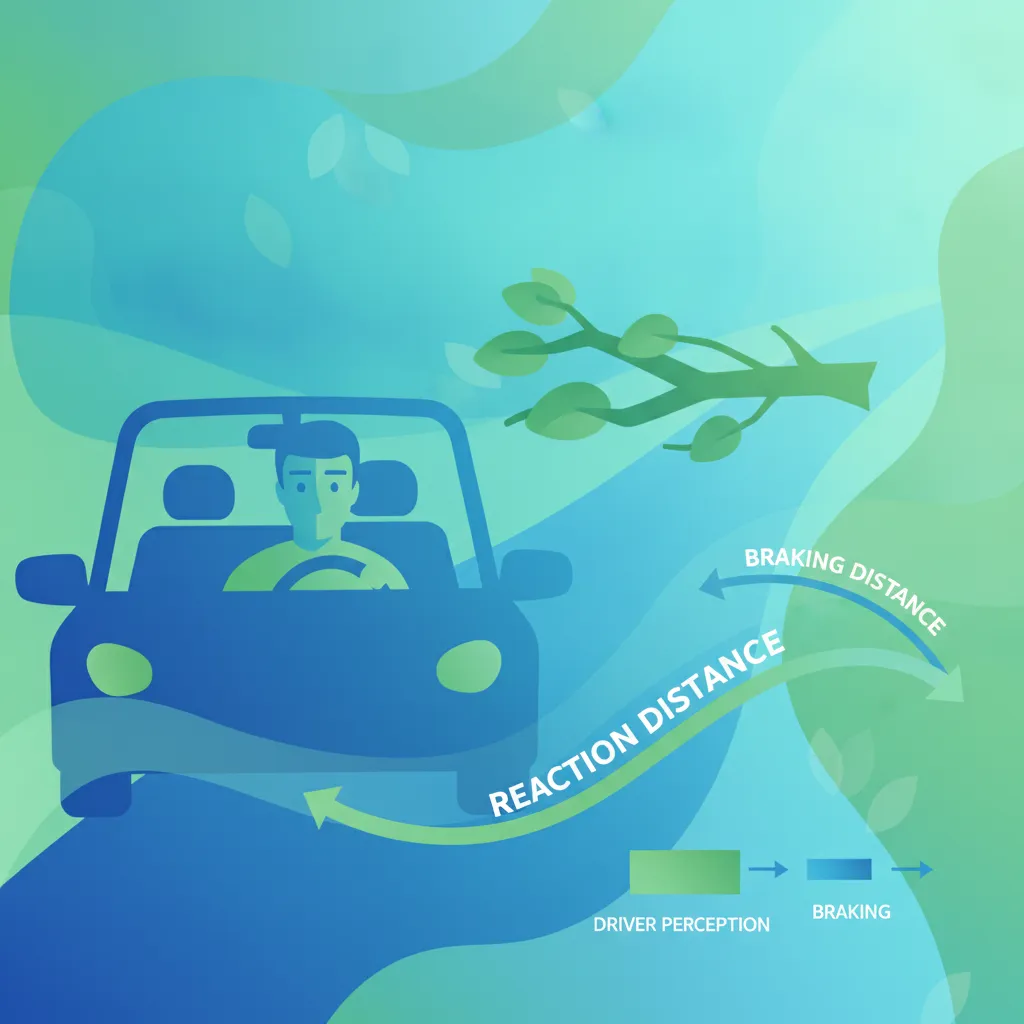
Lesson content overview
Operating a heavy goods vehicle (HGV) under a Category C licence requires an advanced understanding of vehicle physics, mechanical engineering, and defensive driving techniques. Unlike passenger cars, a heavy commercial vehicle possesses immense kinetic energy due to its substantial mass.
In Ireland, a rigid truck can weigh up to 32 tonnes depending on its axle configuration. Managing this mass requires precise control over stopping distances, a deep familiarity with commercial air-brake systems, and the systematic use of auxiliary braking systems to prevent mechanical failure.
To safely operate a Category C vehicle, a driver must understand that Total Stopping Distance (TSD) is not merely the time it takes for the brake pads to grip the drums or discs. It is a compound metric consisting of two primary phases: human reaction and mechanical action.
The entire distance a vehicle travels from the exact moment a driver perceives a hazard to the moment the vehicle comes to a complete, stationary stop. It is calculated as: Total Stopping Distance = Perception-Reaction Distance + Mechanical Braking Distance.
The physics governing this relationship are absolute. Kinetic energy increases linearly with mass, but quadratically with speed (). If you double the speed of a 26-tonne rigid truck, its kinetic energy increases fourfold. This means that even minor increases in speed demand vastly larger areas of clear road ahead to stop safely.
The first phase of stopping is entirely human. Perception-Reaction Time (PRT) is the interval between a hazard appearing in the driver's line of sight and the driver physically applying pressure to the brake pedal.
Under normal, alert driving conditions, the Road Safety Authority (RSA) and international safety standards benchmark the average legal and analytical PRT at 2.5 seconds. This benchmark accounts for real-world complexities, such as scanning mirrors, identifying unexpected obstacles, and the physical cab layout of a heavy vehicle.
At typical carriage speeds, a Category C vehicle covers substantial ground before the mechanical brakes are even engaged. Consider the distance covered during a standard 2.5-second reaction window at various speeds:
This distance is travelled with zero deceleration. Any factor that increases PRT—such as driver fatigue, distraction, minor illnesses, or poor visibility—directly extends this reaction distance, shifting the start of physical braking dangerously closer to the hazard.
Once the brake pedal is depressed, the second phase begins. Mechanical Braking Distance (MBD) is the distance the vehicle travels from the moment the brakes are applied until the vehicle stops.
For Category C vehicles, MBD is heavily influenced by three interlinked variables: vehicle weight (load), speed, and tyre-to-road friction.
A fully loaded truck requires significantly more braking effort to halt than an empty one. The momentum () of a 32-tonne vehicle at 80 km/h is massive. If a vehicle is overloaded beyond its legal design limits, its braking system may not be capable of dissipating the resulting heat energy, leading to catastrophic failure.
Conversely, an unladen (empty) truck presents its own hazards. Because there is less weight pressing the tyres onto the road surface, traction is reduced. Under heavy braking, an empty vehicle's tyres are far more prone to locking and skidding, particularly on damp or uneven road surfaces.
Unlike hydraulic brakes in light passenger cars, heavy goods vehicles utilize compressed air systems. Air takes a fraction of a second to travel through the pneumatic lines, valves, and chambers to actuate the brake shoes. This air-brake lag typically adds 0.3 to 0.5 seconds to the mechanical response time, extending the overall braking distance compared to hydraulic setups.
Friction levels change dramatically depending on the road surface and weather conditions:
Category C commercial vehicles rely on compressed air to operate their primary braking systems. Unlike hydraulic systems, which use pressurized fluid in a closed loop, air-brake systems generate, store, and utilize compressed air to apply pressure to the brake drums or discs.
To monitor and maintain safety, a professional driver must understand the primary components of this pneumatic network:
The Air Compressor: Driven by the vehicle's engine, the compressor pumps atmospheric air into pressurized storage reservoirs.
Governor and Air Dryer: The governor controls when the compressor pumps air into the reservoirs, maintaining system pressure between safe parameters (typically 8 to 12 bar). The air dryer removes moisture and oil contaminants to prevent freezing and valve corrosion.
Storage Tanks (Reservoirs): These tanks store sufficient compressed air to allow several full brake applications even if the engine or compressor fails.
Foot Valve (Service Brake Valve): Pressing the brake pedal releases a metered amount of air from the storage reservoirs into the brake chambers. The harder the driver presses, the more air pressure is directed to the brakes.
S-Cam or Air Disc Brake Chambers: Pressurized air forces a diaphragm and pushrod outward. In an S-cam drum system, this action rotates a camshaft that forces the brake shoes against the drum. In air disc systems, a power caliper squeezes brake pads against a ventilated rotor.
Low Air Pressure Warning: Irish and European vehicle standards dictate that if system pressure drops below a safe threshold (typically around 5.5 to 6 bar), a highly visible red warning light and an audible buzzer must activate in the cab. If this warning sounds while driving, you must pull over safely and immediately.
Heavy vehicles use a mechanical spring mechanism for parking and emergency braking. Powerful steel springs inside the brake chambers physically apply the brakes when there is no air pressure in the lines.
Friction brakes (the service brakes) convert kinetic energy into thermal energy. Under continuous, heavy application—such as when descending long gradients—the temperature of the brake pads, shoes, rotors, and drums can soar to over 500°C. At these extreme temperatures, the friction materials experience brake fade.
The temporary, severe reduction in braking efficiency caused by excessive heat buildup in friction components. Under extreme fade, the brake pedal may feel firm, but the vehicle will fail to slow down because the overheated linings can no longer generate sufficient friction against the drum or disc.
To prevent brake fade and conserve the main service brakes for emergency stopping, Category C vehicles are equipped with auxiliary braking systems, commonly known as retarders. These systems decelerate the vehicle without utilizing friction-based components.
Exhaust Brakes: An exhaust brake operates by closing a butterfly valve in the exhaust pipe downstream of the manifold. This restricts the flow of exhaust gases, creating high backpressure in the engine cylinders during the exhaust stroke. The pistons must work against this compressed gas, which slows the rotation of the crankshaft and, consequently, the drive wheels.
Engine Compression Brakes (Jake Brakes): Commonly used in large commercial diesel engines, compression brakes alter the operation of the engine's exhaust valves. Instead of allowing the compressed air in the cylinder to push the piston back down (which returns energy to the crankshaft), the Jake brake opens the exhaust valves near the top of the compression stroke. This releases the compressed air to the exhaust system, effectively turning the engine into an air compressor that absorbs power from the drivetrain.
Hydraulic and Electromagnetic Retarders:
When operating rigid-and-trailer combinations (which require a Category C+E licence but are highly relevant to the mechanical principles taught in Category C), understanding trailer brake coupling is critical.
A trailer's braking system is integrated with the drawing vehicle's air system through two primary pneumatic coupling lines:
Applying heavy brake pressure abruptly is dangerous in an HGV. It can shift the load forward, damage cargo, destabilize the chassis, and cause wheel lock-ups or skidding. Professional drivers must practice Progressive Braking.
This technique involves three distinct phases:
Modern commercial vehicles are equipped with ABS, which prevents wheels from locking during emergency braking, allowing the driver to maintain steering control.
However, ABS does not guarantee shorter stopping distances. On loose or slippery surfaces, ABS may actually increase the mechanical stopping distance slightly. A driver must never rely on ABS to compensate for tailgating or excessive speed.
The Road Safety Authority (RSA) sets clear guidelines regarding safe spacing and mechanical maintenance for heavy goods vehicles in Ireland.
To account for the high TSD of Category C vehicles, drivers must strictly adhere to following-distance rules:
The "Only a Fool Breaks the Two-Second Rule" Method: Choose a stationary object on the side of the road (e.g., a signpost or bridge). When the vehicle ahead passes it, count: "One thousand and one, one thousand and two." If your front bumper passes the object before you finish counting, you are tailgating and must increase your distance.
In Ireland, all commercial vehicles over one year old must undergo annual roadworthiness testing (CVRT).
During this rigorous examination, the vehicle's air-brake system is tested on a rolling road dynamometer to measure:
A professional driver must perform a walkaround check and pneumatic test daily before taking a Category C vehicle onto public roads.
Check for Air Leaks: With the engine off, apply firm pressure to the service brake pedal and hold it for one minute. The air pressure gauge should not drop by more than 2 psi (or approximately 0.15 bar) in a single-unit vehicle.
Inspect Physical Components: Check all visible brake lines, hoses, and couplings (including yellow and red lines if towing) for cracking, chafing, or audible leaks. Ensure slack adjusters and brake chambers are secure.
Drain Air Reservoirs: Moisture can condense inside steel air tanks, which can freeze in winter or cause internal corrosion. Open the manual drain valves on the bottom of the air tanks daily to drain any accumulated water and oil, unless the vehicle is equipped with fully automatic spit valves.
Test Low-Pressure Warning Systems: Step on and off the brake pedal repeatedly with the engine off to deplete the air supply. The warning light and buzzer must activate before pressure drops below 5.5 bar.
Failure to manage braking systems correctly in a Category C vehicle leads to severe legal penalties and increases the risk of catastrophic road collisions.
Following too closely behind other road users is one of the most common causes of multi-vehicle collisions involving HGVs. Because of the long perception-reaction time and mechanical lag, if the lead vehicle performs an emergency stop, a tailgating truck will strike it before its brakes even begin to apply mechanical force.
Relying solely on friction brakes down steep gradients (such as those encountered on mountainous regional roads in Ireland) is a critical error. The brakes will quickly overheat, glaze, and fail due to fade. Drivers must select a low gear and engage the appropriate auxiliary retarder before beginning the descent.
Towing an unmaintained trailer can lead to asymmetric braking, where the trailer does not slow down at the same rate as the towing vehicle. This creates a high risk of jack-knifing, where the trailer pushes the rear of the towing truck sideways, causing a complete loss of control.
| Speed (km/h) | Reaction Distance (2.5s PRT) | Typical MBD (Fully Laden - Dry) | Estimated Total Stopping Distance |
|---|---|---|---|
| 50 km/h | ~35 metres | ~15 metres | ~50 metres |
| 80 km/h | ~55 metres | ~40 metres | ~95 metres |
| 90 km/h | ~63 metres | ~52 metres | ~115 metres |
Note: These figures are baseline estimates for a modern HGV in dry, optimal conditions. Actual distances will vary significantly depending on load configuration, brake adjustment, and road surface conditions.
Explore all units and lessons included in this driving theory course.
Lesson content overview
Explore all units and lessons included in this driving theory course.
Explore search topics learners often look for when studying Stopping Distances and Braking Techniques. These topics reflect common questions about road rules, driving situations, safety guidance, and lesson level theory preparation for learners in Ireland.
Browse additional driving theory lessons that cover connected traffic rules, road signs, and common driving situations related to this topic. Improve your understanding of how different rules interact across everyday traffic scenarios.
Learn how cargo security and load placement influence the handling and braking characteristics of Category C vehicles. This guide explains the relationship between centre of gravity, axle loading, and vehicle stability to help you understand professional goods transport safety standards as required by the Road Safety Authority theory curriculum.
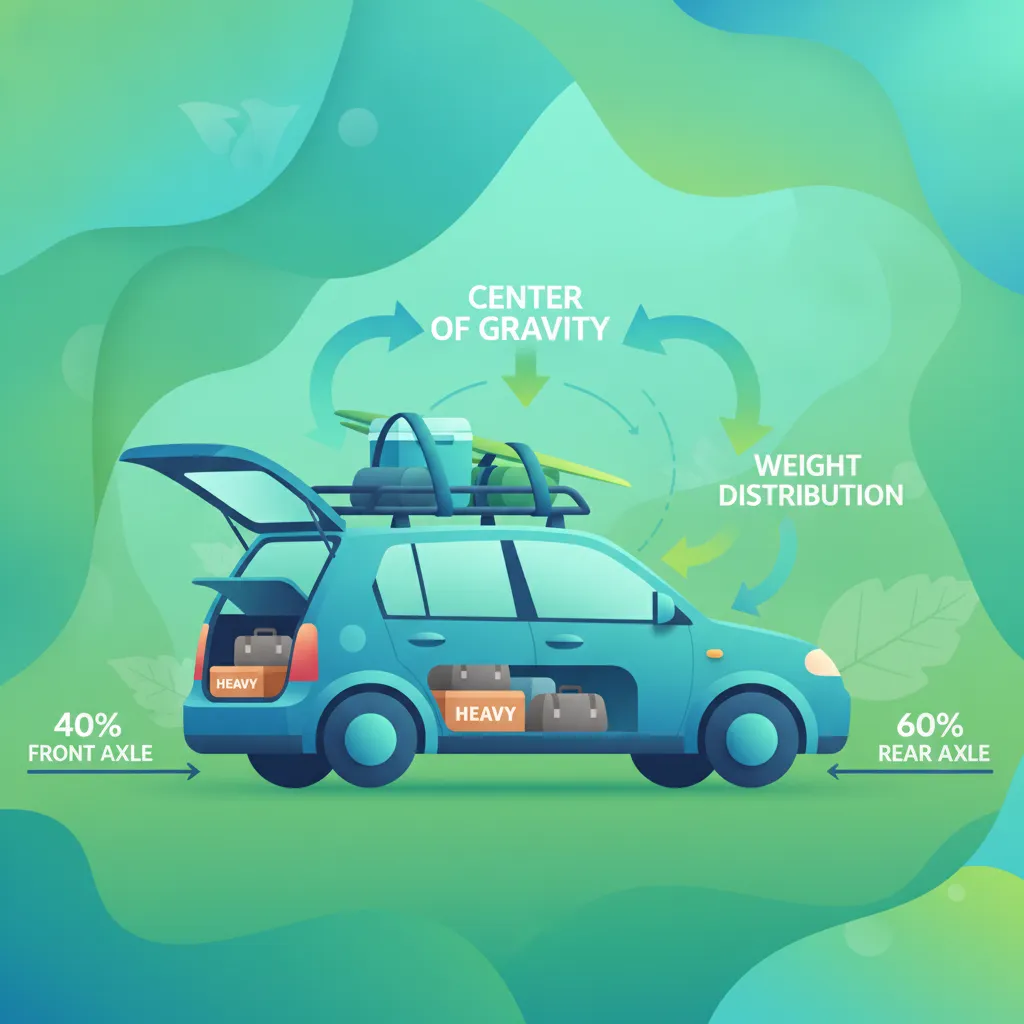
This lesson explains the physical principles of weight distribution and axle overloading on heavy commercial vehicles. It examines how a high centre of gravity increases tipping risks during cornering and alters overall braking effectiveness. Drivers will discover methods for positioning cargo to distribute weight evenly, ensuring optimal steering control and stable vehicle dynamics.

As passenger numbers change throughout a service shift, a heavy vehicle suspension, center of gravity, and steering responsiveness adapt dynamically. This lesson covers load balancing, the physical risks of overloading, and how uneven weight distribution compromises stability during turns. Drivers will learn to perform regular axle weight assessments to comply with Irish transport safety rules.

Carrying heavy loads or towing trailers significantly alters a car's handling, acceleration, and braking characteristics. This lesson outlines the physics of load distribution, explaining why you must secure cargo to prevent shifting and keep the vehicle's centre of gravity low. You will learn about legal roof rack weight limits, safe trailer coupling practices, and how to adjust your driving style when towing.
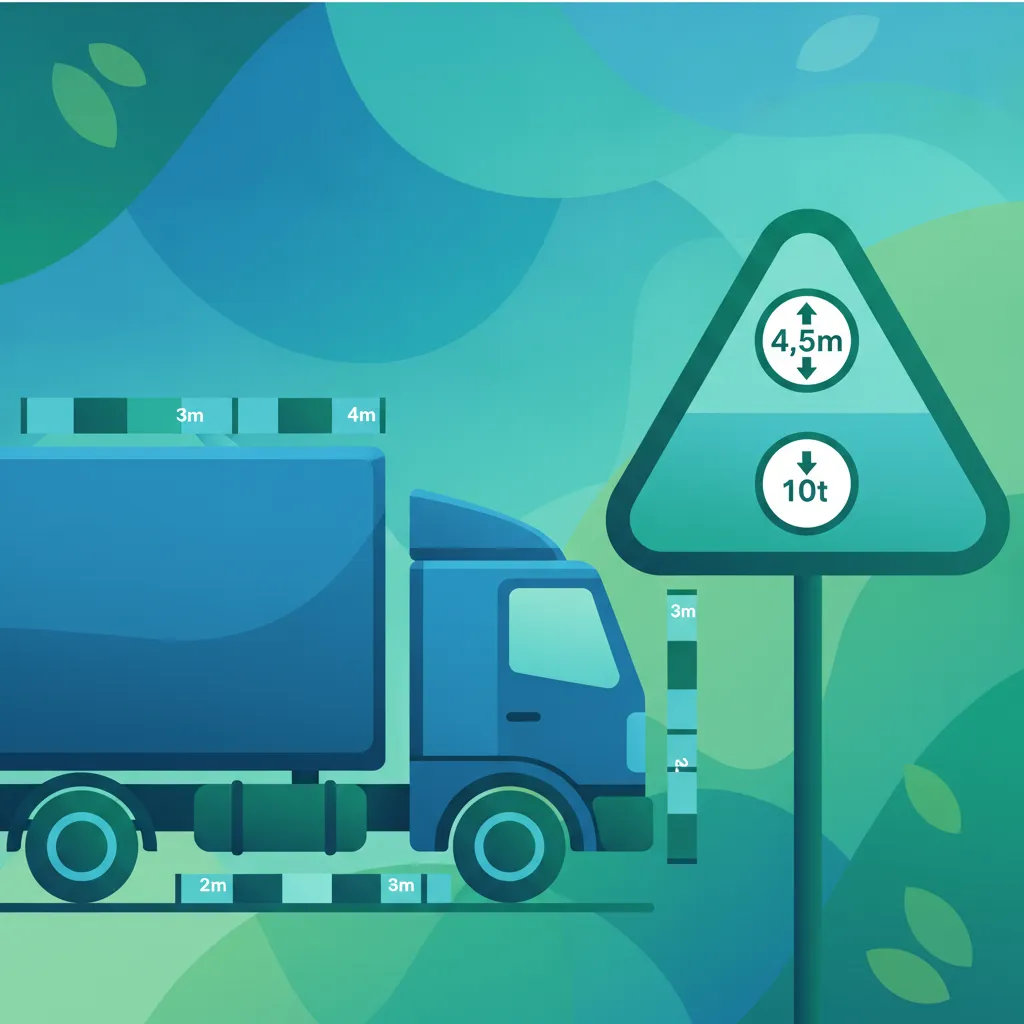
This lesson details the statutory limits on width, height, and length that apply to heavy goods vehicles under Irish transport laws. It explains the mathematical calculation of gross vehicle weight and maximum permissible axle loads to prevent infrastructure damage. Drivers will learn the practical significance of these numbers when passing low bridges or entering height-restricted tunnels.

This lesson reviews the legal definitions and safety guidelines for various categories of cargo, ranging from standard palletized goods to hazardous materials. It highlights the specific documentation, labelling, and safety equipment required by Irish and European laws for specialized transport. Drivers will learn their legal liabilities and the mandatory safety protocols corresponding to each load type.

This lesson covers the legal statutory speed limits for goods vehicles on various road classes, including regional corridors and dual carriageways in Ireland. It focuses on how cargo mass and distribution alter the vehicle's safe maximum operational speed under dry, wet, or icy conditions. Drivers will also understand the purpose, function, and legal requirement of vehicle speed limiter systems.
The physical scale of a coach or bus generates significant momentum that demands extensive space to bring the vehicle to a safe stop. This lesson explains vehicle weight mechanics, the physics of kinetic energy, and how center of gravity affects chassis stability during stops. Drivers will learn to assess braking capacity, accounting for wet road conditions and high passenger counts.
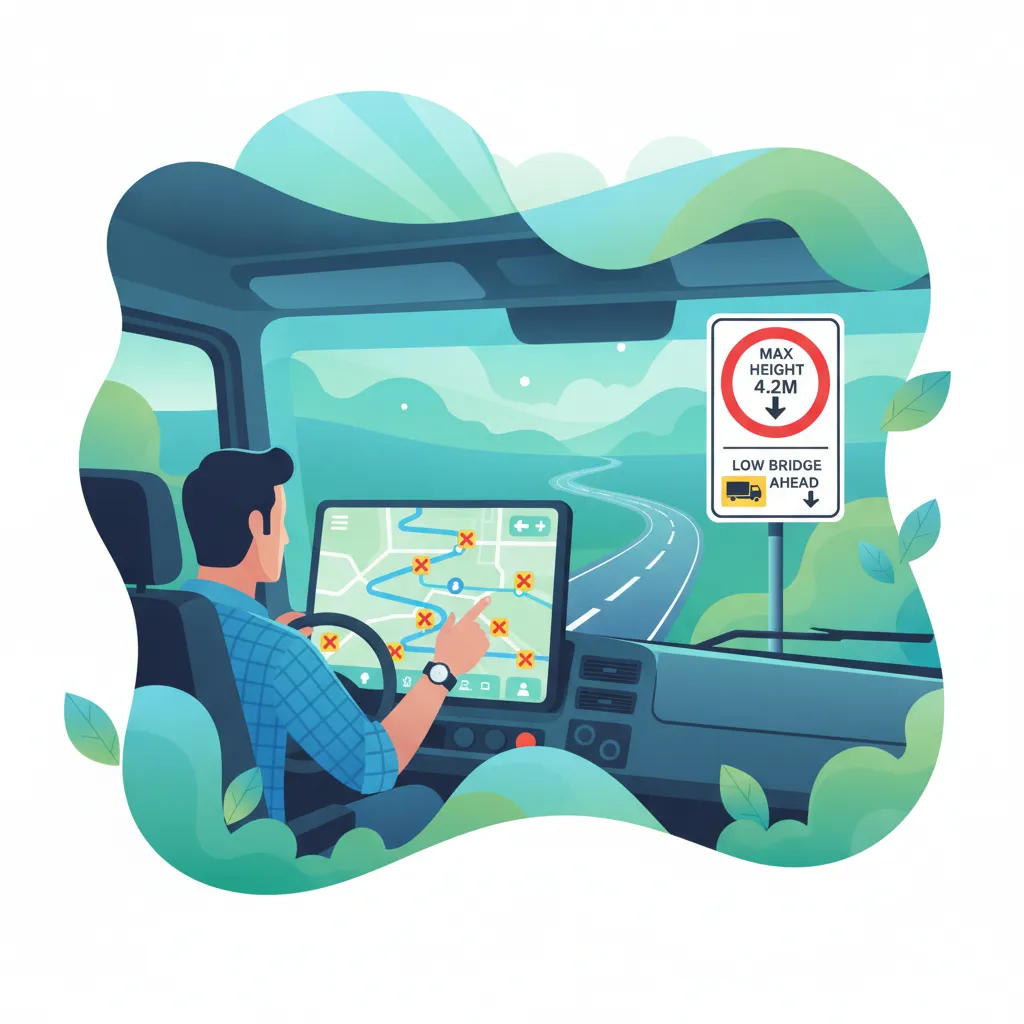
This lesson teaches professional drivers how to systematically map out travel routes that are compatible with heavy vehicle dimensions. It covers the limitations of consumer-grade GPS systems and emphasizes the use of specialized truck navigation systems that account for low bridges and load restrictions. Drivers will also learn to plan for congestion, access timing regulations, and proper entrance paths into commercial zones.

This lesson investigates the relationship between heavy goods vehicle dimensions and the physical constraints of Irish road networks. It highlights how vehicle length and weight contribute to pavement wear and stress on aging bridges and tunnels. Drivers will analyze specific high-risk zones, such as narrow lanes and gauntlet points, where extreme spatial awareness is mandatory.

This lesson details the specific classifications for goods vehicles including Category C, C1, CE, and C1E in Ireland. It explains the core eligibility requirements, necessary medical fitness evaluations, and the sequential steps for theory and practical testing. Professional drivers will also understand when the Driver Certificate of Professional Competence is legally mandatory.
Understand the risks of navigating heavy vehicles in urban environments, focusing on blind spot awareness and interaction with vulnerable road users. This theory lesson provides insight into safe turning practices, reversing protocols, and the defensive driving habits necessary for managing large vehicle dimensions on narrow or crowded Irish city streets.

This lesson explains the location, depth, and angle of the severe blind spots surrounding a standard heavy goods vehicle. It provides step-by-step guidance on setting up primary side mirrors, wide-angle lenses, and close-proximity front-view mirrors to eliminate blind areas. Drivers will learn systematic visual checking routines to ensure complete situational awareness before initiating any maneuver, lane shift, or turn.

This lesson explains the extensive blind spots of heavy goods vehicles, buses, and other large trucks on Irish roads. It teaches Category AM riders how to maintain safe following distances and position themselves where truck drivers can see them. Proper space cushion management is emphasized to protect riders from the wind turbulence of passing trucks.

The length of a commercial passenger vehicle creates a wide rear-wheel track offset, requiring drivers to swing wide during tight turns. This lesson teaches cornering mechanics, mirror adjustment guidelines, and how to check blind spots for cyclists on the inside lane. Drivers will master intersection control, preventing collisions with stationary street furniture or curbs.

This lesson addresses the unique environmental and logistical challenges faced during delivery stops in commercial town and city centers. It covers the legal frameworks governing municipal loading zones, double-parking hazards, and temporary pedestrian-only street restrictions. Drivers will acquire practical skills for managing traffic build-up, utilizing visual spotters, and securing the vehicle while unloading cargo.

This lesson details the location of blind spots on passenger cars, commercial trucks, and buses, explaining how to avoid staying in these danger zones. It teaches the vital importance of the lifesaver glance or physical shoulder check before executing any lateral lane change or turn. Motorcyclists will learn how to monitor other drivers' mirrors to verify if their motorcycle is visible.

Motorcycles and bicycles are often hidden from view in the large blind spots of passenger buses and coaches during turns. This lesson covers safe lateral clearances when overtaking cyclists, recognizing advanced stop lines, and sharing narrow lanes. Drivers will understand how to signal clearly, giving riders enough room to navigate safely near busy public transit corridors.
Reversing a large passenger vehicle is a high-risk maneuver that must be avoided whenever possible or performed with extreme caution. This lesson teaches correct mirror alignment, the use of rear cameras, and establishing clear hand signals with an external spotter. Drivers will study safety protocols for backing into passenger bays, ensuring all blind zones remain completely clear.

This lesson teaches riders how to actively identify and eliminate blind spots through proper mirror adjustment and physical shoulder checks. It explains the concept of a safety cushion, which represents the defensive space maintained around the moped at all times. Managing these zones ensures adequate reaction time and mitigates the impact of sudden braking.

Driving a coach through narrow urban streets or historic Irish town centers demands precise spatial judgment and low speed control. This lesson covers turning radii, rear tail-swing physics, and managing overhangs when navigating around tight, permanent obstacles. Drivers will learn to assess clearance gaps accurately, reducing damage risks to the vehicle exterior and public infrastructure.

Heavy vehicles require continuous visual scanning to identify small or slow-moving road users who may enter the path of travel. This lesson explores the typical behaviors of young children, elderly pedestrians, and visually impaired road users. Drivers will build strong hazard perception skills to anticipate sudden movements, ensuring they can brake safely and avoid serious accidents.
Find clear answers to common questions learners have about Stopping Distances and Braking Techniques. Learn how the lesson is structured, which driving theory objectives it supports, and how it fits into the overall learning path of units and curriculum progression in Ireland. These explanations help you understand key concepts, lesson flow, and exam focused study goals.
Due to their significantly higher mass and kinetic energy, HGVs require more time and distance to come to a complete stop. Even with advanced braking systems, the physical laws of motion dictate that increased weight directly correlates to greater force required to decelerate.
Brake fade occurs when constant braking, especially on long downhill gradients, causes the brake components to overheat and lose efficiency. It is dangerous because it results in a sudden, significant reduction in stopping power, which can lead to loss of control.
Air-brakes rely on compressed air to activate the braking mechanism, which creates a slight delay compared to hydraulic systems. Understanding this 'lag' is crucial for the theory exam when calculating total reaction and braking time.
No, auxiliary retarders are designed to assist the main braking system by slowing the vehicle's engine speed. They are vital for managing speed on descents to prevent overheating the primary friction brakes, but they should not replace them in emergency situations.
Use the practice question search tool to pinpoint specific topics, road signs, or rules you need to master for your official Driver Theory Test. Refine your study strategy and ensure comprehensive preparation for all aspects of the Irish driving exam. Start your focused revision now and build confidence for your learner permit test.