This article breaks down the specific requirements and vehicle types covered by Polish driving license categories T and B. You will learn why distinguishing between a farm tractor and a standard car license is critical for your theory test success. Understanding these fundamental differences ensures you grasp the nuances of Polish road regulations and avoid common mistakes on your exam.
Article content overview
Obtaining a Polish driving license requires a thorough understanding of the different vehicle categories and the specific rules that govern them. Among the various categories, T and B often cause confusion for prospective drivers, particularly regarding the types of vehicles each allows. While both are fundamental for many road users, their scopes are distinct and crucial for passing the Polish theory exam. This article will delve into the key differences between Polish driving license category T and category B, providing clarity on what each permits and why this distinction is vital for your exam preparation.
The Polish legal framework for driving licenses is structured to ensure that drivers possess the appropriate knowledge and skills for the specific vehicles they intend to operate. Failing to understand these distinctions can lead to incorrect answers on the theory exam, potentially jeopardizing your chances of obtaining your license. By focusing on the precise definitions and requirements for categories T and B, you can build a strong foundation of knowledge that aligns with Polish road rules and prepares you effectively for the examination process.
Category B represents the most common driving license category in Poland, permitting the operation of a wide range of passenger cars and light commercial vehicles. The primary entitlement granted by a Category B license is the ability to drive a motor vehicle with a permitted total weight (DMC - dopuszczalna masa całkowita) not exceeding 3.5 tonnes. This encompasses typical passenger cars, as well as smaller vans and light trucks, with the crucial exclusion of buses and motorcycles. This category is accessible from the age of 18, making it the entry point for many young drivers.
Furthermore, a Category B license extends to operating a vehicle combination consisting of a Category B vehicle and a light trailer. A light trailer is defined as having a permitted total weight not exceeding 750 kg. Additionally, you can tow a trailer with a permitted total weight greater than 750 kg, provided that the combined permitted total weight of the towing vehicle and the trailer does not exceed 4250 kg. This nuanced rule about trailer weight is a common point of testing in the theory exam, as it differentiates between simple trailer towing and more complex combinations.
In contrast to the broad applicability of Category B, Polish driving license category T is specifically designed for operating agricultural machinery and other slow-moving vehicles. The core entitlement of a Category T license is the ability to drive a farm tractor or a slow-moving vehicle. This category is particularly important for individuals involved in agriculture or working with specialized machinery. The minimum age requirement for obtaining a Category T license is 16 years old, which is notably younger than for Category B, reflecting the different nature and operational environments of these vehicles.
Crucially, a Category T license also permits the operation of vehicle combinations. This means you are authorized to drive a farm tractor or a slow-moving vehicle when it is coupled with one or more trailers. The specific regulations allow for the towing of trailers behind these specialized vehicles, which is essential for many agricultural and construction tasks. Moreover, holders of a Category T license are also entitled to drive vehicles covered by Category AM. This overlap ensures that individuals with a T license can also operate light quad bikes and mopeds, broadening their operational capabilities within a specific context.
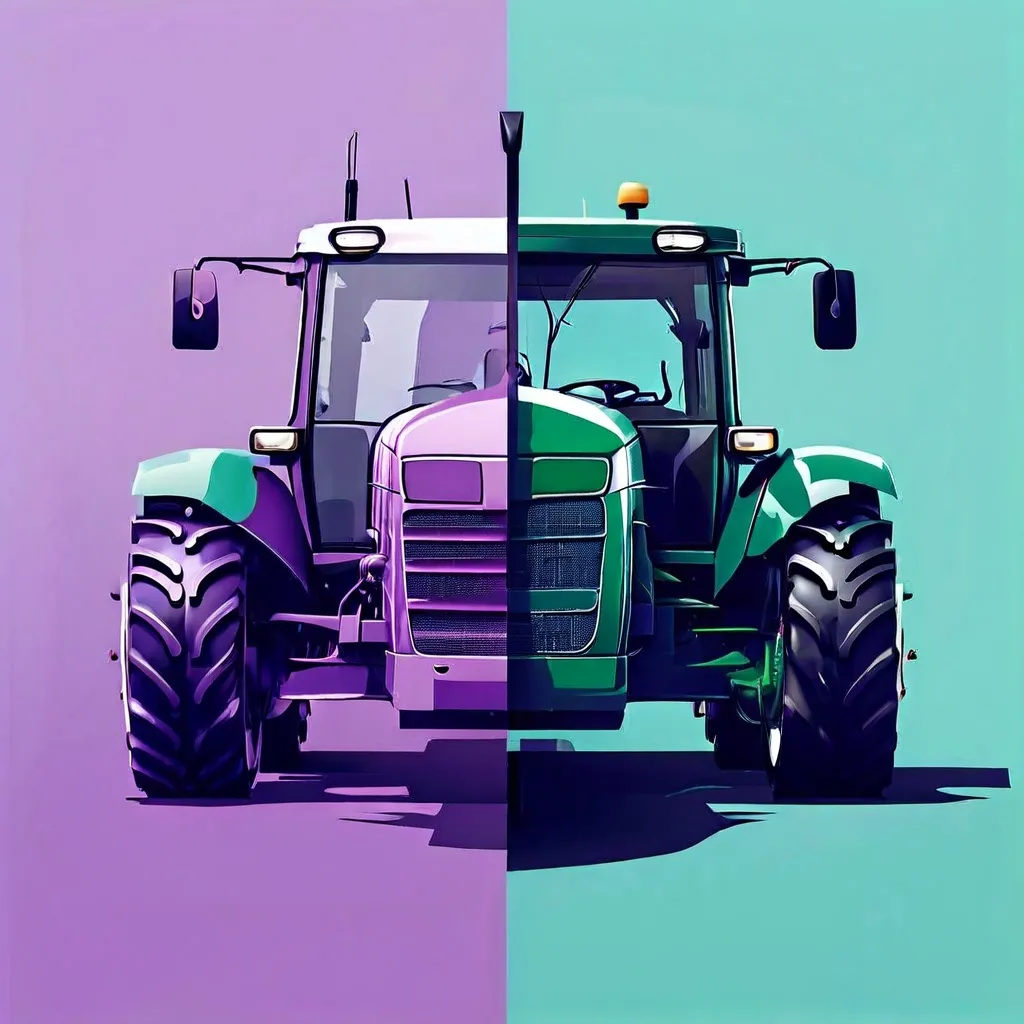
The fundamental difference between Category T and Category B licenses lies in the type of vehicles they authorize. Category B focuses on standard road vehicles like cars and light vans, suitable for general transportation. Category T, on the other hand, is specialized for agricultural tractors, slow-moving vehicles, and combinations involving these. This distinction is critical for the Polish theory exam, as questions frequently test the ability to identify which license category is required for a specific vehicle.
For instance, a common theory exam question might present a scenario involving a farm tractor. A candidate with only a Category B license would not be legally permitted to drive this vehicle on public roads. Conversely, someone with a Category T license could drive the tractor and potentially tow a trailer, but they would need a separate Category B license to drive a standard passenger car. Understanding these precise boundaries prevents common errors that candidates often make.
It is important to note the age requirements and any overlapping entitlements between categories. While Category B requires drivers to be at least 18 years old, Category T can be obtained by individuals aged 16 and over, provided they have parental or guardian consent if under 18. This difference in age accessibility highlights the specific focus of each category. The fact that Category T includes Category AM entitlements (light quad bikes and mopeds) means that a 16-year-old with a T license can operate these smaller vehicles, in addition to tractors and slow-moving vehicles, under specific Polish regulations.
The Polish theory examination often includes questions that probe these age and entitlement overlaps. For example, a question might ask what vehicles a 16-year-old can drive, presenting options that include mopeds (Category AM), tractors (Category T), and cars (Category B). Correctly identifying that only AM and T vehicles are permitted at this age is crucial for a passing score.
The legal basis for these driving license categories in Poland is firmly established in Polish law. The core legislation includes the Act on Drivers of Motor Vehicles of January 5, 2011 (Ustawa o kierujących pojazdami) and the Regulation on Road Signs and Signals (Rozporządzenie w sprawie znaków i sygnałów drogowych), along with amendments to the Road Traffic Law of June 20, 1997. These documents clearly delineate the scope of each license category, including the types of vehicles and any restrictions.
Understanding that these categories are precisely defined by law is fundamental for the theory exam. Examiners are looking for candidates who can apply these legal definitions accurately. For example, a question might ask about the specific definition of a "farm tractor" or a "slow-moving vehicle" in the context of Polish regulations, testing your comprehension of the category's purpose.
When preparing for your Polish driving theory exam, visualize real-world scenarios involving these vehicle types. Imagine a farmer operating a tractor with a trailer full of produce – this clearly falls under Category T. Then, picture someone driving a passenger car to work or on a holiday; this requires Category B. These mental images can help solidify the distinctions.
The theory exam often employs scenario-based questions. For instance, you might be asked: "You need to drive a farm tractor to deliver goods to a market. Which driving license category is required?" The correct answer would be Category T. Similarly, if the question is: "You are using your personal car for a family trip and need to tow a small luggage trailer (DMC up to 750 kg). Which license category is sufficient?", the answer would be Category B.
Successfully passing the Polish driving theory exam hinges on a precise understanding of each license category's entitlements and restrictions. The clear divergence between Category T, focused on agricultural and slow-moving vehicles, and Category B, intended for standard passenger cars, is a cornerstone of this knowledge. Remember that Category B allows for towing light trailers or heavier ones under specific combined weight limits, while Category T enables the operation of tractors and slow-moving vehicles, including combinations, and also incorporates AM category entitlements.
By internalizing these definitions, understanding the age requirements, and practicing with scenario-based questions, you will be well-equipped to tackle any question related to these categories on your theory test. This knowledge not only ensures you pass the exam but also promotes safe and legal driving practices on Polish roads.
Polish driving license categories T and B serve distinct purposes and are not interchangeable. Category B covers standard passenger cars and light vehicles up to 3.5 tonnes DMC for drivers aged 18 and over, including specific rules for towing trailers. Category T specifically targets agricultural tractors and slow-moving vehicles, accessible from age 16, and also includes Category AM entitlements for mopeds and light quad bikes. The key to exam success lies in understanding these precise boundaries, knowing the weight definitions (especially DMC), and recognizing that overlapping entitlements exist primarily within Category T's coverage of Category AM rather than between T and B.
A short set of high-value points that capture the most important ideas from this article.
Category B license covers passenger cars and light vehicles up to 3.5 tonnes DMC, accessible from age 18
Category T license specifically authorizes agricultural tractors and slow-moving vehicles, obtainable from age 16
Category B allows towing light trailers (up to 750 kg DMC) or heavier trailers if combined weight stays under 4250 kg
Category T includes Category AM entitlements, permitting operation of mopeds and light quad bikes
These categories are mutually exclusive—a T license does not cover standard passenger cars, and a B license does not cover tractors
DMC (Dopuszczalna masa całkowita) is the maximum permissible weight of a vehicle including load and any trailer
Light trailer (lekka przyczepa) is defined as having DMC not exceeding 750 kg
Category T holders can also tow trailers behind tractors and slow-moving vehicles
At age 16, only Categories AM and T are accessible (not Category B)
Pojazd wolnobieżny refers to slow-moving vehicles designed for construction or maintenance purposes, not general transportation
Assuming a Category T license permits driving standard passenger cars (it does not)
Confusing trailer towing weight limits between Category B and Category T regulations
Forgetting that a 16-year-old cannot drive a car despite being able to operate a tractor
Not recognizing that Category B does not cover agricultural machinery or slow-moving vehicles
Overlooking that Category T includes Category AM entitlements, allowing mopeds and light quad bikes
Article content overview
A short set of high-value points that capture the most important ideas from this article.
Category B license covers passenger cars and light vehicles up to 3.5 tonnes DMC, accessible from age 18
Category T license specifically authorizes agricultural tractors and slow-moving vehicles, obtainable from age 16
Category B allows towing light trailers (up to 750 kg DMC) or heavier trailers if combined weight stays under 4250 kg
Category T includes Category AM entitlements, permitting operation of mopeds and light quad bikes
These categories are mutually exclusive—a T license does not cover standard passenger cars, and a B license does not cover tractors
DMC (Dopuszczalna masa całkowita) is the maximum permissible weight of a vehicle including load and any trailer
Light trailer (lekka przyczepa) is defined as having DMC not exceeding 750 kg
Category T holders can also tow trailers behind tractors and slow-moving vehicles
At age 16, only Categories AM and T are accessible (not Category B)
Pojazd wolnobieżny refers to slow-moving vehicles designed for construction or maintenance purposes, not general transportation
Assuming a Category T license permits driving standard passenger cars (it does not)
Confusing trailer towing weight limits between Category B and Category T regulations
Forgetting that a 16-year-old cannot drive a car despite being able to operate a tractor
Not recognizing that Category B does not cover agricultural machinery or slow-moving vehicles
Overlooking that Category T includes Category AM entitlements, allowing mopeds and light quad bikes
Explore related topics, search based questions, and concepts that learners often look up when studying PL Driving License T vs. B. These themes reflect real search intent and help you understand how this topic connects to wider driving theory knowledge in Poland.
Find clear and practical answers to common questions learners often have about PL Driving License T vs. B. This section helps explain difficult points, remove confusion, and reinforce the key driving theory concepts that matter for learners in Poland.
Category B primarily allows driving cars and vehicles up to 3.5 tons (excluding buses and motorcycles), including light trailers. Category T specifically covers agricultural tractors, slow-moving vehicles, and their combinations, along with vehicles from category AM.
According to Polish regulations, a standard Category B license only permits driving agricultural tractors within Poland under specific conditions, but Category T is the dedicated license for these vehicles and provides broader rights.
The Polish Category T license authorizes the driving of agricultural tractors or slow-moving vehicles, combinations of these with trailers, and vehicles designated for Category AM (light quads, mopeds).
Yes, for Category T in Poland, the minimum age is 16, often requiring parental consent if under 18. For Category B, the minimum age is 18.
The Polish theory exam frequently includes questions that test your knowledge of which license category is required for specific types of vehicles, such as agricultural machinery or standard passenger cars. Correctly identifying these distinctions is crucial for passing.
After finding your specific article, continue your targeted learning by exploring related topics or diving deeper into practice questions. Our extensive library ensures you have all the resources needed to confidently prepare for your Polish driving license theory exam. Discover more guides and solidify your understanding of Polish road rules.