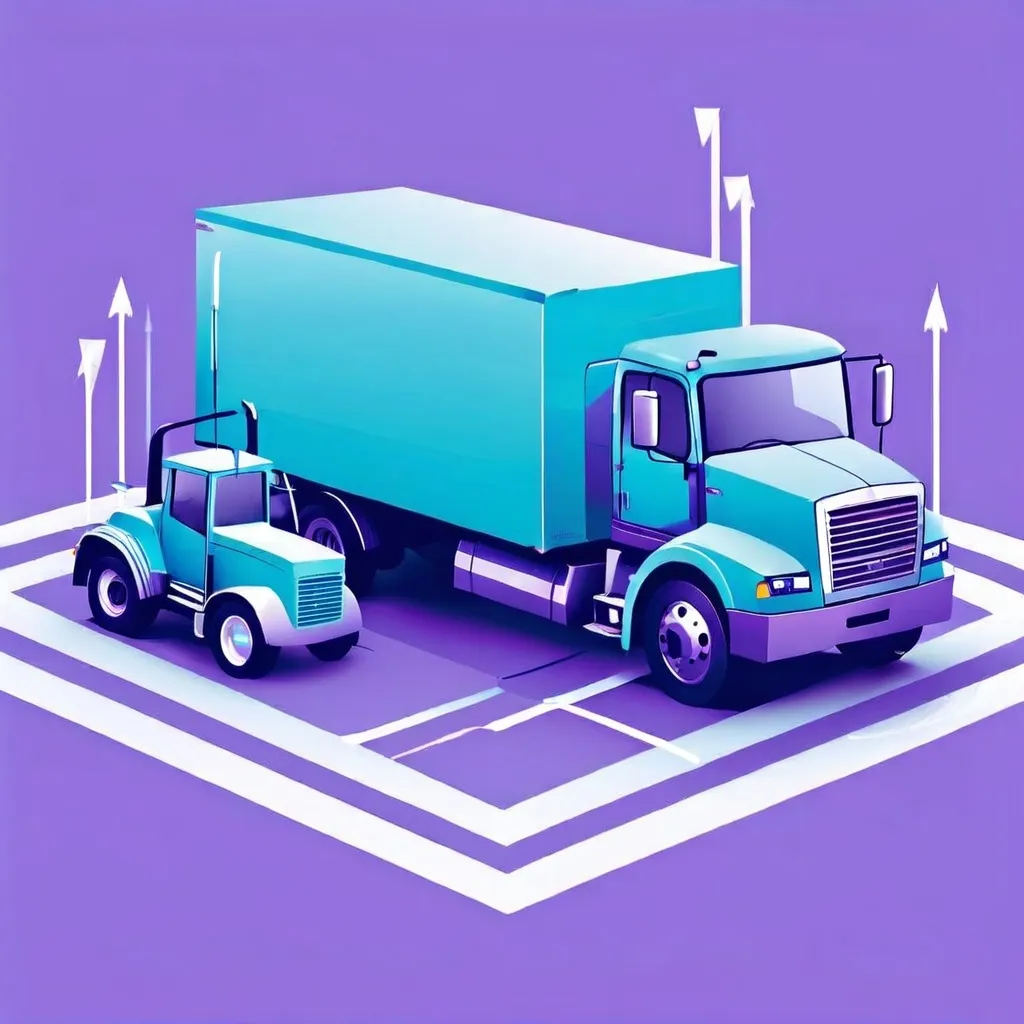
Navigate Polish roads safely and efficiently with our guide to truck and tractor turning techniques, vital for your driving theory exam. We break down the mechanics of 'skręty szosowe' and 'skręt manewrowy', focusing on critical aspects like precise steering and optimal road positioning to ensure you handle large vehicles with confidence and comply with Polish regulations.
Article content overview
Navigating Polish roads with larger vehicles like trucks and agricultural tractors demands a specific set of skills and a deep understanding of turning techniques. Unlike smaller passenger cars, these vehicles have significantly different turning radii, wider stances, and substantial blind spots that necessitate careful planning and execution. The Polish driving theory exam for categories C, CE, and T places considerable emphasis on these aspects, testing candidates' knowledge of safe turning procedures, proper road positioning, and the application of specific maneuvering techniques. This comprehensive guide will delve into the critical turning methods – 'skręty szosowe' (road turns) and 'skręt manewrowy' (maneuver turns) – essential for any aspiring driver of these larger vehicles in Poland.
The fundamental difference between turning a car and turning a truck or tractor lies in their physical dimensions and the resultant dynamics. Trucks, with their longer wheelbases and often articulated trailers, require a much wider turning radius. This means that when making a turn, the rear of the vehicle will track inside the path of the front. This phenomenon is often referred to as "off-tracking" or "cutting the corner," and it's a critical consideration for avoiding collisions with curbs, other vehicles, or road infrastructure. Agricultural tractors, while typically shorter, can have different steering geometries and are often operated in more confined spaces or on uneven terrain, requiring a different approach to safe turning.
Understanding this off-tracking is paramount for safe driving in Poland. The rule of thumb is to anticipate that the rear wheels will not follow the exact same path as the front wheels. For a right turn, the driver must swing wide to the left to give the trailer or rear of the tractor enough space to clear the corner. Conversely, for a left turn, the driver needs to position the vehicle further to the right before initiating the turn. This principle is directly tested in the theory exams, often through scenarios that require identifying the correct vehicle path.
'Skręty szosowe,' or road turns, are the standard maneuvers performed when changing direction on public roads, whether at an intersection or a bend. For trucks and tractors operating on Polish roads, adherence to right-hand traffic rules is always in effect, meaning drivers must keep as far to the right of the carriageway as safely possible. This positioning is especially crucial before initiating a turn.
Proper hand placement on the steering wheel is vital for precise control during road turns. For a right turn, a common technique involves placing the right hand at approximately the 11 or 12 o'clock position and rotating the wheel clockwise until the hand reaches the 3 o'clock position. During this movement, the left hand releases the wheel and moves to the 9 o'clock position, allowing the wheel to feed through the hands smoothly. The reverse applies for a left turn, with the left hand initiating the counter-clockwise rotation from the 11 or 12 o'clock position to the 9 o'clock position, while the right hand moves to the 3 o'clock position.
When making slight adjustments or driving straight, hands can be held on the horizontal diameter of the steering wheel. This ensures a responsive and controlled steering input, crucial for maintaining the correct path and avoiding deviations that could lead to hazards. For any turn, especially a significant one, the driver must continuously assess their surroundings, check mirrors, and ensure adequate clearance before and during the maneuver.
When performing 'skręty szosowe' on Polish public roads, always remember the principle of 'ruch prawostronny' (right-hand traffic). This means keeping as close to the right edge of the road as safely possible before commencing your turn, providing maximum space for your vehicle’s length and potential off-tracking.
Effective gear selection plays a significant role in maintaining control and momentum during road turns. Lower gears are typically used for initiating movement from a standstill or for slower, more controlled turns. For 'skręty szosowe' where speed is a factor, selecting an appropriate gear allows the engine to provide sufficient power without excessive revving or stalling.
Gears 4 through 6, along with reverse (R), are generally considered 'biegi szosowe' (road gears). These are designed for faster travel during transport operations and some field work where high pulling power isn't the primary requirement. For a smooth road turn, a gear that allows for steady acceleration after completing the turn is ideal. Over-revving in too low a gear can lead to jerky movements, while being in too high a gear can cause the engine to labor or stall, compromising safety and control.
'Skręt manewrowy,' or maneuver turn, refers to more complex steering actions often required for specific tasks, such as detailed agricultural work, parking, or navigating tight spaces. These maneuvers may involve sharper angles and more precise adjustments of the steering wheel, sometimes requiring the driver to reposition their hands multiple times to achieve the desired turn.
When performing a sharp right maneuver turn, the process might begin by using the left hand to turn the steering wheel to the right, then repositioning the right hand to the 12 o'clock position to continue the turn. Similarly, for a sharp left maneuver turn, the right hand might initiate the steering wheel rotation to the left, followed by repositioning the left hand to the 12 o'clock position. The core principle remains the smooth transfer of hands around the steering wheel to achieve the necessary angle of turn while maintaining control.
These maneuvers are often encountered when backing a vehicle with a trailer or performing intricate movements in a confined area, such as a farmyard or loading bay. The theory exam might present questions about how to initiate such turns or how to correct for unexpected deviations during a maneuver. Practicing these movements, ideally in a safe, open area, is crucial for developing the spatial awareness and control needed to execute them successfully.
For maneuvers requiring significant steering input, such as a tight turn or backing a trailer, be prepared to make multiple hand movements on the steering wheel to achieve the full range of motion. This ensures precise control and prevents over-steering or losing grip.
Safe turning for trucks and tractors in Poland is not just about steering; it’s equally about correct road positioning and an acute awareness of blind spots. Because of their size and construction, large vehicles have significantly larger blind areas compared to passenger cars. These ‘martwe pola’ (dead spots) mean that drivers cannot always rely solely on their mirrors to see everything around them.
Before commencing any turn, drivers must position their vehicle correctly on the road. For a right turn on a two-lane road in Poland, this means moving to the rightmost lane available. If the road has multiple lanes for right turns, choosing the correct one is essential, often dictated by specific road markings or signage. Similarly, for a left turn, the vehicle should be positioned in the leftmost lane.
When turning, especially at intersections, drivers must consider the path of the entire vehicle, including any trailers. This often means performing a wider arc than one might initially expect, using more than one lane if necessary and safe to do so. Anticipating the movement of the rear wheels is key; they will swing inwards, so a wide enough path must be secured to prevent the rear from hitting curbs, other vehicles, or pedestrians.
Effective use of mirrors is paramount. Drivers should regularly check their side mirrors and potentially use convex mirrors or additional mirror setups if available, which provide a wider field of view. However, mirrors alone are not sufficient. Before and during any turn, drivers should physically turn their heads to check blind spots directly. This is particularly important when changing lanes or merging, but also critical during turns where pedestrians or cyclists might be obscured.
The Polish theory exam frequently includes questions about blind spots and how to manage them safely, often in scenarios involving lane changes or turns near vulnerable road users. Understanding the limitations of visibility is a core component of safe driving for large vehicles.
While many principles of turning apply to both trucks and tractors, agricultural tractors have unique operational environments. They are often used on public roads for transport between fields, and during these journeys, they must adhere to road rules. However, their specialized design, often with high ground clearance and different tire configurations, can affect their handling and turning characteristics.
Tractors are also frequently used in off-road conditions where maneuverability is critical. Here, the concept of 'skręt manewrowy' becomes even more important. Maneuvers in tight spaces, on inclines, or with implements attached (like ploughs or trailers) require exceptional driver skill and an understanding of how the tractor's dynamics change with load and terrain.
When driving an agricultural tractor on public roads in Poland, remember that specific speed limits may apply depending on the vehicle's classification and the road type. Always consult the vehicle's documentation and relevant traffic regulations.
The Polish driving theory exam for larger vehicle categories often tests practical knowledge through scenario-based questions. Common topics include:
A common pitfall is underestimating the space required for a turn, leading to potential collisions. Another is neglecting to check blind spots adequately, which can be dangerous, especially in urban environments with high traffic density. Always think about the entire length of your vehicle and any attached units.
Mastering turning techniques for trucks and agricultural tractors is a critical skill for safe driving in Poland and a fundamental requirement for passing the driving theory exam. Understanding the principles of 'skręty szosowe' and 'skręty manewrowy,' paying close attention to road positioning, and being acutely aware of blind spots are non-negotiable. By internalizing these concepts and practicing them diligently, drivers can navigate Polish roads with confidence, ensuring the safety of themselves, their cargo, and other road users.
This article covers the essential turning techniques for trucks and agricultural tractors in Poland, distinguishing between 'skręty szosowe' (standard road turns) and 'skręt manewrowy' (maneuver turns). Understanding off-tracking is critical—rear wheels track inside the front path, so drivers must swing wide and position correctly. Steering techniques differ by turn type: road turns use smooth hand-over-hand movements while maneuver turns require multiple hand repositionings. Safe operation demands constant blind spot awareness through both mirrors and physical checks, and proper gear selection to maintain control. These concepts are directly tested in the Polish theory exam for categories C, CE, and T.
A short set of high-value points that capture the most important ideas from this article.
Large vehicles experience off-tracking where rear wheels track inside the front wheels' path, requiring wider arcs on turns
'Skręty szosowe' are standard road turns requiring correct lane positioning and smooth hand-over-hand steering technique
'Skręt manewrowy' involves sharper steering angles often requiring multiple hand repositionings on the steering wheel
Road positioning must account for the entire vehicle length including any trailers, often requiring use of more than one lane
Mirrors alone are insufficient for blind spot awareness; physical head checks are required for safe turning
Right-hand traffic ('ruch prawostronny') means keeping as close to the right edge of the road as safely possible before commencing any turn
For a right turn, swing wide to the left to give the trailer or rear enough space to clear the corner
For a left turn, position the vehicle further to the right before initiating the turn to accommodate off-tracking
Road gears (4-6 and reverse) are designed for faster travel during transport operations
Agricultural tractors on public roads must adhere to road rules and applicable speed limits
Underestimating the space required for a turn due to off-tracking, potentially causing collisions with curbs or vehicles
Relying solely on mirrors without performing physical head checks to verify blind spots
Failing to select the correct lane before turning, especially at multi-lane intersections
Over-steering or losing grip during maneuver turns by not using multiple hand movements
Confusing the hand-over-hand steering technique for road turns with the repositioning technique needed for sharp maneuver turns
Article content overview
A short set of high-value points that capture the most important ideas from this article.
Large vehicles experience off-tracking where rear wheels track inside the front wheels' path, requiring wider arcs on turns
'Skręty szosowe' are standard road turns requiring correct lane positioning and smooth hand-over-hand steering technique
'Skręt manewrowy' involves sharper steering angles often requiring multiple hand repositionings on the steering wheel
Road positioning must account for the entire vehicle length including any trailers, often requiring use of more than one lane
Mirrors alone are insufficient for blind spot awareness; physical head checks are required for safe turning
Right-hand traffic ('ruch prawostronny') means keeping as close to the right edge of the road as safely possible before commencing any turn
For a right turn, swing wide to the left to give the trailer or rear enough space to clear the corner
For a left turn, position the vehicle further to the right before initiating the turn to accommodate off-tracking
Road gears (4-6 and reverse) are designed for faster travel during transport operations
Agricultural tractors on public roads must adhere to road rules and applicable speed limits
Underestimating the space required for a turn due to off-tracking, potentially causing collisions with curbs or vehicles
Relying solely on mirrors without performing physical head checks to verify blind spots
Failing to select the correct lane before turning, especially at multi-lane intersections
Over-steering or losing grip during maneuver turns by not using multiple hand movements
Confusing the hand-over-hand steering technique for road turns with the repositioning technique needed for sharp maneuver turns
Explore related topics, search based questions, and concepts that learners often look up when studying Truck & Tractor Turning Techniques. These themes reflect real search intent and help you understand how this topic connects to wider driving theory knowledge in Poland.
Find clear and practical answers to common questions learners often have about Truck & Tractor Turning Techniques. This section helps explain difficult points, remove confusion, and reinforce the key driving theory concepts that matter for learners in Poland.
'Skręty szosowe' are standard road turns, requiring precise positioning and smooth steering. 'Skręt manewrowy' refers to sharper turns needed for specific tasks or in confined spaces, often involving different steering hand movements.
Due to their length and turning radius, trucks often need to position themselves further from the curb or centerline to initiate a turn, particularly on tighter corners, and may cross into adjacent lanes briefly during the maneuver. Polish law requires staying close to the right edge when driving straight but allows for necessary adjustments during turns.
Polish driving theory for large vehicles emphasizes specific hand-over-hand or push-pull techniques on the steering wheel, often described using clock face analogies (e.g., moving hands from 9 to 3 o'clock), to ensure controlled and precise steering adjustments during both 'skręty szosowe' and 'skręt manewrowy'.
Selecting the appropriate gear, often a lower one for controlled turns or specific 'biegi szosowe' (road gears) for transport, helps manage speed, maintain engine power, and ensure stability during turns, especially on varied terrain or when dealing with significant loads.
After finding your specific article, continue your targeted learning by exploring related topics or diving deeper into practice questions. Our extensive library ensures you have all the resources needed to confidently prepare for your Polish driving license theory exam. Discover more guides and solidify your understanding of Polish road rules.