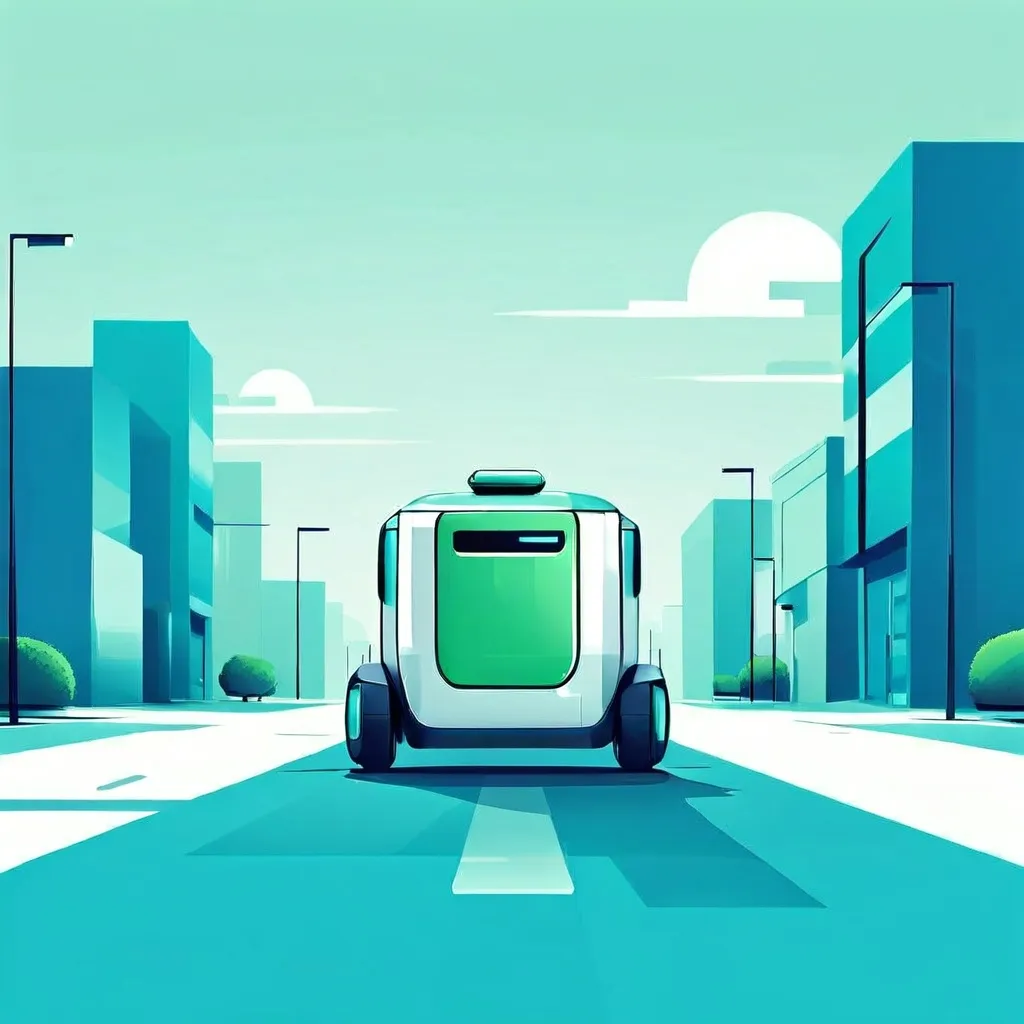
As autonomous delivery robots become more common in Swedish urban areas, it's essential for learner drivers to understand their presence and the evolving regulations. This article provides insight into current research and potential rules governing these new road users, preparing you for diverse traffic situations and enhancing your theoretical knowledge.
Article content overview
The landscape of urban mobility is rapidly evolving, and Sweden is at the forefront of integrating new technologies onto its roads and sidewalks. As a learner driver preparing for your Swedish theory exam, it is increasingly important to be aware of emerging actors in traffic, such as autonomous delivery robots. These small, self-driving machines are no longer confined to science fiction; they are becoming a reality in Swedish cities, presenting new challenges and considerations for road safety and traffic flow. Understanding their presence, potential regulations, and how they interact with human road users will enhance your preparedness for diverse traffic scenarios and contribute to your overall knowledge of Swedish traffic rules.
Sweden, through initiatives like the Drive Sweden program, is actively researching and piloting the use of autonomous delivery robots in various urban environments. Institutions like VTI (Statens väg- och transportforskningsinstitut) are conducting studies to observe and analyze these robots in real-world settings. This research is crucial for developing the necessary policy and regulatory frameworks that will govern these new forms of transport, ensuring they integrate safely and efficiently into our existing infrastructure. For learner drivers, this means familiarizing yourself with the concepts behind autonomous mobility and how these systems might impact your driving experience in the near future.
Autonomous delivery robots, often small, wheeled devices designed to transport goods over short distances, are being tested and deployed in several Swedish cities. These robots aim to provide efficient last-mile delivery services, potentially reducing traffic congestion, lowering emissions, and offering new convenience to consumers. Projects are observing their behaviour on sidewalks, in pedestrian zones, and even on quieter street sections, where they interact with pedestrians, cyclists, and potentially other vehicles. The goal is to understand how these robots navigate complex urban environments, their adherence to traffic norms, and the public's reaction to them.
Early observations from pilot projects, such as those in Stockholm, indicate that public reception has been largely positive. Most interactions have been smooth, with occasional minor disruptions noted, primarily related to loading and unloading activities in congested areas. However, the absence of widespread complaints does not negate the need for a structured regulatory approach. As these robots become more numerous, their impact on pedestrian flow, accessibility, and overall traffic dynamics will become more significant, necessitating clear guidelines for their operation.
The legal classification of autonomous delivery robots in Sweden is an evolving area. Currently, some of these robots might fall under existing categories such as 'motorredskap klass 2' (motorized equipment class 2). This classification, however, is not perfectly suited, as it typically applies to machinery like construction equipment or large ride-on mowers. This highlights a gap in existing legislation that needs to be addressed to accommodate the unique nature and operational context of autonomous delivery robots, especially when they operate in close proximity to pedestrians and other vulnerable road users.
Research initiatives are actively exploring more appropriate regulatory frameworks. The aim is to develop policies that cover not only the operation of these robots but also aspects like parking, speed limits, and interaction protocols. This forward-thinking approach is essential for ensuring that these new technological actors can be integrated responsibly into the Swedish transport system. For your theory exam, understanding this emerging regulatory landscape is important, as it signifies a broadening of what constitutes 'traffic' and 'road users' in Sweden.
Safety is paramount when introducing any new technology into public spaces. For autonomous delivery robots, ensuring they operate safely alongside pedestrians, cyclists, and drivers is a primary concern. Researchers are studying how these robots detect and respond to obstacles, how they communicate their intentions to humans, and what safety features are necessary to prevent accidents. This includes understanding their behaviour in various weather conditions and at different times of the day, especially during periods of low visibility or high traffic density.
The interaction between humans and robots is a key focus. How do pedestrians perceive these robots? How do they react when a robot needs to cross a pedestrian path or a cycle lane? The integration of these robots into existing traffic flows requires careful consideration of human behaviour and the potential for misunderstanding. For learner drivers, this means developing an awareness of these new elements in the traffic environment and understanding that they, like all road users, are expected to act in a manner that ensures safety for themselves and others.
Beyond individual robot operations, there are broader research projects exploring how autonomous robots can be integrated into a larger, more sustainable transport ecosystem. The Helsingbotica project, for instance, investigates the potential of combining autonomous delivery robots with larger vehicles, such as smaller trucks. This hybrid model aims to optimize logistics by using trucks for longer hauls to a local hub, from which robots can then handle the final delivery to individual customers.
This approach offers significant advantages, including reduced energy consumption, lower emissions, and potentially more cost-effective delivery services. It represents a vision for the future of urban logistics, where different modes of transport work in synergy. For the learner driver, this concept underscores how delivery and transport chains are evolving, potentially leading to changes in traffic patterns and the types of vehicles encountered on Swedish roads. Understanding these broader trends in mobility prepares you for a more dynamic and technologically advanced driving future.
While autonomous delivery robots are a relatively new phenomenon, their integration into Swedish society means they are a topic of increasing relevance, even for a driving theory exam. While you might not be tested on the specific technical workings of these robots, you can expect questions that assess your awareness of new road users and your ability to navigate diverse and evolving traffic situations. Your understanding of fundamental traffic rules, priority, and safe behaviour remains the core of the exam, but applying these principles in the context of these new technologies is becoming more important.
Questions might probe your understanding of how to react to robots on sidewalks, their potential presence in pedestrian zones, or how to safely manoeuvre around them. The general principle of being attentive and considerate to all road users, including pedestrians and new forms of mobility, will be central. Familiarity with the concept of autonomous vehicles and their integration into urban planning is therefore beneficial for a comprehensive understanding of Swedish traffic law and practice.
When encountering autonomous delivery robots or any new type of road user, always apply the general principle of caution and consideration. Your theory exam will emphasize your ability to anticipate potential hazards and act responsibly in all traffic situations.
The Swedish authorities, including Transportstyrelsen and Trafikverket, are committed to ensuring road safety as technology advances. The ongoing research into autonomous delivery robots is part of a larger effort to adapt traffic rules and infrastructure to new mobility solutions. By staying informed about these developments, you are not only preparing for your current theory exam but also equipping yourself with the knowledge needed to be a safe and responsible driver in the future.
As autonomous delivery robots become more common, they will undoubtedly influence the way we use our roads and sidewalks. Your ability to adapt to these changes and to integrate this new knowledge into your understanding of traffic rules will be a key aspect of your journey towards obtaining your Swedish driving licence.
Article content overview
Explore related topics, search based questions, and concepts that learners often look up when studying Swedish Autonomous Robot Rules. These themes reflect real search intent and help you understand how this topic connects to wider driving theory knowledge in Sweden.
Find clear and practical answers to common questions learners often have about Swedish Autonomous Robot Rules. This section helps explain difficult points, remove confusion, and reinforce the key driving theory concepts that matter for learners in Sweden.
Autonomous delivery robots are small, self-driving machines designed to transport goods on public roads and sidewalks, becoming increasingly present in Swedish urban environments.
Currently, their classification can be ambiguous, sometimes falling under categories like 'motorredskap klass 2', a designation not ideally suited for sidewalk navigation, highlighting the need for specific regulations.
Understanding how to safely interact with and anticipate the movements of these new road users is vital for safe driving and can be a component of future theory exams or practical driving scenarios.
The Swedish National Road and Transport Research Institute (VTI) is involved in research projects analyzing robot-traffic interaction and developing policy recommendations for their integration into the transport system.
Continue your learning journey by exploring more detailed articles and guides. Clarify specific traffic rules, understand complex road signs, or review safe driving practices. Our extensive content library supports your Swedish driving license theory preparation.