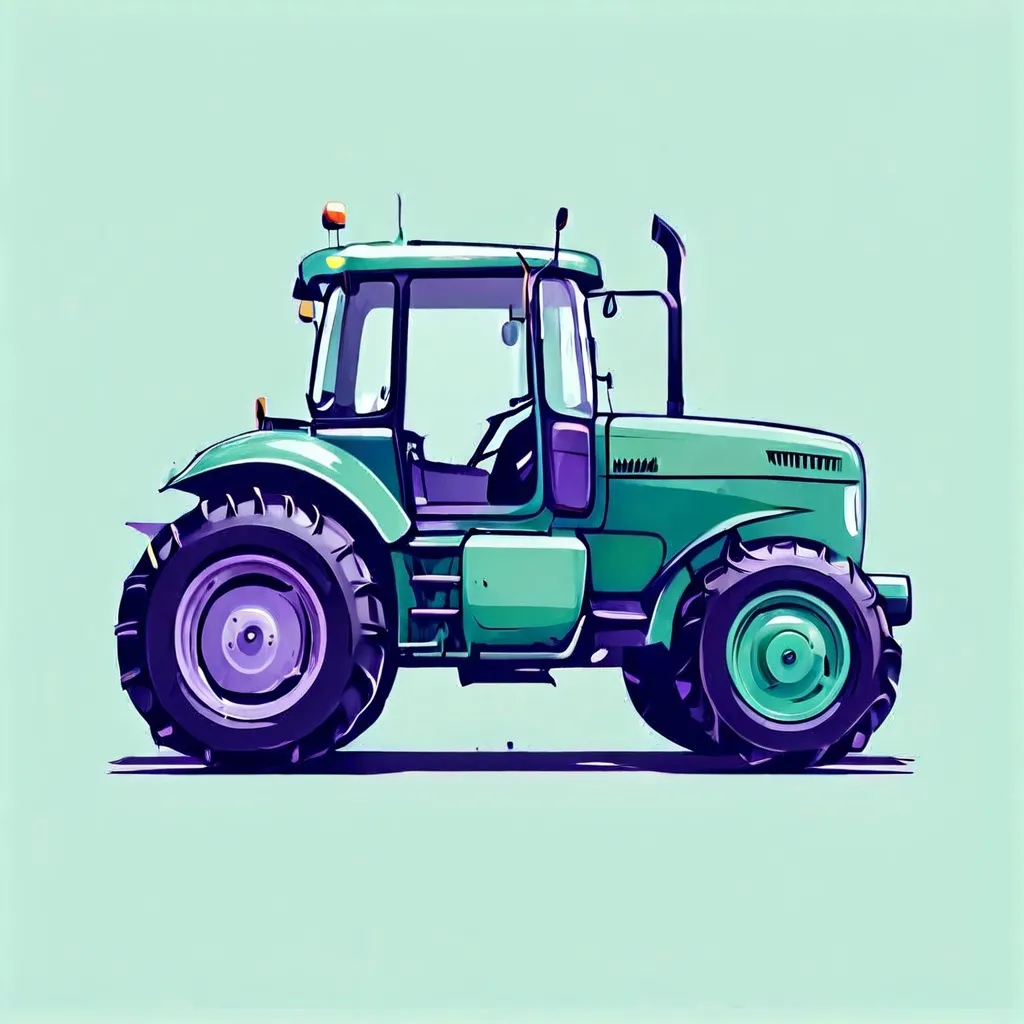
Learn the specific traffic regulations, road signs, and safe driving behaviours required for operating a tractor on Swedish roads with a T-kort. This guide clarifies restrictions, speed limits, and the nuances of mixed traffic to ensure you are well-prepared for both safe operation and your Trafikverket theory test. We focus on the unique challenges and responsibilities of tractor driving.
Article content overview
Operating a tractor on public roads in Sweden requires a specific understanding beyond that of a standard car license. The Swedish tractor licence, colloquially known as the "T-kort," permits the operation of agricultural machinery and other slow-moving vehicles. However, its usage comes with distinct responsibilities, rules, and road signage interpretations that differ significantly from everyday car driving. This guide is designed to equip you with the essential knowledge for safe tractor operation, to help you navigate Swedish traffic law, and to prepare you thoroughly for the Trafikverket theory test. Understanding the nuances of T-kort driving is not just about passing an exam; it's about ensuring the safety of yourself, your vehicle, and all other road users in Sweden's diverse traffic environments.
The T-kort, officially a Category F driving licence, is specifically for operating tractors and certain other slow-moving vehicles. Unlike a regular B-licence (car), the T-kort focuses on the unique challenges and requirements of driving agricultural and forestry machinery on public roads. It's crucial to grasp that while tractors may seem straightforward, their size, speed, and handling characteristics demand a different approach to driving and a heightened awareness of surrounding traffic, especially in mixed-traffic situations. The Trafikverket, Sweden's Transport Agency, mandates specific knowledge for obtaining this licence, focusing on areas often overlooked by those accustomed only to faster vehicles.
The T-kort allows you to drive tractors, but its permissions extend to other vehicles as well, provided you meet certain criteria. For instance, with a T-kort, you can operate vehicles classified as tractors, motorredskap class I and II, and certain mopeds. However, it's vital to understand the limitations. The T-kort does not grant permission for vehicles that exceed certain weight or speed limits, and it's essential to consult the official regulations for precise details. The primary focus is on agricultural and forestry operations, meaning that operating these vehicles in urban settings might have additional regulations or restrictions.
Driving a tractor on Swedish roads involves adhering to a specific set of traffic rules designed to ensure safety. One of the most significant differences from car driving is the considerably lower maximum speed. Tractors are typically slow-moving vehicles, and Swedish law reflects this reality to prevent accidents and facilitate smoother traffic flow. You must always be aware of the speed limits applicable to tractors, which are often significantly lower than those for other vehicles on the same road.
Tractors are generally restricted to a maximum speed of 40 km/h on public roads in Sweden. This speed limit is crucial for maintaining safety, especially when sharing the road with faster-moving vehicles. It is imperative to be aware of this fundamental rule, as exceeding it is a serious violation and poses a significant risk to yourself and others.
Furthermore, tractors have unique dimensions and maneuverability characteristics that necessitate specific rules. Their width and length, especially when towing trailers or implements, can impact other road users. You must ensure you are aware of your vehicle's total width and length and how it affects your position on the road, particularly when overtaking or being overtaken. Swedish traffic regulations also address how tractors should behave in different traffic situations, including intersections and roundabouts, where their slower speed and turning radius may require special consideration.
When driving a tractor, maintaining a safe distance is paramount. Due to their braking capabilities and susceptibility to the road conditions, a greater following distance than typically required for cars is essential. This buffer allows ample time for the tractor to brake safely and provides other drivers with a clear indication of your intentions. It is also important to consider the conditions under which you are driving; for instance, wet or icy roads will significantly increase braking distances, demanding even more caution.
Navigating Swedish roads with a tractor involves interpreting a range of road signs, some of which have specific implications for slow-moving vehicles. While many signs are universal, others are particularly relevant to understanding restrictions, speed limits, and priority rules when operating machinery. Familiarity with these signs is a critical component of the T-kort theory test.
One of the most important sign categories for tractor drivers relates to speed restrictions. Beyond the general 40 km/h limit for tractors, you may encounter signs indicating lower speed limits in specific areas, such as construction zones, areas with poor visibility, or proximity to schools and residential areas.
Other signs to be particularly aware of are those indicating restrictions on vehicle types or dimensions. While tractors are generally permitted on most roads, certain roads or road sections might have weight or width restrictions that could exclude your tractor and any attached equipment.
Signs related to priority and general traffic flow are also essential. Understanding how to interpret signs that dictate priority at intersections or in traffic calming zones is crucial for safe interaction with other road users. For example, understanding signs that indicate "Priority Road" or "Yield" is just as important for a tractor driver as it is for any other vehicle.
In agricultural or rural settings, you might also encounter signs related to agricultural activities or specific hazards, such as livestock crossings. Always be alert to these, as they signal potential unexpected situations.
Beyond understanding the rules and signs, safe tractor driving in Sweden hinges on adopting specific behaviours and practical habits. Tractors are large, heavy, and relatively slow, meaning they have a significant impact on the surrounding traffic. Your responsibility extends to minimising disruption and ensuring the safety of others.
One of the most critical aspects of safe tractor driving is visibility. Tractors are often less visible than cars, especially in poor weather conditions or at dusk. Ensure all your lights are functional and clean: headlights, taillights, brake lights, and indicators. If you are towing a trailer or using wide implements, ensure these are also properly illuminated and marked. Consider using a flashing beacon (varningslykta) if legally permitted and appropriate for the conditions, especially when on busy roads or in low-light situations.
Always ensure your tractor's lights are clean and fully operational before setting off. This includes headlights, taillights, brake lights, indicators, and any additional warning lights.
Manoeuvring with a tractor, particularly when turning or reversing, requires extra caution. Tractors have a larger turning radius than cars, and when towing a trailer, this becomes even more pronounced. Always plan your turns well in advance, indicating your intentions clearly and early. When reversing, if possible, have a spotter to guide you, especially in tight spaces or near other traffic. Remember that the trailer will cut across the path of the tractor, so be mindful of this "off-tracking" when turning.
Be aware of other road users' reactions to your presence. Drivers in cars may become impatient with slow-moving vehicles. While it is your right to use the road, do so responsibly. If safe to do so, pull over at designated lay-bys or safe spots to allow faster traffic to overtake. However, do not compromise your safety or the safety of others by stopping in an unsafe location to let others pass.
When encountering cyclists and motorcyclists, show extra consideration. They are more vulnerable than car occupants and can be easily endangered by spray from your vehicle or by a lack of clear space when being overtaken. Ensure you provide ample space when passing and be aware of their positioning, as they may need to swerve to avoid road hazards.
The Trafikverket theory test for the T-kort will likely include questions designed to test your understanding of the specific challenges and rules surrounding tractor operation. One common area of confusion relates to the permitted use of different road types. While tractors are permitted on most roads, they are generally not allowed on motorways (motorväg) or certain types of express roads (motortrafikled).
Remember that tractors, and often their associated trailers, are generally prohibited from motorways (motorväg) and express roads (motortrafikled) in Sweden. Always check the signage and your route to ensure you are not entering a restricted area.
Another area that frequently appears in theory tests is the correct interpretation of road markings and signage in relation to slow-moving vehicles. You need to understand how signs that indicate pedestrian crossings, cycle paths, or specific traffic calming measures apply to a tractor. For instance, a tractor's size and speed might mean it poses a greater risk at a pedestrian crossing than a car, requiring greater caution.
Questions about load securing are also common, particularly if you are operating a tractor that tows a trailer. Ensuring that any load is safely secured to prevent shifting or falling off the vehicle is a legal requirement and a critical safety measure. The theory test will assess your knowledge of appropriate methods for securing various types of loads.
Finally, be prepared for questions that test your understanding of right-of-way rules in situations where a tractor's behaviour differs from that of a car. This might include how to navigate junctions where visibility is limited due to the tractor's size, or how to correctly signal intentions when turning. Always prioritize safety and follow the most cautious interpretation of the rules when in doubt.
Successfully passing the Trafikverket theory test for your T-kort requires dedicated study. Focus on the specific areas that differentiate tractor driving from car driving, such as speed restrictions, visibility, manoeuvreing with trailers, and understanding relevant road signs and restrictions. The official study materials provided by Trafikverket are an excellent starting point, but supplementing these with dedicated practice questions is highly recommended.
When reviewing road signs, pay close attention to those that might have a direct impact on tractor operation, such as width, height, and weight restrictions, as well as signs indicating specific hazards or prohibited road types. Understand the implications of these signs not just for your tractor but also for any vehicle combination you might be operating.
Remember that the theory test assesses your ability to apply knowledge in practical scenarios. Therefore, try to visualize how the rules and signs would apply in real-world driving situations. Consider how your tractor's characteristics might affect other road users and how you can proactively manage those interactions to ensure everyone's safety.
The T-kort (Category F) is the Swedish tractor licence required for operating agricultural and forestry machinery on public roads. Key restrictions include a maximum speed of 40 km/h and prohibition from motorways and express roads. Tractor drivers must master road signs indicating dimension and weight restrictions, ensure proper lighting and visibility, and understand the challenges of maneuvering vehicle combinations. Safe driving requires greater following distances, early signalling, and extra consideration for cyclists and pedestrians. The Trafikverket theory test will assess your understanding of these specific rules, signs, and practical driving scenarios.
A short set of high-value points that capture the most important ideas from this article.
The T-kort is Category F driving licence specifically for tractors and slow-moving agricultural/forestry vehicles.
Tractors are restricted to a maximum speed of 40 km/h on public roads in Sweden.
Tractors and their trailers are generally prohibited from motorways (motorväg) and express roads (motortrafikled).
Visibility is critical: all lights must be clean and functional, and flashing beacons should be used on busy roads.
Vehicle combinations with trailers create off-tracking challenges that require advance planning for turns.
The general tractor speed limit in Sweden is 40 km/h unless a sign specifies otherwise.
Width, height, and weight restriction signs (G3, G4, G5) directly affect whether your tractor and load can proceed.
Tractors require greater following distances due to longer braking distances, especially in wet or icy conditions.
You can operate tractors, motorredskap class I and II, and certain mopeds with a T-kort.
Priority road signs (B1, B2) work the same for tractors as for other vehicles but require extra caution due to size.
Assuming tractors can use motorways or express roads - they are generally prohibited.
Not checking total width, height, or weight including trailers before entering restricted roads.
Inadequate signalling when turning or changing lanes, leading to confusion for other road users.
Failing to account for off-tracking when turning with a trailer, which can cause collisions at corners.
Underestimating braking distances, particularly in winter conditions or with heavy loads.
Article content overview
A short set of high-value points that capture the most important ideas from this article.
The T-kort is Category F driving licence specifically for tractors and slow-moving agricultural/forestry vehicles.
Tractors are restricted to a maximum speed of 40 km/h on public roads in Sweden.
Tractors and their trailers are generally prohibited from motorways (motorväg) and express roads (motortrafikled).
Visibility is critical: all lights must be clean and functional, and flashing beacons should be used on busy roads.
Vehicle combinations with trailers create off-tracking challenges that require advance planning for turns.
The general tractor speed limit in Sweden is 40 km/h unless a sign specifies otherwise.
Width, height, and weight restriction signs (G3, G4, G5) directly affect whether your tractor and load can proceed.
Tractors require greater following distances due to longer braking distances, especially in wet or icy conditions.
You can operate tractors, motorredskap class I and II, and certain mopeds with a T-kort.
Priority road signs (B1, B2) work the same for tractors as for other vehicles but require extra caution due to size.
Assuming tractors can use motorways or express roads - they are generally prohibited.
Not checking total width, height, or weight including trailers before entering restricted roads.
Inadequate signalling when turning or changing lanes, leading to confusion for other road users.
Failing to account for off-tracking when turning with a trailer, which can cause collisions at corners.
Underestimating braking distances, particularly in winter conditions or with heavy loads.
Explore related topics, search based questions, and concepts that learners often look up when studying Swedish T-kort Guide. These themes reflect real search intent and help you understand how this topic connects to wider driving theory knowledge in Sweden.
Find clear and practical answers to common questions learners often have about Swedish T-kort Guide. This section helps explain difficult points, remove confusion, and reinforce the key driving theory concepts that matter for learners in Sweden.
A T-kort, or tractor licence, is a Swedish licence category that permits individuals to drive tractors and certain other slow-moving vehicles on public roads. It requires passing a theory test administered by Trafikverket.
Generally, tractors are restricted to a maximum speed of 40 km/h on public roads, though some specific regulations or vehicle types might have slightly different limits, as outlined by Trafikverket.
If you have a category B driving licence (for cars), you may already be permitted to drive a tractor. However, specific rules apply, and it's crucial to understand the T-kort requirements for clarity and compliance, especially concerning age and vehicle type.
T-kort holders should pay close attention to signs indicating weight limits, width restrictions, low-speed zones, agricultural areas, and signs that specifically prohibit certain vehicle types, as these directly impact where and how a tractor can be driven.
Tractors are significantly slower, wider, and have different braking and turning characteristics than cars. This means T-kort holders must be more aware of traffic flow, communicate intentions clearly, and understand their vehicle's limitations to ensure safety in mixed traffic environments.
Continue your learning journey by exploring more detailed articles and guides. Clarify specific traffic rules, understand complex road signs, or review safe driving practices. Our extensive content library supports your Swedish driving license theory preparation.