Navigate Swedish roads with confidence by understanding the clear hierarchy of traffic commands. This article breaks down how police officers' signals, traffic lights, road signs, and established rules are prioritized, ensuring you always know which instruction to follow. Essential knowledge for passing your Swedish driving theory test and driving safely.
Article content overview
Understanding the nuances of traffic management in Sweden is paramount for anyone preparing for the driving theory examination and for ensuring safety on the roads. When faced with multiple traffic instructions, knowing which takes precedence is not just a matter of compliance but of critical importance for preventing accidents. This article delves into the hierarchy of traffic commands in Sweden, explaining how signals from police officers, traffic signals, road signs, and established traffic rules interact, and crucially, which one always comes first. This knowledge is essential for passing your Swedish driving theory test and for confident, safe driving in all conditions.
In the complex environment of Swedish traffic, certain individuals are empowered to direct traffic, overriding standard rules when necessary. This authority primarily rests with police officers, but also extends to other authorized personnel such as traffic inspectors (bilinspektör), road transport leaders (vägtransportledare), and traffic sobriety controllers (trafiknykterhetskontrollant). These individuals are appointed by an authority and their role is to ensure smooth and safe traffic flow, especially during situations like traffic control, accident management, or special events.
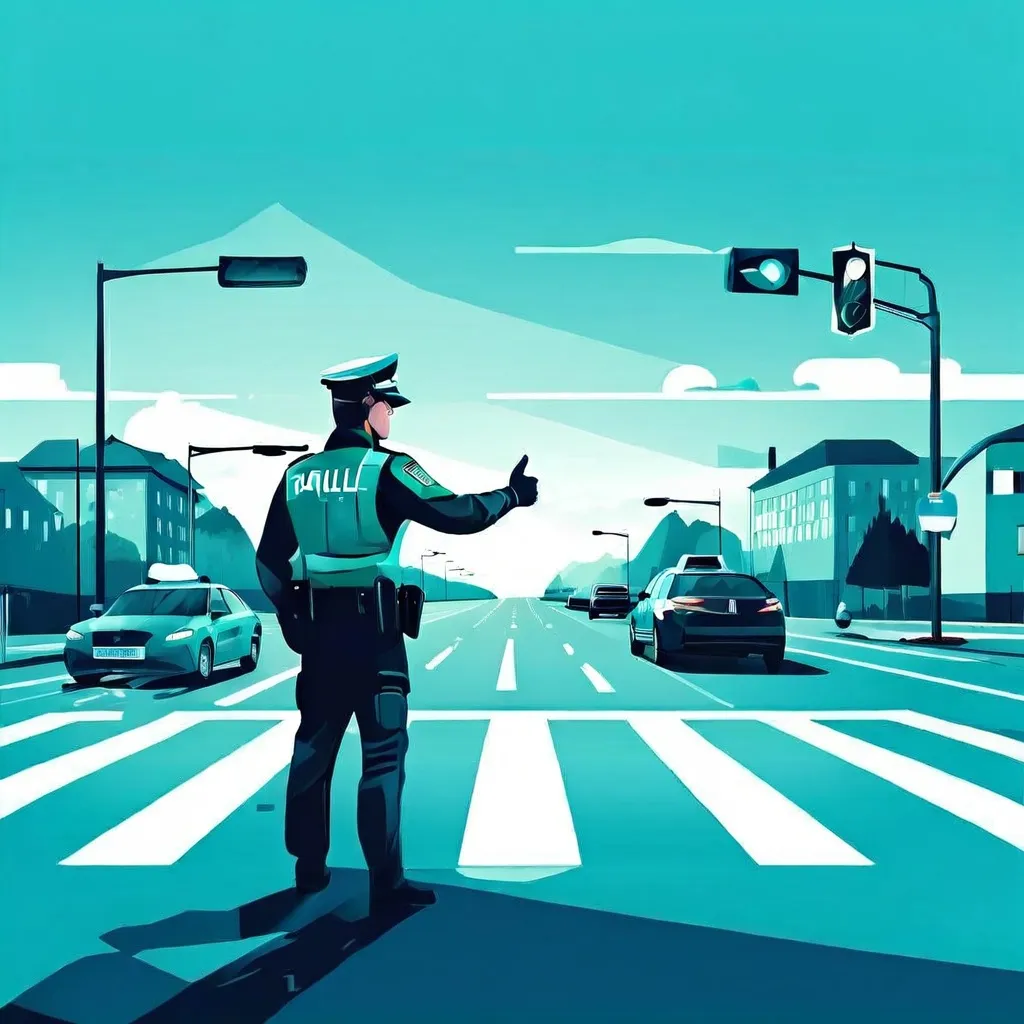
When these authorized individuals give signals, their instructions are considered the highest form of traffic direction. This means that any signal, gesture, or command given by them must be followed immediately, even if it contradicts a traffic light, a road sign, or general traffic rules. For instance, if a police officer directs you to proceed through an intersection where the traffic signal is red, you must obey the officer's command to move forward. Similarly, if a police officer signals you to stop at an intersection that normally grants you priority, you must stop.
The signals given can vary, but they are designed to be clearly understood. Common examples include hand gestures for stopping or proceeding, or the use of a directing baton or light. For instance, the signal 'P4 - Kör fram' is a clear instruction from an authorized person indicating that traffic in the direction of the signal may proceed. Understanding these signals and the authority behind them is a critical component of Swedish traffic law and a key area for theory exam preparation.
Following the authority of police signals, traffic signals, including traffic lights and other light signals, play a crucial role in regulating traffic flow at intersections and other key points. These signals are designed to manage competing traffic streams and provide clear instructions to drivers, cyclists, and pedestrians. A red light universally signifies stop, a green light indicates proceed if safe, and a yellow or amber light warns that the signal is about to change.
It is important to note that traffic signals also have a specific place in the hierarchy of traffic instructions. While they are subordinate to signals from authorized personnel, they hold a higher authority than road signs and general traffic rules. For example, a steady red light at an intersection must be obeyed, even if there is a sign indicating a priority road, because the traffic signal's instruction overrides the sign. This distinction is vital for understanding complex traffic situations and for answering exam questions correctly.
In situations where a traffic signal provides an instruction through a steady light, this instruction generally takes precedence over road signs that might indicate stop (stopplikt) or yield (väjningsplikt). This ensures that the dynamic management of traffic flow at busy junctions is handled effectively. However, specific instructions for cyclists, moped class II drivers, or pedestrians might have their own priority over general traffic signals, underscoring the need for careful observation in mixed traffic environments.
Road signs are a fundamental part of the Swedish traffic system, providing essential information and regulations to road users. These signs are placed strategically to warn of hazards, regulate speed, indicate priority, and guide drivers. While crucial for everyday driving and for passing the theory test, their authority is positioned below both police signals and traffic signals.
There are numerous categories of road signs in Sweden, each serving a specific purpose. For instance, warning signs alert drivers to potential dangers ahead, regulatory signs impose restrictions or obligations (like speed limits or prohibitions), and information signs provide guidance. A common example is a priority road sign, which indicates that you have priority at upcoming intersections. However, if a traffic light is present and showing a red signal, the traffic light's instruction to stop would override the priority road sign.
Understanding the context in which road signs are displayed is also important. Some signs are permanent, while others are temporary, often indicating work zones or special conditions. In cases where a temporary sign contradicts a permanent one, the temporary sign typically takes precedence as it addresses the immediate, prevailing conditions. This adaptive nature of road signage ensures that drivers can adjust their behaviour to the current road environment.
At the base of the hierarchy lie the general traffic rules. These are the foundational principles and regulations that govern how all road users should behave. They cover a wide range of aspects, including the basic duty of care, rules for overtaking, lane discipline, and the fundamental principles of priority at intersections. These rules are the default and apply when no other specific instruction from a police officer, traffic signal, or road sign is present.
Even when specific signals or signs are present, the underlying principles of traffic rules remain relevant. For example, while a green light permits you to proceed, the rule about exercising caution and ensuring the path is clear still applies. Similarly, even if you have priority on a road, you must still exercise due care and avoid causing danger to other road users. The concept of "iadta omsorg och varsamhet" (exercising care and caution) is a cornerstone of Swedish driving culture and a vital principle tested in the theory exam.
Furthermore, Swedish traffic law emphasizes the need to show particular consideration for vulnerable road users such as children, the elderly, and individuals with disabilities. This extends to respecting emergency vehicles, rescue convoys, military convoys, funeral processions, and organized groups of children with supervision, all of which have a right of way and must not be impeded. Adherence to these fundamental rules is essential for maintaining a safe and harmonious traffic environment.
The Swedish driving theory exam frequently tests a candidate's understanding of the hierarchy of traffic instructions. Questions are often designed to present scenarios where multiple directives might appear to conflict, requiring the applicant to identify which instruction must be followed. For instance, you might be asked what to do when a police officer is directing traffic to proceed, but the traffic light is red. In such cases, the correct answer always prioritizes the police officer's signal.
Mastering this hierarchy ensures you can react appropriately and safely in real-world driving situations and confidently answer exam questions. Remember the order: Police signals come first, followed by traffic signals, then road signs, and finally, general traffic rules. Always be observant and ready to adjust your actions based on the most authoritative instruction currently in effect.
In Swedish traffic, the hierarchy of authority follows a clear order: police signals are supreme, followed by traffic signals, then road signs, and finally general traffic rules. When a police officer or authorized personnel directs traffic, their signals must be obeyed even if they contradict traffic lights or signs. Traffic signals take precedence over road signs, and temporary signs override permanent ones. Understanding this priority system is essential for both safe driving and passing the Swedish theory exam, where questions frequently present conflicting instructions requiring correct prioritization.
A short set of high-value points that capture the most important ideas from this article.
Police signals take absolute precedence over traffic lights, road signs, and general traffic rules
Authorized personnel include police officers, bilinspektör, vägtransportledare, and trafiknykterhetskontrollant
Traffic signals override road signs when they conflict (e.g., red light beats priority road sign)
Road signs override general traffic rules when they directly address a situation
Emergency vehicles and organized groups have protected right of way and must not be impeded
Police signal P4 (Kör fram) means proceed; P1 (Stopp) means stop
Traffic signal hierarchy: Police > Traffic lights > Road signs > General traffic rules
Temporary road signs override permanent signs when they conflict
The concept of 'iakttaga omsorg och varsamhet' (care and caution) always applies, even with green lights
Bilinspektör can issue driving bans for defective vehicles
Assuming a green traffic light permits proceeding when a police officer is signaling stop
Believing a priority road sign overrides a red traffic light
Ignoring temporary road signs in favor of permanent ones
Forgetting that cyclists and pedestrians may have separate priority rules at signals
Failing to exercise caution even when following valid signals or right-of-way rules
Article content overview
A short set of high-value points that capture the most important ideas from this article.
Police signals take absolute precedence over traffic lights, road signs, and general traffic rules
Authorized personnel include police officers, bilinspektör, vägtransportledare, and trafiknykterhetskontrollant
Traffic signals override road signs when they conflict (e.g., red light beats priority road sign)
Road signs override general traffic rules when they directly address a situation
Emergency vehicles and organized groups have protected right of way and must not be impeded
Police signal P4 (Kör fram) means proceed; P1 (Stopp) means stop
Traffic signal hierarchy: Police > Traffic lights > Road signs > General traffic rules
Temporary road signs override permanent signs when they conflict
The concept of 'iakttaga omsorg och varsamhet' (care and caution) always applies, even with green lights
Bilinspektör can issue driving bans for defective vehicles
Assuming a green traffic light permits proceeding when a police officer is signaling stop
Believing a priority road sign overrides a red traffic light
Ignoring temporary road signs in favor of permanent ones
Forgetting that cyclists and pedestrians may have separate priority rules at signals
Failing to exercise caution even when following valid signals or right-of-way rules
Explore related topics, search based questions, and concepts that learners often look up when studying Swedish Traffic Signal Priority. These themes reflect real search intent and help you understand how this topic connects to wider driving theory knowledge in Sweden.
Find clear and practical answers to common questions learners often have about Swedish Traffic Signal Priority. This section helps explain difficult points, remove confusion, and reinforce the key driving theory concepts that matter for learners in Sweden.
In Sweden, the hierarchy is: Police signals > Traffic signals > Road signs > Traffic rules. You must always follow the instruction from a police officer or other authorized personnel first.
Yes, a police officer's or authorized signal always takes precedence over traffic lights, road signs, and traffic rules. Always obey the direct instructions from law enforcement.
'P4 - Kör fram' is a police signal indicating that traffic moving in the direction the officer is facing is allowed to proceed forward.
Yes, understanding common police signals like 'Stopp' (P1-P3) and 'Kör fram' (P4) is important for the Swedish theory exam, as they represent the highest authority in traffic control.
If a road sign and a traffic signal conflict, the traffic signal usually takes precedence. However, both are subordinate to signals from police officers or authorized personnel.
Continue your learning journey by exploring more detailed articles and guides. Clarify specific traffic rules, understand complex road signs, or review safe driving practices. Our extensive content library supports your Swedish driving license theory preparation.