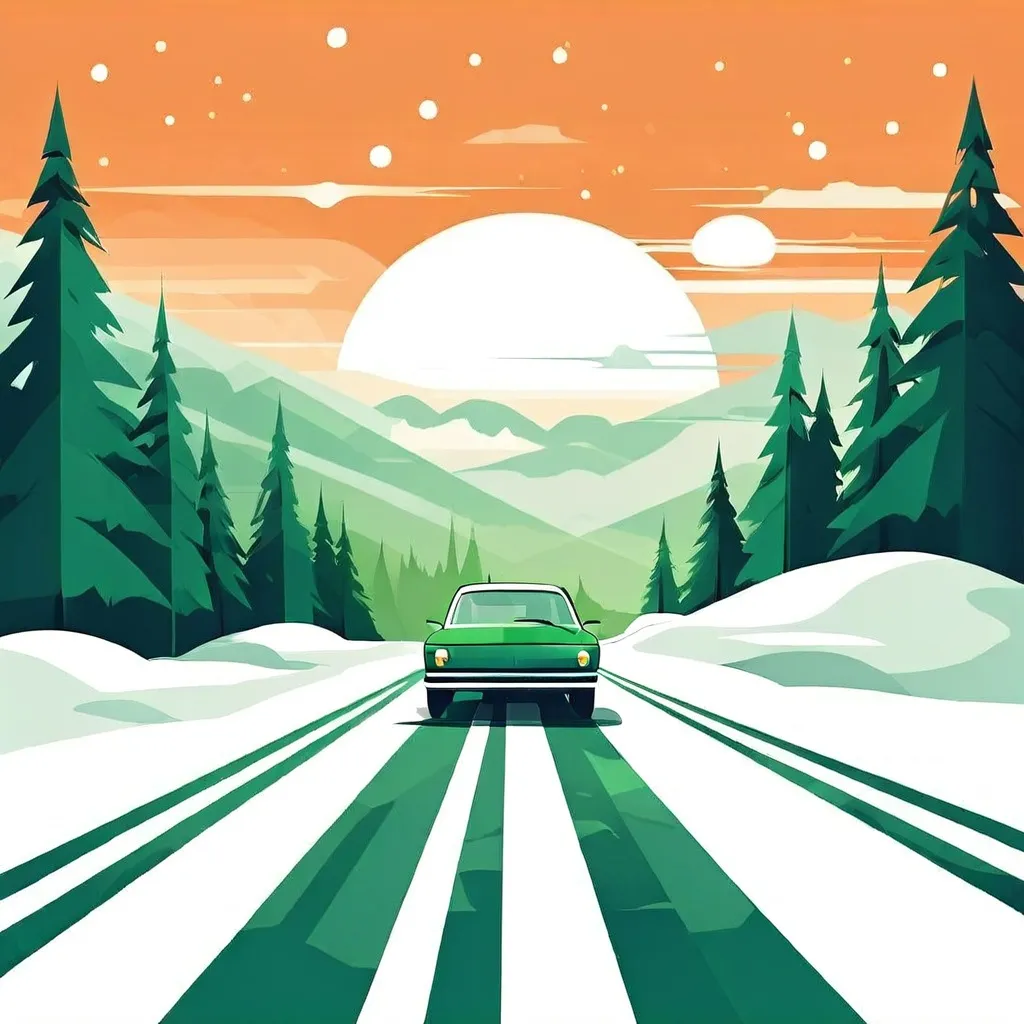
Prepare effectively for the unique challenges of driving in Sweden during winter months. This article covers vital preparedness steps, safe driving techniques, and crucial advice directly from Trafikverket, ensuring you are ready for the demands of the Swedish theory test and wintry road conditions. Learn how to adapt your driving to snow, ice, and reduced visibility.
Article content overview
Driving in Sweden during the winter months presents unique challenges that require careful preparation and a thorough understanding of official guidelines. The Swedish Transport Administration, Trafikverket, provides extensive advice to ensure road safety during periods of snow, ice, and reduced visibility. Mastering these principles is not only crucial for everyday safety but is also a fundamental requirement for passing the Swedish driving license theory test. This article delves into the essential preparedness steps and safe driving techniques recommended by Trafikverket, equipping you to confidently handle wintry road conditions.
Sweden's climate means that snow and ice are common occurrences on its roads for a significant portion of the year. These conditions drastically alter vehicle handling, braking distances, and overall road visibility. Trafikverket categorizes roads based on their importance and traffic volume to prioritize snow clearance and de-icing efforts, with the most heavily trafficked and critical routes receiving first attention. Being aware of the potential for challenging conditions, such as drifting snow, slippery surfaces, and significant reductions in visibility due to snow spray, is the first step in safe winter driving.
It is paramount to always check the latest weather forecasts and road conditions before embarking on any journey during winter. Resources like SMHI (Swedish Meteorological and Hydrological Institute) and Trafikverket's own digital maps and information services are invaluable for this purpose.
Before the first snowflake falls, ensuring your vehicle is adequately prepared for winter conditions is non-negotiable. This preparedness extends beyond simply having functioning headlights; it involves a comprehensive check of critical components and the inclusion of specific winter safety equipment. Trafikverket strongly emphasizes the importance of suitable winter tires, which are legally mandated during certain periods and essential for maintaining grip on snow and ice.
In Sweden, the use of winter tires is regulated. While specific dates can vary slightly, generally from December 1st to March 31st, it is mandatory to use winter tires if road conditions warrant it due to snow, ice, or frost. These tires are designed with special rubber compounds that remain flexible at low temperatures and feature deeper treads with more biting edges to enhance traction on slippery surfaces. It's crucial to understand that "winter tires" can refer to studded tires or non-studded winter tires (often called "friktionsdäck" or friction tires). Both have their advantages and disadvantages, but the key is that they provide significantly better performance than summer tires in wintry conditions.
Beyond tires, a well-equipped vehicle can make a substantial difference if you encounter trouble. Trafikverket advises drivers to carry a basic winter emergency kit. This kit should include items that can help you stay safe and comfortable if you become stranded or encounter significant delays.
Adapting your driving style is as critical as vehicle preparation. The physics of driving change dramatically on slippery surfaces, and understanding these changes is key to avoiding accidents. Trafikverket's guidance focuses on a few core principles: reducing speed, increasing following distance, and being exceptionally smooth with all vehicle inputs.
The most fundamental principle of winter driving is to reduce your speed significantly below the posted speed limit. Even with winter tires, braking distances on snow and ice are considerably longer than on dry asphalt. It is imperative to drive at a speed that allows you to stop safely within the distance you can see clearly ahead, taking into account the reduced grip of the road surface. Furthermore, maintaining a much larger following distance than you would in normal conditions is crucial. This extra space provides a buffer zone that allows you to react and brake gradually if the vehicle in front slows down unexpectedly or loses traction.
Sudden movements of the steering wheel, accelerator, or brakes can easily cause a loss of traction on slippery surfaces. Therefore, all your actions should be smooth and deliberate. When steering, make gentle turns. When accelerating, apply the throttle gradually. When braking, apply the brakes softly and early, allowing the anti-lock braking system (ABS) to work effectively if equipped. Trafikverket strongly advises against undertaking overtaking maneuvers in winter conditions, especially when visibility is poor or road surfaces are compromised. Overtaking a snowplow, particularly a tandem plow ("tandemplog"), is extremely dangerous and can be life-threatening due to reduced visibility and the potential for being pushed by the snow spray.
Never attempt to overtake a snowplow. These vehicles are large, can create significant snow spray reducing visibility to zero, and may suddenly change direction or speed. Always give them a wide berth and allow them to clear the road ahead.
Reduced Visibility: Snow, fog, and darkness combine to create hazardous driving conditions. Always ensure your headlights, taillights, and fog lights are clean and functional. Use your fog lights when visibility is severely limited, but remember to switch them off when visibility improves to avoid dazzling other drivers. Driving at a speed that allows you to stop within the visible distance is paramount.
Drifting Snow: Strong winds can cause snowdrifts to accumulate on roads, even those that have been plowed. Be prepared for sudden changes in road surface and potential obstructions. If you encounter a snowdrift, it is generally safer to maintain a steady, slow speed and avoid stopping if possible, as stopping can lead to getting stuck.
Ice Patches and Black Ice: Patches of ice, particularly "black ice" (a thin, transparent layer of ice), are incredibly dangerous as they offer almost no grip. These often form in shaded areas, on bridges, and near water bodies. If you suspect you are driving on black ice, avoid sudden braking or steering. Try to maintain a steady speed and let the vehicle drift through the icy patch if necessary.
Despite all precautions, it is possible to become stuck or stranded during a snowstorm. In such situations, staying calm and following a set procedure is vital for your safety. Trafikverket’s advice emphasizes remaining in your vehicle for warmth and visibility, and using your mobile phone to seek assistance if possible.
If you must stop due to an emergency or becoming stuck, try to pull over as far to the right-hand side of the road as safely possible. This position allows snowplows and emergency vehicles to pass. If you are in a traffic jam or experience an acute obstruction, contact Trafikverket's customer service or traffic center. This helps them build a situational picture and respond more effectively.
Trafikverket and its contractors work tirelessly to maintain road safety during winter, deploying nearly 200 vehicles for plowing and de-icing in areas like Stockholm. However, this effort is a partnership. While authorities work to keep roads clear and safe, it is the individual driver’s responsibility to stay informed, prepare their vehicle, adapt their driving, and exercise caution. Understanding the different classes of roads and their prioritization for snow removal can help you anticipate potential delays on less critical routes.
Remember that your driving behaviour significantly impacts overall road safety. By driving defensively, being prepared, and following Trafikverket’s advice, you contribute to safer winter roads for everyone.
The Swedish driving license theory test will undoubtedly include questions related to winter driving. These questions are designed to assess your understanding of Swedish traffic rules, road signage, and safe driving practices, particularly in challenging conditions. Expect scenarios that test your knowledge of winter tire regulations, appropriate speeds, following distances, and what to do in adverse weather.
Swedish winter driving requires thorough vehicle preparation and adapted driving techniques to handle snow, ice, and reduced visibility. Key preparations include equipping legally mandated winter tires and carrying a winter emergency kit with items like a reflective vest, snow shovel, and jump leads. Safe driving demands significantly reduced speeds, increased following distances, and smooth vehicle inputs at all times, while overtaking snowplows must be strictly avoided. Trafikverket prioritizes road clearance by traffic importance, and drivers share responsibility for staying informed, prepared, and exercising caution to contribute to overall winter road safety.
A short set of high-value points that capture the most important ideas from this article.
Winter tires (vinterdäck) are legally mandatory from approximately December 1st to March 31st when road conditions warrant it due to snow, ice, or frost.
Reduce your speed significantly below posted limits on winter roads and always maintain a much larger following distance than in normal conditions.
All vehicle inputs—steering, acceleration, and braking—must be smooth and deliberate to avoid losing traction on slippery surfaces.
Never attempt to overtake a snowplow, particularly a tandem plow (tandemplog), due to severe visibility reduction from snow spray and unpredictable movement.
If stranded, stay in your vehicle for warmth and visibility, pull over as far right as safely possible, and contact Trafikverket's traffic center.
Winter tires include both studded tires and non-studded friction tires (friktionsdäck)—both provide significantly better grip than summer tires in winter conditions.
Trafikverket prioritizes snow clearance by road importance and traffic volume, with critical routes receiving attention first; secondary roads may have delayed clearance.
Black ice forms most commonly in shaded areas, on bridges, and near water bodies—approach these locations with extra caution.
Carry a winter emergency kit including reflective vest (reflexväst), snow shovel (snöskyffel), tow rope (bogserlina), and jump leads (startkablar).
Drifting snow (drivsnö) can accumulate rapidly on roads; if you encounter a snowdrift, maintain steady slow speed and avoid stopping if possible.
Assuming that having winter tires means you can drive at the posted speed limit—braking distances remain significantly longer on snow and ice.
Believing all roads are equally cleared and maintained—Trafikverket prioritizes major routes, leaving secondary roads potentially more hazardous.
Applying brakes or steering suddenly when encountering slippery patches, which can cause immediate loss of traction.
Attempting to overtake slower vehicles in poor visibility or on compromised road surfaces during winter conditions.
Exiting the vehicle unnecessarily during a snowstorm instead of staying inside with the engine running for warmth and visibility.
Article content overview
A short set of high-value points that capture the most important ideas from this article.
Winter tires (vinterdäck) are legally mandatory from approximately December 1st to March 31st when road conditions warrant it due to snow, ice, or frost.
Reduce your speed significantly below posted limits on winter roads and always maintain a much larger following distance than in normal conditions.
All vehicle inputs—steering, acceleration, and braking—must be smooth and deliberate to avoid losing traction on slippery surfaces.
Never attempt to overtake a snowplow, particularly a tandem plow (tandemplog), due to severe visibility reduction from snow spray and unpredictable movement.
If stranded, stay in your vehicle for warmth and visibility, pull over as far right as safely possible, and contact Trafikverket's traffic center.
Winter tires include both studded tires and non-studded friction tires (friktionsdäck)—both provide significantly better grip than summer tires in winter conditions.
Trafikverket prioritizes snow clearance by road importance and traffic volume, with critical routes receiving attention first; secondary roads may have delayed clearance.
Black ice forms most commonly in shaded areas, on bridges, and near water bodies—approach these locations with extra caution.
Carry a winter emergency kit including reflective vest (reflexväst), snow shovel (snöskyffel), tow rope (bogserlina), and jump leads (startkablar).
Drifting snow (drivsnö) can accumulate rapidly on roads; if you encounter a snowdrift, maintain steady slow speed and avoid stopping if possible.
Assuming that having winter tires means you can drive at the posted speed limit—braking distances remain significantly longer on snow and ice.
Believing all roads are equally cleared and maintained—Trafikverket prioritizes major routes, leaving secondary roads potentially more hazardous.
Applying brakes or steering suddenly when encountering slippery patches, which can cause immediate loss of traction.
Attempting to overtake slower vehicles in poor visibility or on compromised road surfaces during winter conditions.
Exiting the vehicle unnecessarily during a snowstorm instead of staying inside with the engine running for warmth and visibility.
Explore related topics, search based questions, and concepts that learners often look up when studying Swedish Winter Driving. These themes reflect real search intent and help you understand how this topic connects to wider driving theory knowledge in Sweden.
Find clear and practical answers to common questions learners often have about Swedish Winter Driving. This section helps explain difficult points, remove confusion, and reinforce the key driving theory concepts that matter for learners in Sweden.
Trafikverket strongly advises avoiding travel if possible during heavy snow and adverse conditions. If you must drive, adapt your speed, maintain safe distances, and ensure your vehicle is properly equipped.
Essential equipment includes good winter tires, a snow shovel, jumper cables, warm clothing, a reflective vest, a blanket, and a fully charged mobile phone.
Reduced visibility, slippery surfaces (ice and snow), and increased stopping distances make it critical to reduce speed significantly to maintain control and avoid accidents. Always match your speed to the prevailing road conditions.
If you stop, pull over as far to the right of the road as possible to allow snow plows and rescue vehicles to pass unobstructed. This also helps maintain traffic flow and facilitates your own safety.
Yes, drivers are advised to avoid overtaking, especially plowing vehicles or 'tandemplogar' (tandem plows), as this is extremely dangerous due to reduced visibility and unpredictable road conditions.
Continue your learning journey by exploring more detailed articles and guides. Clarify specific traffic rules, understand complex road signs, or review safe driving practices. Our extensive content library supports your Swedish driving license theory preparation.