
This lesson focuses on the specific challenges of navigating different types of roundabouts on your motorcycle. You will learn the correct approach, lane positioning, and priority rules for both tight mini-roundabouts and complex multi-lane junctions, ensuring you stay safe on the road.

Lesson content overview
Navigating roundabouts is a fundamental skill for any rider, but mini-roundabouts and larger multi-lane roundabouts present unique challenges. For motorcycle riders, precision, advanced planning, and strict adherence to rules are paramount for safety and smooth traffic flow. This lesson, part of your Great Britain Motorcycle Theory Course, will equip you with the knowledge to confidently approach, enter, and exit these complex junctions, minimizing risk and ensuring compliance with traffic regulations.
Roundabouts are designed to keep traffic moving efficiently, but their varying sizes and layouts demand different approaches. It is crucial for motorcycle riders to distinguish between these types and apply the correct riding techniques. Misinterpreting a roundabout's design or rules can lead to dangerous situations and collisions.
Mini-roundabouts are compact circular junctions, typically found in residential areas or as traffic-calming measures. They are characterized by a very small central island, which may be a raised dome or simply painted on the road surface. Despite their reduced size, mini-roundabouts function as full roundabouts in terms of priority rules, making understanding their operation essential.
These junctions are usually marked by clear road signs indicating a mini-roundabout and often 'Give Way' signs. The compact nature requires riders to execute tighter turns and approach with a significantly reduced speed compared to larger roundabouts. Their primary purpose is to manage traffic flow at lower speeds, improving safety in areas where space is limited.
The most critical rule for mini-roundabouts is that you must give way to traffic already circulating on the roundabout. This is identical to the rule for standard roundabouts, despite the smaller physical presence of the island. Many riders incorrectly assume that due to their small size, mini-roundabouts do not require the same yielding behaviour.
Approaching a mini-roundabout requires you to slow down considerably, scan continuously for vehicles from all entry points, and be prepared to stop. You should only enter when it is safe to do so, ensuring you do not cause circulating traffic to brake or swerve. Always be alert for other road users, including cyclists and pedestrians, who may also be navigating the junction.
A frequent mistake at mini-roundabouts is underestimating the need to give way, leading to conflicts with vehicles already on the roundabout. Riders may also approach too quickly, making it difficult to execute the tight turn safely or react to sudden hazards. Loss of traction can occur if a motorcycle is leaned too aggressively at excessive speed on such a tight radius, particularly in wet conditions.
Another error is failing to anticipate the actions of other drivers, who might also misunderstand the rules or take shortcuts over the painted island. Due to their small size, mini-roundabouts offer less time and space to correct errors, making precise control and keen observation even more important for motorcycle riders.
Multi-lane roundabouts are larger junctions featuring two or more circulating lanes. These are common in urban centres or on busier roads and are designed to handle higher volumes of traffic. Navigating them safely requires meticulous lane selection before entry and strict lane discipline while circulating.
These complex junctions often incorporate extensive road markings, overhead signs, and sometimes specialized designs like spiral or continuous-flow layouts to guide traffic. The sheer number of decision points (lane choice, exit selection) makes them cognitively demanding, especially for motorcyclists who need to maintain their balance and focus on surrounding traffic.
On a standard multi-lane roundabout, your intended exit dictates which lane you should select on approach. Road markings and signs will typically guide you, with outer lanes usually for left turns or the first/second exit, and inner lanes for straight-through or right turns (later exits). It is crucial to position your motorcycle in the correct lane well in advance of the roundabout.
Once you have entered your chosen lane, you must not change lanes within the roundabout unless road markings explicitly allow it. This "no lane change" rule is fundamental to preventing collisions, as it ensures predictable vehicle paths and reduces conflict points. Riders must commit to their lane and exit from it, signaling their intentions clearly and early.
Spiral roundabouts are a specific type of multi-lane roundabout designed to simplify navigation and reduce lane changes. In this design, the lanes are arranged in a spiral path, allowing vehicles to stay in the same lane from entry to exit without needing to change lanes internally. This continuous flow design aims to reduce driver uncertainty and potential conflicts.
For motorcyclists, spiral roundabouts can be less stressful, as they largely eliminate the need for internal lane changes. The key is to select the correct entry lane based on your intended exit, following the spiraling markings. Once in the correct lane, you simply follow its path, and it will guide you naturally towards your exit. Always remain vigilant, as other drivers may not understand or adhere to the spiral design.
Mastering roundabouts involves more than just knowing the rules; it requires integrating several key principles into your riding technique. These principles enhance your safety, predictability, and control, particularly on a motorcycle, where vulnerability is higher.
Lane discipline is the bedrock of safe multi-lane roundabout navigation. It means selecting the appropriate lane before entering the roundabout and maintaining that lane throughout your journey until you exit. Incorrect lane choice can lead to dangerous maneuvers, such as cutting across lanes or being forced to take the wrong exit.
Plan Ahead: Before approaching, identify your exit and consult road signs and markings to determine the correct lane.
Position Early: Signal your intentions and move into the designated lane well in advance of the roundabout entry point.
Maintain Course: Once on the roundabout, stay in your chosen lane. Do not change lanes unless road markings or signs explicitly indicate it is permissible and safe.
Exit from Your Lane: Prepare to exit from the lane you have maintained, signaling clearly as you approach your exit.
Strict lane discipline reduces cognitive load, minimizes conflict points, and ensures predictable movements, which is vital for all road users, especially motorcyclists who can be less visible.
Road markings and signs are your primary guides for navigating roundabouts, especially multi-lane ones. They indicate lane usage, give-way points, and exit directions. Approach arrows on the road surface will direct you to the correct lane for various exits. Within the roundabout, split arrows or continuous lines define lane boundaries and permissible movements.
Ignoring these visual cues is a common cause of accidents. Riders must develop a habit of scanning ahead for signage and road markings early, allowing ample time to select the correct lane and adjust speed. Failure to obey mandatory road markings can result in legal penalties and significantly increases the risk of collision.
Adjusting your approach speed is crucial for safe roundabout navigation. You need to decelerate early and smoothly, matching your speed to the flow of circulating traffic and the geometry of the roundabout. On mini-roundabouts, this might mean a significant reduction in speed due to the tight turning circle.
For motorcyclists, controlled deceleration involves smooth application of both front and rear brakes, combined with appropriate gear selection, to maintain stability. Harsh braking, especially on a curve or wet surface, can lead to a loss of traction or control. Always aim for a speed that allows you to stop safely if necessary, or to merge seamlessly into the circulating traffic.
As a motorcycle rider, your visibility to other road users is often reduced. Therefore, proactively managing your visibility and positioning within a roundabout is vital. This includes adopting a prominent position within your chosen lane, typically slightly offset from the centre to provide a better view of potential hazards and upcoming exits.
Continuous eye-scanning is another critical technique. Look left, right, and ahead as you approach and navigate the roundabout, constantly checking for other vehicles, cyclists, and pedestrians. Avoid lingering in the blind spots of larger vehicles, especially when circulating or exiting. A well-positioned motorcycle and an attentive rider significantly reduce collision risk.
Roundabouts are shared spaces, and motorcyclists must be acutely aware of vulnerable road users such as pedestrians and cyclists. Pedestrians often cross at exits or on designated crossings nearby, and they always have priority at marked crossings. Always be prepared to stop for them.
Cyclists may share lanes, especially on larger roundabouts, or use dedicated cycle lanes that merge with traffic. Never assume a cyclist will move out of your way. On multi-lane roundabouts, avoid riding directly alongside a larger vehicle for extended periods, as you may be in their blind spot. Give cyclists and pedestrians ample space and time, demonstrating courtesy and safe riding practices.
Adherence to the Highway Code is a legal requirement for all road users in Great Britain, and roundabouts are no exception. Specific rules dictate priority, lane usage, and acceptable conduct, ensuring a standardized approach to these junctions.
The fundamental rule for all roundabouts, from the smallest mini-roundabout to the largest multi-lane junction, is that you must give way to traffic already on the roundabout. This means slowing down or stopping before the give-way line if necessary, to allow vehicles approaching from your right, or already circulating, to proceed.
Failing to give way at a roundabout is a serious moving violation and can result in points on your licence, a fine, and significantly increase the risk of a collision. Always be prepared to stop.
This rule is enforced under the Road Traffic Act 1988 and is designed to maintain continuous traffic flow while ensuring safety by establishing clear priority.
On multi-lane roundabouts, the Highway Code clearly states that riders must:
These directives are legally binding. Ignoring lane markings (e.g., using an outer lane for a right turn when an inner lane is indicated) can lead to penalties for non-compliance with road markings. Attempting an unsafe lane change within a roundabout, especially without clear indications, can be deemed careless or dangerous riding.
While there isn't always a specific speed limit signposted at every roundabout, riders must always travel at a speed that allows them to safely negotiate the junction and react to hazards. In built-up areas, the default speed limit is usually 30 mph (48 km/h), but this may need to be significantly reduced at tight mini-roundabouts or in adverse conditions.
Excessive speed at a roundabout reduces your reaction time, increases the risk of losing control, and makes it difficult to maintain proper lane discipline. Riders are legally required to drive at a speed appropriate for the road conditions, visibility, and traffic.
Even experienced riders can make mistakes at roundabouts, particularly when faced with complex layouts or adverse conditions. Understanding common violations and developing strong situational awareness are key to proactive defensive riding.
One of the most frequent violations is failing to give way at a mini-roundabout, treating it more like a crossroads. This often results from underestimating its status as a full roundabout. Another common error on multi-lane roundabouts is incorrect lane selection, such as using an outer lane for an exit that requires an inner lane, leading to conflicts or sudden, unsafe lane changes.
Choose the lane that corresponds to your intended exit well before entering a multi-lane roundabout, guided by road markings and signs.
Once inside a multi-lane roundabout, you must not change lanes unless road markings or signs specifically allow it.
Attempting to overtake another vehicle inside a roundabout by changing lanes is also a high-risk maneuver and often illegal. It creates unpredictable paths and significantly increases the chance of a collision. Always wait until you have exited the roundabout to overtake safely.
Environmental factors significantly impact roundabout navigation.
Motorcyclists must be particularly vigilant due to their smaller profile and specific handling characteristics.
Applying theoretical knowledge to practical situations is essential. Here are some scenarios illustrating correct and incorrect actions at various roundabouts.
Setting: A quiet suburban street with a marked mini-roundabout, indicated by a white painted circle and "Mini Roundabout - Give Way" signs. Dry pavement, daylight. You intend to take the second exit (straight ahead).
Correct Behaviour: As you approach, you reduce your speed to approximately 15 km/h, covering your brakes. You scan left, right, and ahead for any circulating traffic. Seeing a car approaching from your right already on the roundabout, you stop at the give-way line. Once the car has passed and the roundabout is clear, you proceed, keeping a tight, controlled line through the junction, maintaining a low speed, and observing your exit.
Incorrect Behaviour: You approach at 30 km/h, assuming the small size means you have priority or that no one will be circulating. You fail to see a small car already in the roundabout and have to brake sharply, losing stability, or you narrowly miss colliding with it.
Setting: A busy city centre multi-lane roundabout with two lanes on approach. Road signs clearly indicate the left lane is for the first or second exit (straight ahead), and the right lane is for the third exit (right turn) or beyond. It is raining heavily. You intend to take the third exit (right).
Correct Behaviour: Well before the roundabout, you signal right and move into the rightmost lane as indicated by the signs. You reduce your speed significantly due to the wet conditions, allowing for longer braking distances and less grip. As you enter, you give way to traffic already circulating. You then stay strictly in your chosen right lane, following its curve, and indicate left as you pass the second exit, exiting smoothly from your lane.
Incorrect Behaviour: You approach in the left lane, intending to go right, thinking you can change lanes inside the roundabout. As you circulate, you realise you're in the wrong lane and attempt to cut across the inner lane, causing a large lorry to brake suddenly and sound its horn. The wet surface makes the maneuver even more dangerous.
Setting: A modern urban spiral roundabout with three entry lanes, designed for continuous flow. Lane markings guide you directly from entry to a specific exit without requiring lane changes within the roundabout. You need to take the second exit.
Correct Behaviour: You observe the approach signs and markings, selecting the middle lane, which is clearly marked as leading to the second exit. You enter the roundabout and simply follow the spiraling lane markings, staying in your lane throughout the entire circulation. As you pass the first exit, you signal left and continue in your lane to smoothly exit at the second exit.
Incorrect Behaviour: You enter the outermost lane, thinking it's better for all exits. While circulating, you notice you're being led to the first exit, not your intended second. In a moment of panic, you try to force your way into the next lane, directly into the path of a car, causing an emergency brake situation.
Setting: A multi-lane roundabout with a marked zebra crossing immediately after your intended exit. Daylight, moderate traffic.
Correct Behaviour: You successfully navigate the roundabout and signal your exit. As you leave the roundabout, you scan ahead for pedestrians at the zebra crossing. Seeing a group of pedestrians waiting to cross, you slow down and stop before the crossing line, allowing them to cross safely. Once the crossing is clear, you proceed.
Incorrect Behaviour: You accelerate out of the roundabout, focused only on clearing the junction quickly. You fail to spot the pedestrians waiting at the crossing until the last moment, forcing a sudden emergency stop that almost causes a rear-end collision with the vehicle behind you.
Setting: A poorly lit multi-lane roundabout at night. Clear weather, but very dark. Your motorcycle has standard dipped headlights. You plan to go straight over (second exit).
Correct Behaviour: You ensure your dipped headlights are clean and correctly aimed to illuminate the road ahead. You approach cautiously, reducing speed earlier than usual to give yourself more time to read the lane markings, which are less visible in the dark. You use your full beam on approach if safe and legal, dipping them for oncoming traffic. You carefully select the correct lane for your second exit and maintain strict lane discipline, relying on reflective markings. You continually scan for the faint outlines of other vehicles, pedestrians, and potential hazards.
Incorrect Behaviour: You assume the roundabout is straightforward due to light traffic. You fail to adequately reduce speed and misinterpret a faded lane marking, drifting slightly into the adjacent lane. You narrowly avoid a side-swipe with a dark-coloured car you hadn't seen until it was too late.
Mastering mini-roundabouts and multi-lane roundabouts is a crucial step in becoming a safe and confident motorcycle rider on Great Britain's roads. The core principles of giving way, strict lane discipline, and precise speed management are non-negotiable. Always prioritize early observation, clear signalling, and proactive hazard perception. By consistently applying these techniques, you will navigate even the most complex junctions with ease, ensuring your safety and the safety of others.
Explore all units and lessons included in this driving theory course.
Lesson content overview
Explore all units and lessons included in this driving theory course.
Explore search topics learners often look for when studying Mini‑Roundabouts and Multi‑Lane Roundabouts. These topics reflect common questions about road rules, driving situations, safety guidance, and lesson level theory preparation for learners in Great Britain.
Browse additional driving theory lessons that cover connected traffic rules, road signs, and common driving situations related to this topic. Improve your understanding of how different rules interact across everyday traffic scenarios.
Understand the critical rules for lane selection and maintenance on complex multi-lane roundabouts. This lesson focuses on safe navigation techniques and avoiding common mistakes for your Great Britain theory preparation.

This lesson tackles the complexities of large roundabouts, which often have multiple lanes and exits. It stresses the importance of reading signs on the approach to select the correct lane for your destination. You will learn about maintaining lane discipline while on the roundabout and signalling correctly as you pass exits and prepare to leave.
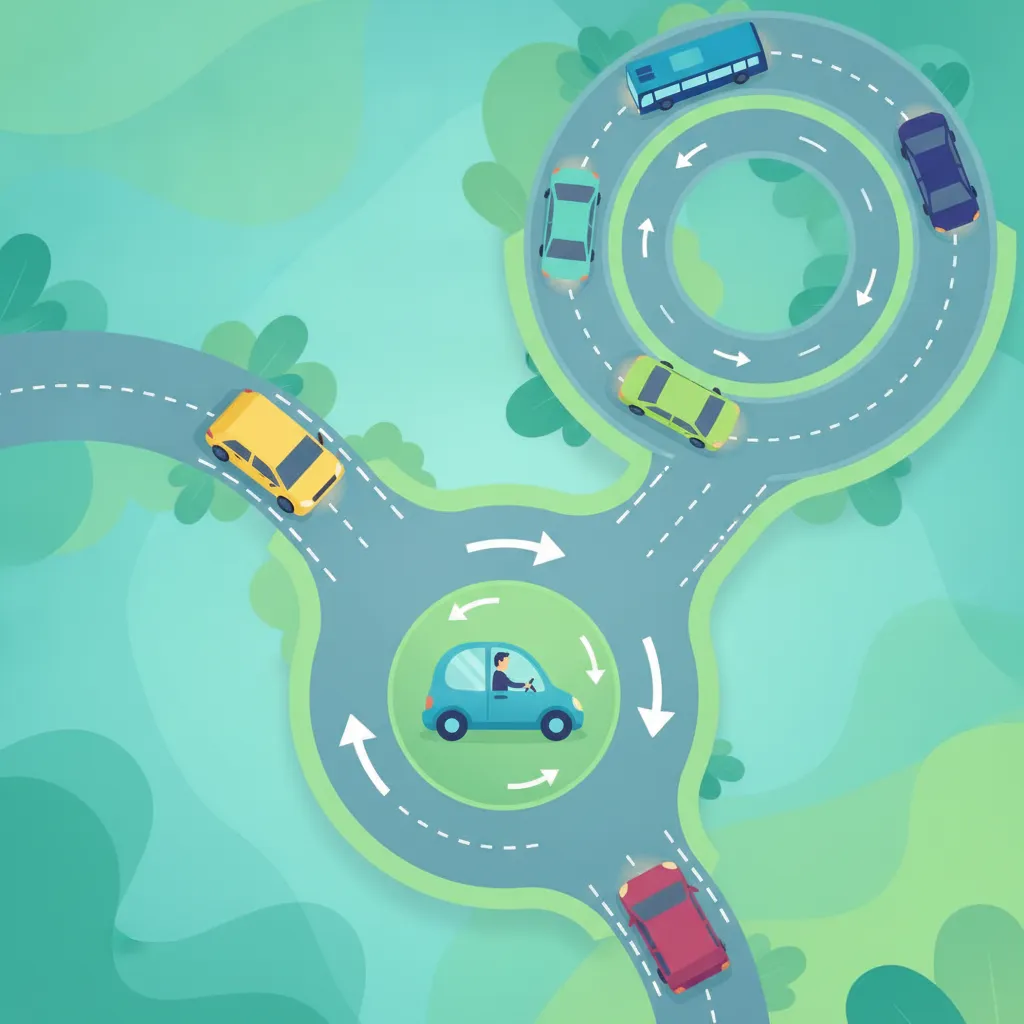
This lesson provides specific techniques for safely navigating the two main types of roundabouts in Great Britain. For multi-lane roundabouts, it covers how to choose the correct lane on approach, maintain your lane while circulating, and signal your exit correctly. It also explains the unique rules for mini-roundabouts, emphasizing the importance of giving way to traffic from the right and navigating them with caution due to their small size.
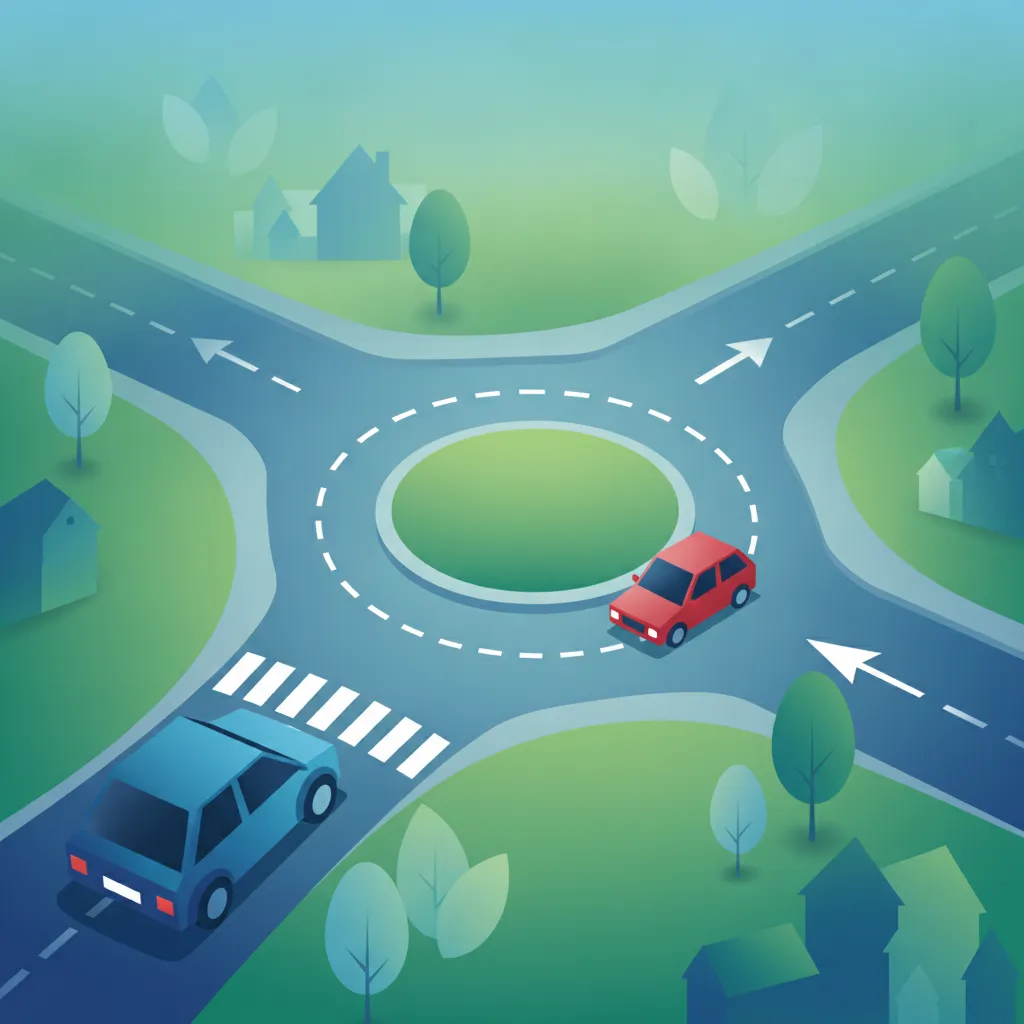
This lesson explains how to handle mini-roundabouts, which are common in urban and residential areas. The primary rule is to approach with caution and give priority to any traffic approaching from your right. You will also learn about correct signalling and the importance of being aware of cyclists and motorcyclists who may be harder to see.

This lesson provides a step-by-step guide to dealing with roundabouts. It covers how to choose the correct lane on approach based on your destination, when and how to signal your intentions, and how to safely enter and exit the roundabout. Emphasis is placed on maintaining good observation and anticipating the actions of other drivers.
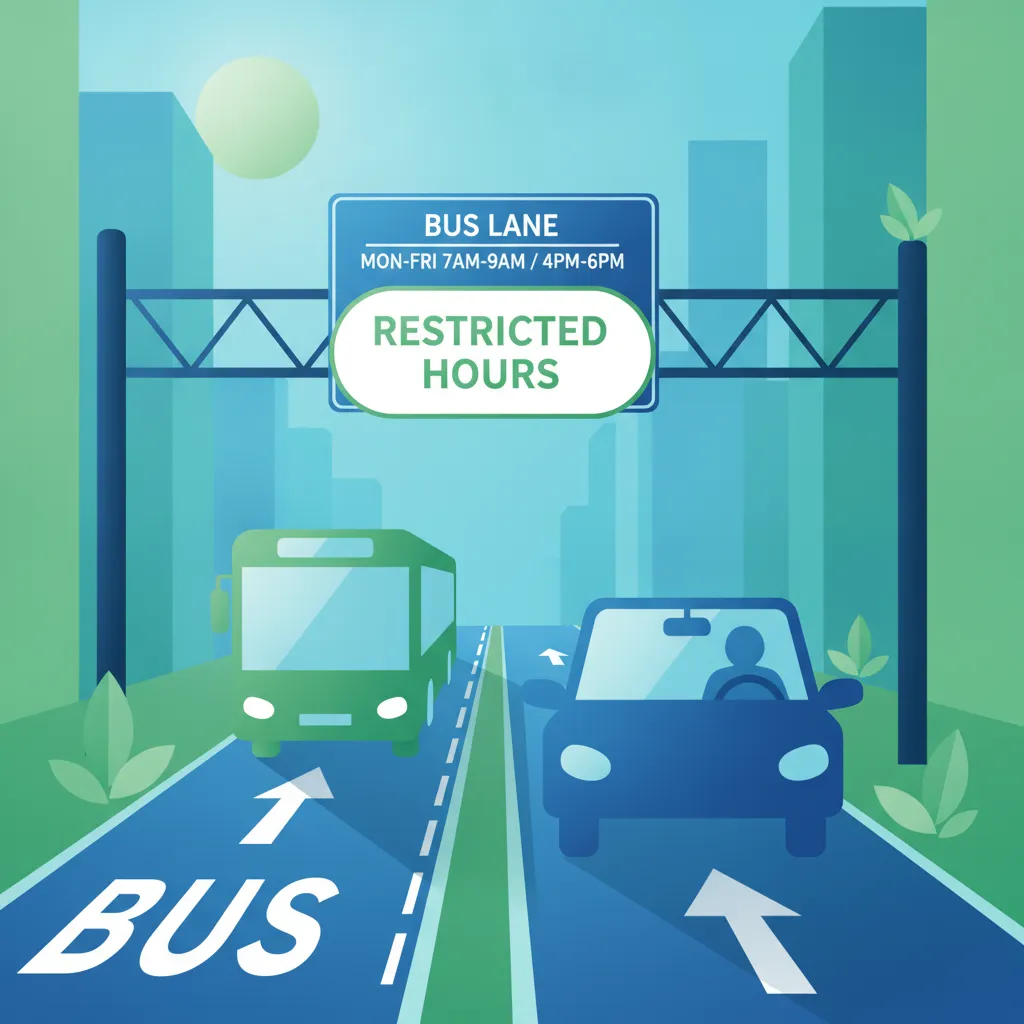
This lesson covers the importance of maintaining correct lane discipline when driving a large passenger vehicle. It details how to position your vehicle safely within a lane on various road types, including multi-lane carriageways and motorways. You will learn the specific rules governing bus lanes, including how to interpret markings, adhere to operating times, and understand the exemptions and penalties associated with their use to ensure legal and efficient driving.
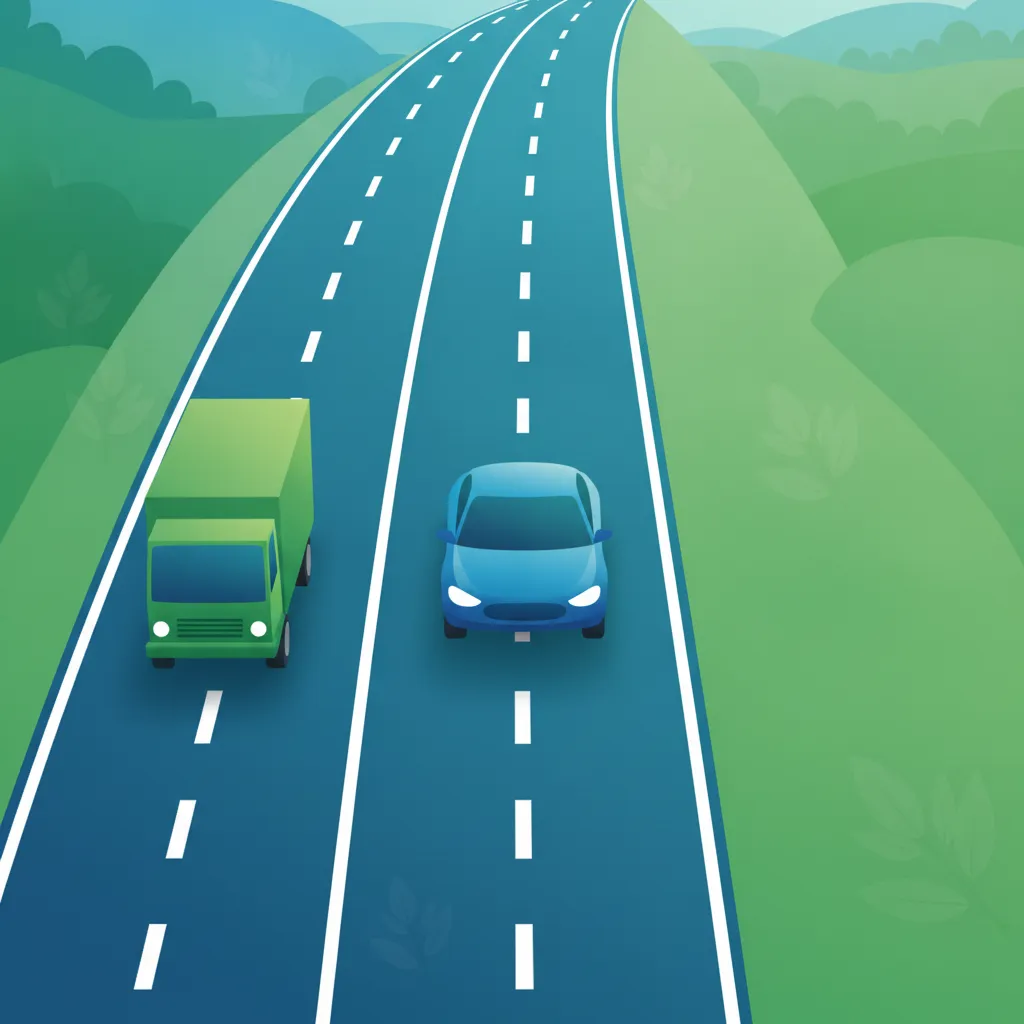
This lesson explains how lines running parallel to the kerb control traffic movement. You will learn that broken white lines divide lanes, while solid white lines generally prohibit crossing them. The specific rules for double white lines, including when you are permitted to cross, are also covered in detail to ensure safe overtaking.
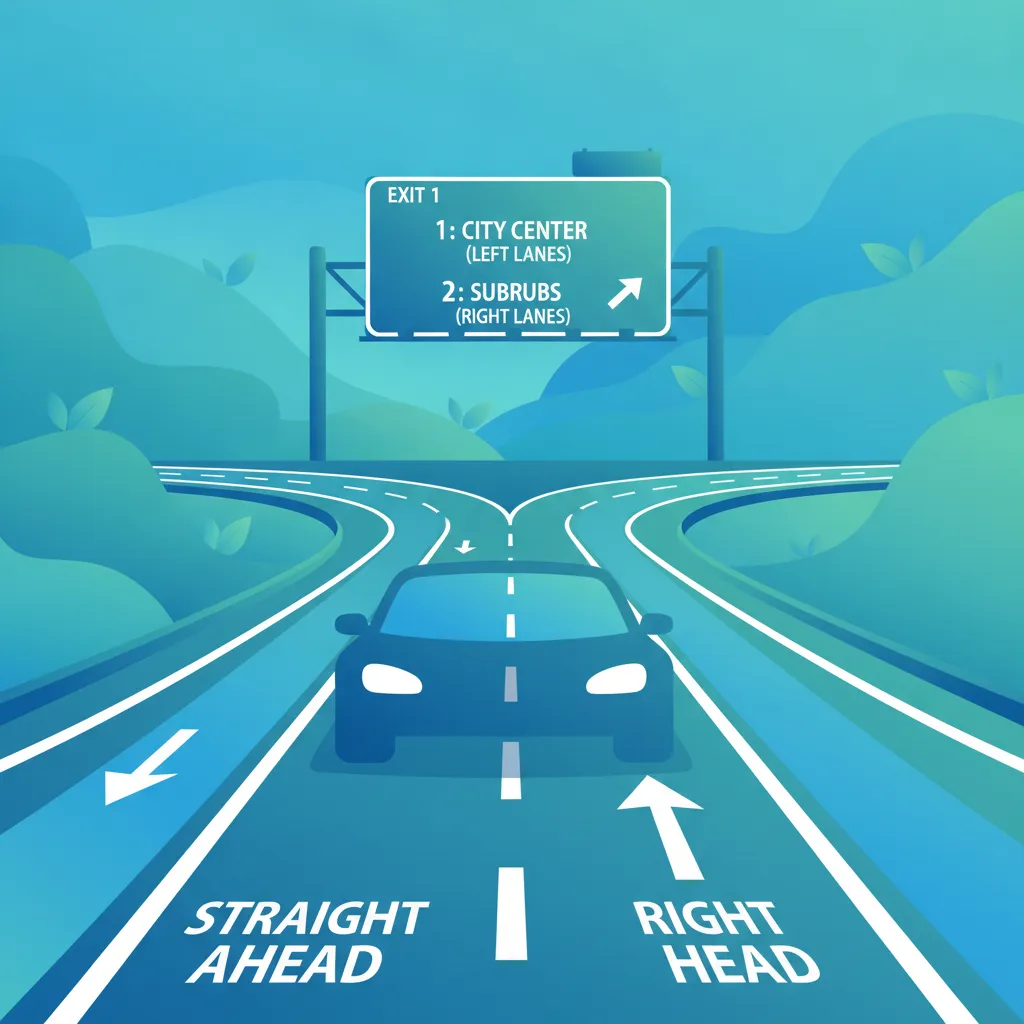
This lesson focuses on the rules conveyed by road markings, such as solid and broken white lines that dictate overtaking rules and lane boundaries. You will learn to interpret waiting and stopping restrictions indicated by yellow and red lines, and understand markings for specific road users like bus and cycle lanes. Maintaining correct lane discipline based on these markings is a fundamental skill for safe navigation and compliance with the Highway Code.

This lesson covers the unique aspects of motorway driving, from joining and leaving the carriageway to the strict lane discipline of keeping to the left unless overtaking. It explains the features of smart motorways, such as variable speed limits and the meaning of a Red X symbol above a lane. The safe procedure for handling a breakdown is also a key topic.
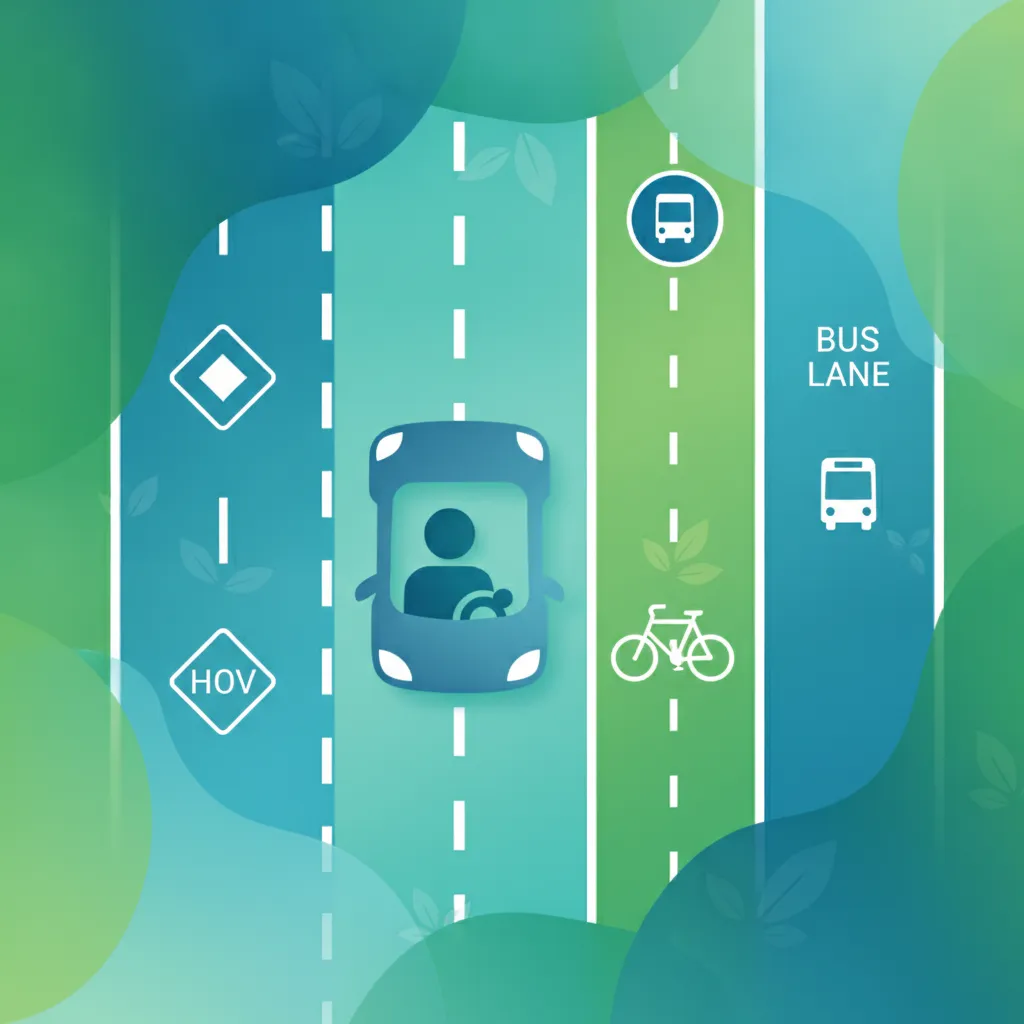
This lesson covers lanes designated for specific types of traffic to improve flow and safety. You will learn to identify mandatory and advisory cycle lanes, and understand the signs indicating the operational hours of bus lanes. The rules governing these lanes are critical for avoiding penalties and ensuring the safety of all road users.

This lesson focuses on the markings that control traffic at intersections. It explains the primary rule of a yellow box junction: do not enter unless your exit is clear. You will also learn the difference between the solid white 'Stop' line and the broken 'Give Way' line, which dictate your priority over other traffic.
Learn to identify and manage hazards, including vulnerable road users like cyclists and pedestrians, when navigating mini and multi-lane roundabouts. Essential theory for safe riding and the GB driving test.
This lesson explains how to handle mini-roundabouts, which are common in urban and residential areas. The primary rule is to approach with caution and give priority to any traffic approaching from your right. You will also learn about correct signalling and the importance of being aware of cyclists and motorcyclists who may be harder to see.
This lesson provides specific techniques for safely navigating the two main types of roundabouts in Great Britain. For multi-lane roundabouts, it covers how to choose the correct lane on approach, maintain your lane while circulating, and signal your exit correctly. It also explains the unique rules for mini-roundabouts, emphasizing the importance of giving way to traffic from the right and navigating them with caution due to their small size.

This lesson introduces the skill of hazard perception, a critical component of the official theory test and safe driving. It teaches you to actively scan your environment for potential dangers, such as a pedestrian about to cross or a car waiting to emerge from a junction. By identifying these situations early, you can take action to avoid them turning into actual dangers.

This lesson explains how to adapt your driving around different vehicles. You will learn to look out for motorcyclists, who are often hard to see, especially at junctions. It also covers the challenges of sharing the road with large vehicles, such as their extended blind spots, wider turning circles, and the wind turbulence they can create.
This lesson tackles the complexities of large roundabouts, which often have multiple lanes and exits. It stresses the importance of reading signs on the approach to select the correct lane for your destination. You will learn about maintaining lane discipline while on the roundabout and signalling correctly as you pass exits and prepare to leave.

This lesson is dedicated to the safe interaction between large vehicles and the most vulnerable road users: pedestrians and cyclists. It highlights high-risk scenarios, such as left turns at junctions, where cyclists can be hidden in nearside blind spots. The content stresses the importance of anticipation, using signals clearly, and providing generous space at crossings, in cycle lanes, and within pedestrianized zones to prevent tragic accidents.

This lesson addresses the unique challenges of driving a large vehicle on rural roads. It provides techniques for positioning the vehicle through sharp bends and on narrow lanes, and for safely navigating unmarked or uncontrolled junctions. Learners will be taught to anticipate hidden hazards common in the countryside, such as slow-moving farm vehicles, animals on the road, and concealed entrances. The correct use of passing places and strategies for meeting oncoming traffic are also covered.

This lesson prepares you for the specific challenges of driving in the countryside. It explains the correct procedure for overtaking horse riders: slow down and pass wide, ensuring you do not spook the animal. You will also learn how to anticipate and safely manage encounters with slow-moving tractors and other farm machinery.

This lesson teaches you to interpret warning signs, which are typically triangular and designed to alert you to potential hazards ahead. You will learn the meanings of common signs indicating sharp curves, slippery surfaces, roadworks, or areas with frequent pedestrian or animal crossings. Understanding these signs is crucial for anticipating dangers and adjusting your speed and position defensively, which is especially important for vulnerable riders of AM vehicles.

This lesson teaches drivers how to identify various types of vulnerable road users and anticipate their potential actions to prevent conflicts. It covers the specific risks associated with pedestrians, cyclists, motorcyclists, children, and elderly or disabled individuals. Emphasis is placed on heightened awareness and defensive driving techniques required to share the road safely. Understanding their perspectives and typical behaviours is key to protecting them and maintaining safety for everyone.
Find clear answers to common questions learners have about Mini‑Roundabouts and Multi‑Lane Roundabouts. Learn how the lesson is structured, which driving theory objectives it supports, and how it fits into the overall learning path of units and curriculum progression in Great Britain. These explanations help you understand key concepts, lesson flow, and exam focused study goals.
Yes, the fundamental rules of priority remain the same: you must give way to traffic approaching from your right. However, mini-roundabouts are much tighter, requiring earlier signaling and precise speed control to avoid over-shooting the junction.
Always aim to stay in the correct lane for your exit as indicated by road markings or signs. On a motorcycle, ensure you are clearly visible within that lane and avoid 'filtering' across lanes while inside the roundabout.
Never force a lane change or stop inside the roundabout. Complete the circle safely, signal your intention, and take the correct exit on your second attempt. Safety and predictability are the priorities.
Yes, signal left to exit at the first exit, signal appropriately for intermediate exits, and use a right signal if you are going past the 12 o'clock position, then switch to a left signal once you have passed the exit before yours.
Dive into our comprehensive question bank to find exactly what you need for your Great Britain theory test. Use our advanced filters to pinpoint specific subjects or test your knowledge on challenging areas, ensuring you're fully prepared for success.