
This lesson teaches you how to identify potential hazards early and adapt your speed to stay safe as a new moped or light quadricycle rider. By mastering these defensive riding techniques, you will build the skills needed to anticipate danger in varied GB traffic conditions and ace your theory exam.

Lesson content overview
Welcome to this comprehensive lesson on Hazard Anticipation and Defensive Speed Management, a critical component of the Great Britain AM Licence Theory Course. This chapter will equip you with the advanced skills needed to identify potential dangers, predict the behaviour of other road users, and proactively adjust your speed to ensure safety. Mastery of these techniques is fundamental for moped and light quadricycle riders operating in Great Britain's diverse and often complex traffic environments.
Developing a proactive mindset on the road reduces your reaction time, enhances overall vehicle control, and significantly lowers the probability of collisions. By anticipating hazards and managing your speed defensively, you gain precious seconds to react, maintain vehicle stability, and mitigate the severity of potential impacts. This lesson builds on your understanding of basic road positioning, speed limits specific to AM vehicles, and fundamental vehicle handling techniques like acceleration, braking, and gear changes. A strong grasp of the Highway Code, particularly sections on road signs, markings, and basic road rules, is also essential.
Hazard perception is more than just seeing an obstacle; it's about continuously scanning the environment, understanding potential risks, and predicting how situations might unfold. For riders of mopeds and light quadricycles, who are inherently more vulnerable than larger vehicles, this skill is paramount. It involves a systematic approach to observation and decision-making that keeps you ahead of potential dangers.
A proactive rider doesn't just react to emergencies; they prevent them. This means constantly assessing the road ahead, to the sides, and behind for any signs that a hazardous situation might develop. When you ride proactively, you're not just adhering to the legal speed limits, but you're constantly evaluating whether that legal limit is also a safe limit given the prevailing conditions. This advanced awareness allows you to make subtle adjustments to your speed and position, thereby avoiding the need for sudden, emergency manoeuvres that can lead to loss of control, especially on a two or four-wheeled vehicle.
Effective speed management for AM licence holders revolves around several interconnected principles. It's about understanding the physics of motion, the Highway Code's mandates, and human reaction times. By integrating these elements, you create a robust safety strategy.
Adjusting your speed proactively based on perceived risk, rather than simply reacting to hazards that have already become imminent. This strategy prioritizes safety over adherence to maximum speed limits when conditions demand it.
This approach allows you to increase the time available to perceive and react to dangers, reduce the kinetic energy involved in potential impacts, and maintain optimal grip and traction. Higher speeds dramatically increase stopping distances and reduce the critical time needed for perception and reaction. The Highway Code reinforces this by mandating that riders travel at a speed that allows them to control their vehicle safely under all prevailing conditions.
Continuous scanning is the cornerstone of effective hazard anticipation. It's an ongoing, systematic visual sweep of your entire road environment, ensuring you don't fixate on a single object or miss crucial cues from your periphery. This technique allows you to build a mental map of potential conflict points and evolving hazards around you.
Looking far ahead means focusing your gaze at least 15 seconds of travel distance in front of your moped or light quadricycle. This allows you to recognise upcoming changes in road layout, such as bends, hills, junctions, or roundabouts, well in advance. By doing so, you can identify potential hazards like roadworks, debris, or slowing traffic much earlier, giving you ample time to plan your response and adjust your speed accordingly. This forward vision is crucial for anticipating how the road might affect your vehicle's stability and traction.
Beyond looking far ahead, continuous scanning also involves frequently checking your side and rear views. This includes quick glances into your mirrors every 5-8 seconds, or more frequently in complex traffic, and performing regular "lifesaver" checks (over-the-shoulder glances) before any change in direction or lane. This ensures you're aware of vehicles in adjacent lanes, merging traffic, or vulnerable road users (VRUs) such as pedestrians and cyclists at entry points or alongside you. Monitoring hazards approaching from behind, especially when preparing to slow down or turn, is equally vital.
Avoid fixing your gaze on the vehicle directly in front. Instead, allow your eyes to constantly move, taking in a wide field of vision to build a complete picture of your surroundings.
Hazard anticipation is the cognitive process where you predict potential dangers before they fully materialise, based on the cues you observe through continuous scanning. It transforms passive observation into active prediction, enabling you to take pre-emptive action.
Hazards can generally be categorised as either static or dynamic. Static hazards are stationary elements of the road environment that could pose a risk, such as potholes, loose gravel, oil spills, roadworks, parked vehicles, or even distinct road markings that become slippery in wet conditions. Anticipating these means adjusting your speed and position well before you reach them.
Dynamic hazards, on the other hand, involve movement and are often unpredictable. These include other road users making sudden lane changes, pedestrians stepping into the road, vehicles pulling out from junctions, or even animals crossing the road. Developing your anticipation skills means recognising the early warning signs, like a car's brake lights flickering in the distance, or a pedestrian looking towards the road edge, and immediately considering the possibility of a developing hazard.
A significant part of hazard anticipation involves understanding common behaviours of other road users and identifying typical "conflict points" where collisions are more likely. For example, a vehicle waiting at a side road might pull out without warning, or a cyclist approaching a junction might turn unexpectedly. By observing subtle cues—like a driver's head turning, a vehicle's wheels moving, or a pedestrian's body language—you can rate the probability of a hazard developing and prepare to react. This predictive ability allows you to reduce speed or adjust your road positioning proactively, rather than waiting for an emergency.
Locations or situations on the road where the paths of different road users are likely to intersect, creating a high risk of collision. Examples include junctions, roundabouts, pedestrian crossings, and merging lanes.
Defensive speed management is about deliberately choosing and maintaining a speed that ensures you can retain full control of your moped or light quadricycle and stop safely, irrespective of the legal speed limit. It’s a flexible approach that puts safety above all else.
It's crucial to understand that the legal speed limit is the maximum permissible speed under ideal conditions, not a target speed to be maintained at all times. The safe speed, however, is the speed at which you can confidently manage any situation that arises, stop within the visible distance ahead, and maintain full control. In many situations, especially on Great Britain's varied roads, the safe speed will be significantly lower than the posted legal limit. For instance, riding at 30 mph on a wet, winding road with a 40 mph limit is a clear example of defensive speed management, prioritising grip and stopping ability over the maximum allowed speed.
Your defensive speed strategy must be dynamic, adapting to numerous factors:
Confusing the legal speed limit with a safe speed is a common and dangerous mistake. Always choose a speed that allows you to stop safely within the distance you can see to be clear, considering all prevailing conditions.
The relationship between speed, time, and distance, often referred to as TTDA, is fundamental to understanding safe stopping distances. It mathematically illustrates how higher speeds dramatically reduce your margin for error and increase the distance required to stop.
The mathematical relationship where the distance travelled is equal to speed multiplied by time. This principle is critical for calculating and understanding safe stopping distances under various conditions.
Total stopping distance is not just about braking; it's a sum of three critical components:
The total stopping distance increases exponentially with speed because kinetic energy (the energy of motion) is proportional to the square of your speed (½ mv²). This means doubling your speed quadruples your braking distance. For example, stopping distance at 40 mph is not just double that at 20 mph; it's significantly more.
20 mph: Perception ~6m, Reaction ~6m, Braking ~12m. Total = ~24m
30 mph: Perception ~9m, Reaction ~9m, Braking ~23m. Total = ~41m
40 mph: Perception ~12m, Reaction ~12m, Braking ~36m. Total = ~60m
For mopeds and light quadricycles, these distances can vary based on vehicle weight, braking system, and rider skill, but the principle remains the same. Always ensure you can stop within the distance you can see to be clear, particularly for unexpected hazards.
Grip management is the practice of maintaining a speed and riding style that preserves sufficient traction between your tyres and the road surface under current conditions. Losing grip means losing control, a particularly dangerous situation for smaller, lighter vehicles.
The amount of grip available depends on several factors:
As a rider of an AM vehicle, you must be acutely aware of how road conditions affect grip. You must reduce your speed and apply controls (throttle, brakes, steering) smoothly when encountering low-grip surfaces. For example, painted white lines on a wet road can become extremely slippery, requiring a significant reduction in speed and a very gentle approach. Similarly, leaves, drain covers, or oily patches can all present hidden hazards that demand careful speed management.
Risk assessment is an ongoing, dynamic evaluation of all variables that could increase the likelihood of a hazard developing. It's about systematically weighing environmental, traffic, and vehicle factors to determine the appropriate defensive speed and scanning intensity.
Effective risk assessment is not a one-time check but a continuous mental process. As conditions change—the weather deteriorates, traffic becomes heavier, or you move from an urban to a rural environment—your risk assessment must adapt, leading to corresponding adjustments in your speed, following distance, and scanning patterns. This adaptive approach ensures you maintain the highest level of safety at all times.
The Highway Code provides the legal framework and best practice guidance for all road users in Great Britain. Adhering to these rules is not just a legal obligation but a fundamental aspect of defensive riding and hazard management.
Rule 166(a): "You MUST NOT drive faster than the road conditions allow you to keep in control." This mandatory rule directly underpins defensive speed management, stating that your speed must always be appropriate for the conditions, even if below the posted limit. This applies particularly in poor weather or when road surface grip is reduced.
Rule 166(b): Advises drivers to consider the distance they travel while perceiving a hazard. This highlights the importance of hazard anticipation and continuous scanning to minimise perception time.
Rule 166(c): States that if conditions mean you cannot keep a safe distance, you MUST slow down. This reinforces the need for safe following distances and adapting speed to traffic flow.
Rule 172: Emphasises the need to "keep a safe distance between you and the vehicle in front." This is directly linked to the Speed-Time-Distance principle, ensuring you have enough room to stop safely.
Rule 165(l): Advises that when a manoeuvre may affect other road users, you MUST ensure you have a clear view of your intended path. This highlights the importance of thorough scanning and hazard anticipation before changing lanes, turning, or entering/exiting a road.
Rule 73(3): States that "There MUST be no danger from your vehicle to others, e.g., from tyre skid." This mandatory rule directly supports the principle of grip management, requiring riders to manage their speed to prevent loss of control due to skidding, especially on slippery surfaces.
Even experienced riders can fall prey to common errors that compromise hazard anticipation and speed management. Being aware of these pitfalls is the first step to avoiding them.
The principles of hazard anticipation and defensive speed management must be highly adaptable to the ever-changing conditions encountered on Great Britain's roads.
Let's illustrate these principles with some real-world examples:
Scenario: You're riding your moped on a residential street with a 30 mph limit. It's lightly raining, the road is wet, and there are parked cars along both sides with occasional pedestrians. Correct Behaviour: You reduce your speed to 20 mph, increase your following distance from the vehicle ahead, and continuously scan for pedestrians emerging from between parked cars or stepping onto a crossing. You approach junctions cautiously, ready to stop for any unexpected movement. This aligns with Highway Code Rule 166(a) to adapt speed to conditions. Incorrect Behaviour: You maintain 30 mph, focusing only on the car in front. A child unexpectedly steps out from between two parked cars. Due to your speed and limited scanning, you have insufficient time to react, resulting in an emergency stop or potential collision.
Scenario: You are on a dual carriageway with a 50 mph limit. Dense fog suddenly reduces visibility to less than 30 metres. Correct Behaviour: You immediately reduce your speed to approximately 20-25 mph, ensuring you can stop within the distance you can see to be clear. You increase your following distance significantly, use dipped headlights (and fog lights if fitted), and continuously scan for the rear lights of vehicles ahead. This demonstrates adherence to Rule 166(c) regarding safe distance and speed for visibility. Incorrect Behaviour: You continue at 50 mph, thinking the dual carriageway is safe. Suddenly, you encounter a stalled vehicle ahead that you only see at the last moment, leading to an unavoidable collision.
Scenario: You are riding your light quadricycle on a 40 mph dual carriageway in the left lane. A car in the adjacent right lane signals left about 200 metres ahead, indicating it intends to merge into your lane. Correct Behaviour: You notice the signal early through continuous scanning (Hazard Anticipation). You gently reduce your speed and prepare to either slightly adjust your lane position or further reduce speed to create space for the merging car, preventing a conflict. This is proactive defensive speed management. Incorrect Behaviour: You focus only on the vehicle directly ahead, failing to notice the car signalling. As the car begins to merge, you are caught unaware and must brake harshly or swerve, potentially causing a dangerous situation or side-impact collision.
Scenario: You are riding your moped at 30 mph. After a brief shower, the painted white road markings ahead are visibly wet and glossy. Correct Behaviour: Recognising the reduced grip (Grip Management), you gently reduce your speed to about 20 mph before crossing the wet markings. You maintain a gentle throttle and avoid any sudden braking or steering inputs until you are safely past them, adhering to Rule 73(3) to avoid tyre skids. Incorrect Behaviour: You maintain 30 mph and accelerate through the markings. The wet paint offers little friction, causing your tyre to lose traction and leading to a momentary skid and potential loss of control.
Explore all units and lessons included in this driving theory course.
Lesson content overview
Explore all units and lessons included in this driving theory course.
Explore search topics learners often look for when studying Hazard Anticipation and Defensive Speed Management. These topics reflect common questions about road rules, driving situations, safety guidance, and lesson level theory preparation for learners in Great Britain.
Browse additional driving theory lessons that cover connected traffic rules, road signs, and common driving situations related to this topic. Improve your understanding of how different rules interact across everyday traffic scenarios.
Learn about frequent errors AM licence holders make in anticipating hazards and managing speed. Understand how to avoid these pitfalls to improve your road safety and understanding of driving theory.

This lesson teaches you to interpret warning signs, which are typically triangular and designed to alert you to potential hazards ahead. You will learn the meanings of common signs indicating sharp curves, slippery surfaces, roadworks, or areas with frequent pedestrian or animal crossings. Understanding these signs is crucial for anticipating dangers and adjusting your speed and position defensively, which is especially important for vulnerable riders of AM vehicles.

This lesson introduces the skill of hazard perception, a critical component of the official theory test and safe driving. It teaches you to actively scan your environment for potential dangers, such as a pedestrian about to cross or a car waiting to emerge from a junction. By identifying these situations early, you can take action to avoid them turning into actual dangers.

Defensive riding is the practice of actively anticipating potential hazards rather than just reacting to them. This lesson teaches you how to scan for clues, predict the actions of other road users, and position yourself to avoid trouble. By developing strong anticipation skills, you can significantly reduce your risk of being taken by surprise on the road.
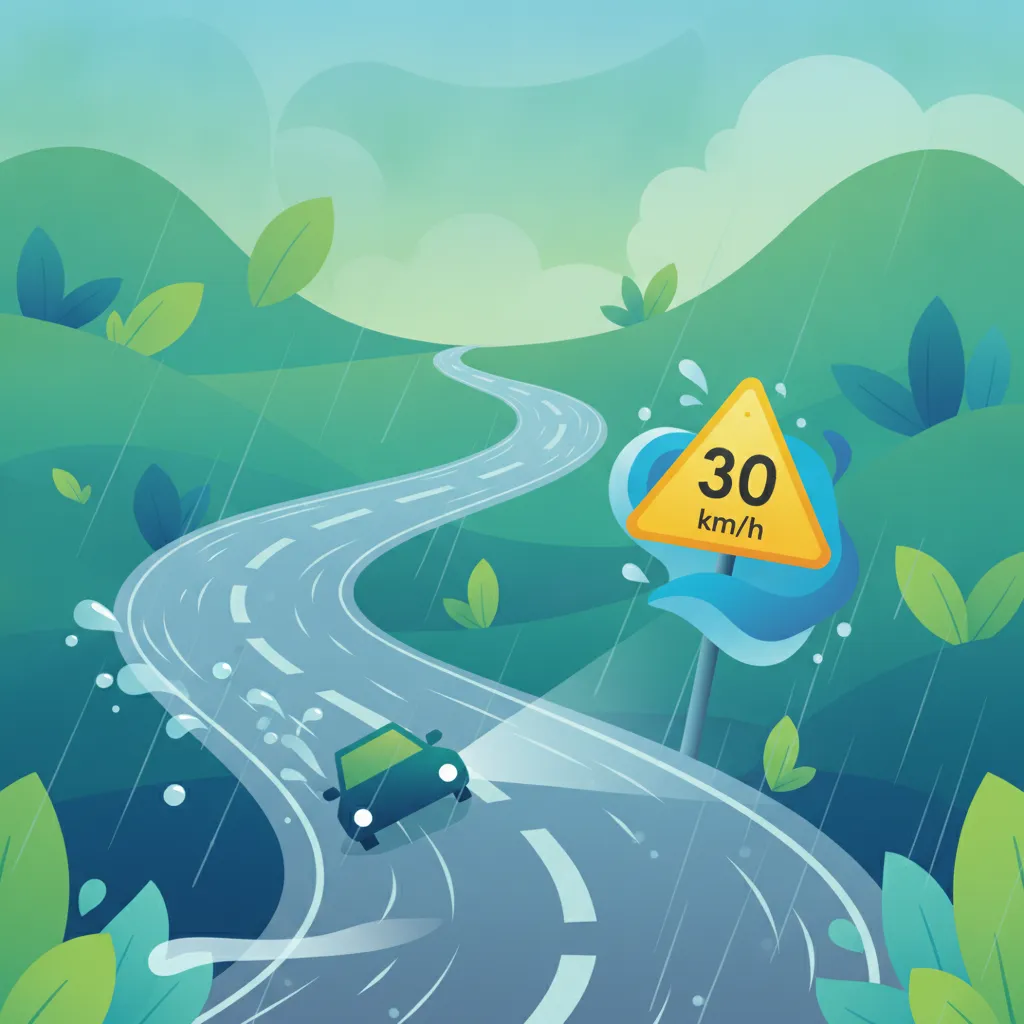
This lesson explains that safe driving often requires travelling at a speed lower than the legal limit. It covers how to adjust your speed for adverse conditions such as rain, which can double your stopping distance, or fog, which severely reduces visibility. The goal is to always be able to stop safely in the distance you can see to be clear.

This lesson clarifies the specific speed limits that apply to Category AM vehicles on various British roads, from 30 mph zones in built-up areas to national speed limits on single and dual carriageways. It emphasizes that the posted limit is a maximum, not a target, and teaches you how to choose an appropriate speed based on factors like weather, traffic, and road layout. Understanding these rules is vital for both legal compliance and personal safety.

This lesson identifies behaviours that significantly increase a rider's risk of being involved in a collision. It explains the dangers of excessive speed, following too closely, and aggressive riding. You will learn how a rider's attitude and choices directly contribute to their safety and the legal penalties associated with these offences.

This lesson focuses on the critical skill of positioning your AM vehicle safely in relation to larger vehicles and roadside hazards like parked cars. You will learn to identify and stay out of the extensive blind spots of lorries and buses, especially at junctions. The content also provides strategies for maintaining a safe 'space cushion' around your vehicle and navigating narrow gaps or filtering in traffic without compromising your safety.

This lesson teaches strategic road positioning techniques to maximize your visibility and safety in traffic. You will learn how to choose the correct lane position to avoid the blind spots of larger vehicles and how to communicate your intentions through predictable riding. Key skills covered include effective use of shoulder checks, making eye contact with drivers, and maintaining a safe following distance, all of which are crucial for defensive riding on British roads.
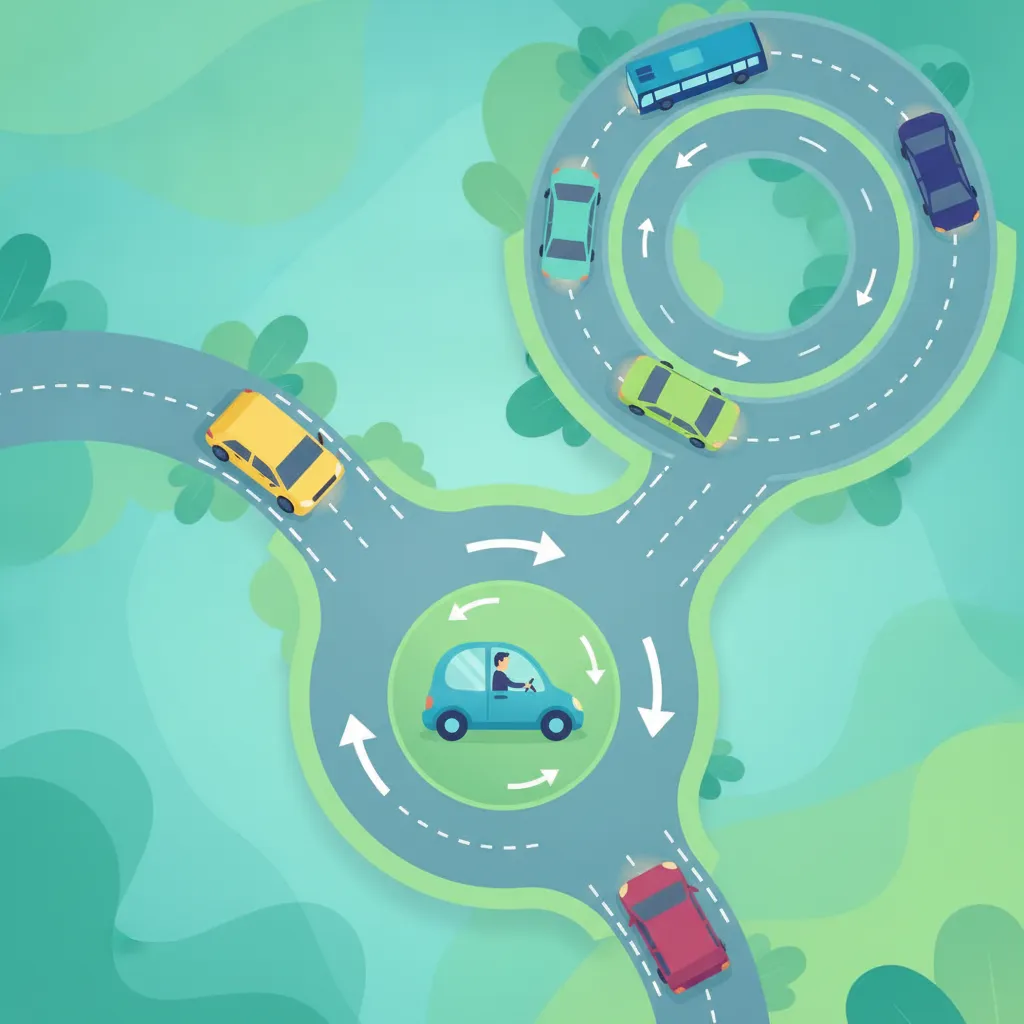
This lesson provides specific techniques for safely navigating the two main types of roundabouts in Great Britain. For multi-lane roundabouts, it covers how to choose the correct lane on approach, maintain your lane while circulating, and signal your exit correctly. It also explains the unique rules for mini-roundabouts, emphasizing the importance of giving way to traffic from the right and navigating them with caution due to their small size.
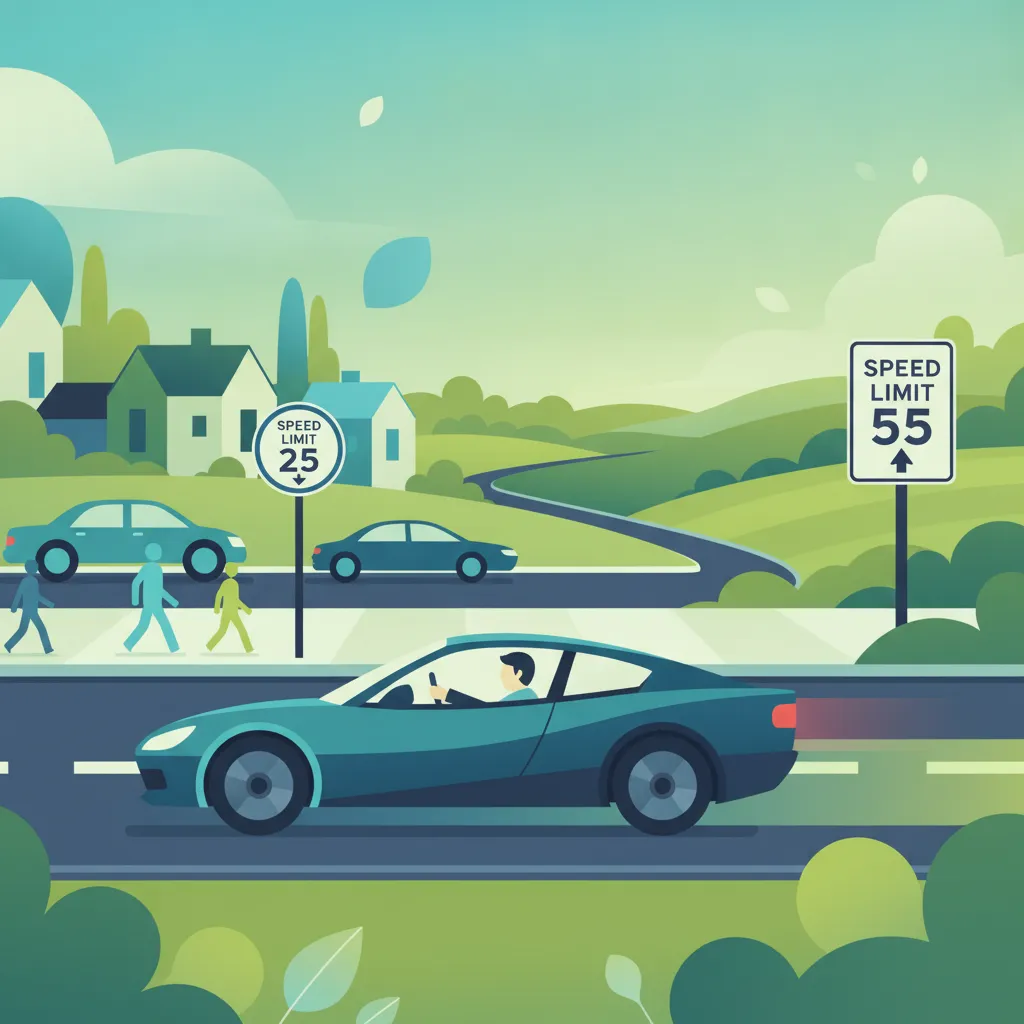
This lesson details speed management techniques applicable to urban, rural, and motorway environments, focusing on compliance with legal speed limits and developing appropriate speed perception. It covers strategies for monitoring speed and adjusting for road conditions, traffic density, and overall passenger safety. The lesson also reviews enforcement mechanisms and emphasizes the importance of speed compliance for accident avoidance and regulatory adherence, a critical skill for all professional drivers.
Explore the specific Highway Code rules relevant to AM licence holders regarding speed management, hazard anticipation, and defensive riding techniques. Understand your legal obligations for road safety in Great Britain.
This lesson teaches you to interpret warning signs, which are typically triangular and designed to alert you to potential hazards ahead. You will learn the meanings of common signs indicating sharp curves, slippery surfaces, roadworks, or areas with frequent pedestrian or animal crossings. Understanding these signs is crucial for anticipating dangers and adjusting your speed and position defensively, which is especially important for vulnerable riders of AM vehicles.
This lesson introduces the skill of hazard perception, a critical component of the official theory test and safe driving. It teaches you to actively scan your environment for potential dangers, such as a pedestrian about to cross or a car waiting to emerge from a junction. By identifying these situations early, you can take action to avoid them turning into actual dangers.

This lesson focuses on the regulations and best practices for driving a bus or coach on motorways. It details the specific speed limits applicable to PCVs and reinforces strict lane discipline. The content covers the correct procedures for safely joining from a slip road, overtaking other vehicles, and exiting the motorway. It also explains the features of smart motorways and the correct safety procedures to follow in the event of a breakdown, including the use of the hard shoulder.
This lesson clarifies the specific speed limits that apply to Category AM vehicles on various British roads, from 30 mph zones in built-up areas to national speed limits on single and dual carriageways. It emphasizes that the posted limit is a maximum, not a target, and teaches you how to choose an appropriate speed based on factors like weather, traffic, and road layout. Understanding these rules is vital for both legal compliance and personal safety.

This lesson explains how to drive safely through areas where roadworks are taking place. It stresses the importance of obeying all temporary signs, especially mandatory speed limits, which are in place for your safety and the safety of road workers. You will learn about navigating narrow lanes, contraflow systems, and how to follow official diversion signs.

This lesson teaches you to interpret warning signs, which are typically triangular with a red border. These signs are crucial for anticipating potential dangers, from changes in road layout to the presence of pedestrians or animals. By understanding these warnings, you can adjust your driving to safely navigate upcoming hazards.
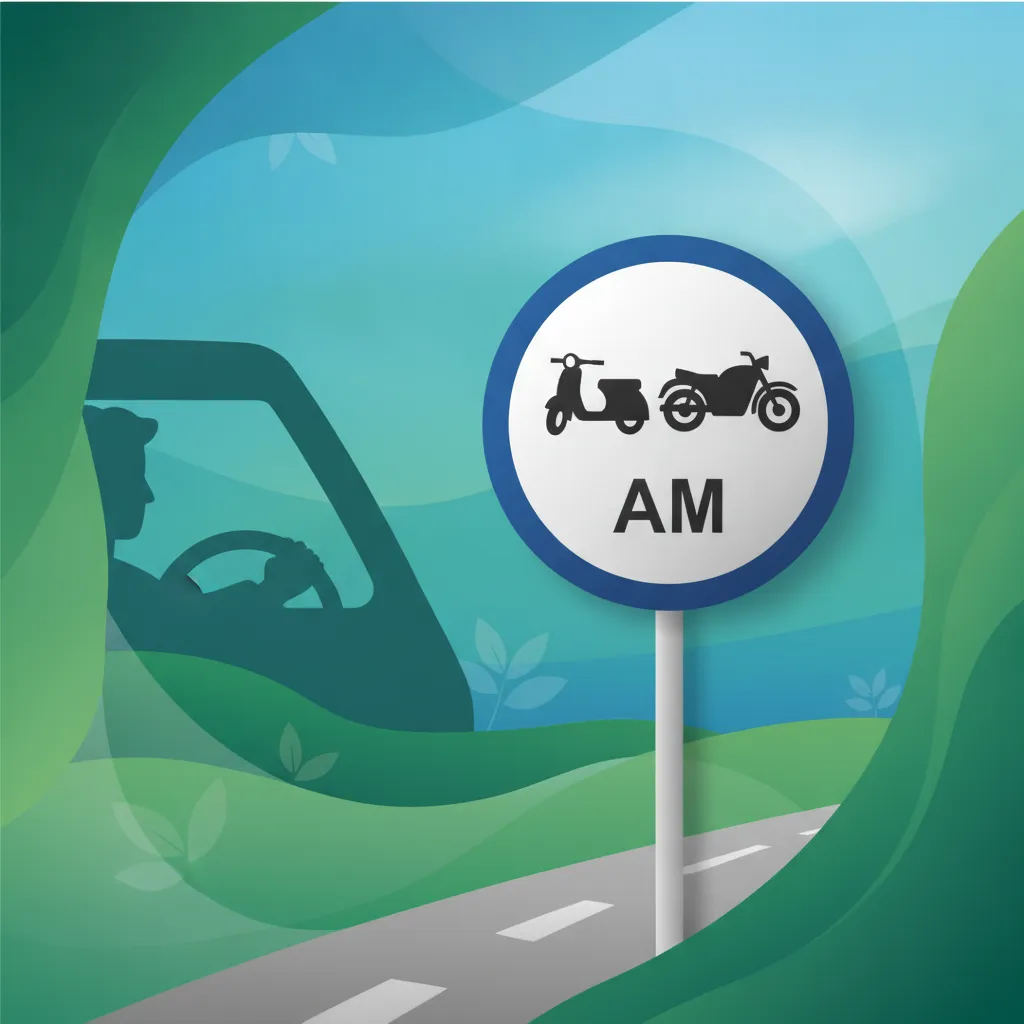
This lesson focuses on regulatory road signs, which convey legally enforceable instructions that all road users must follow. You will learn to identify and understand signs dictating speed limits, prohibited actions like 'no entry' or 'no overtaking', and mandatory directions at junctions. The content explains the distinct shapes and colours used for these signs, ensuring you can comply with their instructions correctly and avoid penalties while riding your AM vehicle.
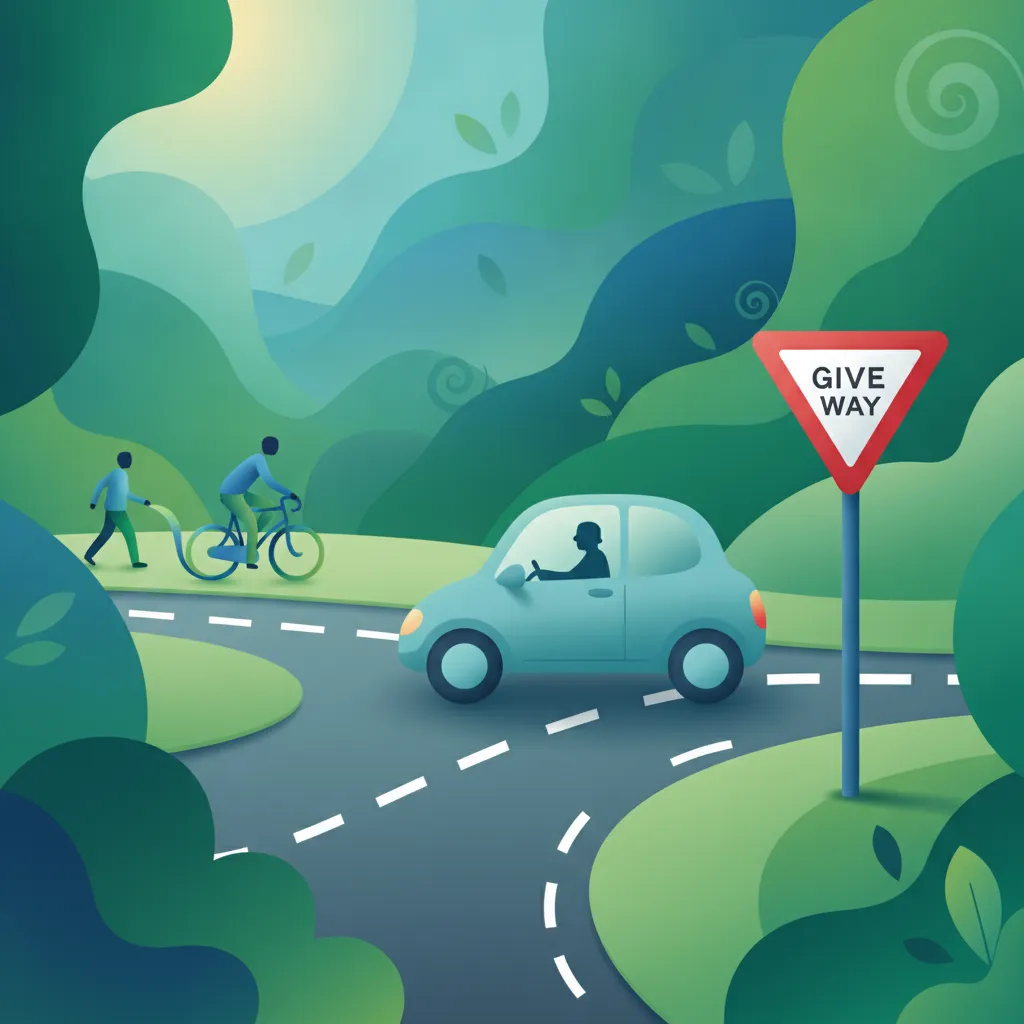
This lesson explains the critical rules of priority that govern traffic flow at junctions, roundabouts, and crossings throughout Great Britain. You will learn how to determine who has right-of-way at both marked and unmarked intersections, and the specific rules for giving way to traffic on roundabouts. The lesson also reinforces the hierarchy of road users from the Highway Code, ensuring you understand when to yield to pedestrians and other vulnerable users.
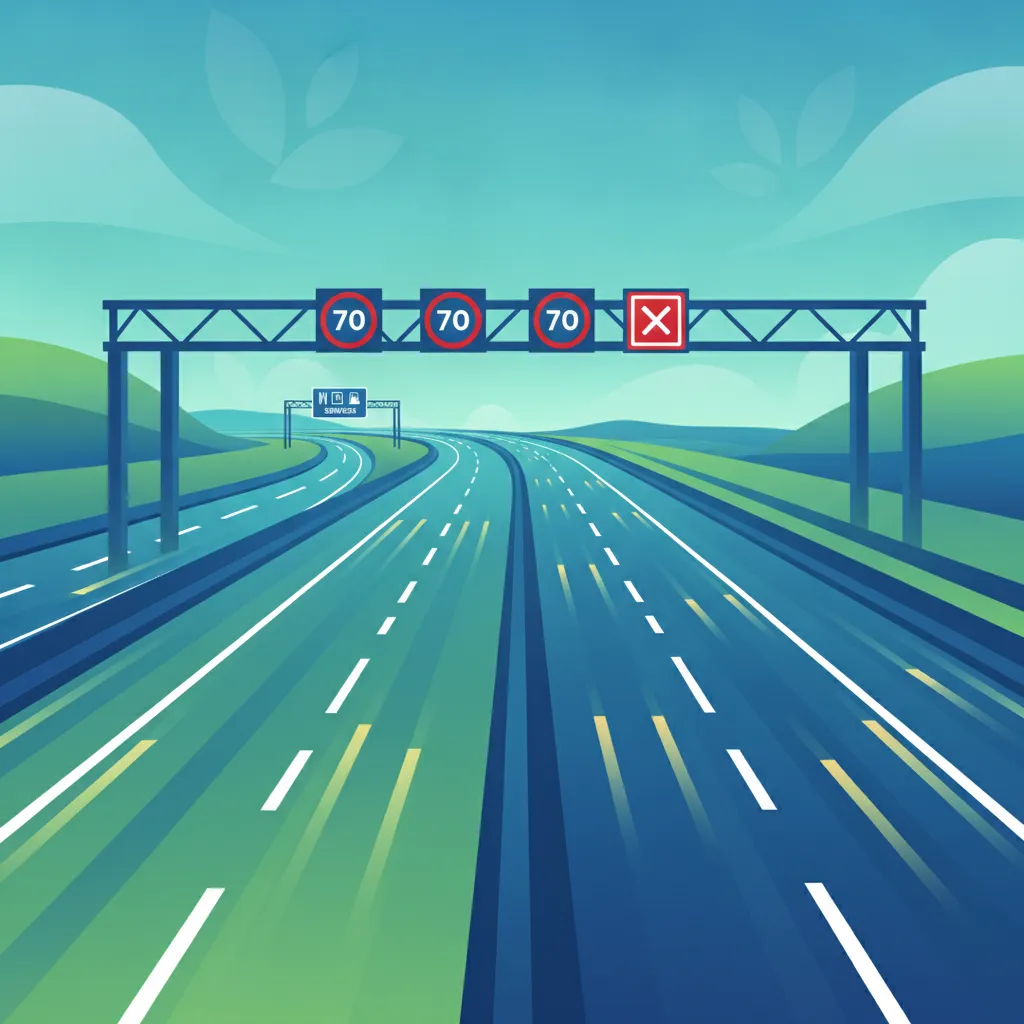
This lesson covers the unique aspects of motorway driving, from joining and leaving the carriageway to the strict lane discipline of keeping to the left unless overtaking. It explains the features of smart motorways, such as variable speed limits and the meaning of a Red X symbol above a lane. The safe procedure for handling a breakdown is also a key topic.
This lesson explains that safe driving often requires travelling at a speed lower than the legal limit. It covers how to adjust your speed for adverse conditions such as rain, which can double your stopping distance, or fog, which severely reduces visibility. The goal is to always be able to stop safely in the distance you can see to be clear.
Find clear answers to common questions learners have about Hazard Anticipation and Defensive Speed Management. Learn how the lesson is structured, which driving theory objectives it supports, and how it fits into the overall learning path of units and curriculum progression in Great Britain. These explanations help you understand key concepts, lesson flow, and exam focused study goals.
Because mopeds and light quadricycles offer less physical protection than cars, managing speed proactively ensures you have enough time and space to react to sudden hazards, keeping you safer in busy traffic.
This lesson trains your eye to scan the road for 'developing' hazards—things that might cause you to change speed or direction—which is exactly what the official hazard perception video clips test for.
Many learners focus only on the car directly in front of them. Defensive speed management requires looking further ahead to scan for junctions, pedestrians, or changing signals so you can adjust your speed early rather than braking harshly.
No, it means choosing the right speed for the environment. It involves adjusting your speed in anticipation of potential risks, like slowing down when approaching a hidden junction or a school zone, to ensure you are in control.
Dive into our comprehensive question bank to find exactly what you need for your Great Britain theory test. Use our advanced filters to pinpoint specific subjects or test your knowledge on challenging areas, ensuring you're fully prepared for success.