
This lesson breaks down the crucial relationship between speed and stopping distance, a fundamental topic in the Great Britain Category B driving theory test. You will learn to calculate the two parts of your stopping distance: thinking distance and braking distance, and discover how factors like weather and tyre condition influence these figures.
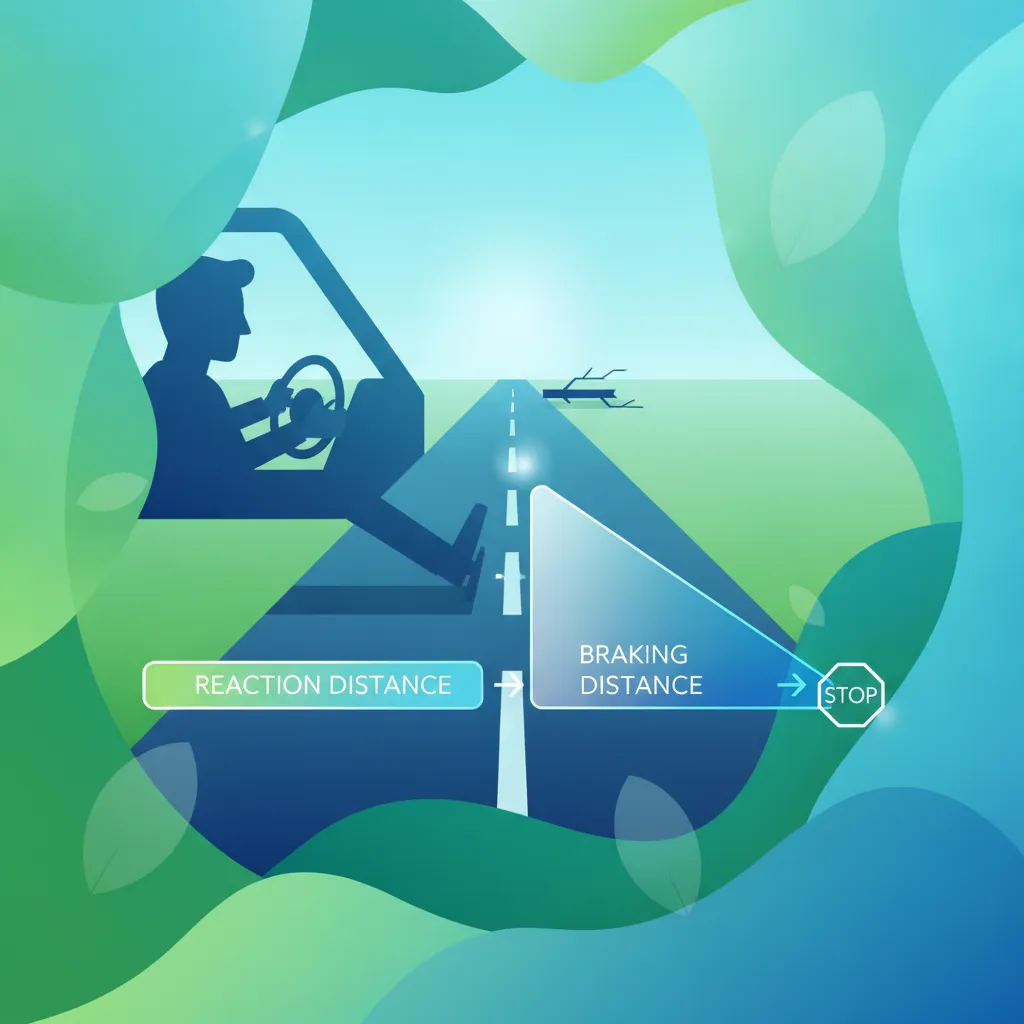
Lesson content overview
Understanding how long it takes to bring a vehicle to a complete stop is a fundamental aspect of safe driving. This lesson delves into the critical concepts of stopping distance, breaking it down into its two main components: thinking distance and braking distance. By grasping these principles, Great Britain Category B learner drivers can make informed decisions about speed, maintain safe following distances, and react effectively to hazards, thereby complying with UK traffic law and preventing collisions.
This comprehensive guide will explain the factors that influence how far your vehicle travels from the moment you perceive a hazard until it comes to a standstill. You'll learn about the impact of speed, weather conditions, road surface, and your vehicle's condition, all crucial for safe speed management and hazard perception on UK roads.
Total stopping distance is the overall linear distance a vehicle travels from the instant a driver first becomes aware of a hazard until the vehicle stops completely. This crucial safety metric integrates both human factors and vehicle dynamics. It is not merely a single number but a dynamic calculation that varies significantly based on numerous circumstances.
The primary purpose of understanding stopping distance is to quantify the space required to react to unforeseen events and bring a vehicle to a safe halt. This understanding underpins many safe driving practices, including setting appropriate following distances and selecting a safe speed for prevailing conditions. Failing to accurately estimate stopping distance is a major cause of rear-end collisions and other traffic incidents.
Thinking distance, also known as reaction distance, is the distance your vehicle travels from the moment you first perceive a hazard until you initiate the braking manoeuvre. This period is driven entirely by human factors: your ability to perceive the danger, process the information, decide on a course of action, and physically move to apply the brakes.
The duration of this period is referred to as Perception–Reaction Time (PRT). For an alert driver under normal conditions, the standard PRT is often considered to be around 1.5 seconds. However, this can extend significantly, potentially up to 2.5 seconds or more, under adverse conditions or if the driver is impaired.
Several factors can impact your thinking distance:
To calculate thinking distance, you can use the formula:
Thinking Distance (metres) = Speed (m/s) × Perception-Reaction Time (seconds)
For practical purposes in the UK where speed is often given in miles per hour (mph), a rough estimate is used: for every 10 mph of speed, the thinking distance is approximately 3 metres. For example, at 30 mph, the thinking distance is roughly 9 metres.
Braking distance is the distance your vehicle travels from the moment you apply the brakes until it comes to a complete stop. Unlike thinking distance, which is primarily a human factor, braking distance is largely determined by the physics of the vehicle and its interaction with the road surface.
The key factors influencing braking distance include:
The total stopping distance (SSD) is simply the sum of the thinking distance and the braking distance.
Total Stopping Distance = Thinking Distance + Braking Distance
The Highway Code provides estimated typical stopping distances for cars under normal, dry conditions. These are based on an average reaction time and good vehicle/road conditions. It is crucial to remember that these are minimum distances and should be increased for adverse conditions.
For example, at 50 mph (approximately 22.35 m/s):
It is vital to understand that the estimated stopping distances in the Highway Code are for ideal conditions. In reality, these distances will almost always be longer due to variations in driver, vehicle, and road factors. Always err on the side of caution.
When conditions are less than ideal, both thinking and braking distances increase significantly.
Drivers must always adjust their speed to account for these conditions. This is not just a recommendation but a legal requirement under the Highway Code.
Several interconnected factors combine to determine your total stopping distance. Understanding each of these allows you to make more informed decisions behind the wheel.
Your physical and mental state profoundly affects your perception-reaction time (PRT).
The mechanical state of your vehicle directly influences its ability to decelerate effectively.
The environment you drive in plays a major role in stopping distances.
The Highway Code and other UK traffic laws provide clear guidance on maintaining safe stopping distances and adjusting your driving for conditions.
Highway Code Rule 103: "You should drive at a speed that will allow you to stop safely, well within the distance you can see to be clear."
This rule is fundamental. It means you must always be able to stop your vehicle within the visible clear road ahead. This distance must be increased when road surfaces, weather conditions, or traffic are adverse. Tailgating, or following too closely, is a common and dangerous violation of this principle.
Highway Code Rule 104: "You MUST adjust your speed to suit the conditions."
Speed limits represent the maximum speed under ideal conditions. Drivers have a mandatory responsibility to reduce their speed below the limit if conditions such as heavy rain, fog, ice, snow, or heavy traffic make it unsafe to drive at the maximum allowed speed. Failure to do so can result in prosecution for dangerous driving.
Highway Code Rule 115: "Your vehicle MUST be roadworthy and maintained in good condition."
This includes ensuring your brakes are in good working order and your tyres meet the legal minimum tread depth of 1.6 mm across the central three-quarters of the tread and around the entire circumference. Poor vehicle maintenance compromises braking efficiency and safety.
The Two-Second Rule is a widely taught guideline for maintaining a safe following distance under normal, dry conditions. To apply it:
Adjusting the Two-Second Rule: In adverse conditions, increase your following gap. Use a three-second rule in wet weather or heavy traffic, and up to ten seconds or more in icy or snowy conditions. When following large vehicles, motorcycles, or vehicles towing trailers, allow extra room.
Highway Code Rule 111 (extract): "In a manual car, use a lower gear on steep downhill gradients to help control your speed."
Using engine braking, especially when going downhill or on slippery surfaces, can help reduce speed and take some strain off your vehicle's friction brakes. This technique uses the engine's resistance to slow the vehicle. It's a smoother way to reduce speed and can be particularly effective on icy roads where sudden braking could lead to a skid.
Understanding common pitfalls related to stopping distances can help you drive more safely.
Tailgating (Following Too Closely):
Driving at the Speed Limit in Adverse Weather:
Over-reliance on ABS:
Ignoring Vehicle Load:
Panic Braking:
Underestimating Thinking Distance at High Speeds:
Failing to Anticipate Aquaplaning:
Let's consider how these principles apply in different situations on Great Britain roads.
Mastering these concepts is crucial for passing your Great Britain Category B driving theory test and, more importantly, for a lifetime of safe driving.
Explore all units and lessons included in this driving theory course.
Lesson content overview
Explore all units and lessons included in this driving theory course.
Explore search topics learners often look for when studying Stopping Distance Calculations and Reaction Times. These topics reflect common questions about road rules, driving situations, safety guidance, and lesson level theory preparation for learners in Great Britain.
Browse additional driving theory lessons that cover connected traffic rules, road signs, and common driving situations related to this topic. Improve your understanding of how different rules interact across everyday traffic scenarios.
Understand how speed, vehicle condition, road surface, and weather impact stopping distances in Great Britain. Learn to adjust driving for rain, ice, and fog to maintain safe distances and comply with Highway Code rules.

This lesson provides essential advice for driving when weather conditions are poor. It explains how rain can cause aquaplaning and why you must double your following distance. You will also learn techniques for driving in icy conditions, including gentle use of controls to avoid skidding, and the correct use of lights in fog.
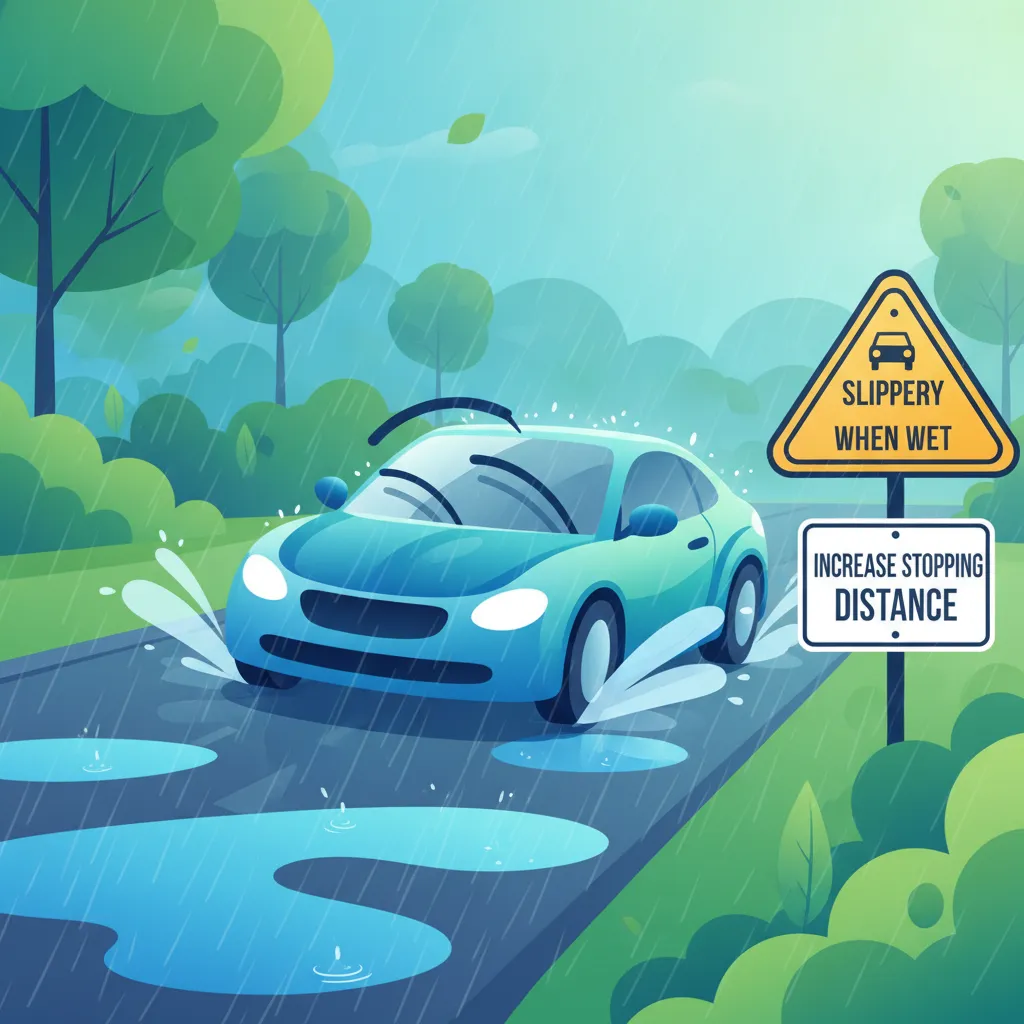
This lesson explains how different weather conditions impact the handling and stability of a large passenger vehicle. It covers the risks of aquaplaning in heavy rain, the effect of high winds on vehicle stability, and the severe reduction in visibility caused by fog. Learners will understand how ice and snow dramatically increase stopping distances and require extremely gentle control inputs to prevent skidding. Strategies for adapting speed and increasing following distances are emphasized.
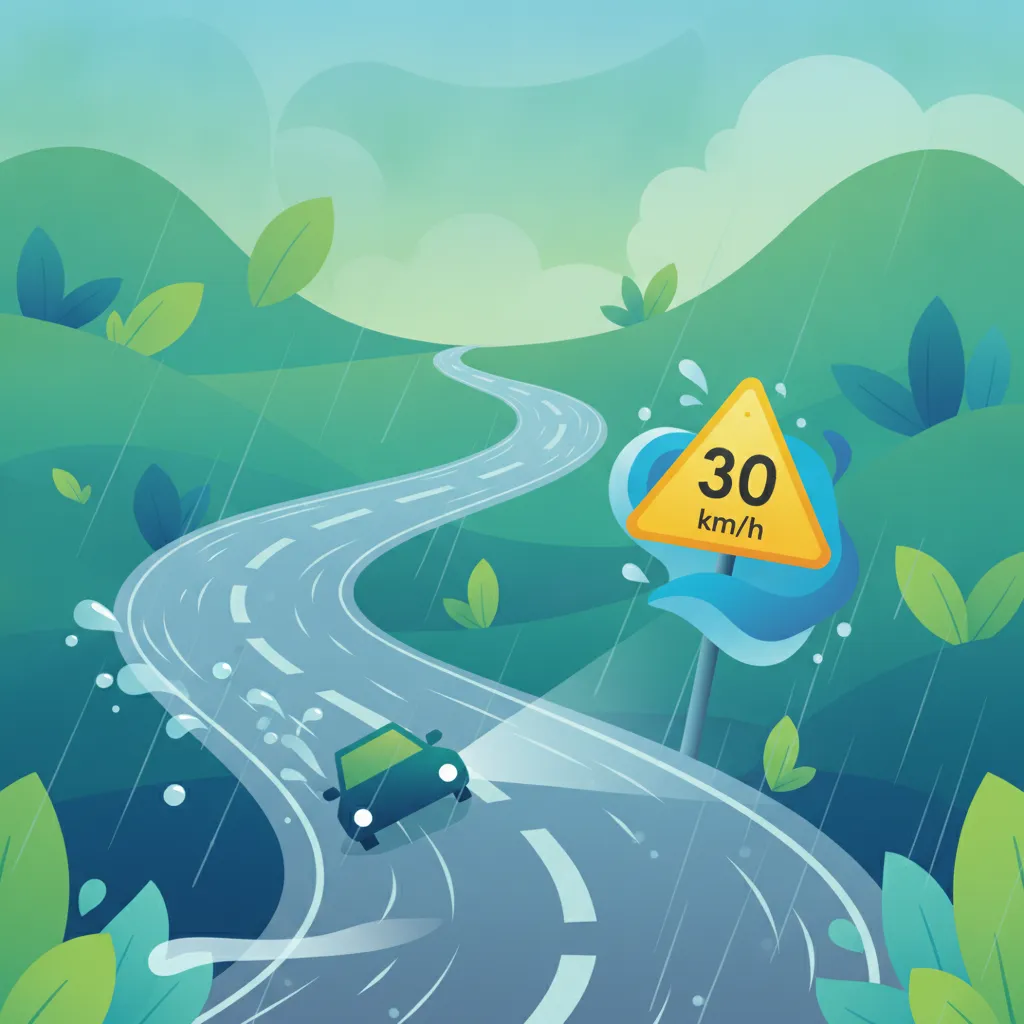
This lesson explains that safe driving often requires travelling at a speed lower than the legal limit. It covers how to adjust your speed for adverse conditions such as rain, which can double your stopping distance, or fog, which severely reduces visibility. The goal is to always be able to stop safely in the distance you can see to be clear.
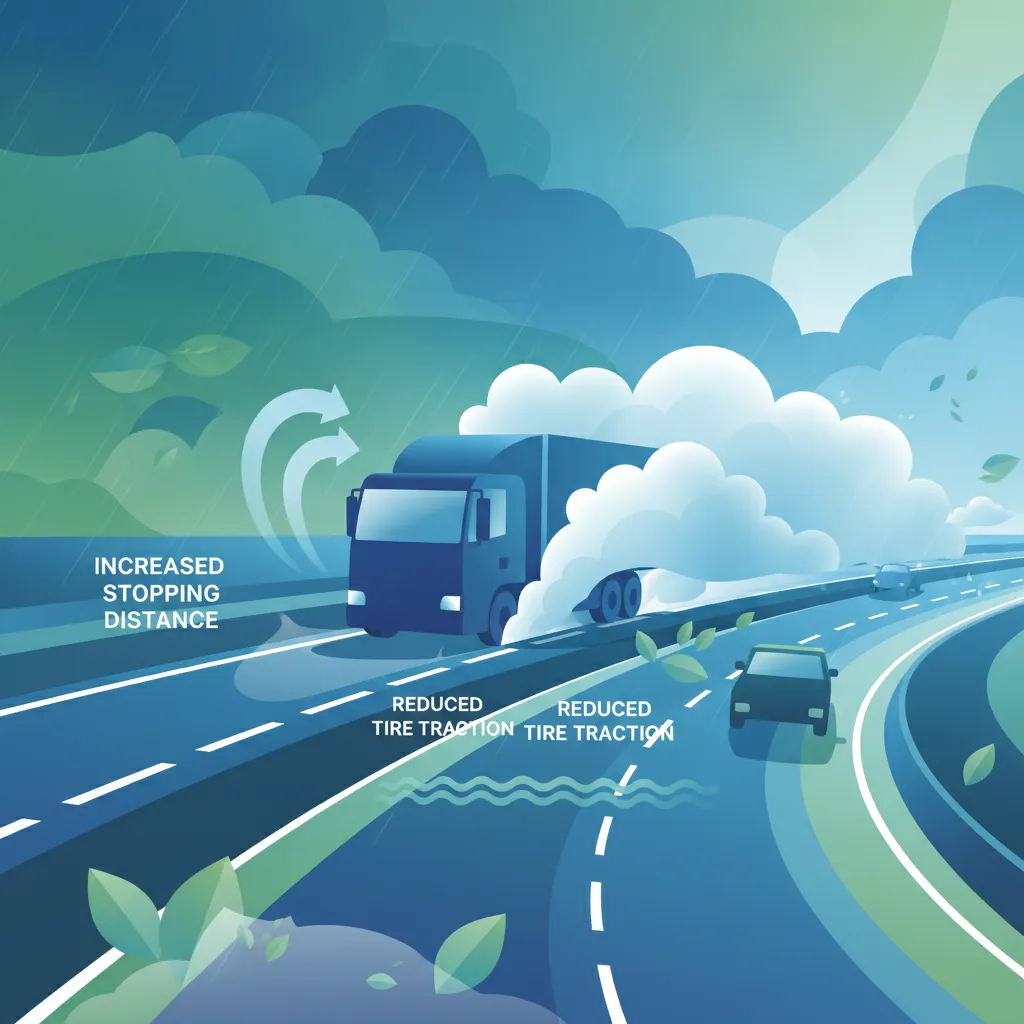
This lesson details how different adverse weather conditions uniquely affect the handling and stability of a heavy goods vehicle. It covers the increased stopping distances in rain, reduced visibility in fog, severe traction loss on ice, and the dangerous effect of strong crosswinds on high-sided vehicles. You will learn specific techniques for adjusting speed, increasing following distances, and using vehicle controls smoothly to maintain safety in challenging weather.
This lesson teaches a practical method for maintaining a safe distance from the vehicle in front. The 'two-second rule' provides a minimum time gap in dry conditions, which should be doubled to four seconds in the wet. Adhering to this rule gives you sufficient time to react and brake safely if the vehicle ahead stops suddenly.

This lesson equips drivers with strategies for maintaining control of a heavy vehicle during adverse weather conditions like heavy rain, ice, snow, and strong crosswinds. It covers the physics of traction loss, aquaplaning, and skidding, and explains how to use smooth inputs for steering, acceleration, and braking. The function of electronic stability control systems and other driver aids is also discussed as part of a proactive approach to safety in challenging environments.
This lesson provides essential advice for riding safely in adverse weather conditions that reduce tyre grip. You will learn how rain, ice, and wet leaves dramatically increase braking distances and affect handling. Key strategies covered include reducing speed, increasing following distances, making smooth control inputs, and anticipating slippery areas to maintain control and avoid skidding on compromised road surfaces.
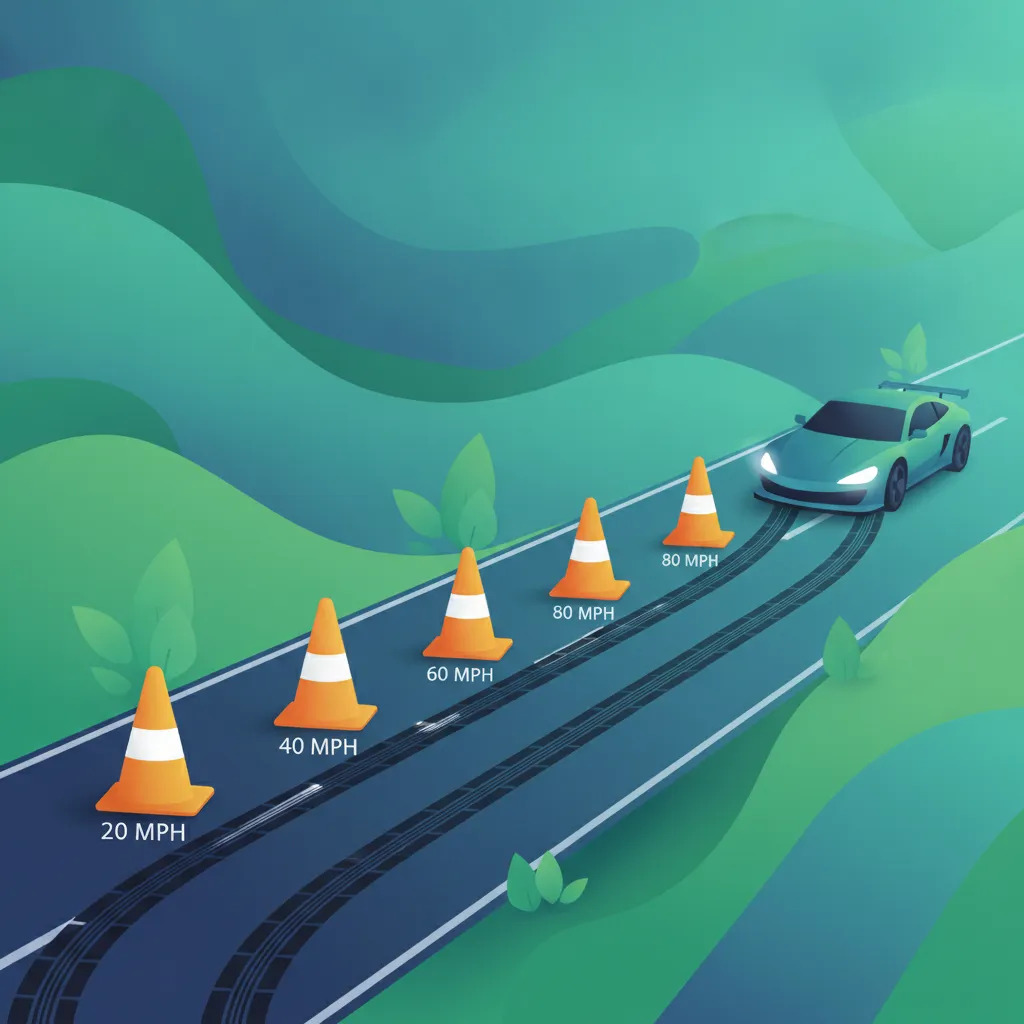
This lesson focuses on effective braking strategies, including brake modulation, ABS usage, and emergency braking procedures for large vehicles. Learners will understand how to calculate total stopping distances, taking into account perception-reaction time, vehicle mass, speed, and road conditions. The discussion also reviews brake wear, proper maintenance, and the effect of passenger load on braking performance. Mastering these concepts is crucial for reducing stopping distances and increasing safety margins.
This lesson provides guidance on where and how to park your vehicle legally and safely. It covers common manoeuvres like parallel parking and reversing into a bay, as well as specific rules for parking on a hill or at night. You will also learn to recognise locations where stopping is prohibited, such as on zig-zag lines or in clearways.
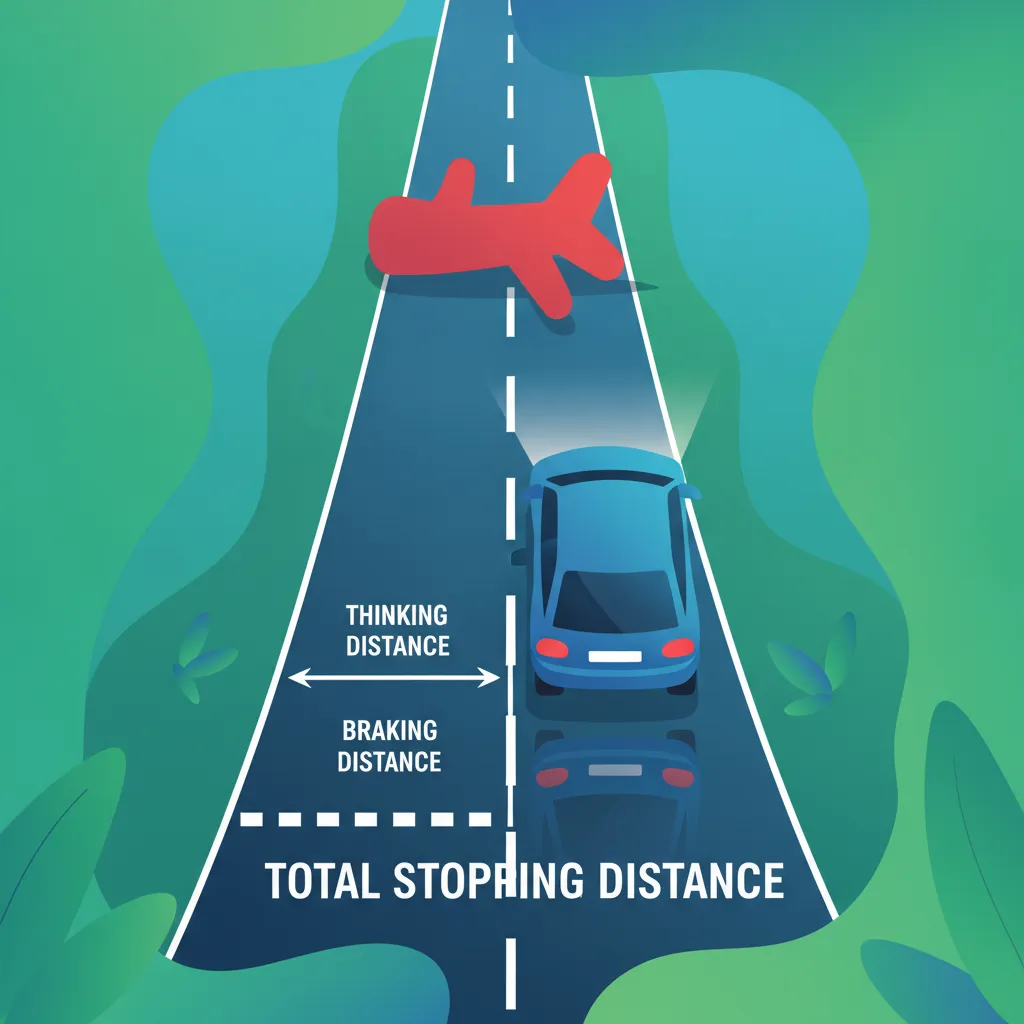
This lesson provides a detailed examination of the powerful air braking systems found on most heavy goods vehicles, including ABS and EBS. It explains the components of total stopping distance—thinking distance and braking distance—and how they are affected by speed, mass, and road conditions. The concept of brake fade, its causes, and prevention methods are also covered, along with the importance of regular brake inspections for maintaining safety.
Master the components of total stopping distance. This lesson clarifies thinking distance related to reaction time and braking distance influenced by vehicle physics, essential for understanding hazard perception and safe speed.
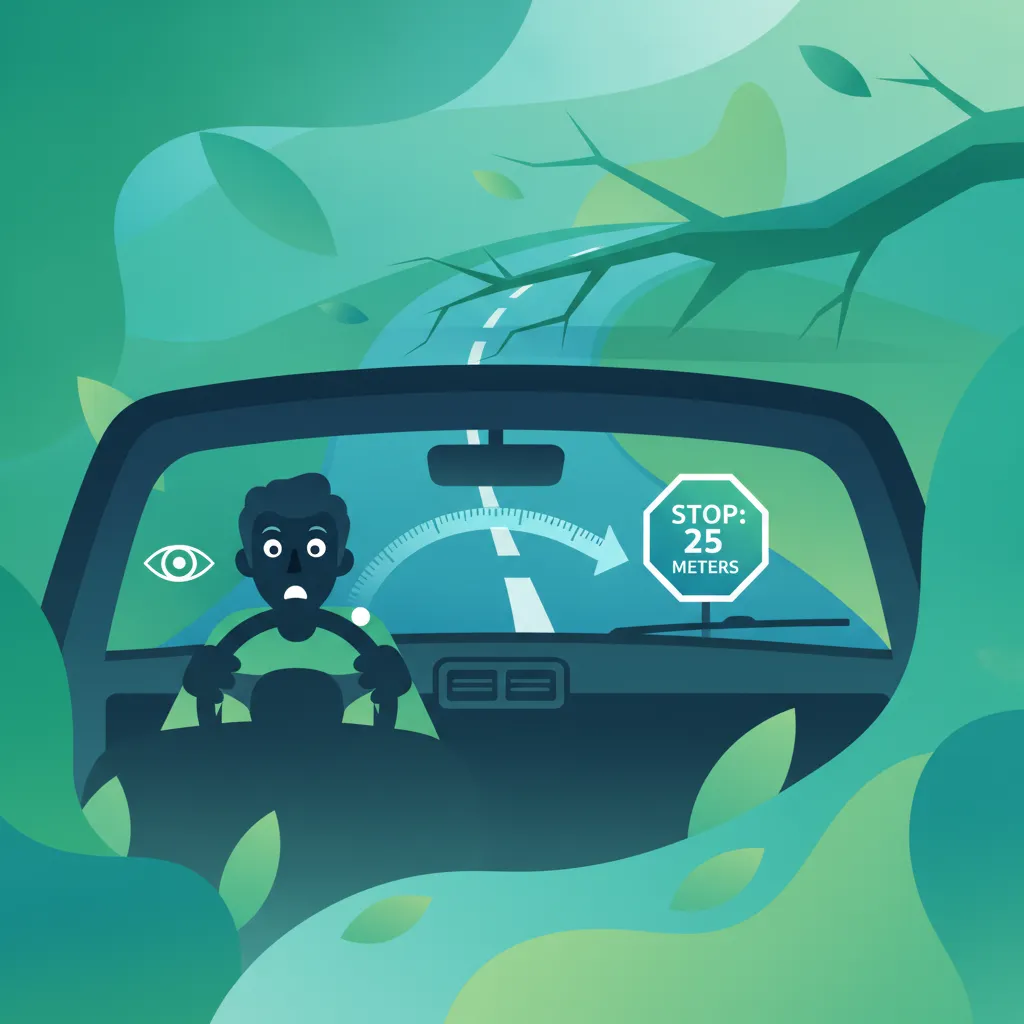
This lesson explains the components of total stopping distance: the distance travelled while you react (thinking distance) and the distance travelled while you brake. You will learn how speed dramatically increases this distance and how adverse weather or poor road surfaces can extend it further. Understanding these factors is crucial for anticipating hazards and avoiding collisions.
This lesson focuses on effective braking strategies, including brake modulation, ABS usage, and emergency braking procedures for large vehicles. Learners will understand how to calculate total stopping distances, taking into account perception-reaction time, vehicle mass, speed, and road conditions. The discussion also reviews brake wear, proper maintenance, and the effect of passenger load on braking performance. Mastering these concepts is crucial for reducing stopping distances and increasing safety margins.
This lesson teaches a practical method for maintaining a safe distance from the vehicle in front. The 'two-second rule' provides a minimum time gap in dry conditions, which should be doubled to four seconds in the wet. Adhering to this rule gives you sufficient time to react and brake safely if the vehicle ahead stops suddenly.
This lesson provides a detailed examination of the powerful air braking systems found on most heavy goods vehicles, including ABS and EBS. It explains the components of total stopping distance—thinking distance and braking distance—and how they are affected by speed, mass, and road conditions. The concept of brake fade, its causes, and prevention methods are also covered, along with the importance of regular brake inspections for maintaining safety.
This lesson explores how to maintain safe following distances specific to large passenger vehicles, accounting for their higher inertia and longer braking distances. It covers time-gap calculations, such as the four-second rule, and dynamic following distance adjustments based on speed and road conditions. Emphasis is placed on avoiding tailgating, ensuring a sufficient safety buffer is always present, and developing an awareness of convoy driving scenarios where multiple large vehicles are present.
This lesson explains that safe driving often requires travelling at a speed lower than the legal limit. It covers how to adjust your speed for adverse conditions such as rain, which can double your stopping distance, or fog, which severely reduces visibility. The goal is to always be able to stop safely in the distance you can see to be clear.

This lesson reinforces the vital safety rule of maintaining an adequate following distance from the vehicle ahead. It explains why the standard 'two-second rule' must be extended for heavy vehicles, especially in poor weather or when heavily laden, to account for longer stopping distances. You will learn practical methods for judging a safe gap in various traffic situations, creating a crucial safety buffer to react to unforeseen hazards.
This lesson provides essential advice for driving when weather conditions are poor. It explains how rain can cause aquaplaning and why you must double your following distance. You will also learn techniques for driving in icy conditions, including gentle use of controls to avoid skidding, and the correct use of lights in fog.
This lesson explains how different weather conditions impact the handling and stability of a large passenger vehicle. It covers the risks of aquaplaning in heavy rain, the effect of high winds on vehicle stability, and the severe reduction in visibility caused by fog. Learners will understand how ice and snow dramatically increase stopping distances and require extremely gentle control inputs to prevent skidding. Strategies for adapting speed and increasing following distances are emphasized.

This lesson teaches effective and safe braking techniques tailored for mopeds and light quadricycles. It explains how to balance the use of the front and rear brakes for optimal stopping power and stability. You will learn the concept of progressive braking for smooth, controlled stops and the correct procedure for performing an emergency stop while maintaining control and minimizing skid risk, a critical skill for every rider.
Find clear answers to common questions learners have about Stopping Distance Calculations and Reaction Times. Learn how the lesson is structured, which driving theory objectives it supports, and how it fits into the overall learning path of units and curriculum progression in Great Britain. These explanations help you understand key concepts, lesson flow, and exam focused study goals.
Thinking distance is the distance your vehicle travels while you react to a hazard before hitting the brakes. Braking distance is the distance traveled once the brakes have been applied until the car comes to a complete stop.
No, it actually increases much more significantly. Because kinetic energy increases with the square of the speed, doubling your speed will typically quadruple your total stopping distance.
In wet or icy conditions, your braking distance can double or even increase ten-fold. You must increase your following distance significantly to compensate for the reduced grip between your tyres and the road.
The official DVSA stopping distances provided in the Highway Code are intended for normal road conditions and typical passenger cars. Larger vehicles or HGVs will have much longer stopping distances due to their weight.
Dive into our comprehensive question bank to find exactly what you need for your Great Britain theory test. Use our advanced filters to pinpoint specific subjects or test your knowledge on challenging areas, ensuring you're fully prepared for success.