
This lesson guides you through the critical decision-making process for safe overtaking on Great Britain's roads. You will learn to assess road conditions, judge relative speeds, and identify where overtaking is prohibited, building on the fundamental lane discipline covered in previous units.
Lesson content overview
Overtaking is one of the most complex and potentially dangerous manoeuvres a driver can perform. Executed incorrectly, it significantly increases the risk of serious collisions, making it a critical skill for any Great Britain Category B learner driver to master. This comprehensive lesson details the decision-making process required for safe overtaking, covering how to assess the road ahead, judge speeds, understand legal prohibitions, and apply correct driving techniques.
Our aim is to equip you with the knowledge to reduce crash risk, improve traffic flow, and ensure full compliance with the Highway Code and legal obligations. This involves understanding road markings, priority rules, and effective speed management, all of which are foundational to successful and safe overtaking.
Overtaking, also known as passing, involves moving your vehicle past another vehicle that is travelling in the same direction, typically by using an adjacent lane or the opposing carriageway where permitted. It's a dynamic manoeuvre that demands careful judgement, precise vehicle control, and an acute awareness of the surrounding road environment and traffic conditions.
The fundamental principle governing all overtaking manoeuvres is ensuring the action can be completed without endangering any other road user. This includes drivers of other vehicles, cyclists, motorcyclists, and pedestrians. This core principle is underpinned by several key considerations:
Safe overtaking is a complex interaction involving your vehicle's capabilities, the specific road environment, the composition of traffic around you, and a strict adherence to legal constraints.
Before you even consider initiating an overtaking manoeuvre, the primary assessment you must make is whether you have a clear road ahead. This concept is paramount to safety and refers to an uninterrupted stretch of road, completely free from obstructions or hazards. This clear stretch must be at least as long as your vehicle plus a substantial safety margin, ensuring you can complete the manoeuvre safely before encountering any new hazards or oncoming traffic.
Practically, this means you must thoroughly scan ahead, confirm that no vehicles (oncoming or same direction), junctions, pedestrian crossings, or other potential hazards are approaching within the required distance to complete your manoeuvre safely.
Associated Highway Code Rules:
Many drivers mistakenly believe that a broken white line alone guarantees sufficient clearance for overtaking. While a broken line may permit overtaking, it does not guarantee safety. You must still perform your own assessment of the clear road ahead, taking into account any temporary obstructions like roadworks or slow-moving agricultural vehicles.
Accurately assessing speeds and ensuring you have sufficient space are critical components of a safe overtaking manoeuvre. These involve calculating relative speed and maintaining a safe overtaking gap.
This is the process of estimating the speed difference between your vehicle and the vehicle you intend to overtake, as well as the speed of any opposing traffic.
You must be confident that your vehicle can accelerate sufficiently to pass the other vehicle safely and rejoin your lane without causing any inconvenience or danger to other road users, especially before encountering any oncoming traffic. Over-reliance on visual estimation alone, without considering speed limits or your vehicle's acceleration capability, is a common misunderstanding that can lead to dangerous situations. For example, if you are travelling at 60 mph and wish to overtake a car doing 50 mph, you need to ensure you can accelerate past it and re-enter your lane safely before an oncoming vehicle travelling at 60 mph reaches your position.
The safe overtaking gap is the minimum amount of space required both in front of your vehicle and in front of any oncoming traffic to allow you to complete the overtaking manoeuvre safely. This gap is dynamic and varies significantly based on several factors.
The components of a safe overtaking gap include:
You must never attempt to overtake if either of these gaps is insufficient. Many drivers mistakenly assume a ‘large gap’ is always safe, ignoring the impact of their speed, the speed of other vehicles, or road gradient. For example, on a single carriageway at 50 mph, you might aim for a lead gap of at least three vehicle lengths and an oncoming gap that allows you to complete the manoeuvre in around 10-12 seconds under dry conditions. This duration needs to be extended significantly in adverse conditions.
Always remember that overtaking requires judging distances and speeds accurately, which becomes harder with higher speeds and reduced visibility. When in doubt, it is always safer not to overtake.
Road markings are vital visual cues etched onto the roadway that provide clear instructions regarding lane usage, overtaking permissions, and correct road positioning. Understanding these markings is fundamental to lawful and safe overtaking in Great Britain.
Common Misunderstandings: A frequent mistake is assuming a solid line only prohibits lane changes, not overtaking itself. In reality, a solid white line explicitly prohibits crossing it to overtake unless one of the very specific exceptions in Rule 122 applies. Always interpret line markings to determine overtaking permissibility, not just lane changing.
The Highway Code provides explicit rules and guidance to ensure safety during overtaking. Adhering to these is not just good practice but a legal requirement for Great Britain Category B drivers.
Certain situations and locations are expressly illegal or unsafe for overtaking due to inherent road conditions, specific markings, or surrounding traffic dynamics.
Proper use of vehicle indicators and correct lane positioning are essential for communicating your intentions to other road users and maintaining orderly traffic flow.
Always remember to cancel your indicators promptly after completing the manoeuvre to avoid confusing other road users.
While not solely an overtaking rule, maintaining a safe following distance, or headway, is crucial when you are considering an overtake. You need sufficient space behind the vehicle ahead to react and brake if they slow down unexpectedly. If you are too close, you compromise your ability to assess the situation safely and may be forced into an unsafe overtake.
Your vehicle's capabilities and the physical characteristics of the road significantly influence the safety and feasibility of an overtaking manoeuvre.
The acceleration and braking capabilities of your vehicle are paramount.
Carrying a heavy load, such as passengers or a full boot, or towing a trailer, drastically alters your vehicle's performance.
The slope of the road, or its gradient, directly impacts vehicle dynamics.
Drivers must adjust their overtaking strategy, including speed and gap requirements, according to their vehicle's load and the road's gradient. The Highway Code implies this in Rule 152, which states you must ensure you have the capability to complete overtaking safely.
Environmental conditions play a critical role in determining the safety and feasibility of overtaking. Reduced visibility and altered road surface traction demand significant adjustments to your overtaking strategy.
Under adverse weather conditions, you must:
Treat overtaking rules as dynamic. Never ignore the impact of weather. The safest option in poor weather is often to remain behind the vehicle ahead until conditions improve or a very clear, safe opportunity arises.
Night driving presents its own set of challenges for overtaking.
When driving at night, you must apply extra caution, use your headlights correctly, and be prepared to take longer to assess the situation before deciding to overtake.
Ignoring the rules and principles of safe overtaking can lead to serious consequences, from fixed penalties and penalty points to severe collisions and legal prosecution. Understanding common violations is the first step in avoiding them.
Assess Legality: Check road markings (solid/broken white lines) and temporary signs to ensure overtaking is permitted.
Check Road Ahead (Clear View): Confirm the uninterrupted stretch of road ahead is long enough (your vehicle length + safety margin) and free from obstructions, junctions, or oncoming traffic.
Check Mirrors and Blind Spots: Use your interior and exterior mirrors, and physically turn your head to check your blind spots to ensure no vehicles are alongside or rapidly approaching from behind.
Signal Intent: Clearly signal your intention to move out and overtake in good time.
Accelerate Smoothly: Increase your speed to quickly and safely pass the vehicle ahead, maintaining a safe lead gap.
Ensure Safe Clearance: Maintain sufficient lateral clearance from the vehicle you are passing (at least 1.5m for vulnerable road users).
Rejoin Safely: Once you can see the overtaken vehicle completely in your interior mirror, signal your intention to move back into the original lane. Check mirrors and blind spots again, then move back smoothly without cutting off the vehicle you have just passed.
Cancel Signal: Promptly cancel your indicator.
Overtaking rules and their application are not static; they vary significantly depending on the prevailing conditions and the type of road. Safe drivers adapt their behaviour to these contextual variations.
| Condition | Variation in Principles / Rules | Reasoning |
|---|---|---|
| Weather (Rain, Fog, Snow, Ice) | Increase clear-road-ahead distance by at least 50%. Extend the safe overtaking gap significantly. Consider not overtaking if visibility is below 100 metres. | Reduced friction and visibility increase braking distance and reaction time. |
| Time of Day (Night) | Use dipped beam headlights. Be extra cautious for glare from oncoming vehicles, which can obscure judgment. | Reduced overall visibility and increased glare make distance and speed assessment harder. |
| Road Type – Dual Carriageway | Overtaking generally uses the right-hand lane (if you are in the left-hand lane). Only overtake over broken white lines. Never cross solid white lines. | Dual carriageways have higher speeds; solid lines denote strict prohibition for safety. |
| Road Type – Single Carriageway | Overtaking may involve using the opposing carriageway. Must strictly observe solid line prohibitions and ensure a clear view of oncoming traffic. | Lower speeds but higher potential for head-on collisions due to shared space. |
| Road Type – Motorway | Overtaking typically occurs in the lanes to your right. You generally should not overtake on the left (undertaking) unless traffic is moving slowly in queues and your lane is moving faster. | Motorway speeds are high; overtaking must be done carefully and lawfully. |
| Intersection Proximity | Overtaking prohibited within 100 metres (or where view is restricted) of any junction. | Vehicles may be turning, stopping, or accelerating from the junction, creating hazards. |
| Vehicle Load (Heavy load/trailer) | Greater distance required to accelerate and brake. Significantly extend overtaking gaps. | Increased inertia reduces acceleration and extends braking distances. |
| Presence of Vulnerable Road Users (VRUs) | Additional caution required. Do not overtake cyclists, motorcyclists, or horse riders without adequate clearance (minimum 1.5 metres for cyclists/motorcyclists). | VRUs are less visible, less protected, and their speed/direction can be harder to judge. |
| Road Gradient (Uphill/Downhill) | Uphill: longer overtaking distance may be needed due to reduced engine power. Downhill: increase caution due to higher potential speed of oncoming traffic and less control. | Gravity affects vehicle dynamics, altering safe gap requirements and overall stability. |
| Temporarily Changed Road Markings (Roadworks, Police Directions) | These override standard markings. Obey temporary signs, cones, or traffic officers. | Temporary conditions may indicate immediate hazards or changes in traffic flow. |
Mastering safe overtaking requires a comprehensive understanding of regulations, environmental factors, vehicle capabilities, and constant vigilance. As a Category B learner driver in Great Britain, you must always prioritise safety.
To summarise, before every overtaking manoeuvre:
By diligently applying these concepts, rules, and insights, you will develop the necessary skills and judgment to perform safe and legal overtaking manoeuvres, contributing to safer roads for everyone.
Explore all units and lessons included in this driving theory course.
Lesson content overview
Explore all units and lessons included in this driving theory course.
Explore search topics learners often look for when studying Overtaking Strategies and Restrictions. These topics reflect common questions about road rules, driving situations, safety guidance, and lesson level theory preparation for learners in Great Britain.
Browse additional driving theory lessons that cover connected traffic rules, road signs, and common driving situations related to this topic. Improve your understanding of how different rules interact across everyday traffic scenarios.
Understand the critical situations and road conditions where overtaking is unsafe or illegal according to the Highway Code. Learn to identify prohibited overtaking zones to ensure compliance and road safety in Great Britain.
This lesson explains how lines running parallel to the kerb control traffic movement. You will learn that broken white lines divide lanes, while solid white lines generally prohibit crossing them. The specific rules for double white lines, including when you are permitted to cross, are also covered in detail to ensure safe overtaking.
This lesson provides guidance on where and how to park your vehicle legally and safely. It covers common manoeuvres like parallel parking and reversing into a bay, as well as specific rules for parking on a hill or at night. You will also learn to recognise locations where stopping is prohibited, such as on zig-zag lines or in clearways.
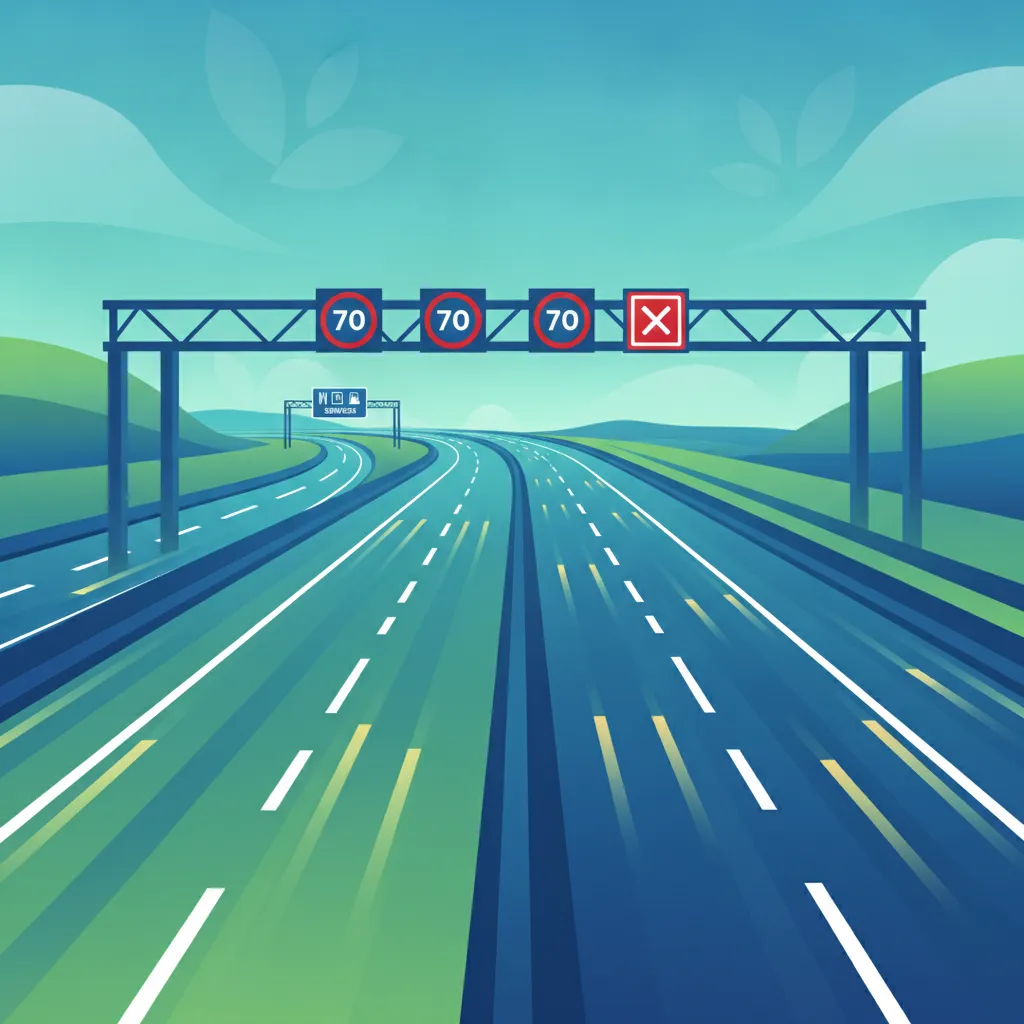
This lesson covers the unique aspects of motorway driving, from joining and leaving the carriageway to the strict lane discipline of keeping to the left unless overtaking. It explains the features of smart motorways, such as variable speed limits and the meaning of a Red X symbol above a lane. The safe procedure for handling a breakdown is also a key topic.
This lesson explains the critical rules of priority that govern traffic flow at junctions, roundabouts, and crossings throughout Great Britain. You will learn how to determine who has right-of-way at both marked and unmarked intersections, and the specific rules for giving way to traffic on roundabouts. The lesson also reinforces the hierarchy of road users from the Highway Code, ensuring you understand when to yield to pedestrians and other vulnerable users.
This lesson focuses on the regulations and best practices for driving a bus or coach on motorways. It details the specific speed limits applicable to PCVs and reinforces strict lane discipline. The content covers the correct procedures for safely joining from a slip road, overtaking other vehicles, and exiting the motorway. It also explains the features of smart motorways and the correct safety procedures to follow in the event of a breakdown, including the use of the hard shoulder.
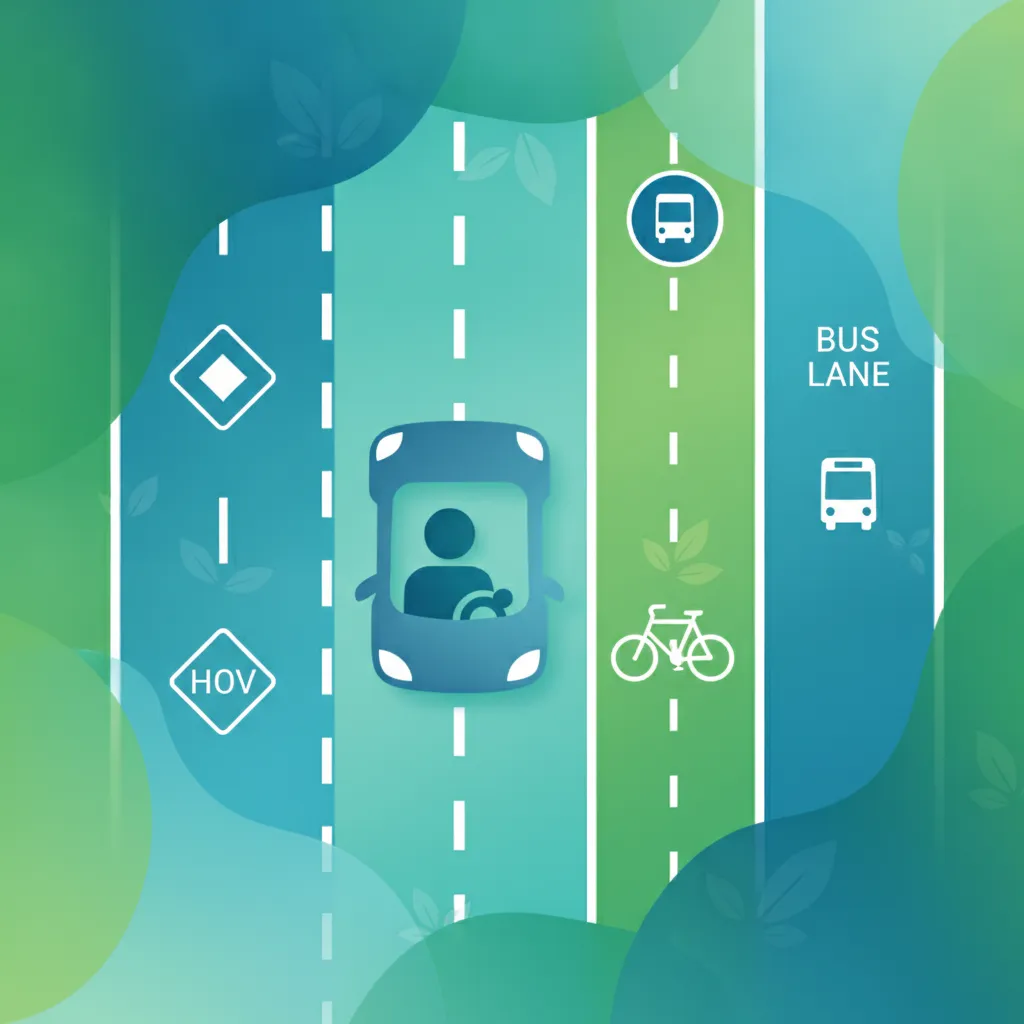
This lesson covers lanes designated for specific types of traffic to improve flow and safety. You will learn to identify mandatory and advisory cycle lanes, and understand the signs indicating the operational hours of bus lanes. The rules governing these lanes are critical for avoiding penalties and ensuring the safety of all road users.
This lesson covers the explicit priority instructions given by signs and markings at junctions. It explains that at a 'Give Way' line, you must yield to traffic on the major road but can proceed if it is safe. At a 'Stop' sign, you must come to a complete halt before the line, assess the traffic, and only proceed when safe.
This lesson examines the unique rules and restrictions governing buses and coaches, focusing on bus lane priority, time-based restrictions, and loading zone limitations. Learners will explore the criteria for using bus-only routes and understand the legal consequences of non-compliance. The content also reviews signage indicating bus gate operation and areas where passenger vehicles are prohibited from stopping or loading outside of designated zones, ensuring lawful and efficient urban navigation.
Explore how factors like weather, road type, vehicle load, and time of day affect safe overtaking. Learn essential adjustments for driving theory in Great Britain's diverse conditions.

This lesson provides essential advice for driving when weather conditions are poor. It explains how rain can cause aquaplaning and why you must double your following distance. You will also learn techniques for driving in icy conditions, including gentle use of controls to avoid skidding, and the correct use of lights in fog.
This lesson explains that safe driving often requires travelling at a speed lower than the legal limit. It covers how to adjust your speed for adverse conditions such as rain, which can double your stopping distance, or fog, which severely reduces visibility. The goal is to always be able to stop safely in the distance you can see to be clear.
This lesson explains how different weather conditions impact the handling and stability of a large passenger vehicle. It covers the risks of aquaplaning in heavy rain, the effect of high winds on vehicle stability, and the severe reduction in visibility caused by fog. Learners will understand how ice and snow dramatically increase stopping distances and require extremely gentle control inputs to prevent skidding. Strategies for adapting speed and increasing following distances are emphasized.
This lesson provides essential advice for riding safely in adverse weather conditions that reduce tyre grip. You will learn how rain, ice, and wet leaves dramatically increase braking distances and affect handling. Key strategies covered include reducing speed, increasing following distances, making smooth control inputs, and anticipating slippery areas to maintain control and avoid skidding on compromised road surfaces.

This lesson equips drivers with strategies for maintaining control of a heavy vehicle during adverse weather conditions like heavy rain, ice, snow, and strong crosswinds. It covers the physics of traction loss, aquaplaning, and skidding, and explains how to use smooth inputs for steering, acceleration, and braking. The function of electronic stability control systems and other driver aids is also discussed as part of a proactive approach to safety in challenging environments.
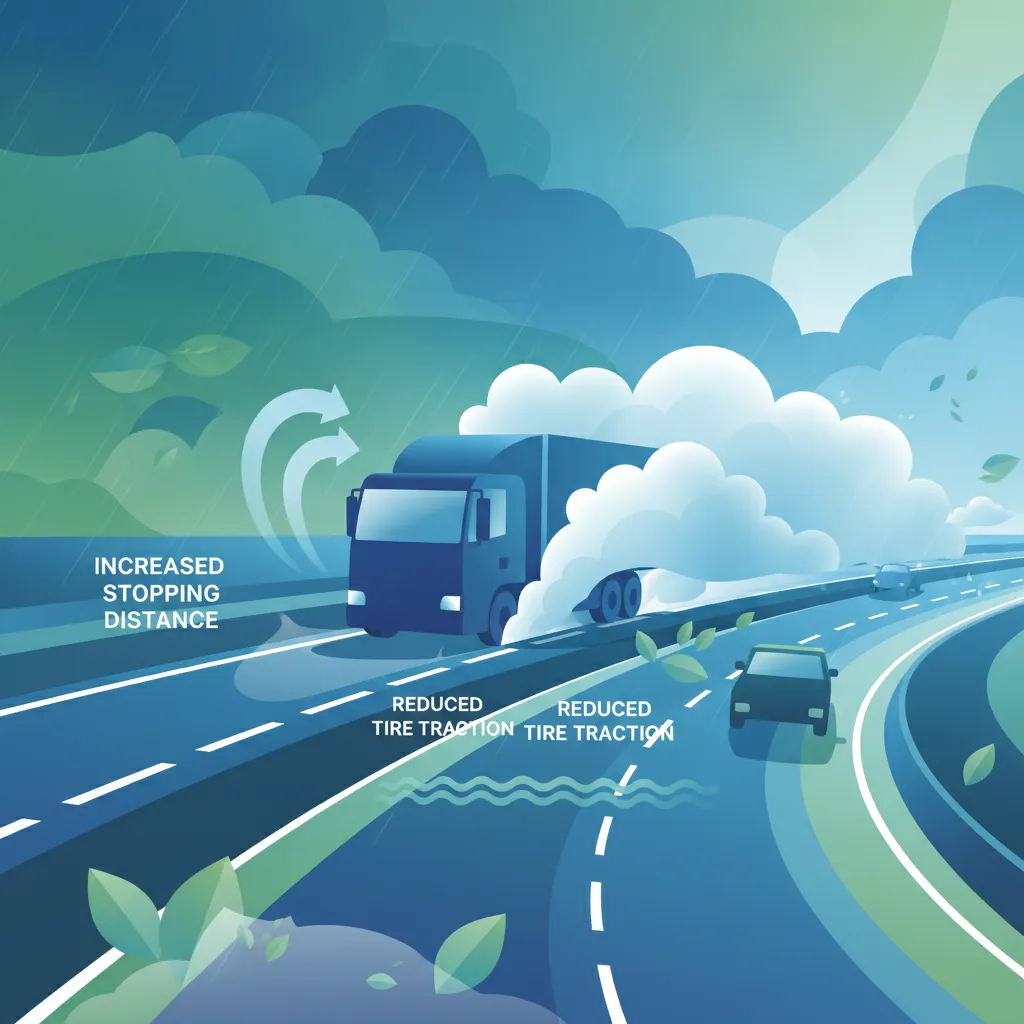
This lesson details how different adverse weather conditions uniquely affect the handling and stability of a heavy goods vehicle. It covers the increased stopping distances in rain, reduced visibility in fog, severe traction loss on ice, and the dangerous effect of strong crosswinds on high-sided vehicles. You will learn specific techniques for adjusting speed, increasing following distances, and using vehicle controls smoothly to maintain safety in challenging weather.
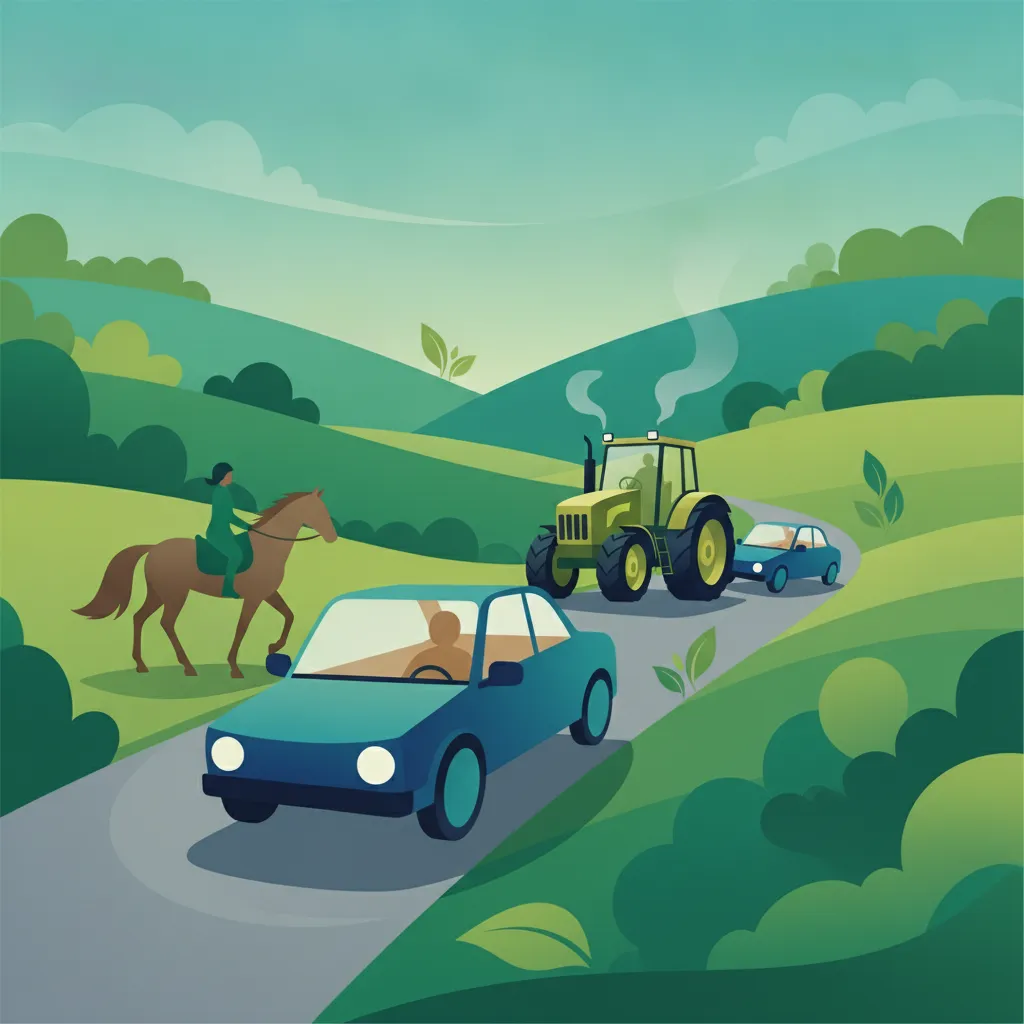
This lesson prepares you for the specific challenges of driving in the countryside. It explains the correct procedure for overtaking horse riders: slow down and pass wide, ensuring you do not spook the animal. You will also learn how to anticipate and safely manage encounters with slow-moving tractors and other farm machinery.

This lesson contrasts the challenges of different road types. It covers how to handle the hidden bends, poor surfaces, and unexpected hazards of rural roads. It then details the specific procedures for using dual carriageways and motorways, including using slip roads, adhering to strict lane discipline, and safely overtaking at high speeds.
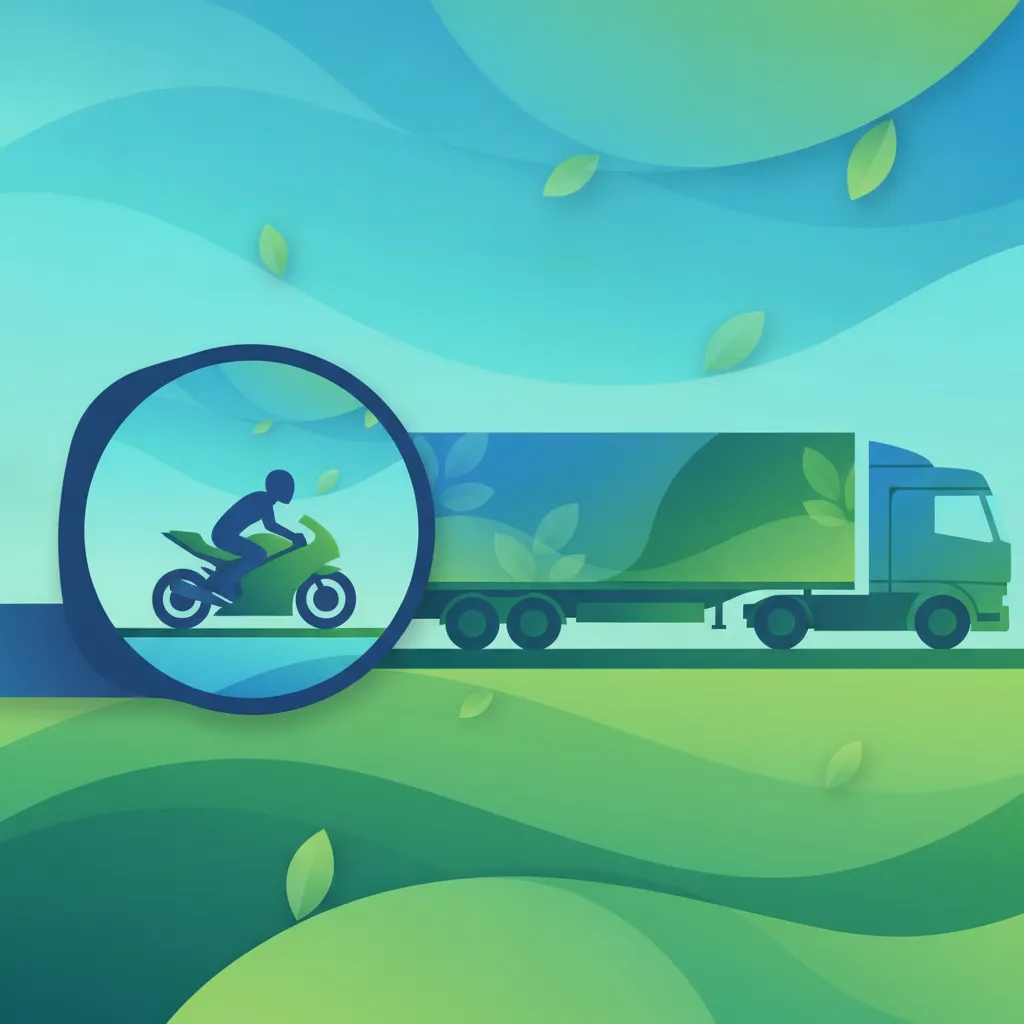
This lesson explains how to adapt your driving around different vehicles. You will learn to look out for motorcyclists, who are often hard to see, especially at junctions. It also covers the challenges of sharing the road with large vehicles, such as their extended blind spots, wider turning circles, and the wind turbulence they can create.
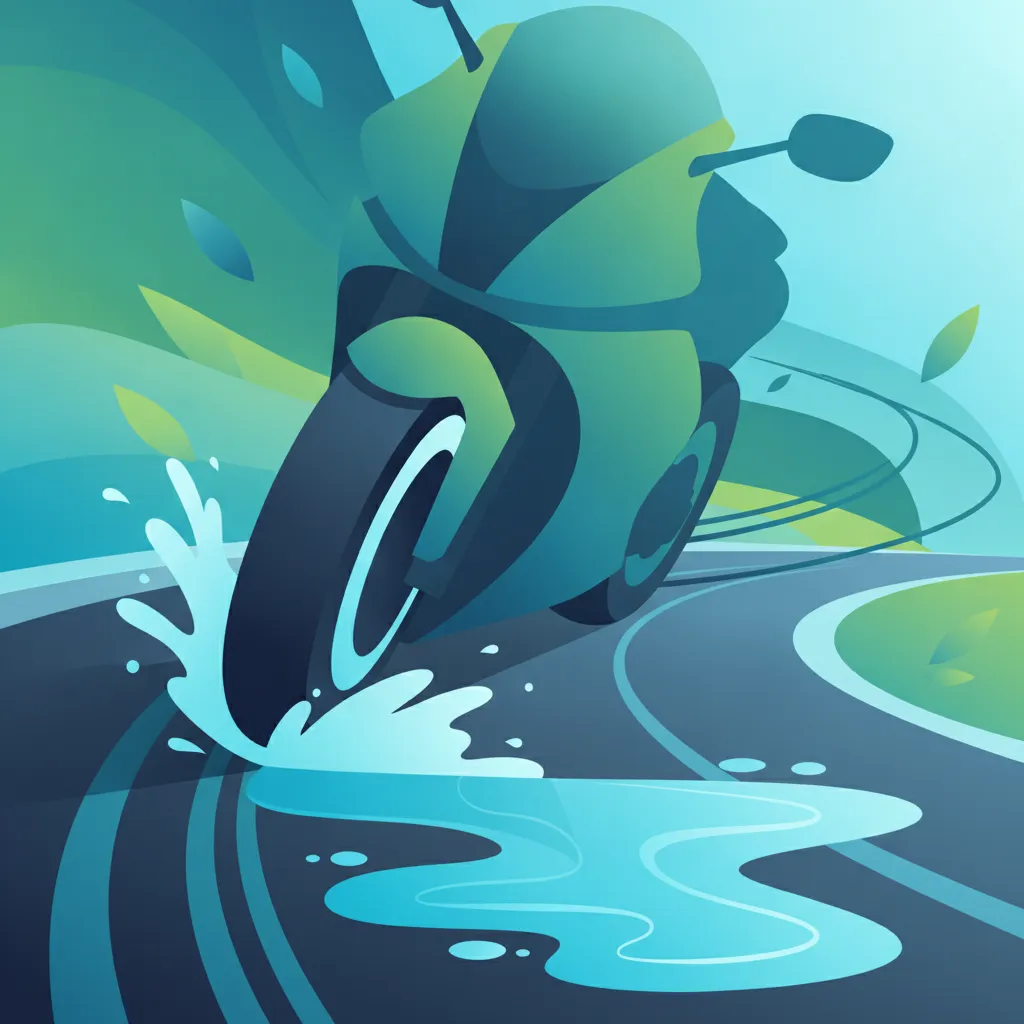
Riding in the rain requires significant adjustments to your technique. This lesson covers how to ride smoothly to maintain traction, the importance of increasing your following distance, and how to deal with reduced visibility from spray and fogged visors. You will also learn what aquaplaning is and how to avoid or manage it.
Find clear answers to common questions learners have about Overtaking Strategies and Restrictions. Learn how the lesson is structured, which driving theory objectives it supports, and how it fits into the overall learning path of units and curriculum progression in Great Britain. These explanations help you understand key concepts, lesson flow, and exam focused study goals.
You may cross a solid white line if it is necessary to pass a stationary vehicle or to overtake a pedal cycle, horse, or road maintenance vehicle, provided you can do so safely and they are travelling at 10 mph (16 km/h) or less.
Overtaking near a junction is dangerous because a vehicle ahead may turn right across your path without seeing you, or another vehicle might emerge from the junction, leading to a collision.
Before overtaking, you must use the MSM routine: check your mirrors, signal your intention, and then position your vehicle correctly, only performing the manoeuvre once it is safe and legal to do so.
No, if you see a regulatory 'No Overtaking' sign, it is strictly prohibited to overtake, regardless of the road markings. These signs are placed specifically to prevent accidents on sections of road where visibility is restricted.
Dive into our comprehensive question bank to find exactly what you need for your Great Britain theory test. Use our advanced filters to pinpoint specific subjects or test your knowledge on challenging areas, ensuring you're fully prepared for success.