
This lesson guides you through the essential techniques for safe reversing and manoeuvring in confined spaces. It builds on your foundational knowledge of vehicle control, ensuring you are prepared to manage low-speed situations safely as required for your Category B licence.
Lesson content overview
Navigating a vehicle at low speeds, particularly when reversing or manoeuvring in tight spaces, is a fundamental skill for all drivers. For Great Britain Category B learner drivers, mastering these techniques is not only crucial for passing the driving test but, more importantly, for ensuring safety on the road. This lesson delves into the principles, techniques, and legal requirements for safe reversing and precision manoeuvring, helping you prevent collisions and drive confidently in challenging environments.
The ability to control your vehicle accurately in confined spaces, such as driveways, parking bays, and narrow streets, is vital. Incorrect or careless manoeuvres are frequent causes of minor collisions, and tragically, often involve vulnerable road users like pedestrians and cyclists. By understanding and applying the core principles outlined here, you will develop the awareness and control needed to perform these actions safely and responsibly.
Safe reversing and manoeuvring in confined spaces are built upon a foundation of several interconnected principles. Adhering to these tenets will significantly reduce the risk of incidents and ensure you maintain full control of your vehicle at all times.
The continuous visual scanning of the vehicle’s immediate surroundings, encompassing views through mirrors, the rear-view window, and critical head turns (shoulder checks).
Before and throughout any reverse manoeuvre, your observation must be continuous and comprehensive. This means actively scanning 360 degrees around your vehicle, using your mirrors, the rear window, and, crucially, turning your head to check blind spots. The purpose is to detect pedestrians, cyclists, children, animals, and stationary obstacles that may otherwise be hidden.
Never rely solely on your mirrors, as they have inherent blind spots. A quick glance is insufficient; you must pause, scan thoroughly, and only then proceed if the path is clear, continually re-checking as you move.
Maintaining a vehicle speed no faster than a brisk walking pace (approximately 5 km/h) during any reverse manoeuvre.
Keeping your vehicle speed extremely low, often described as a "crawl," is paramount. This drastically reduces the vehicle's kinetic energy, which is the energy of motion. With lower kinetic energy, your stopping distance is significantly reduced, allowing you to halt the vehicle almost instantly if an unexpected hazard appears.
Low speed also enhances steering accuracy, giving you more time to make precise adjustments. Use gentle brake control and, in a manual vehicle, precise clutch operation to maintain this minimal speed. Avoid letting the vehicle "coast" without active speed management.
Your physical posture and mental state must always be one of readiness to stop immediately. This means your foot should be hovering over the brake pedal (or the clutch depressed and foot ready to brake in a manual car), allowing for an instant reaction.
This mindset prevents complacency and ensures you are poised to respond to any emerging hazard, such as a child running out from behind a parked car or a pedestrian unknowingly stepping into your path. Never reverse with the intention of stopping only after an obstacle is detected.
Accurately estimating your vehicle's width, length, and turning radius in relation to surrounding obstacles and available space.
Developing an accurate mental model of your vehicle's physical dimensions is crucial for confined space manoeuvring. You must understand how much space your vehicle occupies and its turning capability. This allows you to judge whether a manoeuvre is feasible without collision.
Before you begin, assess the available space, considering all projections of your vehicle. If you are unsure about clearance, it is always safer to adjust your approach, pull forward to reposition, or even seek assistance from a helper.
Pedestrians, cyclists, and individuals with reduced mobility are particularly vulnerable when a vehicle is reversing. The Highway Code explicitly prioritises these road users. You have a legal and moral duty to give them right-of-way at all times, even if they are in a location you intend to reverse into.
If a vulnerable road user is in or approaches your intended path, you must stop and allow them to pass safely before proceeding. Never assume they have seen you or will move out of your way.
While not always legally mandatory for reversing, using appropriate signals is highly recommended to communicate your intentions to other road users. This includes using your indicator lights to show which direction you intend to steer, especially when reversing into a road or parking bay.
In situations where visibility is poor, or when vulnerable road users are present, consider using hand signals to make your intentions even clearer. This proactive communication reduces surprise and enhances safety for everyone.
Before initiating any manoeuvre, take a moment to perform a quick but thorough risk assessment. Evaluate the complexity of the manoeuvre, the presence of hazards, traffic flow, and visibility.
Consider if there is a safer alternative, such as driving forward to reposition rather than attempting a difficult reverse. This thoughtful approach ensures you choose the safest possible method and avoids committing to a manoeuvre that may be beyond your current skill level or too risky for the conditions.
Effective low-speed manoeuvring requires a deep understanding of your vehicle's limitations and how its systems operate.
Areas immediately around your vehicle that cannot be seen directly through your mirrors or rear window without turning your head. These are also known as "no-view zones."
Every vehicle has blind spots. These are areas that your mirrors simply cannot cover, often due to the vehicle's structural pillars (A, B, and C pillars) or the angular limitations of the mirrors themselves. A pedestrian or a child can easily disappear into these zones.
It is a common misunderstanding that mirrors alone provide sufficient rearward visibility. Always perform a thorough shoulder check – turning your head to look directly over your shoulder – to scan these critical areas before and during any reverse movement.
Understanding how your vehicle's reverse gear works is fundamental to maintaining control.
Do not shift into reverse while your vehicle is still moving forward. This can cause severe damage to the transmission and lead to an uncontrolled lurch, known as a "stacking error."
At very low speeds, the vehicle's steering response can feel more sensitive. Small adjustments to the steering wheel can result in significant changes in direction. This is beneficial for precise positioning but requires a gentle and smooth touch.
Avoid abrupt or aggressive steering inputs. Instead, use gentle, incremental turns of the steering wheel, observing the effect on your vehicle's path before making further adjustments. This smooth control helps prevent over-steering and maintains stability.
The smallest circular path a vehicle can make when its steering wheels are turned fully to one side.
Your vehicle's turning radius dictates how tightly it can turn. This is a critical factor when attempting to reverse into a confined space, such as a narrow parking bay or a tight driveway. Larger vehicles, like estate cars or vans, naturally have larger turning circles than smaller hatchbacks.
Before committing to a reverse manoeuvre, mentally visualise whether your vehicle can physically make the turn. If the space appears too tight, it is often safer to pull forward to gain a better angle or to reposition, rather than forcing the manoeuvre.
The safety of vulnerable road users (VRUs) must always be your highest priority, especially during manoeuvres that limit your visibility.
The Highway Code is clear: pedestrians and cyclists have priority, and this applies even when you are reversing. Rule 165 states, "Pedestrians have priority at all times" when on a pavement or crossing. Rule 170 reinforces that cyclists must be given adequate space.
When reversing, you are responsible for ensuring their safety. This means:
While indicator lights are useful, hand signals offer an additional layer of communication, particularly in situations where your vehicle's lights might be obscured, or when communicating directly with pedestrians or cyclists.
When reversing in congested areas or near vulnerable road users, consider using a clear hand signal, such as holding your arm straight out and pointing backwards, to clearly indicate your intention to reverse. This can be especially helpful for alerting children or those who may not be paying full attention.
The Highway Code and other UK statutes outline specific responsibilities for drivers undertaking reverse manoeuvres. Adhering to these rules is not just about passing your Great Britain Category B driving theory test, but about legal compliance and ensuring safety.
Rule 1: Ensure the Area Behind is Clear (Highway Code Rule 172). Before you begin to reverse, you must be certain that the area directly behind your vehicle is completely clear of pedestrians, cyclists, obstacles, and other vehicles. This requires comprehensive observation.
Rule 2: Control Your Speed (Highway Code Guidance). Reversing manoeuvres must be performed at an extremely low speed, ideally no faster than 5 km/h. This allows you to stop within a very short distance (e.g., within 2 metres), enabling instant reactions to hazards.
Rule 3: Yield to Pedestrians and Cyclists (Highway Code Rules 165 & 170). Pedestrians and cyclists always have priority. If they are in your path or approaching it, you must stop and wait for them to pass safely. This is a mandatory and critical safety rule.
Rule 4: Stop Completely Before Shifting to Reverse (Highway Code Rule 210). Always bring your vehicle to a complete halt before engaging the reverse gear. Shifting into reverse while still moving forward can damage your transmission and cause an unpredictable lurch.
Rule 5: Use Appropriate Signals (Highway Code Rule 165 Guidance). While not always legally mandated for reversing, it is strongly recommended to use hand signals or indicator lights when reversing into traffic, or where visibility is limited, to alert other road users to your intentions.
Rule 6: Maintain Continuous Observation (Highway Code Rule 168). Throughout the entire reverse manoeuvre, you must keep your eyes on your intended path, constantly checking your mirrors and turning your head to cover blind spots. Observation is not a one-time check.
Rule 7: Avoid Reversing in Hazardous Conditions Unless Necessary (Highway Code Guidance). In adverse weather (rain, snow, fog), low visibility, or heavy traffic, you should only reverse if absolutely essential. Always prefer alternative manoeuvres that allow you to move forward.
Even experienced drivers can make mistakes when reversing. Understanding these common pitfalls can help you avoid them.
Failure to Check Blind Spots:
Reversing Too Fast:
Not Yielding to Pedestrians/Cyclists:
Stacking Error (Shifting to Reverse While Moving Forward):
Inadequate Observation in Low Light:
Reversing Without Clearance Awareness:
Driving conditions and vehicle state significantly impact how you should perform reverse manoeuvres. Always adapt your technique to the specific circumstances.
The principles of safe reversing are rooted in fundamental physics and human psychology, designed to counteract inherent limitations and maximise safety.
Data from the Driver and Vehicle Standards Agency (DVSA) shows that a significant percentage of reversing collisions involve pedestrians or cyclists. A substantial portion of these incidents occur in residential areas, highlighting the critical need for constant vigilance and adherence to observation rules, even in seemingly familiar environments.
Mastering safe reversing and confined space manoeuvring is a critical component of becoming a responsible and skilled Great Britain Category B driver. It demands discipline, constant awareness, and a methodical approach.
The core of safe reversing lies in continuous, all-around observation, maintaining an extremely low speed, and always being prepared to stop instantly.
Always remember your legal and moral duty to ensure the area behind you is clear, to yield to vulnerable road users (pedestrians and cyclists) at all times, and to bring your vehicle to a complete stop before engaging reverse gear. Continuous observation throughout the manoeuvre is not optional – it is mandatory.
Understand your vehicle's blind spots and turning radius. Practice smooth, incremental steering at low speeds. Be aware of how manual and automatic reverse gears affect vehicle movement and control. Use hand signals when necessary to communicate your intentions clearly.
Always adjust your reversing strategy based on conditions. Reduce speed further and intensify your observations in adverse weather, low light, or when carrying heavy or unbalanced loads. If you are towing a trailer, be aware of the increased blind spots and altered vehicle dynamics.
Before every reverse manoeuvre, quickly assess the potential hazards and complexity. If there's any doubt about safety or clearance, consider alternative actions. It's always better to take a moment to reposition or seek assistance than to risk a collision.
Ensure your vehicle is completely stationary before selecting reverse gear.
Perform a comprehensive all-around observation: check all mirrors, the rear window, and, crucially, execute thorough shoulder checks to cover blind spots.
Confirm that your intended path is clear of all pedestrians, cyclists, animals, and stationary obstacles.
Adjust your speed to an absolute crawl (no more than ~5 km/h), using gentle brake and clutch (manual) control.
Maintain a ready-to-stop posture, with your foot positioned over the brake pedal.
If visibility is limited or vulnerable road users are present, use hand signals or indicator lights to communicate your intent.
Continuously monitor clearance on all sides of your vehicle throughout the manoeuvre, being prepared to stop or abort if space becomes insufficient.
Re-evaluate your surroundings and conditions after each segment of the manoeuvre, especially if conditions change (e.g., weather deteriorates, new road users appear).
By diligently following these guidelines, you will develop the necessary skills and awareness to perform safe, controlled, and responsible reversing and low-speed manoeuvres, contributing to safer roads for everyone.
Explore all units and lessons included in this driving theory course.
Lesson content overview
Explore all units and lessons included in this driving theory course.
Explore search topics learners often look for when studying Safe Reversing and Manoeuvring in Confined Spaces. These topics reflect common questions about road rules, driving situations, safety guidance, and lesson level theory preparation for learners in Great Britain.
Browse additional driving theory lessons that cover connected traffic rules, road signs, and common driving situations related to this topic. Improve your understanding of how different rules interact across everyday traffic scenarios.
Understand the most frequent dangers and mistakes drivers make during reversing and low-speed manoeuvres. Learn how to proactively identify and prevent collisions in confined spaces, focusing on observation and control to ensure safe driving.

Reversing a large passenger vehicle is a high-risk manoeuvre, and this lesson provides essential safety protocols. It covers the importance of using a trained banksman or reversing assistant and understanding standard hand signals. The lesson also discusses the use of technical aids like reversing cameras and audible warnings. Learners will master the procedure for conducting a full 360-degree safety check before beginning and maintaining slow, controlled movement throughout the manoeuvre.
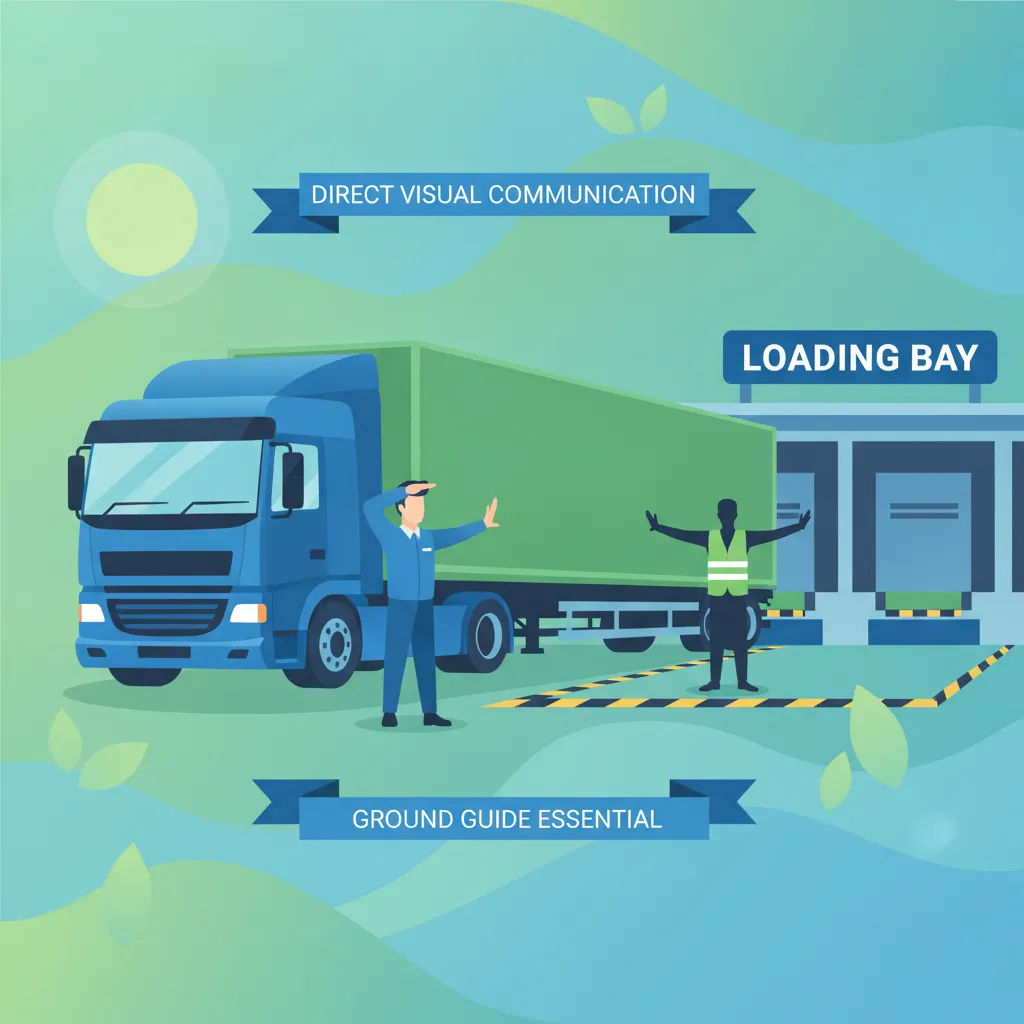
Reversing is one ofthe highest-risk maneuvers for an HGV driver. This lesson provides a structured guide to reversing safely, covering the 'get out and look' principle, effective use of all mirrors, and the use of reversing cameras and alarms. It stresses the importance of using a trained banksman (signaller) whenever possible, using agreed signals, and maintaining a slow, controlled speed throughout the maneuver to prevent accidents.

This lesson builds on basic skills to address complex manoeuvres in challenging, confined environments such as bus stations, depots, and service areas. It covers techniques for positioning the vehicle for bay parking and navigating tight, complex routes. Key focus areas include developing precise spatial awareness, using reference points, maintaining extremely slow and controlled movements, and performing continuous observation to navigate safely without causing damage or injury.

This lesson examines the physical space a goods vehicle occupies on the road and its impact on maneuvering at junctions, roundabouts, and in tight spaces. Learners will understand the concepts of tail swing and off-tracking, and how to calculate the necessary clearance for safe turns. The content emphasizes maintaining safe distances from other road users and infrastructure, which is a key component of professional spatial awareness and accident prevention.

This lesson addresses the unique challenges of driving a large vehicle on rural roads. It provides techniques for positioning the vehicle through sharp bends and on narrow lanes, and for safely navigating unmarked or uncontrolled junctions. Learners will be taught to anticipate hidden hazards common in the countryside, such as slow-moving farm vehicles, animals on the road, and concealed entrances. The correct use of passing places and strategies for meeting oncoming traffic are also covered.
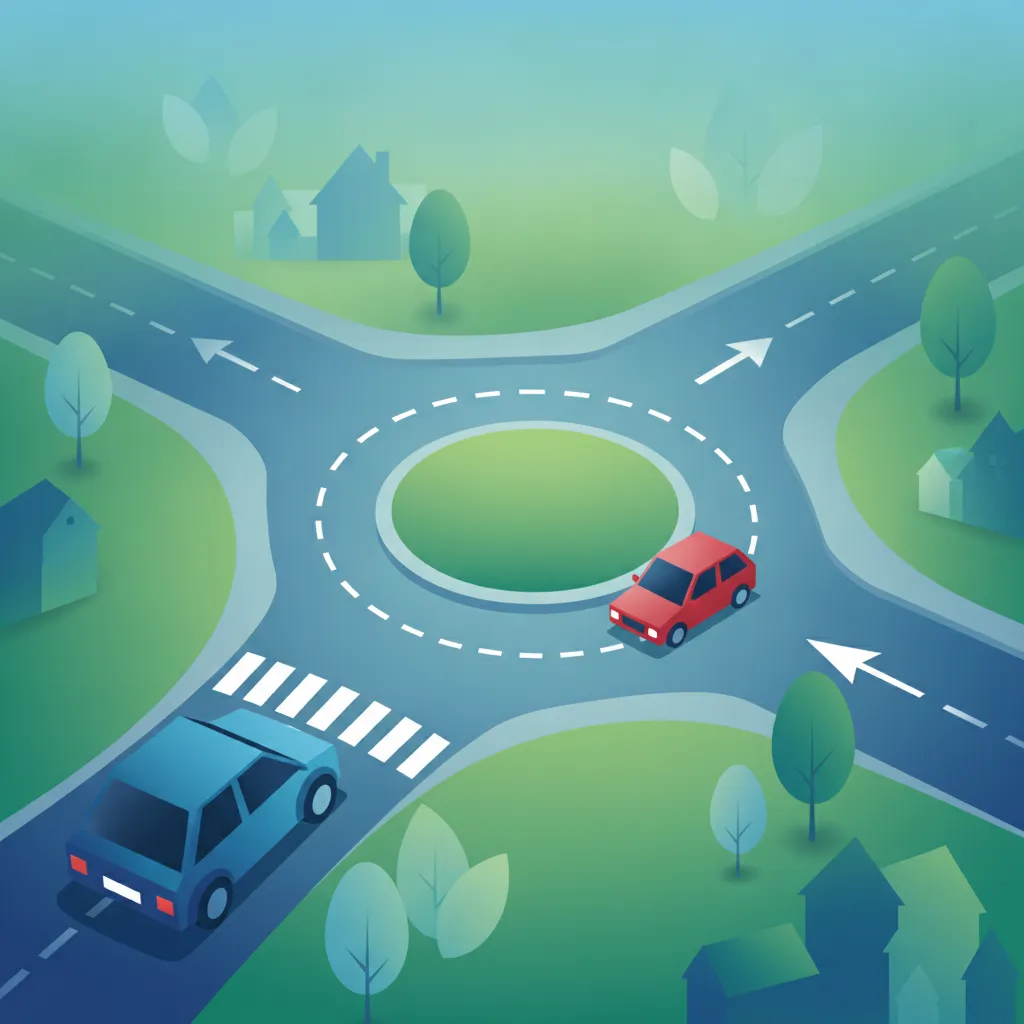
This lesson explains how to handle mini-roundabouts, which are common in urban and residential areas. The primary rule is to approach with caution and give priority to any traffic approaching from your right. You will also learn about correct signalling and the importance of being aware of cyclists and motorcyclists who may be harder to see.

This lesson addresses the unique challenges of operating a large goods vehicle in congested urban and city environments. It focuses on techniques for navigating narrow streets, making tight turns, and safely accessing delivery points while being highly aware of vulnerable road users like pedestrians and cyclists. The importance of exceptional observation, low-speed control, and clear communication with other road users is heavily emphasized to minimize risk in these complex settings.

This lesson focuses on the critical skill of positioning your AM vehicle safely in relation to larger vehicles and roadside hazards like parked cars. You will learn to identify and stay out of the extensive blind spots of lorries and buses, especially at junctions. The content also provides strategies for maintaining a safe 'space cushion' around your vehicle and navigating narrow gaps or filtering in traffic without compromising your safety.

This lesson provides a detailed map of the significant blind spots located to the front, sides, and rear of a typical heavy goods vehicle. It explains the purpose of the different classes of mirrors and how to adjust them correctly for maximum visibility. Learners will be taught effective scanning techniques—'mirror-signal-manoeuvre'—to actively check these zones before changing position, ensuring they are aware of any hidden hazards or other road users.
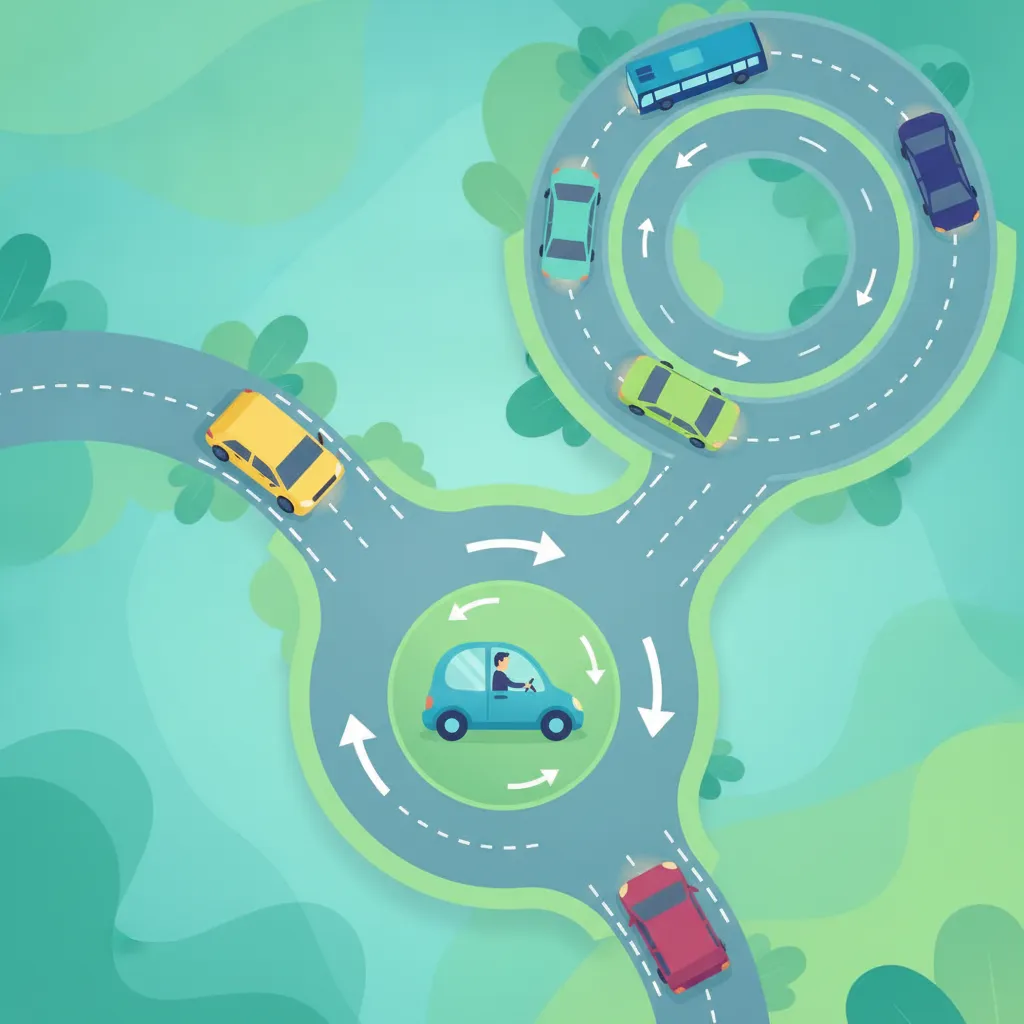
This lesson provides specific techniques for safely navigating the two main types of roundabouts in Great Britain. For multi-lane roundabouts, it covers how to choose the correct lane on approach, maintain your lane while circulating, and signal your exit correctly. It also explains the unique rules for mini-roundabouts, emphasizing the importance of giving way to traffic from the right and navigating them with caution due to their small size.
Learn the crucial legal and safety obligations to protect pedestrians and cyclists when performing reverse manoeuvres. This lesson details how to yield appropriately and ensure the safety of all road users, especially in complex environments.
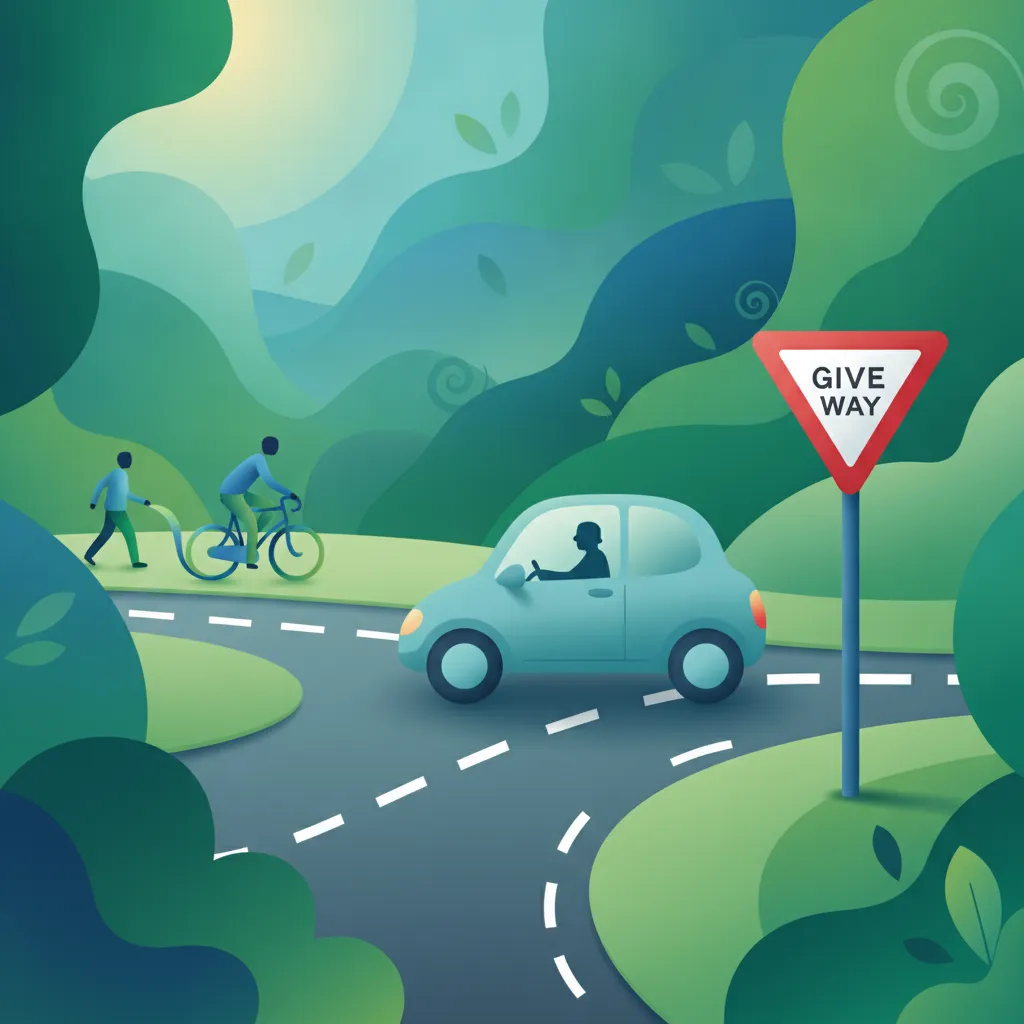
This lesson explains the critical rules of priority that govern traffic flow at junctions, roundabouts, and crossings throughout Great Britain. You will learn how to determine who has right-of-way at both marked and unmarked intersections, and the specific rules for giving way to traffic on roundabouts. The lesson also reinforces the hierarchy of road users from the Highway Code, ensuring you understand when to yield to pedestrians and other vulnerable users.
Reversing a large passenger vehicle is a high-risk manoeuvre, and this lesson provides essential safety protocols. It covers the importance of using a trained banksman or reversing assistant and understanding standard hand signals. The lesson also discusses the use of technical aids like reversing cameras and audible warnings. Learners will master the procedure for conducting a full 360-degree safety check before beginning and maintaining slow, controlled movement throughout the manoeuvre.

This lesson focuses on the markings and rules at designated pedestrian crossing points. It details the legal requirement to give way to pedestrians on a zebra crossing and explains the light sequences at signal-controlled crossings. You will also learn the meaning of the white zig-zag lines on the approach to all crossings.

This lesson provides detailed guidance on protecting pedestrians in high-risk areas like bus stops and formal crossings. It covers the specific rules and driver obligations at zebra, pelican, toucan, and puffin crossings, as well as when approaching a school crossing patrol. The content emphasizes the importance of vigilance, anticipating pedestrian movements, especially those who may be distracted or emerge from behind the bus, and always being prepared to stop to prevent accidents.

This lesson provides a detailed guide to various pedestrian crossings and their specific rules. You will learn to identify each type by its markings and signals, from the black and white stripes of a zebra crossing to the sensor-controlled lights of a puffin crossing. The focus is on knowing when and how to stop to ensure pedestrian safety.
Reversing is one ofthe highest-risk maneuvers for an HGV driver. This lesson provides a structured guide to reversing safely, covering the 'get out and look' principle, effective use of all mirrors, and the use of reversing cameras and alarms. It stresses the importance of using a trained banksman (signaller) whenever possible, using agreed signals, and maintaining a slow, controlled speed throughout the maneuver to prevent accidents.
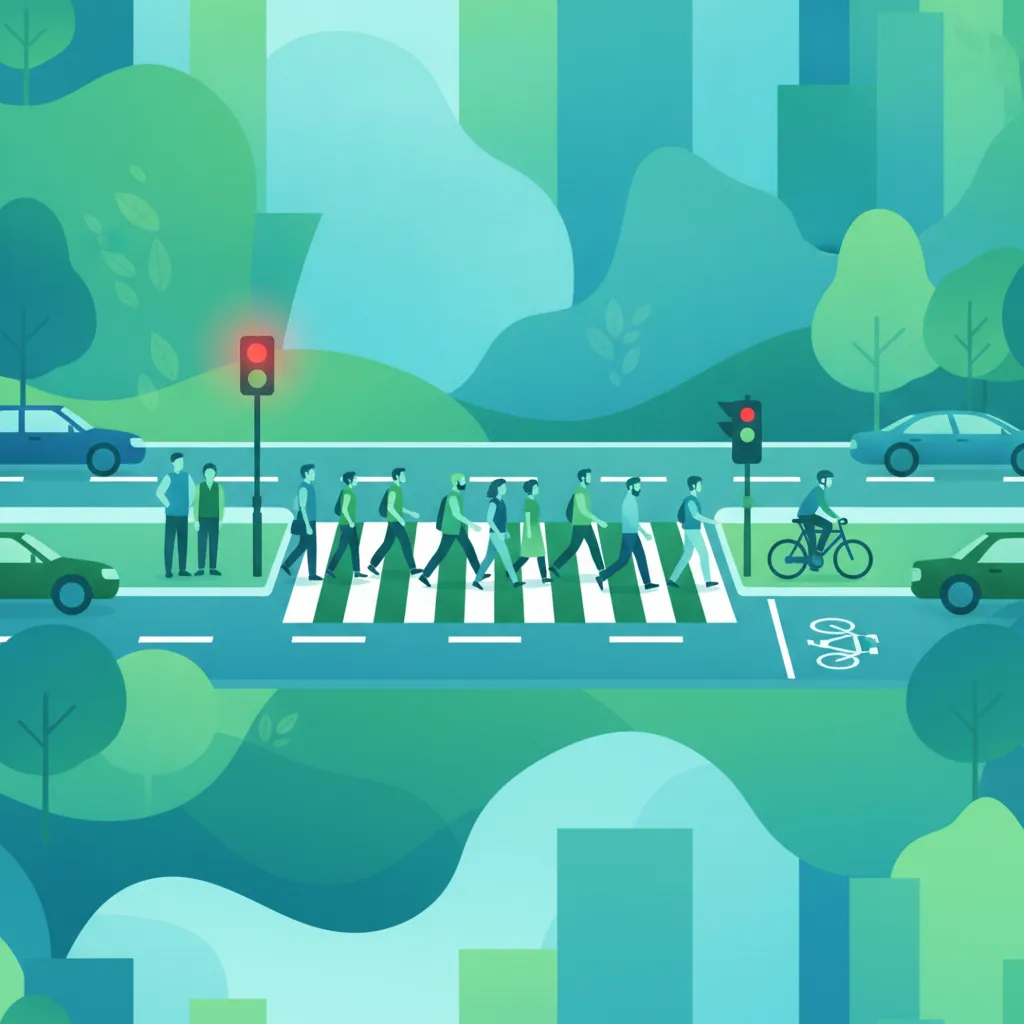
This lesson provides a detailed guide to the various types of pedestrian crossings found on British roads. You will learn the specific rules for each, including the absolute priority of pedestrians at zebra crossings and how to respond to the light signals at pelican, puffin, and toucan crossings. Understanding these rules is essential for protecting vulnerable road users and ensuring you are compliant with the Highway Code.
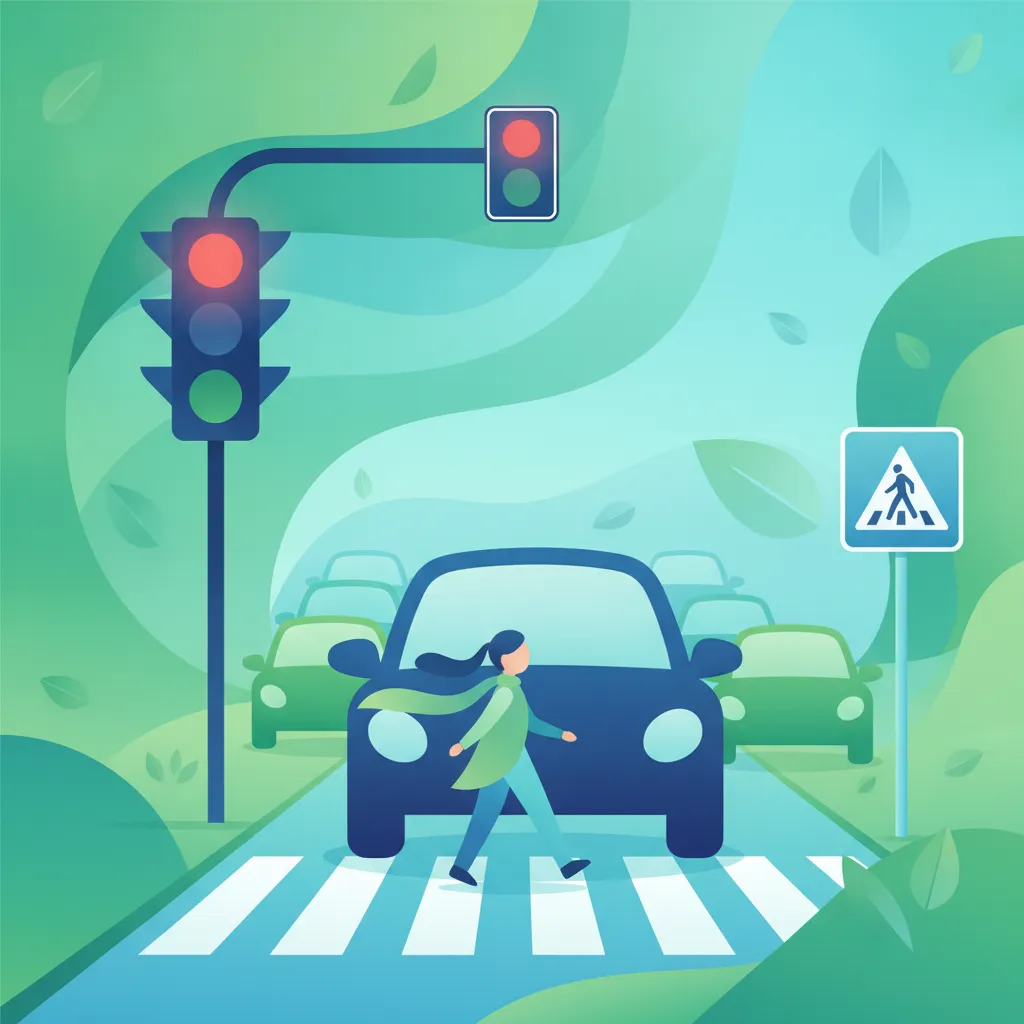
This lesson covers the operation of traffic light signals and the rules for approaching them safely. It also provides a detailed explanation of different pedestrian crossings, such as zebra, pelican, and toucan crossings, clarifying the specific rules and priority for each. You will learn to anticipate the actions of pedestrians and other vulnerable road users at these locations.
This lesson explains how to handle mini-roundabouts, which are common in urban and residential areas. The primary rule is to approach with caution and give priority to any traffic approaching from your right. You will also learn about correct signalling and the importance of being aware of cyclists and motorcyclists who may be harder to see.

This lesson focuses on safe interaction with cyclists, a key aspect of urban driving for PCV operators. It details the rules for cycle lanes and advanced stop lines, and the correct procedure for overtaking cyclists, emphasizing the need to provide ample space. The content stresses the importance of frequent mirror checks to manage blind spots where cyclists can be hidden, especially when turning at junctions, to ensure their safety and comply with the Highway Code's road user hierarchy.
Find clear answers to common questions learners have about Safe Reversing and Manoeuvring in Confined Spaces. Learn how the lesson is structured, which driving theory objectives it supports, and how it fits into the overall learning path of units and curriculum progression in Great Britain. These explanations help you understand key concepts, lesson flow, and exam focused study goals.
When reversing, your field of vision is restricted, and blind spots are larger. Constant scanning allows you to detect small children, pets, or obstacles that may enter your path unexpectedly, preventing accidents.
You should maintain a walking pace or slower. Moving slowly gives you more time to assess the environment, adjust your steering, and stop immediately if a hazard is detected.
Yes, you must ensure your path is clear before starting and remain aware of both the front and rear of your vehicle, as the front wheels will swing wide when turning.
No, mirrors provide a limited view. You must combine mirror checks with looking out of all windows and checking blind spots to ensure you have complete awareness of your surroundings.
Dive into our comprehensive question bank to find exactly what you need for your Great Britain theory test. Use our advanced filters to pinpoint specific subjects or test your knowledge on challenging areas, ensuring you're fully prepared for success.