
This lesson explores how adverse weather conditions uniquely challenge the handling and stability of large goods vehicles. You will learn critical techniques for managing speed, braking, and following distances in various weather scenarios to ensure safety. This is a vital component of your Category C theory preparation in Great Britain.
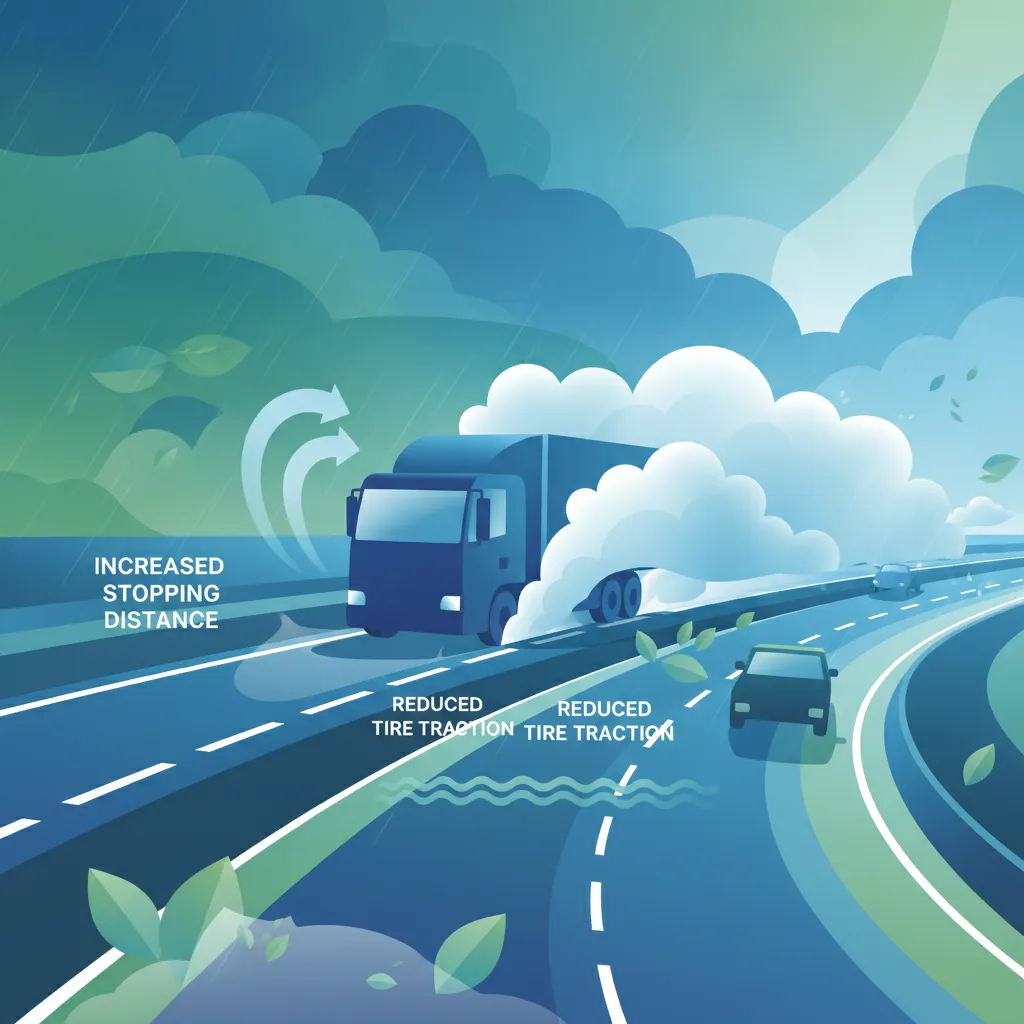
Lesson content overview
Driving a Heavy Goods Vehicle (HGV) presents unique challenges, particularly when faced with adverse weather conditions. The sheer size, weight, and dynamic characteristics of HGVs mean that rain, fog, ice, snow, and strong winds can have a far more pronounced and dangerous impact on handling and stability compared to smaller vehicles. This lesson provides an in-depth examination of how different weather scenarios affect HGV operation, outlining essential techniques and regulatory compliance for professional drivers in Great Britain.
Mastering safe driving in challenging weather is not just a matter of good practice; it is a critical skill that directly supports road safety, reduces accident liability, and ensures adherence to the legal obligations set forth in the Highway Code and other relevant regulations. Weather-related incidents account for a disproportionate share of HGV crashes, underscoring the importance of anticipating risks and adapting driving behaviour.
Adverse weather conditions fundamentally alter the interaction between your vehicle's tyres and the road surface, impact visibility, and introduce external forces like wind. For heavy vehicles, these changes are amplified, demanding a proactive and adaptive approach to driving.
At its core, professional driving in adverse weather revolves around a few key principles:
Any meteorological state that measurably reduces normal vehicle-road interaction, such as rain, fog, ice, snow, or high winds.
Such conditions diminish a driver's perception and significantly reduce tyre-road friction, thereby increasing the probability of a collision. Consequently, drivers must always modify their speed, increase following distances, and adjust their control inputs to maintain safety.
The physics governing vehicle movement are profoundly affected by weather.
The decrease in tyre-road grip due to a lubricating layer, such as water or ice.
This reduction in the kinetic friction coefficient (μ) directly leads to longer braking distances and diminished steering response. Smooth steering and early correction of trajectory become paramount.
High-sided vehicles, including many HGVs, are particularly vulnerable to aerodynamic forces.
The force exerted on the vehicle’s side area (including the superstructure and trailer) due to wind velocity perpendicular to the direction of travel.
This force can create a significant yaw moment, pushing the vehicle sideways and potentially causing trailer sway or loss of control. Corrective steering and reduced speed are essential.
Visibility is another critical factor. Fog, heavy rain, or even reduced daylight severely limit a driver’s ability to detect hazards and react in time. This necessitates appropriate lighting use, greater spacing from other vehicles, and slower speeds to compensate for impaired reaction time and hazard perception.
The stability of an HGV is also influenced by its load. The principle of
The concept that tyre loading pressure and distribution affect grip, especially in wet or icy conditions.
Incorrect tyre pressures, whether over- or under-inflated, alter the tyre's contact patch size, directly impacting friction. Furthermore, maintaining vehicle equilibrium under varying longitudinal and lateral forces (braking, acceleration, cornering, cross-winds) becomes more challenging in severe weather, increasing the risk of rollovers or jack-knifing. Drivers must avoid harsh manoeuvres, maintain upright steering, and be acutely aware of potential trailer sway.
Rain is one of the most common adverse weather conditions encountered by HGV drivers in Great Britain. Its primary impact is the significant increase in stopping distances and the potential for aquaplaning.
The total distance required for a heavy vehicle to stop after the driver perceives a need to halt. This includes perception distance, reaction distance, and braking distance.
In rainy conditions, the layer of water between the tyres and the road surface reduces the dynamic friction coefficient. This means that braking distances can increase by up to 50% or more, especially on extremely wet or oil-slicked surfaces. For a fully loaded 44-tonne HGV travelling at 56 mph on a motorway in heavy rain, the stopping distance could be around 110 metres, compared to approximately 70 metres on a dry surface.
The Highway Code Rule 143 explicitly mandates adjusting speed and maintaining a safe distance in adverse weather. The DVSA recommends increasing your following distance to at least 2 seconds in light rain and up to 3 seconds on wet roads. Many drivers mistakenly believe that simply applying brakes earlier is sufficient without fully accounting for the drastic reduction in friction, or they assume wet roads share the same stopping characteristics as dry ones. It is crucial to anticipate situations requiring a stop and to begin braking much earlier and more progressively than in dry conditions.
A hazardous condition where a film of water builds up in front of the tyres, lifting them off the road surface, leading to a complete loss of traction, steering, and braking control.
Aquaplaning occurs when the vehicle's speed and the depth of standing water on the road surface overwhelm the tyre's ability to displace water through its tread pattern. HGVs, with their larger contact patches, can be particularly prone to aquaplaning, especially if their tyre tread depth is inadequate.
There are two main types:
If you feel your HGV aquaplaning – often indicated by a sudden lightness in the steering and a rise in engine RPM as the wheels spin freely – do not brake suddenly or make abrupt steering movements. Instead, ease off the accelerator, keep the steering wheel straight, and allow the vehicle to slow down gradually until the tyres regain contact with the road. Highway Code Rule 143 advises slowing down, and Rule 150 highlights the importance of maintaining tyres to legal minimum depths (1.0 mm for HGV tyres in Great Britain).
Fog significantly reduces clear sight distance (CSD), creating dangerous conditions where hazards can appear suddenly with little time to react. HGVs, with their longer stopping distances, require even greater caution.
When driving in fog, proper lighting is crucial for both your visibility and for other road users to see you.
The standard headlight setting designed for normal night driving, engineered to illuminate the road ahead without causing excessive glare for oncoming or preceding vehicles.
Highway Code Rule 104 states that you must use dipped-beam headlights in fog and must not use full-beam headlights. High beams will reflect off the fog particles, creating glare that further reduces your own visibility and can blind other drivers.
Auxiliary lights positioned low on the vehicle, designed to cut through fog more effectively than headlights due to their lower angle and wider beam.
Highway Code Rule 105 mandates that you must switch on your fog lights only when visibility is seriously reduced to less than 100 metres due to fog, snow, or heavy rain. Using fog lights in clear conditions is illegal and can dazzle other drivers. Remember to switch them off once visibility improves.
In dense fog, the ability to rely on visual cues from ahead is severely limited. This means you must compensate by significantly reducing your speed and increasing your following distance. For instance, in dense fog where visibility is less than 30 metres, a heavy vehicle travelling at even 30 mph should dramatically increase its headway, allowing sufficient time to react to unexpected hazards or sudden stops by vehicles ahead. Overtaking in dense fog is extremely dangerous and should be avoided at all costs. Always remember: if you can't see, neither can others.
When driving in fog, listen for traffic you cannot see and be prepared to stop. If you have to stop, leave your lights on and, if necessary, use your hazard warning lights.
Driving an HGV on icy or snow-covered roads presents the most significant challenge to traction. These conditions can lead to a near-zero coefficient of tyre-road friction, making braking, cornering, and acceleration extremely hazardous.
A thin, transparent layer of ice that forms on the road surface, making it appear wet rather than icy and therefore very difficult to detect.
Black ice is particularly treacherous because it offers minimal grip (dynamic friction coefficient can be as low as 0.1-0.2), often leading to a complete loss of steerability or uncontrollable skids even at low speeds. Snow-packed roads offer slightly more grip (μ ≈ 0.4) but still demand extreme caution.
HGVs are highly susceptible to skidding and jack-knifing on such surfaces. Rule 143 of the Highway Code advises decreasing speed and increasing spacing, while Rule 151 recommends using 'engine braking' and avoiding sharp steering inputs.
When encountering ice or snow, smooth, gentle control inputs are paramount. Avoid any sudden braking, acceleration, or steering.
The technique of slowing a vehicle by releasing the accelerator pedal and downshifting gears, using the engine's compression to reduce speed without applying the service brakes.
Engine braking is highly effective on slippery surfaces as it applies a controlled, progressive braking force to the drive wheels, reducing the risk of wheel lock-up. If your HGV is equipped with an Anti-Lock Braking System (ABS), it will help prevent wheels from locking, but it does not magically reduce stopping distances on ice. For vehicles without ABS, Rule 155 emphasizes the importance of employing progressive braking techniques to prevent wheel lock-up.
Reduce Speed Drastically: On black ice, speeds of 20 mph or less may be necessary.
Increase Following Distance: Allow at least 5 seconds of headway in icy conditions.
Gentle Inputs: Use minimal steering, acceleration, and braking inputs.
Anticipate: Look far ahead for signs of slippery surfaces (e.g., glistening roads, areas under bridges).
Use Engine Braking: Control your speed by downshifting, rather than heavy use of the foot brake.
Maintain Tyre Pressure: Ensure tyres are correctly inflated (see below).
Using trailer brakes excessively on slippery surfaces can lead to the trailer wheels locking up and a dangerous jack-knife situation. Always apply brakes gently and progressively, allowing the tractor unit to do most of the braking, especially if the trailer lacks ABS.
High-sided vehicles like HGVs are particularly vulnerable to the effects of strong winds, especially crosswinds. These aerodynamic forces can significantly compromise vehicle stability and control.
A rotational force applied to the vehicle around its vertical axis, caused by wind acting on the vehicle's large side area. This force can lead to significant trailer sway.
When a strong wind blows perpendicular to your direction of travel, it creates an aerodynamic lateral force that pushes against the side of your vehicle and trailer. This force generates a yaw moment, which can cause the trailer to swing or "sway," especially for articulated lorries. Gusting winds are even more dangerous than steady crosswinds, as sudden changes in wind speed can abruptly push the vehicle off course, requiring rapid and precise steering corrections.
Areas particularly prone to strong crosswinds include exposed bridges, viaducts, open motorways, and stretches of road with gaps in natural windbreaks (e.g., between hills or buildings). The problem is exacerbated when vehicles are lightly loaded or empty, as there is less mass to resist the lateral force.
Highway Code Rule 146 advises drivers to reduce speed and avoid abrupt steering manoeuvres in high winds. For an HGV, this means taking proactive steps:
Tyres are the only contact point between your HGV and the road, making their condition and correct inflation paramount in all weather, especially adverse conditions.
The internal air pressure within a tyre, measured in pounds per square inch (psi) or bar, which directly influences the tyre's contact patch with the road.
Highway Code Rule 150 emphasizes that tyres must be in good condition and inflated to the manufacturer’s recommended pressures. Correct tyre pressure ensures the optimal contact patch size, maximising grip, stability, and braking performance.
Temperature fluctuations directly affect tyre pressure. Cold weather causes the air within tyres to contract, reducing pressure. Conversely, hot weather can increase tyre pressure. A drop from 20 °C to 0 °C can reduce tyre pressure by approximately 2-3 psi, requiring an adjustment to maintain optimal grip.
Under-inflated tyres can lead to excessive heat build-up, increased rolling resistance, and reduced steering responsiveness. Over-inflated tyres reduce the contact patch, leading to poorer grip and uneven wear. The DVSA guidance recommends checking tyre pressures at least weekly and always before long trips, particularly when significant temperature changes are expected.
The depth of the grooves on the tyre surface, crucial for displacing water and maintaining grip on wet roads.
Regulation 4(2) of the DVSA guidance stipulates a minimum tyre tread depth for HGV tyres of 1.0 mm (subject to specific vehicle type). Adequate tread depth is crucial for water displacement, directly reducing the risk of aquaplaning. Worn tyres dramatically increase the risk of losing control in wet conditions.
For winter conditions, EU/UK Regulation 79/2012 (Tyres for heavy vehicles) states that tyres must carry the M+S (Mud + Snow) symbol if intended for use in winter weather. These tyres are designed to provide better grip in low temperatures, snow, and slush.
Compliance with the Highway Code and other regulations is not just a legal obligation but a cornerstone of safe HGV operation in Great Britain.
Professional goods vehicle drivers must be intimately familiar with the following rules:
Understanding the rules and physics is one thing; applying them effectively in real-world scenarios is another. Here are examples of correct and incorrect behaviour in various adverse weather conditions for HGV drivers.
Scenario 1: Heavy Rain on Motorway
Scenario 2: Dense Fog on Rural Road
Scenario 3: Black Ice on Approach to Junction
Scenario 4: Cross-Wind on Bridge
Scenario 5: Low Tyre Pressure in Cold Weather
Regular vehicle maintenance, especially of brakes and tyres, is fundamentally linked to safety in adverse weather. Poorly maintained brakes will increase stopping distances regardless of conditions, and worn tyres elevate aquaplaning risks. A defective ABS could lead to unexpected wheel lock-up.
Driving a Heavy Goods Vehicle safely in adverse weather conditions requires a comprehensive understanding of physics, strict adherence to regulations, and continuous adaptation of driving techniques.
Key takeaways for HGV drivers in Great Britain:
By internalising these principles and consistently applying operational adjustments – proportional speed reduction, increased following distances (up to 5 seconds on ice), appropriate lighting, proactive tyre maintenance, and smooth control inputs – professional HGV drivers can navigate challenging weather conditions safely and legally. This mastery not only ensures compliance with the Highway Code and DVSA standards but also significantly enhances road safety for all users, mitigating accident risks and preparing the driver for more complex scenarios encountered on motorways, rural roads, and during emergency situations.
Explore all units and lessons included in this driving theory course.
Lesson content overview
Explore all units and lessons included in this driving theory course.
Explore search topics learners often look for when studying Weather Impact on Heavy Vehicle Handling. These topics reflect common questions about road rules, driving situations, safety guidance, and lesson level theory preparation for learners in Great Britain.
Browse additional driving theory lessons that cover connected traffic rules, road signs, and common driving situations related to this topic. Improve your understanding of how different rules interact across everyday traffic scenarios.
Explore in-depth strategies for managing HGVs in extreme weather like heavy rain, fog, ice, and high winds. This lesson details advanced braking, traction control, and stability management beyond basic requirements for UK professional drivers.

This lesson equips drivers with strategies for maintaining control of a heavy vehicle during adverse weather conditions like heavy rain, ice, snow, and strong crosswinds. It covers the physics of traction loss, aquaplaning, and skidding, and explains how to use smooth inputs for steering, acceleration, and braking. The function of electronic stability control systems and other driver aids is also discussed as part of a proactive approach to safety in challenging environments.

This lesson provides essential advice for driving when weather conditions are poor. It explains how rain can cause aquaplaning and why you must double your following distance. You will also learn techniques for driving in icy conditions, including gentle use of controls to avoid skidding, and the correct use of lights in fog.
This lesson explains how different weather conditions impact the handling and stability of a large passenger vehicle. It covers the risks of aquaplaning in heavy rain, the effect of high winds on vehicle stability, and the severe reduction in visibility caused by fog. Learners will understand how ice and snow dramatically increase stopping distances and require extremely gentle control inputs to prevent skidding. Strategies for adapting speed and increasing following distances are emphasized.
This lesson provides essential advice for riding safely in adverse weather conditions that reduce tyre grip. You will learn how rain, ice, and wet leaves dramatically increase braking distances and affect handling. Key strategies covered include reducing speed, increasing following distances, making smooth control inputs, and anticipating slippery areas to maintain control and avoid skidding on compromised road surfaces.

This lesson explains the functions and legal requirements for all exterior vehicle lights. You will learn when it is appropriate to use dipped and main beam headlights, the specific conditions for using fog lights, and the correct application of hazard warning lights. Proper use of lighting is vital for seeing and being seen by other road users.

This lesson addresses the unique challenges of driving a large vehicle on rural roads. It provides techniques for positioning the vehicle through sharp bends and on narrow lanes, and for safely navigating unmarked or uncontrolled junctions. Learners will be taught to anticipate hidden hazards common in the countryside, such as slow-moving farm vehicles, animals on the road, and concealed entrances. The correct use of passing places and strategies for meeting oncoming traffic are also covered.
This lesson teaches essential techniques for safely navigating steep inclines and descents in a heavy vehicle. It focuses on the correct use of auxiliary braking systems, such as engine brakes and retarders, to control speed without overheating the service brakes. Proper gear selection for both ascending and descending gradients is explained in detail to ensure the driver maintains full control of the vehicle's momentum at all times, preventing dangerous situations.

This lesson addresses the unique challenges of operating a large goods vehicle in congested urban and city environments. It focuses on techniques for navigating narrow streets, making tight turns, and safely accessing delivery points while being highly aware of vulnerable road users like pedestrians and cyclists. The importance of exceptional observation, low-speed control, and clear communication with other road users is heavily emphasized to minimize risk in these complex settings.

This lesson reinforces the vital safety rule of maintaining an adequate following distance from the vehicle ahead. It explains why the standard 'two-second rule' must be extended for heavy vehicles, especially in poor weather or when heavily laden, to account for longer stopping distances. You will learn practical methods for judging a safe gap in various traffic situations, creating a crucial safety buffer to react to unforeseen hazards.

This lesson focuses on the specific rules and best practices for driving HGVs on motorways in Great Britain. It covers mandatory speed limits for goods vehicles, lane discipline including restrictions on using the outside lane, and procedures for safely joining and leaving the motorway. The lesson also includes up-to-date information on driving on smart motorways, including understanding the signs and using emergency refuge areas correctly.
Understand common and challenging real-world situations faced by HGV drivers during rain, fog, ice, and high winds. This lesson uses practical examples to illustrate correct and incorrect responses to weather-related driving hazards.
This lesson equips drivers with strategies for maintaining control of a heavy vehicle during adverse weather conditions like heavy rain, ice, snow, and strong crosswinds. It covers the physics of traction loss, aquaplaning, and skidding, and explains how to use smooth inputs for steering, acceleration, and braking. The function of electronic stability control systems and other driver aids is also discussed as part of a proactive approach to safety in challenging environments.
This lesson provides essential advice for driving when weather conditions are poor. It explains how rain can cause aquaplaning and why you must double your following distance. You will also learn techniques for driving in icy conditions, including gentle use of controls to avoid skidding, and the correct use of lights in fog.
This lesson explains how different weather conditions impact the handling and stability of a large passenger vehicle. It covers the risks of aquaplaning in heavy rain, the effect of high winds on vehicle stability, and the severe reduction in visibility caused by fog. Learners will understand how ice and snow dramatically increase stopping distances and require extremely gentle control inputs to prevent skidding. Strategies for adapting speed and increasing following distances are emphasized.
This lesson addresses the unique challenges of driving a large vehicle on rural roads. It provides techniques for positioning the vehicle through sharp bends and on narrow lanes, and for safely navigating unmarked or uncontrolled junctions. Learners will be taught to anticipate hidden hazards common in the countryside, such as slow-moving farm vehicles, animals on the road, and concealed entrances. The correct use of passing places and strategies for meeting oncoming traffic are also covered.
This lesson addresses the unique challenges of operating a large goods vehicle in congested urban and city environments. It focuses on techniques for navigating narrow streets, making tight turns, and safely accessing delivery points while being highly aware of vulnerable road users like pedestrians and cyclists. The importance of exceptional observation, low-speed control, and clear communication with other road users is heavily emphasized to minimize risk in these complex settings.
This lesson provides essential advice for riding safely in adverse weather conditions that reduce tyre grip. You will learn how rain, ice, and wet leaves dramatically increase braking distances and affect handling. Key strategies covered include reducing speed, increasing following distances, making smooth control inputs, and anticipating slippery areas to maintain control and avoid skidding on compromised road surfaces.
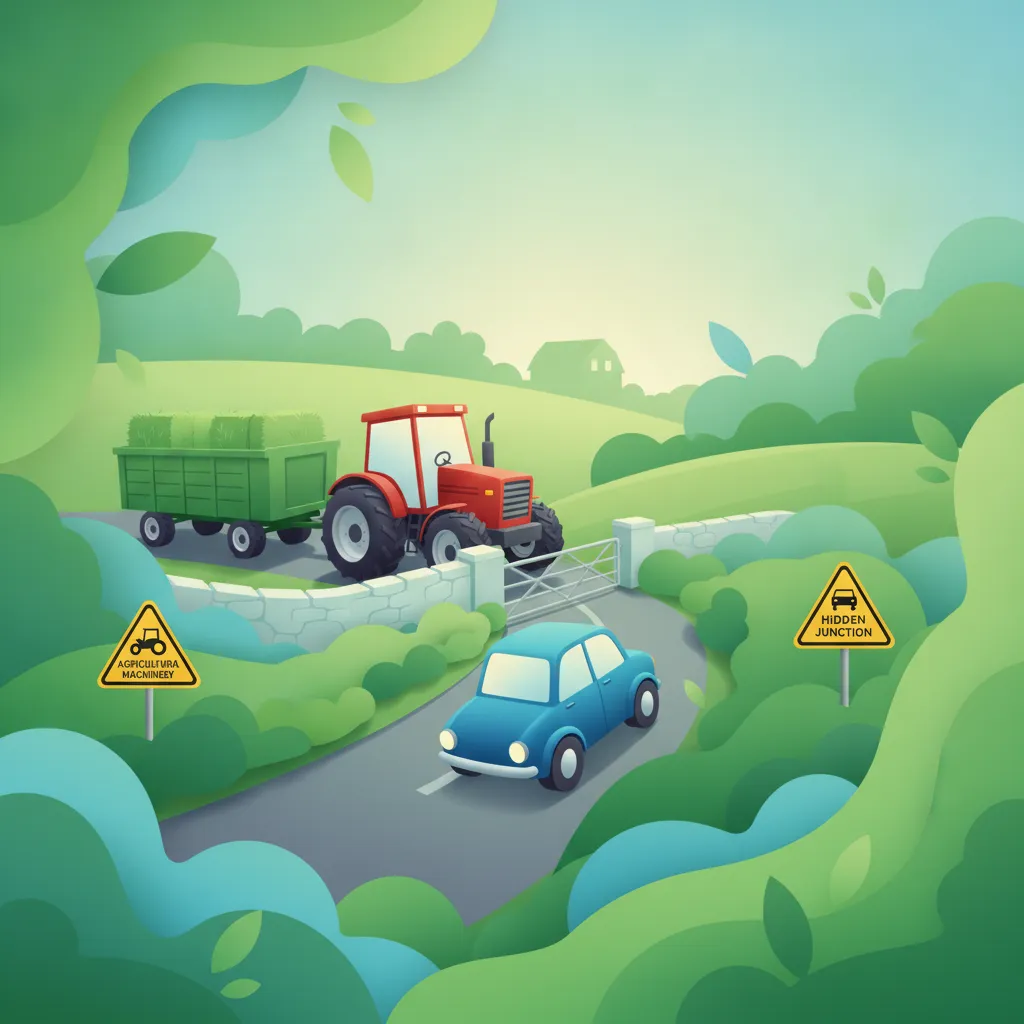
This lesson prepares you for the challenges of countryside driving. It emphasizes that the national speed limit on these roads is often too fast for the conditions. You will learn how to approach sharp bends, use passing places on single-track roads, and anticipate hazards like slow-moving tractors, horse riders, or mud on the road surface.
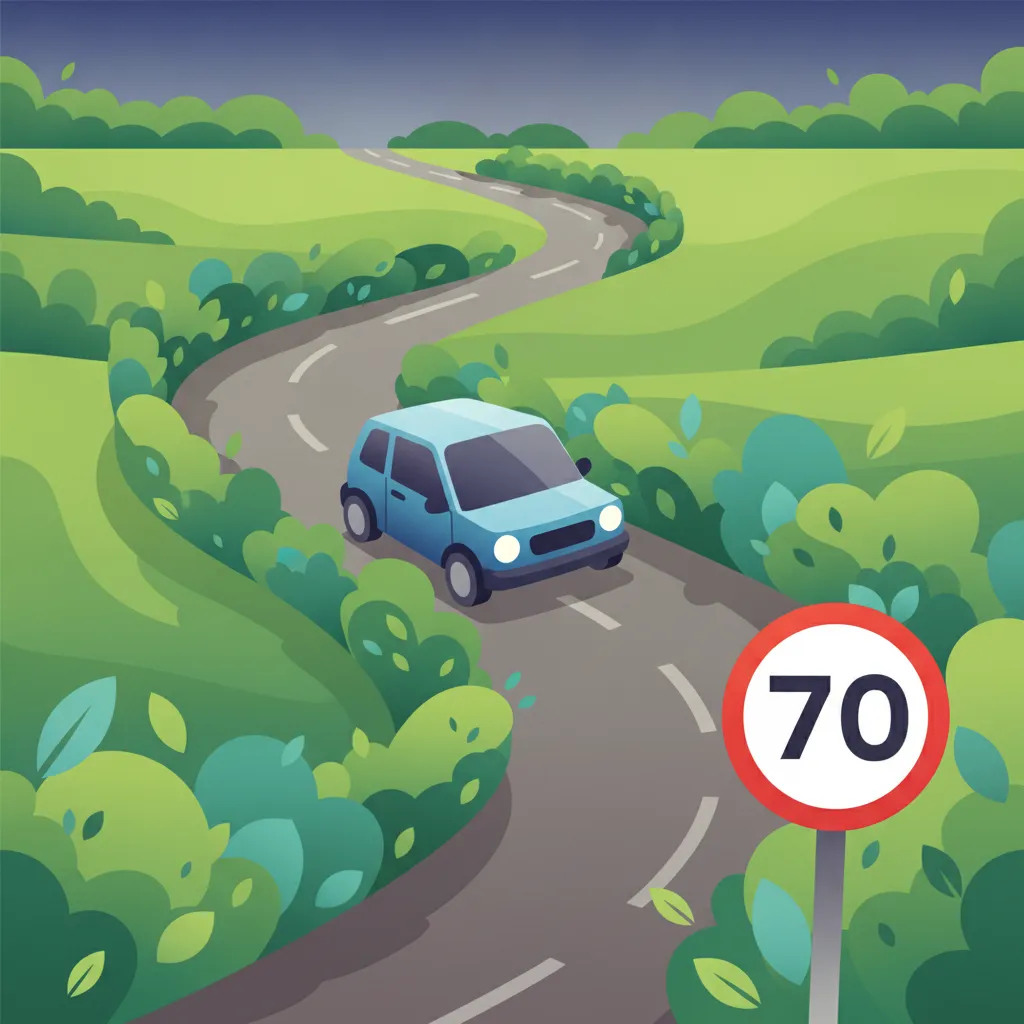
This lesson addresses the unique set of challenges that rural roads present to HGV drivers. It covers how to safely navigate narrow and winding lanes, the importance of anticipating hazards like slow-moving agricultural machinery, mud on the road, and wildlife. You will learn how the national speed limit applies to your vehicle on these roads and why it is often necessary to travel at a much lower speed to ensure safety.
This lesson reinforces the vital safety rule of maintaining an adequate following distance from the vehicle ahead. It explains why the standard 'two-second rule' must be extended for heavy vehicles, especially in poor weather or when heavily laden, to account for longer stopping distances. You will learn practical methods for judging a safe gap in various traffic situations, creating a crucial safety buffer to react to unforeseen hazards.
This lesson focuses on the specific rules and best practices for driving HGVs on motorways in Great Britain. It covers mandatory speed limits for goods vehicles, lane discipline including restrictions on using the outside lane, and procedures for safely joining and leaving the motorway. The lesson also includes up-to-date information on driving on smart motorways, including understanding the signs and using emergency refuge areas correctly.
Find clear answers to common questions learners have about Weather Impact on Heavy Vehicle Handling. Learn how the lesson is structured, which driving theory objectives it supports, and how it fits into the overall learning path of units and curriculum progression in Great Britain. These explanations help you understand key concepts, lesson flow, and exam focused study goals.
High-sided vehicles have a large surface area that acts like a sail. In strong crosswinds, they are at significant risk of being blown off course or, in extreme cases, overturning. Drivers must reduce speed and be prepared for buffeting, especially when exiting tunnels or passing gaps in hedges.
Because of their mass and the nature of air brakes, HGVs already have extended stopping distances. In the rain, reduced road grip (traction) compounds these factors significantly. You must increase your following distance to at least double the normal recommended gap to allow for the increased time needed to stop safely.
You must reduce your speed significantly and use your dipped headlights. If visibility is severely restricted, use your fog lights, but remember to turn them off once visibility improves. Always keep a safe distance from the vehicle in front, using their tail lights as a guide if safe to do so, while remaining alert for hazards.
While the core principles of road safety apply, Category C drivers must be far more conservative. Because of the vehicle's weight and dimensions, the consequences of a loss of control are much more severe. You are expected to show a higher level of professional judgment and anticipation in your theory exam answers.
Dive into our comprehensive question bank to find exactly what you need for your Great Britain theory test. Use our advanced filters to pinpoint specific subjects or test your knowledge on challenging areas, ensuring you're fully prepared for success.