
This lesson guides you through the complexities of route planning and wayfinding for large passenger vehicles. You will learn to integrate navigation tools with schedule adherence while managing unexpected disruptions, ensuring you remain confident and prepared for your Category D theory test.

Lesson content overview
For professional drivers operating passenger vehicles across Great Britain, meticulous route planning and effective wayfinding are not merely about reaching a destination; they are fundamental pillars of safe, reliable, and compliant service. This lesson, designed for the Great Britain Passenger Vehicle Theory curriculum, delves into the systematic approach required to navigate scheduled routes, manage unforeseen circumstances, and ensure passenger satisfaction. It covers everything from understanding timetables and journey maps to utilising GPS navigation and adhering to strict regulatory requirements for public transport.
Efficient route planning and adept wayfinding are critical for professional passenger vehicle drivers for several key reasons. Firstly, they enhance safety by ensuring predictable routes, which minimise sudden manoeuvres and reduce potential conflicts with other road users. A well-planned route takes into account the vehicle's size and capabilities, avoiding unsuitable roads or difficult turns.
Secondly, these practices drive operational efficiency and punctuality. Adhering to a planned schedule reduces unnecessary fuel consumption, optimises vehicle utilisation, and ensures passengers arrive at their destinations on time. This punctuality is a hallmark of reliable public transport service.
Finally, strict adherence to planned routes and established procedures is crucial for legal and regulatory compliance. Professional drivers and operators must meet obligations set out in the Highway Code, DVSA (Driver and Vehicle Standards Agency) regulations, and local authority transport policies. Failing to follow authorised routes or procedures can lead to penalties and compromise the operator's licensing conditions.
Route planning is the foundational pre-journey activity that determines the optimal path, stops, and timings for a passenger vehicle service. This systematic process involves a detailed analysis of service requirements, the available road network, the creation of accurate timetables, and a thorough risk assessment. It ensures that every aspect of the journey is considered before the wheels even turn.
At a broader level, strategic planning involves long-term service design and route selection based on passenger demand data and community needs. This stage defines the overall network. In contrast, operational planning focuses on day-to-day details, including timetable calibration and the allocation of specific vehicles to specific routes. For drivers, this translates into receiving a detailed route sheet that specifies start and end points, key intermediate stops, and acceptable timing tolerances. It is paramount that drivers strictly follow the route published by the operator; any deviation typically requires prior permission and adherence to specific company policies.
Effective wayfinding involves real-time navigation and decision-making during the journey, utilising various aids to ensure accurate positioning and stop identification. These tools are crucial for keeping the vehicle on track and for adapting to dynamic changes on the road.
The primary wayfinding tools include:
It is crucial for drivers to use these tools in conjunction with one another. For instance, a driver might check the GPS for an upcoming turn, confirm the stop location using a journey map, and then validate their timing against the timetable. While highly useful, electronic navigation systems must always comply with DVSA guidance regarding display usage and driver distraction. Importantly, a GPS device must be securely mounted in a position that does not obstruct the driver’s view of the road. Relying solely on GPS without cross-referencing other information sources can lead to errors, particularly if the GPS data is outdated or inaccurate.
Always cross-reference information from your GPS navigation system with official route sheets, physical journey maps, and road signs. GPS can sometimes be inaccurate or outdated, especially regarding bus-specific restrictions.
Schedule adherence is the practice of consistently maintaining the predetermined departure and arrival times at each stop along the route. This principle is vital for guaranteeing service reliability and fulfilling contractual commitments to passengers and transport authorities.
Operators often establish hard tolerance limits, which specify the maximum acceptable lateness (e.g., no more than 3 minutes late). There may also be soft tolerance variations, allowing for minor fluctuations, typically within 30 seconds to a minute, without being considered off-schedule. Drivers must constantly monitor their time at each stop and adjust their speed or dwell time as necessary to stay on schedule safely.
It is a common misunderstanding that drivers should rush or exceed safe speeds to recover lost time. This practice is dangerous and illegal. Instead, operators build in recovery time – specific margins within the timetable – that allow drivers to absorb minor delays without becoming significantly behind schedule. Consistent failure to adhere to schedules, particularly chronic lateness beyond established tolerances, can result in operational penalties for the driver or operator. Public Service Vehicle (PSV) Standards mandate the publication of accurate timetables, and drivers are expected to meet these published times.
Correctly identifying and stopping at designated bus stops, loading zones, or contractually required points is paramount for passenger safety and service quality. Drivers must possess a clear understanding of the different types of stops they may encounter:
Drivers must meticulously check for appropriate signage, stop lines, and road markings before stopping. The Highway Code (Rules 229 and 230) provides specific guidance on where buses may stop. Failing to stop at a request stop when a passenger is waiting, for example, is a common error that can lead to service complaints and negatively impact passenger perception. Conversely, stopping at a non-designated point, even if convenient, can cause traffic obstruction and may be illegal.
The period a bus remains stationary at a stop, allowing sufficient time for passengers to safely board and alight. This duration is typically determined by operator policy to prevent rushing and ensure passenger safety.
Despite meticulous planning, unforeseen circumstances like roadworks, accidents, or severe weather can necessitate a deviation from the planned route. Deviation management refers to the established procedures for legally and safely altering a route in such situations.
Deviations can be categorised as:
In instances of ad hoc deviation, the driver's immediate responsibility is to ensure safety. This typically involves contacting the control centre as soon as possible, describing the situation, and obtaining instructions for an alternate route. Following receipt of new instructions, the driver must promptly inform passengers about the deviation, the reason for it, and any expected changes to arrival times or alternative stops. Unlawful or unauthorised deviation can lead to a breach of PSV licensing conditions and significant safety risks.
Identify the obstruction or reason for deviation and ensure the immediate safety of your vehicle and passengers.
Contact your operator's control centre immediately to report the situation and seek authorisation for a diversion.
Follow the control centre's instructions carefully for the approved alternative route.
Inform passengers clearly and promptly about the deviation, the reason for it, and any impact on their journey (e.g., new estimated time of arrival, alternative alighting points).
Drive the alternative route safely, adhering to all traffic laws and new directions.
Providing accurate, timely, and comprehensible information to passengers regarding their journey status is a fundamental duty for passenger vehicle operators and drivers. This obligation is not just about good customer service; it is often a legal requirement.
Information provision may take several forms:
The Public Service Vehicle Accessibility Regulations (PCSC) include specific requirements for passenger information, emphasising accessibility and clarity. Drivers must avoid underestimating the need for detailed information, even for seemingly short delays, as passengers rely on this information to plan their onward journeys or communicate with others. Effective communication builds passenger confidence and reduces frustration during disruptions.
A timetable is more than just a list of times; it is a critical tool for managing a passenger vehicle service efficiently. Understanding how to interpret and apply its information is a core skill for professional drivers.
Timetables typically identify timing points – specific locations along the route where the bus is expected to be at a precise time. Drivers must strive to meet these times within defined tolerances. As mentioned earlier, timetables also incorporate recovery time, which is a built-in margin designed to help the driver regain schedule after minor, unavoidable delays without resorting to unsafe driving practices.
Drivers should regularly consult the timetable throughout their journey, comparing actual progress against expected times. This allows for informed decisions, such as whether to briefly wait at a stop to maintain spacing with the preceding service or to slightly increase speed (within legal limits) to account for a minor delay. A common misunderstanding is assuming the timetable is only for initial planning and does not need continuous consultation during the journey.
While GPS navigation systems are invaluable wayfinding tools, professional drivers must be aware of their limitations and potential for inaccuracy. Over-reliance on GPS can lead to dangerous situations or non-compliance with road regulations.
Common limitations of GPS systems include:
Professional drivers should never rely solely on electronic navigation for safety-critical decisions. DVSA guidance explicitly states that devices must be mounted securely and not distract the driver. If GPS directions conflict with official road signs or the operator's route sheet, road signs and the official route take precedence. Drivers must maintain situational awareness and use their judgment, cross-checking information from multiple sources.
Professional passenger vehicle drivers in Great Britain must operate within a robust framework of rules and regulations. These ensure safety, reliability, and accountability for public transport services.
Understanding common mistakes can help professional drivers avoid them, ensuring smoother, safer, and more compliant journeys.
Route planning and wayfinding are not static processes; they require continuous adaptation to changing conditions. Professional drivers must be prepared to adjust their approach based on the environment and specific circumstances.
| Condition | Variation in Principle / Rule | Reasoning |
|---|---|---|
| Heavy Rain / Snow | Increase dwell time; adjust speed earlier and reduce speed significantly to maintain schedule safely; use weather-adjusted recovery tolerance. | Poor visibility and slippery roads drastically increase stopping distances; safety must always override strict schedule adherence. |
| Reduced Visibility (Fog, Night) | Use enhanced wayfinding techniques such as focusing on additional signage and audible GPS prompts; adhere strictly to bus lane markings; avoid relying solely on visual GPS cues. | Low visibility heightens the risk of mis-identifying stops or lane markings, requiring greater caution. |
| Urban vs Rural Roadways | In urban areas, prioritise strict bus lane usage rules and precise stop compliance. In rural areas, be prepared for fewer designated stops and potentially unmarked stopping zones (only if explicitly permitted by the operator). | Urban environments feature higher traffic density and specific infrastructure, while rural routes may lack bus-specific facilities. |
| Vehicle Load (Full vs Empty) | A heavier vehicle load affects acceleration and braking performance. Adjust schedule calculations to account for slower accelerations, especially on inclines, and longer braking distances. | Vehicle dynamics change significantly with passenger load, impacting performance and the ability to maintain timing. |
| Encountering Vulnerable Road Users | Give pedestrians and cyclists clear priority at crossings; adjust speed well in advance; ensure safe boarding/alighting procedures do not obstruct vulnerable user movement. | Legal priority rules (e.g., pedestrians over vehicles) and the higher risk of injury to vulnerable users necessitate extra care. |
| Road Works / Obstructions | Activate authorised deviation procedures; update the passenger information system promptly; recalculate new timings based on the diversion length and potential delays. | This maintains safety and service reliability while complying with legal deviation requirements. |
| Control Centre Communication Failure | Follow pre-approved contingency plans; default to safe stopping at the next designated stop; verbally inform passengers about the communication issue and any necessary changes. | Ensures continuity of service and safety even without direct guidance from the control centre. |
| Technical Failure of GPS | Revert immediately to physical journey maps and route sheets; cross-check directions with road signs; inform the control centre of the navigation issue. | Provides redundancy to maintain navigation accuracy and prevent becoming lost. |
| Special Events (Parades, Large Gatherings) | Check for temporary road restrictions well in advance; adjust the route as directed; provide advanced passenger notifications about changes. | Temporary events can significantly affect bus lane availability or stop locations, requiring proactive planning. |
The systematic approach to route planning and wayfinding has significant psychological and safety benefits for professional drivers. Consistency in route execution reduces the driver's cognitive load, freeing up mental resources to focus better on dynamic traffic situations, passenger needs, and overall road safety.
However, a potential pitfall is automation bias, where drivers may over-rely on GPS or automated systems, leading to a reduction in their own situational awareness. It is crucial for drivers to actively engage with their environment and cross-reference information rather than blindly following electronic cues.
Physically, accurate speed management is paramount. Large passenger vehicles, such as buses and coaches, have significantly longer stopping distances compared to cars. Aggressive driving to make up for lost time dramatically increases accident risk. Studies show that while punctuality improves passenger satisfaction, attempts at unsafe speed recovery directly correlate with an increase in safety incidents. Drivers of large vehicles also have longer perception-reaction times (approximately 2.5 seconds), which further influences safe speed limits and the time needed to make safe deviation decisions.
Examining practical scenarios helps solidify the application of route planning and wayfinding principles in everyday driving.
Setting: An urban bus route experiencing moderate traffic during the afternoon. The weather is clear. Rule/Decision Point: Schedule adherence and the appropriate use of recovery time. Correct Behavior: The driver arrives at a stop 40 seconds late. After assessing the timetable, they identify a 1-minute recovery allowance built into the schedule for the next segment. The driver maintains a safe speed, slightly below the posted limit, using the recovery time to gradually get back on schedule without rushing. Incorrect Behavior: The driver, noticing the delay, accelerates aggressively and exceeds the speed limit to "make up time," compromising safety and risking a penalty. Explanation: Recovery time is designed to absorb minor delays safely. Exceeding speed limits is illegal and significantly increases the risk of accidents, particularly with a large passenger vehicle.
Setting: A suburban coach route during the morning rush hour. A road ahead is unexpectedly closed due to an emergency incident. Rule/Decision Point: Deviation management and passenger information obligations. Correct Behavior: The driver immediately contacts the operator's control centre, reports the road closure, and awaits an authorised diversion plan. Upon receiving instructions, the driver makes a clear announcement to passengers, explaining the reason for the diversion, the new route to be taken, and the revised estimated time of arrival. The driver then safely follows the instructed alternate route. Incorrect Behavior: The driver attempts to find their own shortcut through unfamiliar streets, ignoring the official closure signage and failing to inform passengers, leading to confusion and potential safety hazards. Explanation: In an ad hoc deviation, communication with the control centre is paramount for safety and legal compliance. Passengers must be kept informed to reduce anxiety and allow them to make alternative arrangements if needed.
Setting: Night-time driving in an unfamiliar urban area with limited street lighting. The GPS suggests a turn. Rule/Decision Point: Responsible use of GPS navigation systems and adherence to road signs. Correct Behavior: The GPS indicates a left turn onto a specific road. However, the driver clearly sees a road sign at the junction marked "No Entry for Buses" or a clear height restriction. Prioritising the physical road sign, the driver safely continues straight, cross-referencing with their physical route sheet or journey map to find the next authorised turn. Incorrect Behavior: The driver blindly follows the GPS instruction, turning into the restricted road. This could lead to the bus becoming stuck, obstructing traffic, or incurring a fine for a traffic violation. Explanation: Road signs and markings are the ultimate authority on the road. GPS systems can be outdated or generic, and professional drivers are legally obliged to obey visible road signage over electronic navigation advice.
Setting: A rural bus service with low passenger volume, sunny weather. The bus approaches a marked request stop. Rule/Decision Point: Correct identification and compliance with request stop procedures. Correct Behavior: As the driver approaches the request stop, they scan the waiting area and observe a passenger clearly waving for the bus. The driver safely applies the brakes and pulls over to the designated stop line, allowing the passenger to board. Incorrect Behavior: Due to being slightly behind schedule and the low overall passenger count, the driver assumes no one is waiting and passes the request stop without checking thoroughly. Explanation: Missing a legitimate passenger request is a failure of service and can lead to passenger complaints. Drivers must be vigilant and proactive in identifying signals at request stops, regardless of how busy the route appears.
Setting: A city centre street during the early afternoon. There is a clearly marked bus lane that operates between 7:00 am and 10:00 am. Rule/Decision Point: Proper use of designated bus lanes and adherence to time restrictions. Correct Behavior: The driver, having used the bus lane earlier during its operational hours, notes the time is now 11:30 am. Recognising that the bus lane restriction has ended, they safely merge out of the bus lane into the general traffic lane, avoiding any potential penalty for unauthorised use. Incorrect Behavior: The driver continues to use the bus lane, believing it is always for buses, or simply not paying attention to the time restriction. This results in using a lane illegally, potentially causing congestion for other vehicles, and risks a fine. Explanation: Bus lane restrictions are time-sensitive and legally enforceable. Drivers must be fully aware of when and where they are permitted to use special lanes to avoid penalties and ensure fair road use.
Explore all units and lessons included in this driving theory course.
Lesson content overview
Explore all units and lessons included in this driving theory course.
Explore search topics learners often look for when studying Route Planning and Wayfinding. These topics reflect common questions about road rules, driving situations, safety guidance, and lesson level theory preparation for learners in Great Britain.
Browse additional driving theory lessons that cover connected traffic rules, road signs, and common driving situations related to this topic. Improve your understanding of how different rules interact across everyday traffic scenarios.
Understand official procedures for handling planned and unplanned route diversions. Learn how to communicate changes to passengers and maintain service reliability when facing unexpected road closures or detours in Great Britain.

This lesson explains how to drive safely through areas where roadworks are taking place. It stresses the importance of obeying all temporary signs, especially mandatory speed limits, which are in place for your safety and the safety of road workers. You will learn about navigating narrow lanes, contraflow systems, and how to follow official diversion signs.

This lesson addresses the unique challenges of driving a large vehicle on rural roads. It provides techniques for positioning the vehicle through sharp bends and on narrow lanes, and for safely navigating unmarked or uncontrolled junctions. Learners will be taught to anticipate hidden hazards common in the countryside, such as slow-moving farm vehicles, animals on the road, and concealed entrances. The correct use of passing places and strategies for meeting oncoming traffic are also covered.
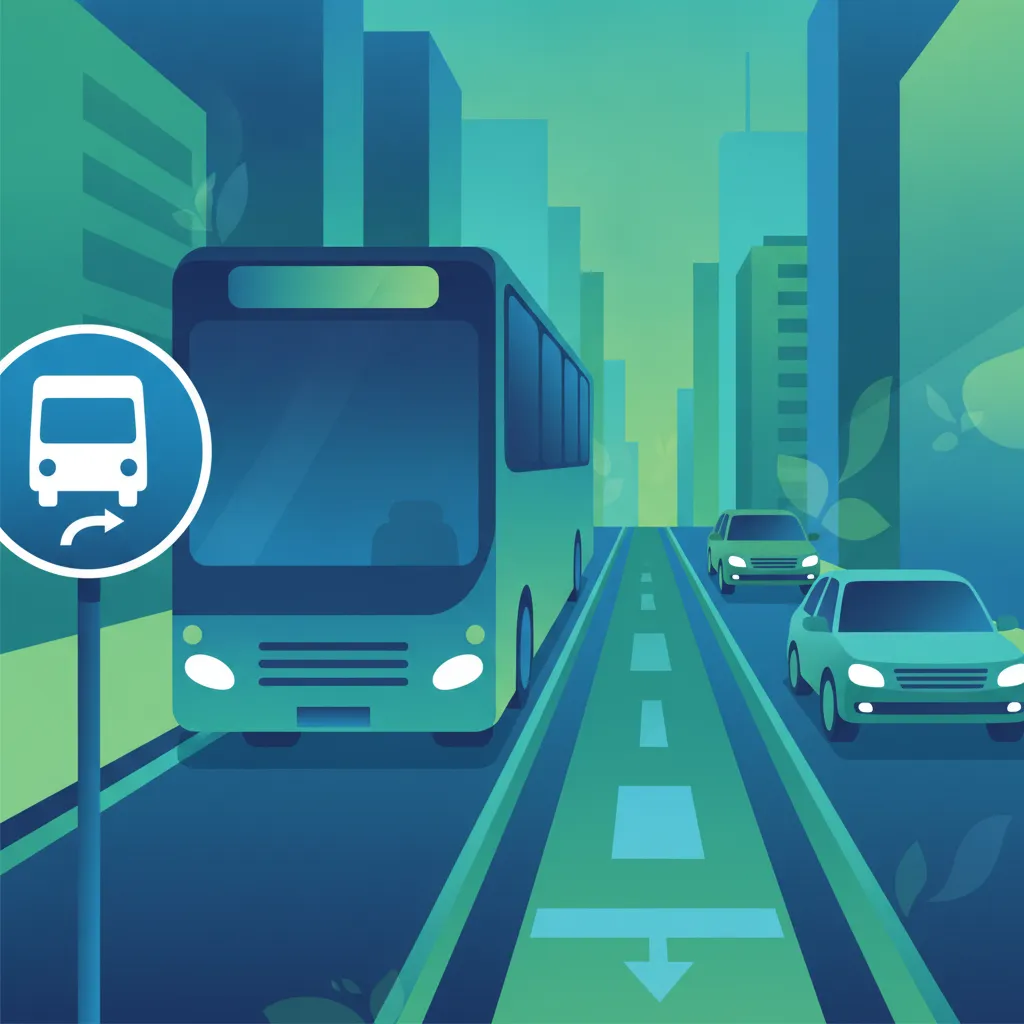
This lesson examines the unique rules and restrictions governing buses and coaches, focusing on bus lane priority, time-based restrictions, and loading zone limitations. Learners will explore the criteria for using bus-only routes and understand the legal consequences of non-compliance. The content also reviews signage indicating bus gate operation and areas where passenger vehicles are prohibited from stopping or loading outside of designated zones, ensuring lawful and efficient urban navigation.

This lesson provides essential guidance for handling on-road emergencies. It outlines the steps to take if your vehicle breaks down, including making yourself visible and getting to a place of safety. You will also learn the basics of what to do at an accident scene, including assessing the situation, calling for help, and providing simple first aid until professional assistance arrives.

This lesson provides guidance on how to safely and compliantly navigate through roadworks, which are a common feature of the road network. It covers the interpretation of temporary signs, strict adherence to reduced speed limits, and how to maneuver through narrow lanes and contraflow systems. The paramount importance of protecting road workers by driving with extra care and attention is a central theme of this lesson.

This lesson covers the full range of road signs encountered by passenger vehicle drivers, focusing on regulatory, warning, and informational signs. It explains the visual characteristics of sign shapes, colors, and symbols, particularly those associated with bus lane usage and priority rules. By mastering sign hierarchy and meaning, drivers can quickly interpret the sign's intent and adjust their driving behaviour accordingly, ensuring full compliance with the Highway Code and enhancing road safety.

This lesson provides detailed instruction on turning techniques tailored for long vehicles. It explains the concepts of off-tracking (where rear wheels follow a tighter path than front wheels) and rear swing, and how to compensate for them. Learners will understand how to position the vehicle correctly when approaching and navigating left and right turns at junctions, roundabouts, and tight corners, using mirrors and signals effectively to ensure clearance and safety.
This lesson covers the specific procedures for operating within busy bus terminals and service areas. It details the protocols for approaching and parking in allocated bays, managing the safe flow of passengers, and communicating with station staff. The content emphasizes the need for extreme caution and low-speed manoeuvring due to high pedestrian traffic. It also reviews pre-departure checks and communication protocols necessary for efficient and safe terminal operations.

This lesson focuses on the regulations and best practices for driving a bus or coach on motorways. It details the specific speed limits applicable to PCVs and reinforces strict lane discipline. The content covers the correct procedures for safely joining from a slip road, overtaking other vehicles, and exiting the motorway. It also explains the features of smart motorways and the correct safety procedures to follow in the event of a breakdown, including the use of the hard shoulder.
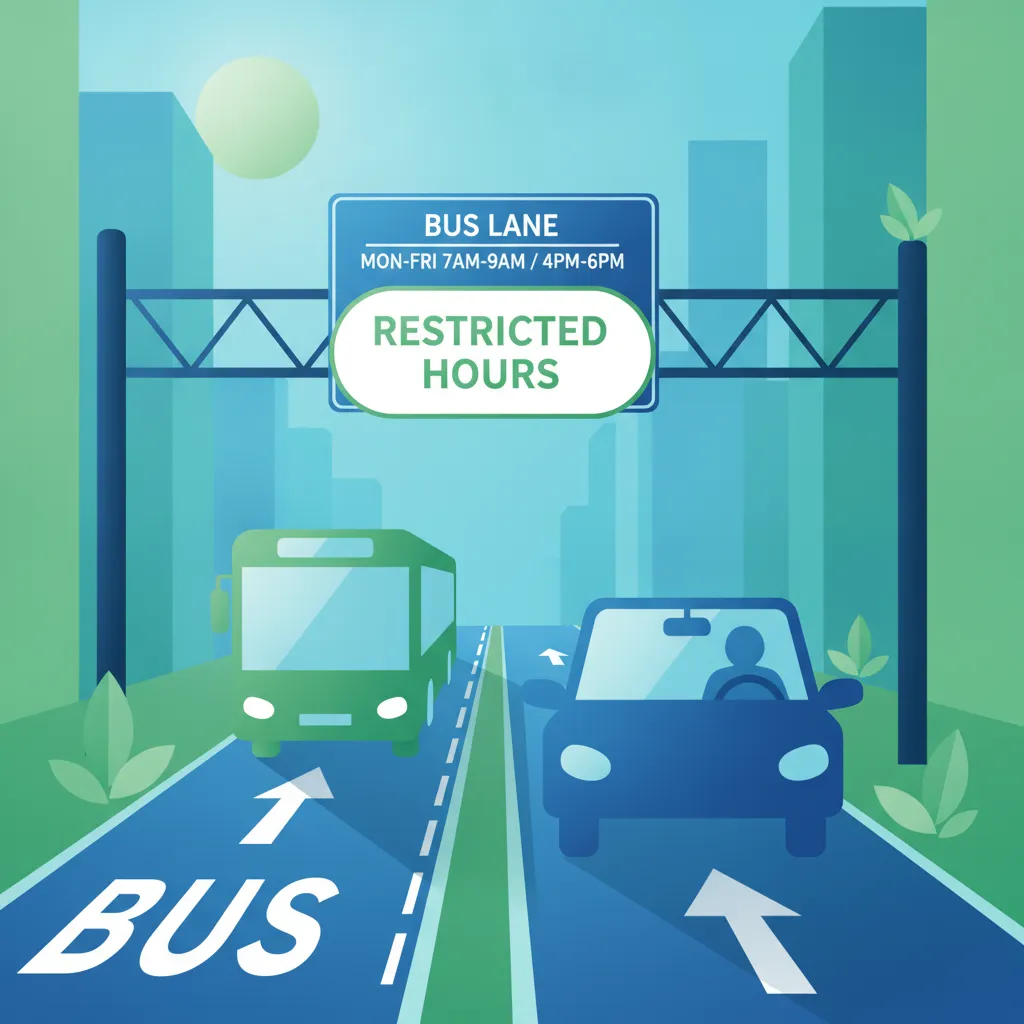
This lesson covers the importance of maintaining correct lane discipline when driving a large passenger vehicle. It details how to position your vehicle safely within a lane on various road types, including multi-lane carriageways and motorways. You will learn the specific rules governing bus lanes, including how to interpret markings, adhere to operating times, and understand the exemptions and penalties associated with their use to ensure legal and efficient driving.
Learn the essential wayfinding tools for professional drivers, including how to effectively use timetables, journey maps, and GPS systems. Understand their benefits and limitations for maintaining schedule adherence and route accuracy.
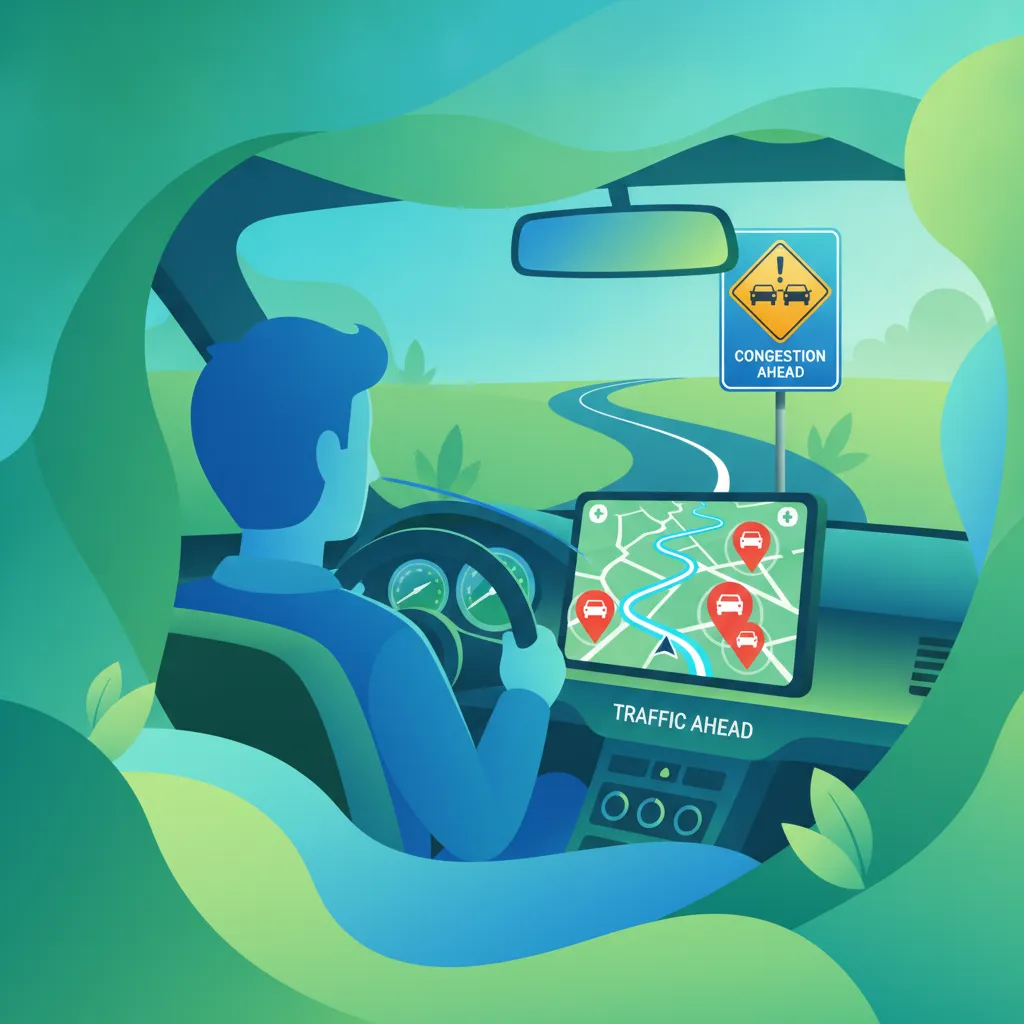
This lesson explores the effective use of modern digital navigation tools, including GPS systems and mobile apps tailored for HGVs. It explains how to leverage real-time traffic data, congestion alerts, and dynamic re-routing to adapt to changing road conditions. Importantly, it also emphasizes the need to use this technology safely, cross-referencing information with road signs and maintaining situational awareness to avoid distractions while driving.

This lesson covers the signs that help you navigate your journey effectively. It explains how sign colours indicate the type of road—blue for motorways, green for primary routes, and white for non-primary routes. You will also learn to interpret signs for tourist attractions, services, and lane information at complex junctions.

This lesson teaches a structured approach to effective route planning, a critical skill for any professional driver. It covers the use of specialized HGV navigation software and traditional maps to account for vehicle dimensions, weight limits, low bridges, and delivery time constraints. The goal is to create routes that are not only the most efficient in terms of time and fuel but are also safe, legal, and responsive to potential disruptions like roadworks or traffic.
This lesson addresses the unique challenges of driving a large vehicle on rural roads. It provides techniques for positioning the vehicle through sharp bends and on narrow lanes, and for safely navigating unmarked or uncontrolled junctions. Learners will be taught to anticipate hidden hazards common in the countryside, such as slow-moving farm vehicles, animals on the road, and concealed entrances. The correct use of passing places and strategies for meeting oncoming traffic are also covered.
This lesson covers the specific procedures for operating within busy bus terminals and service areas. It details the protocols for approaching and parking in allocated bays, managing the safe flow of passengers, and communicating with station staff. The content emphasizes the need for extreme caution and low-speed manoeuvring due to high pedestrian traffic. It also reviews pre-departure checks and communication protocols necessary for efficient and safe terminal operations.
This lesson explains how to drive safely through areas where roadworks are taking place. It stresses the importance of obeying all temporary signs, especially mandatory speed limits, which are in place for your safety and the safety of road workers. You will learn about navigating narrow lanes, contraflow systems, and how to follow official diversion signs.
This lesson covers the full range of road signs encountered by passenger vehicle drivers, focusing on regulatory, warning, and informational signs. It explains the visual characteristics of sign shapes, colors, and symbols, particularly those associated with bus lane usage and priority rules. By mastering sign hierarchy and meaning, drivers can quickly interpret the sign's intent and adjust their driving behaviour accordingly, ensuring full compliance with the Highway Code and enhancing road safety.

This lesson details how to safely navigate junctions controlled by traffic signals. It explains the meaning of filter arrows, which allow you to proceed in a specific direction even if the main light is red. You will also learn about respecting advanced stop lines for cyclists and how to approach a junction when the traffic lights are not working.
This lesson examines the unique rules and restrictions governing buses and coaches, focusing on bus lane priority, time-based restrictions, and loading zone limitations. Learners will explore the criteria for using bus-only routes and understand the legal consequences of non-compliance. The content also reviews signage indicating bus gate operation and areas where passenger vehicles are prohibited from stopping or loading outside of designated zones, ensuring lawful and efficient urban navigation.
This lesson covers the importance of maintaining correct lane discipline when driving a large passenger vehicle. It details how to position your vehicle safely within a lane on various road types, including multi-lane carriageways and motorways. You will learn the specific rules governing bus lanes, including how to interpret markings, adhere to operating times, and understand the exemptions and penalties associated with their use to ensure legal and efficient driving.
Find clear answers to common questions learners have about Route Planning and Wayfinding. Learn how the lesson is structured, which driving theory objectives it supports, and how it fits into the overall learning path of units and curriculum progression in Great Britain. These explanations help you understand key concepts, lesson flow, and exam focused study goals.
Professional drivers must account for vehicle height, length, and weight restrictions. Always use a commercial-grade satellite navigation system that allows you to input your vehicle dimensions to avoid unsuitable roads.
Prioritise safety and passenger communication. Attempt to follow pre-approved diversion routes if provided by your operator, notify control, and ensure passengers are updated on any changes to stops.
Yes, you may face scenario-based questions about handling schedule pressures, reporting service disruptions, and navigating zones with vehicle-specific restrictions.
Reliability is key to public trust and operational standards. Efficient wayfinding allows you to maintain your timetable while driving safely, avoiding the temptation to rush, which can lead to hazardous driving.
Dive into our comprehensive question bank to find exactly what you need for your Great Britain theory test. Use our advanced filters to pinpoint specific subjects or test your knowledge on challenging areas, ensuring you're fully prepared for success.