
This lesson explores the essential physics and techniques required for safely controlling large passenger vehicles. You will learn how vehicle weight, speed, and road conditions influence your braking performance, ensuring you can manage passenger comfort while meeting DVSA theory standards.
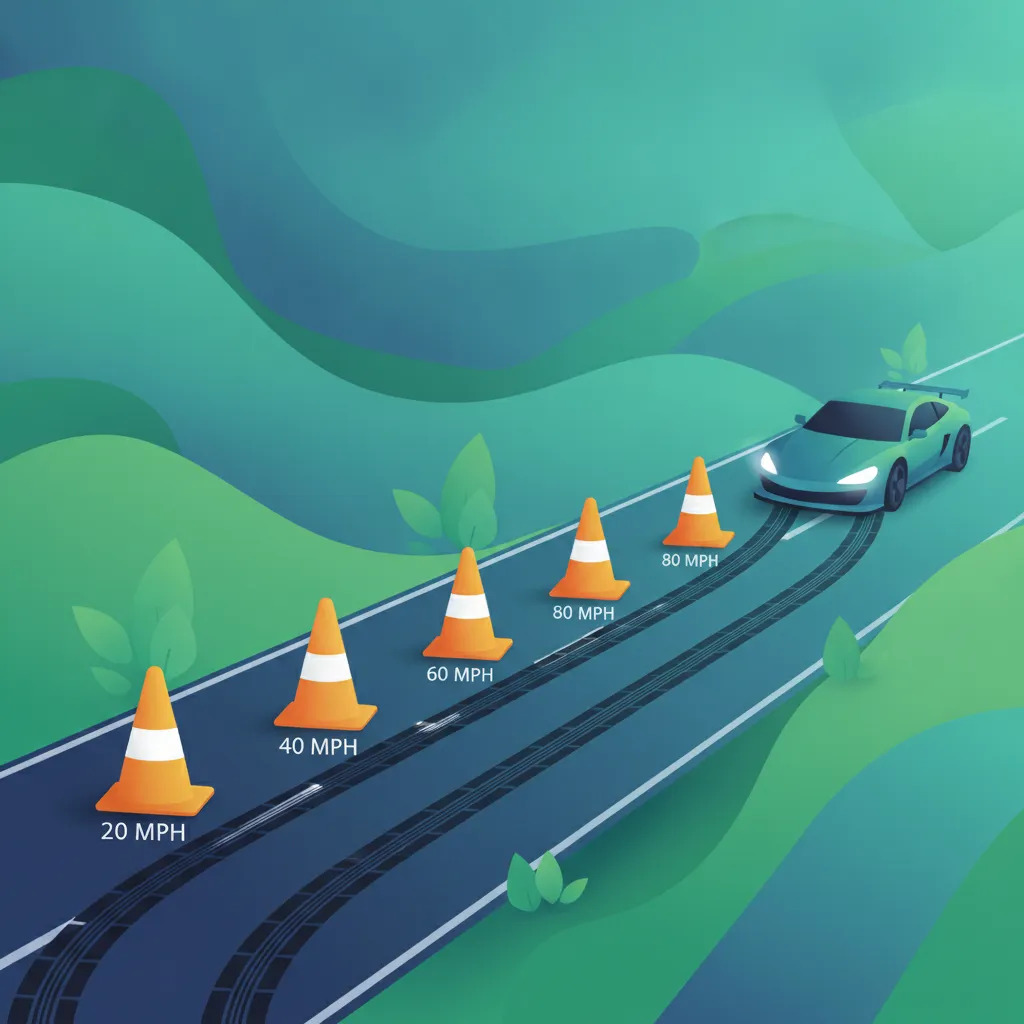
Lesson content overview
Operating a bus, coach, or minibus in Great Britain demands exceptional driving skills, particularly regarding braking. Due to their significant mass and passenger capacity, these large vehicles possess considerable kinetic energy, making effective braking strategies and a thorough understanding of stopping distances paramount for safety. This lesson, designed for drivers pursuing their Category D, D1, D1E, or DE licence, delves into the essential principles and practical techniques required to ensure safe deceleration and stopping in all conditions. Mastering these concepts is fundamental to preventing collisions, enhancing passenger comfort, and adhering to strict regulatory requirements set by the DVSA and the Highway Code.
Total Stopping Distance (TSD) is the full distance a vehicle travels from the moment a driver perceives a hazard until the vehicle comes to a complete halt. It is a critical safety metric, comprising two distinct phases: the perception-reaction distance and the braking distance. For large passenger vehicles, understanding and accurately estimating TSD is crucial, as their greater mass significantly extends these distances compared to smaller vehicles.
Before any mechanical braking can occur, the driver must first perceive a hazard, process the information, decide to brake, and then physically initiate the braking action. This interval is known as the Perception-Reaction Time (PRT).
The time elapsed from a driver first observing a hazard to the instant they begin to apply the brakes.
For professional drivers, PRT typically ranges from 1.5 to 2.5 seconds. While this might seem short, even a small delay can have significant consequences, especially at higher speeds. For instance, a bus travelling at 50 mph (approximately 22.4 metres per second) will cover nearly 45 metres during a 2-second PRT before the brakes are even engaged. Factors such as fatigue, distraction, alcohol, drugs, or even emotional stress can considerably lengthen a driver's PRT, increasing the perception-reaction distance and, consequently, the total stopping distance. Professional drivers are expected to maintain high levels of alertness and practice pre-emptive hazard scanning to minimise their PRT.
Once the driver initiates braking, the vehicle begins to slow down. The distance covered during this phase, from brake application to a complete stop, is the Braking Distance. This distance is governed by fundamental principles of physics, particularly kinetic energy and friction.
The distance a vehicle travels from the moment the brakes are applied until it comes to a complete stop.
The kinetic energy of a moving vehicle is directly proportional to its mass and the square of its speed (½mv²). This means that doubling a vehicle's speed quadruples its kinetic energy, requiring four times the braking force or distance to bring it to a stop. Due to their substantial mass, buses and coaches carry immense kinetic energy, explaining why they require significantly longer braking distances than cars.
The ability to reduce this kinetic energy and stop the vehicle depends heavily on the coefficient of friction (µ) between the tyres and the road surface, as well as the efficiency of the vehicle's braking system. A higher coefficient of friction (e.g., on dry, coarse asphalt) allows for shorter braking distances, while a lower coefficient (e.g., on wet or icy roads) dramatically increases the required braking distance. Effective brakes convert kinetic energy into heat through friction, bringing the vehicle to a halt.
Effective braking is not merely about pressing the brake pedal; it involves a sophisticated understanding of technique, vehicle dynamics, and technological aids. For passenger vehicle drivers, smooth, controlled deceleration is as important for passenger comfort as it is for safety.
Brake modulation refers to the skilled control of brake pedal pressure to achieve smooth, controlled deceleration without abrupt stops or wheel lock-up. This technique is crucial for large passenger vehicles, where sudden braking can cause discomfort or even injury to passengers, especially those standing.
The gradual and controlled application and release of brake pressure to achieve smooth deceleration, prevent wheel lock-up, and maintain vehicle stability.
There are two primary approaches to brake modulation:
Proper brake modulation helps maintain the vehicle's stability, reduces tyre wear, and is fundamental to safe and comfortable passenger transport.
Modern passenger vehicles are almost universally equipped with Anti-Lock Braking Systems (ABS), a critical safety feature that significantly enhances braking performance and control.
An electronic safety system that prevents the wheels from locking up during hard braking by automatically modulating brake pressure, allowing the driver to maintain steering control.
ABS works by continuously monitoring the rotational speed of each wheel. If a wheel is about to lock up under heavy braking, the ABS unit momentarily reduces the brake pressure to that specific wheel, then reapplies it. This process happens many times per second, creating a pulsating sensation in the brake pedal. This rapid cycling prevents the wheels from skidding, preserving the driver's ability to steer around obstacles even during an emergency stop.
When ABS activates, you will feel a pulsing or vibration through the brake pedal. It is crucial to maintain firm, continuous pressure on the pedal and resist the urge to "pump the brakes." Pumping the brakes will override the ABS and can lead to wheel lock-up, extending your stopping distance and reducing steering control.
ABS is particularly effective on slippery surfaces (wet, icy, or gravel roads) where wheel lock-up is more prone to occur. It helps reduce stopping distances under these challenging conditions by ensuring maximum available grip is maintained.
An emergency braking manoeuvre is a deliberate, maximum-effort stop performed when a collision is imminent, requiring the shortest possible stopping distance while maintaining vehicle control.
The rapid application of maximum braking force to achieve the shortest possible stopping distance, typically involving the activation of ABS or threshold braking techniques, while striving to maintain vehicle control.
Identify Hazard: Recognize an immediate and unavoidable danger.
Apply Maximum Pressure: Press the brake pedal firmly and continuously with maximum force. Do not release pressure even if the pedal pulses.
Steer to Safety (if possible): Allow the ABS to work. While maintaining full brake pressure, make small, controlled steering adjustments to avoid the obstacle if there's a safe path. Avoid sudden, sharp steering inputs that could destabilise the large vehicle.
Hold Until Stop: Keep the pedal fully depressed until the vehicle comes to a complete stop.
For vehicles without ABS (though rare in modern passenger transport), threshold braking would be applied: pressing firmly just short of lock-up, easing slightly if wheels lock, then reapplying. The goal remains the same: achieve maximum deceleration without losing control. Practising emergency braking in a controlled environment is invaluable for professional drivers to develop the necessary muscle memory and confidence.
Brake Force Distribution (BFD) refers to how braking power is allocated between the front and rear axles of a vehicle. In most vehicles, a front-biased distribution is common because weight shifts to the front during deceleration, increasing front wheel grip. However, vehicle load dramatically impacts this balance.
An advanced electronic system that works with ABS to dynamically adjust the braking force to each wheel based on load, road conditions, and vehicle stability, optimising braking efficiency and stability.
Electronic Brakeforce Distribution (EBD) takes BFD a step further by electronically monitoring individual wheel speeds and distributing optimal braking force to each wheel in real-time. This is particularly beneficial for large passenger vehicles that experience significant variations in load (empty vs. fully laden). EBD helps:
EBD ensures that the vehicle maintains maximum braking efficiency and stability under various loading and road conditions, complementing ABS to provide superior braking control.
Beyond driver technique and vehicle technology, several external and internal factors significantly influence a large passenger vehicle's stopping distance. Professional drivers must constantly assess and adapt to these variables.
The weight of a vehicle directly affects its kinetic energy and, consequently, the force required to bring it to a stop. For passenger vehicles, load effect is a crucial consideration, encompassing the weight of passengers, luggage, and any additional cargo or trailers.
The impact of a vehicle's total mass (including passengers, luggage, and any trailers) on its kinetic energy and the resultant increase in required braking force and stopping distance.
A fully laden bus or coach can weigh considerably more than an empty one. This increased mass means:
Drivers must adjust their speed and increase their following distances significantly when operating a fully loaded passenger vehicle. Failure to do so severely compromises safety margins.
The coefficient of friction (µ) between tyres and the road surface is the single most variable factor affecting braking distance. Weather conditions are primary determinants of this coefficient.
Drivers of passenger vehicles must constantly monitor road and weather conditions and adjust their speed and following distances accordingly. This proactive approach is essential for maintaining safe stopping capabilities.
The performance of a braking system is only as good as its components. Over time, friction and heat cause brake wear, leading to degradation of brake pads, discs, drums, and hydraulic fluid.
The gradual degradation of brake components (pads, discs, drums) due to friction and heat during normal operation, which reduces braking efficiency and requires replacement.
Regular inspections and adherence to manufacturer-recommended service intervals are critical. The annual MOT (Ministry of Transport) inspection in the UK mandates functional brakes, and DVSA guidelines specify maintenance schedules for heavy vehicles. Neglecting brake maintenance not only compromises safety but also leads to legal non-compliance.
Brake fade is a dangerous phenomenon where the braking efficiency dramatically decreases due to overheating of the brake components. This is a particular risk for heavy passenger vehicles on long, steep descents.
A temporary reduction in braking effectiveness caused by excessive heat build-up in the brake components, leading to a loss of friction and increased stopping distances.
Continuous heavy braking generates immense heat in the pads, discs, and fluid. When components overheat, the coefficient of friction drops, and the brake fluid can boil, causing a sudden loss of braking power.
To prevent brake fade:
The DVSA strongly recommends these practices, as failure to prevent brake fade can lead to catastrophic accidents, especially with a fully loaded vehicle.
The safe operation of passenger vehicles is heavily regulated to protect public safety. Drivers must be intimately familiar with the legal obligations and best practices concerning braking.
The Driver and Vehicle Standards Agency (DVSA) sets stringent standards for the braking systems of all vehicles, especially large passenger vehicles.
Maintaining your vehicle's braking system in top condition is not just a safety recommendation; it is a legal requirement. Failure to meet these standards can result in fines, points on your licence, or your vehicle being taken off the road.
The Highway Code provides crucial guidance on maintaining safe following distances, which are a direct application of Total Stopping Distance.
The safe space maintained between your vehicle and the vehicle ahead, typically measured in seconds, allowing enough time and distance to react and stop safely.
To measure following distance, choose a fixed point ahead (e.g., a road sign or bridge). When the vehicle in front passes that point, start counting "one thousand and one, one thousand and two, one thousand and three..." If your vehicle reaches the point before you finish counting to three (or more, depending on conditions), you are following too closely.
Even experienced drivers can fall into common traps regarding braking. Awareness of these pitfalls is key to professional, safe driving.
Mastering braking strategies and understanding stopping distances is a cornerstone of professional driving for large passenger vehicles. It encompasses a blend of physics, driver technique, technological assistance, and unwavering adherence to legal frameworks. For Great Britain Passenger Vehicle Theory – Bus, Coach and Minibus Drivers, this means:
By internalising these concepts, you not only prepare effectively for your Category D theory and practical tests but also equip yourself with the critical knowledge needed to transport passengers safely and professionally across the diverse roads of England, Scotland, and Wales.
Explore all units and lessons included in this driving theory course.
Lesson content overview
Explore all units and lessons included in this driving theory course.
Explore search topics learners often look for when studying Braking Strategies and Stopping Distances. These topics reflect common questions about road rules, driving situations, safety guidance, and lesson level theory preparation for learners in Great Britain.
Browse additional driving theory lessons that cover connected traffic rules, road signs, and common driving situations related to this topic. Improve your understanding of how different rules interact across everyday traffic scenarios.
Understand the physics behind stopping large passenger vehicles. Explore how vehicle mass, passenger load, and speed directly impact kinetic energy and required stopping distances for your UK driving theory test.

This lesson explores how to maintain safe following distances specific to large passenger vehicles, accounting for their higher inertia and longer braking distances. It covers time-gap calculations, such as the four-second rule, and dynamic following distance adjustments based on speed and road conditions. Emphasis is placed on avoiding tailgating, ensuring a sufficient safety buffer is always present, and developing an awareness of convoy driving scenarios where multiple large vehicles are present.
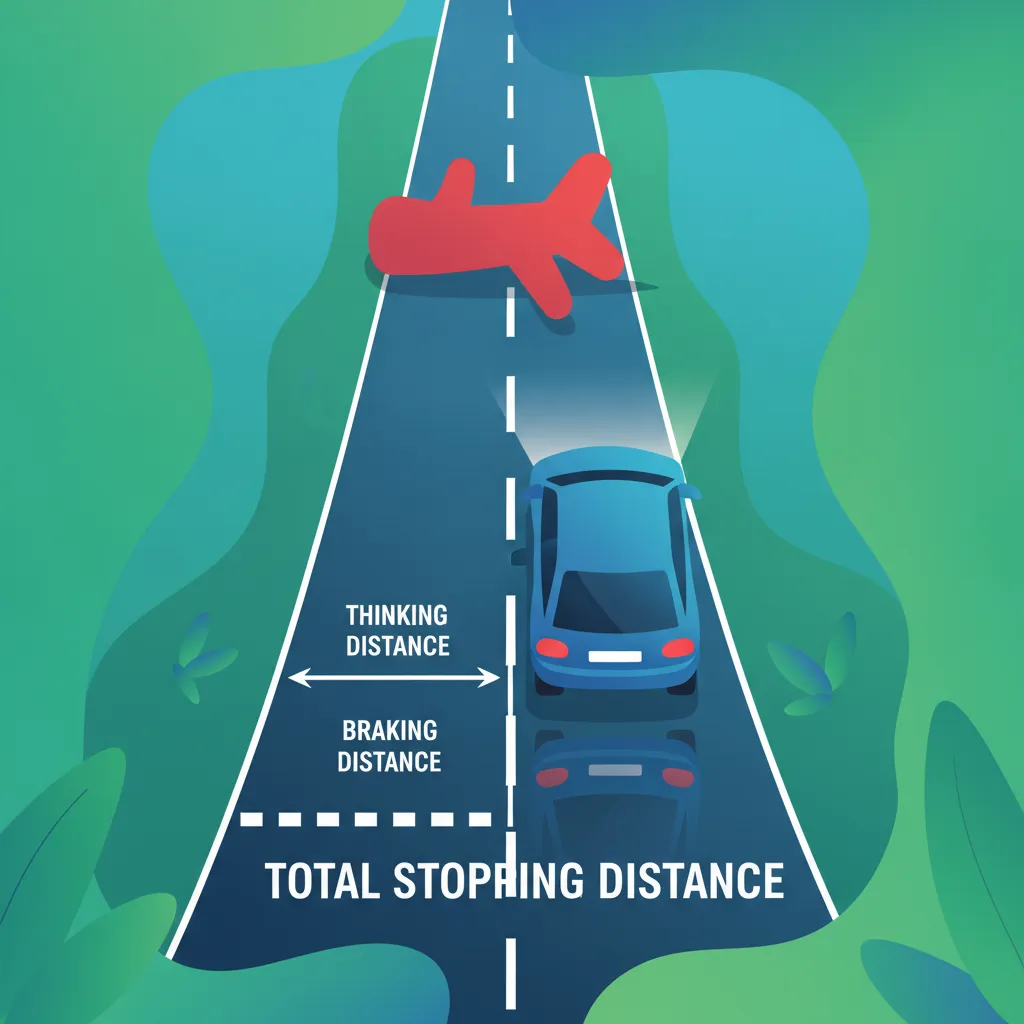
This lesson provides a detailed examination of the powerful air braking systems found on most heavy goods vehicles, including ABS and EBS. It explains the components of total stopping distance—thinking distance and braking distance—and how they are affected by speed, mass, and road conditions. The concept of brake fade, its causes, and prevention methods are also covered, along with the importance of regular brake inspections for maintaining safety.
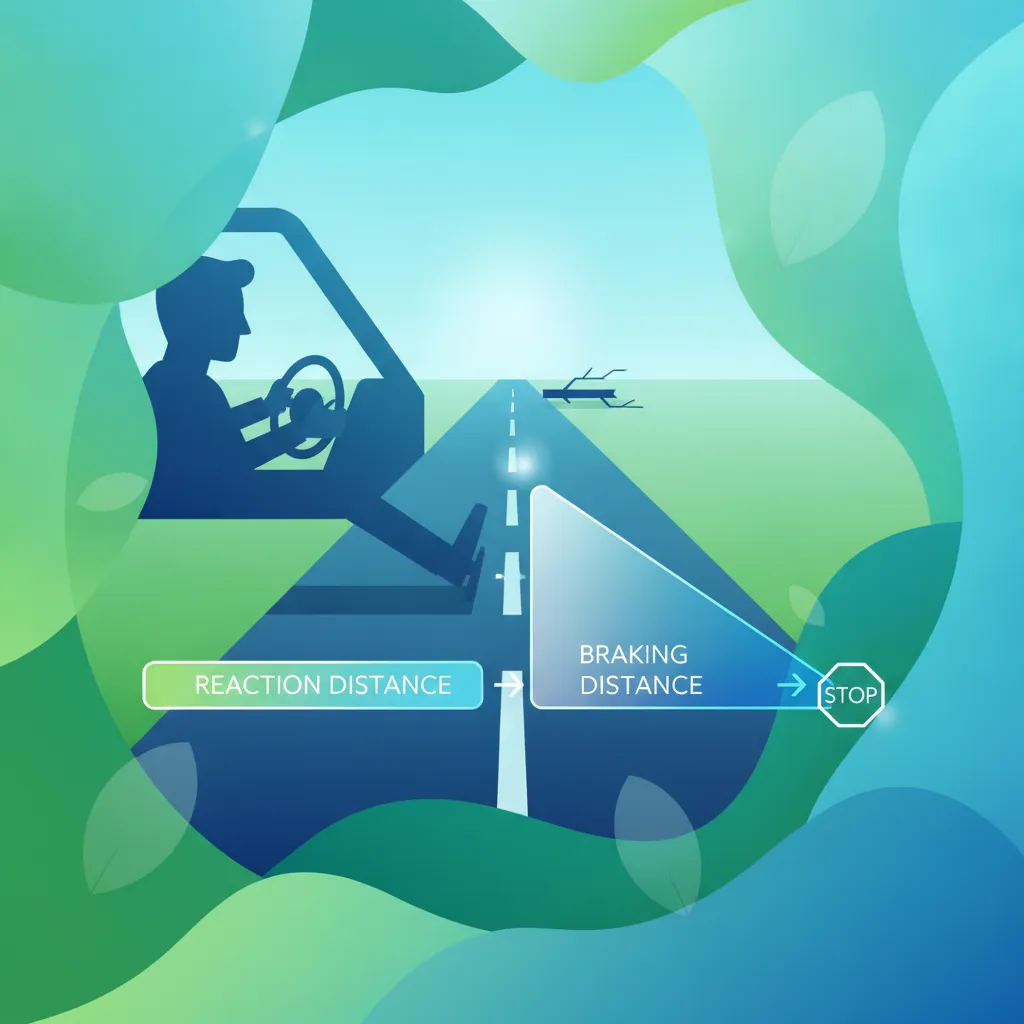
This lesson breaks down the concept of stopping distance into its two key parts. Thinking distance is the distance travelled while you react to a hazard, while braking distance is the distance the car travels after you apply the brakes. You will learn how speed, weather, and vehicle condition influence these distances.
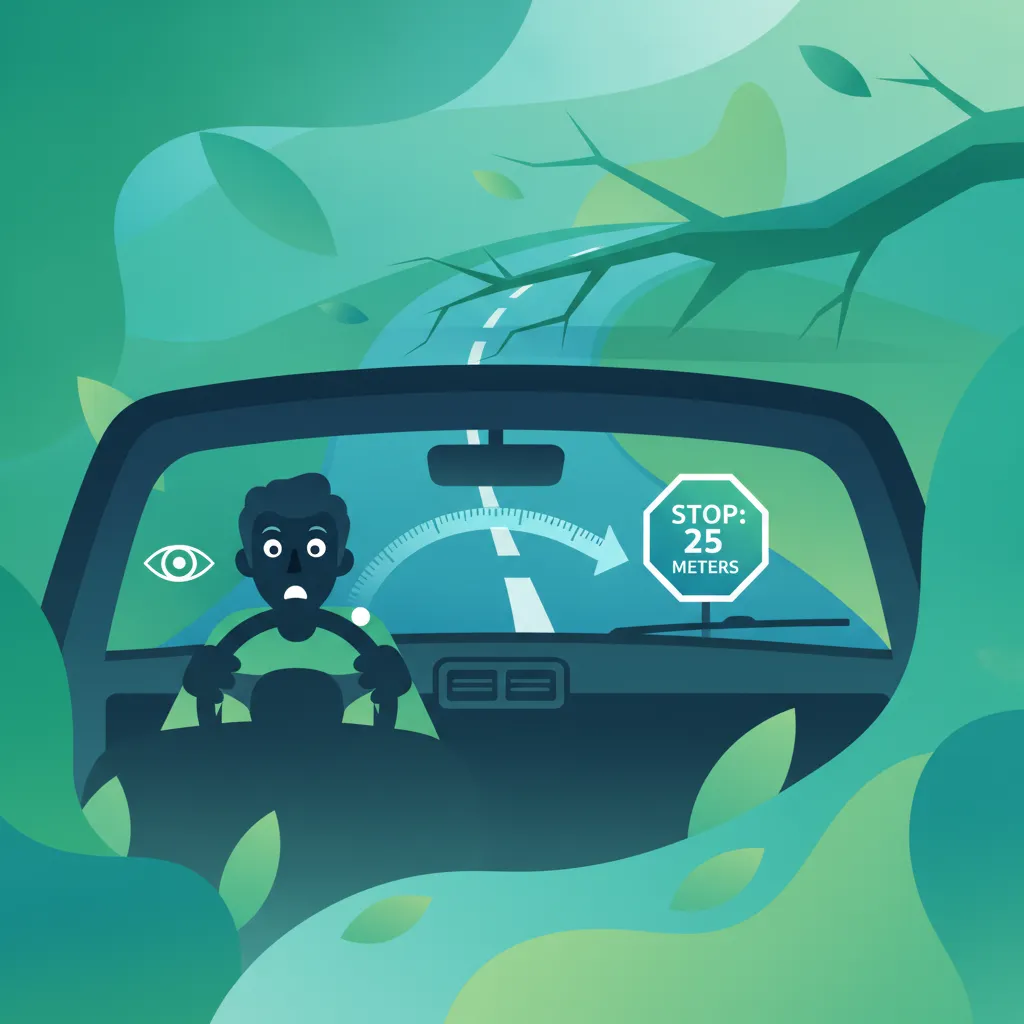
This lesson explains the components of total stopping distance: the distance travelled while you react (thinking distance) and the distance travelled while you brake. You will learn how speed dramatically increases this distance and how adverse weather or poor road surfaces can extend it further. Understanding these factors is crucial for anticipating hazards and avoiding collisions.

This lesson explores how a passenger vehicle’s physical dimensions and weight influence its dynamic stability, handling, and manoeuvring capabilities. It covers the impact of length, width, wheelbase, and turning radius on cornering and route choice. The content also examines centre of gravity, load distribution, and the effects of inertia that influence braking and acceleration, which are essential concepts for safe operation in confined urban environments and at tight junctions.
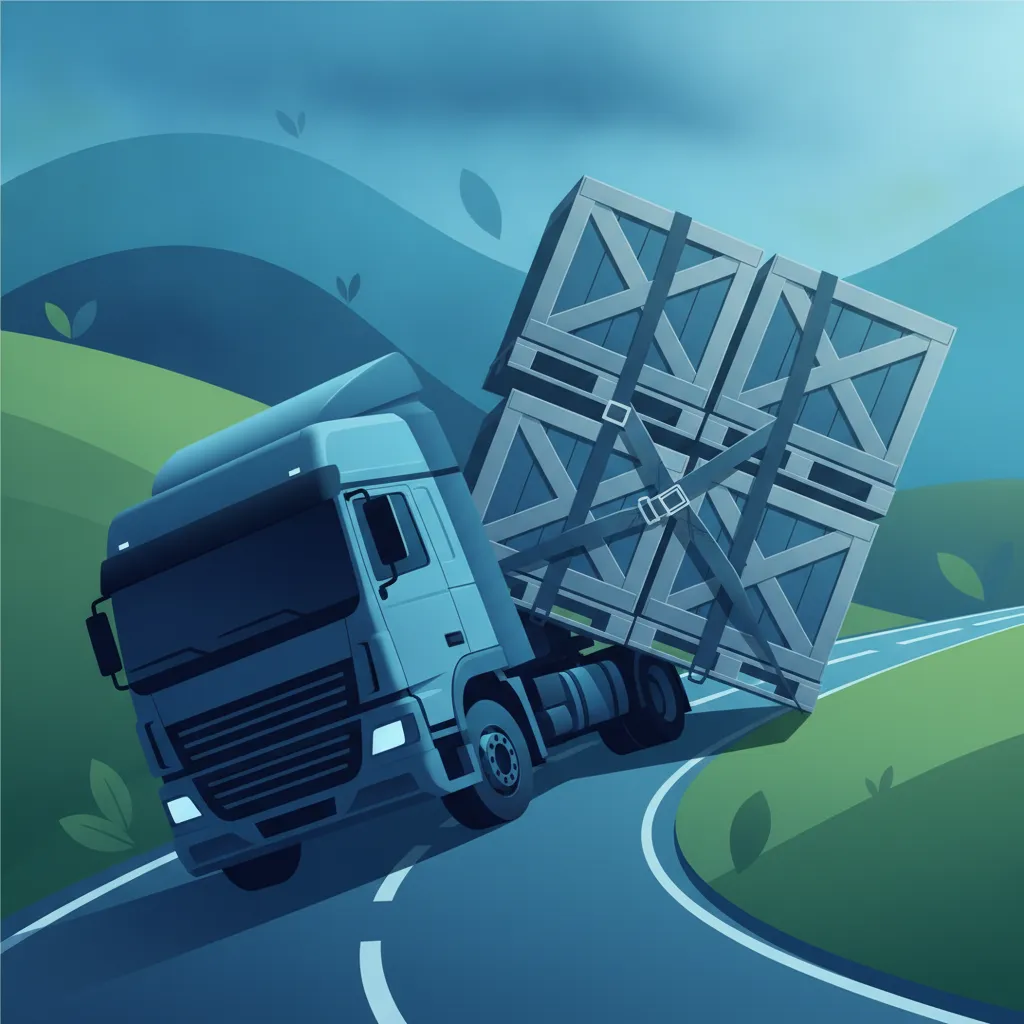
This lesson covers the principles of safe loading to prevent items from shifting or falling and causing a hazard. It explains that any load must be securely fastened and must not obstruct your view. You will also learn how overloading or distributing weight incorrectly can dangerously affect the vehicle's steering, braking, and overall stability.

This lesson reinforces the vital safety rule of maintaining an adequate following distance from the vehicle ahead. It explains why the standard 'two-second rule' must be extended for heavy vehicles, especially in poor weather or when heavily laden, to account for longer stopping distances. You will learn practical methods for judging a safe gap in various traffic situations, creating a crucial safety buffer to react to unforeseen hazards.
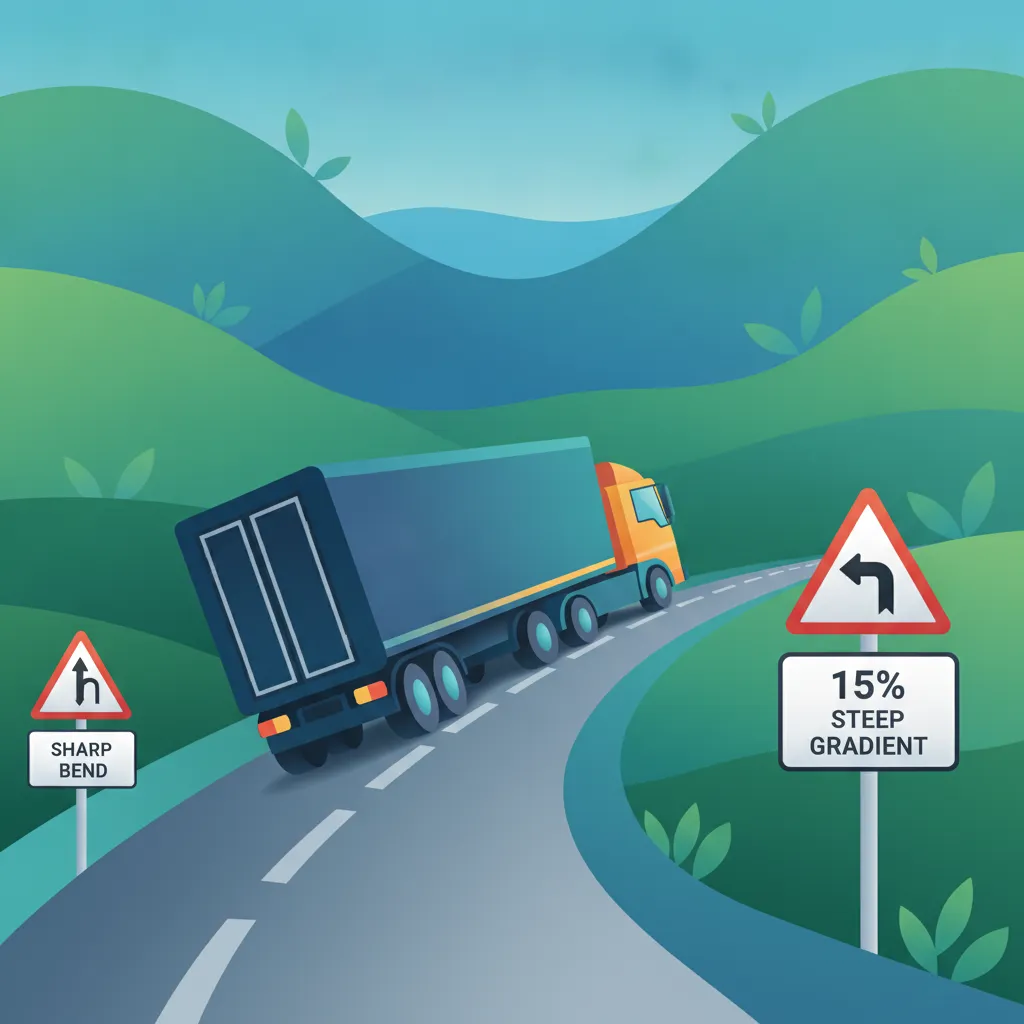
This lesson focuses on the principles of effective speed management for heavy goods vehicles, which extends beyond simply obeying the statutory speed limits. It covers how to adapt speed based on vehicle weight, load stability, road gradients, and prevailing traffic and weather conditions. You will also learn about the function of mandatory speed limiters and how intelligent use of speed and cruise control can significantly improve fuel efficiency and safety.
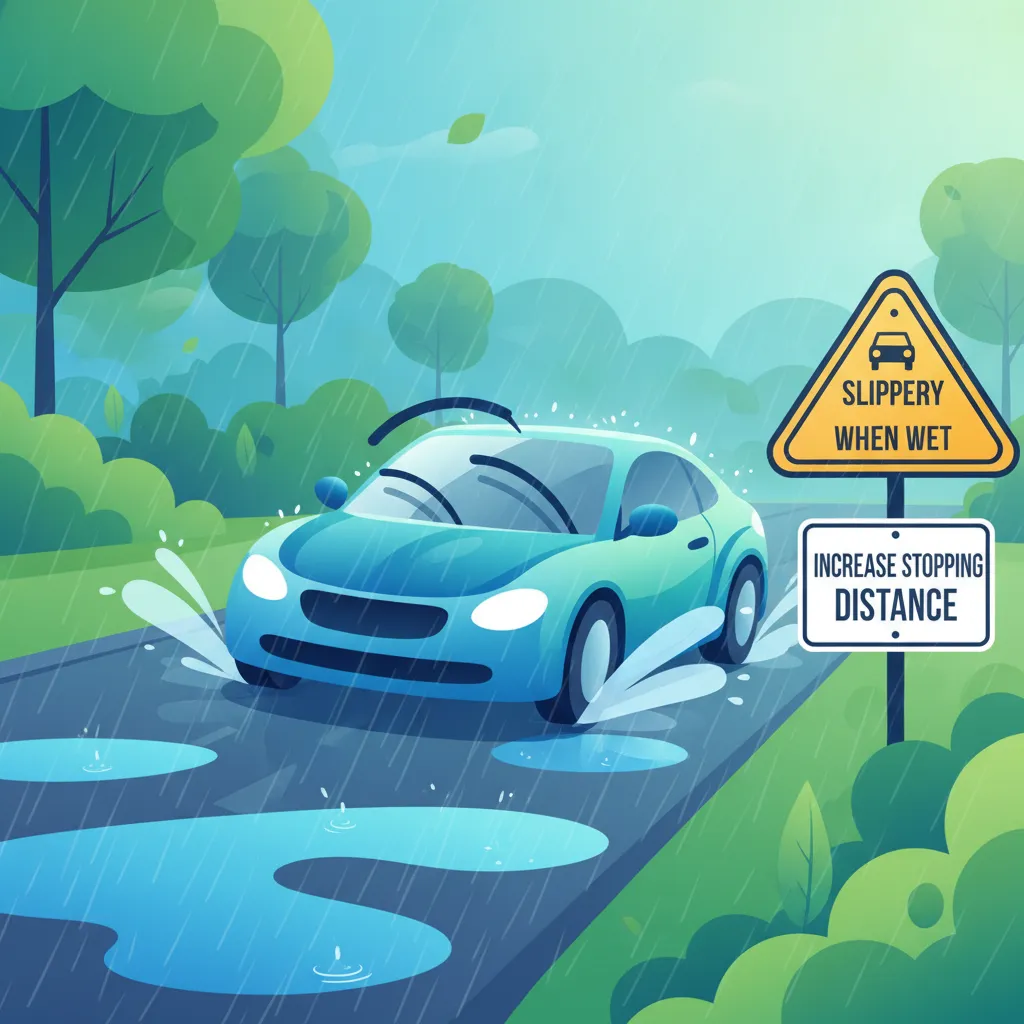
This lesson explains how different weather conditions impact the handling and stability of a large passenger vehicle. It covers the risks of aquaplaning in heavy rain, the effect of high winds on vehicle stability, and the severe reduction in visibility caused by fog. Learners will understand how ice and snow dramatically increase stopping distances and require extremely gentle control inputs to prevent skidding. Strategies for adapting speed and increasing following distances are emphasized.
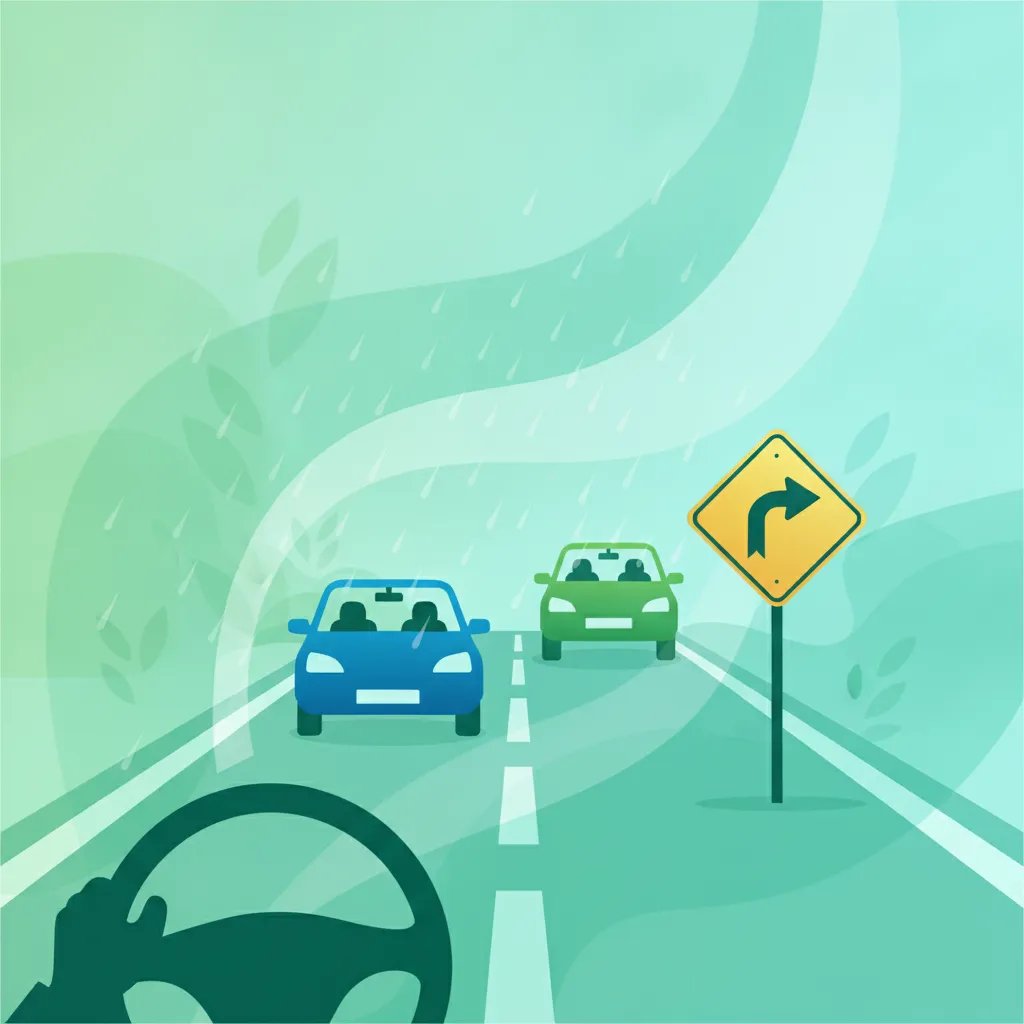
This lesson teaches a practical method for maintaining a safe distance from the vehicle in front. The 'two-second rule' provides a minimum time gap in dry conditions, which should be doubled to four seconds in the wet. Adhering to this rule gives you sufficient time to react and brake safely if the vehicle ahead stops suddenly.
Learn advanced braking techniques for large passenger vehicles, including effective ABS usage, managing brake fade on long descents, and understanding EBD for optimal control in Great Britain theory.
This lesson provides a detailed examination of the powerful air braking systems found on most heavy goods vehicles, including ABS and EBS. It explains the components of total stopping distance—thinking distance and braking distance—and how they are affected by speed, mass, and road conditions. The concept of brake fade, its causes, and prevention methods are also covered, along with the importance of regular brake inspections for maintaining safety.
This lesson teaches essential techniques for safely navigating steep inclines and descents in a heavy vehicle. It focuses on the correct use of auxiliary braking systems, such as engine brakes and retarders, to control speed without overheating the service brakes. Proper gear selection for both ascending and descending gradients is explained in detail to ensure the driver maintains full control of the vehicle's momentum at all times, preventing dangerous situations.

This lesson teaches effective and safe braking techniques tailored for mopeds and light quadricycles. It explains how to balance the use of the front and rear brakes for optimal stopping power and stability. You will learn the concept of progressive braking for smooth, controlled stops and the correct procedure for performing an emergency stop while maintaining control and minimizing skid risk, a critical skill for every rider.

This lesson focuses on techniques for achieving smooth acceleration and deceleration, which is essential for passenger comfort and safety. Learners will study progressive throttle application, appropriate gear selection, and the use of engine braking and retarders to minimize harsh braking. The discussion includes managing momentum on inclines and declines while balancing fuel efficiency with passenger ride quality. Mastering these skills reduces passenger jolts and maintains vehicle stability.
This lesson explores how to maintain safe following distances specific to large passenger vehicles, accounting for their higher inertia and longer braking distances. It covers time-gap calculations, such as the four-second rule, and dynamic following distance adjustments based on speed and road conditions. Emphasis is placed on avoiding tailgating, ensuring a sufficient safety buffer is always present, and developing an awareness of convoy driving scenarios where multiple large vehicles are present.

This lesson provides foundational knowledge on managing the speed of a low-powered vehicle through smooth and deliberate control inputs. You will learn proper throttle control for gradual acceleration, how to decelerate using both brakes and engine braking, and the principles of timely gear selection. Achieving smoothness in these actions is key to maintaining balance, traction, and overall stability, particularly in challenging conditions.
This lesson explains the components of total stopping distance: the distance travelled while you react (thinking distance) and the distance travelled while you brake. You will learn how speed dramatically increases this distance and how adverse weather or poor road surfaces can extend it further. Understanding these factors is crucial for anticipating hazards and avoiding collisions.

This lesson clarifies the roles of the front and rear brakes on a motorcycle. You will learn that the front brake is responsible for around 70-80% of your braking power due to weight transfer during deceleration. The lesson teaches how to apply both brakes progressively and smoothly for controlled, stable stops in various situations.

This lesson provides detailed instruction on turning techniques tailored for long vehicles. It explains the concepts of off-tracking (where rear wheels follow a tighter path than front wheels) and rear swing, and how to compensate for them. Learners will understand how to position the vehicle correctly when approaching and navigating left and right turns at junctions, roundabouts, and tight corners, using mirrors and signals effectively to ensure clearance and safety.

This lesson equips drivers with strategies for maintaining control of a heavy vehicle during adverse weather conditions like heavy rain, ice, snow, and strong crosswinds. It covers the physics of traction loss, aquaplaning, and skidding, and explains how to use smooth inputs for steering, acceleration, and braking. The function of electronic stability control systems and other driver aids is also discussed as part of a proactive approach to safety in challenging environments.
Find clear answers to common questions learners have about Braking Strategies and Stopping Distances. Learn how the lesson is structured, which driving theory objectives it supports, and how it fits into the overall learning path of units and curriculum progression in Great Britain. These explanations help you understand key concepts, lesson flow, and exam focused study goals.
A bus has significantly greater mass and inertia, requiring more time and distance to decelerate. When you add a full load of passengers, the kinetic energy increases further, meaning your braking system must work harder to bring the vehicle to a stop.
The Anti-lock Braking System is a vital safety feature for large vehicles. If the warning light remains illuminated, it indicates a fault, and you must not drive the vehicle; you should report it immediately according to your operator's procedures.
Brake fade occurs when the friction material overheats, usually during prolonged downhill braking. For a professional driver, it is critical to use low gears to control speed, reducing the reliance on the service brakes and preventing the risk of total brake failure.
Sudden or harsh braking causes passenger movement, which can shift the centre of gravity and potentially lead to falls or injuries. Progressive, smooth braking is essential to keep the vehicle balanced and passengers safe and comfortable.
Dive into our comprehensive question bank to find exactly what you need for your Great Britain theory test. Use our advanced filters to pinpoint specific subjects or test your knowledge on challenging areas, ensuring you're fully prepared for success.