
Reversing a large passenger vehicle requires precise control and heightened situational awareness to ensure the safety of passengers and pedestrians. This lesson outlines the professional protocols, including the use of banksmen and technical aids, that are vital for passing your Category D and D1 theory exams. You will learn how to conduct thorough safety checks and maintain full control in restricted spaces.

Lesson content overview
Reversing a large passenger vehicle, such as a bus, coach, or minibus, is one of the most challenging and potentially dangerous manoeuvres a driver will undertake. Due to their significant size, extended rear overhangs, and numerous blind spots, these vehicles present considerable risks during backing up. Mastering safe reversing practices is not just a matter of skill; it is a fundamental requirement for operating Category D, D1, D1E, and DE vehicles on UK roads, ensuring the safety of passengers, other road users, and infrastructure.
This lesson provides a comprehensive framework for understanding and executing safe reversal, combining best practices with legal obligations. It covers the crucial role of human factors like clear communication with a banksman, the correct use of technical aids such as reversing cameras, and the systematic procedural steps required to mitigate the inherent risks.
The Highway Code explicitly identifies reversing a large vehicle as a high-risk manoeuvre. This is primarily due to the severely limited rear visibility, the expansive blind spots that can conceal pedestrians or cyclists, and the increased stopping distances required for heavy vehicles. A proper and systematic approach to reversing significantly reduces the likelihood of collisions, injuries, and property damage.
Understanding the physics involved is essential: larger vehicles have longer rear overhangs which swing out during a turn, a higher centre of gravity affecting stability, and slower response times. These factors mean that even a slight misjudgement can have severe consequences. Adhering to the Highway Code and Driver and Vehicle Standards Agency (DVSA) regulations is paramount, as these guidelines are designed to prevent accidents, protect vulnerable road users, and ensure drivers maintain full control at all times.
This lesson builds upon prior knowledge of blind spot management, mirror checks, and the legal obligations for professional passenger vehicle drivers.
Safe reversing is built upon a foundation of interconnected principles. Each element contributes to a systematic approach that reduces risk and enhances control.
A full 360-degree safety check is the absolute first step before initiating any reversal. This involves a comprehensive visual inspection of the entire area surrounding your vehicle – the rear, both sides, and even the front. The purpose is to detect any obstacles, pedestrians, cyclists, or other traffic that might be hidden from standard mirrors or cameras.
Static Check: While the vehicle is stationary, exit the vehicle if necessary or possible, and walk around it. Systematically check every angle, paying close attention to potential blind spots.
Internal Check: Once back in the cab, use your mirrors, engage the rear-view camera, and physically turn your head to look over both shoulders where visibility allows.
Confirm Clear Path: Only when you are absolutely certain the area is clear in all directions should you consider starting the manoeuvre. Remember that assuming mirrors alone are sufficient is a common and dangerous misunderstanding.
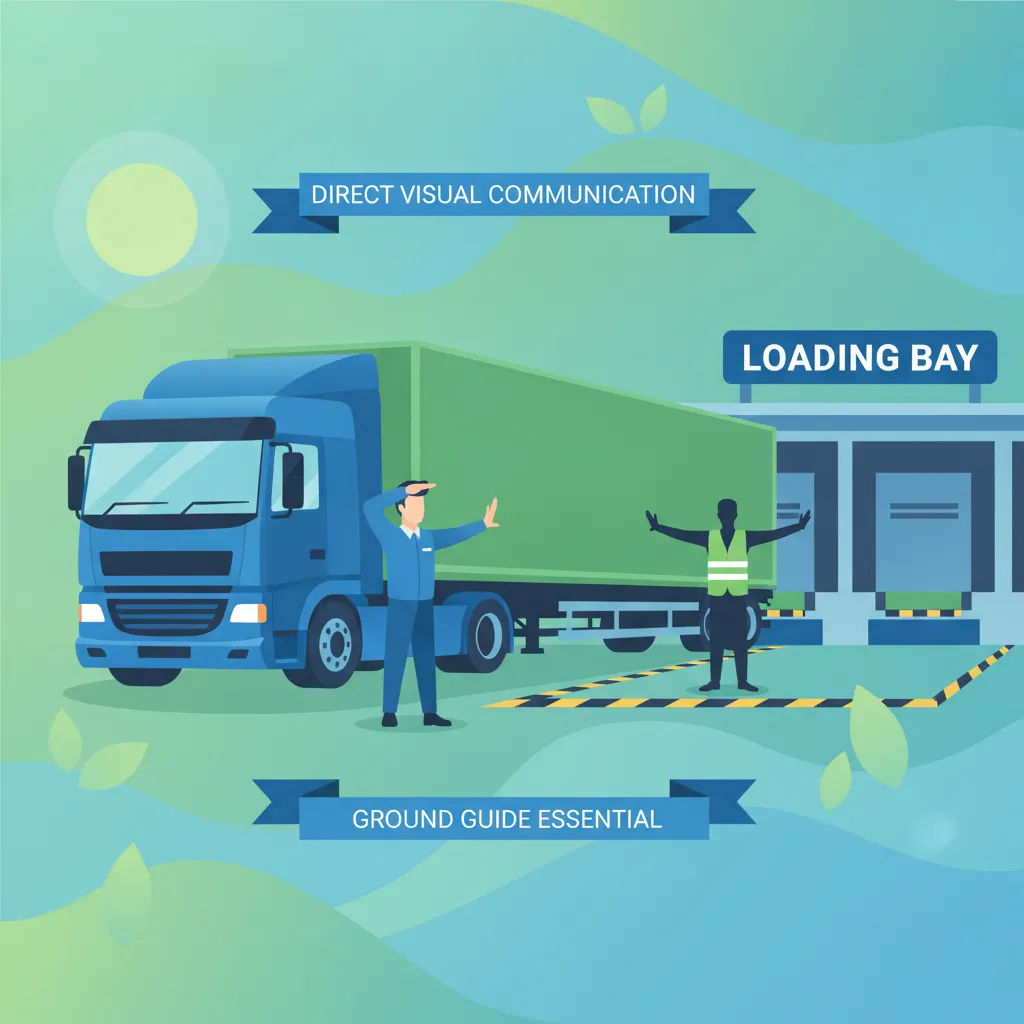
When visibility is limited, especially at the rear or sides, the presence of a trained banksman (also known as a reversing assistant) is critical. This individual is positioned outside the vehicle, within your constant view or audible range, and is trained in a standardised signalling system to guide you. Their role is to provide an external perspective, particularly for areas the driver cannot see, ensuring the path is clear of hazards.
The driver must only begin reversing upon receiving a clear, unambiguous signal from the banksman. This collaborative approach significantly enhances safety, especially in busy depots, tight urban spaces, or areas with high pedestrian traffic. Professional banksmen often hold recognised certifications, while ad-hoc assistants must still be thoroughly trained on the job in correct signalling procedures.
Standard hand signals are the universal language between a driver and banksman. They are legally recognised gestures designed to ensure consistent and unambiguous communication, preventing dangerous misinterpretations.
Stop: One arm extended upwards, palm facing forward. This means stop all movement immediately.
Proceed: One arm extended horizontally to the side, palm facing forward, then moved slowly in the direction of intended travel.
Turn Left/Right while Reversing: One arm extended horizontally, pointing in the direction of the turn, while the other arm sweeps towards the body. For example, for a left turn, the left arm points left, and the right arm sweeps.
Back Up / Reverse Straight: Both arms extended downwards with palms facing backwards, then swept repeatedly backwards.
Any ambiguity in signals must immediately halt the manoeuvre. It is the driver’s responsibility to only act upon clear, recognised signals.
Modern passenger vehicles are often equipped with various technical aids designed to supplement human observation during reversing. These tools are invaluable but should never be solely relied upon.
Drivers must confirm that all technical aids are functional before use and understand their limitations. Over-reliance on a camera or ignoring an audible warning can lead to serious incidents.
Operating the vehicle at a controlled, slow speed is perhaps the most fundamental principle of safe reversing. For large passenger vehicles, DVSA guidance specifies that reversing speed should not exceed 5 km/h (approximately 3 mph). In particularly confined or hazardous conditions, this speed should be reduced even further, to a "walking speed" of 2-3 km/h.
Maintaining a vehicle speed low enough (typically ≤5 km/h for buses) to allow for immediate stopping within the available sight distance, ensuring maximum reaction time and vehicle stability.
This low speed is critical because it:
Drivers must use gentle accelerator inputs and effective clutch control (for manual vehicles) to maintain a consistent, low speed without sudden surges.
A static 360-degree check is only the beginning. Throughout the entire reversal manoeuvre, continuous monitoring is essential. This involves ongoing visual scanning and auditory assessment to update your situational awareness in real-time. The environment around a large vehicle is dynamic; pedestrians may approach, other vehicles may turn, or objects might shift.
Constantly glance at your mirrors, monitor the reversing camera view, and listen carefully for audible warnings. If any new hazard appears, stop immediately to reassess the situation.
While hand signals from a banksman are vital, verbally declaring your intended actions, such as "Reversing now," before beginning the manoeuvre, adds an extra layer of safety. This clear communication of intent reinforces non-verbal signals, warns nearby road users who might not see the banksman, and reduces the element of surprise. This practice, while not always legally mandated, is highly recommended as best practice for professional drivers.
Hazard identification is a systematic process of detecting potential dangers, whether static (e.g., lampposts, walls, parked cars) or dynamic (e.g., pedestrians, cyclists, other moving vehicles) in your reversing path. Once a hazard is identified, immediate mitigating actions must be taken, such as stopping, adjusting your path, or repositioning the vehicle.
This requires proactive thinking and anticipation, especially regarding blind spot entry points. The driver’s ultimate duty, as emphasised in the Highway Code, is to avoid a collision.
Professional passenger vehicle drivers in Great Britain must adhere to specific rules and guidelines regarding reversing. These regulations are designed to minimise risk and ensure public safety.
Highway Code Rule 221: "Do not reverse unless you can see clearly what is behind you and it is safe to do so." This foundational rule applies to all vehicles and underlines the importance of comprehensive checks before any movement.
Highway Code Rule 236: "Ensure that you have complete control of the vehicle, and that you can see ahead and behind clearly before reversing." This rule specifically highlights the need for full situational awareness, particularly for large vehicles with substantial overhangs.
DVSA Guidance for Bus/Coach Reversal (Category D): Professional drivers are mandated to reverse at a speed not exceeding 5 km/h. Furthermore, the use of a trained banksman is required when visibility is limited. This ensures control and minimises stopping distances.
Regulation (EC) No 161/2004 – Health and Safety at Work (Banksman): This regulation (or its UK-specific adaptation) states that a banksman must be trained, competent, and able to communicate clearly with vehicle operators. This is crucial in workplaces like depots or bus stations to prevent accidents involving ground staff or pedestrians.
Regulation (EC) No 661/2009 – Vehicle Sound and Visual Signalling: This regulation stipulates that audible reversing beepers, where fitted, must be audible for at least 30 metres. This ensures other road users are adequately warned of a reversing manoeuvre.
Highway Code Rule 248: "The maximum appropriate speed when reversing is 5 mph (approximately 8 km/h)." While this applies generally, DVSA guidance for professional passenger vehicles often specifies a stricter 5 km/h limit.
Highway Code Rule 235 – Use of Reversing Alarm: "An audible alarm must be used when reversing if fitted, except where a driver can control the vehicle without causing danger." This reinforces the importance of the auditory warning system.
Even experienced drivers can make mistakes when reversing large vehicles. Awareness of common pitfalls and specific challenging scenarios can help prevent incidents.
Safe reversing is not a one-size-fits-all procedure. Environmental conditions, vehicle state, and the presence of other road users necessitate adjustments to core principles.
The systematic approach to safe reversing is rooted in fundamental safety principles and statistical evidence:
Applying these principles in real-world situations is crucial for developing safe reversing habits.
A double-decker bus needs to reverse slightly to manoeuvre out of a bus stop during daylight on a city street with moderate traffic and pedestrians.
Correct Procedure:
A minibus needs to reverse out of a tight parking bay in a bus depot after a night shift. The rear-view camera is malfunctioning.
Correct Procedure:
A coach is reversing out of a lay-by onto a rural road during heavy rain with low visibility. A cyclist approaches from the left side.
Correct Procedure:
Explore all units and lessons included in this driving theory course.
Lesson content overview
Explore all units and lessons included in this driving theory course.
Explore search topics learners often look for when studying Safe Reversing Practices. These topics reflect common questions about road rules, driving situations, safety guidance, and lesson level theory preparation for learners in Great Britain.
Browse additional driving theory lessons that cover connected traffic rules, road signs, and common driving situations related to this topic. Improve your understanding of how different rules interact across everyday traffic scenarios.
Explore complex reversing scenarios and advanced techniques for large passenger vehicles in Great Britain. Understand challenges like confined spaces, adverse weather, and adapting strategies for safer driving theory.
Reversing is one ofthe highest-risk maneuvers for an HGV driver. This lesson provides a structured guide to reversing safely, covering the 'get out and look' principle, effective use of all mirrors, and the use of reversing cameras and alarms. It stresses the importance of using a trained banksman (signaller) whenever possible, using agreed signals, and maintaining a slow, controlled speed throughout the maneuver to prevent accidents.
This lesson focuses on the key principles of safe low-speed manoeuvres, especially reversing. It stresses the need for continuous, all-around observation, looking for pedestrians, obstacles, and other vehicles. You will learn the importance of moving very slowly and being prepared to stop at any moment to maintain full control of the vehicle.

This lesson provides detailed instruction on turning techniques tailored for long vehicles. It explains the concepts of off-tracking (where rear wheels follow a tighter path than front wheels) and rear swing, and how to compensate for them. Learners will understand how to position the vehicle correctly when approaching and navigating left and right turns at junctions, roundabouts, and tight corners, using mirrors and signals effectively to ensure clearance and safety.

This lesson addresses the unique challenges of operating a large goods vehicle in congested urban and city environments. It focuses on techniques for navigating narrow streets, making tight turns, and safely accessing delivery points while being highly aware of vulnerable road users like pedestrians and cyclists. The importance of exceptional observation, low-speed control, and clear communication with other road users is heavily emphasized to minimize risk in these complex settings.

This lesson provides a detailed map of the significant blind spots located to the front, sides, and rear of a typical heavy goods vehicle. It explains the purpose of the different classes of mirrors and how to adjust them correctly for maximum visibility. Learners will be taught effective scanning techniques—'mirror-signal-manoeuvre'—to actively check these zones before changing position, ensuring they are aware of any hidden hazards or other road users.

This lesson builds on basic skills to address complex manoeuvres in challenging, confined environments such as bus stations, depots, and service areas. It covers techniques for positioning the vehicle for bay parking and navigating tight, complex routes. Key focus areas include developing precise spatial awareness, using reference points, maintaining extremely slow and controlled movements, and performing continuous observation to navigate safely without causing damage or injury.

This lesson explains the dynamics of turning a long vehicle, focusing on the concepts of off-tracking, where the rear wheels follow a tighter path than the front wheels, and tail swing. You will learn the correct road positioning on approach to junctions and roundabouts to safely clear obstacles and avoid mounting kerbs or striking street furniture. Managing speed and using mirrors effectively throughout the turn are emphasized as crucial safety techniques.

This lesson addresses the unique challenges of driving a large vehicle on rural roads. It provides techniques for positioning the vehicle through sharp bends and on narrow lanes, and for safely navigating unmarked or uncontrolled junctions. Learners will be taught to anticipate hidden hazards common in the countryside, such as slow-moving farm vehicles, animals on the road, and concealed entrances. The correct use of passing places and strategies for meeting oncoming traffic are also covered.

This lesson examines the physical space a goods vehicle occupies on the road and its impact on maneuvering at junctions, roundabouts, and in tight spaces. Learners will understand the concepts of tail swing and off-tracking, and how to calculate the necessary clearance for safe turns. The content emphasizes maintaining safe distances from other road users and infrastructure, which is a key component of professional spatial awareness and accident prevention.

This lesson focuses on the critical skill of positioning your AM vehicle safely in relation to larger vehicles and roadside hazards like parked cars. You will learn to identify and stay out of the extensive blind spots of lorries and buses, especially at junctions. The content also provides strategies for maintaining a safe 'space cushion' around your vehicle and navigating narrow gaps or filtering in traffic without compromising your safety.
Identify key risks, common mistakes, and hazard perception crucial for safe reversing of buses and coaches. Learn about blind spots, banksman communication, and legal requirements according to GB driving theory.
Reversing is one ofthe highest-risk maneuvers for an HGV driver. This lesson provides a structured guide to reversing safely, covering the 'get out and look' principle, effective use of all mirrors, and the use of reversing cameras and alarms. It stresses the importance of using a trained banksman (signaller) whenever possible, using agreed signals, and maintaining a slow, controlled speed throughout the maneuver to prevent accidents.
This lesson focuses on the key principles of safe low-speed manoeuvres, especially reversing. It stresses the need for continuous, all-around observation, looking for pedestrians, obstacles, and other vehicles. You will learn the importance of moving very slowly and being prepared to stop at any moment to maintain full control of the vehicle.
This lesson provides detailed instruction on turning techniques tailored for long vehicles. It explains the concepts of off-tracking (where rear wheels follow a tighter path than front wheels) and rear swing, and how to compensate for them. Learners will understand how to position the vehicle correctly when approaching and navigating left and right turns at junctions, roundabouts, and tight corners, using mirrors and signals effectively to ensure clearance and safety.
This lesson focuses on the critical skill of positioning your AM vehicle safely in relation to larger vehicles and roadside hazards like parked cars. You will learn to identify and stay out of the extensive blind spots of lorries and buses, especially at junctions. The content also provides strategies for maintaining a safe 'space cushion' around your vehicle and navigating narrow gaps or filtering in traffic without compromising your safety.
This lesson addresses the unique challenges of driving a large vehicle on rural roads. It provides techniques for positioning the vehicle through sharp bends and on narrow lanes, and for safely navigating unmarked or uncontrolled junctions. Learners will be taught to anticipate hidden hazards common in the countryside, such as slow-moving farm vehicles, animals on the road, and concealed entrances. The correct use of passing places and strategies for meeting oncoming traffic are also covered.
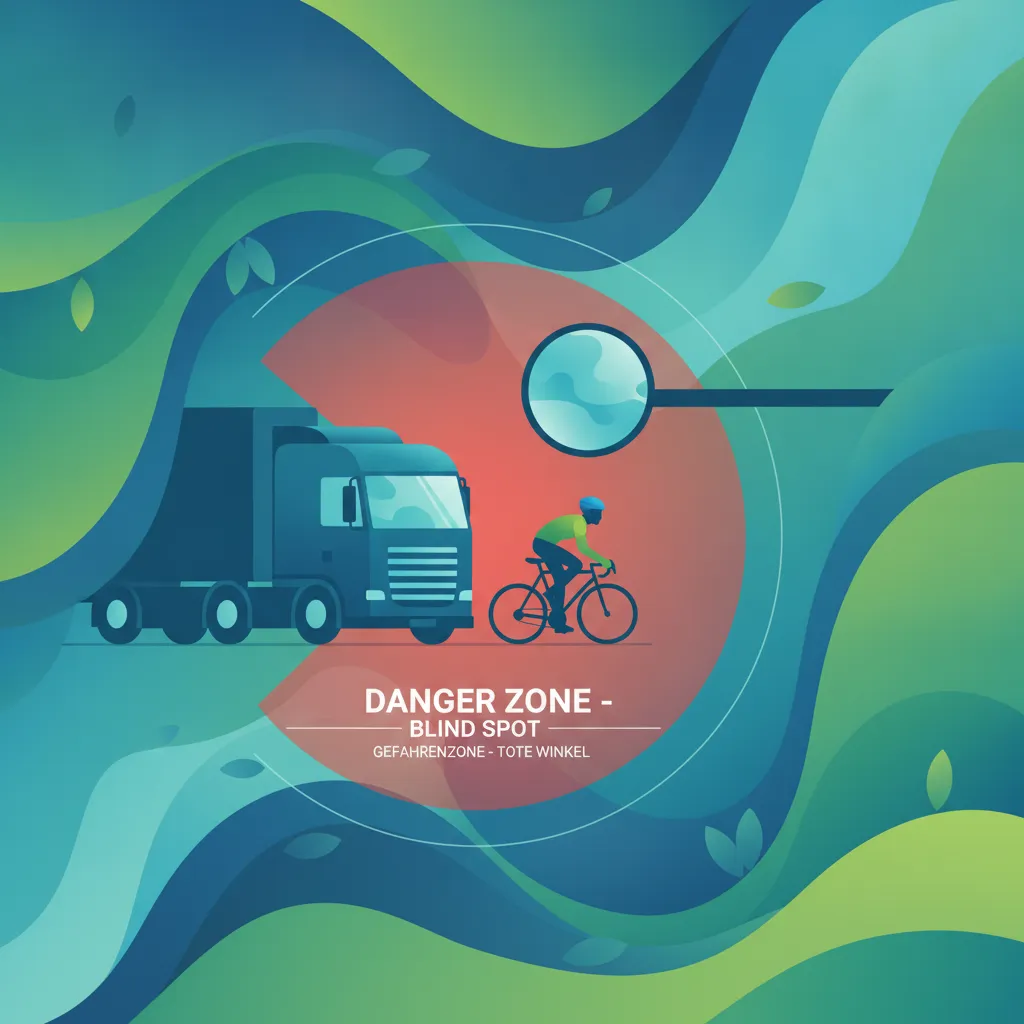
This lesson highlights the significant danger posed by the large blind spots of HGVs and buses. You will learn to identify these hazardous areas around a vehicle where the driver cannot see you. The lesson provides practical strategies for staying out of these zones, especially at junctions and when overtaking, to prevent serious accidents.

This lesson prepares you for the challenges of countryside driving. It emphasizes that the national speed limit on these roads is often too fast for the conditions. You will learn how to approach sharp bends, use passing places on single-track roads, and anticipate hazards like slow-moving tractors, horse riders, or mud on the road surface.

This lesson focuses on the unique risks faced by motorcyclists and scooter riders when sharing the road with HGVs. It explains how their small size and rapid acceleration can make them difficult to see, especially when they are filtering through traffic. Drivers will learn the importance of making extra mirror checks—'look twice'—before any maneuver and giving motorcyclists extra space, as they can be more affected by wind buffeting and road surface imperfections.

This lesson explores how to maintain safe following distances specific to large passenger vehicles, accounting for their higher inertia and longer braking distances. It covers time-gap calculations, such as the four-second rule, and dynamic following distance adjustments based on speed and road conditions. Emphasis is placed on avoiding tailgating, ensuring a sufficient safety buffer is always present, and developing an awareness of convoy driving scenarios where multiple large vehicles are present.
This lesson provides a detailed map of the significant blind spots located to the front, sides, and rear of a typical heavy goods vehicle. It explains the purpose of the different classes of mirrors and how to adjust them correctly for maximum visibility. Learners will be taught effective scanning techniques—'mirror-signal-manoeuvre'—to actively check these zones before changing position, ensuring they are aware of any hidden hazards or other road users.
Find clear answers to common questions learners have about Safe Reversing Practices. Learn how the lesson is structured, which driving theory objectives it supports, and how it fits into the overall learning path of units and curriculum progression in Great Britain. These explanations help you understand key concepts, lesson flow, and exam focused study goals.
A banksman provides an extra set of eyes, covering blind spots that mirrors cannot reach. They ensure the path is clear of pedestrians and obstructions, helping the driver maintain safety in busy or confined environments.
No. Technical aids such as cameras and sensors are supplementary tools. Drivers must always perform a manual 360-degree check before starting the manoeuvre and use their mirrors consistently throughout the process.
You must stop immediately. Never continue reversing if you cannot see your assistant or if you are unsure of the vehicle's position relative to surroundings. Communication must be re-established before proceeding.
Always look for the answer that prioritises continuous observation. You must check all mirrors regularly to monitor the vehicle's path, especially focusing on the rear corners and the tail-swing of the vehicle.
Dive into our comprehensive question bank to find exactly what you need for your Great Britain theory test. Use our advanced filters to pinpoint specific subjects or test your knowledge on challenging areas, ensuring you're fully prepared for success.