
Driving Theory
British Driving Theory Courses

Lesson 1 of the Weather, Motorways, Rural Routes, Terminals and Long-Distance Service unit

GB Passenger Vehicle Theory: Weather Impact on Vehicle Handling

This lesson explores the physics and safety requirements for operating large passenger vehicles in challenging weather conditions. You will learn how to adapt your driving techniques for rain, fog, and ice, ensuring you can manage passenger comfort and vehicle stability as required by the DVSA theory test.
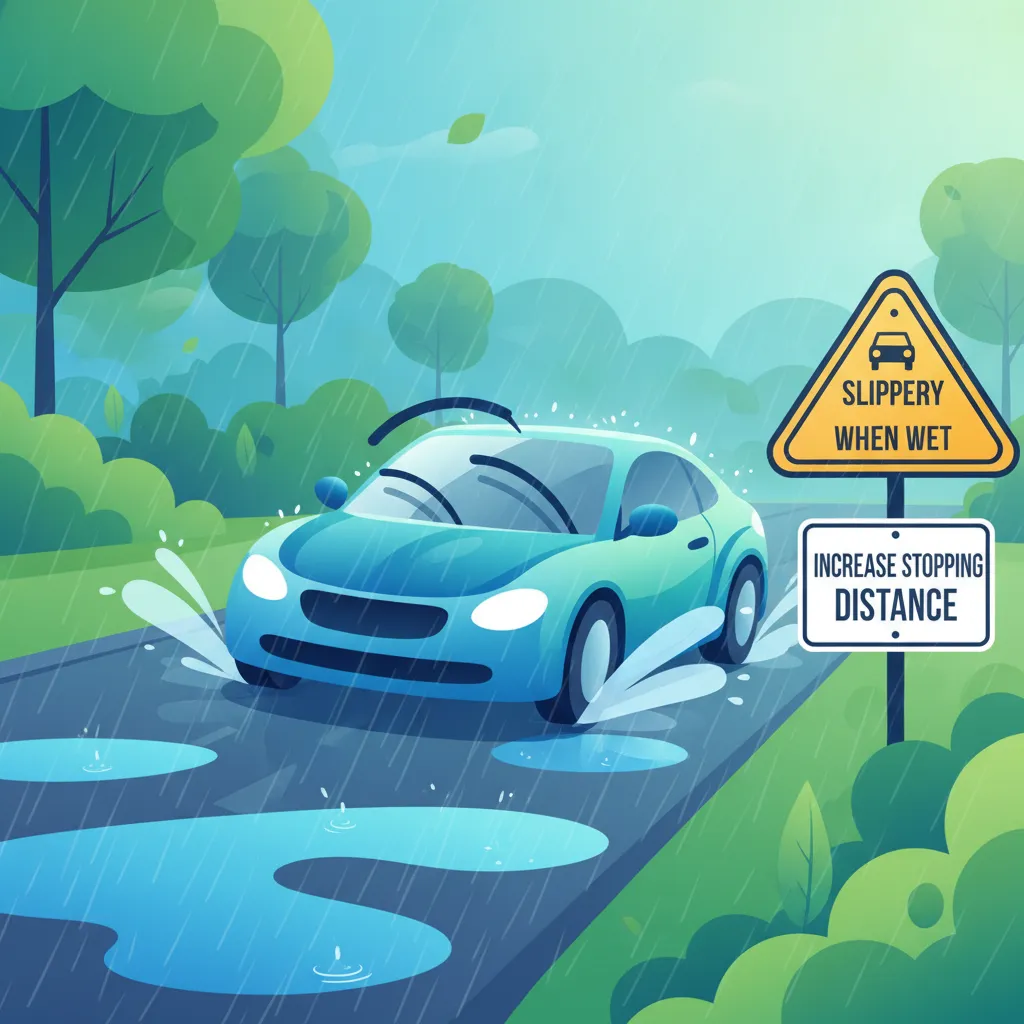
weather safetyvehicle dynamicsCategory D theoryhazard perceptiondriving in rain
GB Passenger Vehicle Theory: Weather Impact on Vehicle Handling

Lesson content overview

GB Passenger Vehicle Theory

Weather Impact on Passenger Vehicle Handling in Great Britain

Operating a large passenger vehicle, such as a bus, coach, or minibus, demands a high level of skill and awareness, especially when facing adverse weather conditions. The sheer size, weight, and higher centre of gravity of these vehicles mean that the impact of rain, snow, ice, fog, and high winds is amplified compared to smaller vehicles. Understanding these challenges and knowing how to adapt your driving is paramount for the safety of your passengers and other road users.

This comprehensive lesson will explore how various weather phenomena fundamentally alter vehicle handling, stability, and stopping capabilities. We will delve into the physics behind reduced traction and visibility, outline essential driving strategies, and highlight the legal requirements for professional drivers in Great Britain. By mastering these principles, you will be better prepared to navigate challenging conditions safely and confidently.

Fundamentals of Vehicle Control in Adverse Weather

Adverse weather conditions directly affect the delicate balance between a vehicle's tyres and the road surface, its interaction with the air, and a driver's ability to perceive their surroundings. For large passenger vehicles, these effects are more pronounced, requiring significant adjustments to driving behaviour.

Understanding Tyre-Road Traction

Traction is the frictional grip between your vehicle's tyres and the road surface. It is the fundamental force that allows you to accelerate, brake, and steer effectively. When road conditions are dry, traction is generally high, providing ample grip. However, water, ice, snow, or even loose debris can dramatically reduce this crucial friction.

Reduced traction means that the tyres have less grip on the road, making it easier for them to slip. This directly impacts your ability to control the vehicle, leading to potential skidding during braking, acceleration, or even gentle steering manoeuvres. Professional drivers must always be aware of the prevailing surface conditions and understand how they influence the available traction.

The Dangers of Hydroplaning (Aquaplaning)

Hydroplaning, also known as aquaplaning, occurs when a layer of water builds up between a vehicle's tyres and the road surface, causing the tyres to lose contact with the road. When this happens, the driver loses all steering, braking, and acceleration control. The vehicle essentially floats on the water, becoming an uncontrollable sled.

This phenomenon is particularly dangerous for large passenger vehicles due to their weight and the speeds they often maintain. The risk of hydroplaning increases with speed, tyre wear (insufficient tread depth), and the depth of water on the road. Maintaining adequate tyre tread depth is crucial as it helps to channel water away from the tyre's contact patch. If you experience hydroplaning, ease off the accelerator, do not brake or steer sharply, and allow the vehicle to slow down until the tyres regain contact with the road.

Increased Stopping and Braking Distances

Braking distance is the distance your vehicle travels from the moment you apply the brakes until it comes to a complete stop. Stopping distance, however, is the total distance required to stop, encompassing your perception time (recognising a hazard), reaction time (moving your foot to the brake), and the actual braking distance.

Adverse weather conditions significantly lengthen both braking and stopping distances. On wet roads, stopping distances can double, while on icy roads, they can increase by up to ten times compared to dry conditions. This amplification is even more pronounced for large, heavy passenger vehicles due to their greater momentum. Drivers must proactively adjust their speed and increase their following distance to account for these extended stopping capabilities.

Maintaining Vehicle Stability Against Crosswinds

Large passenger vehicles, with their considerable side surface area, are highly susceptible to crosswinds. These are lateral wind forces that blow perpendicular to the vehicle's direction of travel. Strong crosswinds can cause the vehicle to yaw (rotate around its vertical axis) or drift sideways, potentially pushing it out of its lane or, in extreme cases, leading to a rollover.

Areas particularly prone to strong crosswinds include open stretches of motorway, elevated roads, bridges, viaducts, and coastal routes. Professional drivers must be acutely aware of wind strength and direction, especially when transitioning from sheltered areas to exposed sections. Reducing speed and maintaining a firm, steady grip on the steering wheel are critical strategies to counteract these forces and maintain vehicle stability.

Visibility is your ability to clearly see the road ahead, traffic signs, other road users, and potential hazards. Fog, heavy rain, and snowfall can drastically reduce visibility, making driving incredibly hazardous. When visibility is compromised, your reaction time slows down because it takes longer to perceive dangers.

In such conditions, the correct use of vehicle lighting is vital. Dipped beam headlights should always be used, and fog lights (both front and rear) should be activated when visibility drops below 100 metres. High-beam headlights should never be used in fog or heavy snow as the light reflects off the moisture particles, creating glare that further impairs your vision. Adjusting speed to match the reduced visibility and increasing your following distance are non-negotiable safety measures.

Mastering Gentle Control Inputs

In low-friction conditions, abrupt actions can easily lead to a loss of control. This is where gentle control inputs become essential. This principle refers to making smooth, progressive applications of the accelerator, brakes, and steering.

  • Gentle Acceleration: Avoid sudden acceleration that could cause the drive wheels to spin, especially on icy or snowy surfaces.
  • Feathered Braking: Instead of slamming the brakes, apply them progressively and gently. Where appropriate, use engine braking by selecting a lower gear to help slow the vehicle without relying heavily on the service brakes, thereby reducing the risk of wheel lock.
  • Small Steering Corrections: Make gradual, small steering adjustments rather than sharp turns. Sudden steering inputs can easily break traction and lead to a skid.

Practising gentle control inputs maintains the tyre's grip on the road surface, preventing wheel slip and enhancing vehicle stability.

Adjusting Following Distance for Safety

Following distance is the gap you maintain between the front of your vehicle and the rear of the vehicle ahead. It is typically measured in seconds, providing a dynamic buffer that accounts for your speed.

The universally recommended minimum following distance on dry roads is the "two-second rule." However, this must be significantly increased in adverse weather. On wet roads, the recommended minimum extends to four seconds, and on icy or snowy roads, it should be six seconds or even more. This extended gap provides crucial additional time to perceive hazards, react, and bring your large passenger vehicle to a safe stop, compensating for increased stopping distances.

Specific Weather Conditions and Driving Strategies

Understanding the general principles is the first step; applying them effectively to specific weather scenarios is the next.

Driving in Heavy Rain: Preventing Aquaplaning

Heavy rainfall presents multiple challenges, including reduced visibility, wet road surfaces, and the significant risk of hydroplaning.

Strategies for Heavy Rain:

  • Reduce Speed: This is the most crucial action. Lowering your speed reduces the likelihood of hydroplaning and gives you more time to react. Aim for at least a 20-30% reduction from normal speeds.
  • Increase Following Distance: Extend your gap to at least four seconds, or more if visibility is severely reduced.
  • Use Appropriate Lighting: Switch on your dipped beam headlights. If visibility drops below 100 metres, activate your front and rear fog lights. Never use high beams.
  • Check Tyres: Ensure your tyres have a minimum tread depth of 1.6 mm across the central three-quarters of the breadth of the tread and around the entire circumference. Deeper tread is always better for water dispersion.
  • Use Wipers and Washers: Keep your windscreen clear. Ensure your wipers are in good condition and your washer fluid reservoir is full.
  • Avoid Puddles: If possible, steer around large puddles, especially on the side of the road, as they can conceal potholes or cause a sudden pull on the steering wheel. If you must drive through one, do so slowly and steadily.

Tip

After driving through deep water, gently apply your brakes a few times to dry them out. Wet brakes are less effective.

Operating in Snow and Ice: Maximising Grip and Control

Snow and ice are perhaps the most dangerous conditions, as they drastically reduce traction and can create unpredictable slippery patches.

Strategies for Snow and Ice:

  • Extreme Speed Reduction: Reduce your speed by 30-40% or more, depending on the severity of the ice and snow. Even a thin layer of black ice can be extremely treacherous.
  • Massive Increase in Following Distance: Aim for six seconds or more. On motorways or open roads, this may mean a very large visual gap.
  • Gentle Everything: All control inputs – acceleration, braking, and steering – must be exceptionally gentle and smooth. Any abrupt action can lead to a skid.
  • Use Engine Braking: When slowing down or descending hills, use a lower gear to let the engine assist in deceleration. This is far less likely to cause wheel lock than relying solely on the foot brake.
  • Anticipate and Look Far Ahead: Plan your manoeuvres well in advance. Braking and steering will take much longer and require more space.
  • Clear Vehicle Thoroughly: Before setting off, clear all snow and ice from your windscreen, mirrors, roof, lights, and number plates. Failing to clear snow from the roof can cause it to slide onto the windscreen, or fly off, endangering other road users.
  • Check for Black Ice: Be particularly wary of black ice, which is nearly invisible. It often forms on shaded areas, bridges, and overpasses, which freeze before the rest of the road.
  • Consider Winter Tyres/Chains: For routes known to be severely affected by snow and ice, consider fitting winter tyres or carrying snow chains if appropriate and permitted.

Dealing with Fog: Enhancing Visibility and Awareness

Fog significantly reduces visibility, making it difficult to judge distances and spot hazards. It can also be very disorienting.

Strategies for Fog:

  • Use Dipped Beams and Fog Lights: Always use your dipped beam headlights and front and rear fog lights when visibility falls below 100 metres. Remember to switch fog lights off once visibility improves.
  • Do NOT Use High Beams: High beams will reflect off the fog particles and create glare, worsening your visibility.
  • Reduce Speed Drastically: Adjust your speed so you can stop safely within the distance you can see ahead. If you can only see 30 metres, you should not be driving faster than a speed that allows you to stop within 30 metres.
  • Increase Following Distance: Give yourself a much larger gap from the vehicle in front.
  • Listen for Traffic: Open your windows slightly to listen for other vehicles that you might not see.
  • Use Road Markings as a Guide: Follow the white lines in the centre or at the edge of the road, but do not rely solely on them.
  • Avoid Overtaking: Overtaking in fog is extremely dangerous due to reduced visibility and difficulty in judging oncoming traffic.

Managing High Winds: Stability for High-Sided Vehicles

High winds pose a particular threat to large passenger vehicles due to their large side profiles, which act like sails.

Strategies for High Winds:

  • Reduce Speed: Lowering your speed reduces the impact of aerodynamic forces and gives you more control.
  • Maintain a Firm Grip on the Steering Wheel: Be prepared for sudden gusts that can push your vehicle sideways. Keep both hands on the wheel.
  • Anticipate Exposed Areas: Be extra vigilant on bridges, viaducts, open stretches of road, and when passing gaps in hedges or buildings where sudden gusts can occur.
  • Avoid Abrupt Steering or Braking: Sudden movements can exacerbate the effect of crosswinds.
  • Be Wary When Overtaking or Being Overtaken: The sudden reduction in wind resistance when passing a large vehicle can cause a momentary swerve. Similarly, be aware of the 'bow wave' effect from large vehicles passing you.
  • Monitor Weather Forecasts: Check wind warnings before starting your journey, especially if your route includes known windy areas.

Warning

Empty coaches are more susceptible to high winds than fully loaded ones, as they have less weight to anchor them.

Compliance with the Highway Code and Driver and Vehicle Standards Agency (DVSA) guidance is mandatory for professional drivers in Great Britain. These regulations ensure that drivers adjust their behaviour to maintain safety in all conditions.

Highway Code Rules for Adverse Weather

Several rules in The Highway Code are particularly relevant to driving in adverse weather:

  • Rule 34: Driving Safely for Conditions: "A driver must not travel faster than is safe for the prevailing conditions." This overarching rule applies universally, mandating that you adjust your speed to match the road and weather conditions, regardless of the posted speed limit.
  • Rule 174: Use of Lights: "Use dipped beam headlights in fog, heavy rain or snowfall. Fog lights may be used when visibility is reduced to less than 100 m." This specifies the correct use of lighting to improve visibility for yourself and others without causing glare.
  • Rule 225: Maintain Safe Distance: "Maintain a safe distance from the vehicle ahead, adjusting for speed, road conditions, and weather." This reinforces the need to increase following distances significantly in poor conditions.
  • Rule 182: Windscreen Wipers: "Windscreen wipers and washers must be used where visibility is reduced, with up-and-down flick action when required." Keeping your view clear is fundamental to safe driving.

Note

Always ensure your brake lights are clean and fully operational to clearly signal your intentions to following traffic, especially in poor visibility.

DVSA Guidance on Tyres and Speed Adjustments

The DVSA provides additional guidance for professional drivers:

  • Tyre Tread Depth: While the legal minimum tread depth is 1.6 mm across the central three-quarters of the tyre's width and around its entire circumference, the DVSA advises deeper tread for wet or icy conditions. Regular inspection and maintenance of tyres are critical for passenger vehicles.
  • Recommended Speed Reductions: The DVSA recommends reducing speed significantly in adverse weather – typically by at least 20% on wet roads and 30-40% on icy roads. This guidance reinforces Rule 34 of the Highway Code.

Adhering to these regulations is not only a legal obligation but also a fundamental aspect of safe and responsible professional driving.

Common Mistakes and Hazards in Poor Weather Driving

Even experienced drivers can make mistakes in challenging conditions. Being aware of common pitfalls can help you avoid them.

  1. Excessive Speed in Heavy Rain: The most frequent cause of hydroplaning. Maintaining the legal speed limit when water is accumulating on the road can be extremely dangerous. Always reduce speed proactively.
  2. Abrupt Braking on Ice: Slamming the brakes on an icy road will almost certainly lead to wheel lock and an uncontrollable skid. Use feathered braking and engine braking.
  3. Using High Beam in Fog: This common mistake creates intense glare, making visibility worse for you and dazzling oncoming drivers. Always use dipped beams and fog lights.
  4. Neglecting Windscreen Wipers: Driving with an unclear windscreen due to rain or snow greatly reduces reaction time and can cause vital road signs or hazards to be missed.
  5. Overtaking on Wet or Icy Roads: The risk of losing traction during a lane change or while accelerating to overtake is greatly increased on slippery surfaces. It is generally safer to remain behind the slower vehicle.
  6. Ignoring Wind Direction on Exposed Bridges: Maintaining high speed across bridges during strong crosswinds can lead to dangerous lateral movement or even overturning, especially for high-sided coaches.
  7. Insufficient Tyre Tread in Winter: Operating with tyres barely meeting the minimum legal tread depth significantly increases the risk of hydroplaning and reduces grip on snow and ice.
  8. Assuming Heavy Vehicles Have More Traction: While weight contributes to momentum, it does not magically create more friction. In fact, a heavier vehicle often requires even greater care due to its longer stopping distances.

Adapting to Context: Road Types and Vehicle Conditions

The strategies for driving in adverse weather must also consider the specific road environment and the state of your vehicle.

Motorway Driving in Inclement Weather

Motorways often involve higher speeds, which amplify the effects of adverse weather.

  • Hydroplaning Risk: The greater speeds mean a higher risk of dynamic hydroplaning in heavy rain. Constant vigilance for spray from other vehicles and standing water is essential.
  • Crosswind Exposure: Motorways often feature long, open stretches and elevated sections, increasing exposure to strong crosswinds.
  • Increased Following Distances: At higher speeds, stopping distances are significantly longer. The 'four-second rule' for wet conditions and 'six-second rule' for ice/snow are minimums that may need further extension.

Urban and Rural Road Challenges

  • Urban Streets: Frequent stopping and starting, numerous junctions, and higher exposure to pedestrians mean careful speed modulation and increased vigilance are required. Puddles can be common, and icy patches may linger in shaded areas.
  • Rural Roads: These often have less consistent surface quality, tighter bends, and less effective drainage. Open fields can expose vehicles to sudden crosswinds. Black ice is also a common hazard in shaded, rural lanes.

Impact of Vehicle Load and Trailers

  • Heavy Load: A fully loaded passenger vehicle will have significantly longer stopping distances compared to an empty one. Its increased momentum means it takes more force and distance to slow down. While a heavy load might offer some stability against wind, it also increases the risk of rollover if a strong crosswind combines with a sudden steering input.
  • Trailer Attachment: Operating a coach with a trailer (e.g., luggage trailer) dramatically increases the overall length and side surface area. This magnifies the effect of crosswinds and extends the vehicle's braking requirements, necessitating even greater following distances and more cautious manoeuvring.

Ensuring Passenger Safety in All Conditions

As a professional passenger vehicle driver, your primary responsibility is the safety and comfort of your passengers. Adverse weather conditions directly impact this.

  • Smooth Driving: Gentle control inputs are not just about safety; they also ensure a comfortable ride for passengers, preventing jolts or sudden movements that could cause discomfort or injury.
  • Communication: If conditions are particularly severe, inform passengers about potential delays or the need for slower speeds. This can reduce anxiety and manage expectations.
  • Anticipate Passenger Needs: In heavy rain or snow, ensure heating/air conditioning is set appropriately to prevent the interior from becoming too hot, cold, or foggy.
  • Emergency Preparedness: Be aware of emergency procedures in case a weather-related incident occurs.

By adopting a proactive and safety-first approach in adverse weather, you uphold your professional duty and ensure a secure journey for everyone on board.

Key Terms for Weather Driving Safety

Practical Scenarios: Applying Weather Driving Principles

Let's consider some real-world situations to solidify your understanding.

Scenario 1 – Heavy Rain on a Motorway

A coach travelling on a motorway encounters sudden, torrential rain. Visibility rapidly drops to 70 metres, and significant standing water accumulates on the road surface.

  • Correct Behaviour: The driver immediately reduces speed from 70 mph to approximately 50 mph (a 28% reduction), activates dipped beam headlights and front/rear fog lights, and increases their following distance to at least four seconds. They monitor for signs of hydroplaning, such as a sudden lightness in the steering.
  • Why it's Correct: This proactive reduction in speed is crucial to stay below the hydroplaning threshold. Appropriate lighting ensures the vehicle is visible to others, and the increased following distance provides a critical safety buffer for stopping.

Scenario 2 – Snow on a Rural Bypass

A minibus is travelling on a rural bypass as fresh snow begins to fall, quickly making the road surface slippery. There are gentle hills ahead.

  • Correct Behaviour: The driver reduces speed by at least 30-40%, increases their following distance to six seconds or more, and uses extremely gentle acceleration and braking. When approaching a downhill section, they downshift to a lower gear to utilise engine braking, avoiding heavy use of the foot brake.
  • Why it's Correct: Drastic speed reduction and increased following distance are vital for snow. Gentle inputs prevent skidding, and engine braking helps maintain traction during deceleration on slippery descents.

Scenario 3 – Strong Crosswinds on a Coastal Bridge

A coach approaches a long coastal bridge known for strong crosswinds, with gusts expected to reach 40 mph.

  • Correct Behaviour: The driver reduces speed significantly before entering the bridge, maintains a firm, two-handed grip on the steering wheel, and keeps the vehicle centred in its lane, prepared for sudden lateral movements. They avoid any abrupt steering or braking inputs and do not attempt to overtake.
  • Why it's Correct: Reducing speed and maintaining steady control minimises the impact of aerodynamic forces. Avoiding sudden manoeuvres prevents exacerbating the wind's effect, which could lead to loss of control or a rollover.

Summary: Safe Driving Practices in Adverse Weather

Navigating adverse weather conditions safely in a large passenger vehicle demands vigilance, adaptation, and adherence to established safety principles and regulations.

  • Traction is Key: Understand that water, ice, and snow dramatically reduce tyre-road friction, leading to longer stopping distances and increased risk of skidding.
  • Speed Management is Paramount: Always reduce your speed significantly – typically 20-30% in rain and 30-40% in snow/ice – to maintain control and ensure you can stop within the visible distance.
  • Increase Following Distances: Extend your following gap to at least four seconds in wet conditions and six seconds or more in snow and ice.
  • Gentle Control Inputs: Apply accelerator, brakes, and steering smoothly and progressively to prevent sudden loss of traction. Utilise engine braking in slippery conditions, especially on descents.
  • Optimise Visibility: Use dipped beam headlights in all adverse weather. Activate fog lights when visibility drops below 100 metres, but never use high beams in fog or heavy snow. Ensure windscreen wipers and washers are fully functional.
  • Beware of Crosswinds: Be particularly cautious on exposed routes like bridges and open motorways. Reduce speed and keep a steady steering input to counteract lateral forces.
  • Maintain Your Vehicle: Ensure tyres have adequate tread depth (at least 1.6 mm, but deeper is better for winter), and check all lighting and wipers regularly.
  • Stay Informed and Prepared: Check weather forecasts before your journey and adjust your plans accordingly.

By internalising these principles and consistently applying them, you will minimise risks, protect your passengers, and uphold the highest standards of professional driving, regardless of what the weather throws at you.

Learn more with these articles

Check out these practice sets


Search topics related to Weather Impact on Vehicle Handling

Explore search topics learners often look for when studying Weather Impact on Vehicle Handling. These topics reflect common questions about road rules, driving situations, safety guidance, and lesson level theory preparation for learners in Great Britain.

DVSA theory test weather conditions for bus drivershow to handle a coach in high windsstopping distances for large passenger vehicles in rainCategory D theory test weather hazardsavoiding aquaplaning when driving a busHighway Code advice for driving large vehicles in fog

Related driving theory lessons for Weather Impact on Vehicle Handling

Browse additional driving theory lessons that cover connected traffic rules, road signs, and common driving situations related to this topic. Improve your understanding of how different rules interact across everyday traffic scenarios.

Driving Strategies for Rain, Snow, Ice, and Fog in Great Britain

Learn detailed strategies for managing your vehicle in specific adverse weather conditions including heavy rain, snow, ice, and fog. Understand how to adapt speed, braking, and control for safe driving in Great Britain.

weather safetyadverse weatherrain drivingsnow drivingice drivingfog drivingdriving theory gb
Driving in Rain, Fog, Snow, Ice and Low‑Visibility Conditions lesson image

Driving in Rain, Fog, Snow, Ice and Low‑Visibility Conditions

This lesson provides essential advice for driving when weather conditions are poor. It explains how rain can cause aquaplaning and why you must double your following distance. You will also learn techniques for driving in icy conditions, including gentle use of controls to avoid skidding, and the correct use of lights in fog.
GB Category B TheoryWeather, Night Driving, Motorways, Rural Roads and Roadworks
View lesson
Weather Impact on Heavy Vehicle Handling lesson image

Weather Impact on Heavy Vehicle Handling

This lesson details how different adverse weather conditions uniquely affect the handling and stability of a heavy goods vehicle. It covers the increased stopping distances in rain, reduced visibility in fog, severe traction loss on ice, and the dangerous effect of strong crosswinds on high-sided vehicles. You will learn specific techniques for adjusting speed, increasing following distances, and using vehicle controls smoothly to maintain safety in challenging weather.
GB Goods Vehicle TheoryWeather, Motorways, Rural Roads, Roadworks and Emergency Situations
View lesson
Riding in Wet, Slippery and Icy Conditions lesson image

Riding in Wet, Slippery and Icy Conditions

This lesson provides essential advice for riding safely in adverse weather conditions that reduce tyre grip. You will learn how rain, ice, and wet leaves dramatically increase braking distances and affect handling. Key strategies covered include reducing speed, increasing following distances, making smooth control inputs, and anticipating slippery areas to maintain control and avoid skidding on compromised road surfaces.

GB AM Moped TheoryWeather, Risk Behaviour, Emergencies and Penalties
View lesson
Managing Heavy Vehicle Dynamics in Adverse Conditions lesson image

Managing Heavy Vehicle Dynamics in Adverse Conditions

This lesson equips drivers with strategies for maintaining control of a heavy vehicle during adverse weather conditions like heavy rain, ice, snow, and strong crosswinds. It covers the physics of traction loss, aquaplaning, and skidding, and explains how to use smooth inputs for steering, acceleration, and braking. The function of electronic stability control systems and other driver aids is also discussed as part of a proactive approach to safety in challenging environments.
GB Goods Vehicle TheorySpeed, Braking, Following Distance, Gradients and Heavy Vehicle Control
View lesson
Factors Influencing Safe Speed and Adjustments lesson image

Factors Influencing Safe Speed and Adjustments

This lesson explains that safe driving often requires travelling at a speed lower than the legal limit. It covers how to adjust your speed for adverse conditions such as rain, which can double your stopping distance, or fog, which severely reduces visibility. The goal is to always be able to stop safely in the distance you can see to be clear.

GB Category B TheorySpeed, Following Distance, Stopping Distance and Hazard Perception
View lesson
Vehicle Lighting Requirements (Day, Night, Adverse Conditions) lesson image

Vehicle Lighting Requirements (Day, Night, Adverse Conditions)

This lesson explains the functions and legal requirements for all exterior vehicle lights. You will learn when it is appropriate to use dipped and main beam headlights, the specific conditions for using fog lights, and the correct application of hazard warning lights. Proper use of lighting is vital for seeing and being seen by other road users.

GB Category B TheoryVehicle Safety, Lights, Tyres, Loads and Passenger Safety
View lesson
Riding in Wet Weather and Managing Aquaplaning lesson image

Riding in Wet Weather and Managing Aquaplaning

Riding in the rain requires significant adjustments to your technique. This lesson covers how to ride smoothly to maintain traction, the importance of increasing your following distance, and how to deal with reduced visibility from spray and fogged visors. You will also learn what aquaplaning is and how to avoid or manage it.
Motorcycle Theory GBWeather, Road Surfaces, Night Riding and Faster Roads
View lesson
Night Driving Techniques and Glare Reduction lesson image

Night Driving Techniques and Glare Reduction

This lesson addresses the increased risks associated with driving after dark. It explains when to switch between dipped and main beam headlights to maximise your own vision without dazzling other drivers. Techniques for reducing glare and spotting hazards like cyclists or pedestrians with poor visibility are also covered.
GB Category B TheoryWeather, Night Driving, Motorways, Rural Roads and Roadworks
View lesson
Following Distance, Two‑Second Rule, and Variable Conditions lesson image

Following Distance, Two‑Second Rule, and Variable Conditions

This lesson teaches a practical method for maintaining a safe distance from the vehicle in front. The 'two-second rule' provides a minimum time gap in dry conditions, which should be doubled to four seconds in the wet. Adhering to this rule gives you sufficient time to react and brake safely if the vehicle ahead stops suddenly.

GB Category B TheorySpeed, Following Distance, Stopping Distance and Hazard Perception
View lesson
Reduced Visibility: Fog, Darkness, and Poor Lighting lesson image

Reduced Visibility: Fog, Darkness, and Poor Lighting

This lesson focuses on the challenges of riding when you can't see or be seen clearly. It covers the correct use of lights in fog, rain, and at night to maximize both your vision and your visibility to others. You will learn why reducing speed is critical, how to use reflective clothing effectively, and strategies for dealing with the glare from other vehicles' headlights to ensure you can navigate safely in all lighting conditions.

GB AM Moped TheoryWeather, Risk Behaviour, Emergencies and Penalties
View lesson

How Weather Affects Passenger Vehicle Handling and Stability

Understand the specific ways weather impacts large passenger vehicle handling, stability, and stopping distances. This lesson explores risks like aquaplaning, crosswinds, and reduced visibility for Category D drivers.

weather safetyvehicle dynamicsCategory D theoryhandlingstopping distancescrosswindsaquaplaning
Weather Impact on Heavy Vehicle Handling lesson image

Weather Impact on Heavy Vehicle Handling

This lesson details how different adverse weather conditions uniquely affect the handling and stability of a heavy goods vehicle. It covers the increased stopping distances in rain, reduced visibility in fog, severe traction loss on ice, and the dangerous effect of strong crosswinds on high-sided vehicles. You will learn specific techniques for adjusting speed, increasing following distances, and using vehicle controls smoothly to maintain safety in challenging weather.

GB Goods Vehicle TheoryWeather, Motorways, Rural Roads, Roadworks and Emergency Situations
View lesson
Dimensions, Weight, and Vehicle Dynamics lesson image

Dimensions, Weight, and Vehicle Dynamics

This lesson explores how a passenger vehicle’s physical dimensions and weight influence its dynamic stability, handling, and manoeuvring capabilities. It covers the impact of length, width, wheelbase, and turning radius on cornering and route choice. The content also examines centre of gravity, load distribution, and the effects of inertia that influence braking and acceleration, which are essential concepts for safe operation in confined urban environments and at tight junctions.

GB Passenger Vehicle TheoryVehicle Size, Smooth Control, Speed, Braking and Following Distance
View lesson
Managing Heavy Vehicle Dynamics in Adverse Conditions lesson image

Managing Heavy Vehicle Dynamics in Adverse Conditions

This lesson equips drivers with strategies for maintaining control of a heavy vehicle during adverse weather conditions like heavy rain, ice, snow, and strong crosswinds. It covers the physics of traction loss, aquaplaning, and skidding, and explains how to use smooth inputs for steering, acceleration, and braking. The function of electronic stability control systems and other driver aids is also discussed as part of a proactive approach to safety in challenging environments.
GB Goods Vehicle TheorySpeed, Braking, Following Distance, Gradients and Heavy Vehicle Control
View lesson
Braking Strategies and Stopping Distances lesson image

Braking Strategies and Stopping Distances

This lesson focuses on effective braking strategies, including brake modulation, ABS usage, and emergency braking procedures for large vehicles. Learners will understand how to calculate total stopping distances, taking into account perception-reaction time, vehicle mass, speed, and road conditions. The discussion also reviews brake wear, proper maintenance, and the effect of passenger load on braking performance. Mastering these concepts is crucial for reducing stopping distances and increasing safety margins.

GB Passenger Vehicle TheoryVehicle Size, Smooth Control, Speed, Braking and Following Distance
View lesson

Frequently asked questions about Weather Impact on Vehicle Handling

Find clear answers to common questions learners have about Weather Impact on Vehicle Handling. Learn how the lesson is structured, which driving theory objectives it supports, and how it fits into the overall learning path of units and curriculum progression in Great Britain. These explanations help you understand key concepts, lesson flow, and exam focused study goals.

Why is the braking distance for a coach longer in the rain compared to a car?

A bus or coach has a much greater mass and a higher centre of gravity. In wet conditions, the reduced friction between the tyres and the road requires a much larger distance to bring the vehicle to a stop safely, especially when loaded with passengers.

How does high wind affect the handling of a large passenger vehicle?

Large vehicles have a high side profile, making them susceptible to the 'sail effect' in high winds. This can lead to instability, especially when emerging from shielded areas like tunnels or when passing high-sided vehicles, requiring you to slow down and hold a firm grip on the steering wheel.

What should I do if I encounter dense fog while driving a coach?

You must use dipped headlights to ensure you are visible to others, and use fog lights if visibility drops significantly. Reduce your speed to ensure you can stop within the distance you can see to be clear, and increase your following distance to provide extra reaction time.

Are there specific rules for buses regarding tyre tread in winter?

While the legal minimum tread depth applies to all vehicles, professional drivers must ensure their tyres are in excellent condition. In winter, deeper tread is essential to disperse water and slush, preventing the vehicle from losing grip or control.

Start Your Targeted Practice Question Search Now

Dive into our comprehensive question bank to find exactly what you need for your Great Britain theory test. Use our advanced filters to pinpoint specific subjects or test your knowledge on challenging areas, ensuring you're fully prepared for success.

Search Practice Questions

Continue your British driving theory learning journey

British road signsBritish article topicsGB AM Moped Theory courseSearch British road signsMotorcycle Theory GB courseGB Category B Theory courseBritish driving theory homeBritish road sign categoriesBritish driving theory topicsGB Goods Vehicle Theory courseSearch British theory articlesBritish driving theory coursesBritish driving theory articlesBritish driving theory practiceBritish practice set categoriesGB Passenger Vehicle Theory courseBritish driving licence proceduresSearch British driving theory practiceBritish driving theory terminology A–ZBritish driving theory terms and glossaryGB Road Signs and Traffic Signals unit in GB Category B TheoryHelmet, Visibility and Protective Behaviour unit in GB AM Moped TheoryAM Licence Basics and Small Vehicle Responsibility unit in GB AM Moped TheoryMotorcycle Licence Basics and Rider Responsibility unit in Motorcycle Theory GBVehicle Size, Weight, Dimensions and Road Space unit in GB Goods Vehicle TheoryCategory B Licence Basics and Driver Responsibility unit in GB Category B TheoryProtective Equipment, Visibility and Rider Condition unit in Motorcycle Theory GBGoods Vehicle Licence Scope and Professional Responsibility unit in GB Goods Vehicle TheoryPassenger Safety, Comfort, Accessibility and Driver Conduct unit in GB Passenger Vehicle TheoryPassenger Vehicle Licence Scope and Professional Responsibility unit in GB Passenger Vehicle TheoryWeather Impact on Vehicle Handling lesson in Weather, Motorways, Rural Routes, Terminals and Long-Distance ServiceLong-Distance Coach Service Planning lesson in Weather, Motorways, Rural Routes, Terminals and Long-Distance ServiceMotorway Rules and High-Speed Operation lesson in Weather, Motorways, Rural Routes, Terminals and Long-Distance ServiceTerminal Operations and Service Area Management lesson in Weather, Motorways, Rural Routes, Terminals and Long-Distance ServiceRural Roads, Curves, and Uncontrolled Intersections lesson in Weather, Motorways, Rural Routes, Terminals and Long-Distance Service