
This lesson guides you through the complex rules for driving a large passenger vehicle on Great Britain's motorways. Building on your knowledge of vehicle dynamics, you will learn to manage high-speed travel, lane restrictions, and safety protocols essential for Category D, D1, D1E, and DE licence holders.

Lesson content overview
Driving a Passenger-Carrying Vehicle (PCV), such as a bus, coach, or minibus, on motorways presents unique challenges and requires strict adherence to specific regulations. Motorways are high-speed environments where the consequences of errors are significantly magnified due to increased kinetic energy, reduced reaction times, and limited manoeuvring space. For drivers holding a Category D, D1, D1E, or DE licence, understanding these rules is paramount for ensuring the safety of passengers and other road users.
This lesson provides a comprehensive overview of the regulations, operational procedures, and safety considerations essential for operating PCVs on motorways and smart motorways across Great Britain. It integrates statutory rules with the practical realities of high-capacity vehicles to promote safe, efficient, and predictable traffic flow at higher speeds.
Motorways are designed for high-speed, long-distance travel, featuring multiple lanes, no right-hand turns at junctions, and controlled access points via slip roads. The inherent design of motorways, combined with the characteristics of PCVs, necessitates a heightened level of driver skill and attentiveness.
Passenger vehicles, due to their size, weight, and passenger load, have different handling characteristics and longer stopping distances compared to private cars. The physics of high-speed travel dictates that kinetic energy increases exponentially with speed, meaning a small increase in velocity dramatically increases the force of any potential collision and the distance required to stop. This fundamental principle underpins many of the specific rules for PCVs on motorways, aiming to minimise risk for all road users.
One of the most critical rules for PCV drivers on motorways concerns speed limits. Unlike cars and motorcycles, which typically adhere to a 70 mph (112 km/h) national speed limit on motorways, PCVs have specific, lower limits.
The maximum legal speed for buses, coaches, and minibuses with a gross vehicle weight (GVW) exceeding 3.5 tonnes or those carrying passengers for hire, is 60 mph (96 km/h) on standard motorways in Great Britain.
It is crucial for PCV drivers to always be aware of this reduced limit, as failing to comply can lead to severe penalties and significantly increase crash risk. This limit is set to account for the vehicle's greater mass, increased stopping distances, and reduced agility compared to lighter vehicles.
Always check for any specific local speed limit signs or electronic variable limits, as these supersede the default national limits.
On designated smart motorways, electronic signs display variable speed limits (VSLs) that can change in real-time based on traffic conditions, congestion, or incidents. These variable limits are mandatory and can be lower than the statutory 60 mph limit for PCVs. Drivers must adjust their speed immediately to comply with the displayed limit, regardless of the default motorway speed limit. Ignoring these limits can result in fines and penalty points, in addition to contributing to traffic flow issues and increased accident risk.
Maintaining correct lane discipline is fundamental to safe and efficient motorway driving, especially for large PCVs. The Highway Code mandates specific rules for lane use to prevent unnecessary obstruction and promote smooth traffic flow.
The practice of maintaining a consistent lane position, primarily using the left-hand lane for normal travel, and only using right-hand lanes for overtaking or when directed by signs or road markings.
For PCVs, the default position on any motorway in Great Britain is the left-hand lane. You should remain in this lane unless you are overtaking slower traffic or traffic conditions (such as exiting soon) make it necessary to move over. Driving consistently in the left-hand lane prevents lateral conflicts, maximises road capacity, and aligns with other drivers' expectations.
Do not "hog" the middle or right-hand lanes. Staying in an overtaking lane unnecessarily is a common violation that can cause congestion and frustration for other drivers, potentially leading to dangerous manoeuvres.
The right-hand lane(s) are designated as overtaking lanes. A PCV may move into the right-hand lane solely for the purpose of passing slower vehicles. Once the overtaking manoeuvre is complete and it is safe to do so, you must return to the left-hand lane promptly, ensuring you leave sufficient space between your vehicle and the one you have just passed.
Merging onto a motorway from a slip road requires careful planning and execution to integrate smoothly into high-speed traffic. This process is crucial for maintaining the flow of traffic and preventing sudden deceleration or acceleration that could lead to collisions.
Motorway slip roads are equipped with an acceleration lane, designed to allow vehicles to increase their speed to match that of the traffic already on the motorway. As a PCV driver, you must use this lane effectively by accelerating to the appropriate speed (up to 60 mph for PCVs) before merging. It is dangerous to join the motorway at a speed significantly lower than the prevailing traffic flow.
Observe Early: Look for a safe gap in the motorway traffic well in advance, using your mirrors and checking your blind spots.
Accelerate Appropriately: Use the full length of the acceleration lane to build up speed, aiming to match the speed of vehicles in the left-hand lane.
Signal Clearly: Indicate your intention to merge into the left lane well before you move.
Select a Gap: Choose a gap that allows you to merge without forcing other drivers to brake or alter their speed significantly. Remember, traffic already on the motorway has priority.
Merge Smoothly: Steer into the lane decisively but smoothly, maintaining your speed.
Never stop on a motorway slip road unless traffic conditions have brought you to a standstill. Stopping unnecessarily creates a significant hazard.
Overtaking on a motorway should be a controlled and deliberate action, undertaken only when it is safe, legal, and necessary. PCVs, with their longer length and slower acceleration, require more time and space to overtake safely.
On motorways in Great Britain, you must only overtake slower traffic from the right-hand lane. Overtaking on the left (undertaking) is generally prohibited and dangerous, as it can be unexpected by other drivers and often occurs in situations of congested or erratic traffic flow. The only exception is if traffic in the right-hand lanes is stationary or moving slower than traffic in the left-hand lanes, or if you are following specific lane instructions on a smart motorway.
Before initiating an overtake, assess the situation carefully. You need sufficient time and distance to:
Be mindful that an overtaking PCV, especially a fully loaded coach, will take longer to accelerate and complete the manoeuvre. Avoid lingering in the overtaking lane; complete the pass efficiently and return to the left-hand lane as soon as it is safe and practicable.
Smart motorways are a specific type of motorway that use technology to actively manage traffic flow. Key features include variable speed limits, hard shoulder running, and emergency refuge areas.
On sections of smart motorway, the hard shoulder may be temporarily opened as a live lane to relieve congestion. This is indicated by overhead electronic signs displaying a green arrow above the hard shoulder. When the hard shoulder is active, it functions as a normal lane, and you should use it as such, adhering to all standard lane discipline rules.
Never drive on the hard shoulder when it is closed, indicated by a red 'X' or blank signs. The hard shoulder is strictly for emergency use only when not designated as a live lane.
Since hard shoulders are often used as live lanes on smart motorways, designated Emergency Refuge Areas (ERAs) are provided at regular intervals. These are safe stopping zones, set back from the main carriageway, that should be used in the event of a breakdown or emergency. They are clearly marked and offer a safer alternative to stopping on a live hard shoulder.
A breakdown on a motorway, particularly in a PCV, can be a highly stressful and dangerous situation. Knowing the correct procedure is vital to ensure the safety of your passengers and to minimise risk to other road users.
Move to a Safe Location: If possible, steer your vehicle to the hard shoulder or, on a smart motorway, to an emergency refuge area. Try to get as far left as possible, away from the live carriageway. If this is not possible and you are forced to stop in a live lane, activate hazard warning lights immediately.
Activate Hazard Warning Lights: Turn on your vehicle's hazard warning lights (all indicators flashing simultaneously) to alert other drivers to your stationary hazard.
Exit the Vehicle Safely: If on the hard shoulder or in an ERA, ensure passengers alight from the vehicle on the side furthest from the live traffic. Direct them to stand behind the safety barrier, away from the road. The driver should also move to a safe position.
Place Warning Triangle: On a motorway, place a warning triangle a minimum of 30 metres (approximately 100 feet) behind your vehicle, in the lane you are stopped in, to give following drivers advanced warning. Do not put yourself at risk when doing this.
Contact Emergency Services: Use one of the orange emergency telephones located along the motorway (these connect directly to National Highways and pinpoint your location). If this is not possible, use a mobile phone to call 999. Provide clear details of your location and the nature of the breakdown.
Passenger Management: Keep passengers informed and calm. Instruct them to stay seated in the vehicle if it's considered safer than evacuating, or guide them to a safe area away from the vehicle and traffic if evacuation is necessary.
Effective signalling and ensuring your vehicle is clearly visible are paramount on motorways, where speeds are high and conditions can change rapidly. Clear communication of your intentions and your vehicle's presence helps prevent collisions.
The low-intensity headlight setting designed to illuminate the road ahead without causing glare to oncoming drivers.
A high-intensity red light at the rear of the vehicle, significantly brighter than normal tail lights, used only in conditions of severely reduced visibility.
Rear fog lights should only be used when visibility is seriously reduced, typically to less than 100 metres (approximately 328 feet). Using them in clear conditions causes glare for following drivers, which can be distracting and dangerous. Remember to switch them off as soon as visibility improves.
As mentioned in the breakdown procedure, hazard warning lights are used exclusively when your vehicle is stationary and posing a hazard to other road users (e.g., breakdown, accident, or temporary obstruction). Do not use them while driving unless you are specifically warning traffic behind you of a significant and sudden hazard ahead (e.g., extreme slow-moving traffic approaching a standstill), and then only for a short period before resuming normal signalling.
Ensure all your vehicle's lights are clean and in good working order before commencing any journey, especially one involving motorway driving.
Understanding common mistakes helps PCV drivers prevent serious incidents and legal repercussions.
Safe motorway driving requires continuous adaptation to changing conditions.
The stringent rules for PCV operation on motorways are not arbitrary; they are rooted in fundamental principles of physics and driver psychology, designed to ensure safety and efficiency.
By understanding the "why" behind these rules, PCV drivers can adopt a more proactive and responsible approach to motorway driving, ultimately enhancing safety for themselves, their passengers, and all other road users.
Explore all units and lessons included in this driving theory course.
Lesson content overview
Explore all units and lessons included in this driving theory course.
Explore search topics learners often look for when studying Motorway Rules and High-Speed Operation. These topics reflect common questions about road rules, driving situations, safety guidance, and lesson level theory preparation for learners in Great Britain.
Browse additional driving theory lessons that cover connected traffic rules, road signs, and common driving situations related to this topic. Improve your understanding of how different rules interact across everyday traffic scenarios.
Learn the specific rules for driving on smart motorways in Great Britain. Understand variable speed limits, hard shoulder running, emergency refuge areas, and how they apply to passenger-carrying vehicles (PCVs).

This lesson covers the unique aspects of motorway driving, from joining and leaving the carriageway to the strict lane discipline of keeping to the left unless overtaking. It explains the features of smart motorways, such as variable speed limits and the meaning of a Red X symbol above a lane. The safe procedure for handling a breakdown is also a key topic.

This lesson focuses on the specific rules and best practices for driving HGVs on motorways in Great Britain. It covers mandatory speed limits for goods vehicles, lane discipline including restrictions on using the outside lane, and procedures for safely joining and leaving the motorway. The lesson also includes up-to-date information on driving on smart motorways, including understanding the signs and using emergency refuge areas correctly.

This lesson contrasts the challenges of different road types. It covers how to handle the hidden bends, poor surfaces, and unexpected hazards of rural roads. It then details the specific procedures for using dual carriageways and motorways, including using slip roads, adhering to strict lane discipline, and safely overtaking at high speeds.

This lesson addresses the unique challenges of driving a large vehicle on rural roads. It provides techniques for positioning the vehicle through sharp bends and on narrow lanes, and for safely navigating unmarked or uncontrolled junctions. Learners will be taught to anticipate hidden hazards common in the countryside, such as slow-moving farm vehicles, animals on the road, and concealed entrances. The correct use of passing places and strategies for meeting oncoming traffic are also covered.
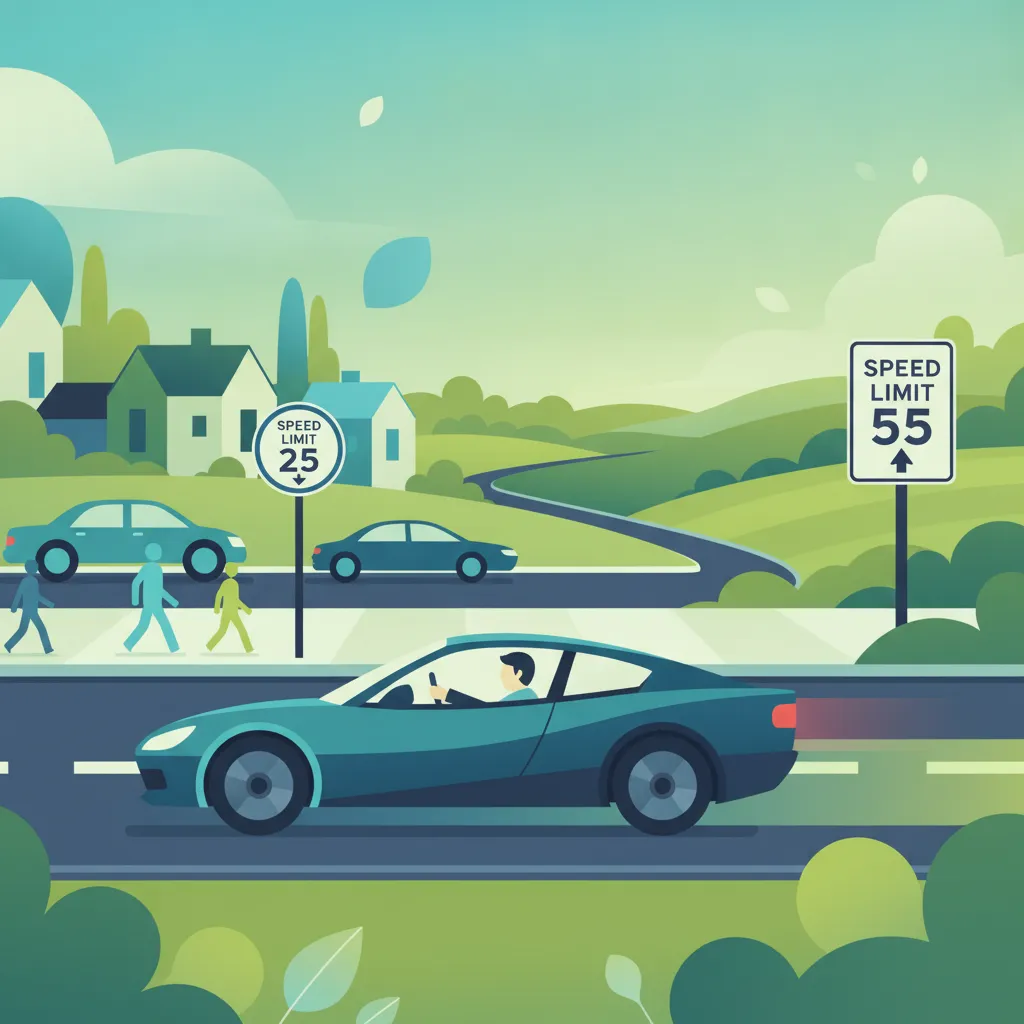
This lesson details speed management techniques applicable to urban, rural, and motorway environments, focusing on compliance with legal speed limits and developing appropriate speed perception. It covers strategies for monitoring speed and adjusting for road conditions, traffic density, and overall passenger safety. The lesson also reviews enforcement mechanisms and emphasizes the importance of speed compliance for accident avoidance and regulatory adherence, a critical skill for all professional drivers.
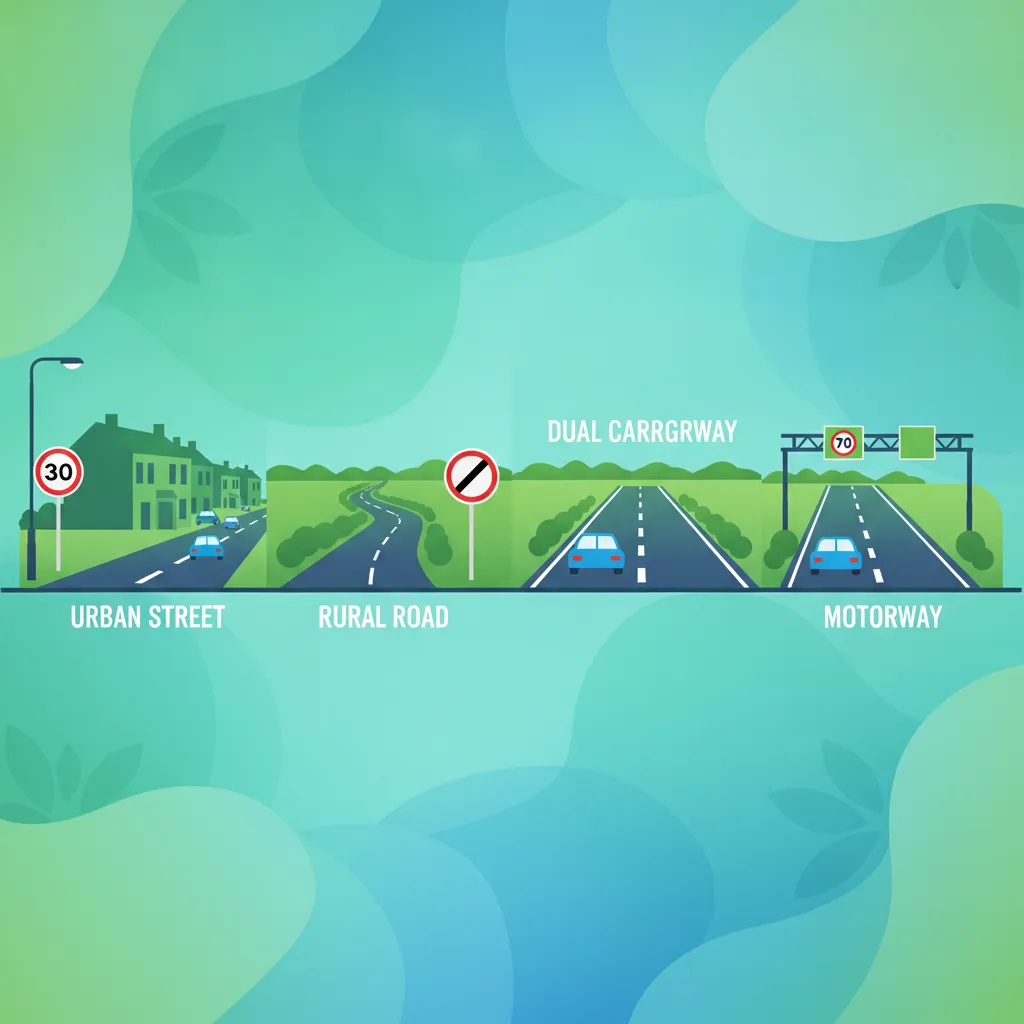
This lesson details the default speed limits for cars in Great Britain. You will learn the 30 mph limit for built-up areas, 60 mph on single carriageways, and 70 mph on dual carriageways and motorways. It also covers how to identify these roads and the importance of looking for signs indicating a different limit is in force.

This lesson explains how to drive safely through areas where roadworks are taking place. It stresses the importance of obeying all temporary signs, especially mandatory speed limits, which are in place for your safety and the safety of road workers. You will learn about navigating narrow lanes, contraflow systems, and how to follow official diversion signs.
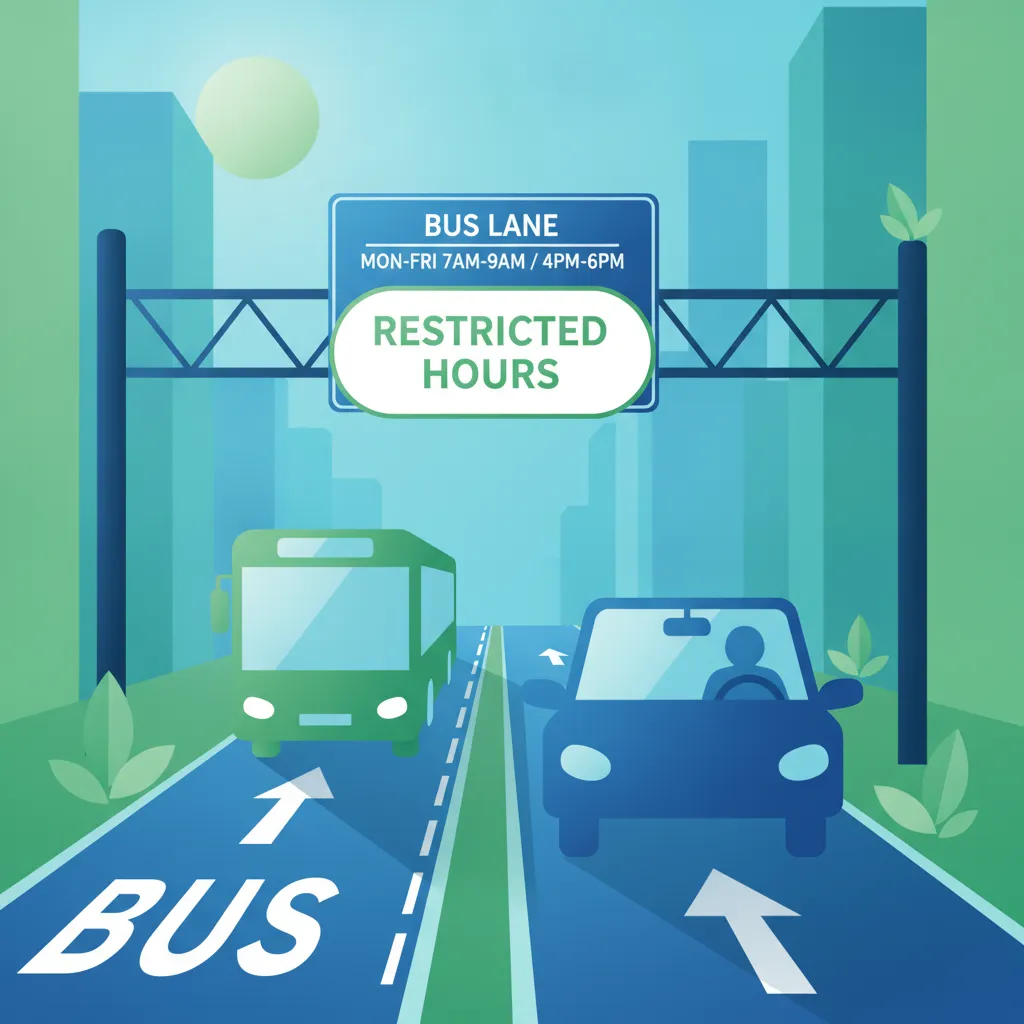
This lesson covers the importance of maintaining correct lane discipline when driving a large passenger vehicle. It details how to position your vehicle safely within a lane on various road types, including multi-lane carriageways and motorways. You will learn the specific rules governing bus lanes, including how to interpret markings, adhere to operating times, and understand the exemptions and penalties associated with their use to ensure legal and efficient driving.

This lesson teaches the skill of joining a major road like a dual carriageway or motorway. It explains how to use the slip road to build up your speed to match the traffic flow on the main road. The focus is on observation, signalling, and finding a safe gap before merging smoothly and decisively into the traffic stream.
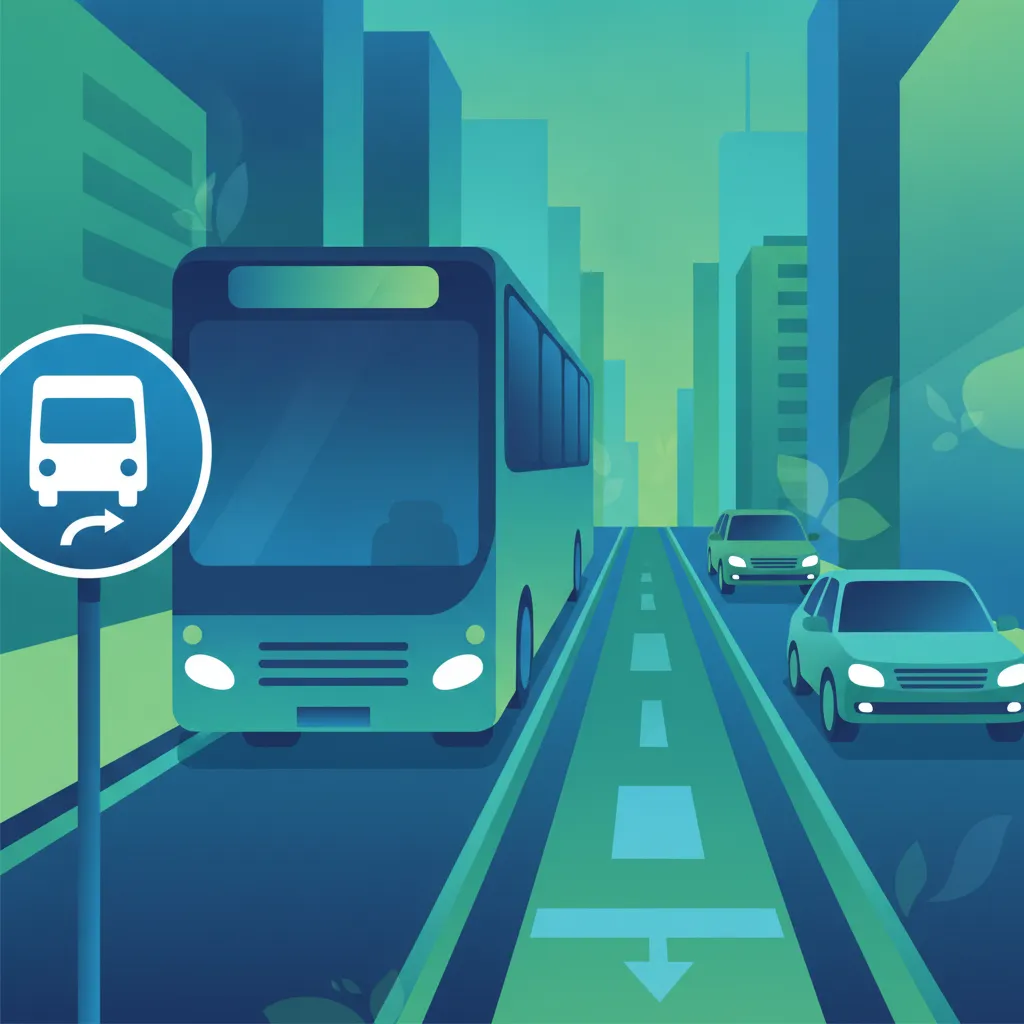
This lesson examines the unique rules and restrictions governing buses and coaches, focusing on bus lane priority, time-based restrictions, and loading zone limitations. Learners will explore the criteria for using bus-only routes and understand the legal consequences of non-compliance. The content also reviews signage indicating bus gate operation and areas where passenger vehicles are prohibited from stopping or loading outside of designated zones, ensuring lawful and efficient urban navigation.
Master essential safety procedures for breakdowns on UK motorways. This lesson covers safe stopping, passenger evacuation, using emergency phones, and placing warning triangles for passenger-carrying vehicles.

This lesson provides essential guidance for handling on-road emergencies. It outlines the steps to take if your vehicle breaks down, including making yourself visible and getting to a place of safety. You will also learn the basics of what to do at an accident scene, including assessing the situation, calling for help, and providing simple first aid until professional assistance arrives.
This lesson covers the unique aspects of motorway driving, from joining and leaving the carriageway to the strict lane discipline of keeping to the left unless overtaking. It explains the features of smart motorways, such as variable speed limits and the meaning of a Red X symbol above a lane. The safe procedure for handling a breakdown is also a key topic.
This lesson provides a clear, step-by-step guide for managing an emergency situation like a breakdown or a road traffic collision. You will learn the correct procedures for making the scene safe, when and how to contact the emergency services (999 or 112), and what information to provide. It also covers your legal obligations regarding reporting accidents and exchanging details, ensuring you are prepared to act correctly and calmly under pressure.
This lesson addresses the unique challenges of driving a large vehicle on rural roads. It provides techniques for positioning the vehicle through sharp bends and on narrow lanes, and for safely navigating unmarked or uncontrolled junctions. Learners will be taught to anticipate hidden hazards common in the countryside, such as slow-moving farm vehicles, animals on the road, and concealed entrances. The correct use of passing places and strategies for meeting oncoming traffic are also covered.
This lesson focuses on the specific rules and best practices for driving HGVs on motorways in Great Britain. It covers mandatory speed limits for goods vehicles, lane discipline including restrictions on using the outside lane, and procedures for safely joining and leaving the motorway. The lesson also includes up-to-date information on driving on smart motorways, including understanding the signs and using emergency refuge areas correctly.
This lesson explains how to drive safely through areas where roadworks are taking place. It stresses the importance of obeying all temporary signs, especially mandatory speed limits, which are in place for your safety and the safety of road workers. You will learn about navigating narrow lanes, contraflow systems, and how to follow official diversion signs.

This lesson equips drivers with the knowledge to manage on-road emergencies effectively and safely. It provides clear, step-by-step procedures for vehicle breakdowns, including where to stop and how to use warning devices. It also covers initial actions at the scene of an accident, fire safety protocols including the use of an extinguisher, and the correct way to report incidents to emergency services and the transport office.

This lesson provides a thorough understanding of the core safety principles required to protect passengers. It covers secure seating, safe standing zones, and the proper handling of passenger luggage to prevent hazards. Learners will also identify the location and use of emergency equipment, understand seatbelt compliance, and learn how to conduct on-board safety briefings. The focus is on risk assessment and hazard identification to maintain a secure environment for all passengers.
This lesson covers the specific procedures for operating within busy bus terminals and service areas. It details the protocols for approaching and parking in allocated bays, managing the safe flow of passengers, and communicating with station staff. The content emphasizes the need for extreme caution and low-speed manoeuvring due to high pedestrian traffic. It also reviews pre-departure checks and communication protocols necessary for efficient and safe terminal operations.
This lesson contrasts the challenges of different road types. It covers how to handle the hidden bends, poor surfaces, and unexpected hazards of rural roads. It then details the specific procedures for using dual carriageways and motorways, including using slip roads, adhering to strict lane discipline, and safely overtaking at high speeds.
Find clear answers to common questions learners have about Motorway Rules and High-Speed Operation. Learn how the lesson is structured, which driving theory objectives it supports, and how it fits into the overall learning path of units and curriculum progression in Great Britain. These explanations help you understand key concepts, lesson flow, and exam focused study goals.
No. PCVs have specific speed limits. On motorways in Great Britain, a coach or bus that is limited to 60 mph must not exceed that limit even if the motorway sign shows 70 mph.
Generally, vehicles drawing a trailer and certain large vehicles like some coaches are prohibited from the right-hand lane of a motorway with three or more lanes, unless directed to do so by traffic signs or signals.
If possible, move to an emergency area. If you cannot reach one, move to the hard shoulder if it is open as a lane, or stop in the leftmost lane with your hazard lights on and call for assistance immediately.
Yes. Because of your vehicle's size and slower acceleration, you must plan your entry to the slip road earlier and match your speed carefully to the traffic flow, ensuring you have enough space to merge safely without forcing other vehicles to brake hard.
Dive into our comprehensive question bank to find exactly what you need for your Great Britain theory test. Use our advanced filters to pinpoint specific subjects or test your knowledge on challenging areas, ensuring you're fully prepared for success.