
This lesson focuses on the unique challenges of operating large passenger vehicles on rural roads. You will learn to manage vehicle positioning on narrow lanes and navigate unmarked or uncontrolled junctions safely, ensuring you are prepared for both the DVSA theory test and real-world driving.

Lesson content overview
Driving a large passenger vehicle, such as a bus, coach, or minibus, on rural roads in Great Britain presents a unique set of challenges that demand heightened skill and awareness. Unlike urban environments or motorways, rural routes often feature narrow lanes, sharp or concealed bends, and junctions lacking conventional traffic controls. This lesson for Great Britain Passenger Vehicle Theory – Bus, Coach and Minibus Drivers will equip you with the essential techniques for safe navigation, emphasizing vehicle positioning, speed management, and hazard anticipation to mitigate risks common in the countryside.
Rural roads in the UK can vary significantly, from single-track lanes with passing places to wider A-roads that still retain a rural character. What unifies these environments are factors such as limited sightlines due to hedgerows and terrain, unpredictable encounters with slow-moving farm machinery, wildlife crossing the road, and concealed entrances to properties. These conditions demand a proactive driving approach that maximizes safety margins and minimizes the risk of collision.
For large passenger vehicles, these challenges are magnified. The greater length, width, and weight of a bus or coach mean that even minor misjudgments in speed or positioning can have serious consequences. A higher centre of gravity can affect stability on tight bends, while longer braking distances require earlier hazard perception and speed adjustments. Mastering rural driving is crucial for maintaining vehicle control, ensuring passenger safety and comfort, and complying with the Highway Code.
Optimal vehicle positioning is fundamental to safe driving on narrow rural lanes. It involves deliberately placing your vehicle within the carriageway to maximize your line of sight, maintain sufficient clearance, and communicate your intentions to other road users. The goal is to always have an escape route or a safety margin, especially when facing oncoming traffic or navigating around obstacles.
On single-track or very narrow roads, your positioning will constantly adapt. You might need to move further to the left to allow an oncoming vehicle to pass, or slightly to the right (within your lane) to give more clearance to a hazard on your left. Always be mindful of the width of your vehicle and the space required for other road users, including vulnerable ones like cyclists and pedestrians.
When unsure of the exact width of a rural road, err on the side of caution. Reduce your speed, anticipate meeting other vehicles, and be prepared to stop or use a passing place to ensure ample clearance.
The Highway Code emphasizes giving way and leaving sufficient space on narrow roads. Rule 165 states that you should give way to oncoming traffic on narrow roads or at any obstruction. Specifically, when operating a large passenger vehicle, you are expected to be particularly courteous and accommodating.
Curves on rural roads often vary in radius, camber, and visibility, making them significantly more challenging than those on well-engineered motorways. For large passenger vehicles, negotiating bends requires careful speed management and precise steering to prevent loss of control and ensure passenger comfort. Centrifugal force, which pushes a vehicle outwards on a curve, is a critical factor, especially with a high centre of gravity.
The most critical aspect of curve negotiation is to reduce your speed sufficiently before entering the bend. This allows you to maintain full control, steer smoothly, and react to any unexpected hazards within the curve. Braking within a curve can destabilize a large vehicle, especially on uneven or low-friction surfaces.
Never assume the posted speed limit is safe for a curve, especially with a loaded passenger vehicle, in adverse weather, or on an unfamiliar road. Your speed must always be appropriate for the actual conditions and your vehicle's capabilities.
Road surface conditions (wet, icy, gravel, potholes) significantly impact traction. Adjust your speed further down on compromised surfaces. When steering through a bend, aim for a smooth, progressive input. Avoid sharp, sudden movements. A common technique for right-hand bends is to approach slightly to the left of your lane (but never encroaching oncoming traffic) to improve your line of sight through the bend. For left-hand bends, keep slightly to the right within your lane.
Passing places are essential features on many narrow rural roads in Great Britain, designed to allow vehicles to safely pass each other when the carriageway is too narrow for two-way traffic. Correctly using and understanding passing place etiquette is vital for maintaining traffic flow and preventing dangerous encounters.
A designated or naturally widened area on a narrow road where vehicles can pull aside to allow other vehicles to pass safely.
Uncontrolled junctions are intersections lacking traffic lights, stop signs, or give-way signs. These are common on rural roads, and navigating them safely relies entirely on the driver's judgment, adherence to right-of-way conventions, and keen observation. Misjudging an uncontrolled junction is a leading cause of collisions in rural areas.
Rural roads are often brimming with hazards that are not immediately obvious. Developing strong hazard anticipation skills is crucial for operating a passenger vehicle safely and comfortably in these environments. This involves continuous scanning of the entire roadside scene, looking beyond the immediate view for potential dangers.
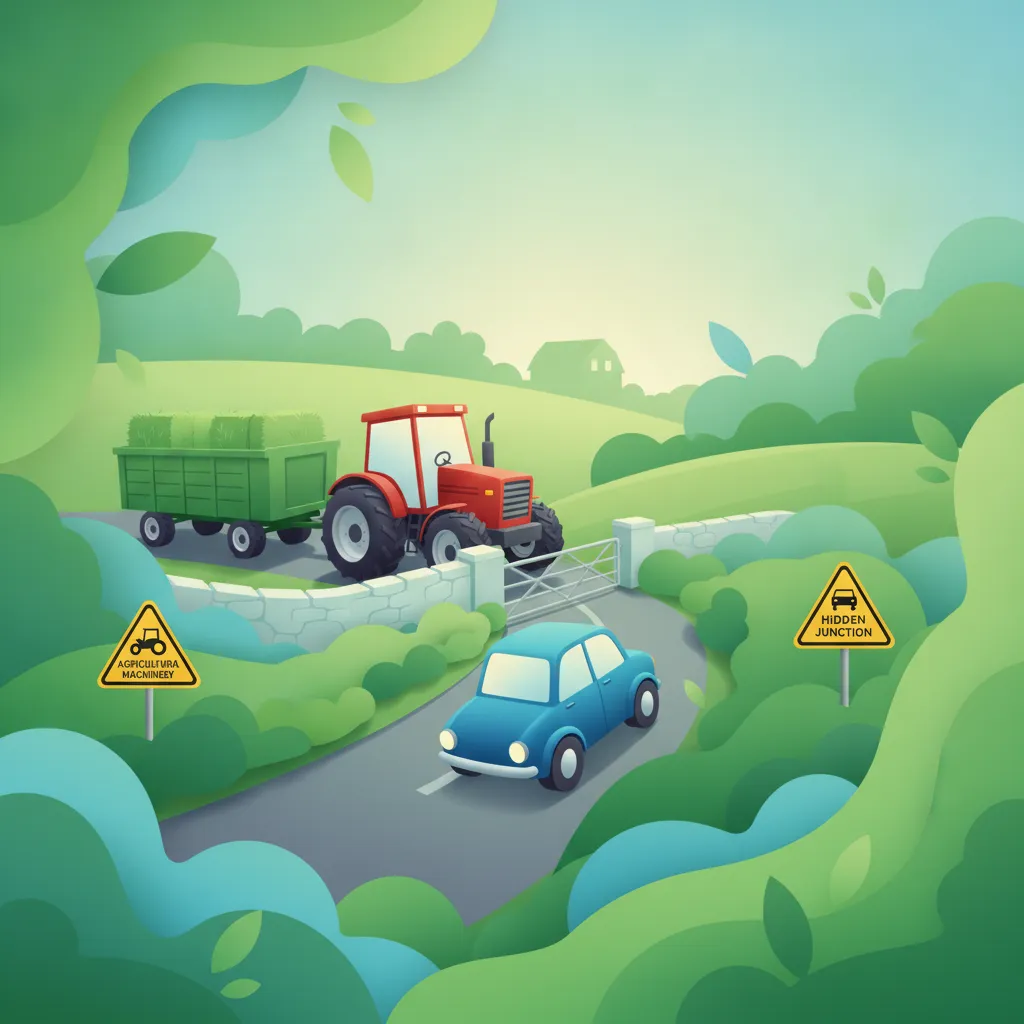
Look for "clues" in the environment: open farm gates, tracks leading off the road, warning signs for animals, or even just gaps in hedgerows can indicate a hidden entrance or potential hazard.
The dynamics of a large passenger vehicle are profoundly affected by its load (number of passengers and luggage) and the condition of the road surface. Understanding these influences is paramount for safe and comfortable rural driving.
A fully loaded bus or coach behaves very differently from an empty one.
The effect of passenger or cargo weight on a vehicle's braking distances, stability during turns, and overall handling characteristics.
The type and condition of the road surface directly impact your vehicle's traction and control. Rural roads are notorious for varied and unpredictable surfaces.
Always adjust your speed and driving technique to match the prevailing road surface conditions (Rule 150). On slippery surfaces, use gentle steering and braking, and consider engaging a lower gear for engine braking rather than solely relying on the footbrake.
Adherence to the Highway Code is non-negotiable for all drivers, especially those operating passenger vehicles professionally. Several rules are particularly pertinent to driving on rural roads in Great Britain:
Avoiding common pitfalls on rural roads is crucial for the safety of your passengers and other road users.
Scan Aggressively: Continuously look far ahead and to the sides for potential hazards, not just the road immediately in front.
Manage Speed Proactively: Reduce speed well before curves, junctions, and areas with limited visibility. Always drive within your stopping sight distance.
Position Correctly: Adapt your lane position to maximize visibility, maintain safety margins, and facilitate safe passing on narrow roads.
Be Prepared to Yield: Always be ready to stop at uncontrolled junctions and use passing places to allow other vehicles to pass safely.
Account for Load: Remember that a loaded passenger vehicle requires longer braking distances and careful speed management on curves.
Rural driving demands constant adaptation to changing conditions, which can significantly alter vehicle handling and visibility.
Driving large passenger vehicles on rural roads requires a professional mindset focused on proactive safety, precise vehicle control, and constant situational awareness. By consistently applying correct vehicle positioning, managing your speed effectively on curves, mastering the use of passing places, and approaching uncontrolled junctions with extreme caution, you can navigate these challenging environments safely. Always anticipate hidden hazards, understand the impact of your vehicle's load and road surface conditions, and adapt your driving to prevailing environmental factors. Adhering to the Highway Code and prioritizing the comfort and safety of your passengers will ensure you are a competent and responsible driver on Great Britain's diverse rural network.
This lesson covers the specialised skills needed to drive large passenger vehicles safely on rural roads in Great Britain. It details vehicle positioning strategies for narrow lanes, emphasising that drivers must constantly adapt their lane position to maintain safety margins and visibility. Speed management is critical: drivers must reduce speed before curves rather than during them, and always drive within their stopping sight distance. Passing places must be used when meeting traffic, with large vehicles generally expected to yield. The lesson also covers uncontrolled junction navigation, requiring early anticipation, thorough observation, and readiness to stop for traffic from the right or on the major road. Hidden hazards including farm vehicles, animals, and concealed entrances demand constant scanning, and drivers must account for increased braking distances and reduced stability when the vehicle is fully loaded.
A short set of high-value points that capture the most important learning from this lesson.
Vehicle positioning on narrow rural roads must constantly adapt between centre, left-side, and right-side positions to maximise visibility and clearance for oncoming traffic
Speed must be reduced before entering any curve or bend; braking within a curve can destabilise a large passenger vehicle due to its higher centre of gravity
Passing places on single-track roads must be used when meeting oncoming traffic, with large vehicles generally expected to yield
Approach all uncontrolled junctions by anticipating early, reducing speed significantly, observing thoroughly, and being prepared to stop for traffic from the right or on the major road
A loaded passenger vehicle requires longer braking distances and demands even greater caution on curves due to increased weight and altered centre of gravity
Explore all units and lessons included in this driving theory course.
On narrow roads, move further left to give oncoming traffic more space, or slightly right within your lane when meeting traffic to create a larger gap for the opposing vehicle to pass
Use engine braking by selecting a lower gear before entering curves, especially on descents, to avoid over-relying on service brakes
Always drive at a speed that allows you to stop within your stopping sight distance, particularly on blind bends with restricted visibility
Concealed entrances, farm gates, slow-moving agricultural vehicles, and animals are common hidden hazards on rural roads requiring proactive scanning
Rule 165 requires giving way to oncoming traffic on narrow roads, and Rule 170 mandates using passing places when available
Entering an uncontrolled junction at speed without stopping, risking collision with traffic that has priority
Approaching sharp bends at the posted speed limit without adjusting for reduced friction on wet, icy, or gravel surfaces
Failing to use a passing place when meeting oncoming traffic, forcing dangerous encounters on narrow sections
Positioning the vehicle on the centre line of a narrow lane, reducing clearance and increasing collision risk with oncoming vehicles
Using hard braking on low-friction surfaces, which can lock wheels and cause skidding rather than safe deceleration
Lesson content overview
A short set of high-value points that capture the most important learning from this lesson.
Vehicle positioning on narrow rural roads must constantly adapt between centre, left-side, and right-side positions to maximise visibility and clearance for oncoming traffic
Speed must be reduced before entering any curve or bend; braking within a curve can destabilise a large passenger vehicle due to its higher centre of gravity
Passing places on single-track roads must be used when meeting oncoming traffic, with large vehicles generally expected to yield
Approach all uncontrolled junctions by anticipating early, reducing speed significantly, observing thoroughly, and being prepared to stop for traffic from the right or on the major road
A loaded passenger vehicle requires longer braking distances and demands even greater caution on curves due to increased weight and altered centre of gravity
Explore all units and lessons included in this driving theory course.
On narrow roads, move further left to give oncoming traffic more space, or slightly right within your lane when meeting traffic to create a larger gap for the opposing vehicle to pass
Use engine braking by selecting a lower gear before entering curves, especially on descents, to avoid over-relying on service brakes
Always drive at a speed that allows you to stop within your stopping sight distance, particularly on blind bends with restricted visibility
Concealed entrances, farm gates, slow-moving agricultural vehicles, and animals are common hidden hazards on rural roads requiring proactive scanning
Rule 165 requires giving way to oncoming traffic on narrow roads, and Rule 170 mandates using passing places when available
Entering an uncontrolled junction at speed without stopping, risking collision with traffic that has priority
Approaching sharp bends at the posted speed limit without adjusting for reduced friction on wet, icy, or gravel surfaces
Failing to use a passing place when meeting oncoming traffic, forcing dangerous encounters on narrow sections
Positioning the vehicle on the centre line of a narrow lane, reducing clearance and increasing collision risk with oncoming vehicles
Using hard braking on low-friction surfaces, which can lock wheels and cause skidding rather than safe deceleration
Explore search topics learners often look for when studying Rural Roads, Curves, and Uncontrolled Intersections. These topics reflect common questions about road rules, driving situations, safety guidance, and lesson level theory preparation for learners in Great Britain.
Browse additional driving theory lessons that cover connected traffic rules, road signs, and common driving situations related to this topic. Improve your understanding of how different rules interact across everyday traffic scenarios.
Deepen your understanding of large vehicle dynamics on challenging rural routes. Explore advanced techniques for positioning, speed control, and hazard perception on sharp bends and single-track lanes.
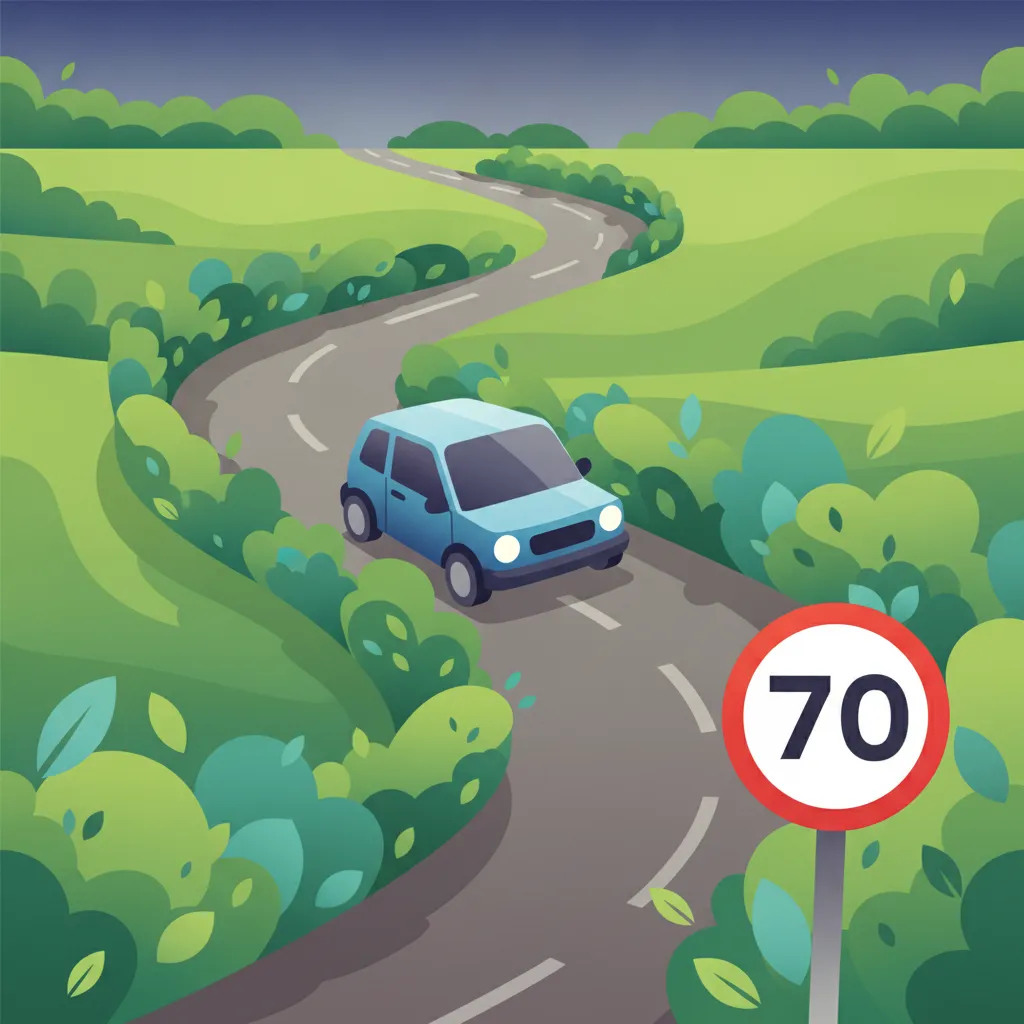
This lesson prepares you for the challenges of countryside driving. It emphasizes that the national speed limit on these roads is often too fast for the conditions. You will learn how to approach sharp bends, use passing places on single-track roads, and anticipate hazards like slow-moving tractors, horse riders, or mud on the road surface.

This lesson contrasts the challenges of different road types. It covers how to handle the hidden bends, poor surfaces, and unexpected hazards of rural roads. It then details the specific procedures for using dual carriageways and motorways, including using slip roads, adhering to strict lane discipline, and safely overtaking at high speeds.
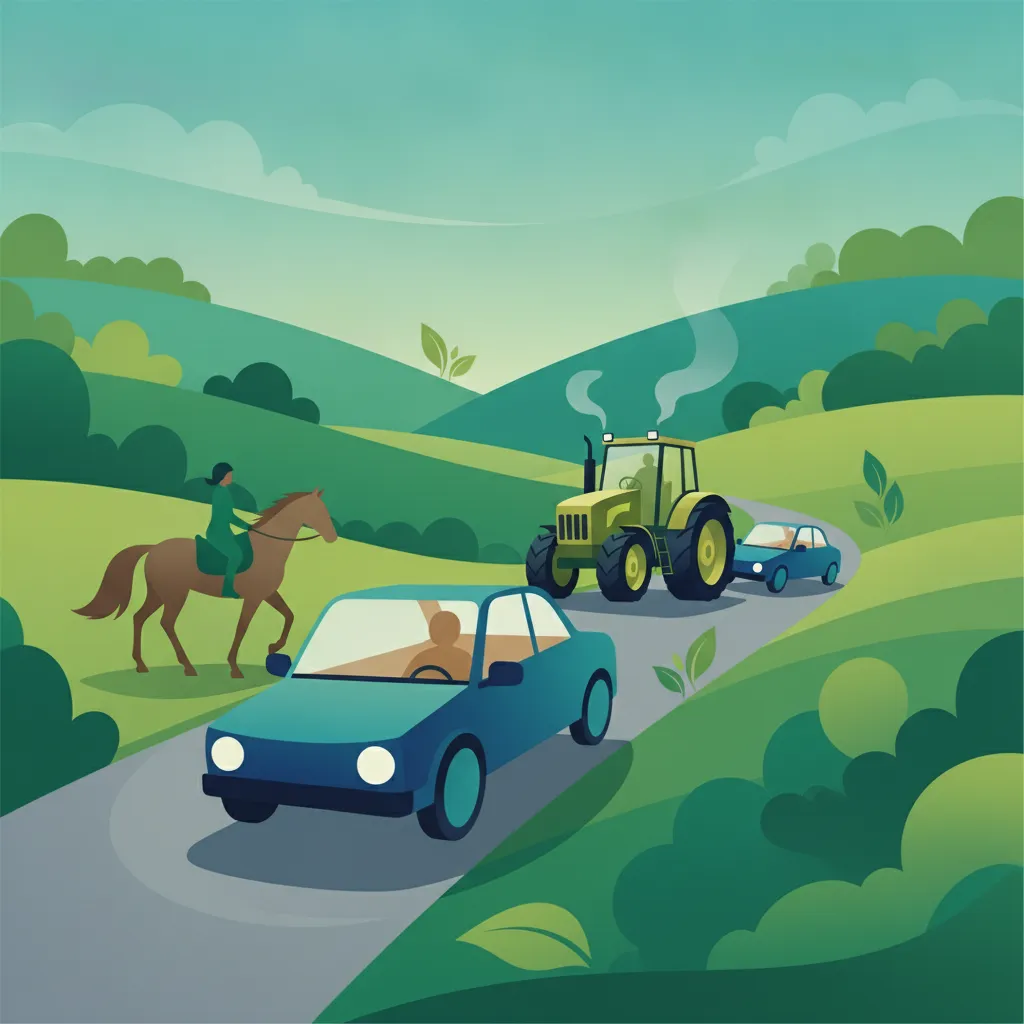
This lesson prepares you for the specific challenges of driving in the countryside. It explains the correct procedure for overtaking horse riders: slow down and pass wide, ensuring you do not spook the animal. You will also learn how to anticipate and safely manage encounters with slow-moving tractors and other farm machinery.
This lesson addresses the unique set of challenges that rural roads present to HGV drivers. It covers how to safely navigate narrow and winding lanes, the importance of anticipating hazards like slow-moving agricultural machinery, mud on the road, and wildlife. You will learn how the national speed limit applies to your vehicle on these roads and why it is often necessary to travel at a much lower speed to ensure safety.
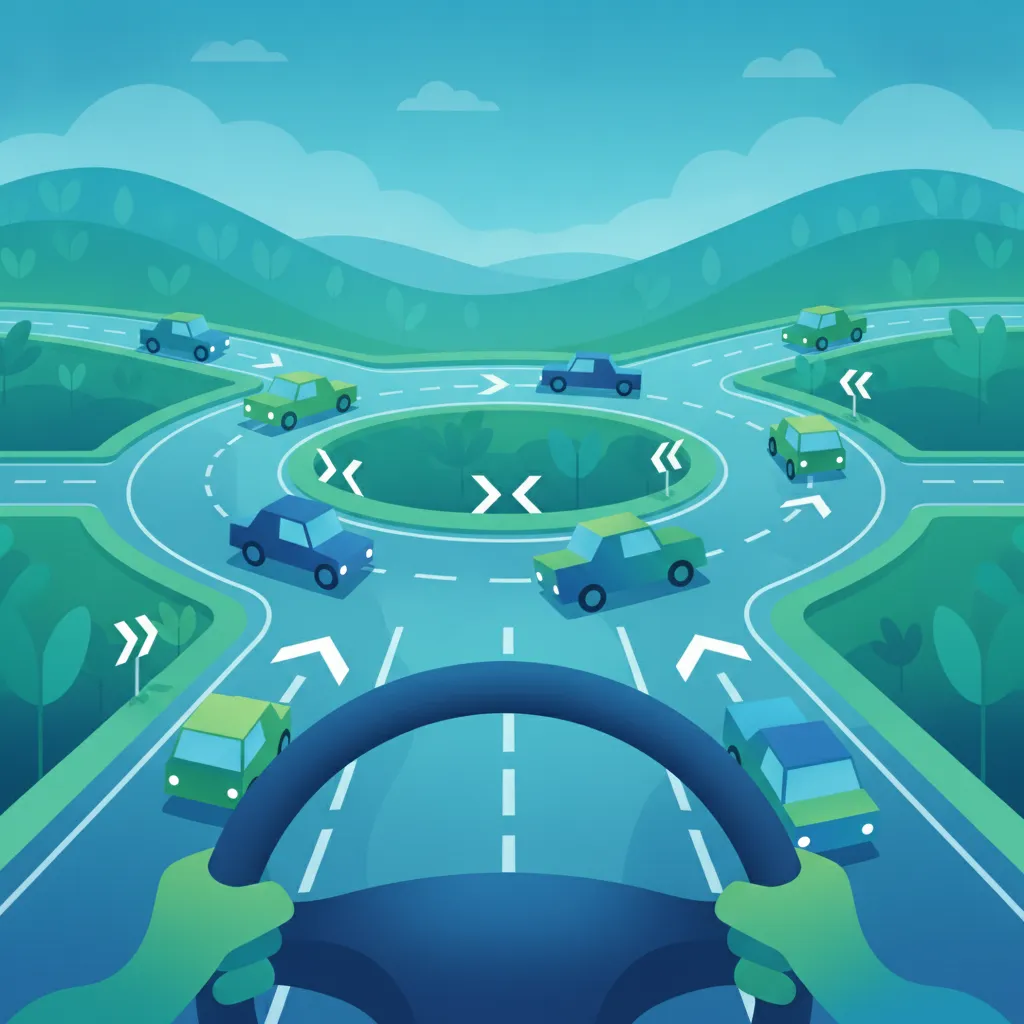
This lesson tackles the complexities of large roundabouts, which often have multiple lanes and exits. It stresses the importance of reading signs on the approach to select the correct lane for your destination. You will learn about maintaining lane discipline while on the roundabout and signalling correctly as you pass exits and prepare to leave.

This lesson explains the dynamics of turning a long vehicle, focusing on the concepts of off-tracking, where the rear wheels follow a tighter path than the front wheels, and tail swing. You will learn the correct road positioning on approach to junctions and roundabouts to safely clear obstacles and avoid mounting kerbs or striking street furniture. Managing speed and using mirrors effectively throughout the turn are emphasized as crucial safety techniques.

This lesson provides detailed instruction on turning techniques tailored for long vehicles. It explains the concepts of off-tracking (where rear wheels follow a tighter path than front wheels) and rear swing, and how to compensate for them. Learners will understand how to position the vehicle correctly when approaching and navigating left and right turns at junctions, roundabouts, and tight corners, using mirrors and signals effectively to ensure clearance and safety.

This lesson addresses the unique challenges of operating a large goods vehicle in congested urban and city environments. It focuses on techniques for navigating narrow streets, making tight turns, and safely accessing delivery points while being highly aware of vulnerable road users like pedestrians and cyclists. The importance of exceptional observation, low-speed control, and clear communication with other road users is heavily emphasized to minimize risk in these complex settings.
This lesson focuses on the key principles of safe low-speed manoeuvres, especially reversing. It stresses the need for continuous, all-around observation, looking for pedestrians, obstacles, and other vehicles. You will learn the importance of moving very slowly and being prepared to stop at any moment to maintain full control of the vehicle.
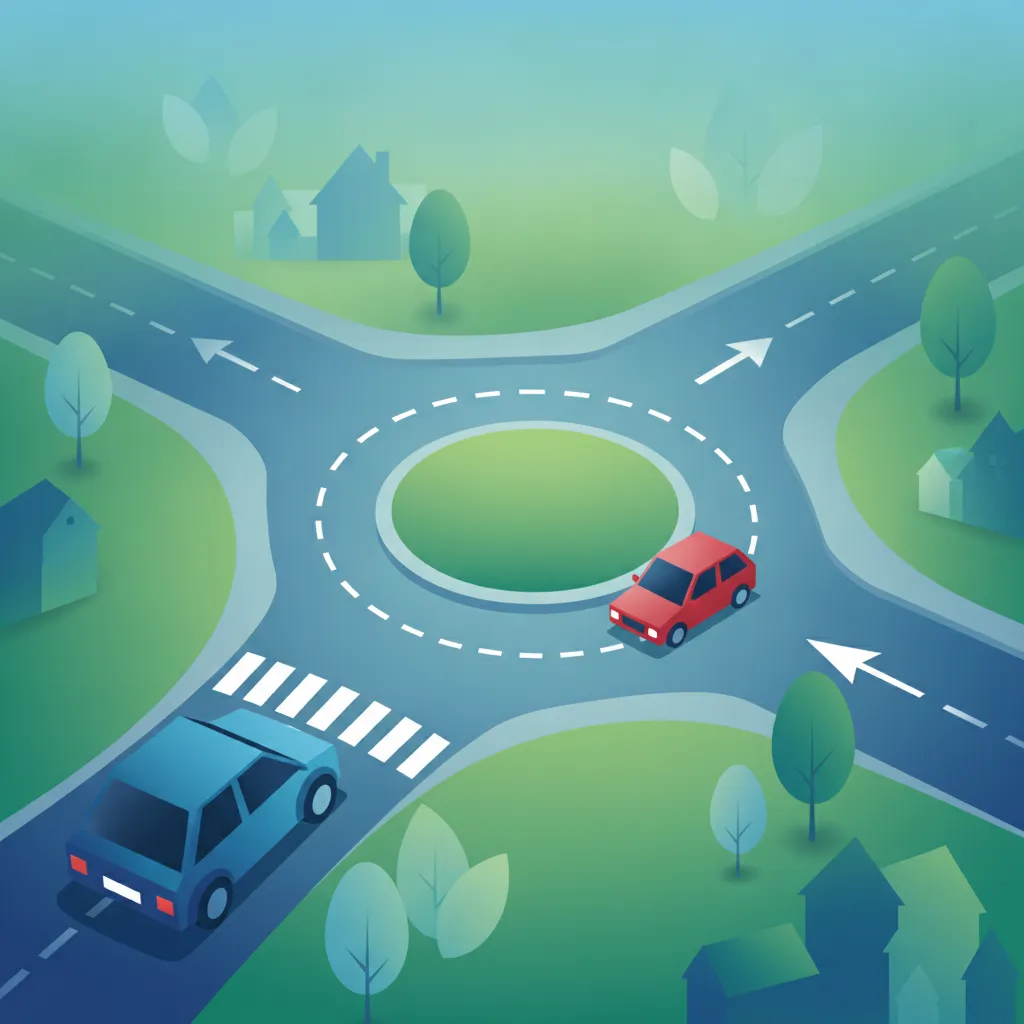
This lesson explains how to handle mini-roundabouts, which are common in urban and residential areas. The primary rule is to approach with caution and give priority to any traffic approaching from your right. You will also learn about correct signalling and the importance of being aware of cyclists and motorcyclists who may be harder to see.
Learn the specific rules and safe practices for approaching and negotiating uncontrolled junctions on rural roads in Great Britain. Focus on right-of-way, observation, and hazard identification.
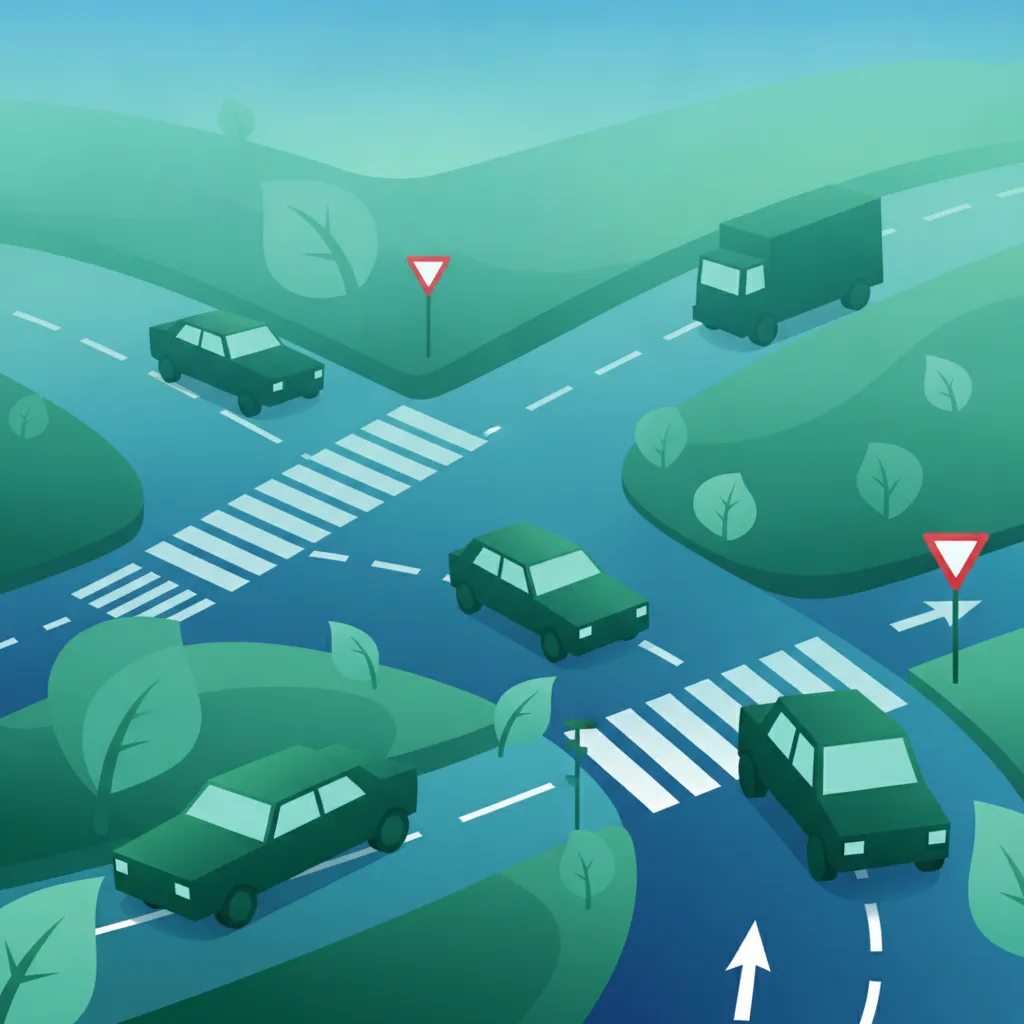
This lesson teaches the systematic approach to safely navigating junctions, emphasizing the importance of adjusting your speed and position well in advance. You will learn the 'Mirror-Signal-Manoeuvre' routine, how to perform effective all-round observation checks, and when to give way to other traffic. The content focuses on making safe judgments about gaps in traffic, a crucial skill for vulnerable AM riders when turning or emerging from a junction.
This lesson explains how to handle mini-roundabouts, which are common in urban and residential areas. The primary rule is to approach with caution and give priority to any traffic approaching from your right. You will also learn about correct signalling and the importance of being aware of cyclists and motorcyclists who may be harder to see.
This lesson prepares you for the challenges of countryside driving. It emphasizes that the national speed limit on these roads is often too fast for the conditions. You will learn how to approach sharp bends, use passing places on single-track roads, and anticipate hazards like slow-moving tractors, horse riders, or mud on the road surface.
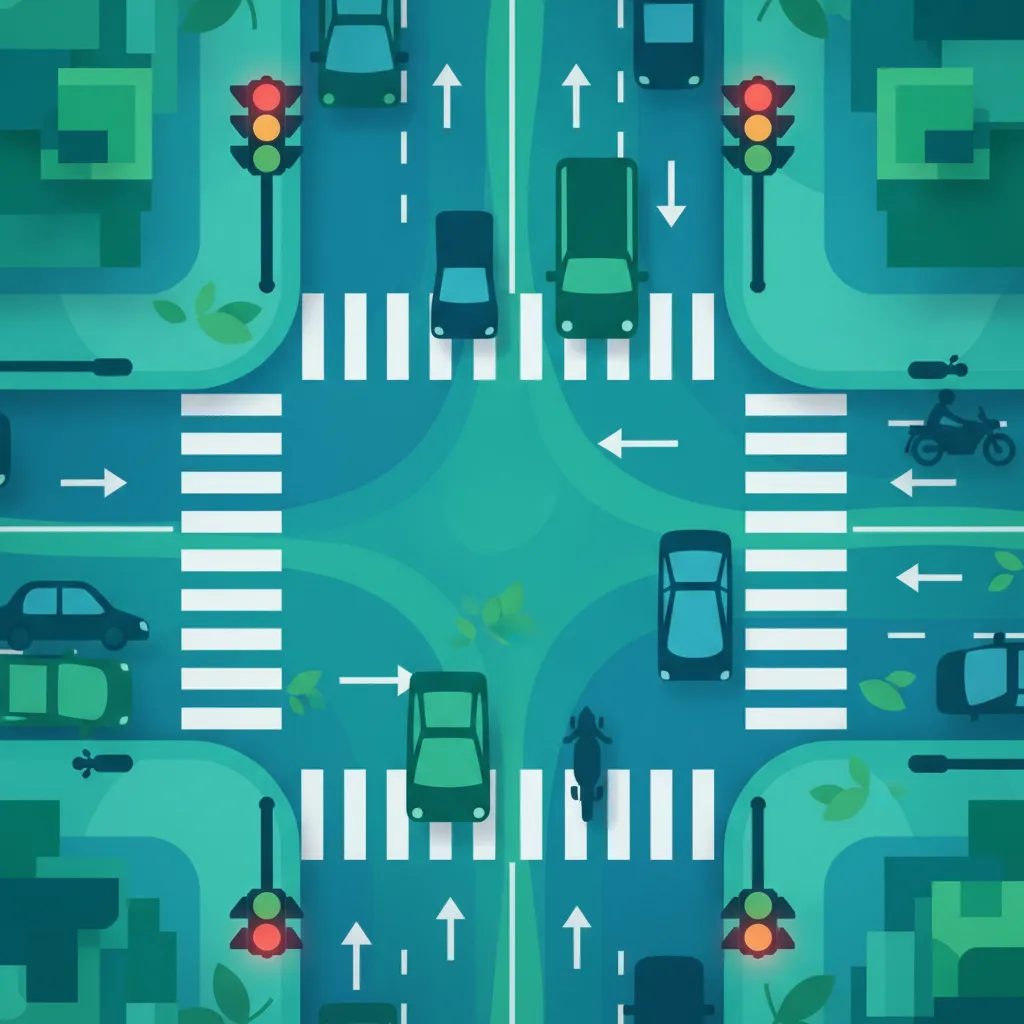
This lesson details how to safely navigate junctions controlled by traffic signals. It explains the meaning of filter arrows, which allow you to proceed in a specific direction even if the main light is red. You will also learn about respecting advanced stop lines for cyclists and how to approach a junction when the traffic lights are not working.
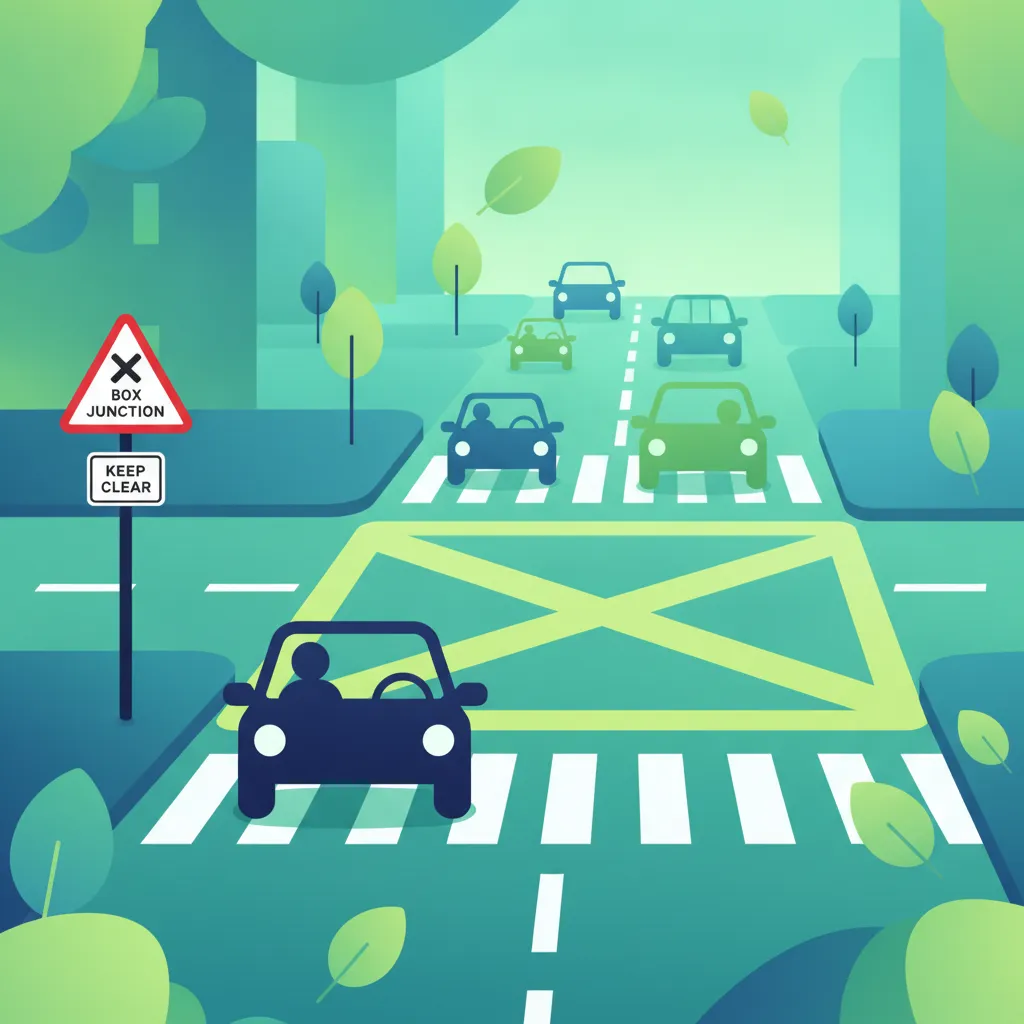
This lesson focuses on the markings that control traffic at intersections. It explains the primary rule of a yellow box junction: do not enter unless your exit is clear. You will also learn the difference between the solid white 'Stop' line and the broken 'Give Way' line, which dictate your priority over other traffic.
This lesson prepares you for the specific challenges of driving in the countryside. It explains the correct procedure for overtaking horse riders: slow down and pass wide, ensuring you do not spook the animal. You will also learn how to anticipate and safely manage encounters with slow-moving tractors and other farm machinery.
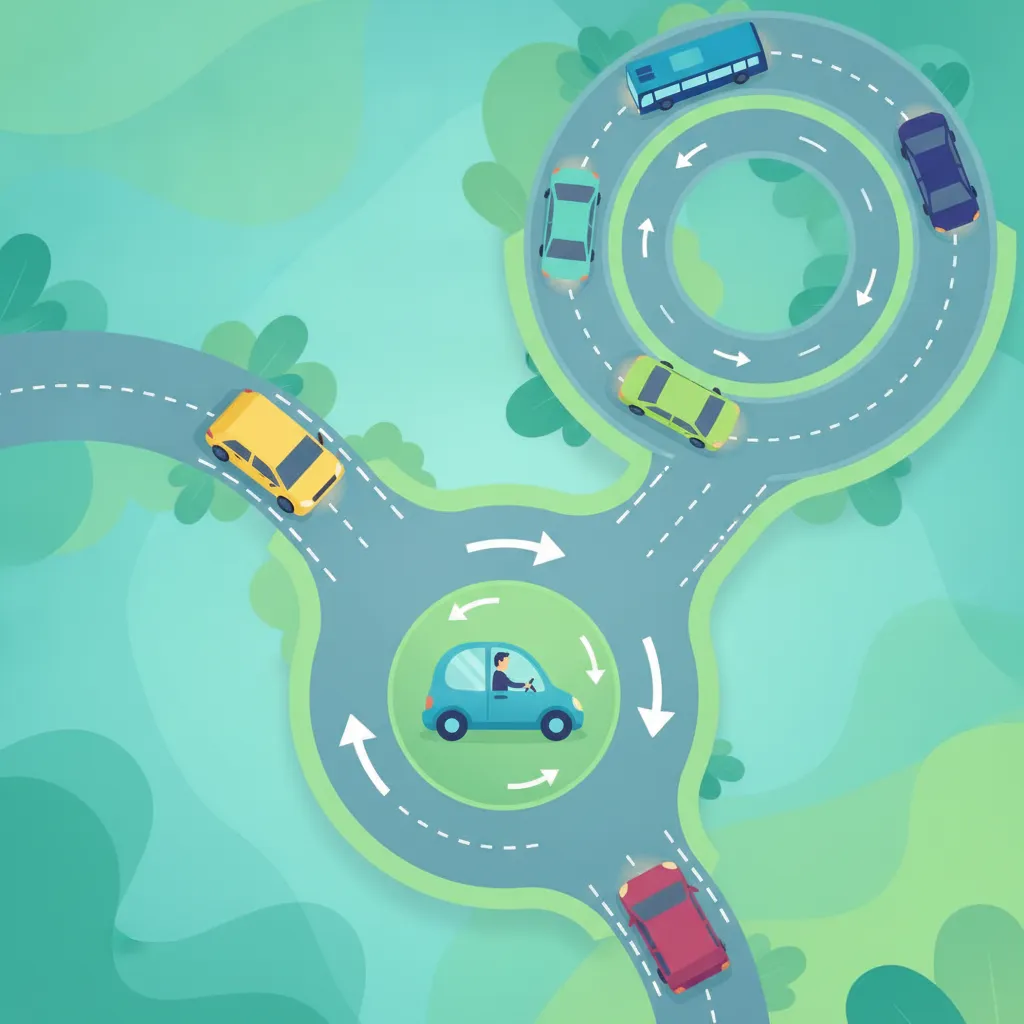
This lesson provides specific techniques for safely navigating the two main types of roundabouts in Great Britain. For multi-lane roundabouts, it covers how to choose the correct lane on approach, maintain your lane while circulating, and signal your exit correctly. It also explains the unique rules for mini-roundabouts, emphasizing the importance of giving way to traffic from the right and navigating them with caution due to their small size.
This lesson breaks down the process of navigating basic junctions. It emphasizes the importance of the Mirror-Signal-Manoeuvre (MSM) and Position-Speed-Look (PSL) routines. You will learn how to position your motorcycle correctly for turning, perform effective observation checks for traffic, and judge safe gaps before emerging.
This lesson addresses the unique set of challenges that rural roads present to HGV drivers. It covers how to safely navigate narrow and winding lanes, the importance of anticipating hazards like slow-moving agricultural machinery, mud on the road, and wildlife. You will learn how the national speed limit applies to your vehicle on these roads and why it is often necessary to travel at a much lower speed to ensure safety.
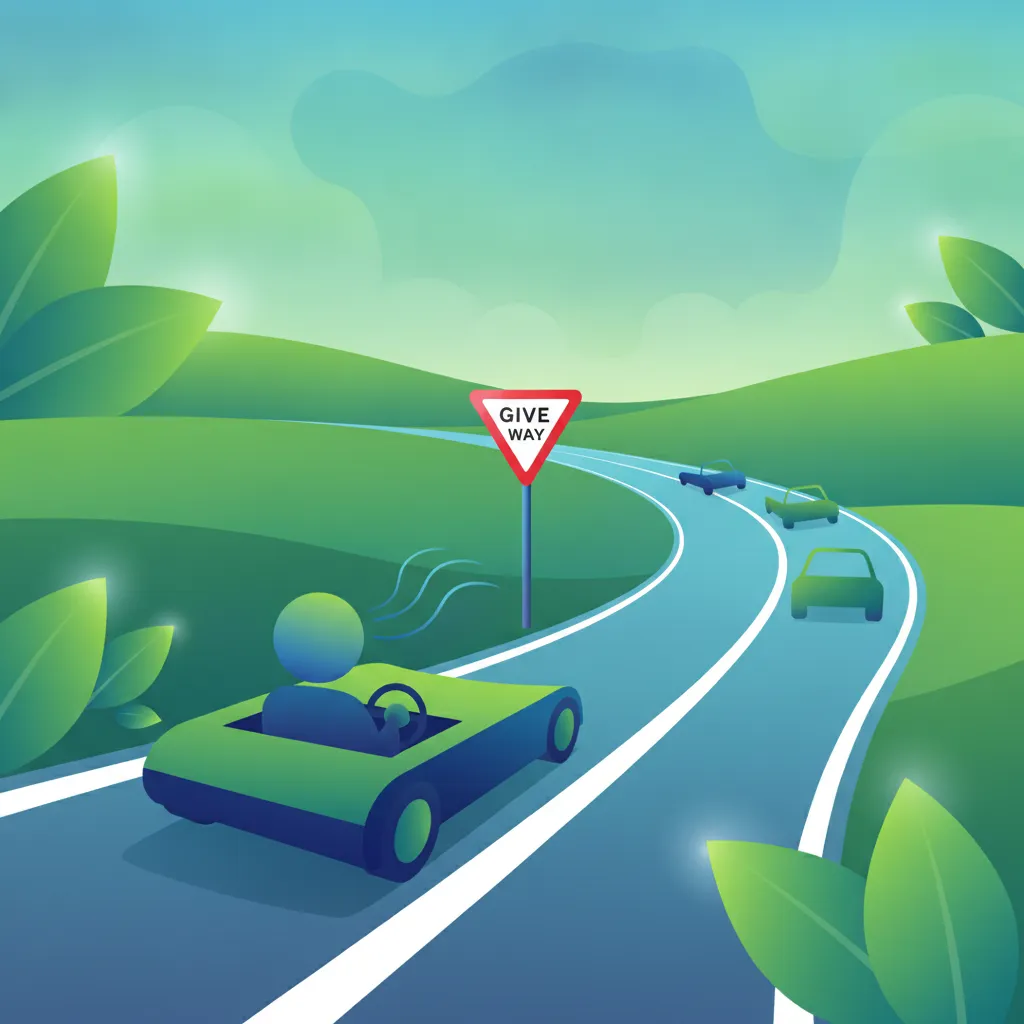
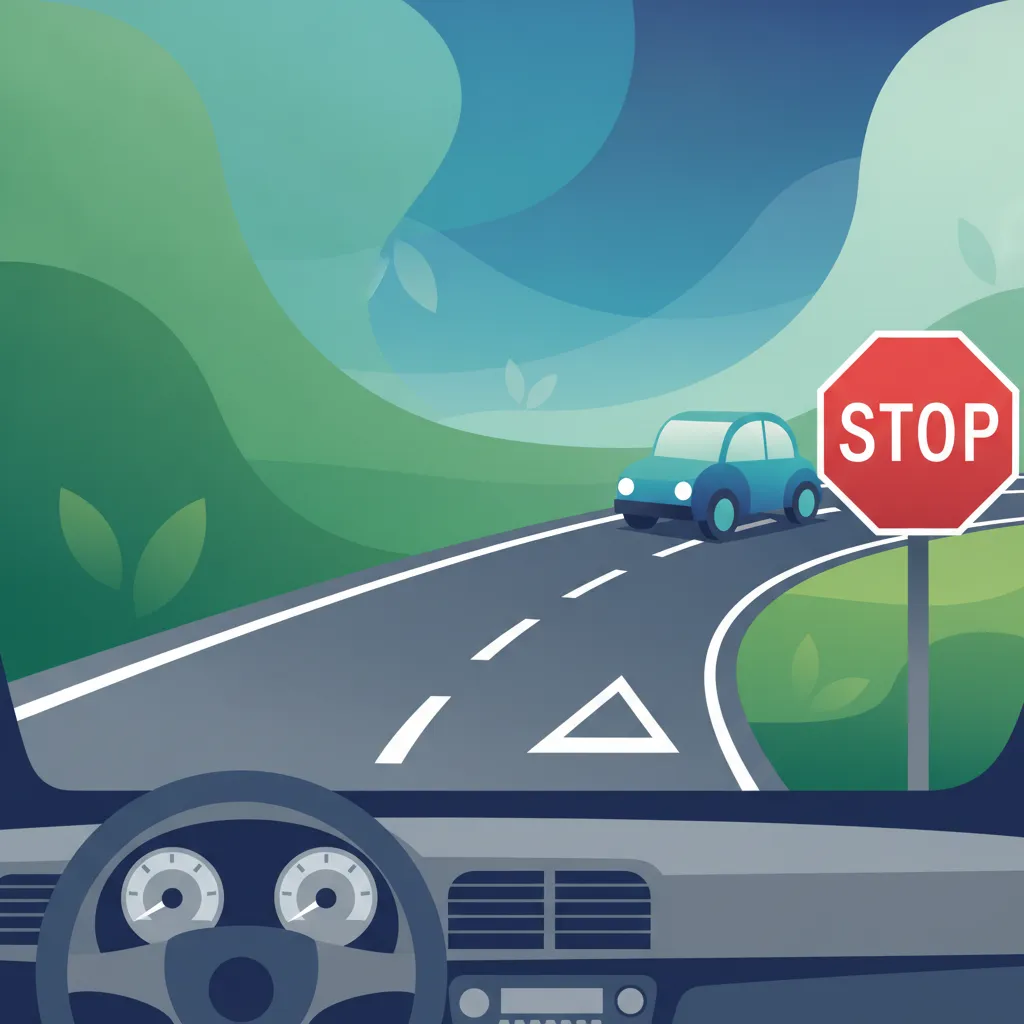
This lesson covers the explicit priority instructions given by signs and markings at junctions. It explains that at a 'Give Way' line, you must yield to traffic on the major road but can proceed if it is safe. At a 'Stop' sign, you must come to a complete halt before the line, assess the traffic, and only proceed when safe.
Find clear answers to common questions learners have about Rural Roads, Curves, and Uncontrolled Intersections. Learn how the lesson is structured, which driving theory objectives it supports, and how it fits into the overall learning path of units and curriculum progression in Great Britain. These explanations help you understand key concepts, lesson flow, and exam focused study goals.
You should use the full width of your lane to maintain a clear view through the bend, slowing down early and staying well within your side of the road to account for the vehicle's length and off-tracking.
There is no formal priority at an unmarked junction in Great Britain. You must treat these as hazards, approach with extreme caution, slow down, look thoroughly, and be prepared to stop if another vehicle has already entered the junction.
If you are on a single-track road and see a vehicle approaching, wait for it to reach a passing place. If a passing place is on your left, pull in; if it is on your right, you may need to wait opposite it while the oncoming vehicle passes.
Rural roads often feature blind corners, hidden field entrances, and unexpected obstacles like livestock or slow-moving farm machinery, which require significantly higher levels of anticipation and lower speeds for large vehicles.
Dive into our comprehensive question bank to find exactly what you need for your Great Britain theory test. Use our advanced filters to pinpoint specific subjects or test your knowledge on challenging areas, ensuring you're fully prepared for success.