
Understanding how to respond to a vehicle breakdown on an Autobahn or Schnellstraße is a critical component of the Austrian driving theory curriculum. This guide clarifies the legal obligations for drivers, including the proper use of the Pannenstreifen, the positioning of warning triangles, and the correct contact procedures for emergency roadside assistance. You will learn the distinctions between calling for professional help and utilizing the ASFINAG emergency infrastructure to ensure safety for yourself and other road users.
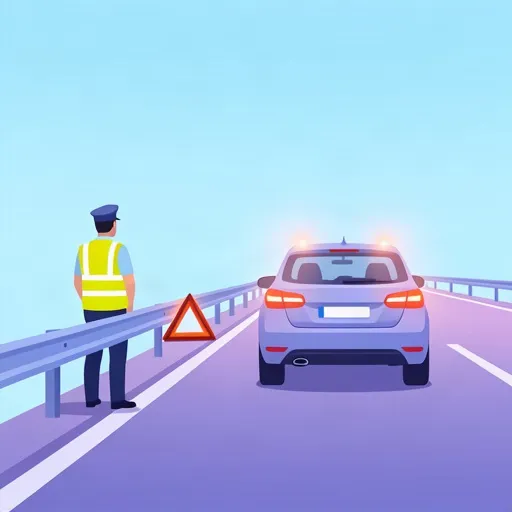
Article content overview
Handling a vehicle breakdown on an Autobahn or Schnellstraße in Austria is a critical skill that every driver must master, not only for real-world safety but also to pass the official Austrian driving theory exam. Austrian traffic regulations are designed to prioritize the safety of all road users and the efficient flow of high-speed traffic, meaning that your actions during an emergency are strictly governed by law.
In Austria, it is a legal requirement to put on your reflective safety vest (Warnweste) while still inside the vehicle, before you open any car door to exit. Failing to do so puts you at significant risk and can lead to complications if an incident occurs.
If your vehicle suffers a technical failure or you are involved in an incident on a motorway, your first priority is to move to a safe location. If possible, steer the car onto the Pannenstreifen (hard shoulder). Immediately activate your hazard lights (Warnblinker) to alert other drivers that you are experiencing an emergency.
Once the car is stationary on the hard shoulder, you must remain calm and follow a specific sequence of actions to minimize the danger to yourself and your passengers.
Austria relies on two primary automobile clubs to provide breakdown services (Pannenhilfe). Knowing which number to call is essential for a prompt response. The ÖAMTC (Österreichischer Automobil-, Motorrad- und Touringclub) is the largest organization, identifiable by its yellow and black vehicle livery. You can reach their breakdown service by dialing 120.
The second major organization is the ARBÖ (Auto-, Motor- und Radfahrerbund Österreichs), which operates blue and white vehicles. In the event of a breakdown, you should dial 123 to request assistance from them. Both organizations are highly experienced in handling motorway emergencies and will coordinate with ASFINAG if necessary.
ASFINAG maintains the motorway network and installs orange emergency SOS telephones (Notruf) every two kilometers along all Autobahnen. If you do not have mobile service or need to contact the traffic operations center directly, locate the nearest orange pillar. These phones connect you directly to the ASFINAG control center, which can dispatch the police, ambulance, or breakdown services to your exact location.
If you break down inside a tunnel, the procedure changes slightly to prioritize fire safety and quick evacuation. Observe the tunnel's digital signage and look for emergency niches. These areas are equipped with fire extinguishers and emergency phones. If your vehicle is disabled, do not attempt to fix it yourself; evacuate through the marked emergency exits as instructed by the tunnel control system.
In the theory exam, questions often focus on the order of operations. A common mistake is assuming you should place the warning triangle before putting on your vest, or exiting the car toward the traffic side. Remember that your safety—and compliance with the law—demands that you prepare yourself inside the car before opening any doors. Furthermore, always prioritize moving passengers behind the crash barrier to ensure they are shielded from potential secondary collisions.
This article covers mandatory safety procedures for handling vehicle breakdowns on Austrian Autobahnen and Schnellstraßen, emphasizing that hazard lights must be activated immediately and the vehicle moved to the Pannenstreifen before any other action. Austrian law requires drivers to don their reflective Warnweste while still seated inside the car before opening any door, and all passengers must exit away from traffic and relocate behind the crash barrier. The step-by-step protocol includes placing a warning triangle at least 100 meters behind the vehicle, contacting professional assistance via 120 (ÖAMTC) or 123 (ARBÖ), or using ASFINAG's orange SOS phones positioned every two kilometers. Tunnel breakdowns require evacuation to emergency niches with fire extinguishers rather than roadside repairs, prioritizing fire safety over vehicle recovery.
A short set of high-value points that capture the most important ideas from this article.
Activate hazard lights immediately upon experiencing breakdown, then steer to the hard shoulder as far right as possible.
The reflective safety vest must be put on while still inside the vehicle before opening any door—this is a legal requirement in Austria.
All passengers must exit the vehicle through doors facing away from traffic and move behind the crash barrier if available.
Warning triangles must be placed at least 100 meters behind the vehicle on motorways to give approaching traffic adequate warning time.
If breakdown occurs inside a tunnel, evacuate to emergency niches and do not attempt repairs—tunnel procedures prioritize fire safety and quick evacuation.
ÖAMTC breakdown service: dial 120; ARBÖ breakdown service: dial 123.
ASFINAG installs orange SOS emergency phones every two kilometers along all Austrian motorways for direct contact with traffic operations.
Tunnel breakdowns require immediate observation of digital signage and use of emergency niches with fire extinguishers and emergency phones.
The correct sequence is: hazard lights first, move to hard shoulder, don safety vest inside vehicle, exit away from traffic, place triangle 100m back, then contact assistance.
Passengers must be moved behind the crash barrier before any other action to shield them from potential secondary collisions.
Placing the warning triangle before putting on the reflective safety vest—compliance requires dressing inside the vehicle first.
Exiting the vehicle toward the traffic side instead of away from traffic, exposing occupants to oncoming vehicles.
Attempting to repair the vehicle yourself in a tunnel rather than evacuating to emergency niches.
Failing to activate hazard lights immediately upon losing speed, delaying warning to other road users.
Not moving all occupants behind the crash barrier, leaving them exposed on the hard shoulder.
Article content overview
A short set of high-value points that capture the most important ideas from this article.
Activate hazard lights immediately upon experiencing breakdown, then steer to the hard shoulder as far right as possible.
The reflective safety vest must be put on while still inside the vehicle before opening any door—this is a legal requirement in Austria.
All passengers must exit the vehicle through doors facing away from traffic and move behind the crash barrier if available.
Warning triangles must be placed at least 100 meters behind the vehicle on motorways to give approaching traffic adequate warning time.
If breakdown occurs inside a tunnel, evacuate to emergency niches and do not attempt repairs—tunnel procedures prioritize fire safety and quick evacuation.
ÖAMTC breakdown service: dial 120; ARBÖ breakdown service: dial 123.
ASFINAG installs orange SOS emergency phones every two kilometers along all Austrian motorways for direct contact with traffic operations.
Tunnel breakdowns require immediate observation of digital signage and use of emergency niches with fire extinguishers and emergency phones.
The correct sequence is: hazard lights first, move to hard shoulder, don safety vest inside vehicle, exit away from traffic, place triangle 100m back, then contact assistance.
Passengers must be moved behind the crash barrier before any other action to shield them from potential secondary collisions.
Placing the warning triangle before putting on the reflective safety vest—compliance requires dressing inside the vehicle first.
Exiting the vehicle toward the traffic side instead of away from traffic, exposing occupants to oncoming vehicles.
Attempting to repair the vehicle yourself in a tunnel rather than evacuating to emergency niches.
Failing to activate hazard lights immediately upon losing speed, delaying warning to other road users.
Not moving all occupants behind the crash barrier, leaving them exposed on the hard shoulder.
Explore related topics, search based questions, and concepts that learners often look up when studying Austrian Motorway Breakdown Rules. These themes reflect real search intent and help you understand how this topic connects to wider driving theory knowledge in Austria.
Find clear and practical answers to common questions learners often have about Austrian Motorway Breakdown Rules. This section helps explain difficult points, remove confusion, and reinforce the key driving theory concepts that matter for learners in Austria.
In Austria, you are legally required to put on your reflective safety vest while still inside the vehicle before opening any doors to exit.
You can reach the ÖAMTC breakdown service by calling 120, and the ARBÖ breakdown service by calling 123.
You must immediately activate your hazard lights (Warnblinker) and pull over to the hard shoulder (Pannenstreifen) as soon as it is safe to do so.
Located every 2 km on motorways, these phones connect you directly to the ASFINAG motorway operations center, which can coordinate emergency services or dispatch a patrol.
On motorways and expressways, the warning triangle must be placed at least 100 meters behind your vehicle on the hard shoulder to effectively warn oncoming traffic.
Use the search bar above to delve deeper into any Austrian road rule, traffic sign, or specific driving procedure. Refine your understanding of complex theory concepts and fully prepare for your official driving licence examination. Start your targeted study now.