As a driver in Austria, you are legally responsible for ensuring your vehicle's technical condition does not pose a hazard to traffic safety. This guide helps you recognize the risks of marten-related damage, how to perform safety-focused vehicle checks, and why maintaining a defect-free engine compartment is essential for your exam and daily driving.
Article content overview
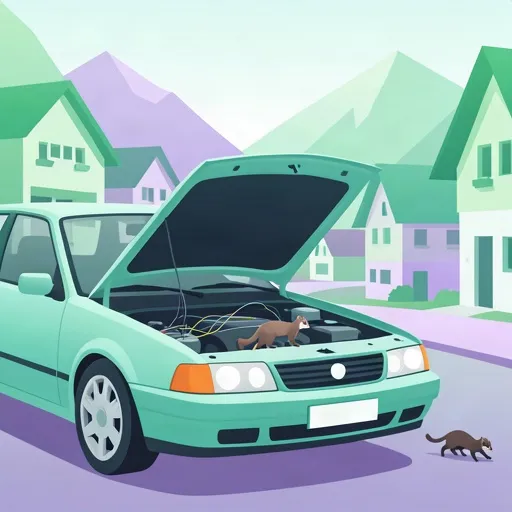
As a driver in Austria, maintaining the technical integrity of your vehicle is not just a recommendation—it is a legal obligation. According to Austrian road law, the person operating the vehicle is responsible for ensuring that the car is in a roadworthy condition before starting any journey. One common but often overlooked threat to this roadworthiness is the stone marten (Martes foina). These small predators are notorious for chewing through ignition cables, coolant hoses, and insulation mats in engine compartments, particularly between March and June. If you ignore the signs of a potential marten attack, you risk sudden mechanical failure, which could be catastrophic when driving at high speeds on an Autobahn or a Schnellstraße.
Marten damage often occurs because these animals are attracted to the warmth of a parked engine and the scent marks left by other martens. When they enter the engine bay, they may bite through sensitive components out of territorial aggression. For a learner driver preparing for the theory exam, it is vital to understand that a vehicle with damaged ignition cables or leaking coolant is technically defective. Operating such a vehicle violates traffic safety regulations, as it can lead to erratic engine performance, total power loss, or even fire hazards.
Under the Führerscheingesetz (FSG) implementation guidelines, drivers are required to detect obvious technical defects that could jeopardize traffic safety. Before you set off, especially if your vehicle has been parked in an area known for marten activity, you should perform a brief check. While you are not expected to be a professional mechanic, you must be observant. If you notice warning lights on your dashboard—such as the engine management light—do not ignore them or assume they are minor. Driving with a known technical defect is a serious risk that can result in your car being taken off the road by police during a routine traffic stop.
It is a common misconception that standard liability insurance (Haftpflichtversicherung) covers damage caused by animals like martens. In Austria, damage to your own vehicle, including marten bites, usually requires a Teilkasko (partial comprehensive) insurance policy. However, even with Teilkasko, you must pay close attention to the fine print regarding "consequential damages" (Folgeschäden). For example, if a marten chews a cooling hose, the leaking fluid might cause the engine to overheat, leading to a much more expensive repair. Ensure your insurance policy explicitly covers these consequential damages to avoid significant out-of-pocket expenses.
Financial costs resulting from a primary technical failure, such as engine overheating caused by a marten-damaged coolant hose, which may or may not be covered depending on your specific insurance contract.
While home remedies like dog hair or ultrasonic devices are often discussed, they are frequently ineffective as martens become accustomed to them. The most reliable ways to protect your vehicle involve physical barriers and environmental management. Installing protective metal conduits around ignition cables can prevent teeth from reaching the rubber. Additionally, regular engine washing performed by a professional can remove the scent marks left by martens, which often prevents them from returning to the same "territory." Whenever possible, parking in a secure, enclosed garage remains the most effective defense against animal-related damage.
Never attempt to drive a vehicle if you have confirmed major cable damage or if the engine warning light is illuminated. Doing so can cause irreparable damage to the engine or lead to a dangerous loss of power while traveling on high-speed sections of the road.
| Prevention Method | Effectiveness | Professional Recommendation |
|---|---|---|
| Metal Cable Protection | High | Recommended for vulnerable cables |
| Engine Cleaning | Moderate | Removes scent marks to deter return |
| Garage Parking | Very High | Prevents access entirely |
| Ultrasonic/Chemical Repellents | Low | Often ineffective over time |
This article explains the driver's legal obligation under Austrian road law to ensure vehicle roadworthiness, with stone marten damage serving as a practical case study. Drivers must recognize obvious technical defects before driving and should perform pre-drive checks including dashboard inspection and engine performance observation. Insurance coverage requires a Teilkasko policy for marten damage, and consequential damages (Folgeschäden) need explicit policy confirmation. Prevention effectiveness varies significantly: metal cable protection and garage parking are highly effective, while ultrasonic repellents are largely ineffective over time.
A short set of high-value points that capture the most important ideas from this article.
Under Austrian road law, drivers are legally responsible for ensuring their vehicle is roadworthy before any journey, including checking for technical defects.
Stone martens are most active between March and June and commonly damage ignition cables, coolant hoses, and insulation mats in engine compartments.
Driving with a known technical defect—such as damaged ignition cables or illuminated engine warning lights—violates traffic safety regulations and can result in your vehicle being taken off the road.
Standard Haftpflichtversicherung does not cover marten damage; a Teilkasko policy is required, and consequential damages (Folgeschäden) may need explicit coverage.
Never enter high-speed roads like the Autobahn if you suspect major cable damage or see an engine management warning light.
The stone marten (Martes foina) is attracted to warm parked engines and leaves scent marks that encourage return visits to the same engine bay.
Teilkasko covers primary damage from marten bites, but Folgeschäden (consequential damages like engine overheating from a chewed coolant hose) may require additional coverage.
Pre-drive checks should include inspecting for animal intrusion signs, checking dashboard warning lights, and observing engine performance in the first few kilometers.
Physical barriers like metal cable conduits are far more effective than ultrasonic devices or home remedies, which martens quickly ignore.
Parking in an enclosed garage is the most effective prevention method, rated as 'Very High' effectiveness in the prevention table.
Assuming that standard Haftpflichtversicherung covers damage to your own vehicle from animal attacks, when only Teilkasko does.
Ignoring dashboard warning lights or assuming they indicate minor issues rather than serious technical defects.
Driving onto the Autobahn with a suspected technical defect rather than seeking professional help first.
Relying on home remedies like dog hair or ultrasonic devices as the primary defense, which have low long-term effectiveness.
Failing to perform a visual inspection of the engine compartment after parking in an area known for marten activity.
Article content overview
A short set of high-value points that capture the most important ideas from this article.
Under Austrian road law, drivers are legally responsible for ensuring their vehicle is roadworthy before any journey, including checking for technical defects.
Stone martens are most active between March and June and commonly damage ignition cables, coolant hoses, and insulation mats in engine compartments.
Driving with a known technical defect—such as damaged ignition cables or illuminated engine warning lights—violates traffic safety regulations and can result in your vehicle being taken off the road.
Standard Haftpflichtversicherung does not cover marten damage; a Teilkasko policy is required, and consequential damages (Folgeschäden) may need explicit coverage.
Never enter high-speed roads like the Autobahn if you suspect major cable damage or see an engine management warning light.
The stone marten (Martes foina) is attracted to warm parked engines and leaves scent marks that encourage return visits to the same engine bay.
Teilkasko covers primary damage from marten bites, but Folgeschäden (consequential damages like engine overheating from a chewed coolant hose) may require additional coverage.
Pre-drive checks should include inspecting for animal intrusion signs, checking dashboard warning lights, and observing engine performance in the first few kilometers.
Physical barriers like metal cable conduits are far more effective than ultrasonic devices or home remedies, which martens quickly ignore.
Parking in an enclosed garage is the most effective prevention method, rated as 'Very High' effectiveness in the prevention table.
Assuming that standard Haftpflichtversicherung covers damage to your own vehicle from animal attacks, when only Teilkasko does.
Ignoring dashboard warning lights or assuming they indicate minor issues rather than serious technical defects.
Driving onto the Autobahn with a suspected technical defect rather than seeking professional help first.
Relying on home remedies like dog hair or ultrasonic devices as the primary defense, which have low long-term effectiveness.
Failing to perform a visual inspection of the engine compartment after parking in an area known for marten activity.
Explore related topics, search based questions, and concepts that learners often look up when studying Marten Damage Prevention for Austrian Drivers. These themes reflect real search intent and help you understand how this topic connects to wider driving theory knowledge in Austria.
Find clear and practical answers to common questions learners often have about Marten Damage Prevention for Austrian Drivers. This section helps explain difficult points, remove confusion, and reinforce the key driving theory concepts that matter for learners in Austria.
Yes. Under Austrian law, the driver is responsible for the technical condition of the vehicle before starting a journey. Driving with damaged ignition cables or critical component failures poses a safety risk and could lead to penalties.
Standard liability insurance (Haftpflicht) generally does not cover marten damage to your own vehicle. Partial insurance (Teilkasko) may cover direct marten bites, but you must specifically check if your policy includes coverage for consequential damage (Folgeschäden) to other vehicle parts.
If a marten has damaged ignition cables or sensors, it can lead to sudden engine failure or the illumination of warning lights while driving. On high-speed roads like an Autobahn or Schnellstraße, this sudden loss of power creates a high-risk situation for you and other traffic.
Commonly cited home remedies like dog hair or mothballs are largely ineffective. Professional solutions, such as installing specific cable protection (metal hoses) or thorough engine cleaning to remove scent marks, are recommended to prevent repeated territory-marking behavior.
Use the search bar above to delve deeper into any Austrian road rule, traffic sign, or specific driving procedure. Refine your understanding of complex theory concepts and fully prepare for your official driving licence examination. Start your targeted study now.