
Understanding where you are permitted to stop or park on federal roads is a fundamental aspect of safe driving and exam success in Austria. This guide breaks down the requirements for urban versus open-road segments and clarifies your obligations according to §24 StVO. Master these rules to navigate Austria's road network confidently while avoiding common legal pitfalls.
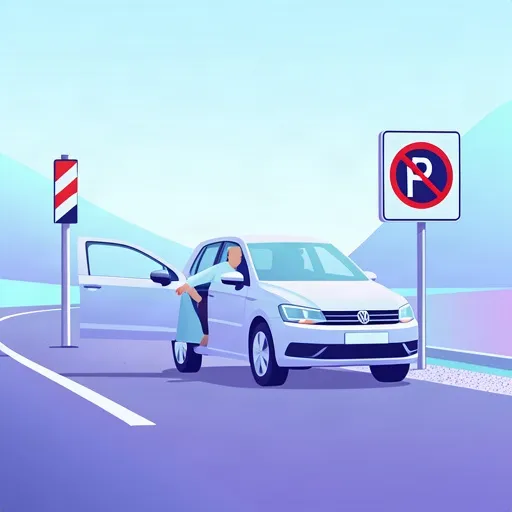
Article content overview
Mastering the laws governing where you can stop and park is a vital component of your Austrian driving theory exam. On Austrian federal roads, known as Bundesstraßen (B-roads), the rules regarding stationary vehicles are strict and change significantly depending on whether you are driving within or outside of a built-up area. Understanding the difference between stopping and parking is essential, as the Straßenverkehrsordnung (StVO) provides clear boundaries to ensure traffic flow and safety for all road users.
When you drive on a Bundesstraße that passes through an Ortsgebiet (built-up area), the regulations for parking are generally consistent with standard urban traffic rules. In these sections, parking is permitted along the edge of the carriageway unless a specific traffic sign or road marking prohibits it. This means you must keep a sharp eye out for signs such as "No Parking" or "No Stopping and Parking," as well as yellow lines painted along the curb, which indicate a strict prohibition.
In urban areas, the primary goal is to balance the needs of residents, commercial deliveries, and traffic flow. Always check for supplementary signs, such as those indicating time limits for short-term parking zones (Kurzparkzonen) or permits required for resident parking. If you are uncertain about the legality of a space, look for official road markings; a solid yellow line signifies a prohibition on both stopping and parking, while a broken yellow line typically implies a parking ban.
Once you pass the end-of-town sign, you are in the Freiland (open road). The rules for stopping on a Bundesstraße change dramatically here. Under §24 StVO, it is generally prohibited to stop or park on the main carriageway of a federal road outside of built-up areas. The risk to high-speed traffic is too great to allow vehicles to pull over indiscriminately.
If you need to stop, you must use a designated facility such as a Parkbucht (lay-by) or a formal rest area. These areas are specifically designed to provide a safe space away from the flow of moving traffic. Trying to pull over onto the grass verge or the edge of the carriageway is not only illegal but also dangerous, as rural Bundesstraßen often lack the visibility and shoulder width found on motorways.
It is crucial to distinguish between Bundesstraßen and high-level roads like Autobahnen (A-roads) and Schnellstraßen (S-roads). On motorways and expressways, the prohibitions are absolute. You are never permitted to stop or park on the main lanes or the hard shoulder, except in a genuine emergency breakdown.
If your vehicle suffers a breakdown, you should aim for a Pannenbucht (emergency bay) if possible. If you must stop on the hard shoulder, follow standard safety procedures: turn on your hazard warning lights, wear a high-visibility vest, and place a warning triangle at a sufficient distance to alert approaching traffic.
To help you prepare for the Austrian driving theory exam, keep this summary of common prohibited parking zones in mind. These locations are standardized under the StVO to prevent accidents and maintain traffic safety.
| Location Type | Rule Summary |
|---|---|
| Narrow road sections | Parking is prohibited to ensure free flow. |
| Hill crests & curves | Prohibited due to limited visibility. |
| Bridges & tunnels | Absolutely prohibited due to safety risks. |
| Pedestrian crossings | Prohibited 5 meters before the crossing. |
| Public transport lanes | Parking is forbidden on bus lanes or tram tracks. |
Parking on Austrian Bundesstraßen requires understanding two distinct regulatory contexts: urban areas (Ortsgebiet) where standard edge-of-carriageway parking applies unless signs prohibit it, and open roads (Freiland) where §24 StVO generally bans stopping or parking on the main carriageway and mandates use of designated lay-bys. Common prohibited locations include narrow sections, hill crests, curves, bridges, tunnels, and within 5 meters of pedestrian crossings—areas chosen for safety and traffic flow reasons. Road markings and signs take precedence, with solid yellow lines indicating absolute prohibition and yellow signs prohibiting both stopping and parking on the entire roadside side where placed. On high-speed roads like Autobahnen and Schnellstraßen, stopping is restricted to genuine emergencies in emergency bays only.
A short set of high-value points that capture the most important ideas from this article.
Parking on Austrian Bundesstraßen is regulated by §24 StVO, with rules that change dramatically between urban and open-road environments.
In an Ortsgebiet (built-up area), parking is generally allowed at the road edge unless prohibited by signs or yellow road markings.
In Freiland (open road), stopping or parking on the main carriageway is prohibited; you must use a designated Parkbucht (lay-by) or rest area.
Vehicles may never stop or park in locations with limited visibility such as hill crests, curves, bridges, or tunnels.
On motorways (Autobahnen) and expressways (Schnellstraßen), stopping is only permitted in genuine emergencies within emergency bays.
Solid yellow curb lines prohibit both stopping and parking; broken yellow lines typically prohibit parking only.
A yellow sign prohibiting stopping and parking applies to the entire side of the road where it is placed.
Technical necessity (e.g., breakdown) does not give you the right to stop on open roads indefinitely—you must reach a safe location quickly.
Pedestrian crossings are protected zones: parking is prohibited within 5 meters before the crossing.
The end-of-town sign marks the boundary between Ortsgebiet rules and stricter Freiland regulations.
Confusing 'stopping' with 'parking'—stopping means a brief halt, while parking implies the vehicle is left unattended; rules differ.
Assuming the road shoulder or grass verge is acceptable for stopping on rural Bundesstraßen; it is generally prohibited.
Forgetting that Kurzparkzonen (short-term parking zones) have time limits and may require payment or a parking disc.
Using 'checking a map' or similar minor reasons as justification for stopping on open roads where no lay-by exists.
Overlooking supplementary signs that modify the general parking rules, such as time-specific prohibitions or permit requirements.
Article content overview
A short set of high-value points that capture the most important ideas from this article.
Parking on Austrian Bundesstraßen is regulated by §24 StVO, with rules that change dramatically between urban and open-road environments.
In an Ortsgebiet (built-up area), parking is generally allowed at the road edge unless prohibited by signs or yellow road markings.
In Freiland (open road), stopping or parking on the main carriageway is prohibited; you must use a designated Parkbucht (lay-by) or rest area.
Vehicles may never stop or park in locations with limited visibility such as hill crests, curves, bridges, or tunnels.
On motorways (Autobahnen) and expressways (Schnellstraßen), stopping is only permitted in genuine emergencies within emergency bays.
Solid yellow curb lines prohibit both stopping and parking; broken yellow lines typically prohibit parking only.
A yellow sign prohibiting stopping and parking applies to the entire side of the road where it is placed.
Technical necessity (e.g., breakdown) does not give you the right to stop on open roads indefinitely—you must reach a safe location quickly.
Pedestrian crossings are protected zones: parking is prohibited within 5 meters before the crossing.
The end-of-town sign marks the boundary between Ortsgebiet rules and stricter Freiland regulations.
Confusing 'stopping' with 'parking'—stopping means a brief halt, while parking implies the vehicle is left unattended; rules differ.
Assuming the road shoulder or grass verge is acceptable for stopping on rural Bundesstraßen; it is generally prohibited.
Forgetting that Kurzparkzonen (short-term parking zones) have time limits and may require payment or a parking disc.
Using 'checking a map' or similar minor reasons as justification for stopping on open roads where no lay-by exists.
Overlooking supplementary signs that modify the general parking rules, such as time-specific prohibitions or permit requirements.
Explore related topics, search based questions, and concepts that learners often look up when studying Parking Rules on Austrian Federal Roads. These themes reflect real search intent and help you understand how this topic connects to wider driving theory knowledge in Austria.
Find clear and practical answers to common questions learners often have about Parking Rules on Austrian Federal Roads. This section helps explain difficult points, remove confusion, and reinforce the key driving theory concepts that matter for learners in Austria.
Yes, unless there are specific traffic signs, road markings, or general prohibitions such as at intersections or near pedestrian crossings that forbid stopping or parking.
No. Outside of urban areas, stopping and parking on the main carriageway of a Bundesstraße is generally prohibited. You must only use designated lay-bys (Parkbuchten) or rest areas.
If you have a genuine vehicle breakdown, you must move the vehicle as far as possible to the side. While you may stop in an emergency, you must clear the road as soon as the issue is resolved.
No, stopping and parking are strictly prohibited on both Autobahnen (A-roads) and Schnellstraßen (S-roads), except in designated emergency bays (Pannenbuchten) during a breakdown.
Use the search bar above to delve deeper into any Austrian road rule, traffic sign, or specific driving procedure. Refine your understanding of complex theory concepts and fully prepare for your official driving licence examination. Start your targeted study now.