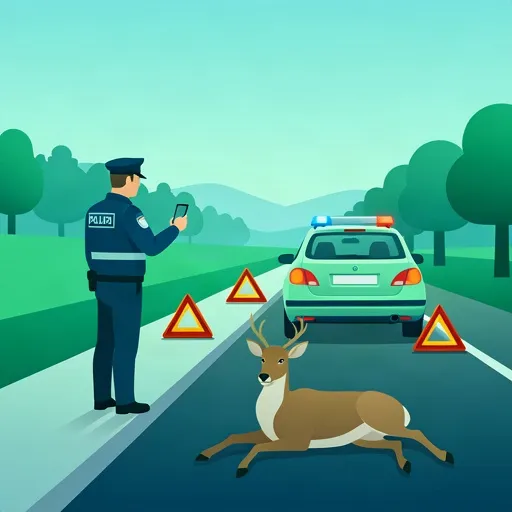
Collisions with wildlife are a frequent reality on Austrian roads that require a specific and mandatory legal response. This guide clarifies your duties as a driver, including how to secure the accident scene, when to contact the police, and why you must never move the animal yourself. Mastering these procedures ensures you are prepared for potential real-world hazards and common exam scenarios related to accident management.
Article content overview
Driving through the diverse landscapes of Austria—from the dense forests of Styria to the open rural stretches of Lower Austria—offers a beautiful experience but also carries the inherent risk of wildlife crossing your path. According to data from the KFV (Kuratorium für Verkehrssicherheit), approximately 73,000 wildlife accidents occur annually in Austria. Understanding how to react during such a high-stress moment is not just a critical life skill for road safety, but a mandatory part of your driving theory education.
In the event of a collision with an animal, many drivers mistakenly believe that if the animal runs away or appears unharmed, there is no need to involve the authorities. This is a significant misconception that can lead to legal complications. Under Austrian road law, you are required to secure the scene and report the accident to the police immediately. Even if no human injury has occurred and the damage to your vehicle seems minor, a police report is essential for insurance purposes and to document the incident correctly.
The authorities will then coordinate with the local Jägerschaft (hunting association) to search for the animal, assess its health, or provide humane relief if it has been injured. Attempting to take the animal with you—even if it is dead—is strictly prohibited and is legally classified as theft under Austrian law.
Wildlife accidents are not seasonal; they can happen at any time of year. However, statistics show that the hours between dusk and dawn are particularly dangerous, as many species are most active during these times. When driving on rural roads, you should remain vigilant for specific warning signs that indicate high-risk areas.
When you see a "Wildlife Crossing" sign, the theory exam expects you to demonstrate "defensive driving." This means not only lowering your speed but also being prepared to brake firmly while keeping your steering steady. One of the most common mistakes drivers make is swerving to avoid an animal, which often leads to a more severe collision with oncoming traffic or roadside obstacles like trees or embankments.
Your insurance policy, specifically the Kaskoversicherung, typically covers damages caused by wildlife collisions. However, insurance providers often require an official police report to process claims. If you fail to report the accident and simply leave the scene, you may lose your right to insurance compensation and could potentially face charges for failing to fulfill your duties as a driver.
In cases where negligence is determined—such as driving at an excessive speed despite clear warning signs of wildlife activity—the driver may be held partially liable. Always adapt your speed to the visibility conditions, especially when driving through wooded or agricultural areas where game movement is frequent.
The Austrian driving theory test includes questions on wildlife accidents because they test your ability to manage high-pressure situations and understand your legal responsibilities. You may be asked about the correct placement of a warning triangle or the specific procedure for reporting an animal hit on an Autobahn versus a country road. Remember, the authorities emphasize that human safety always comes first; after ensuring your own safety and the safety of your passengers, your next priority is to minimize the suffering of the animal by alerting the professional help required.
Never attempt to touch or move a wild animal, even if it appears to be dead. It may still be alive and can react with defensive aggression, or it may be carrying diseases. Always wait for the Jägerschaft or authorized personnel to handle the animal.
Wildlife collisions in Austria require immediate mandatory reporting to police (133), regardless of apparent damage or whether the animal fled. Drivers must secure the scene using hazard lights, high-visibility vest, and warning triangle before calling authorities. The Jägerschaft handles the animal professionally—drivers are legally prohibited from touching or moving it. Insurance claims through Kaskoversicherung depend on having an official police report, and swerving to avoid wildlife often causes worse accidents than the collision itself. This topic appears on the Austrian theory exam to test your understanding of legal obligations and proper hazard response procedures.
A short set of high-value points that capture the most important ideas from this article.
Reporting every wildlife collision to police (133) is mandatory under Austrian law, regardless of visible damage or whether the animal fled.
Always secure the accident scene first: hazard lights, high-visibility vest, and warning triangle at sufficient distance.
Never attempt to move or touch a wild animal after a collision—it is illegal and potentially dangerous.
When encountering wildlife crossing signs, practice defensive driving by reducing speed and maintaining steady steering rather than swerving.
A police report is essential for insurance claims; failing to report may void your Kaskoversicherung coverage.
Call 133 (Police) immediately after securing the scene and wait for officers to document the incident.
The Jägerschaft (hunting association) handles the animal—drivers must never transport or dispose of wildlife themselves.
Dusk-to-dawn hours are highest risk periods for wildlife collisions across all seasons.
Swerving to avoid an animal often causes more severe accidents than the original collision with wildlife.
If negligence is determined (e.g., excessive speed despite wildlife warning signs), the driver may face partial liability.
Assuming no report is needed if the animal ran away or appears unharmed—reporting is legally required regardless.
Attempting to move a dead or injured animal from the road, which constitutes theft under Austrian law.
Swerving sharply when an animal appears, risking collision with oncoming traffic or roadside hazards.
Failing to activate hazard lights or place a warning triangle, endangering other road users.
Leaving the scene without calling police, which can void insurance claims and result in driver duty violations.
Article content overview
A short set of high-value points that capture the most important ideas from this article.
Reporting every wildlife collision to police (133) is mandatory under Austrian law, regardless of visible damage or whether the animal fled.
Always secure the accident scene first: hazard lights, high-visibility vest, and warning triangle at sufficient distance.
Never attempt to move or touch a wild animal after a collision—it is illegal and potentially dangerous.
When encountering wildlife crossing signs, practice defensive driving by reducing speed and maintaining steady steering rather than swerving.
A police report is essential for insurance claims; failing to report may void your Kaskoversicherung coverage.
Call 133 (Police) immediately after securing the scene and wait for officers to document the incident.
The Jägerschaft (hunting association) handles the animal—drivers must never transport or dispose of wildlife themselves.
Dusk-to-dawn hours are highest risk periods for wildlife collisions across all seasons.
Swerving to avoid an animal often causes more severe accidents than the original collision with wildlife.
If negligence is determined (e.g., excessive speed despite wildlife warning signs), the driver may face partial liability.
Assuming no report is needed if the animal ran away or appears unharmed—reporting is legally required regardless.
Attempting to move a dead or injured animal from the road, which constitutes theft under Austrian law.
Swerving sharply when an animal appears, risking collision with oncoming traffic or roadside hazards.
Failing to activate hazard lights or place a warning triangle, endangering other road users.
Leaving the scene without calling police, which can void insurance claims and result in driver duty violations.
Explore related topics, search based questions, and concepts that learners often look up when studying Wildlife Collision Procedures in Austria. These themes reflect real search intent and help you understand how this topic connects to wider driving theory knowledge in Austria.
Find clear and practical answers to common questions learners often have about Wildlife Collision Procedures in Austria. This section helps explain difficult points, remove confusion, and reinforce the key driving theory concepts that matter for learners in Austria.
Yes. According to Austrian traffic regulations, every collision with wildlife must be reported to the police, regardless of whether the animal survived or fled the scene.
No. Taking the animal is considered theft of game and is illegal. You must leave the animal where it is and wait for the authorities or the responsible hunter to handle it.
A police report is typically required by insurance companies to process claims for vehicle damage (Kaskoversicherung). Failure to report the accident correctly can lead to complications with your insurance coverage.
The police contact the responsible local hunter after you report the accident. The hunter is then responsible for the professional and humane handling of the animal, including its removal from the scene.
Use the search bar above to delve deeper into any Austrian road rule, traffic sign, or specific driving procedure. Refine your understanding of complex theory concepts and fully prepare for your official driving licence examination. Start your targeted study now.