When a collision occurs, knowing your exact responsibilities under the Austrian StVO is crucial to protecting yourself and others. This article clarifies when you must call the police, how to properly document the incident, and why the European Accident Report is a data-sharing tool rather than an admission of guilt. These insights will help you navigate post-accident stress while staying fully compliant with local traffic regulations.
Article content overview
Navigating the aftermath of a traffic accident is a stressful experience, but for drivers in Austria, it is essential to remain calm and systematic. According to the Austrian Road Traffic Act (StVO), every person involved in an incident that has a causal link to their behavior at the scene has specific legal responsibilities. Failing to adhere to these rules—even if you believe the accident was minor—can lead to severe administrative penalties and charges for "hit-and-run" (Fahrerflucht). Whether you are a learner driver preparing for the theory exam or a licensed motorist, understanding your duties is vital for both legal safety and the protection of all road users.
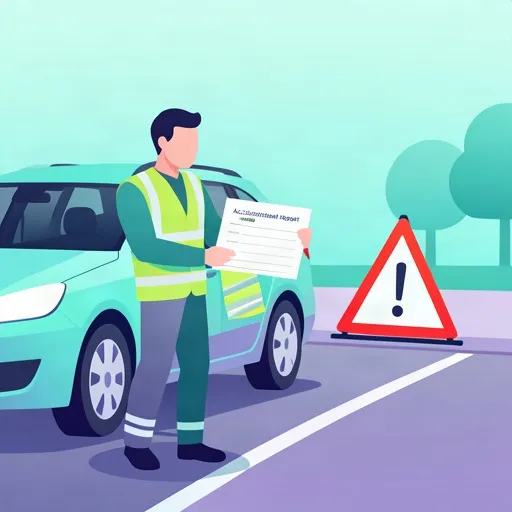
The very first priority at any accident site is to prevent secondary accidents. Before attending to people, you must secure the scene, especially on high-speed roads like an Autobahn or Schnellstraße. You are legally required to switch on your hazard warning lights immediately and, if necessary, place a warning triangle at a sufficient distance to alert approaching traffic. In Austria, the distance varies depending on the road type and visibility conditions, ensuring that other motorists have enough time to react and slow down.
If the accident has resulted in injuries, your legal obligations under Paragraph 4 of the StVO become significantly more stringent. You are required to provide immediate first aid to the best of your ability. If you are unable to provide effective assistance, or if the situation is overwhelming, you must immediately ensure that professional help is contacted. Calling the emergency services is not just a moral imperative; it is a mandatory legal duty. In cases of physical injury, notifying the police is not optional—it is a requirement to ensure the accident is properly recorded and that victims receive the necessary medical care.
In situations involving only property damage where all parties are present and cooperative, the police do not always need to be called. However, you are still required to cooperate in the clarification of the facts. This is where the European Accident Report (Europäischer Unfallbericht) becomes the most important tool. It is designed to capture the facts of the accident, including the positions of the vehicles, the time, the location, and the contact details of the involved drivers and witnesses.
The European Accident Report is not an admission of guilt. It is a data-sharing document intended to provide insurance companies with the information they need to assess liability. Always verify the details provided by the other party and take photos of the damage if it is safe to do so.
Many learners wrongly assume they must always call the police for every minor scratch. In reality, police involvement is mandatory if:
If you are involved in an accident with a parked vehicle and the owner is not present, you cannot simply leave. You are legally obligated to wait for a reasonable amount of time or to report the incident to the nearest police station immediately. Leaving the scene without taking these steps is a criminal offense.
| Situation | Police Mandatory? |
|---|---|
| Minor property damage (mutual agreement) | No |
| Personal injury | Yes |
| Disagreement on fault | Recommended |
| Hit-and-run / Unknown owner | Yes |
| Damage to public property/barriers | Yes |
In the Austrian driving theory exam, you will often face questions regarding post-accident behavior that test your knowledge of these specific paragraphs. A common misconception is that you have a "right" to stay on the road to keep traffic flowing; however, the law dictates that you must secure the scene first. Another frequent trap involves the duty to provide witness statements. If you witness an accident, you are expected to assist in the clarification of the facts, as courts and insurance companies rely on these testimonies to determine liability, especially in complex scenarios like multi-vehicle pileups.
After a traffic accident in Austria, the StVO requires you to secure the scene first by activating hazard lights and placing a warning triangle at a safe distance, then provide first aid if needed. The European Accident Report is the standard tool for documenting property-damage-only incidents and does not represent an admission of guilt. Police must be called mandatorily only when injuries occur, details are refused, public transport is involved, or significant traffic disruption is unavoidable. Leaving the scene without fulfilling these duties constitutes Fahrerflucht, a criminal offense. Understanding these specific obligations is essential for both legal compliance and success in the Austrian driving theory exam.
A short set of high-value points that capture the most important ideas from this article.
Activate hazard warning lights immediately and place the warning triangle at an appropriate distance to prevent secondary accidents.
Police involvement is mandatory only when persons are injured, a party refuses to provide details, a public transport vehicle is involved, or significant traffic disruption occurs.
The European Accident Report is a data-sharing document for insurance purposes, not an admission of guilt—always verify the other party's details.
If you hit an unattended parked vehicle, you must either wait a reasonable time or report to the nearest police station immediately.
Witness statements are legally expected and courts and insurers rely on them to determine liability in complex scenarios.
StVO Paragraph 4 requires you to provide first aid to the best of your ability and call professional help immediately if injuries occur.
Leaving the scene of an accident without fulfilling your legal duties constitutes Fahrerflucht, a criminal offense under Austrian law.
Securing the scene (Warnweste, hazard lights, warning triangle) takes priority over keeping traffic flowing.
The Anonymverfügung is a simplified fine procedure for minor offenses but does not apply when injuries or mandatory police reporting are involved.
Both parties must cooperate in clarifying facts even when police are not called and only property damage occurred.
Believing you may leave the scene to avoid blocking traffic—scene security always comes first regardless of congestion.
Assuming the European Accident Report implies fault or admission of guilt, when it is purely for exchanging factual data with insurers.
Thinking police must be called for every minor scratch—mutual property damage without injury does not require police.
Leaving after hitting an unattended parked car without waiting or reporting to police, which constitutes hit-and-run.
Failing to gather witness information or refusing to provide a witness statement when you observed an accident.
Article content overview
A short set of high-value points that capture the most important ideas from this article.
Activate hazard warning lights immediately and place the warning triangle at an appropriate distance to prevent secondary accidents.
Police involvement is mandatory only when persons are injured, a party refuses to provide details, a public transport vehicle is involved, or significant traffic disruption occurs.
The European Accident Report is a data-sharing document for insurance purposes, not an admission of guilt—always verify the other party's details.
If you hit an unattended parked vehicle, you must either wait a reasonable time or report to the nearest police station immediately.
Witness statements are legally expected and courts and insurers rely on them to determine liability in complex scenarios.
StVO Paragraph 4 requires you to provide first aid to the best of your ability and call professional help immediately if injuries occur.
Leaving the scene of an accident without fulfilling your legal duties constitutes Fahrerflucht, a criminal offense under Austrian law.
Securing the scene (Warnweste, hazard lights, warning triangle) takes priority over keeping traffic flowing.
The Anonymverfügung is a simplified fine procedure for minor offenses but does not apply when injuries or mandatory police reporting are involved.
Both parties must cooperate in clarifying facts even when police are not called and only property damage occurred.
Believing you may leave the scene to avoid blocking traffic—scene security always comes first regardless of congestion.
Assuming the European Accident Report implies fault or admission of guilt, when it is purely for exchanging factual data with insurers.
Thinking police must be called for every minor scratch—mutual property damage without injury does not require police.
Leaving after hitting an unattended parked car without waiting or reporting to police, which constitutes hit-and-run.
Failing to gather witness information or refusing to provide a witness statement when you observed an accident.
Explore related topics, search based questions, and concepts that learners often look up when studying Steps After a Traffic Accident in Austria. These themes reflect real search intent and help you understand how this topic connects to wider driving theory knowledge in Austria.
Find clear and practical answers to common questions learners often have about Steps After a Traffic Accident in Austria. This section helps explain difficult points, remove confusion, and reinforce the key driving theory concepts that matter for learners in Austria.
No, the European Accident Report is primarily used to document the factual circumstances of the accident and exchange contact details between parties. It is not a legally binding confession of fault.
You must contact the police if someone is injured, if a party refuses to share their identification and insurance data, or if the accident involves significant damage where traffic flow is hindered and other parties are not present.
Leaving the scene without fulfilling your duties—such as stopping to exchange information or assisting the injured—is considered 'Fahrerflucht' (hit-and-run). This is a serious administrative offense that carries severe legal consequences, including heavy fines and potential loss of your driving license.
Under the StVO, you must secure the scene first. If your vehicle is causing a danger or obstructing traffic and no one is injured, you should take necessary steps to secure it and, if possible, move it to a safe location after documenting the position if required.
Use the search bar above to delve deeper into any Austrian road rule, traffic sign, or specific driving procedure. Refine your understanding of complex theory concepts and fully prepare for your official driving licence examination. Start your targeted study now.