Navigating Vienna's dense urban environment requires a solid grasp of specific local traffic rules, particularly regarding tram interactions and controlled parking zones. This guide helps learners understand the legal obligations under the StVO, including how to handle tram priority and the specific restrictions of city-centre zones. Mastering these concepts is vital for passing the Austrian theory exam and ensuring safe, compliant driving in the capital.
Article content overview
Driving in Vienna presents a unique challenge for both learner drivers and experienced motorists. As the capital of Austria, the city features a dense infrastructure where the interaction between private vehicles, public transport, and pedestrians is strictly regulated by the Straßenverkehrsordnung (StVO). Whether you are driving along the historic Ringstraße or navigating the 23 Bezirke, understanding the hierarchy of road users and local parking customs is essential for both daily safety and your upcoming theory exam.
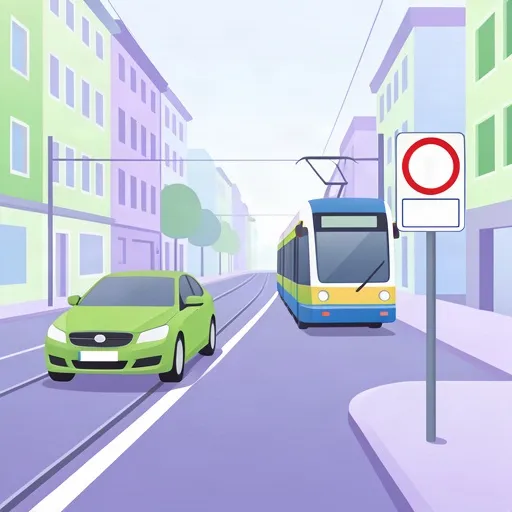
In the Austrian traffic system, trams operate under a specific set of rules that prioritise their movement to ensure public transport efficiency. According to §28 StVO, trams have absolute priority in most scenarios, and they are essentially the "kings" of the road in Vienna. A common mistake in the theory exam is underestimating the distance and speed of a tram; you must never obstruct a tram’s path, even if you are turning or changing lanes.
Overtaking a tram on the left is strictly prohibited in almost all circumstances within urban areas. Furthermore, when a tram is stopped at a designated station, you must observe strict safety distances. If the tram doors are open or passengers are boarding or alighting, you must wait behind the tram and proceed only at walking pace if the layout allows it, ensuring you do not endanger any pedestrians crossing to or from the vehicle.
The first district (Innere Stadt) of Vienna is characterized by narrow, historic streets and extensive pedestrian zones (Fußgängerzonen). Many areas here are restricted, meaning only residents with specific permits, delivery vehicles during set times, or authorized personnel may enter. These zones are clearly marked with traffic signs that you must recognize instantly during your theory test.
When entering a pedestrian zone, the speed limit is reduced to walking pace (Schrittgeschwindigkeit). You must be prepared to yield to pedestrians at all times, as they have priority throughout these areas. Always look for supplementary signs below the main prohibition signs; these often detail the exceptions for residents or specific time windows for authorized traffic, which are common topics in complex theory exam questions.
One of the most frequent sources of confusion for students is the difference between general short-term parking and resident parking. Most of Vienna is covered by flächendeckende Kurzparkzonen. In these zones, you are required to use a parking ticket (Parkschein) for a limited time. However, this does not grant you the right to park in spaces reserved for residents.
Residents hold a "Parkpickerl," a specialized permit that allows them to park in their specific district without time restrictions. It is a critical exam point to remember that these resident parking spaces are strictly off-limits to unauthorized drivers. Furthermore, motorcyclists must note that even though they are exempt from parking fees in many parts of Vienna, they are explicitly forbidden from parking in resident-only spots.
| Parking Type | Requirement | Limitation |
|---|---|---|
| Kurzparkzone | Parkscheine (Ticket) | Strictly timed (e.g., 2 hours) |
| Parkpickerl | Resident Permit | Unlimited duration in home district |
| Resident Space | Permit holder only | No parking for general public |
| Motorcycle | No fee | No resident parking allowed |
Never assume a parking spot is free just because there is no ticket machine nearby. In Vienna, many areas are part of a city-wide Kurzparkzone even if physical signs are not immediately visible at every single parking space. Always check for entry signs at the beginning of the district or zone.
The Austrian theory exam often tests your ability to handle complex urban intersections, particularly where cycle paths, pedestrian crossings, and tram lines converge. A frequent trap involves the "Reißverschlusssystem" (zipper merge) when leaving a cycle lane or merging into heavy traffic. You must demonstrate that you can manage these merges without impeding the flow of traffic or violating the priority of cyclists.
Additionally, remember that the Vienna Gürtel (B224) acts as a high-traffic boundary. Rules here often differ from the smaller side streets within the inner districts. The exam may present a situation where you are forced to cross tram tracks to turn; always signal early, check your mirrors for cyclists in the blind spot, and ensure there is enough space on the other side of the tracks to complete your maneuver without stopping on the rails.
This article covers Vienna's strict urban driving regulations, emphasising that Wiener Linien trams have absolute priority under §28 StVO and must never be obstructed, with overtaking prohibited on the left. The Innere Stadt operates as a restricted pedestrian zone where walking pace is mandatory and pedestrians always have priority, requiring drivers to watch for supplementary exception signs. Vienna's parking system distinguishes between flächendeckende Kurzparkzonen requiring a Parkschein and resident-only Parkpickerl zones, where motorcycles are explicitly banned regardless of fee exemptions. The content highlights exam-relevant traps involving tram tracks at intersections, cycle lane merges, and zone boundary confusion, making it essential for passing Austrian theory questions on urban traffic compliance.
A short set of high-value points that capture the most important ideas from this article.
Trams have absolute priority in Vienna under §28 StVO and must never be obstructed, even when you are turning or changing lanes.
Overtaking a tram on the left is prohibited in nearly all urban situations; always pass on the right when permitted.
When a tram is stationary with open doors, you must wait behind it and proceed only at walking pace (Schrittgeschwindigkeit).
The Innere Stadt has extensive pedestrian zones where speed is limited to walking pace and pedestrians always have priority.
Kurzparkzonen apply city-wide even where physical signs are not visible at every parking spot; always check zone entry signs.
The Ringstraße and Gürtel (B224) have different traffic dynamics than inner district side streets; tram tracks may cross your turning path.
Parkpickerl permits allow unlimited parking only within your registered district; they do not grant access to other districts' resident spaces.
Motorcycles are exempt from parking fees but are forbidden from parking in resident-only spaces.
Supplementary signs below main prohibition signs list exceptions for residents and permitted time windows.
Zipper merge (Reißverschlusssystem) applies when merging from cycle lanes; you must not impede cyclists' priority.
Assuming a parking spot is free because no ticket machine is visible nearby, without checking zone entry signs.
Underestimating tram speed and distance, leading to obstructing a tram's path during a turn.
Confusing Kurzparkzonen (timed public parking) with Parkpickerl resident zones, resulting in illegal parking.
Attempting to overtake a tram on the left side, which violates StVO in urban areas.
Failing to yield to pedestrians in Fußgängerzonen or driving faster than walking pace in restricted areas.
Article content overview
A short set of high-value points that capture the most important ideas from this article.
Trams have absolute priority in Vienna under §28 StVO and must never be obstructed, even when you are turning or changing lanes.
Overtaking a tram on the left is prohibited in nearly all urban situations; always pass on the right when permitted.
When a tram is stationary with open doors, you must wait behind it and proceed only at walking pace (Schrittgeschwindigkeit).
The Innere Stadt has extensive pedestrian zones where speed is limited to walking pace and pedestrians always have priority.
Kurzparkzonen apply city-wide even where physical signs are not visible at every parking spot; always check zone entry signs.
The Ringstraße and Gürtel (B224) have different traffic dynamics than inner district side streets; tram tracks may cross your turning path.
Parkpickerl permits allow unlimited parking only within your registered district; they do not grant access to other districts' resident spaces.
Motorcycles are exempt from parking fees but are forbidden from parking in resident-only spaces.
Supplementary signs below main prohibition signs list exceptions for residents and permitted time windows.
Zipper merge (Reißverschlusssystem) applies when merging from cycle lanes; you must not impede cyclists' priority.
Assuming a parking spot is free because no ticket machine is visible nearby, without checking zone entry signs.
Underestimating tram speed and distance, leading to obstructing a tram's path during a turn.
Confusing Kurzparkzonen (timed public parking) with Parkpickerl resident zones, resulting in illegal parking.
Attempting to overtake a tram on the left side, which violates StVO in urban areas.
Failing to yield to pedestrians in Fußgängerzonen or driving faster than walking pace in restricted areas.
Explore related topics, search based questions, and concepts that learners often look up when studying Vienna Driving and Parking Rules. These themes reflect real search intent and help you understand how this topic connects to wider driving theory knowledge in Austria.
Find clear and practical answers to common questions learners often have about Vienna Driving and Parking Rules. This section helps explain difficult points, remove confusion, and reinforce the key driving theory concepts that matter for learners in Austria.
Yes, as per §28 StVO, trams have absolute priority in traffic. You must never obstruct their path, and overtaking a tram on the left is strictly prohibited.
A Kurzparkzone is a short-term parking area requiring a paid parking ticket (Parkschein) for all drivers. A Parkpickerl is a resident parking permit that allows locals to park in their specific district without time limits or additional costs.
No. Single-track vehicles like motorcycles are not permitted to park in designated resident parking spaces, even if they are exempt from standard Kurzparkzone fees.
Yes, the first district (Innere Stadt) features many pedestrian zones and restricted streets where access is limited to authorized vehicles, such as residents and specific delivery services.
Use the search bar above to delve deeper into any Austrian road rule, traffic sign, or specific driving procedure. Refine your understanding of complex theory concepts and fully prepare for your official driving licence examination. Start your targeted study now.