Navigating Styria requires a solid grasp of both high-speed motorway regulations and the nuances of mountain driving safety. This guide breaks down the critical traffic laws for routes like the A9 Pyhrn Autobahn and the B115, ensuring you are prepared for both practical driving and the specific challenges found in your theory test.
Article content overview
Styria, Austria’s second-largest province, presents a diverse range of driving environments, from the high-speed transit of the A2 and A9 motorways to the challenging, winding roads of the Ennstal and the scenic routes of the southern wine regions. For students preparing for the Austrian driving theory exam, mastering these environments is not merely about understanding local geography but about applying the strict regulations of the Austrian Road Traffic Act (StVO). Whether navigating the high-traffic corridors of Graz or managing the safety requirements of alpine tunnels, a solid grasp of these rules is essential for both your test success and your safety on the road.
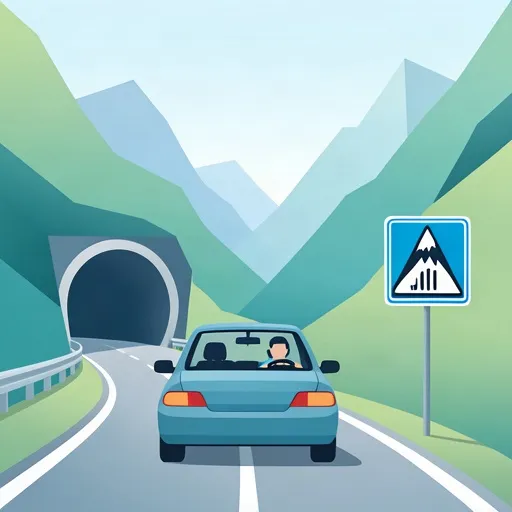
The A9 Pyhrn Autobahn serves as a critical link between Upper Austria and Styria. Because it traverses mountainous terrain, it features significant infrastructure, including the Gleinalm and Bosruck tunnels. When driving through these sections, traffic laws are strictly enforced to prevent accidents and congestion. Drivers must adhere to specific speed limits, which are often lowered during periods of high traffic density or poor visibility to ensure safety.
In tunnels, the rule of "emergency behavior" is paramount. You must maintain a safe distance from the vehicle in front, even in stationary traffic, to allow emergency vehicles access if needed. Should a breakdown occur, pull into the designated emergency bays whenever possible. If you must stop in a lane, turn on your hazard lights, switch off the engine, and exit the vehicle only if it is safe to do so, moving immediately to a protected emergency area.
Beyond the motorways, Styria’s rural landscape—characterized by roads like the B115 Ennstal and the B116—requires a different set of driving skills. These roads are often narrower, feature steep gradients, and are subject to changing weather conditions. When driving on mountain gradients, the driver descending the hill generally has the responsibility to manage their speed carefully, using engine braking to avoid overheating the vehicle's braking system.
On scenic roads like those winding through the Styrian wine regions, road markings can become less frequent, placing the burden of responsibility on the driver to maintain lane discipline. Always be prepared for cyclists and pedestrians, particularly on blind curves where sightlines are significantly restricted.
As the capital of Styria and the second-largest city in Austria, Graz presents unique challenges for learner drivers. The city center is dense with cyclists, trams, and pedestrians, all of whom have specific priority rules. When driving near public transport, remember that trams always have the right of way unless specific road signs indicate otherwise. You must be hyper-aware of "dead zones" where cyclists may be hidden from your side mirrors.
Styria shares a significant border with Slovenia, with the Spielfeld crossing on the A9/A4 axis serving as a major international transit point. When approaching border regions, be prepared for sudden changes in traffic flow and potential temporary speed restrictions or stationary lanes. It is your responsibility to remain aware of the vignette requirements for both Austrian and Slovenian motorways to avoid heavy fines.
This article covers essential driving regulations for Styria's diverse road environments, from high-speed motorway tunnels like the Gleinalm and Bosruck to winding mountain routes. Key topics include tunnel emergency procedures requiring safe distances and proper lighting, mountain driving techniques emphasizing engine braking on steep gradients, and urban traffic rules giving trams absolute priority in Graz. Border crossing protocols at Spielfeld highlight vignette requirements for both Austria and Slovenia. The content prepares learners for exam-relevant Austrian traffic law applications with specific terminology and procedural knowledge.
A short set of high-value points that capture the most important ideas from this article.
Tunnel emergency protocols require maintaining safe distance even in stationary traffic to allow emergency vehicle access
You must switch from daytime running lights to low-beam headlights (Abblendlicht) before entering Austrian tunnels
On mountain descents, use engine braking to prevent brake overheating and maintain control
Trams in Graz always have priority unless overridden by specific road signs, and you must yield when tram doors are open
Motorway vignettes are mandatory for both Austrian and Slovenian roads at border crossings to avoid fines
The A1 road sign marks the start of a motorway where stopping, reversing, and U-turns are prohibited
If breakdown occurs in a tunnel lane, turn on hazard lights, switch off engine, and exit only when safe to reach a protected area
The Rechtsregel (priority-from-the-right) applies at unmarked intersections on rural roads
Dead zones around vehicles require extra vigilance for hidden cyclists in urban traffic
Steep mountain gradients like those on the B115 Ennstal require careful speed management from descending drivers
Assuming daytime running lights are sufficient in tunnels; tail lights only illuminate with low-beam headlights
Blocking tram tracks when approaching intersections without ensuring space to cross completely
Failing to use engine braking on long descents, which can overheat the braking system
Not checking for passengers alighting from stopped trams before proceeding
Overlooking vignette requirements when approaching international border crossings like Spielfeld
Article content overview
A short set of high-value points that capture the most important ideas from this article.
Tunnel emergency protocols require maintaining safe distance even in stationary traffic to allow emergency vehicle access
You must switch from daytime running lights to low-beam headlights (Abblendlicht) before entering Austrian tunnels
On mountain descents, use engine braking to prevent brake overheating and maintain control
Trams in Graz always have priority unless overridden by specific road signs, and you must yield when tram doors are open
Motorway vignettes are mandatory for both Austrian and Slovenian roads at border crossings to avoid fines
The A1 road sign marks the start of a motorway where stopping, reversing, and U-turns are prohibited
If breakdown occurs in a tunnel lane, turn on hazard lights, switch off engine, and exit only when safe to reach a protected area
The Rechtsregel (priority-from-the-right) applies at unmarked intersections on rural roads
Dead zones around vehicles require extra vigilance for hidden cyclists in urban traffic
Steep mountain gradients like those on the B115 Ennstal require careful speed management from descending drivers
Assuming daytime running lights are sufficient in tunnels; tail lights only illuminate with low-beam headlights
Blocking tram tracks when approaching intersections without ensuring space to cross completely
Failing to use engine braking on long descents, which can overheat the braking system
Not checking for passengers alighting from stopped trams before proceeding
Overlooking vignette requirements when approaching international border crossings like Spielfeld
Explore related topics, search based questions, and concepts that learners often look up when studying Styrian Motorway and Mountain Driving. These themes reflect real search intent and help you understand how this topic connects to wider driving theory knowledge in Austria.
Find clear and practical answers to common questions learners often have about Styrian Motorway and Mountain Driving. This section helps explain difficult points, remove confusion, and reinforce the key driving theory concepts that matter for learners in Austria.
Drivers must maintain a safe following distance, adhere strictly to lane markings, keep headlights on, and observe variable speed limit signs, which are often adjusted to manage traffic flow and safety within these long mountain tunnels.
The B115 is a major arterial route; drivers must be prepared for changing terrain and high traffic volume, strictly adhering to overtaking prohibitions and speed limits which are frequently enforced due to the road's topography.
The Spielfeld border crossing is a high-volume international transit point; drivers must follow all local road markings and signage regarding lane segregation for heavy goods vehicles and passenger cars, and be ready for potential police or customs checks.
Use the search bar above to delve deeper into any Austrian road rule, traffic sign, or specific driving procedure. Refine your understanding of complex theory concepts and fully prepare for your official driving licence examination. Start your targeted study now.