As micro-mobility continues to evolve, understanding how e-scooters integrate into Austrian traffic is a key component of your theory preparation. This guide breaks down the latest legal mandates for equipment, safety, and operational conduct, ensuring you can correctly identify and respond to these vehicle categories on the road. Preparing for these specific rules helps you avoid common exam pitfalls and contributes to safer interactions with all road users.
Article content overview
As micro-mobility continues to reshape urban transport, the Austrian legal framework has been refined to ensure road safety for all participants. If you are preparing for your Austrian driving theory exam, understanding the current rules for E-scooters is no longer optional—it is a critical requirement. The Road Traffic Act (StVO) reform, which took effect on May 1, 2026, introduced clear mandates regarding equipment, safety standards, and behavioral expectations to curb the rising number of traffic incidents involving electric small-vehicle users.
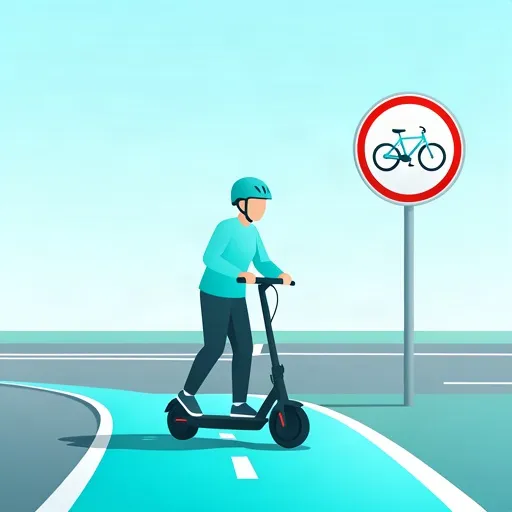
In Austria, E-scooters are classified similarly to bicycles, meaning riders are generally subject to the same traffic rules, speed limits, and signage as cyclists. However, their unique design necessitates specific technical and safety requirements. As a future driver, you must recognize that E-scooters are restricted to road surfaces where cycling is permitted. They are strictly prohibited from being operated on sidewalks, footpaths, and designated pedestrian crossings (Schutzwege).
If you encounter an E-scooter rider at a pedestrian crossing, expect them to dismount and push their vehicle across the street, just as a cyclist would. When riding in designated areas like residential streets (Wohnstraßen) or meeting zones (Begegnungszonen), riders must adjust their speed to the pace of pedestrian traffic to ensure the safety of vulnerable road users.
Since May 1, 2026, the technical standards for E-scooters have become significantly more stringent. To be legally operated on public roads, these vehicles must be equipped with specific safety features. Failure to adhere to these standards can result in penalties and increases the risk of serious accidents.
Key technical requirements now include:
Drivers should be aware that the blood alcohol limit for E-scooter riders in Austria is 0.5 promille. This is a vital detail for your theory exam, as it differs from the legal limits often discussed for other categories. Operating an E-scooter under the influence of alcohol or drugs is a serious offense that the authorities are monitoring with increased frequency.
One of the most impactful changes in the 2026 legislation concerns mandatory head protection. To mitigate the risk of severe head trauma, a mandatory helmet requirement now applies to all E-scooter riders up to the age of 16. Furthermore, young children under the age of 12 who do not hold a "Radfahrausweis" (cycling proficiency certificate) are only permitted in public traffic when accompanied by a person aged 16 or older, unless they are within a residential street.
| Feature | Regulation for E-Scooters (Post-May 2026) |
|---|---|
| Sidewalk Use | Strictly prohibited |
| Alcohol Limit | 0.5 Promille |
| Helmet Rule | Mandatory for riders under 16 |
| Signaling | Indicators (Blinker) required |
| Max Power/Speed | Max 600W / 25 km/h |
The Austrian theory exam frequently tests your ability to identify the correct interaction with E-scooters. You might encounter scenarios involving priority rules at intersections or specific behaviors in mixed-traffic zones. Always remember that E-scooters are not motor vehicles in the same sense as cars or motorcycles, but their speed and acceleration capabilities require motorists to maintain a defensive driving posture, especially when overtaking or turning across their path.
While E-scooters are treated like bicycles, it is important not to confuse them with E-mopeds. Starting October 1, 2026, E-mopeds are legally classified as motor vehicles. This shift means they are no longer permitted to travel on cycling infrastructure. Distinguishing between these two categories is essential for your exam, as the rules regarding where a vehicle is allowed to travel depend entirely on its classification under the StVO.
Austrian E-scooter regulations classify these vehicles as bicycles under the StVO, restricting them to roads where cycling is permitted and prohibiting sidewalk use. The 2026 reform introduced mandatory indicators, a 0.5 promille alcohol limit, and helmet requirements for riders under 16. A critical distinction for the exam is that E-scooters remain permitted on cycling infrastructure, while E-mopeds become motor vehicles from October 2026 and lose this access. Drivers must also remember that E-scooter riders must dismount at Schutzwege and adjust speed in Begegnungszonen to pedestrian pace.
A short set of high-value points that capture the most important ideas from this article.
E-scooters in Austria are legally treated like bicycles under the StVO, subject to the same traffic rules, speed limits, and signage as cyclists.
Operating an E-scooter on sidewalks, footpaths, or pedestrian crossings (Schutzwege) is strictly prohibited; riders must dismount at crossings.
As of May 1, 2026, E-scooters must be equipped with mandatory turn indicators (Blinker) in addition to brakes, reflectors, and bells.
The blood alcohol limit for E-scooter riders is 0.5 promille, which differs from rules for other vehicle categories and is actively enforced.
E-scooters (max 600W, 25 km/h) are distinct from E-mopeds, which become motor vehicles from October 2026 and are no longer permitted on cycling infrastructure.
E-scooter = bicycle classification under StVO; E-moped = motor vehicle classification (from Oct 2026); this determines where each can travel.
Helmet is mandatory for E-scooter riders under 16 years old; children under 12 need a Radfahrausweis or adult supervision unless in a Wohnstraße.
At Schutzwege (pedestrian crossings), E-scooter riders must dismount and push their vehicle across, just like cyclists.
Key technical specs: maximum 600W power, 25 km/h speed, white front reflectors, red rear reflectors, bell, and Blinker required.
0.5 promille is the legal alcohol limit for E-scooter operation—always remember this specific threshold for the exam.
Confusing E-scooters with E-mopeds and assuming both can use cycling infrastructure; only E-scooters are permitted.
Believing E-scooters are allowed on sidewalks; they are restricted to road surfaces where cycling is permitted.
Assuming the standard car/motorcycle alcohol limits apply to E-scooters; the specific 0.5 promille limit is a distinct rule.
Forgetting that turn indicators (Blinker) are now mandatory equipment on E-scooters as of May 2026.
Thinking E-scooter riders always have priority at pedestrian crossings; they must dismount and walk their vehicle.
Article content overview
A short set of high-value points that capture the most important ideas from this article.
E-scooters in Austria are legally treated like bicycles under the StVO, subject to the same traffic rules, speed limits, and signage as cyclists.
Operating an E-scooter on sidewalks, footpaths, or pedestrian crossings (Schutzwege) is strictly prohibited; riders must dismount at crossings.
As of May 1, 2026, E-scooters must be equipped with mandatory turn indicators (Blinker) in addition to brakes, reflectors, and bells.
The blood alcohol limit for E-scooter riders is 0.5 promille, which differs from rules for other vehicle categories and is actively enforced.
E-scooters (max 600W, 25 km/h) are distinct from E-mopeds, which become motor vehicles from October 2026 and are no longer permitted on cycling infrastructure.
E-scooter = bicycle classification under StVO; E-moped = motor vehicle classification (from Oct 2026); this determines where each can travel.
Helmet is mandatory for E-scooter riders under 16 years old; children under 12 need a Radfahrausweis or adult supervision unless in a Wohnstraße.
At Schutzwege (pedestrian crossings), E-scooter riders must dismount and push their vehicle across, just like cyclists.
Key technical specs: maximum 600W power, 25 km/h speed, white front reflectors, red rear reflectors, bell, and Blinker required.
0.5 promille is the legal alcohol limit for E-scooter operation—always remember this specific threshold for the exam.
Confusing E-scooters with E-mopeds and assuming both can use cycling infrastructure; only E-scooters are permitted.
Believing E-scooters are allowed on sidewalks; they are restricted to road surfaces where cycling is permitted.
Assuming the standard car/motorcycle alcohol limits apply to E-scooters; the specific 0.5 promille limit is a distinct rule.
Forgetting that turn indicators (Blinker) are now mandatory equipment on E-scooters as of May 2026.
Thinking E-scooter riders always have priority at pedestrian crossings; they must dismount and walk their vehicle.
Explore related topics, search based questions, and concepts that learners often look up when studying 2026 E-Scooter Rules in Austria. These themes reflect real search intent and help you understand how this topic connects to wider driving theory knowledge in Austria.
Find clear and practical answers to common questions learners often have about 2026 E-Scooter Rules in Austria. This section helps explain difficult points, remove confusion, and reinforce the key driving theory concepts that matter for learners in Austria.
As of May 1, 2026, the blood alcohol limit for e-scooter riders in Austria is 0.5 promille, which is stricter than the 0.8 promille limit currently applicable to bicycles.
No, driving e-scooters on sidewalks, footpaths, or pedestrian crossings is strictly prohibited. You must use designated cycle lanes or the road where cycling is permitted.
From May 1, 2026, e-scooters must be equipped with specific safety features, including effective braking systems, white front reflectors or foils, red rear reflectors or foils, and blinkers (indicators) on the ends of the handlebar grips.
Under the current rules, there is a mandatory helmet requirement for all e-scooter riders up to the age of 16.
Use the search bar above to delve deeper into any Austrian road rule, traffic sign, or specific driving procedure. Refine your understanding of complex theory concepts and fully prepare for your official driving licence examination. Start your targeted study now.