
Driving someone else's car requires more than just permission from the owner; it demands proof of valid motor insurance that specifically covers you to drive that vehicle. Failing to verify your insurance status can lead to fixed penalty notices, vehicle seizure, or prosecution. This guide explains how to check your coverage and avoid common pitfalls regarding vehicle insurance legislation in Great Britain.
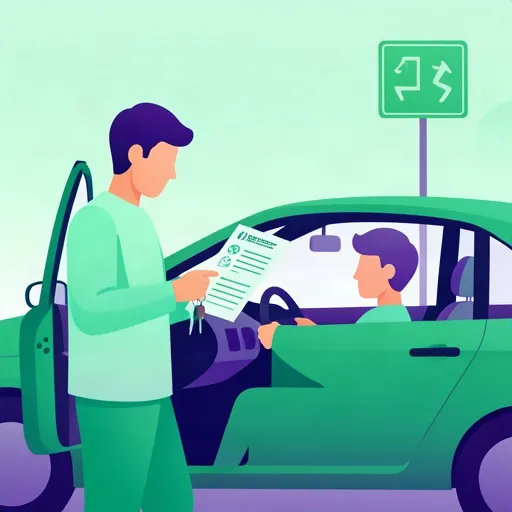
Article content overview
Many new drivers believe that as long as they have a full driving licence, they are automatically permitted to drive any vehicle. However, the laws in Great Britain regarding vehicle insurance are strict and non-negotiable. Whether you are borrowing a friend’s car for a quick errand or hoping to use a family member's vehicle, you must ensure that you are legally covered before you even turn the ignition. Driving without valid insurance is a serious offence that can lead to heavy fines, penalty points, or even the seizure of the vehicle.
In Great Britain, the law requires that every vehicle used on public roads must be covered by at least third party insurance. This is the absolute legal minimum set by the Road Traffic Act. This level of cover ensures that if you are involved in an accident, any damage or injury caused to other people, their vehicles, animals, or property is covered.
Crucially, it is important to understand that third party insurance does not cover the costs of repairing or replacing the vehicle you are driving. If you cause damage to the car you have borrowed, you will be personally liable for those repair costs unless your policy specifically includes additional cover.
The mandatory minimum level of motor insurance required by law in Great Britain, which provides cover for your legal liability for injury or damage caused to other people or their property.
Some comprehensive insurance policies include a 'Driving Other Cars' (DOC) extension. This clause allows the policyholder to drive a vehicle they do not own or have not hired, provided they have the owner's permission. However, you should never assume you have this cover.
Many modern insurance policies—especially those held by younger drivers or those with high-risk profiles—explicitly exclude the DOC benefit. Before you take the wheel, you must check your Certificate of Motor Insurance. If the DOC clause is not explicitly stated in your policy document, you are not insured to drive anyone else's car, regardless of whether you believe you are covered under their existing policy.
Never assume you are covered under the owner's policy. Being a named driver on your own car does not grant you the legal right to drive a vehicle owned by someone else. Always verify your own insurance documentation before driving.
Driving without valid insurance is one of the most frequently prosecuted motoring offences in Great Britain. If you are stopped by the police and cannot provide proof of insurance that covers you specifically for that vehicle, the consequences can be immediate and severe.
Police officers have the power to issue a Fixed Penalty Notice, which usually includes a fine and the endorsement of penalty points on your licence. In more serious cases, or if you are a repeat offender, the case may go to court, leading to unlimited fines and potential disqualification from driving. Furthermore, the police have the authority to seize any vehicle that is found to be driven without insurance, leading to significant recovery fees and stress for the vehicle owner.
The rules for learner drivers are even more restrictive. A learner driver cannot simply borrow a car and drive it, even if they have insurance. Under Great Britain's regulations, learner drivers are only permitted to drive on motorways if they are accompanied by an Approved Driving Instructor (ADI) in a car fitted with dual controls. When practicing on other roads, a learner must be supervised by someone who meets specific legal criteria, including having held a full driving licence for at least three years and being over the age of 21.
In the Great Britain theory test, you may encounter questions regarding the legal responsibilities of a driver. These questions are designed to ensure you understand that insurance is a legal requirement for the vehicle, not just the driver. Always remember that the registered keeper is responsible for ensuring the vehicle is insured, but as the driver, you are legally responsible for ensuring you are properly covered to operate it on public roads.
This article explains the strict insurance requirements for driving someone else's car in Great Britain, centred on the Road Traffic Act's third party minimum. It emphasises that DOC cover is not guaranteed and must appear on your own Certificate of Motor Insurance. The content outlines severe penalties for uninsured driving, including Fixed Penalty Notices, vehicle seizure, and potential court action. For learner drivers, motorway practice requires an ADI with dual controls, while general supervised driving requires a supervisor over 21 with three years' experience. Key terminology including Registered Keeper, ADI, and DOC Clause is defined in the accompanying glossary.
A short set of high-value points that capture the most important ideas from this article.
Third party insurance is the legal minimum required by the Road Traffic Act for any vehicle on public roads in Great Britain, covering damage or injury to others but not the borrowed vehicle itself.
A DOC clause is not automatic—many comprehensive policies exclude it, especially those for younger or high-risk drivers, and you must verify your own Certificate of Motor Insurance.
As the driver, you are legally responsible for ensuring you are covered to operate a vehicle, even though the registered keeper is responsible for ensuring the vehicle itself is insured.
Learner drivers face stricter rules and cannot drive on motorways unless accompanied by an ADI in a dual-control car, and must be supervised by someone over 21 with a full licence for at least three years on other roads.
Driving without valid insurance can result in immediate penalties including Fixed Penalty Notices, vehicle seizure, penalty points, unlimited fines, and potential disqualification.
Third party insurance covers liability to others but NOT repair costs for the borrowed vehicle.
DOC clause must be explicitly stated on your Certificate of Motor Insurance—never assume it exists.
The registered keeper ensures the vehicle is insured; the driver ensures they personally are covered.
Learner drivers on motorways must have an ADI and dual controls—standard supervision rules do not apply.
Police can seize an uninsured vehicle on the spot, and the owner may face recovery fees.
Assuming that being a named driver on your own policy grants you the right to drive any other vehicle.
Believing that the owner's comprehensive insurance automatically covers anyone they give permission to.
Thinking third party insurance pays for repairs to the borrowed car—it only covers damage you cause to others.
Failing to check the MOT and road tax of the borrowed vehicle in addition to insurance.
Learner drivers believing they can practice on motorways with any qualified supervisor rather than an ADI in a dual-control car.
Article content overview
A short set of high-value points that capture the most important ideas from this article.
Third party insurance is the legal minimum required by the Road Traffic Act for any vehicle on public roads in Great Britain, covering damage or injury to others but not the borrowed vehicle itself.
A DOC clause is not automatic—many comprehensive policies exclude it, especially those for younger or high-risk drivers, and you must verify your own Certificate of Motor Insurance.
As the driver, you are legally responsible for ensuring you are covered to operate a vehicle, even though the registered keeper is responsible for ensuring the vehicle itself is insured.
Learner drivers face stricter rules and cannot drive on motorways unless accompanied by an ADI in a dual-control car, and must be supervised by someone over 21 with a full licence for at least three years on other roads.
Driving without valid insurance can result in immediate penalties including Fixed Penalty Notices, vehicle seizure, penalty points, unlimited fines, and potential disqualification.
Third party insurance covers liability to others but NOT repair costs for the borrowed vehicle.
DOC clause must be explicitly stated on your Certificate of Motor Insurance—never assume it exists.
The registered keeper ensures the vehicle is insured; the driver ensures they personally are covered.
Learner drivers on motorways must have an ADI and dual controls—standard supervision rules do not apply.
Police can seize an uninsured vehicle on the spot, and the owner may face recovery fees.
Assuming that being a named driver on your own policy grants you the right to drive any other vehicle.
Believing that the owner's comprehensive insurance automatically covers anyone they give permission to.
Thinking third party insurance pays for repairs to the borrowed car—it only covers damage you cause to others.
Failing to check the MOT and road tax of the borrowed vehicle in addition to insurance.
Learner drivers believing they can practice on motorways with any qualified supervisor rather than an ADI in a dual-control car.
Explore related topics, search based questions, and concepts that learners often look up when studying Driving Someone Else's Car: Insurance Rules. These themes reflect real search intent and help you understand how this topic connects to wider driving theory knowledge in Great Britain.
Find clear and practical answers to common questions learners often have about Driving Someone Else's Car: Insurance Rules. This section helps explain difficult points, remove confusion, and reinforce the key driving theory concepts that matter for learners in Great Britain.
Yes, you must be legally insured to drive any vehicle on a public road in Great Britain. You are either covered by your own policy if it includes a 'Driving Other Cars' (DOC) extension or by being added as a named driver on the owner's policy.
Driving without insurance is a serious offence that can lead to a fixed penalty notice, penalty points on your licence, an unlimited fine, and the seizure or destruction of the vehicle by the police.
Not automatically. While third-party is the legal minimum for insurance, your specific policy must explicitly state that you are covered to drive other vehicles (DOC). You should always check your insurance certificate before driving a car you do not own.
Explore our extensive library of Great Britain driving theory articles to clarify any topic, review specific road rules, or gain deeper insights into vehicle safety and the Highway Code. Use the search to find exactly what you need for comprehensive DVSA theory test preparation.