
Understanding the function of temporary traffic management is a key requirement for any driver in Great Britain. This guide breaks down the rules surrounding contraflow systems, lane restrictions, and the legal weight of temporary speed limits and markings found on motorways and dual carriageways.
Article content overview
Driving through roadworks is a routine part of travel in Great Britain, yet it remains one of the most common areas where learners feel anxious. Understanding temporary traffic management is not just a practical necessity; it is a fundamental requirement for passing your DVSA theory test. Whether you are navigating narrow lanes on a motorway or obeying temporary signals on a dual carriageway, knowing how to interpret signage and follow instructions is critical for the safety of road workers and other motorists.
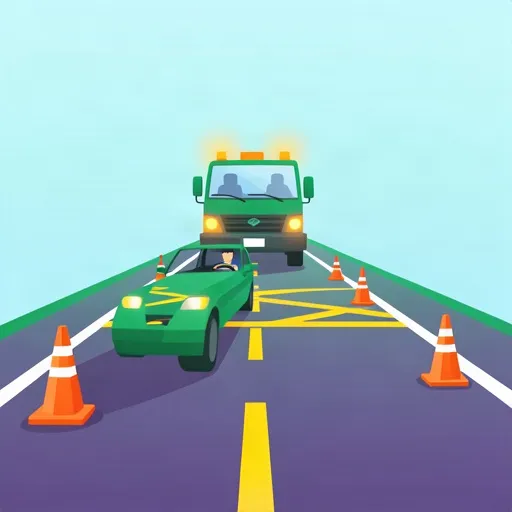
Temporary roadworks signs serve a vital purpose: they warn you of hazards ahead that do not exist during normal traffic conditions. These signs are often accompanied by cones, bollards, and sometimes temporary traffic lights. You must remain alert, as these setups are designed to keep road workers safe and manage traffic flow through constricted spaces. If you see a warning sign, you should adjust your speed and lane position well in advance to avoid last-minute maneuvers.
On high-speed roads, you will frequently encounter works vehicles designed to protect lanes during maintenance. These vehicles often display large arrows or signs indicating which lane is closed and instructing you to pass on a specific side. You must obey these directions, as they are legally binding under the Road Traffic Act 1988. When you see a "Keep Left" or "Keep Right" sign on the back of a works vehicle, you are required to change lanes safely when the path is clear.
A contraflow system is a common setup on major roads where one side of the dual carriageway is closed for repairs, and traffic in both directions is diverted onto the remaining side. This creates a narrower driving environment, often marked by cones and yellow road markings. It is crucial to understand that during these works, temporary road markings take precedence over permanent ones. You must follow the temporary layout, maintain a safe distance from the vehicle in front, and keep your speed within the reduced limit.
| Feature | Action Required |
|---|---|
| Temporary Markings | Follow these over permanent white lines. |
| Cones/Bollards | Do not cross into areas cordoned off. |
| Works Vehicles | Follow all direction signs displayed. |
| Speed Limit | Adhere strictly to temporary limits. |
Under UK law, ignoring temporary traffic management signals is an offense. Safety for those working on the road relies entirely on your compliance with signs, cones, and speed restrictions. When driving through these areas, avoid distractions and keep your eyes focused on the road ahead. If you encounter a "Convoy Vehicle," you must not overtake it under any circumstances, as its purpose is to guide traffic through the most hazardous sections of the site.
The DVSA theory test often features situational questions regarding roadworks to ensure you can identify potential hazards. You might be asked about the correct action to take when approaching a works vehicle or which lane to move into when a lane is closed. Remember to read the question carefully—the "correct" answer will always prioritize the safety of road workers and the strict adherence to mandatory signs and speed limits.
This guide covers the essential rules for navigating temporary roadworks on GB roads, emphasizing that temporary yellow markings and signage override permanent road markings. Learners must understand that works vehicles display directional arrows that are legally binding, convoy vehicles must never be overtaken, and mandatory speed limits remain in force regardless of visible workers. The content prepares learners for DVSA theory test questions by reinforcing that safety of road workers and compliance with temporary traffic management are the primary considerations in any roadworks scenario.
A short set of high-value points that capture the most important ideas from this article.
Temporary yellow road markings always override permanent white lines during roadworks
Works vehicles displaying Keep Left or Keep Right arrows give legally binding lane instructions you must obey
You must never overtake a convoy vehicle as it guides traffic through the most hazardous sections
Mandatory speed limits through roadworks remain in force even when workers are not visible
Only resume normal speed after passing the official End of road works sign
Temporary traffic management signs, cones, and signals take legal precedence over normal road rules
Works vehicles on high-speed roads often use illuminated arrow signs to indicate which lane to use
Entering areas cordoned off by cones or bollards is prohibited and potentially dangerous
Lane restrictions and reduced speeds are often enforced by cameras in roadworks zones
Contraflow systems require both directions of traffic to share a single carriageway
Assuming speed limits return to normal once past visible workers or machinery
Confusing permanent road markings with temporary yellow roadworks markings
Attempting to pass works vehicles on the wrong side when the arrow sign indicates the opposite direction
Failing to reduce speed early enough when approaching warning signs for roadworks ahead
Not maintaining sufficient distance from the vehicle ahead in narrow roadwork lanes
Article content overview
A short set of high-value points that capture the most important ideas from this article.
Temporary yellow road markings always override permanent white lines during roadworks
Works vehicles displaying Keep Left or Keep Right arrows give legally binding lane instructions you must obey
You must never overtake a convoy vehicle as it guides traffic through the most hazardous sections
Mandatory speed limits through roadworks remain in force even when workers are not visible
Only resume normal speed after passing the official End of road works sign
Temporary traffic management signs, cones, and signals take legal precedence over normal road rules
Works vehicles on high-speed roads often use illuminated arrow signs to indicate which lane to use
Entering areas cordoned off by cones or bollards is prohibited and potentially dangerous
Lane restrictions and reduced speeds are often enforced by cameras in roadworks zones
Contraflow systems require both directions of traffic to share a single carriageway
Assuming speed limits return to normal once past visible workers or machinery
Confusing permanent road markings with temporary yellow roadworks markings
Attempting to pass works vehicles on the wrong side when the arrow sign indicates the opposite direction
Failing to reduce speed early enough when approaching warning signs for roadworks ahead
Not maintaining sufficient distance from the vehicle ahead in narrow roadwork lanes
Explore related topics, search based questions, and concepts that learners often look up when studying Roadworks Signs and Markings Guide. These themes reflect real search intent and help you understand how this topic connects to wider driving theory knowledge in Great Britain.
Find clear and practical answers to common questions learners often have about Roadworks Signs and Markings Guide. This section helps explain difficult points, remove confusion, and reinforce the key driving theory concepts that matter for learners in Great Britain.
Yes. Under Section 36 of the Road Traffic Act 1988, you are legally required to obey temporary speed limits and traffic management instructions indicated by signage at roadworks.
You must move into the lane indicated by the sign as soon as it is safe to do so. Do not return to the closed lane until you can clearly see that it is safe.
A contraflow system occurs when one or more lanes of traffic are diverted onto the opposite side of a dual carriageway or motorway to bypass the area under repair, allowing traffic to flow in both directions on one carriageway.
Yellow markings are temporary lines used to define lanes through a construction area. They take precedence over any permanent white lines that may still be visible, guiding you safely through the altered road layout.
Explore our extensive library of Great Britain driving theory articles to clarify any topic, review specific road rules, or gain deeper insights into vehicle safety and the Highway Code. Use the search to find exactly what you need for comprehensive DVSA theory test preparation.