
Proper tyre inflation is a fundamental aspect of vehicle maintenance that every driver must master. By learning how to identify the correct pressure for different driving conditions and understanding the link between tyre health and stopping distances, you will be better prepared to answer key vehicle safety questions on your theory exam.
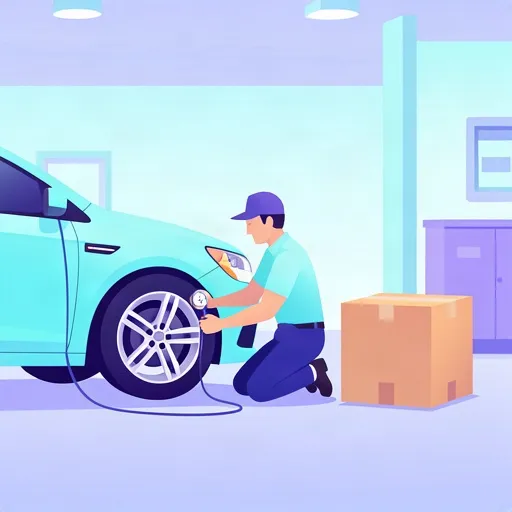
Article content overview
Maintaining correct tyre pressure is one of the most critical responsibilities for any driver on Great Britain's roads. Beyond the obvious safety implications, proper inflation is a fundamental aspect of vehicle maintenance that the DVSA frequently assesses in both the multiple-choice theory test and the practical examination. When your tyres are correctly inflated according to the manufacturer’s specifications, your vehicle operates at its optimum efficiency, providing the best possible grip and fuel economy.
Understanding how to check and adjust tyre pressures is not just a practical skill; it is a core component of the Highway Code that ensures you are prepared for varied road conditions. Whether you are planning a long motorway journey or driving through urban environments, your vehicle's condition directly influences your safety and your ability to respond to hazards on the road.
Tyre pressure significantly dictates how your vehicle behaves under braking and steering. When tyres are under-inflated, the contact patch between the rubber and the road surface changes, which can lead to increased rolling resistance and, more importantly, reduced responsiveness during emergency manoeuvres. According to Rule 227 of the Highway Code, wet weather conditions demand extra caution because stopping distances can at least double compared to those on dry roads.
If your tyre pressures are incorrect, your tyres will struggle to clear surface water effectively, increasing the risk of aquaplaning. Furthermore, under-inflated tyres can lead to internal damage due to excessive flexing, which might not be immediately visible during a quick visual check.
Always check your tyre pressures when the tyres are cold. Pressure increases as tyres heat up during a journey, leading to inaccurate readings if measured immediately after driving.
A common trap in the DVSA theory test involves knowing when to alter your tyre pressure. Many learners incorrectly assume that pressures should only be checked during a service. However, if you are carrying a heavy load—such as passengers, luggage, or equipment—the weight distribution changes, and your vehicle's handling characteristics shift.
Consulting your vehicle handbook is the only way to determine the correct tyre pressure for specific load conditions. Increasing the pressure to the manufacturer’s recommended "loaded" setting is essential to prevent the vehicle from squatting, which can affect your steering precision and headlight aim. If you are preparing for a long motorway journey, checking your pressures is a mandatory safety step; tyre failure at high speeds can have catastrophic consequences.
Beyond safety, correct tyre pressure is a key pillar of eco-driving. When tyres are under-inflated, the engine has to work harder to overcome the additional rolling resistance, which directly results in increased fuel consumption and higher carbon emissions. By maintaining the correct pressure as specified by the manufacturer, you reduce unnecessary fuel expenditure and prolong the life of your tyres.
The force that resists the motion of a tyre as it rolls on a surface; higher rolling resistance caused by low tyre pressure requires more engine power to maintain speed, thereby increasing fuel use.
In the context of the Great Britain driving theory test, it is vital to distinguish between what constitutes a legal requirement and what is a matter of essential vehicle maintenance. While you are legally responsible for ensuring your vehicle is in a roadworthy condition—which includes having correct tyre tread and appropriate inflation—the DVSA expects you to know the practical steps that prevent mechanical failure. Failing to manage your vehicle's condition can lead to poor handling and, eventually, a failed theory or practical test.
Maintaining correct tyre pressure is essential for vehicle safety, handling, and fuel efficiency, and it is a key topic in the DVSA theory test. Tyres must always be checked when cold, and pressures should be adjusted according to manufacturer specifications, particularly when carrying heavy loads. Under-inflation increases rolling resistance and stopping distances, raises the risk of aquaplaning in wet weather, and reduces fuel economy. Drivers are legally responsible for ensuring their vehicle is roadworthy, which includes correct tyre inflation and tread depth. Familiarity with the practical steps for checking tyres and understanding the difference between legal requirements and recommended maintenance checks will help learners answer vehicle safety questions confidently on exam day.
A short set of high-value points that capture the most important ideas from this article.
Correct tyre pressure ensures optimum vehicle handling, grip, and stopping performance in both dry and wet conditions.
Tyre pressure must always be checked when tyres are cold to obtain accurate readings.
When carrying heavy loads, you must adjust tyre pressure to the manufacturer's recommended 'loaded' setting to maintain proper handling.
Under-inflated tyres increase rolling resistance, which reduces fuel efficiency and raises fuel consumption.
Tyre condition is a legal roadworthiness requirement assessed in both the theory and practical driving tests.
Rule 227 of the Highway Code states that stopping distances can at least double in wet weather compared to dry roads.
Always consult your vehicle handbook or the sticker on the driver's door pillar for the correct pressure specifications.
Under-inflated tyres are more prone to aquaplaning because they cannot clear surface water effectively.
Tyre failure at motorway speeds can have catastrophic consequences, making pre-journey pressure checks essential.
The engine must work harder to overcome increased rolling resistance from under-inflated tyres, directly increasing fuel consumption.
Checking tyre pressure immediately after driving instead of waiting for tyres to cool down, leading to inaccurate readings.
Assuming tyre pressures only need to be checked during scheduled vehicle services.
Failing to adjust tyre pressure when carrying heavy loads such as passengers, luggage, or equipment.
Overlooking the spare tyre when checking pressures and condition.
Not replacing valve caps after checking pressure, which can allow dirt and moisture to damage the valve mechanism.
Article content overview
A short set of high-value points that capture the most important ideas from this article.
Correct tyre pressure ensures optimum vehicle handling, grip, and stopping performance in both dry and wet conditions.
Tyre pressure must always be checked when tyres are cold to obtain accurate readings.
When carrying heavy loads, you must adjust tyre pressure to the manufacturer's recommended 'loaded' setting to maintain proper handling.
Under-inflated tyres increase rolling resistance, which reduces fuel efficiency and raises fuel consumption.
Tyre condition is a legal roadworthiness requirement assessed in both the theory and practical driving tests.
Rule 227 of the Highway Code states that stopping distances can at least double in wet weather compared to dry roads.
Always consult your vehicle handbook or the sticker on the driver's door pillar for the correct pressure specifications.
Under-inflated tyres are more prone to aquaplaning because they cannot clear surface water effectively.
Tyre failure at motorway speeds can have catastrophic consequences, making pre-journey pressure checks essential.
The engine must work harder to overcome increased rolling resistance from under-inflated tyres, directly increasing fuel consumption.
Checking tyre pressure immediately after driving instead of waiting for tyres to cool down, leading to inaccurate readings.
Assuming tyre pressures only need to be checked during scheduled vehicle services.
Failing to adjust tyre pressure when carrying heavy loads such as passengers, luggage, or equipment.
Overlooking the spare tyre when checking pressures and condition.
Not replacing valve caps after checking pressure, which can allow dirt and moisture to damage the valve mechanism.
Explore related topics, search based questions, and concepts that learners often look up when studying Tyre Pressure and Safety. These themes reflect real search intent and help you understand how this topic connects to wider driving theory knowledge in Great Britain.
Find clear and practical answers to common questions learners often have about Tyre Pressure and Safety. This section helps explain difficult points, remove confusion, and reinforce the key driving theory concepts that matter for learners in Great Britain.
You should increase your tyre pressure when you are carrying a heavy load, as specified in your vehicle handbook.
Low tyre pressure reduces your vehicle's grip on the road, which significantly increases your stopping distance, especially in wet weather conditions.
Under-inflated tyres increase rolling resistance, which forces the engine to work harder and consumes more fuel.
You should always check the manufacturer’s recommendations in your vehicle handbook to find the correct pressure for different loads.
Explore our extensive library of Great Britain driving theory articles to clarify any topic, review specific road rules, or gain deeper insights into vehicle safety and the Highway Code. Use the search to find exactly what you need for comprehensive DVSA theory test preparation.