
This lesson details the critical safety equipment required for riders of scooters and cyclomoteurs in France. You will learn the legal standards for protective gear that help minimize injury and meet the requirements of the Code de la route. Mastering these protective habits is essential for your Category AM exam and your long-term safety.

Lesson content overview
Operating a light motorized vehicle—such as a moped, scooter, or light quadricycle under the Category AM licence (historically known in France as the Brevet de Sécurité Routière or BSR)—exposes riders to unique physical risks. Unlike passenger car occupants who are shielded by a metal passenger cell, crumple zones, and seatbelts, moped and scooter riders are highly vulnerable.
In the event of an accident, your clothing is your primary defense. It serves as a personal safety envelope, designed to absorb impact forces, resist tearing when sliding along the pavement, and shield you from harsh environmental conditions.
To understand the necessity of specialized protective gear, you must understand the physical forces at play during a fall or collision. When a rider falls from a vehicle traveling at 45 km/h (the maximum legal speed for a Category AM vehicle in France), their body carries significant kinetic energy. This kinetic energy must be dissipated when the rider contacts the road or an obstacle.
Impact resistance is the capacity of protective gear to absorb and dissipate kinetic energy during a collision, preventing that energy from directly fracturing bones or damaging internal organs.
When an unprotected body part hits the road, the force is concentrated on a small area of bone and tissue, often causing severe fractures or deep contusions. Specialized riding gear utilizes impact protectors (armor) made of advanced polymers or viscoelastic foam. These protectors are strategically located at high-risk zones: the shoulders, elbows, back, hips, and knees.
Upon impact, these materials deform and compress, spreading the force over a much wider surface area and increasing the duration of the impact pulse. By slowing down the deceleration of the joint, the peak force transmitted to the skeleton is drastically reduced.
When a rider slides across asphalt, friction generates intense heat and mechanical wear. Standard clothing materials, such as denim or cotton, shred within fractions of a second when subjected to sliding friction at 45 km/h. This leads to immediate and severe skin damage, commonly referred to as "road rash," which carries a high risk of infection and can require skin graft surgeries.
Abrasion resistance refers to a material's durability against this friction-induced wear. Specialized riding garments use high-tenacity synthetic fibers like polyamide, Cordura, or aramid fibers (such as Kevlar). These fabrics are engineered to withstand the sliding friction of asphalt for several seconds without tearing, keeping a protective barrier between your skin and the road surface.
Safety is not only about surviving a crash; it is also about preventing one. A cold, wet, or overheated rider is a distracted rider. Hypothermia impairs cognitive function and slows muscle reaction times, which can delay emergency braking. Conversely, extreme heat causes dehydration and fatigue, reducing alertness in complex urban traffic.
Weather adaptability ensures that riding gear regulates the body’s microclimate. By utilizing breathable, waterproof membranes (such as Gore-Tex or similar materials) and removable thermal liners, riders can maintain physiological comfort, ensuring their reaction times and decision-making remain sharp.
In France, the Code de la route enforces strict rules regarding rider equipment. While some protective items are highly recommended for your physical safety, others are strictly mandated by law. Failing to wear mandatory gear is a legal infraction that carries immediate penalties.
Mandatory Equipment in France: Every rider and passenger of an AM category vehicle must wear an approved, fastened helmet and CE-certified protective gloves. Additionally, you must carry a high-visibility yellow safety vest (gilet de haute sécurité) on your vehicle to use during roadside emergencies.
Under Article R431-1-2 of the French Code de la route, wearing CE-certified gloves is legally mandatory for both the driver and any passenger of a moped or motorized scooter.
During a fall, human instinct causes us to extend our hands to break the impact. Without gloves, this results in severe, often permanent hand injuries. To comply with the law, your gloves must be certified to the European standard EN 13594, which ensures they feature adequate abrasion resistance, seam strength, and wrist retention systems to prevent the glove from slipping off during a slide.
Riders are legally required to have a high-visibility yellow safety vest conforming to European standards within reach (for instance, in the under-seat storage compartment or a backpack). You do not have to wear it while riding under normal daytime conditions, but you must put it on immediately if you are forced to make an unscheduled stop on the roadside due to a breakdown or emergency. Failing to have this vest on board is punishable by law.
When purchasing protective gear in Europe, you must look for the CE Marking (Conformité Européenne). This logo indicates that the equipment has undergone standardized laboratory testing to verify its protective capabilities. Non-certified garments may look like protective gear, but they often lack the structural integrity to protect you in an accident.
Testing Criteria: To receive CE certification, gear is tested for tear strength, seam durability, impact absorption, and abrasion resistance. Look for internal labels containing a pictogram of a motorcyclist along with the specific standard number.
The protective armor elements (protectors) inserted into jackets, pants, and vests are certified under the EN 1621 standards. These standards divide protection into two distinct levels based on the amount of force transmitted through the protector during a test drop:
To build an effective personal protective system, you must understand the function and requirements of each individual garment.
The jacket shields your upper body, including vital organs, the ribcage, shoulders, elbows, and the spine.
The lower limbs are highly susceptible to injury during side-impact collisions and low-side falls, where the moped falls over and slides with the rider.
As hands contain many delicate bones, tendons, and nerve endings, protecting them is vital.
Many scooter and moped riders mistakenly ride in light sneakers, canvas shoes, or even sandals. This exposes the delicate ankle joints to severe crushing injuries, fractures, and skin loss.
Before every journey, perform a quick check of your protective gear to ensure it is in safe working order.
Check the CE Labels: Verify that your gloves carry the EN 13594 standard label and your jacket/pants armor elements are marked with EN 1621. Replace any components that are uncertified.
Inspect for Damage: Examine all fabric surfaces, seams, and zippers. If a jacket or pant has torn stitching or a broken zipper, it can burst open during a slide, exposing your body. Do not ride with damaged gear.
Verify the Armor Alignment: Put on your jacket and trousers. Sit on your vehicle to confirm that the elbow, shoulder, and knee protectors align perfectly with your joints in the active riding position.
Secure All Closures: Ensure all wrist straps, collar fasteners, and waist adjusters are tightly secured. Loose flaps can catch on your vehicle’s handlebars or mirrors, causing a loss of control.
Safety requires adjusting your protective choices to match your riding environment, weather conditions, and light levels.
Rain drastically reduces tire grip and increases stopping distances. When you get wet and cold, your body shivering causes muscle tension, which reduces your steering precision.
To stay safe, choose windproof and waterproof outer layers. Thermal liners should be added to keep your core body temperature stable. Additionally, use clear visor inserts (such as Pinlock lenses) to prevent your helmet visor from fogging up due to your breath in cold air, preserving clear visibility.
In urban areas, car drivers are often distracted or struggle to spot small, narrow AM-category vehicles.
To counteract this, integrate high-visibility materials into your daily gear:
Understanding the direct physical consequences of your gear choices can help you build safer riding habits:
This lesson explains why protective gear is the primary safety defense for vulnerable Category AM riders, covering the physics of impact and abrasion resistance that specialized materials provide. It details French legal requirements under the Code de la route, including mandatory CE-certified gloves meeting EN 13594 standards and the high-visibility vest requirement. Learners should understand the distinction between CE Level 1 and Level 2 armor certification (EN 1621) and how each protects against transmitted force during collisions. The lesson also addresses practical concerns like proper fit, pre-ride inspection procedures, and environmental adaptations for weather and visibility, while dispelling common misconceptions about everyday clothing like denim jeans and light footwear.
A short set of high-value points that capture the most important learning from this lesson.
Wearing CE-certified gloves (EN 13594 standard) is legally mandatory for all Category AM riders and passengers in France under Article R431-1-2 of the Code de la route.
Protective gear must provide both impact resistance to absorb kinetic energy during collisions and abrasion resistance to prevent road rash when sliding on asphalt.
CE Level 1 armor offers baseline protection suitable for low-speed urban riding, while CE Level 2 provides significantly superior impact absorption with force transmission reduced to a maximum of 9 kN for back protectors.
Standard denim jeans fail within fractions of a second at 45 km/h, whereas aramid fibers (Kevlar) and high-tenacity textiles maintain structural integrity during sliding contact with asphalt.
Proper gear fit is critical: oversized jackets allow armor to shift away from joints during a fall, and improperly sized gloves can cause numbness or slippage that compromises braking control.
Explore all units and lessons included in this driving theory course.
EN 13594 is the mandatory European standard for riding gloves; EN 1621 governs impact protectors for joints and the spine.
CE Level 1 limits transmitted force to approximately 35 kN (suitable for 45 km/h Category AM speeds); CE Level 2 reduces this to a maximum of 9 kN.
The high-visibility yellow safety vest (gilet de haute sécurité) must be carried on board and worn during roadside emergencies, though not required while riding under normal conditions.
Impact protectors work by deforming and compressing to spread force over a wider surface area and increase the duration of the impact pulse.
Retroreflective materials on gear reflect car headlights back to drivers, dramatically improving visibility at dawn, dusk, and nighttime.
Assuming regular denim jeans provide adequate protection—standard cotton denim shreds in under half a second of asphalt contact at 45 km/h.
Wearing oversized jackets to accommodate everyday clothes underneath, which causes armor to rotate away from joints during a fall.
Choosing gloves that are too tight (restricting blood flow and slowing reactions) or too loose (slipping and reducing control during braking).
Riding in light sneakers, canvas shoes, or sandals, which offer zero protection against ankle crushing injuries or fractures.
Neglecting to check that knee armor stays positioned over the kneecaps when seated on the vehicle rather than riding up.
Lesson content overview
A short set of high-value points that capture the most important learning from this lesson.
Wearing CE-certified gloves (EN 13594 standard) is legally mandatory for all Category AM riders and passengers in France under Article R431-1-2 of the Code de la route.
Protective gear must provide both impact resistance to absorb kinetic energy during collisions and abrasion resistance to prevent road rash when sliding on asphalt.
CE Level 1 armor offers baseline protection suitable for low-speed urban riding, while CE Level 2 provides significantly superior impact absorption with force transmission reduced to a maximum of 9 kN for back protectors.
Standard denim jeans fail within fractions of a second at 45 km/h, whereas aramid fibers (Kevlar) and high-tenacity textiles maintain structural integrity during sliding contact with asphalt.
Proper gear fit is critical: oversized jackets allow armor to shift away from joints during a fall, and improperly sized gloves can cause numbness or slippage that compromises braking control.
Explore all units and lessons included in this driving theory course.
EN 13594 is the mandatory European standard for riding gloves; EN 1621 governs impact protectors for joints and the spine.
CE Level 1 limits transmitted force to approximately 35 kN (suitable for 45 km/h Category AM speeds); CE Level 2 reduces this to a maximum of 9 kN.
The high-visibility yellow safety vest (gilet de haute sécurité) must be carried on board and worn during roadside emergencies, though not required while riding under normal conditions.
Impact protectors work by deforming and compressing to spread force over a wider surface area and increase the duration of the impact pulse.
Retroreflective materials on gear reflect car headlights back to drivers, dramatically improving visibility at dawn, dusk, and nighttime.
Assuming regular denim jeans provide adequate protection—standard cotton denim shreds in under half a second of asphalt contact at 45 km/h.
Wearing oversized jackets to accommodate everyday clothes underneath, which causes armor to rotate away from joints during a fall.
Choosing gloves that are too tight (restricting blood flow and slowing reactions) or too loose (slipping and reducing control during braking).
Riding in light sneakers, canvas shoes, or sandals, which offer zero protection against ankle crushing injuries or fractures.
Neglecting to check that knee armor stays positioned over the kneecaps when seated on the vehicle rather than riding up.
Explore search topics learners often look for when studying Protective Clothing and Gear. These topics reflect common questions about road rules, driving situations, safety guidance, and lesson level theory preparation for learners in France.
Browse additional driving theory lessons that cover connected traffic rules, road signs, and common driving situations related to this topic. Improve your understanding of how different rules interact across everyday traffic scenarios.
Understand how to identify traffic hazards and implement defensive riding strategies to mitigate risks. This guide explains how to effectively scan urban environments and predict potential conflicts with other road users to enhance your safety as a moped or light vehicle operator on French roads.

Proactive drivers scan the road constantly, detecting potential dangers before they turn into real-world emergency situations. This lesson teaches scanning techniques, the use of rear-view mirrors, and the interpretation of visual cues from other road users. You will learn to anticipate hazards like child play near roads, merging vehicles, and sudden lane changes, helping you drive defensively.

In this lesson, drivers will learn strategies to avoid conflicts with smaller vehicles, such as cars and vans, which may not be as visible in large vehicle blind spots. The content emphasizes maintaining adequate spacing, using proper lane discipline, and being aware of small vehicles' behavior during lane changes and turns. Learners will also be introduced to communication techniques, such as signalling and eye contact.

Learners will develop the ability to anticipate potential hazards on the road, enhancing reaction times and defensive riding strategies. The lesson emphasizes constant scanning, early identification of threats such as sudden stops, pedestrian crossings, or unexpected lane changes, and appropriate response measures. By cultivating proactive risk assessment, AM riders can significantly reduce accident likelihood.

Rural roads account for a high percentage of severe accidents due to narrow widths, winding geometries, and sudden hazards. This lesson teaches strategies for negotiating sharp bends, handling agricultural machinery, and reacting to wildlife warning signs. You will learn to manage your vehicle's lane placement on roads with soft shoulders and understand speed limits on rural networks.

This lesson focuses on the inherent vulnerability of AM vehicles due to their limited mass, exposure, and visibility within mixed traffic flows on French roads. Learners will examine how blind spots, sudden lane changes by larger vehicles, and higher impact severity affect small vehicle safety. The content underscores the necessity for riders to adopt proactive safety measures, maintain safe distances, and be constantly aware of surrounding traffic dynamics.
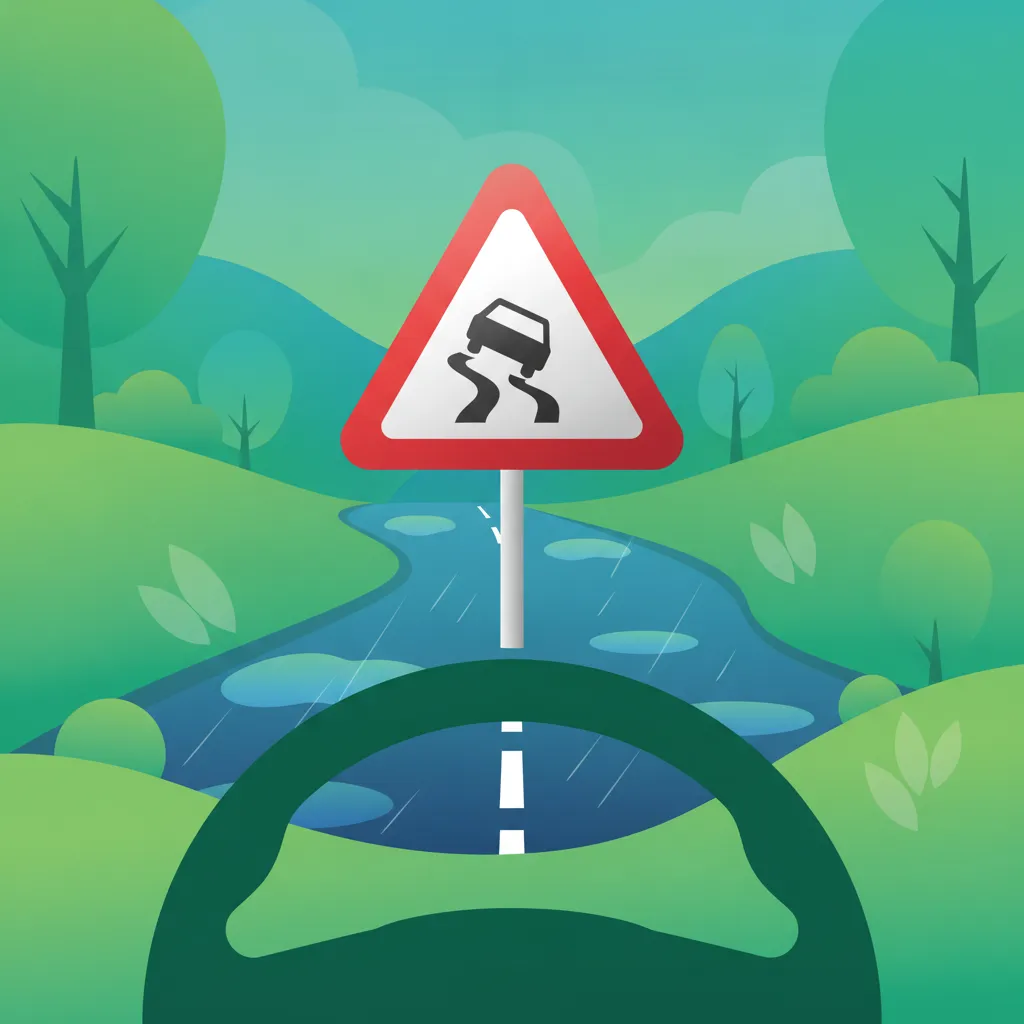
Warning signs on French roads are triangular with a red border, designed to alert drivers to upcoming dangers. This lesson teaches you how to interpret warnings for sharp curves, slippery surfaces, narrowing lanes, and wildlife or animal crossing hazards. You will understand the safety adjustments needed when approaching school zones, active roadworks, or crossings where vulnerable pedestrians are present.

This lesson focuses on French warning signs that alert drivers to potential hazards ahead, such as curves, animal crossings, or slippery surfaces, with particular attention to signs relevant to AM riders. Learners will examine how to interpret these signs, understand the associated risks, and adapt riding behavior accordingly. By mastering warning sign recognition, riders can proactively manage safety risks in diverse road conditions.

This lesson addresses the challenges of positioning near larger vehicles such as cars, vans, buses, and lorries on French roads. Learners will learn to identify blind spots (angles morts), maintain a safe distance, and position themselves to maximize visibility and predictability. Understanding these dynamics is crucial for AM riders to avoid dangerous situations and ensure safe overtaking and lane sharing.

In this lesson, drivers will explore the specific challenges presented by rural road environments, including narrower lanes, shared space with agricultural vehicles, and frequent wildlife crossings. The content emphasizes adapting speed to road curvature, surface conditions, and visibility while navigating hills and bends. Learners will also learn to interpret rural road signage and understand the importance of maintaining vigilance.
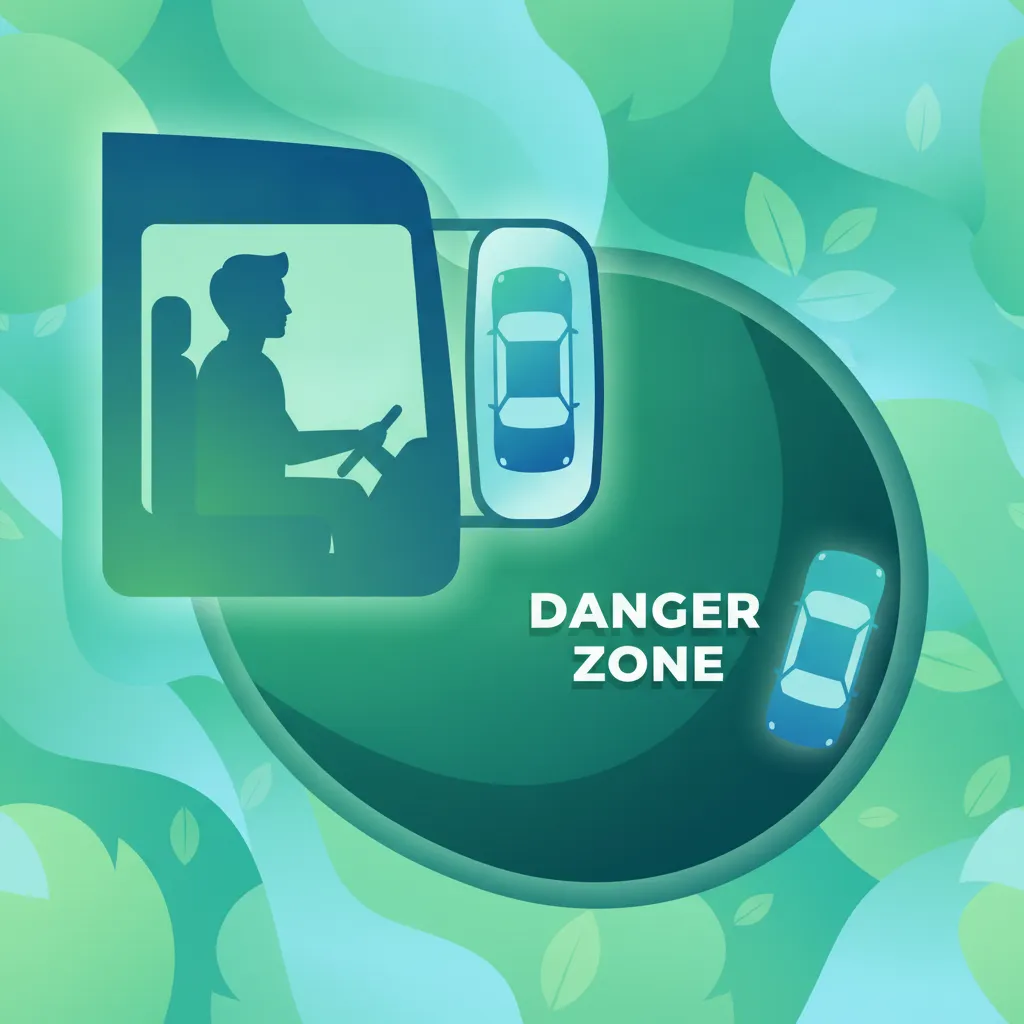
This lesson details the location and scale of blind spots around passenger cars and heavy goods vehicles, often referred to as the 'no-zone' or 'angles morts'. You will learn why truck drivers cannot see you directly behind or immediately adjacent to their cab doors. The lesson provides actionable strategies to minimize the time you spend in these dangerous zones, ensuring you always pass quickly and safely.
Learn the mechanics of maintaining vehicle control during adverse weather conditions in France. This lesson covers how to adjust riding techniques, optimize visibility, and adapt to reduced grip on wet surfaces to ensure stable handling and compliance with safety requirements under the Code de la route.

Learners will explore techniques for maintaining control and safety while riding in rain, focusing on reduced braking efficiency, hydroplaning prevention, and visibility challenges. The lesson emphasizes appropriate speed reduction, tire condition checks, and the use of rain gear to enhance rider comfort and protection. By mastering these adaptations, riders can navigate wet French conditions with confidence.

This lesson focuses on adapting your riding behavior to sudden environmental shifts, such as heavy fog or strong crosswinds on exposed bridges. You will learn specific technical adjustments, including leaning slightly into crosswinds and widening your safety margins during low-visibility fog. The lesson also highlights how seasonal temperature drops affect your tires' ability to warm up and achieve reliable, safe levels of road adhesion.

This lesson provides guidance on safe riding practices during nighttime, emphasizing proper headlamp usage, reflective clothing, and strategies to manage glare from oncoming traffic. Learners will learn to compensate for reduced peripheral vision and increased fatigue, as well as to identify common night road hazards in France. By applying these techniques, riders can enhance their visibility and safety after dark.

This lesson addresses the distinct safety considerations for riding during daylight hours versus nighttime, covering topics such as managing glare from the sun and ensuring adequate lighting after dark. Learners will learn strategies to maintain visibility, stay alert, and adapt riding techniques to varying light conditions, including the use of reflective gear. Emphasis is placed on proactive planning to mitigate risks associated with reduced visibility, thereby fostering safe riding practices.
This lesson focuses on the skill of adjusting speed according to real-time road conditions, visibility, and traffic density. Learners will learn to assess factors such as weather, road surface quality, and pedestrian activity to determine a safe riding speed under French regulatory expectations. By mastering adaptive speed control, riders can enhance safety and reduce the likelihood of accidents caused by inappropriate speed.

This lesson explores practical methods to make yourself visible to other road users, preventing the classic 'sorry mate, I didn't see you' hazard. You will analyze the use of high-visibility yellow or orange retro-reflective waistcoats, which are legally required to be carried on board in France. Additionally, you will study optimal headlight utilization and correct placement of auxiliary indicators to capture driver attention.

This lesson addresses the unique hazards of riding a motorcycle in wet conditions, emphasizing the danger of aquaplaning. You will learn how water pooling on the asphalt can cause tires to lose direct contact with the road, leading to a complete loss of steering control. The lesson offers practical advice on reducing your speed, using smooth throttle and brake inputs, and ensuring your tires have adequate tread depth to clear water.

Learners will examine how the strategic use of lighting and reflectors significantly enhances rider visibility to other road users, especially in low-light conditions. The lesson outlines the legal requirements for front and rear lights, the benefits of daytime running lights, and the role of retroreflective strips on clothing. By following these guidelines, AM riders can improve their conspicuity, reducing the risk of collisions during both day and night riding in France.

This lesson covers the environmental legalities that motorcyclists must follow in French urban areas, including low-emission zones designated as ZFE. You will understand how Euro emissions classifications affect your motorcycle and learn the process for acquiring and placing a Crit'Air vignette. The lesson also explores eco-driving techniques that help reduce fuel consumption, greenhouse gas emissions, and exhaust noise levels.
This lesson focuses on French warning signs that alert drivers to potential hazards ahead, such as curves, animal crossings, or slippery surfaces, with particular attention to signs relevant to AM riders. Learners will examine how to interpret these signs, understand the associated risks, and adapt riding behavior accordingly. By mastering warning sign recognition, riders can proactively manage safety risks in diverse road conditions.
Find clear answers to common questions learners have about Protective Clothing and Gear. Learn how the lesson is structured, which driving theory objectives it supports, and how it fits into the overall learning path of units and curriculum progression in France. These explanations help you understand key concepts, lesson flow, and exam focused study goals.
Yes, wearing gloves that are CE-certified is a legal requirement for riders of two-wheeled motorized vehicles in France. They must provide protection against abrasion and impact to ensure your hands are safe in the event of a fall.
The CE mark indicates that the piece of equipment has been tested and meets European safety standards for impact resistance and durability. Always check for this label to ensure your gear provides actual protection rather than just aesthetic value.
Sturdy boots that cover the ankles are necessary to protect against joint injuries and friction. Regular sneakers or open-toed shoes do not provide the necessary stability or protection against road debris and potential impacts.
No, the exam does not test specific brands. Instead, it focuses on the safety standards, the necessity of certified materials, and the legal obligations for rider visibility and protection to keep you safe on French roads.
Ready to focus your study? Use the practice search to find exactly the French driving theory questions you need for the Code de la route and permis de conduire ETG. Refine your knowledge on specific topics or challenging rules to boost your confidence and exam readiness.