
This lesson covers the critical legal and safety requirements regarding helmet usage for AM licence holders in France. You will learn to identify certified protective equipment and understand how proper fitting is essential for compliance with the Code de la route and your personal safety.
Lesson content overview
Operating a category AM vehicle (such as a 50cc scooter, moped, or light quadricycle) on public roads in France carries significant legal and safety responsibilities. Among these, none is more critical than the proper use of a certified protective helmet. Under French road safety legislation (le Code de la route), wearing a helmet is not merely a recommendation; it is a strict legal mandate designed to prevent traumatic brain injuries and save lives.
This lesson explores the legal frameworks, technical safety standards, precise fitting protocols, and maintenance guidelines required to comply with French law and maximize your personal safety on the road.
In France, the law regarding helmet use is clear and absolute. According to Article R412-5 of the Code de la route, any driver or passenger of a motorized two-wheeler, three-wheeler, or light motor quadricycle must wear an approved, certified protective helmet while the vehicle is in motion.
Crucial Rule: The helmet's chin strap must be securely fastened at all times. Wearing an unbuckled helmet is legally equivalent to wearing no helmet at all and carries the exact same penalties.
This mandate applies to all public ways, including urban streets, rural routes, and major roads where category AM vehicles are permitted. There are no exemptions based on travel distance, speed, or weather conditions. Whether you are riding 100 metres to the local bakery or commuting 10 kilometres across a city, your helmet must be worn and secured before you start the engine.
Failure to comply with French helmet laws results in severe legal and financial consequences:
Not all helmets offer the same level of protection. To be legally compliant in France and the wider European Union, a helmet must meet stringent manufacturing and performance criteria. It must bear the CE (Conformité Européenne) marking, indicating it has undergone rigorous impact and retention testing.
When choosing a helmet for an AM vehicle, you will primarily encounter two European safety standards on the labels:
Note on Motorcycle Helmets: While EN 1078 and EN 1080 are legally permissible for light AM class operations, many riders choose helmets certified under the stricter motorcycle standards (such as ECE 22.05 or ECE 22.06). These helmets feature thicker Expanded Polystyrene (EPS) liners and heavier outer shells, offering the highest level of protection available.
A unique requirement of the French Code de la route is that all helmets used on motorized two-wheelers must feature reflective elements. When purchased in France, helmets are typically supplied with four adhesive reflective stickers. To remain fully compliant with national safety laws, these stickers must be applied to the helmet: one on the front, one on the back, and one on each side.
A helmet can only protect your head if it fits correctly and remains securely in place during an accident. An improperly fitted helmet can easily slide off or shift during a fall, leaving vital areas of your skull exposed to direct impact.
To find a helmet that fits, you must measure your head circumference. Use a flexible measuring tape and wrap it horizontally around your head, approximately 2 centimetres above your eyebrows and ears. Use this measurement against the manufacturer's sizing chart.
Positioning: Place the helmet level on your head. The front edge should sit low on your forehead, roughly two finger-widths above your eyebrows. It should not be tilted back (exposing your forehead) or tilted forward (obstructing your field of vision).
The Snugness Test: The interior padding should press firmly against your cheeks and forehead without causing painful pressure points. If you shake your head side-to-side, the helmet should not move independently of your skin.
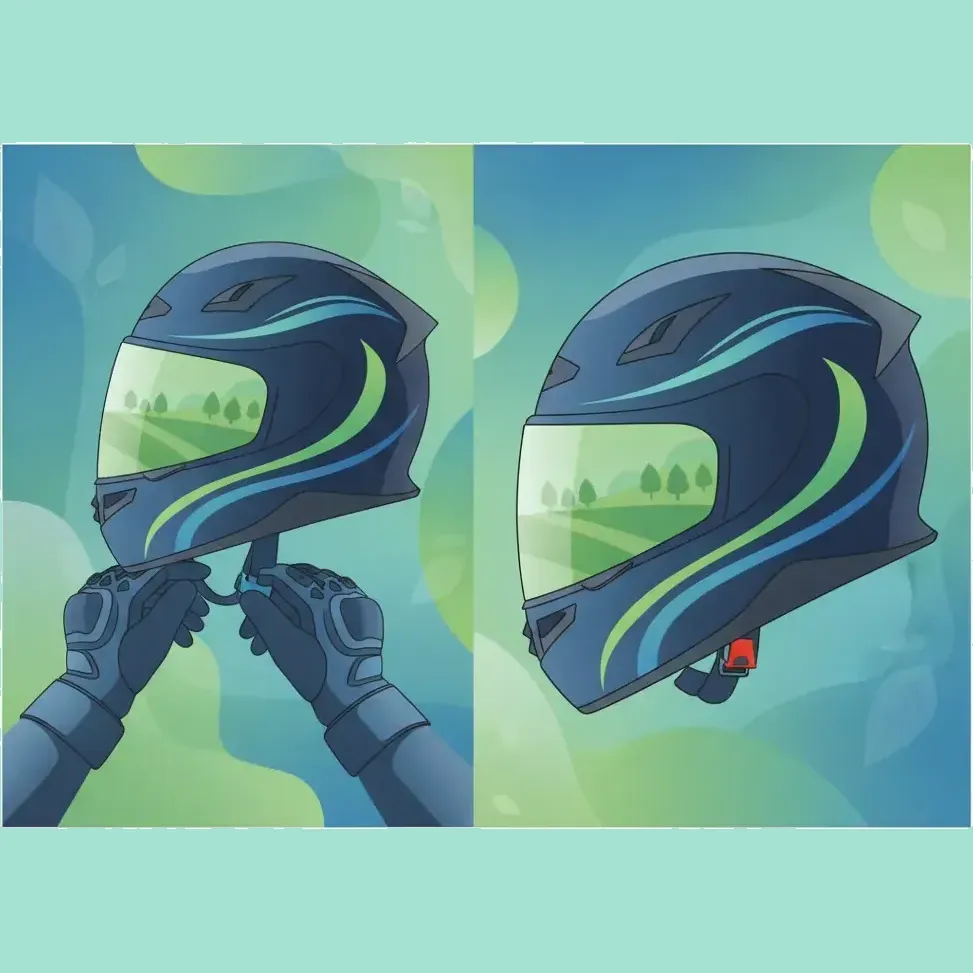
Adjusting the Chin Strap: Buckle the retention system. Tighten the strap until it is snug under your chin. You should only be able to fit a maximum of two fingers flat between the strap and your neck.
The Retention Test: With the chin strap securely buckled, grab the back of the helmet and attempt to pull it forward off your head. If the helmet rolls forward or slides off your forehead, the strap is too loose, or the helmet shell is too large.
The safety practice of adjusting the helmet's chin strap so that no more than two fingers can be inserted between the strap and the throat, ensuring the helmet cannot be thrown off during an impact.
A helmet is a single-use safety device. Once it performs its job by absorbing a significant impact, its internal structure is compromised and it must be discarded.
Helmets protect the brain through a process of energy dissipation. The outer shell deflects sharp objects and spreads the force of an impact over a larger surface area. Underneath the shell, the thick layer of Expanded Polystyrene (EPS) acts as a crumple zone.
During a crash, the EPS liner compresses to absorb the kinetic energy. This compression is permanent. Even if the outer plastic or fiberglass shell looks completely undamaged after a fall, the internal foam may be crushed and incapable of protecting you in a second impact.
[KINETIC IMPACT] ➔ [OUTER SHELL (Spreads Force)] ➔ [EPS FOAM LINER (Compresses permanently)] ➔ [PROTECTED SKULL & BRAIN]
Over time, environmental factors degrade a helmet’s materials. Exposure to ultraviolet (UV) radiation from sunlight, sweat, hair oils, cosmetics, and fluctuations in temperature slowly break down both the outer shell and the inner foam liner.
If your category AM vehicle is officially approved to carry a passenger (indicated on your registration certificate, or carte grise), that passenger is subject to the exact same safety laws as you.
As the operator of the vehicle, you are legally responsible for any passenger under the age of 18. If you carry a minor passenger who is not wearing a helmet, or whose helmet is unbuckled, you (the driver) will receive the fine.
Additionally, carrying a passenger alters the balance, braking distance, and handling characteristics of your vehicle. Before setting off, you must visually inspect your passenger's helmet to ensure it is CE-marked, properly sized, level on their head, and securely buckled.
To understand how these safety rules function in daily life, let us analyze some common roadside situations.
This lesson covers the strict helmet mandate under Article R412-5 of the French Code de la route, which requires all AM licence riders and passengers to wear a CE-certified helmet that is securely fastened while the vehicle is in motion. The content details how to identify compliant protective equipment (CE marking, EN 1078 or EN 1080 standards), explains the correct fitting procedure using the Two-Finger Rule for strap adjustment, and outlines the consequences of non-compliance including a €135 fine, 2 demerit points, and vehicle immobilisation. It also addresses the unique French requirement for reflective stickers on all helmets and clarifies that helmets must be replaced after any significant impact or every five years due to material degradation.
A short set of high-value points that capture the most important learning from this lesson.
Article R412-5 of the Code de la route makes helmet use absolutely mandatory for every rider and passenger of an AM vehicle while in motion
Only helmets bearing the CE marking and conforming to EN 1078 or EN 1080 standards are legally compliant for AM vehicles in France
An unbuckled helmet carries identical penalties and zero protective value compared to wearing no helmet at all
French law requires reflective stickers on the front, back, and both sides of any helmet used on a motorized two-wheeler
Helmets must be replaced immediately after any impact or after 5 years due to material degradation, regardless of visible damage
Explore all units and lessons included in this driving theory course.
The Two-Finger Rule: only two fingers should fit between the chin strap and your neck after tightening
EN 1078 covers light helmets for cycles and light-wheeled vehicles; EN 1080 covers hard-shell helmets with rigid protective exteriors
The EPS (Expanded Polystyrene) liner inside a helmet is a single-use crumple zone that compresses permanently on impact
Class 4 traffic infraction for no helmet results in a €135 flat fine and vehicle immobilisation on the spot
Riders are legally responsible for any passenger under 18 who is not wearing a properly secured helmet
Believing that a short trip or low speed removes the obligation to wear a secured helmet—over 50% of serious accidents happen near home
Assuming that no visible cracks after dropping a helmet means it is still safe; internal EPS damage can be invisible
Confusing EN 1078 and EN 1080 with motorcycle helmet standards ECE 22.05/22.06, which are stricter but not mandatory for AM
Forgetting to apply reflective stickers, which is a separate French legal requirement even if the helmet has CE marking
Storing helmets near fuel, solvents, or in direct sunlight, which degrades the EPS liner without leaving external signs of damage
Lesson content overview
A short set of high-value points that capture the most important learning from this lesson.
Article R412-5 of the Code de la route makes helmet use absolutely mandatory for every rider and passenger of an AM vehicle while in motion
Only helmets bearing the CE marking and conforming to EN 1078 or EN 1080 standards are legally compliant for AM vehicles in France
An unbuckled helmet carries identical penalties and zero protective value compared to wearing no helmet at all
French law requires reflective stickers on the front, back, and both sides of any helmet used on a motorized two-wheeler
Helmets must be replaced immediately after any impact or after 5 years due to material degradation, regardless of visible damage
Explore all units and lessons included in this driving theory course.
The Two-Finger Rule: only two fingers should fit between the chin strap and your neck after tightening
EN 1078 covers light helmets for cycles and light-wheeled vehicles; EN 1080 covers hard-shell helmets with rigid protective exteriors
The EPS (Expanded Polystyrene) liner inside a helmet is a single-use crumple zone that compresses permanently on impact
Class 4 traffic infraction for no helmet results in a €135 flat fine and vehicle immobilisation on the spot
Riders are legally responsible for any passenger under 18 who is not wearing a properly secured helmet
Believing that a short trip or low speed removes the obligation to wear a secured helmet—over 50% of serious accidents happen near home
Assuming that no visible cracks after dropping a helmet means it is still safe; internal EPS damage can be invisible
Confusing EN 1078 and EN 1080 with motorcycle helmet standards ECE 22.05/22.06, which are stricter but not mandatory for AM
Forgetting to apply reflective stickers, which is a separate French legal requirement even if the helmet has CE marking
Storing helmets near fuel, solvents, or in direct sunlight, which degrades the EPS liner without leaving external signs of damage
Explore search topics learners often look for when studying Helmet Laws and Correct Usage. These topics reflect common questions about road rules, driving situations, safety guidance, and lesson level theory preparation for learners in France.
Browse additional driving theory lessons that cover connected traffic rules, road signs, and common driving situations related to this topic. Improve your understanding of how different rules interact across everyday traffic scenarios.
Learn the essential legal requirements regarding visibility, reflective equipment, and protective gear for category AM vehicle operators. This guide covers how to enhance rider safety on French roads by following the Code de la route standards for daytime and nighttime riding conditions.

This lesson explores practical methods to make yourself visible to other road users, preventing the classic 'sorry mate, I didn't see you' hazard. You will analyze the use of high-visibility yellow or orange retro-reflective waistcoats, which are legally required to be carried on board in France. Additionally, you will study optimal headlight utilization and correct placement of auxiliary indicators to capture driver attention.

This lesson focuses on the defensive value of CE-certified motorcycle apparel, including jackets, trousers, gloves, and boots. You will learn about the technical properties of abrasion-resistant materials like Cordura or leather, and the integration of armor inserts. Crucially, the lesson covers the French legal mandate requiring riders and passengers to wear certified protective gloves, detailing the legal fines for non-compliance.

This lesson focuses on the importance of wearing appropriate protective clothing and gear, such as jackets, CE-certified gloves, and durable boots, that meet safety standards for impact and abrasion resistance. Learners will examine the material properties that provide optimal protection while ensuring comfort and adaptability to various weather conditions. Selecting correct gear helps mitigate injury severity and promotes long-term safety habits among AM riders.

This lesson addresses the distinct safety considerations for riding during daylight hours versus nighttime, covering topics such as managing glare from the sun and ensuring adequate lighting after dark. Learners will learn strategies to maintain visibility, stay alert, and adapt riding techniques to varying light conditions, including the use of reflective gear. Emphasis is placed on proactive planning to mitigate risks associated with reduced visibility, thereby fostering safe riding practices.

This lesson provides guidance on safe riding practices during nighttime, emphasizing proper headlamp usage, reflective clothing, and strategies to manage glare from oncoming traffic. Learners will learn to compensate for reduced peripheral vision and increased fatigue, as well as to identify common night road hazards in France. By applying these techniques, riders can enhance their visibility and safety after dark.

This lesson teaches the fundamental differences between helmet types, highlighting full-face, modular, and jet configurations. You will learn about the strict European ECE certification standards and how to secure a perfect anatomical fit to maximize deceleration protection. It also addresses the specific French legal requirement of applying retro-reflective stickers to the helmet for enhanced visibility.

Learners will examine how the strategic use of lighting and reflectors significantly enhances rider visibility to other road users, especially in low-light conditions. The lesson outlines the legal requirements for front and rear lights, the benefits of daytime running lights, and the role of retroreflective strips on clothing. By following these guidelines, AM riders can improve their conspicuity, reducing the risk of collisions during both day and night riding in France.

Correctly using your vehicle's lighting system is critical for visibility and communicating with other drivers on the road. This lesson explains when to use low beams (feux de croisement), high beams (feux de route), position lights, and specialized front and rear fog lights. You will learn the legal lighting configurations for driving in urban tunnels, rainy weather, dense fog, and dark rural roads.

This lesson covers the operational logic of traffic light signals in France, emphasizing the legal implications of the red, amber, and green cycles. You will study how to safely manage the amber phase to avoid rear-end collisions from vehicles behind while maintaining control. Additionally, you will discover the unique challenge of electromagnetic induction loops, which sometimes fail to detect lightweight motorcycles at quiet intersections.

Learners will explore techniques for maintaining control and safety while riding in rain, focusing on reduced braking efficiency, hydroplaning prevention, and visibility challenges. The lesson emphasizes appropriate speed reduction, tire condition checks, and the use of rain gear to enhance rider comfort and protection. By mastering these adaptations, riders can navigate wet French conditions with confidence.
Understand the vulnerability of light vehicles in traffic and how to safely share the road with cyclists, pedestrians, and larger vehicles. This lesson provides an overview of defensive riding principles and hazard anticipation strategies vital for navigating urban traffic safely under the official French driving theory curriculum.

Learners explore the specific responsibilities that accompany operating a small, exposed vehicle, emphasizing the need for heightened defensive driving techniques under French law. The lesson stresses the importance of maintaining visibility and predictability, adhering strictly to the Code de la route, and understanding the dynamics of sharing the road safely. By internalizing these responsibilities, riders can significantly reduce risks and contribute to a safer traffic environment for all users.

This lesson focuses on the legal requirement to yield to pedestrians on or about to step onto zebra crossings, a major focus of French road safety. You will learn how to approach school zones and pedestrian islands with heightened vigilance and reduced speed. Additionally, the lesson explores shared urban spaces, explaining how to maintain safe lateral distances when overtaking cyclists or personal electric scooters.

Learners will focus on the best practices for interacting safely with cyclists and pedestrians in mixed traffic environments. The lesson covers proper lane usage, overtaking protocols, maintaining adequate safety gaps, and non-verbal communication techniques in the French urban landscape. By applying these principles, AM riders can coexist harmoniously with vulnerable road users, reducing the likelihood of accidents.
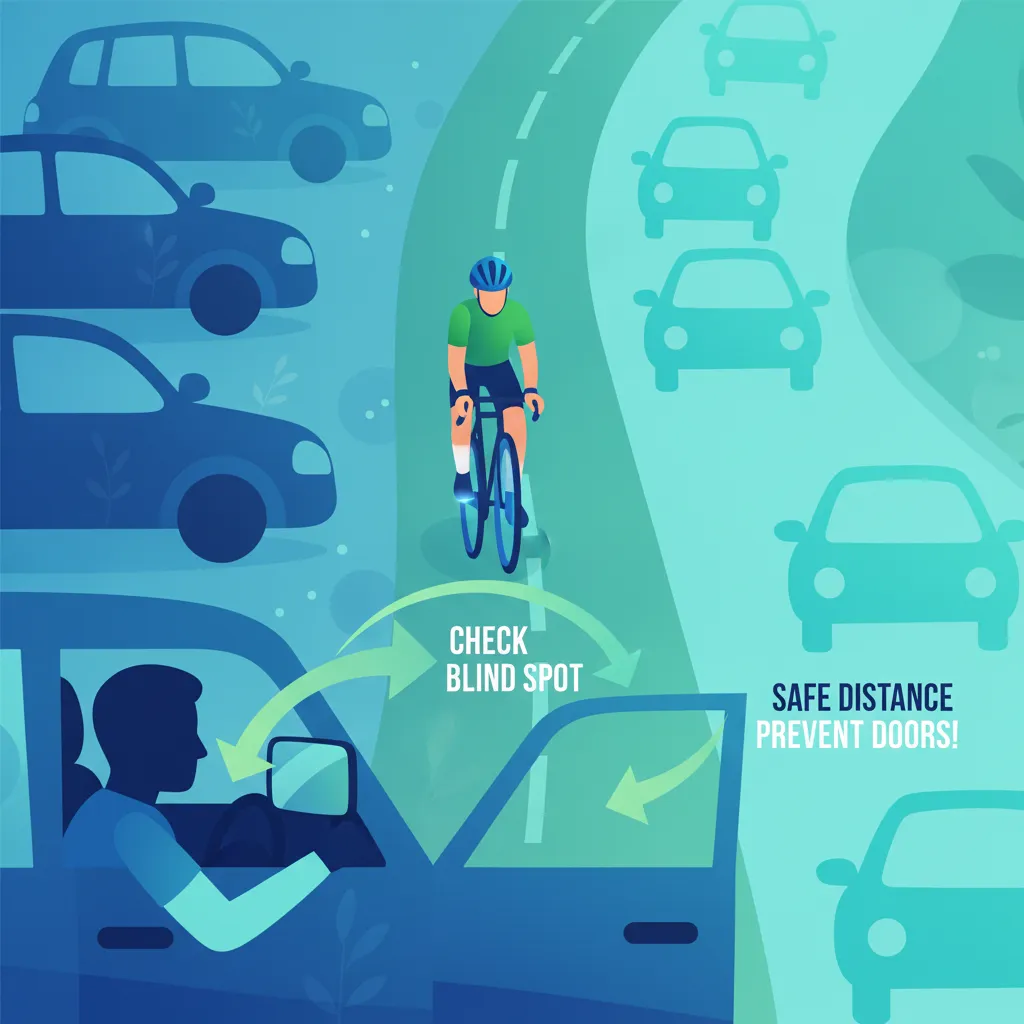
This lesson explains how to share the road safely with cyclists in both urban and rural environments. Drivers will study the legal minimum passing distances when overtaking cyclists, which is one meter in cities and one and a half meters outside urban areas. It also covers recognizing specialized cycling infrastructure, bike boxes at intersections, and preventing blind-spot collisions during right turns.

This lesson examines the specific challenges and responsibilities goods vehicle drivers face when interacting with pedestrians and cyclists in urban environments. Learners will understand right-of-way rules, the importance of yielding at pedestrian crossings, and safe turning practices that protect cyclists. The content emphasizes heightened driver vigilance, especially when navigating bike lanes and crowded sidewalks.
Correctly using your vehicle's lighting system is critical for visibility and communicating with other drivers on the road. This lesson explains when to use low beams (feux de croisement), high beams (feux de route), position lights, and specialized front and rear fog lights. You will learn the legal lighting configurations for driving in urban tunnels, rainy weather, dense fog, and dark rural roads.

This lesson focuses on the inherent vulnerability of AM vehicles due to their limited mass, exposure, and visibility within mixed traffic flows on French roads. Learners will examine how blind spots, sudden lane changes by larger vehicles, and higher impact severity affect small vehicle safety. The content underscores the necessity for riders to adopt proactive safety measures, maintain safe distances, and be constantly aware of surrounding traffic dynamics.

Certain groups of road users require heightened defensive attention from drivers due to physical limitations or unpredictable behaviors. This lesson covers how to recognize signs of visual impairment (white canes), mobility challenges, and the unpredictability of young children. You will learn to reduce your speed, extend yielding patience, and proactively secure extra space to protect these vulnerable users.
This lesson covers the operational logic of traffic light signals in France, emphasizing the legal implications of the red, amber, and green cycles. You will study how to safely manage the amber phase to avoid rear-end collisions from vehicles behind while maintaining control. Additionally, you will discover the unique challenge of electromagnetic induction loops, which sometimes fail to detect lightweight motorcycles at quiet intersections.
This lesson provides guidance on safe riding practices during nighttime, emphasizing proper headlamp usage, reflective clothing, and strategies to manage glare from oncoming traffic. Learners will learn to compensate for reduced peripheral vision and increased fatigue, as well as to identify common night road hazards in France. By applying these techniques, riders can enhance their visibility and safety after dark.
Find clear answers to common questions learners have about Helmet Laws and Correct Usage. Learn how the lesson is structured, which driving theory objectives it supports, and how it fits into the overall learning path of units and curriculum progression in France. These explanations help you understand key concepts, lesson flow, and exam focused study goals.
No, you must use a helmet that meets official safety standards, specifically those bearing the CE mark. This indicates the helmet has been tested and approved for use on French public roads.
Even if you are wearing an approved helmet, it will not protect you effectively if the strap is loose or unfastened. Furthermore, failing to secure your helmet correctly is a punishable traffic violation under the French Code de la route.
Yes, it is highly recommended. Internal damage to the shock-absorbing material is often invisible to the naked eye. For your safety, always replace a helmet that has been involved in an impact.
The ETG (Exam Théorique Général) or specific AM tests often feature questions about mandatory equipment. You must know that the helmet is the primary piece of safety gear required by law for all cyclomoteur and scooter operators.
Ready to focus your study? Use the practice search to find exactly the French driving theory questions you need for the Code de la route and permis de conduire ETG. Refine your knowledge on specific topics or challenging rules to boost your confidence and exam readiness.