
Transitioning to a motorhome involves understanding significantly different vehicle dynamics, including increased weight, height, and wind sensitivity. This guide helps learners understand how to apply German road traffic regulations, specifically those governed by the StVO, to larger vehicles. You will learn the importance of spatial awareness and legal weight limits to ensure you are fully prepared for both the road and the theory exam.
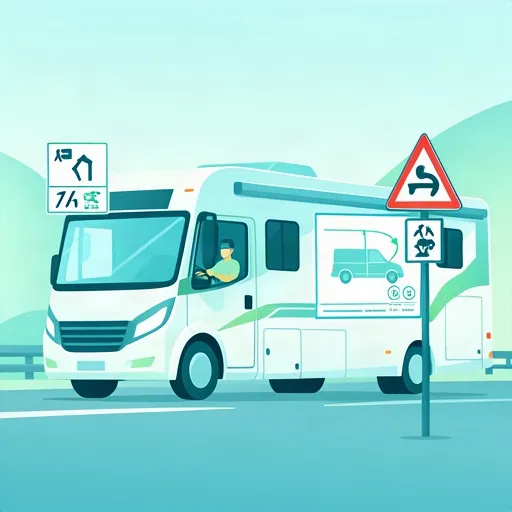
Article content overview
Operating a motorhome, or Wohnmobil, on German roads requires a shift in mindset for drivers accustomed to standard passenger vehicles. Whether you are planning a holiday through the scenic routes of the Black Forest or navigating urban environments, understanding the physical dynamics and legal constraints of larger vehicles is essential. This guide covers the critical aspects of German road traffic regulations—known as the Straßenverkehrs-Ordnung (StVO)—that apply to campervans and motorhomes, helping you bridge the gap between theory and road safety.
The most fundamental rule for driving a motorhome in Germany revolves around the total permissible weight (zulässige Gesamtmasse). Under the standard Class B driving license, you are generally permitted to drive vehicles with a gross vehicle weight of up to 3,500 kg (3.5 tons). Many modern motorhomes are designed to fall exactly under this limit to accommodate the millions of drivers holding a standard license.
If you choose to drive a vehicle that exceeds this weight limit, your current Class B license will not suffice. For vehicles between 3,500 kg and 7,500 kg, you would require a Class C1 license. Ignorance of your specific vehicle's weight rating is not considered a valid defense in a traffic stop, and exceeding your license class can lead to serious legal consequences, including fines and the invalidation of insurance coverage.
Driving a motorhome is significantly different from operating a standard car due to the vehicle's height, length, and width. In the theory test, you will often encounter questions about spatial awareness, which is the ability to perceive your vehicle's position within the lane and its proximity to surrounding infrastructure. A motorhome has a higher center of gravity, making it more sensitive to crosswinds and affecting its stability during cornering.
When you are behind the wheel, you must constantly monitor your surroundings for height restrictions. In urban areas, bridges, underpasses, and parking structures often have clearance limits that a standard car would clear without issue, but which could lead to a catastrophic collision for a motorhome. Always be aware of the exact height of your vehicle, including any roof-mounted equipment, and watch for warning signs.
The Straßenverkehrs-Ordnung (StVO) applies to all motor vehicles, but the size and mass of a motorhome dictate a more cautious approach. Your braking distance increases significantly with weight; a fully loaded camper requires much more room to come to a complete stop than a sedan. Furthermore, turning maneuvers must be performed with a wider radius to avoid clipping curbs or striking objects with the rear of the vehicle, which has a significant "tail swing."
In the context of the German driving theory test, you should be prepared for questions regarding "Hazard Perception." When driving a large vehicle, you must anticipate the behavior of other road users, particularly cyclists and pedestrians in urban zones. You should also be familiar with specific traffic signs that prohibit the entry of vehicles over a certain weight or width.
Driving a motorhome in Germany requires more than just a standard license; you must understand the weight-based licensing thresholds (Class B up to 3.5t, Class C1 up to 7.5t) and ensure your vehicle stays within legal limits. The vehicle's increased height, length, and mass create unique handling challenges including greater wind sensitivity, extended braking distances, and significant tail swing during turns. Always check the zulässige Gesamtmasse (zGM) rather than the empty weight, and adjust your mirrors, route planning, and spatial awareness accordingly. The StVO applies to all vehicles, but larger motorhomes demand heightened anticipation of hazards, especially regarding cyclists and pedestrians in urban areas.
A short set of high-value points that capture the most important ideas from this article.
A standard Class B license permits driving motorhomes up to 3,500 kg (3.5 tons) total permissible weight; heavier vehicles require a Class C1 license.
Motorhomes have a higher center of gravity than cars, making them more sensitive to crosswinds and less stable during cornering.
The rear of a long vehicle swings wide during turns (tail swing), requiring a wider turning radius and careful mirror observation.
Always verify your motorhome's exact height before driving, as bridges, underpasses, and parking structures have clearance limits that vary.
Before each journey, adjust mirrors to account for larger blind spots and check that the loaded vehicle weight remains under your license limit.
zGM (zulässige Gesamtmasse) is the maximum loaded weight as specified by the manufacturer and shown on registration documents.
Class C1 covers vehicles between 3,500 kg and 7,500 kg; exceeding your license class invalidates insurance and carries fines.
Height warning signs (Road Sign 265) indicate maximum clearance—always account for roof-mounted equipment.
Heavier vehicles require longer braking distances; a fully loaded motorhome needs significantly more stopping room than a sedan.
Plan your route in advance to avoid roads with weight, height, or width restrictions that may block larger vehicles.
Assuming the vehicle's unladen weight determines license requirements instead of the total permissible weight (zGM).
Failing to account for roof-mounted accessories when checking vehicle height, leading to low-clearance collisions.
Setting mirrors for a standard car and leaving large blind spots along the sides of a wider motorhome.
Underestimating tail swing when turning, potentially striking curbs or pedestrians on the inside of the turn.
Overlooking weight restrictions on certain roads or bridges because the motorhome 'looks' like it would fit.
Article content overview
A short set of high-value points that capture the most important ideas from this article.
A standard Class B license permits driving motorhomes up to 3,500 kg (3.5 tons) total permissible weight; heavier vehicles require a Class C1 license.
Motorhomes have a higher center of gravity than cars, making them more sensitive to crosswinds and less stable during cornering.
The rear of a long vehicle swings wide during turns (tail swing), requiring a wider turning radius and careful mirror observation.
Always verify your motorhome's exact height before driving, as bridges, underpasses, and parking structures have clearance limits that vary.
Before each journey, adjust mirrors to account for larger blind spots and check that the loaded vehicle weight remains under your license limit.
zGM (zulässige Gesamtmasse) is the maximum loaded weight as specified by the manufacturer and shown on registration documents.
Class C1 covers vehicles between 3,500 kg and 7,500 kg; exceeding your license class invalidates insurance and carries fines.
Height warning signs (Road Sign 265) indicate maximum clearance—always account for roof-mounted equipment.
Heavier vehicles require longer braking distances; a fully loaded motorhome needs significantly more stopping room than a sedan.
Plan your route in advance to avoid roads with weight, height, or width restrictions that may block larger vehicles.
Assuming the vehicle's unladen weight determines license requirements instead of the total permissible weight (zGM).
Failing to account for roof-mounted accessories when checking vehicle height, leading to low-clearance collisions.
Setting mirrors for a standard car and leaving large blind spots along the sides of a wider motorhome.
Underestimating tail swing when turning, potentially striking curbs or pedestrians on the inside of the turn.
Overlooking weight restrictions on certain roads or bridges because the motorhome 'looks' like it would fit.
Explore related topics, search based questions, and concepts that learners often look up when studying Motorhome License and Driving Skills. These themes reflect real search intent and help you understand how this topic connects to wider driving theory knowledge in Germany.
Find clear and practical answers to common questions learners often have about Motorhome License and Driving Skills. This section helps explain difficult points, remove confusion, and reinforce the key driving theory concepts that matter for learners in Germany.
Yes, a standard Class B license allows you to drive motorhomes with a maximum authorized mass of up to 3,500 kg (3.5 tonnes).
If the vehicle's maximum authorized mass exceeds 3,500 kg, you will require a higher license category, such as Class C1, which covers vehicles up to 7,500 kg.
Motorhomes are longer, wider, and taller than standard cars, meaning they have a larger turning radius and are subject to height restrictions on roads and bridges that do not apply to passenger cars.
Due to their significantly higher weight and mass, motorhomes have a longer braking distance compared to standard cars; you must maintain a greater safety gap to the vehicle in front.
Didn't find what you were looking for? Continue your German driving theory preparation by exploring related articles, specific road sign categories, or in-depth guides on complex traffic situations. Deepen your understanding before the official test.