
Navigating construction zones requires strict adherence to temporary speed limits to ensure the safety of road workers and other motorists. This guide explains why these regulations persist regardless of time or worker presence and clarifies the legal consequences of speeding in these critical areas, helping you prepare for your German driving theory test.
Article content overview
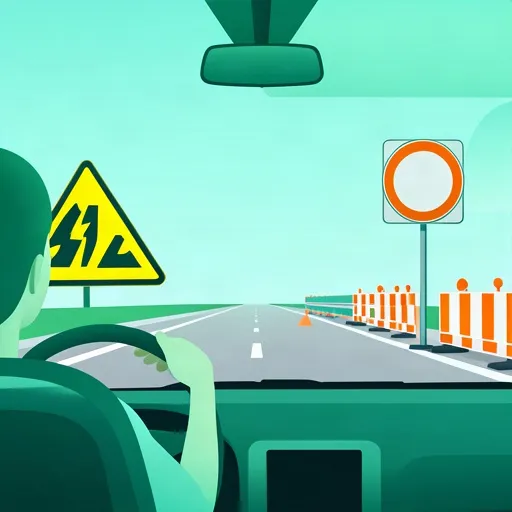
Driving on the German Autobahn requires constant attention, but construction zones—known as Baustellen—represent some of the most challenging environments for any motorist. Whether you are a learner preparing for your German driving theory test or an experienced driver navigating the A7 or A8, understanding the specific regulations governing these areas is critical. Construction zones are not just zones of convenience; they are high-risk environments where infrastructure changes, such as narrowed lanes and temporary markings, create unique hazards that demand your full concentration.
A common point of frustration for many drivers is encountering a strict speed limit of 60 or 80 km/h in a construction zone during late-night or early-morning hours when no road workers are visible. It is a widespread myth that these limits are only binding when work is actively taking place. In Germany, traffic regulations are based on the structural reality of the road, not the presence of personnel. Even if the site appears empty, the hazards—such as reduced lane widths, uneven surfaces, or displaced traffic routing—remain constant.
When you see a speed limit sign in a construction zone, it is legally binding at all times until it is officially cancelled by an end-of-restriction sign or until you have safely exited the marked section. Authorities enforce these limits precisely because the risk of accidents remains elevated regardless of the time of day.
In various European countries, such as Italy or Spain, speeding fines may automatically double in construction zones to deter reckless driving. Many learners mistakenly believe this rule applies in Germany as well. Under current German law, there is no automatic doubling of fines simply because a violation occurs within a Baustelle.
However, this does not mean the consequences are light. Speeding violations in construction zones are processed according to the standard Bußgeldkatalog (fine catalogue). Because these areas are classified as high-risk zones, police frequently deploy mobile radar units (Blitzer) to ensure compliance. If you are caught speeding, you face the standard penalties, which include monetary fines, potential points in the Flensburg register, and, depending on the severity of the offense, temporary driving bans. Safety compliance is an essential part of the German theory exam, and you will likely encounter questions that test your ability to recognize how signage dictates your responsibility.
Driving through road works requires more than just watching the speedometer. You must be prepared to respond to temporary lane markings, which often take precedence over permanent markings, and recognize specific signs that warn of merging traffic or reduced lane widths.
When navigating these areas, prioritize maintaining a sufficient following distance. Because heavy goods vehicles (HGVs) often struggle to maintain stability in narrow lanes, being trapped in their blind spots can be life-threatening.
When you sit for your driving theory test, questions regarding Baustellen will focus on hazard perception. You are expected to recognize that the complexity of the road environment increases significantly in these zones. Always look for:
Speed limits in German construction zones are permanently enforceable because hazards such as narrowed lanes and uneven surfaces persist regardless of worker presence or time of day. Unlike some other European countries, Germany does not automatically double fines for speeding in Baustellen—violations follow the standard Bußgeldkatalog, with enforcement often including mobile radar units. Drivers must recognize that temporary yellow markings override permanent ones, and Zeichen 616 signals mandatory lane changes. Understanding these rules is essential for both safe driving and passing the German driving theory exam, which tests hazard perception in construction environments.
A short set of high-value points that capture the most important ideas from this article.
Speed limits in German construction zones (Baustellen) are legally binding 24 hours a day, regardless of whether workers are present or not.
German traffic regulations are based on the structural reality of the road, not on the presence of personnel or time of day.
Temporary yellow lane markings in construction zones take precedence over permanent white markings.
Construction zones are high-risk environments where hazards like narrowed lanes and uneven surfaces remain constant even when the site appears empty.
Speed enforcement in Baustellen often includes mobile radar units (Blitzer) deployed specifically for these high-risk areas.
The Zeichen 616 (mobile barrier) sign indicates lane closure and requires mandatory lane change to the adjacent lane.
Under the Bußgeldkatalog, there is NO automatic doubling of fines for speeding in construction zones in Germany.
StVO requires drivers to adapt speed to road, traffic, and visibility conditions—in construction zones, 'adapted speed' essentially means the posted limit.
Speed limits remain in effect until officially cancelled by an end-of-restriction sign or until you have exited the marked construction section.
The Flensburg register records points for traffic violations, which can result in temporary driving bans for serious speeding offenses.
Believing speed limits in Baustellen only apply when workers are visibly present at the site.
Assuming that fines are automatically doubled in German construction zones, as they might be in Italy or Spain.
Ignoring temporary yellow lane markings, which override permanent white markings and indicate the current traffic routing.
Attempting to use the emergency lane (Standspur) to bypass traffic congestion in construction zones—this is illegal and blocks emergency vehicles.
Assuming the Richtgeschwindigkeit (recommended speed) applies in construction zones, when it is suspended and posted limits must be followed.
Article content overview
A short set of high-value points that capture the most important ideas from this article.
Speed limits in German construction zones (Baustellen) are legally binding 24 hours a day, regardless of whether workers are present or not.
German traffic regulations are based on the structural reality of the road, not on the presence of personnel or time of day.
Temporary yellow lane markings in construction zones take precedence over permanent white markings.
Construction zones are high-risk environments where hazards like narrowed lanes and uneven surfaces remain constant even when the site appears empty.
Speed enforcement in Baustellen often includes mobile radar units (Blitzer) deployed specifically for these high-risk areas.
The Zeichen 616 (mobile barrier) sign indicates lane closure and requires mandatory lane change to the adjacent lane.
Under the Bußgeldkatalog, there is NO automatic doubling of fines for speeding in construction zones in Germany.
StVO requires drivers to adapt speed to road, traffic, and visibility conditions—in construction zones, 'adapted speed' essentially means the posted limit.
Speed limits remain in effect until officially cancelled by an end-of-restriction sign or until you have exited the marked construction section.
The Flensburg register records points for traffic violations, which can result in temporary driving bans for serious speeding offenses.
Believing speed limits in Baustellen only apply when workers are visibly present at the site.
Assuming that fines are automatically doubled in German construction zones, as they might be in Italy or Spain.
Ignoring temporary yellow lane markings, which override permanent white markings and indicate the current traffic routing.
Attempting to use the emergency lane (Standspur) to bypass traffic congestion in construction zones—this is illegal and blocks emergency vehicles.
Assuming the Richtgeschwindigkeit (recommended speed) applies in construction zones, when it is suspended and posted limits must be followed.
Explore related topics, search based questions, and concepts that learners often look up when studying German Construction Zone Speed Rules. These themes reflect real search intent and help you understand how this topic connects to wider driving theory knowledge in Germany.
Find clear and practical answers to common questions learners often have about German Construction Zone Speed Rules. This section helps explain difficult points, remove confusion, and reinforce the key driving theory concepts that matter for learners in Germany.
Yes. Speed limits in construction zones (Baustellen) are based on physical infrastructure changes, such as narrowed lanes or temporary road surfaces, and remain legally binding 24/7 regardless of whether workers are currently on-site.
No. Unlike in some other European countries, Germany does not have a federal law that automatically doubles fines for speeding specifically within construction zones. Fines are determined by the standard Bußgeldkatalog based on the severity of the violation.
The fahrbare Absperrtafel (mobile barrier board) is a safety device used to warn drivers of upcoming lane closures or narrowings, often marking the immediate area where construction work is occurring.
The theory exam often tests your ability to recognize hazardous situations. Understanding that construction zones are official 'danger spots' (Gefahrenstellen) is crucial for identifying why speed reduction is mandatory for safety, not just legal compliance.
Didn't find what you were looking for? Continue your German driving theory preparation by exploring related articles, specific road sign categories, or in-depth guides on complex traffic situations. Deepen your understanding before the official test.