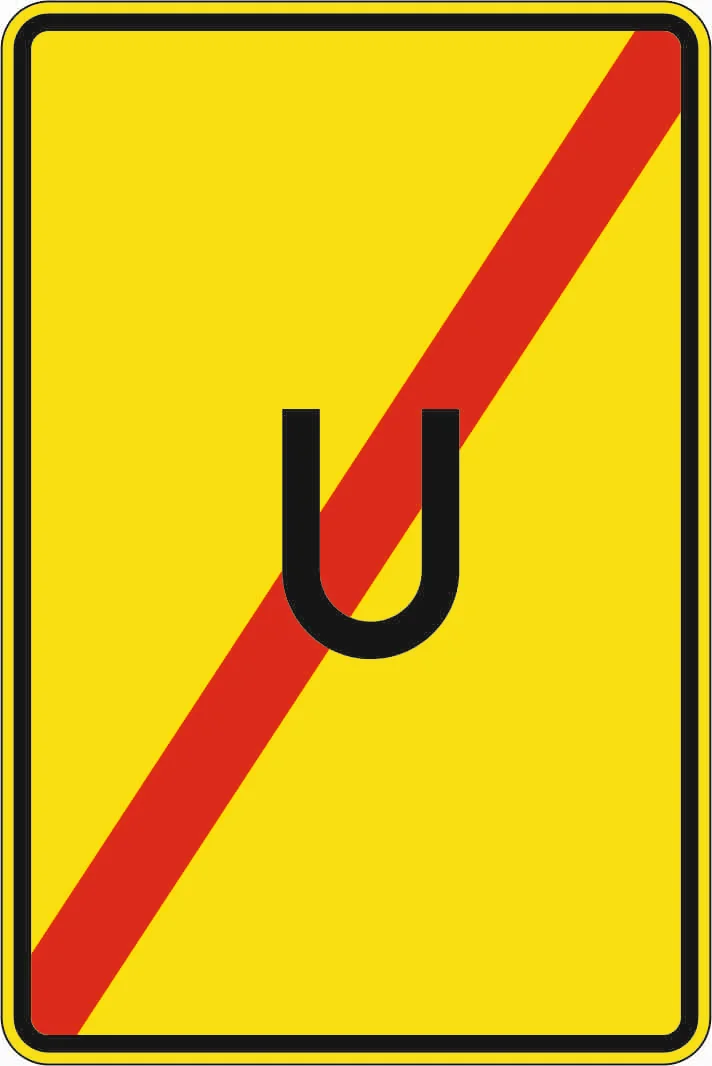
This German traffic sign 455.2, officially 'Ende der Umleitung', signals the end of a previously indicated diversion route. As part of the guide and information signs group, it helps drivers reintegrate into normal traffic flow. When you see this sign, it means the temporary route is over and you should prepare to follow standard road markings and rules, or proceed towards your intended destination without further diversionary guidance.
Hide the name and meaning, look at the sign and check whether you know what it means.
Master the meaning of German road sign 455.2, the 'End Umleitung' (End of Diversion) marker. This crucial road sign explanation helps you understand when a temporary diversion route concludes, vital for accurate traffic sign interpretation during your theory test revision.
German road sign 455.2, officially designated "Ende der Umleitung (in Verb. m. Z 455.1)", belongs to the guide and information signs group. It provides official information that supports orientation and safer decisions without usually creating a prohibition by itself. You may see it in route guidance, priority-road sections, motorway services, parking facilities, tourist destinations, diversions, and local information points, depending on how the road authority has arranged the location. An end version marks the point where that specific rule, facility, or marked section ceases to apply. The practical meaning is not just the symbol itself, but the driving decision it triggers: adjust speed, position, priority, route choice, stopping behaviour, or attention before the situation becomes urgent. For learners, the key skill is using the information early while still obeying mandatory signs and markings. Always combine the sign with road markings, traffic lights, police instructions, and any supplementary plates at the same location.
German road sign 455.2 means "End Umleitung (in Verb. m. Z 455.1)" and is officially listed as "Ende der Umleitung (in Verb. m. Z 455.1)". In practice, it tells drivers to recognise the situation early, adapt before reaching the controlled area, and check whether markings or supplementary plates change how the rule applies.
Get clear, practical answers to the most common questions about the 455.2 - End Umleitung (in Verb. m. Z 455.1) road sign. Learn how the sign works, what rules it represents, and how it affects real driving situations. This FAQ strengthens your understanding and supports accurate decision making for the German driving theory exam in Germany.
Sign 455.2, officially "Ende der Umleitung (in Verb. m. Z 455.1)", indicates that a temporary diversion route is no longer in effect. You are now returning to the normal traffic flow or the original route.
Upon seeing sign 455.2, you should be aware that the diversion is ending. Prepare to follow regular road markings, traffic signals, and priority rules, or to resume your planned route. This might involve a gradual lane change or adjusting your speed to match the normal traffic conditions.
No, sign 455.2 is a guide and information sign. It does not impose a prohibition but rather provides information about the end of a specific situation (the diversion). You must, however, continue to obey all other mandatory signs, priority rules, and lane markings.
A common trap is assuming that the end of the diversion means you are automatically back on your original planned route or that all temporary restrictions have been lifted. Always pay attention to subsequent signs and road markings to ensure you are navigating correctly and following current traffic rules.
While sign 455.2 itself indicates the end of a diversion, it's crucial to always check for any supplementary plates or accompanying road markings. These might provide further instructions or clarify the exact point at which the diversion ends or what the new traffic situation is.
A clear reference image of the 455.2 - End Umleitung (in Verb. m. Z 455.1) road sign used in Germany.
The 455.2 - End Umleitung (in Verb. m. Z 455.1) road sign may also be known by these alternative names or terms.
The 455.2 - End Umleitung (in Verb. m. Z 455.1) road sign is part of the German Guide and Information Signs category, which groups together signs with similar rules and functions.
Reviewing signs similar to this one helps cement your knowledge, improving recognition and reducing errors on your German driving theory test. Comparing traffic signs aids in understanding subtle differences crucial for accurate decision-making and successful exam preparation.
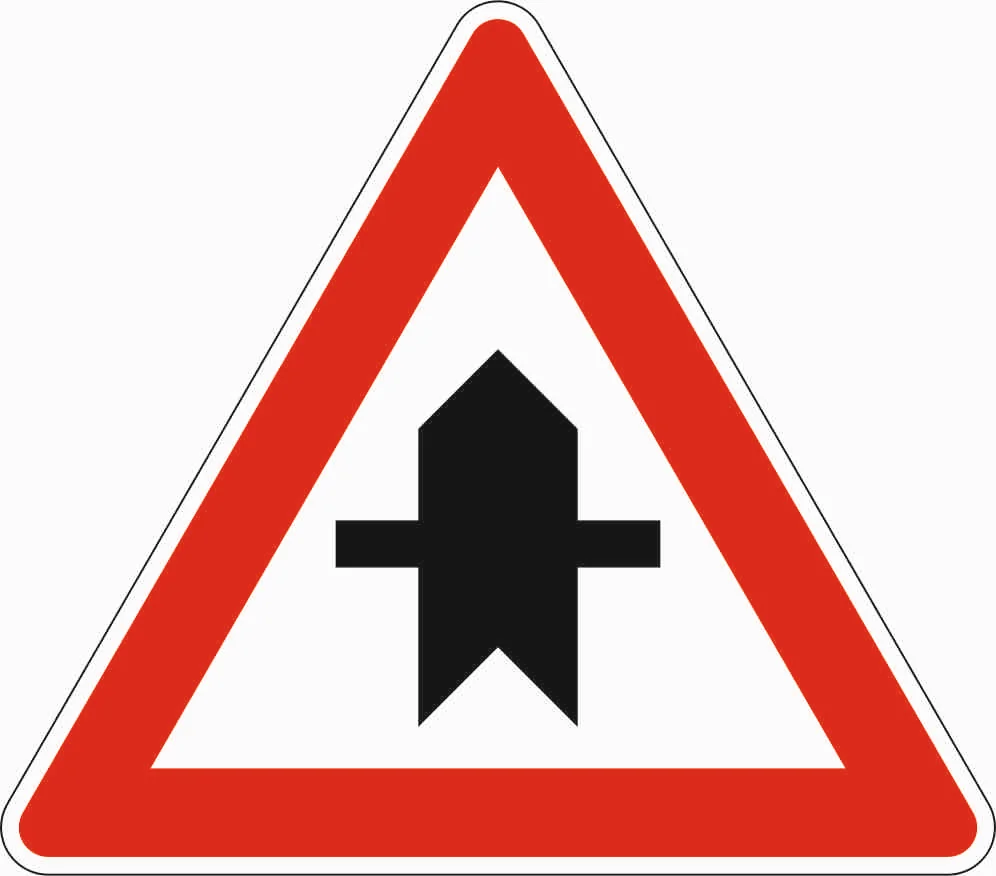
Understand German Sign 301: The Priority Road Sign
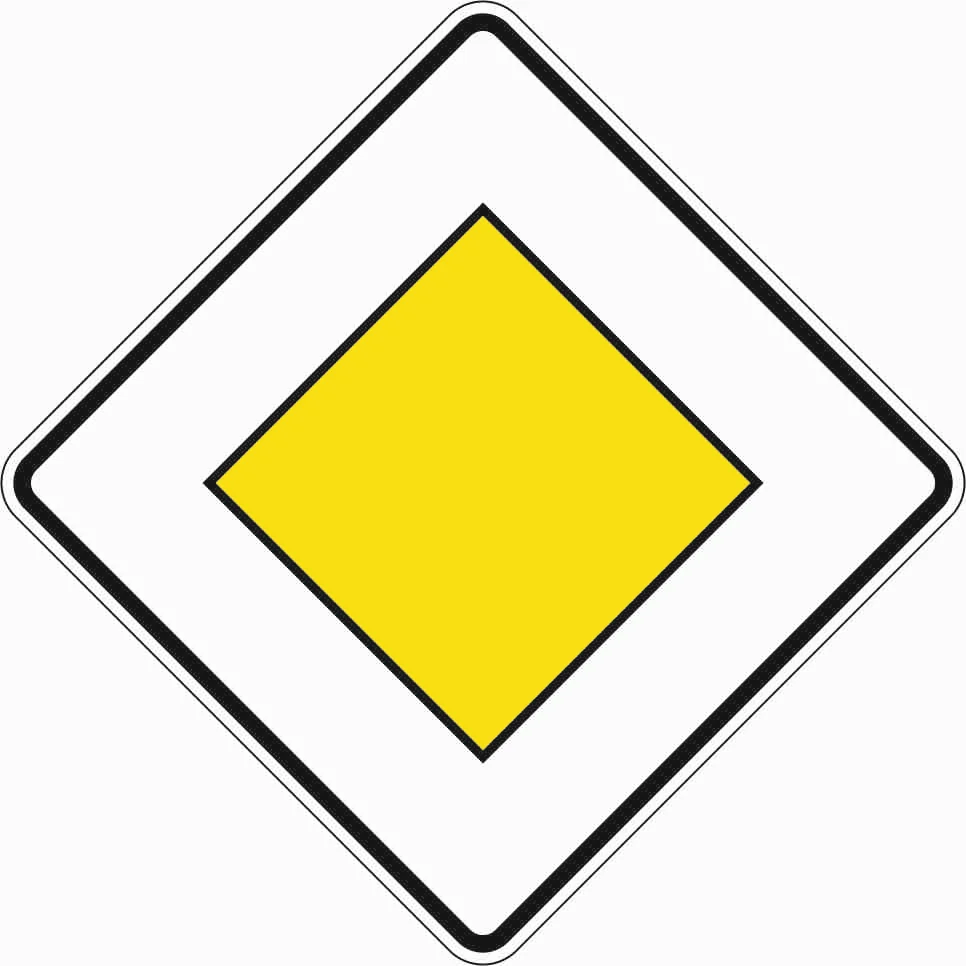
Sign 306: Understand Germany's 'Priority Road' Traffic Sign
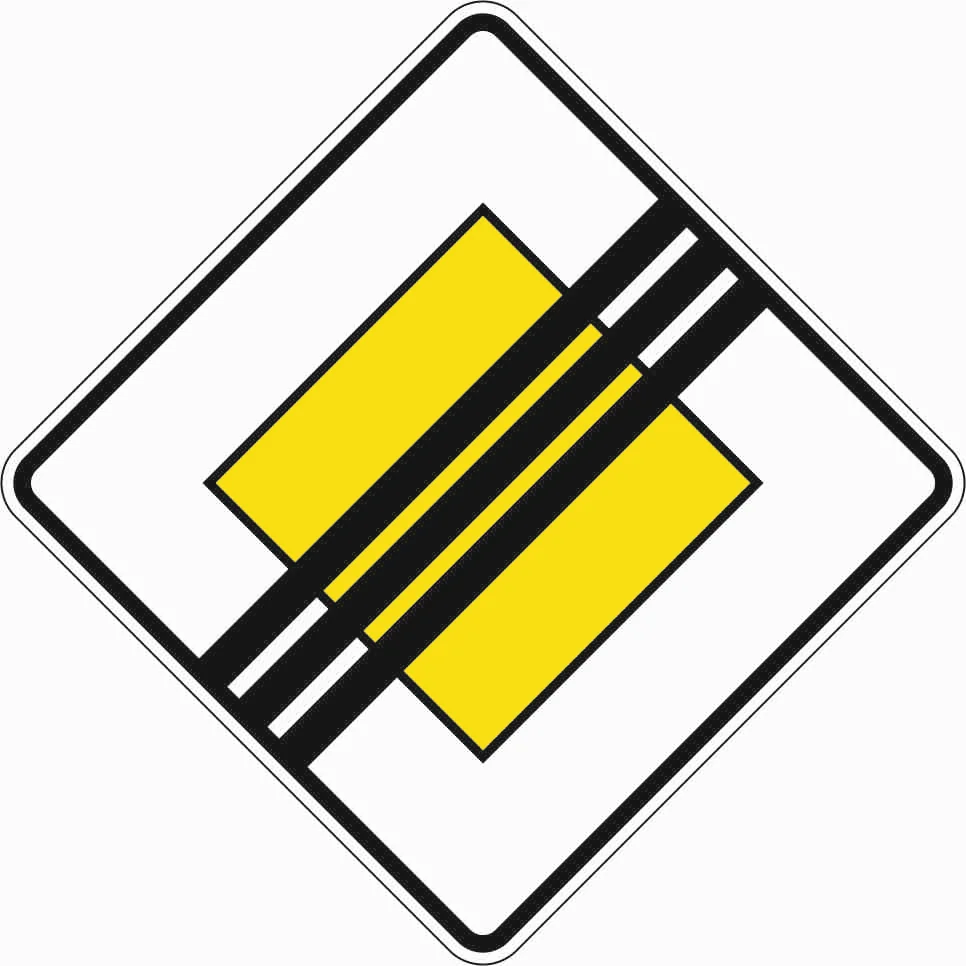
German Sign 307: You're Leaving the Priority Road
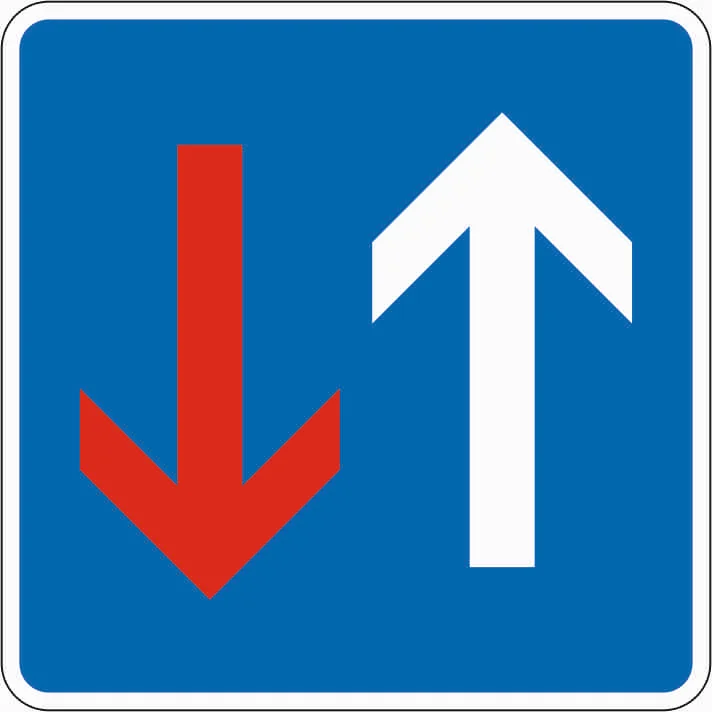
Sign 308: You Have Priority Over Oncoming Traffic
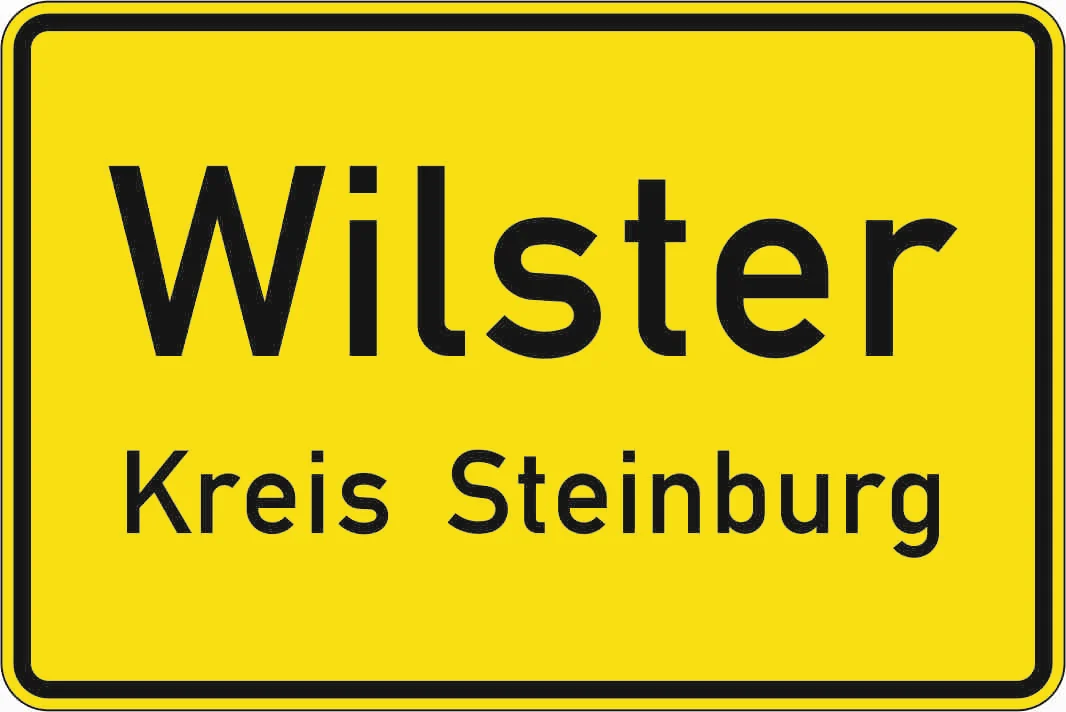
German Sign 310: Recognizing Place Names Ahead
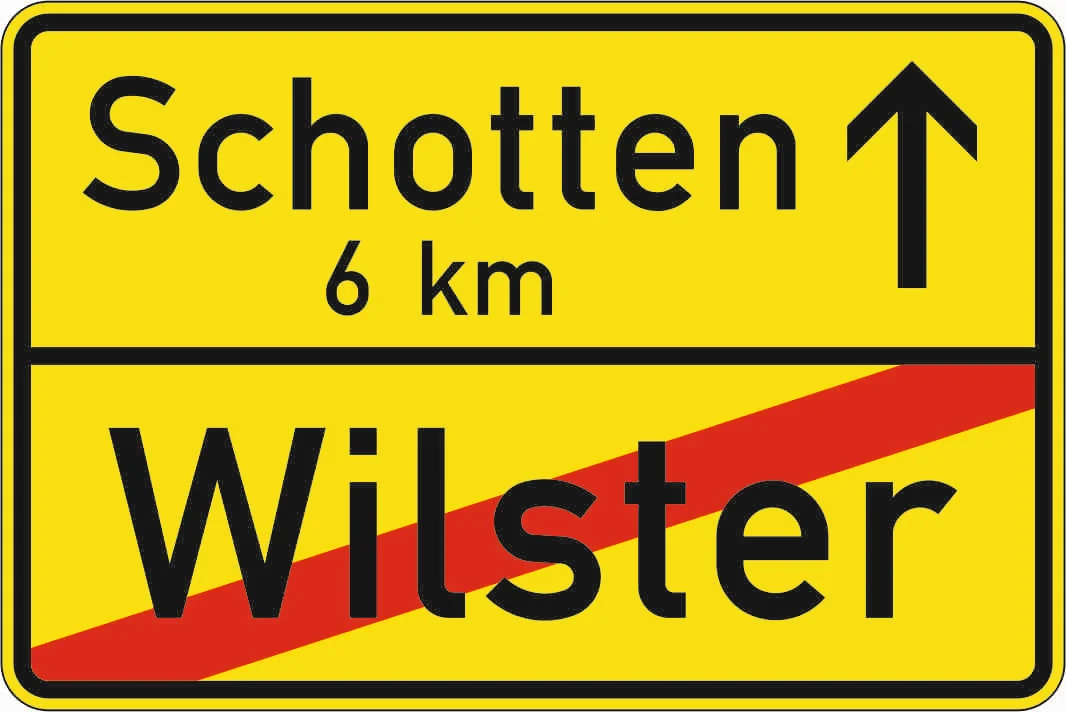
Sign 311 (Ortstafel Rückseite) - Understanding Place-Name Sign Backsides
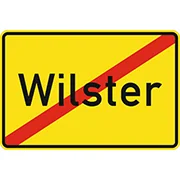
German Sign 311.1: Understand the Back of a Place-Name Sign without a Destination
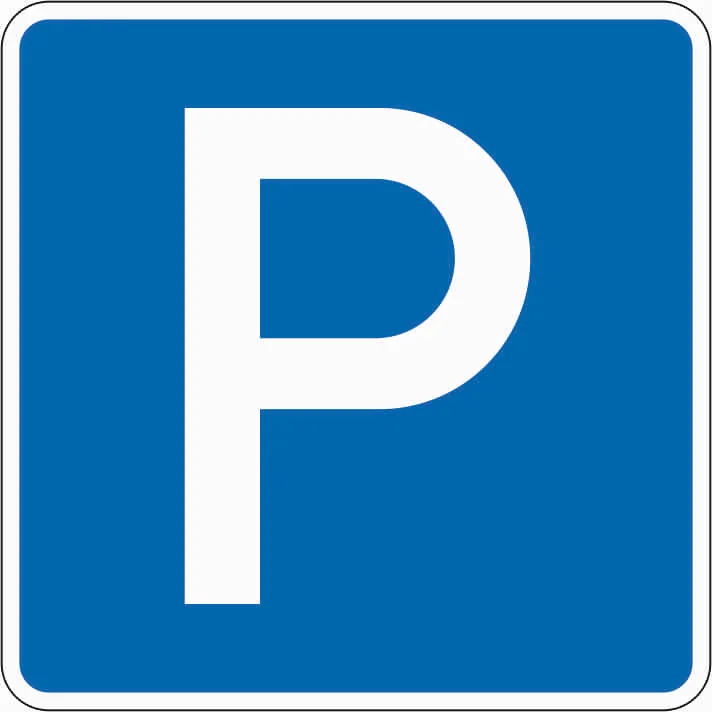
Sign 314 'Parken' Provides Information About Parking Facilities and Rules
Deepen your understanding of these specific road markings by exploring related traffic rules and situational hazard perception exercises. Applying the official StVO regulations ensures you recognize critical signage accurately during your theory test.
Selecting the right driving school is a foundational step in your journey to obtaining a German driver's licence. This article outlines how to assess potential schools by considering the official Fahrschüler-Ausbildungsordnung alongside subjective indicators of teaching quality and organizational structure to help you prepare effectively for your theory and practical tests.
Stay Safe and Legal: Navigate German Roads with Confidence in Any Weather.
Master the crucial first steps after an accident to avoid legal penalties.
Securing a driving license in Germany requires a clear understanding of the legal requirements and the structured path from theory lessons to your final examination. This guide breaks down the essential criteria for selecting an officially recognized driving school in Hamburg and clarifies the differences between license classes like B, A1, and C, ensuring you are well-prepared for the regulations governed by the FEV.
German road sign 286-11, officially designated "Eingeschränktes Haltverbot - Ende - Aufstellung links", belongs to the regulatory signs group. It creates a binding restriction or prohibition that applies until it is cancelled, replaced, or limited by a supplementary plate. You may see it in junctions, restricted streets, cycle and pedestrian facilities, parking areas, low-emission zones, and roads with binding lane or speed rules, depending on how the road authority has arranged the location. This left-side version is used where the sign is placed on the left side of the carriageway or where a mirrored symbol fits the approach direction. An end version marks the point where that specific rule, facility, or marked section ceases to apply. Any left reference should be read as part of the direction, road side, lane arrangement, or placement shown by the sign. The practical meaning is not just the symbol itself, but the driving decision it triggers: adjust speed, position, priority, route choice, stopping behaviour, or attention before the situation becomes urgent. For learners, the key skill is knowing whether the sign commands, forbids, limits, or cancels a rule. Always combine the sign with road markings, traffic lights, police instructions, and any supplementary plates at the same location.
German road sign 550-21, officially designated "Zusammenführungstafel - an durchgehender Strecke - 2-streifig plus 1 Fahrstreifen von rechts", belongs to the traffic control boards group. It shows how lanes are arranged, shifted, narrowed, separated, or merged, usually before a roadworks or high-speed lane-change area. You may see it in motorways, multilane roads, temporary roadworks, lane closures, lane shifts, merge areas, and construction-stage traffic management, depending on how the road authority has arranged the location. An end version marks the point where that specific rule, facility, or marked section ceases to apply. Any right reference should be read as part of the direction, road side, lane arrangement, or placement shown by the sign. The practical meaning is not just the symbol itself, but the driving decision it triggers: adjust speed, position, priority, route choice, stopping behaviour, or attention before the situation becomes urgent. For learners, the key skill is translating the arrows into early lane choice rather than reacting at the last moment. Always combine the sign with road markings, traffic lights, police instructions, and any supplementary plates at the same location.
Deepen your understanding of specific road sign categories or test your knowledge with practice questions. Explore our themed sign groups for targeted study or jump into quizzes to reinforce your recognition skills for the official German theory exam.
All German Road Signs List