
On multi-lane roads and particularly on the German Autobahn, correct lane use is paramount for maintaining safe and fluid traffic flow. This principle, known as the 'Rechtsfahrgebot' (keep right rule), dictates how drivers should position their vehicles, when to overtake, and how to avoid obstructing faster traffic.
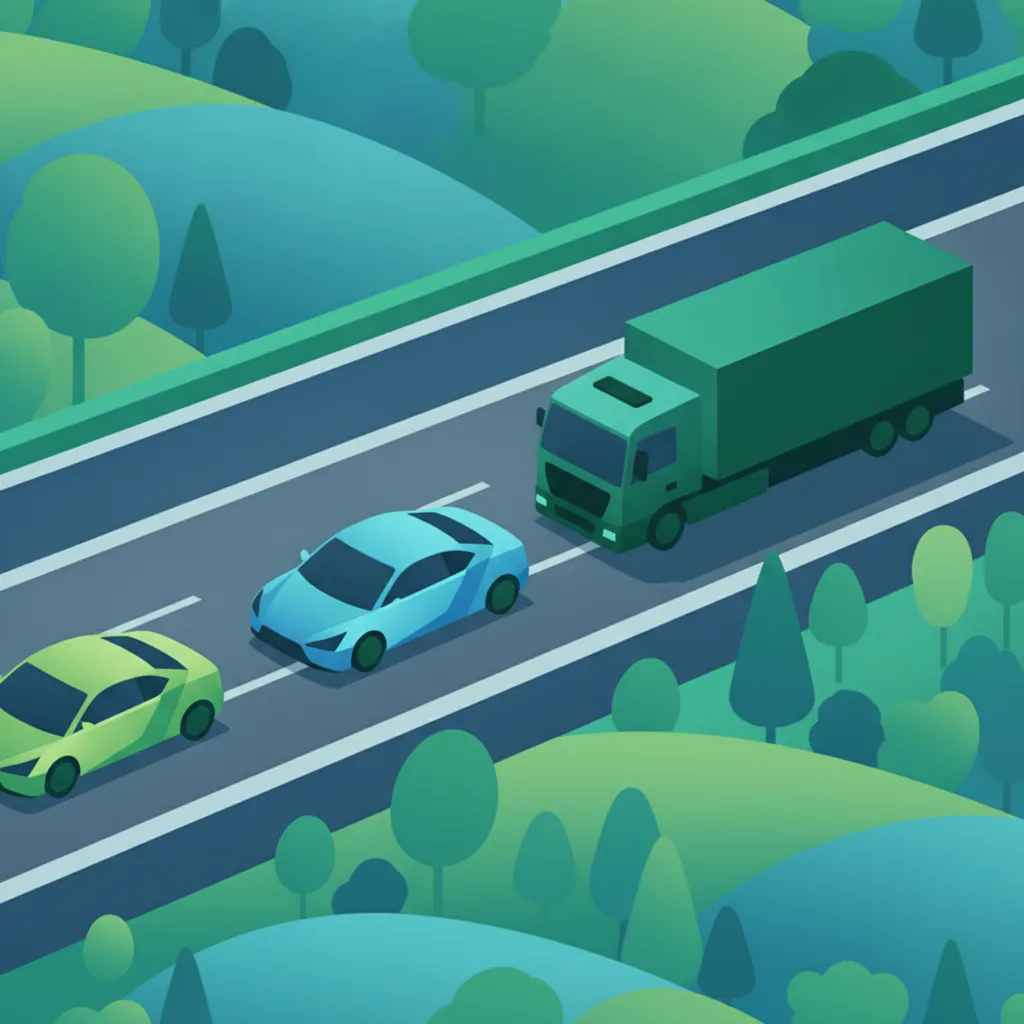
Theory topic content overview
Read the full theory topic guide for Motorway Lane Use with structured, easy-to-scan content built for learners in Germany. This detailed section explains the exact rule, meaning, traffic context, comparison points, and exam logic behind this German driving theory topic so you can study faster, understand the concept more clearly, and avoid common interpretation mistakes on the theory test.
In Germany, the fundamental rule governing lane use on multi-lane roads, especially on the iconic Autobahn, is the Rechtsfahrgebot (pronounced "rechts-far-ge-bote"). This principle, translated as "keep right rule," mandates that drivers must always use the rightmost lane possible. Left lanes are primarily reserved for overtaking, meaning passing slower vehicles, and should be vacated once the overtaking manoeuvre is complete and it is safe to return to the right.
The Rechtsfahrgebot is a cornerstone of the German Straßenverkehrs-Ordnung (StVO), the country's road traffic regulations. It is not merely a suggestion but a legal requirement designed to ensure efficient traffic flow and enhance road safety, particularly at the high speeds common on German motorways.
Understanding and adhering to proper motorway lane use in Germany is critical for several reasons:
Rechtsfahrgebot is essential for maintaining fluid traffic. When drivers keep to the right, it allows faster vehicles to use the left lanes for their intended purpose – overtaking – without impediment, preventing congestion and "phantom traffic jams."Rechtsfahrgebot can result in fines and points on your driving license. It's a common area for enforcement, particularly if obstruction is caused.Rechtsfahrgebot and correct overtaking procedures, often presenting scenarios where staying in a left lane is incorrect even if travelling at the speed limit.The Rechtsfahrgebot dictates a clear hierarchy of lane usage:
Rechtsfahrgebot can be relaxed slightly. If traffic is so dense that there's effectively a continuous line of vehicles in all lanes, drivers may remain in their lane. However, as soon as traffic flow eases, the principle applies again.This is where the Rechtsfahrgebot is most strictly enforced. Whether it's a Bundesstraße (federal highway) with multiple lanes or the Autobahn, the expectation is to keep right.
Within city limits, on roads with multiple marked lanes for the same direction, a different rule applies for vehicles up to 3.5 tonnes:
Trucks and other large vehicles (often over 3.5 tonnes) are frequently restricted to using only the rightmost lane, or the two rightmost lanes, on motorways and other multi-lane roads. This is indicated by specific road signs (e.g., a truck symbol with a crossed-out left lane). It is vital for all drivers to be aware of these restrictions and give heavy vehicles ample space.
When approaching traffic lights or intersections on multi-lane roads, drivers should select the appropriate lane well in advance based on their intended direction (straight, left turn, right turn). Lane designation arrows on the road surface or overhead signs will guide this.
A critical point of confusion for many learners and even experienced drivers, especially in Germany, is the relationship between the speed limit, a safe speed, and the Rechtsfahrgebot.
Rechtsfahrgebot. The left lane is for overtaking, not for "fast cruising" if the right lane is open.Rechtsfahrgebot always operates within the broader context of driving at a speed appropriate for the conditions. Even if the right lane is clear, you must not move into it if doing so would require sudden braking or create a hazardous situation due to the speed of traffic.Rechtsfahrgebot, you must move back to the right lane, even though you are travelling at the recommended speed. Failing to do so can impede faster traffic or create confusion.Rechtsfahrgebot is relaxed; you would stay in your lane within the slow-moving traffic flow, avoiding unnecessary lane changes that could worsen congestion.Rechtsfahrgebot: The most frequent error is simply staying in a left or middle lane when the right lane is clear. Learners often believe that because they are driving fast, they are exempt, or they are nervous about moving back and forth.The Rechtsfahrgebot is your guiding principle for motorway and multi-lane road use in Germany. Always strive to keep right. Use left lanes purposefully for overtaking and return to the right as soon as it is safe. This discipline is not just a rule; it's a core component of safe and efficient driving on German roads, vital for your theory test, and crucial for navigating the Autobahn confidently and responsibly. Remember: "Keep right unless overtaking, and return to the right once safe."
The Rechtsfahrgebot is Germany's fundamental keep-right rule for multi-lane roads and the Autobahn, mandating that drivers use the rightmost lane by default and only move left to overtake slower vehicles before returning right as soon as it is safe. The rule applies even at maximum speed limits, and travelling fast does not exempt drivers from lane discipline. Special exceptions exist for urban roads (innerorts) where vehicles under 3.5 tonnes may stay in the left lane for further manoeuvres, and for heavy vehicles over 3.5 tonnes which face additional lane restrictions. Common mistakes include unnecessarily hogging left lanes, attempting right-side overtaking, and inadequate observation before lane changes.
A short set of high-value points that capture the most important ideas from this theory explanation.
The Rechtsfahrgebot (keep right rule) is a legal requirement in Germany requiring drivers to use the rightmost lane and only use left lanes for overtaking.
Left lanes on German motorways are reserved for overtaking only; you must return to the right lane as soon as it is safe after passing.
Travelling at the maximum speed limit does not exempt you from the Rechtsfahrgebot; the left lane is not for fast cruising.
On multi-lane roads within built-up areas (innerorts), vehicles up to 3.5 tonnes may stay in the left lane if they plan to turn left or overtake again shortly.
Heavy vehicles over 3.5 tonnes face further restrictions on motorways, typically limited to the rightmost lane or two rightmost lanes.
Three-step lane discipline: default right, use left only to overtake, return to right as soon as safe.
Overtaking on the right (Rechtsüberholen) is forbidden on the Autobahn except in very slow-moving traffic (60 km/h or less) in specific congested conditions.
Heavy vehicles over 3.5 tonnes or with trailers often have mandatory lane restrictions, enforced by specific road signs.
In dense traffic where all lanes are effectively full, the Rechtsfahrgebot is relaxed until traffic flow eases.
Always check mirrors and signal before changing lanes; insufficient observation is a common and dangerous mistake.
Staying in a left or middle lane when the right lane is clear, often believing fast driving exempts you from the rule.
Overtaking a vehicle but lingering in the left lane much longer than necessary even when the right lane is open and safe to return to.
Attempting to overtake on the right, which is strictly forbidden and dangerous except in specific slow-moving traffic situations.
Insufficient mirror checks before changing lanes, leading to dangerous situations with faster traffic approaching from behind.
Frequent, unnecessary lane changes (slalom driving) without a clear overtaking purpose, which disrupts traffic flow.
Start with a short, direct summary of Motorway Lane Use before reading the full explanation below.
In Germany, drivers must always keep to the rightmost lane possible on multi-lane roads and motorways, using left lanes only for overtaking. After passing a slower vehicle, you should return to the right lane once it is safe to do so. Unnecessarily remaining in a left lane (the 'Rechtsfahrgebot' violation) can impede traffic flow and create hazardous situations.
Review the most important terms, rule signals, and traffic concepts linked to Motorway Lane Use.
Explore related theory topic pages connected to Motorway Lane Use and continue with the next useful rule explanation.
See the common search queries learners use when trying to understand Motorway Lane Use in Germany.

Solidify your understanding of German road rules. Explore specific theory topics in detail, from priority rules to complex Autobahn situations. Review key concepts and prepare thoroughly for every aspect of your official driving license theory examination.
German Driving Theory TopicsTheory topic content overview
A short set of high-value points that capture the most important ideas from this theory explanation.
The Rechtsfahrgebot (keep right rule) is a legal requirement in Germany requiring drivers to use the rightmost lane and only use left lanes for overtaking.
Left lanes on German motorways are reserved for overtaking only; you must return to the right lane as soon as it is safe after passing.
Travelling at the maximum speed limit does not exempt you from the Rechtsfahrgebot; the left lane is not for fast cruising.
On multi-lane roads within built-up areas (innerorts), vehicles up to 3.5 tonnes may stay in the left lane if they plan to turn left or overtake again shortly.
Heavy vehicles over 3.5 tonnes face further restrictions on motorways, typically limited to the rightmost lane or two rightmost lanes.
Three-step lane discipline: default right, use left only to overtake, return to right as soon as safe.
Overtaking on the right (Rechtsüberholen) is forbidden on the Autobahn except in very slow-moving traffic (60 km/h or less) in specific congested conditions.
Heavy vehicles over 3.5 tonnes or with trailers often have mandatory lane restrictions, enforced by specific road signs.
In dense traffic where all lanes are effectively full, the Rechtsfahrgebot is relaxed until traffic flow eases.
Always check mirrors and signal before changing lanes; insufficient observation is a common and dangerous mistake.
Staying in a left or middle lane when the right lane is clear, often believing fast driving exempts you from the rule.
Overtaking a vehicle but lingering in the left lane much longer than necessary even when the right lane is open and safe to return to.
Attempting to overtake on the right, which is strictly forbidden and dangerous except in specific slow-moving traffic situations.
Insufficient mirror checks before changing lanes, leading to dangerous situations with faster traffic approaching from behind.
Frequent, unnecessary lane changes (slalom driving) without a clear overtaking purpose, which disrupts traffic flow.
Start with a short, direct summary of Motorway Lane Use before reading the full explanation below.
In Germany, drivers must always keep to the rightmost lane possible on multi-lane roads and motorways, using left lanes only for overtaking. After passing a slower vehicle, you should return to the right lane once it is safe to do so. Unnecessarily remaining in a left lane (the 'Rechtsfahrgebot' violation) can impede traffic flow and create hazardous situations.
Review the most important terms, rule signals, and traffic concepts linked to Motorway Lane Use.
Explore related theory topic pages connected to Motorway Lane Use and continue with the next useful rule explanation.
See the common search queries learners use when trying to understand Motorway Lane Use in Germany.
Solidify your understanding of German road rules. Explore specific theory topics in detail, from priority rules to complex Autobahn situations. Review key concepts and prepare thoroughly for every aspect of your official driving license theory examination.
German Driving Theory TopicsUse this exam-focused revision tip to understand how Motorway Lane Use is likely to appear in theory questions for learners in Germany. This section helps you identify the most testable part of the rule, avoid common traps, and remember the concept more effectively during German driving theory exam preparation.
A common mistake in the German theory exam is failing to return to the right lane after overtaking, or believing that you can stay in a left lane simply because you are travelling at the maximum speed limit. Remember the 'Rechtsfahrgebot' – keep right unless actively overtaking.
Read direct answers to the most common learner questions about Motorway Lane Use in Germany. This FAQ focuses on rule confusion, practical meaning, comparison with similar concepts, and the exact uncertainties that appear most often in German driving theory revision and exam preparation.
The basic rule is the 'Rechtsfahrgebot', meaning drivers must keep to the rightmost lane unless they are overtaking or if traffic density makes it impractical (e.g., in heavy traffic or tailbacks).
Left-hand lanes are primarily for overtaking slower vehicles. You should move into a left lane to pass, and then return to the right lane once you have safely completed the maneuver and have enough space.
Yes, unnecessarily remaining in a left lane when the right lane is clear is a violation of the 'Rechtsfahrgebot' and can lead to fines, as it obstructs traffic flow and creates unsafe conditions.
To overtake safely, first check your mirrors and blind spot, signal your intention, move into the left lane, accelerate past the slower vehicle, and once you can see the overtaken vehicle in your rearview mirror, signal and return to the right lane.
Yes, large vehicles like trucks and buses are often restricted to using only the two rightmost lanes on motorways with three or more lanes, especially during certain hours or on specific sections.
Good lane discipline, particularly adherence to the 'Rechtsfahrgebot', prevents congestion, reduces sudden braking, and allows faster traffic to flow smoothly, making motorways safer and more efficient for everyone.
If you are in a left lane and a faster vehicle is approaching, you should complete your overtaking maneuver as quickly and safely as possible and then return to the right lane to allow the faster vehicle to pass.
Begin your targeted revision now. Use our practice search to quickly find specific German driving theory questions. Filter by StVO rules, road signs, or hazard perception to create your focused study plan. Master challenging areas and prepare confidently for your theoretical driving test.