
Changing lanes safely is a fundamental skill on multi-lane roads in Germany, from city streets to the Autobahn. This maneuver demands careful observation of all surrounding traffic, precise signaling, and a thorough understanding of the right of way. Mastering the Fahrstreifenwechsel ensures smooth traffic flow and significantly reduces the risk of dangerous situations.
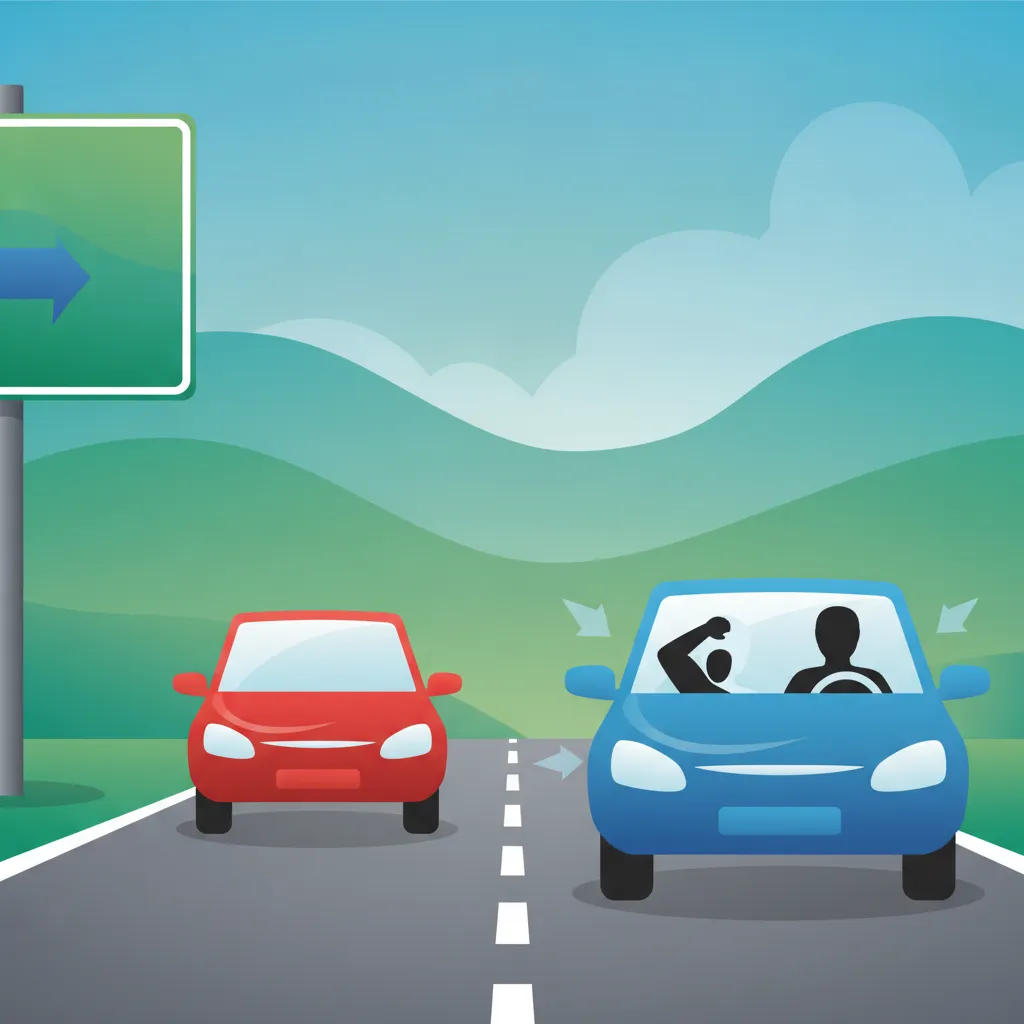
Theory topic content overview
Read the full theory topic guide for Safe Lane Changes with structured, easy-to-scan content built for learners in Germany. This detailed section explains the exact rule, meaning, traffic context, comparison points, and exam logic behind this German driving theory topic so you can study faster, understand the concept more clearly, and avoid common interpretation mistakes on the theory test.
A Fahrstreifenwechsel, or lane change, is the maneuver of moving your vehicle from one traffic lane to an adjacent one on a multi-lane road. While seemingly straightforward, it's a dynamic process that demands precise observation, communication, and timing to ensure safety and maintain smooth traffic flow. In Germany, mastering the Fahrstreifenwechsel is fundamental for safe driving on all multi-lane roads, from busy urban streets to high-speed Autobahnen. It involves more than just steering; it's a careful negotiation of space and intent with other road users.
Lane changing is one of the most frequent causes of accidents if performed incorrectly. Misjudgments in speed, distance, or a failure to observe crucial areas around the vehicle can lead to dangerous situations and collisions.
For your German driving theory test, the Fahrstreifenwechsel is a recurring and important topic. Test questions often focus on the correct sequence of actions, the importance of checking blind spots (the Schulterblick), and the legal obligation under the Straßenverkehrs-Ordnung (StVO) to never endanger or impede other road users during a lane change.
Practically, safe lane changes are vital for:
To execute a safe and legal Fahrstreifenwechsel in Germany, follow this essential sequence, often remembered as the "MSM" (Mirror, Signal, Manoeuvre) extended with a critical observation step:
Before anything else, check all relevant mirrors:
Activate your turn signal (indicator) well in advance in the direction you intend to move. This communicates your plan to other drivers, allowing them time to react and adjust their speed or position. Early signalling is key in Germany, especially on the Autobahn where speeds are higher.
This is a non-negotiable step in Germany and a common trap in the theory test. Mirrors do not show everything; there's always an area beside your vehicle (the blind spot) where another vehicle, especially a motorcycle or cyclist, can be hidden.
Once your vehicle is fully and safely in the new lane, turn off your indicator.
Several factors influence the safety and execution of a Fahrstreifenwechsel in Germany:
durchgezogene Linie) prohibits lane changes, while a dashed line (Leitlinie) permits them. Arrows on the road also indicate mandatory direction or lane use ahead.It's crucial to differentiate Fahrstreifenwechsel from related maneuvers in Germany:
Fahrstreifenwechsel refers specifically to moving between parallel lanes without the intention of leaving the road itself at an intersection.On the Autobahn: You are driving in the middle lane at 120 km/h and want to overtake a slower truck in the right lane.
Schulterblick to the left. If clear, smoothly move into the left lane, increase speed to overtake, then reverse the process (mirror, signal, Schulterblick, maneuver) to return to the right lane or middle lane. Never linger in the left lane if the right lane is open (Rechtsfahrgebot).In City Traffic: You are in the right-most lane approaching an intersection and realise you need to turn left, but the left-turn lane is one lane over.
Schulterblick. If clear and you can complete the maneuver without cutting off another driver or missing the turn, smoothly move into the left-turn lane. If not, you must continue straight and find an alternative route, as forcing a lane change is illegal and dangerous.Learners frequently make these mistakes, which are often tested in the German theory exam:
Schulterblick: This is perhaps the most common error and can lead directly to collisions, especially with motorcycles or cyclists.StVO § 7 (Lane Use) and a critical failure point in driving tests.The Fahrstreifenwechsel in Germany is strictly governed by the Straßenverkehrs-Ordnung (StVO), particularly § 7 (Use of lanes). The core principle is outlined in § 7 (5): "Anyone who changes lanes, turns, or otherwise moves off to the side, must ensure that no other road user is endangered." This is why the Schulterblick and proper spacing are so crucial.
The concept of Rechtsfahrgebot (keeping to the right) on multi-lane roads, especially the Autobahn, also influences lane changes. Drivers should generally use the rightmost lane possible unless overtaking. This means frequent lane changes are expected for overtaking, but always adhering to the safety procedure.
In the German theory test, expect questions that present scenarios where a lane change is attempted under various conditions (e.g., restricted visibility, heavy traffic, presence of motorcycles). Always choose the option that prioritises safety, clear communication, and the StVO principle of non-endangerment.
The most important takeaway for mastering Fahrstreifenwechsel in Germany is a proactive and meticulous approach: Observe everything, communicate clearly, and act only when truly safe. Never assume other drivers have seen your signal or will make way for you. The Schulterblick is your final, essential safety check. By consistently applying this procedure, you'll execute safe and confident lane changes, contributing to smoother traffic flow and significantly reducing accident risks on German roads.
Start with a short, direct summary of Safe Lane Changes before reading the full explanation below.
To change lanes safely in Germany, always begin by checking your mirrors for traffic behind and beside you. Signal your intention early, perform a swift blind spot check (Schulterblick), and only then smoothly steer into the target lane when it is clear and safe to do so. Ensure your maneuver does not force other drivers to brake or swerve, prioritizing safety and traffic flow according to German regulations.
Review the most important terms, rule signals, and traffic concepts linked to Safe Lane Changes.
Explore related theory topic pages connected to Safe Lane Changes and continue with the next useful rule explanation.
See the common search queries learners use when trying to understand Safe Lane Changes in Germany.

Solidify your understanding of German road rules. Explore specific theory topics in detail, from priority rules to complex Autobahn situations. Review key concepts and prepare thoroughly for every aspect of your official driving license theory examination.
German Driving Theory TopicsTheory topic content overview
Start with a short, direct summary of Safe Lane Changes before reading the full explanation below.
To change lanes safely in Germany, always begin by checking your mirrors for traffic behind and beside you. Signal your intention early, perform a swift blind spot check (Schulterblick), and only then smoothly steer into the target lane when it is clear and safe to do so. Ensure your maneuver does not force other drivers to brake or swerve, prioritizing safety and traffic flow according to German regulations.
Review the most important terms, rule signals, and traffic concepts linked to Safe Lane Changes.
Explore related theory topic pages connected to Safe Lane Changes and continue with the next useful rule explanation.
See the common search queries learners use when trying to understand Safe Lane Changes in Germany.
Solidify your understanding of German road rules. Explore specific theory topics in detail, from priority rules to complex Autobahn situations. Review key concepts and prepare thoroughly for every aspect of your official driving license theory examination.
German Driving Theory TopicsUse this exam-focused revision tip to understand how Safe Lane Changes is likely to appear in theory questions for learners in Germany. This section helps you identify the most testable part of the rule, avoid common traps, and remember the concept more effectively during German driving theory exam preparation.
In the German theory test, pay close attention to questions involving multi-lane situations, especially those concerning observation order (mirrors, then blind spot), signalling timing, and giving priority. Remember, you must never force another driver to brake or swerve when performing a Fahrstreifenwechsel.
Read direct answers to the most common learner questions about Safe Lane Changes in Germany. This FAQ focuses on rule confusion, practical meaning, comparison with similar concepts, and the exact uncertainties that appear most often in German driving theory revision and exam preparation.
The basic steps involve checking your rearview and side mirrors, signaling your intention well in advance, performing a shoulder check (Schulterblick) for blind spots, and then smoothly moving into the target lane only when it is entirely safe and clear.
Mirrors do not cover every area around your vehicle, leaving blind spots. The Schulterblick (shoulder check) is crucial to visually confirm that no vehicle, especially smaller ones like motorcycles or bicycles, is hidden in this unseen area before you commit to the lane change.
You should activate your turn signal early, well before you begin to steer into the new lane. This gives other drivers sufficient time to recognize your intention and adjust their speed or position accordingly, contributing to smoother traffic flow.
On the German Autobahn, lane changes are generally permitted where there are multiple lanes in the same direction, provided it is safe and you follow all procedures. However, you must not change lanes over solid white lines (Sperrflächen) or in areas where signs specifically prohibit it, such as certain construction zones or before junctions.
A very common mistake is failing to perform a thorough blind spot check (Schulterblick) or not signaling early enough. Another frequent error is changing lanes without ensuring sufficient space, forcing other drivers to react abruptly.
No, the driver changing lanes never has priority. You must ensure that your maneuver does not endanger or impede other road users who are already in the lane you intend to enter. The responsibility lies entirely with the changing driver.
Higher speeds significantly reduce the time you have to react and the distance required to complete a safe lane change. It's crucial to correctly assess gaps in traffic and the closing speeds of other vehicles, especially on fast roads like the Autobahn.
Begin your targeted revision now. Use our practice search to quickly find specific German driving theory questions. Filter by StVO rules, road signs, or hazard perception to create your focused study plan. Master challenging areas and prepare confidently for your theoretical driving test.