Merging traffic occurs whenever two lanes or road sections combine into one. In Germany, safely navigating these situations requires careful observation, appropriate speed adjustment, and cooperation with other drivers. This page clarifies the rules and practical approaches to merge smoothly, whether you're joining a motorway or transitioning between urban lanes.
Theory topic content overview
Read the full theory topic guide for Merging Traffic Rules with structured, easy-to-scan content built for learners in Germany. This detailed section explains the exact rule, meaning, traffic context, comparison points, and exam logic behind this German driving theory topic so you can study faster, understand the concept more clearly, and avoid common interpretation mistakes on the theory test.
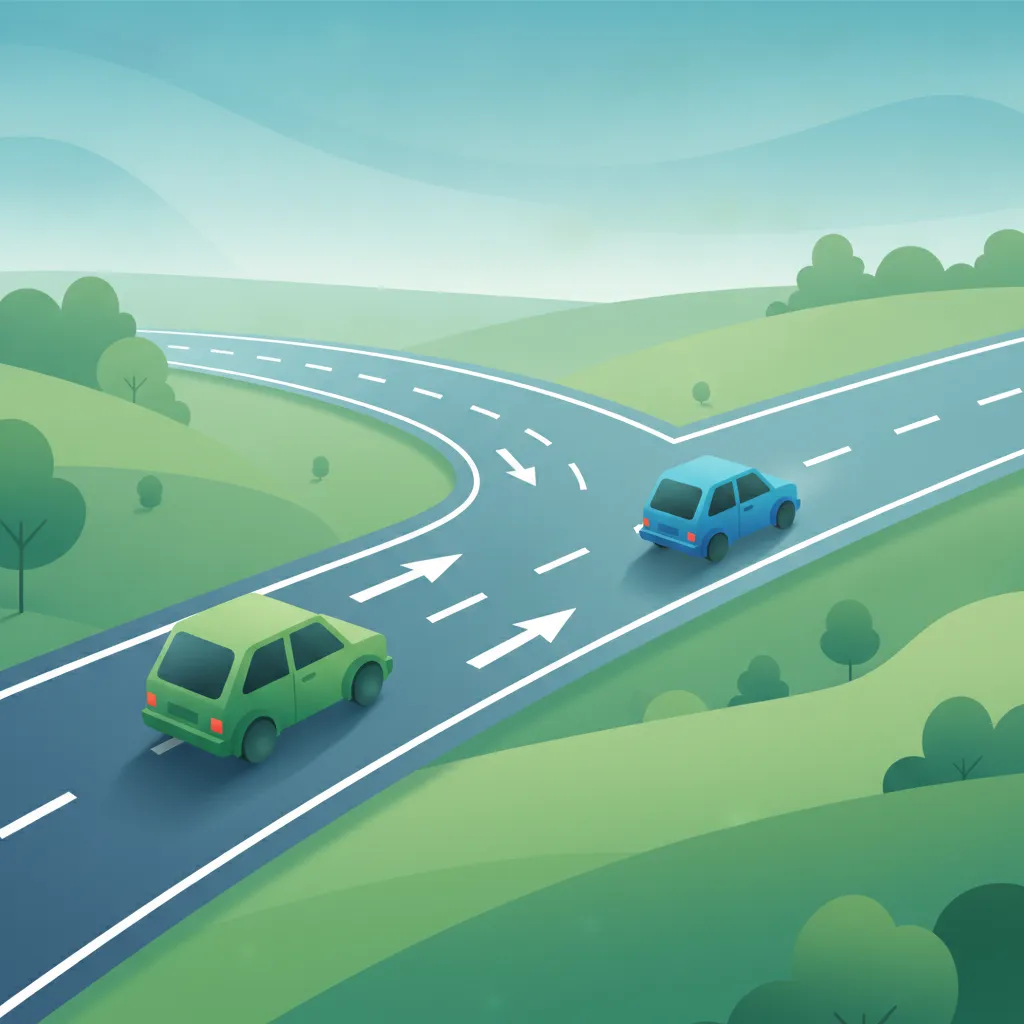
Merging traffic (in German, Einfädeln) refers to the process where two separate lanes or streams of vehicles converge into a single lane. This is a common driving scenario in Germany, occurring on motorways (Autobahnen) when joining from a slip road, on urban roads where lanes reduce, or at temporary roadworks.
The core concept is to seamlessly integrate your vehicle into an existing traffic flow without disrupting it or causing other drivers to take evasive action. It requires a high degree of observation, speed management, and cooperative driving.
Understanding and executing safe merging techniques is critical for several reasons:
Straßenverkehrs-Ordnung - StVO) governs merging behaviour, and failing to comply can result in penalties.Successfully merging traffic involves a series of critical observations and actions, whether you are the merging driver or a driver in the main traffic flow.
When you are about to merge, your primary responsibility is to find a safe opportunity to join the traffic stream.
Beschleunigungsstreifen), this often means accelerating strongly.While the merging driver has the primary responsibility to find a safe gap, drivers already in the main traffic flow also have a duty to cooperate (Kooperationspflicht):
Germany has specific nuances regarding merging that are important for the theory test and practical driving:
Reißverschlussverfahren)The "zipper merge" applies specifically when a lane officially ends or narrows due to roadworks, an accident, or permanent lane reduction (e.g., from three lanes to two). In these situations, drivers are required by StVO (§ 7 Abs. 4 StVO) to merge at the very end of the terminating lane, alternating with vehicles in the continuing lane, like the teeth of a zipper.
Zeichen 440 - lane reduction) indicate the end of a lane.Beschleunigungsstreifen)When joining a main road or Autobahn via an acceleration lane, the situation is different from a zipper merge:
must give way (Vorrang achten) to vehicles already on the main carriageway. This means the merging driver has the primary responsibility to find a gap and enter safely without affecting the main traffic flow.You are on an Autobahn-Zufahrt (slip road) accelerating. The Beschleunigungsstreifen (acceleration lane) runs parallel to the Autobahn. You need to:
You are driving in a city, and a sign indicates that your lane is ending ahead due to roadworks (Baustelle).
Mastering Einfädeln requires a blend of individual skill and cooperative spirit. Always remember: Observe, Match Speed, Indicate, and Cooperate.
Whether it's an Autobahn entry where you give way or a lane reduction where the zipper merge applies, proactive observation, smooth speed adjustments, and clear communication are your best tools for safe and efficient merging on German roads. Expect and encourage cooperation from others, and always be prepared to offer it yourself.
Start with a short, direct summary of Merging Traffic Rules before reading the full explanation below.
Merging traffic involves vehicles from two separate lanes or roads combining into a single lane. In Germany, this requires drivers to observe traffic flow, adjust their speed to match, and integrate cooperatively without forcing their way in. The 'zipper merge' principle, where vehicles alternate entry, is often applicable, especially in congested situations, promoting efficient and safe traffic flow.
Review the most important terms, rule signals, and traffic concepts linked to Merging Traffic Rules.
Explore related theory topic pages connected to Merging Traffic Rules and continue with the next useful rule explanation.
See the common search queries learners use when trying to understand Merging Traffic Rules in Germany.

Solidify your understanding of German road rules. Explore specific theory topics in detail, from priority rules to complex Autobahn situations. Review key concepts and prepare thoroughly for every aspect of your official driving license theory examination.
German Driving Theory TopicsTheory topic content overview
Start with a short, direct summary of Merging Traffic Rules before reading the full explanation below.
Merging traffic involves vehicles from two separate lanes or roads combining into a single lane. In Germany, this requires drivers to observe traffic flow, adjust their speed to match, and integrate cooperatively without forcing their way in. The 'zipper merge' principle, where vehicles alternate entry, is often applicable, especially in congested situations, promoting efficient and safe traffic flow.
Review the most important terms, rule signals, and traffic concepts linked to Merging Traffic Rules.
Explore related theory topic pages connected to Merging Traffic Rules and continue with the next useful rule explanation.
See the common search queries learners use when trying to understand Merging Traffic Rules in Germany.
Solidify your understanding of German road rules. Explore specific theory topics in detail, from priority rules to complex Autobahn situations. Review key concepts and prepare thoroughly for every aspect of your official driving license theory examination.
German Driving Theory TopicsUse this exam-focused revision tip to understand how Merging Traffic Rules is likely to appear in theory questions for learners in Germany. This section helps you identify the most testable part of the rule, avoid common traps, and remember the concept more effectively during German driving theory exam preparation.
Pay close attention to scenarios involving merging onto motorways or when lanes reduce. The exam often tests your ability to identify safe gaps, proper speed adjustment, and the importance of using indicators. Remember, cooperation is key in German merging situations; avoiding sudden braking or forcing entry is crucial.
Read direct answers to the most common learner questions about Merging Traffic Rules in Germany. This FAQ focuses on rule confusion, practical meaning, comparison with similar concepts, and the exact uncertainties that appear most often in German driving theory revision and exam preparation.
Merging traffic (Einfädeln) refers to situations where two separate traffic lanes or roads converge into one, requiring drivers to smoothly integrate into a single stream of vehicles. This is common at motorway entrances, lane reductions, or construction zones.
The zipper merge (Reißverschlussverfahren) is a cooperative technique where drivers from two merging lanes take turns, alternating one by one, to enter the single lane. This method is encouraged in Germany to maintain traffic flow and prevent unnecessary congestion, especially during high traffic volumes.
Generally, in Germany, there is no automatic right of way for one lane over the other in merging situations unless specified by road signs (e.g., 'give way'). Instead, drivers are expected to cooperate. Vehicles in the lane that is ending must yield to traffic already in the continuing lane, but drivers in the continuing lane should facilitate the merge by leaving space.
When merging onto a German Autobahn, you should accelerate on the acceleration lane (Einfädelungsstreifen) to match the speed of the traffic already on the Autobahn. This allows you to find a suitable gap and merge smoothly without causing disruption.
Common mistakes include not observing traffic adequately, failing to adjust speed to match the flow, braking too late, attempting to merge without a safe gap, or forcing your way into traffic. Hesitation or stopping on an acceleration lane can also be dangerous.
Yes, you must always use your indicator (turn signal) to show your intention to merge. This informs other drivers of your actions and helps with cooperative driving.
Merging (Einfädeln) is when two separate lanes combine into one, requiring drivers to integrate into a shared lane. Lane changing (Fahrstreifenwechsel) is moving from one lane to another on the same road without the lanes themselves combining, often requiring the driver to yield to traffic in the target lane.
You should look far ahead to assess the overall traffic situation, including speed and density, as well as checking your mirrors and blind spots. This helps you identify appropriate gaps and anticipate other drivers' movements well in advance.
Begin your targeted revision now. Use our practice search to quickly find specific German driving theory questions. Filter by StVO rules, road signs, or hazard perception to create your focused study plan. Master challenging areas and prepare confidently for your theoretical driving test.