
This theory hub provides comprehensive explanations of all German driving theory topics, road signs, and traffic rules. Understand essential concepts like right-of-way, speed limits, and Autobahn regulations, crucial for the official German theoretical driving test. Develop a strong grasp of the Straßenverkehrs-Ordnung (StVO) to drive confidently and safely.
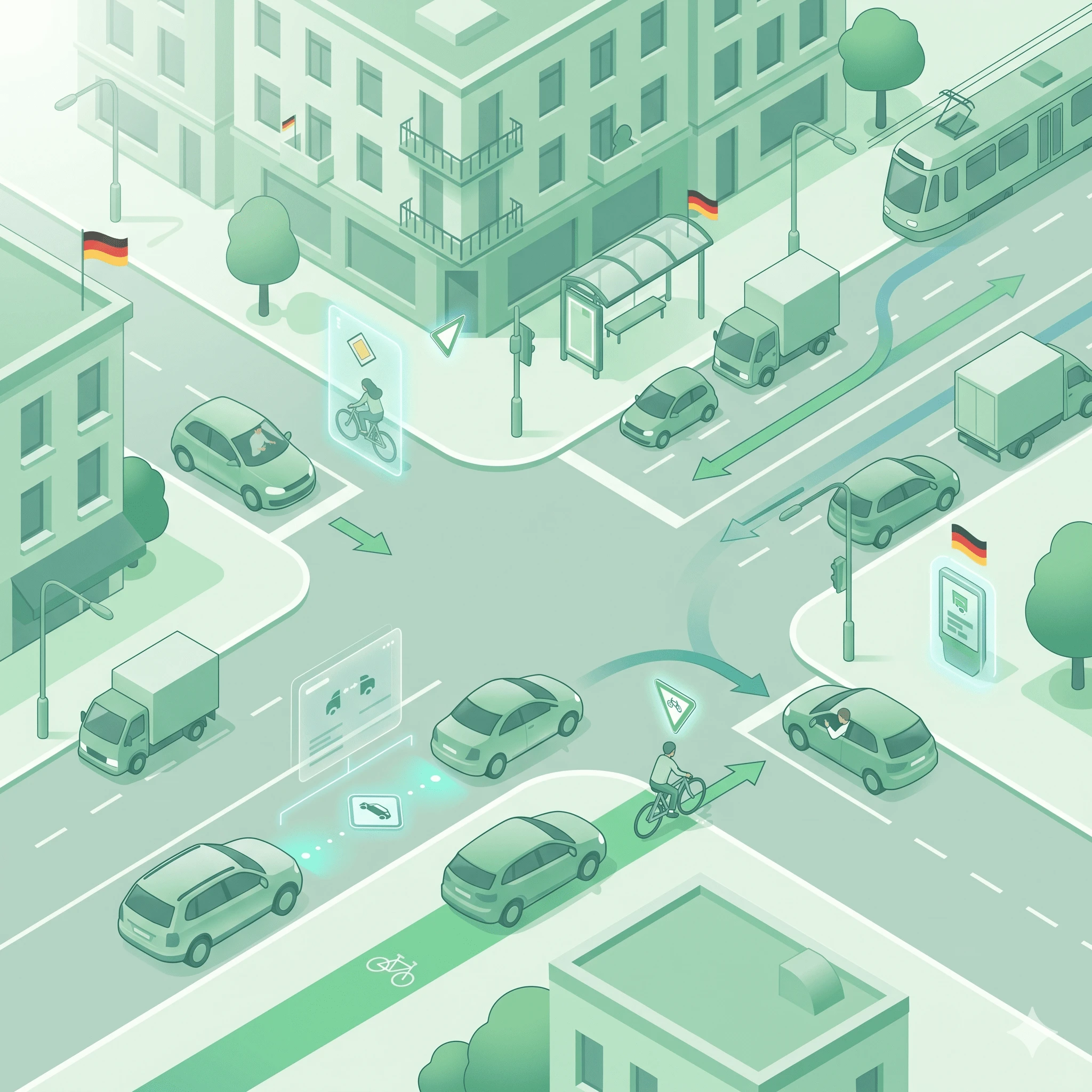
Our curriculum organizes German driving theory into targeted subject areas, helping you master complex traffic rules, road signs, and right-of-way priority situations. Focus your exam preparation by diving deep into specific technical categories and safety protocols.
12 topics
6 topics
5 topics
4 topics
3 topics
2 topics
2 topics
2 topics
1 topic
1 topic
1 topic
1 topic
Dive into detailed driving theory subjects to prepare for your German theory test. Search for specific traffic rules or browse all available topics to deepen your understanding of driving knowledge.
Filter by category
4 theory topics found
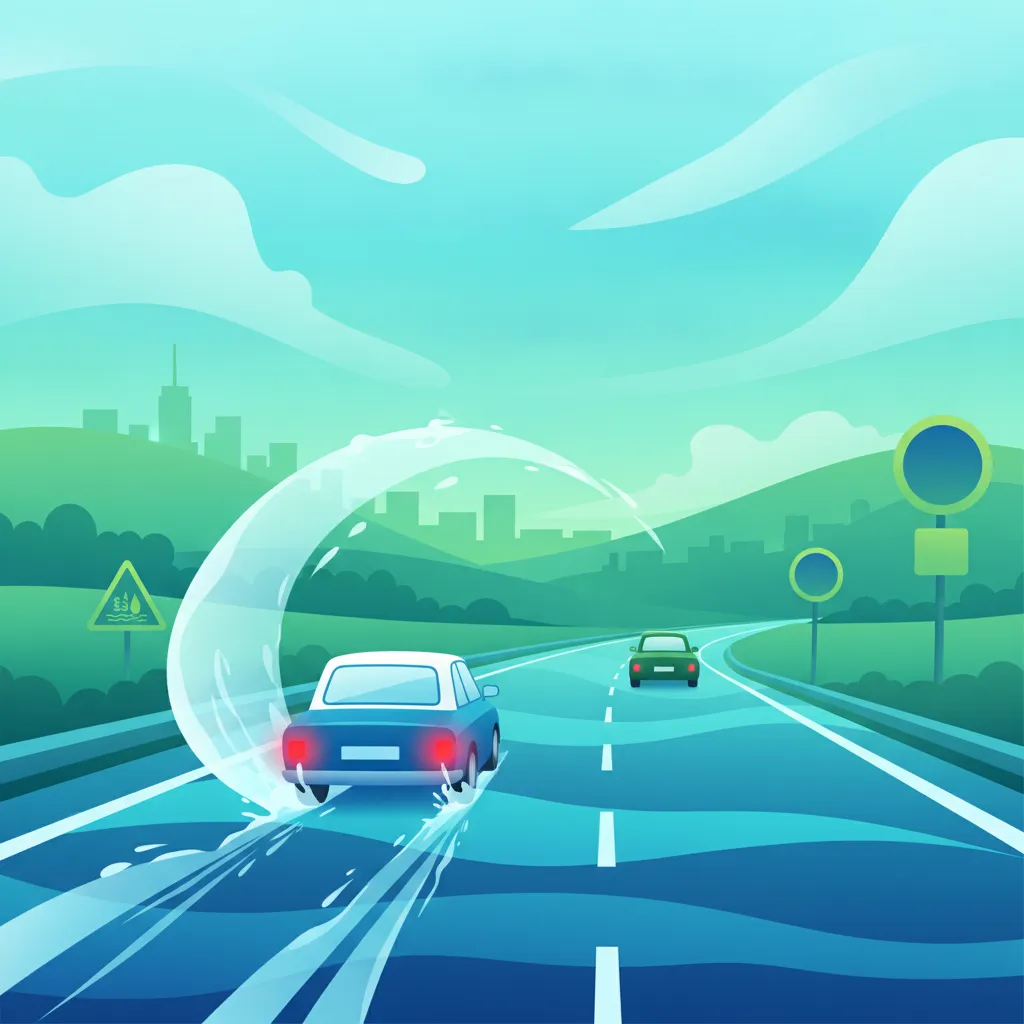
When roads are wet due to rain, the friction between your tires and the road surface is significantly reduced, leading to longer braking distances and decreased vehicle stability. This condition can also lead to aquaplaning, where a layer of water completely separates the tires from the road. Mastering how to safely navigate these conditions is vital for any driver in Germany.

Driving in fog demands heightened awareness and specific adjustments to your driving behavior and vehicle lighting. In Germany, adhering to rules for visibility, speed, and the correct use of fog lights (Nebelschlussleuchte and Nebelscheinwerfer) is crucial for your safety and that of other road users. This guide covers how to adapt to ensure you can stop within your visible range and avoid hazards.

Snow and ice drastically alter road conditions, leading to significantly reduced traction and increased risks. This section explains the effects of low grip on your vehicle's acceleration, braking, and steering, and outlines the critical adjustments you must make to drive safely in winter conditions according to German traffic law (StVO).

Driving in rain introduces several hazards, including reduced visibility, decreased tire grip, and longer braking distances. In Germany, drivers must proactively adjust their speed, following distance, and observation techniques to mitigate these risks. Understanding the specific dangers, such as aquaplaning, is crucial for safe navigation and adherence to the Straßenverkehrs-Ordnung (StVO).
Continue your learning journey with our comprehensive articles. Delve into specific topics, review complex German road rules, and gain expert insights. Fully prepare for your theoretical driving test by exploring more content to deepen your understanding of traffic law.
Explore Driving Theory Articles