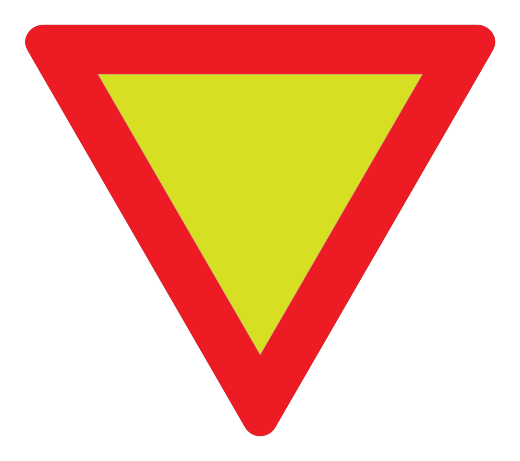
The 'Give Way' sign (code 202), also known as 'Biðskylda' or Yield, is a crucial priority sign you'll encounter frequently at Icelandic junctions and conflict points. It means you must yield to traffic on the road you are about to enter or cross. Always approach this sign at a speed that allows you to stop safely, and be prepared to wait if other road users have priority. Failing to yield correctly is a common exam trap, so understanding this sign is vital for safe driving.
Master the meaning of the Give Way sign (202) to navigate junctions safely and confidently in Iceland. This crucial sign demands you yield to other traffic, making its correct interpretation vital for your theory test revision and everyday driving.
Give Way is used at junctions and other conflict points where a full stop is not automatically required, but priority must be given to other traffic. Drivers must approach at a speed that allows them to yield safely, and if the way is not clear they must stop before entering the conflict area. The sign works together with road markings and the actual junction layout, so it should be read in context rather than in isolation. A driver who has to give way must never force others to brake or change course.
This priority sign tells drivers they must give way to traffic on the road they are about to join or cross. You should slow down early, assess the traffic situation carefully, and be ready to stop if another road user has priority.
Get clear, practical answers to the most common questions about the 202 - Give Way road sign. Learn how the sign works, what rules it represents, and how it affects real driving situations. This FAQ strengthens your understanding and supports accurate decision making for the Icelandic driving theory exam in Iceland.
The 202 'Give Way' sign, or 'Biðskylda', means you must allow other traffic on the intersecting or continuous road to proceed first. You don't always have to stop, but you must be prepared to do so and yield priority to vehicles, cyclists, or pedestrians who have the right of way.
No, the Give Way sign does not automatically require a full stop unless you need to do so to yield safely. You must slow down and assess the traffic. If the way is clear, you may proceed without stopping. However, if clearing the junction would impede or endanger priority traffic, you must stop before the give-way line.
Common mistakes include assuming you can proceed just because you slowed down, not looking far enough in both directions, or entering the junction and forcing other traffic to brake or swerve. You must ensure your passage causes no disruption to priority traffic.
Approach the junction cautiously and at a reduced speed. Scan for traffic on all relevant approaches, paying close attention to vehicles that have priority. Be ready to stop if necessary before the marked give-way line to allow priority traffic to pass safely.
It means you must not enter the junction or conflict area until it is absolutely safe to do so without interfering with any vehicle, cyclist, or pedestrian that has priority. This includes oncoming traffic if you are turning, as well as traffic from the right or left.
A clear reference image of the 202 - Give Way road sign used in Iceland.
The 202 - Give Way road sign may also be known by these alternative names or terms.
The 202 - Give Way road sign is part of the Priority Signs category, which groups together signs with similar rules and functions.
Comparing related road signs, like different variations of Give Way signs, sharpens your ability to distinguish them under pressure. This focused revision aids sign recognition and reduces errors, essential for passing your theory test and for effective traffic sign comparison.
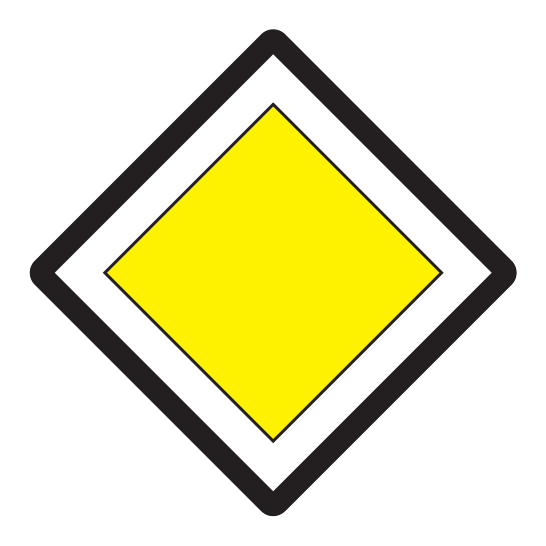
Master Junction Priority with the 'Priority Road' Sign (206)
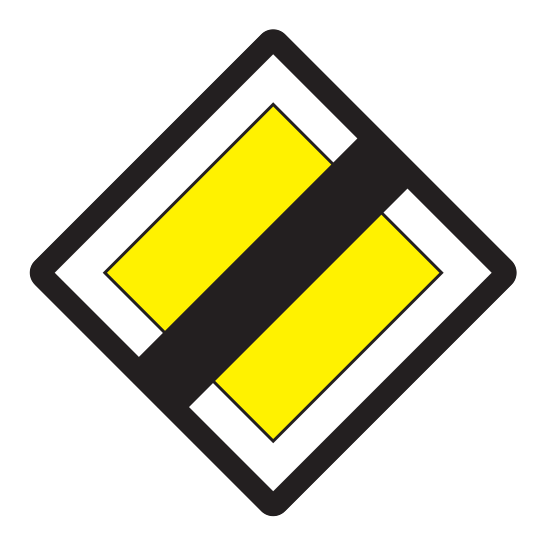
The End of Priority Road Sign (208): What You Need to Know
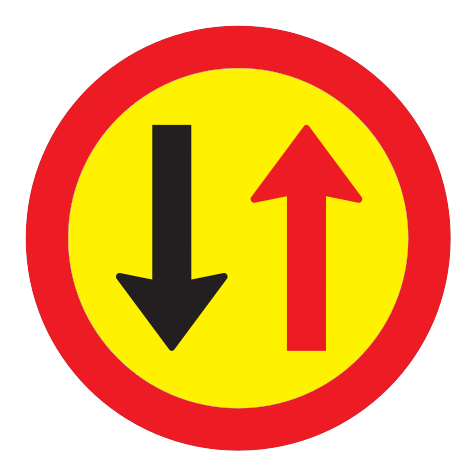
Master Priority: Understand the Give Way to Oncoming Traffic sign (212)
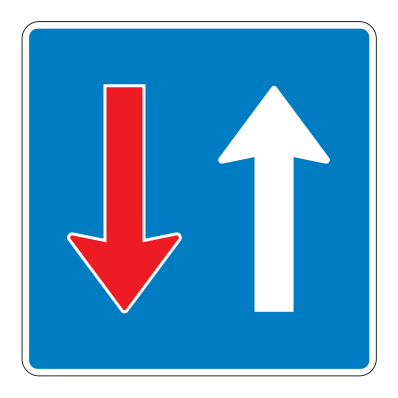
Sign 214: Know When to Give Way to Oncoming Traffic
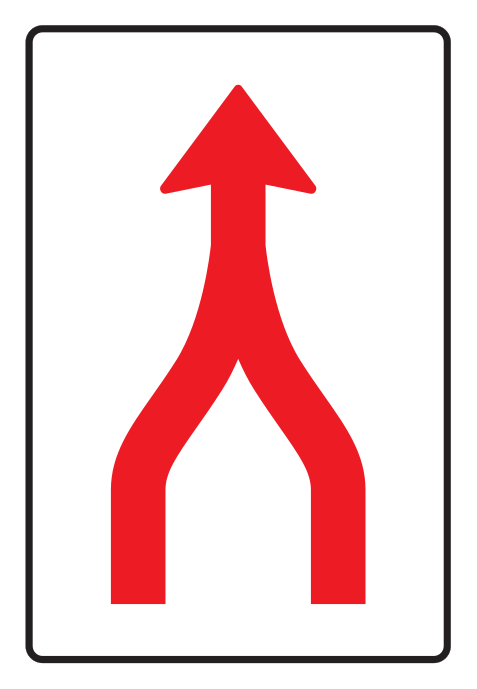
Understand the Priority Pattern at the Next Junction
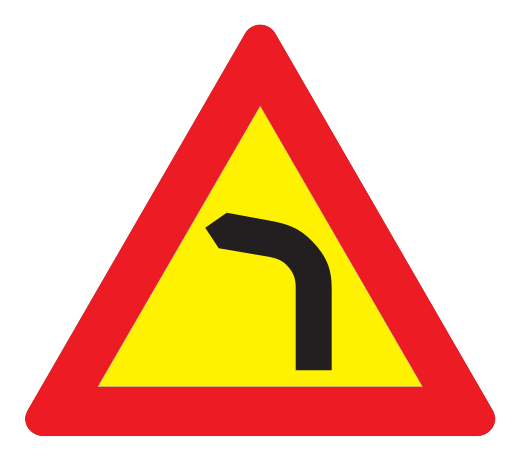
Prepare for a Dangerous Left-Hand Bend Ahead with Sign 100.2
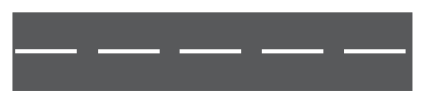
Understand the Half-broken Line (Caution Line) for clear driving guidance on the carriageway.
Explore curated theory modules and safety procedures that clarify how specific road signs dictate right-of-way and vehicle conduct on Icelandic roads. Apply this knowledge to your driving theory test preparation by linking visual signage to real-world traffic laws.
Master Icelandic Crosswalk Rules for a Safer Drive and Exam Success
Don't let a false sense of security put you at risk on Icelandic roads.
Learn about the financial penalties for traffic violations in Iceland for 2026, covering common offenses such as speeding and red light violations. A key takeaway is the 25% discount offered for prompt payment of most fines, a crucial detail for responsible driving and passing your Icelandic theory test. We also explore serious violations like off-road driving ('Utanvegaakstur') which are not eligible for this discount.
Learn about Iceland's strict legal requirement to keep your vehicle's headlights and rear lights illuminated at all times, day and night, year-round. This essential driving rule, enforced by Samgöngustofa, is vital for visibility in Iceland's challenging conditions. This article will help you understand why simple Daytime Running Lights (DRLs) are often not enough and how to comply fully to ensure road safety and pass your theory exam.
Priority Pattern at Next Junction is used where the right of way has to be made unmistakably clear. It tells drivers how to manage conflict with cross traffic or oncoming traffic and helps prevent hesitation, false assumptions, and side-impact collisions. At the approach, you should decide your priority status before entering the conflict point, while still being ready to slow or stop if another road user behaves unexpectedly. Good priority reading is not just about the sign itself; it also depends on observation, road markings, speed, and communication with other traffic.
Limits Of The Area Where Vehicles May Be Parked (a) belongs to the group of special regulation signs used for lane control, reserved areas, controlled parking layouts, crossing zones, or other operational arrangements that need more detail than a normal warning or prohibition sign. These signs are often placed above lanes or directly beside the affected area so that each road user can see which space, lane, or movement applies to them. In practice, the safest approach is to read the sign early, choose the correct lane or area before reaching the conflict point, and avoid any last-second correction. If the sign is combined with markings or local layout features, those details are part of the instruction and should be followed as one system.
After reviewing the full list of Icelandic road signs, reinforce your learning with targeted practice. Explore our sign group categories or take a specific quiz to test your recognition and recall. Ensure you're fully prepared to identify and interpret all traffic signs for your upcoming driving theory exam.
View All Icelandic Road Signs