Understanding the legal obligations towards pedestrians is essential for both road safety and success in the Italian driving licence theory test. This guide details the requirements set out in Article 191 of the Codice della Strada and outlines the specific consequences for failing to yield, helping learners avoid common exam traps and ensure safe interaction with vulnerable road users.
Article content overview
Understanding the specific legal obligations towards pedestrians is a fundamental component of the Italian driving theory test (patente B). The Codice della Strada places a high priority on the safety of vulnerable road users, and failing to respect these rules is one of the most common reasons candidates lose points or struggle in the exam. By mastering the nuances of Article 191, you ensure not only success in your test but also a safer driving practice on Italy’s complex road network.
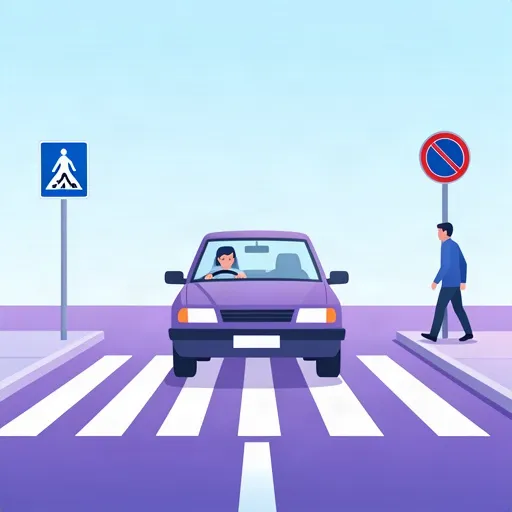
In Italy, the law is very clear regarding the conduct of drivers near pedestrian crossings (strisce pedonali). According to Article 191 of the Codice della Strada, when traffic is not regulated by police or traffic lights, drivers must give way to pedestrians who are currently crossing or who are clearly about to cross the road. This duty to yield involves slowing down gradually and coming to a complete stop if necessary.
The term "clearly about to cross" is a critical exam concept. It means that if a pedestrian is standing at the edge of the strisce pedonali and demonstrates a clear intent to enter the roadway, you must treat them with the same priority as someone already on the road. Waiting for them to physically step onto the asphalt before you brake is often interpreted as dangerous driving in the context of the theory quiz.
Using the horn to signal to a pedestrian that they should move faster or to intimidate them while they are on a crossing is strictly prohibited. Doing so is an additional violation under the Codice della Strada and is a common trap in theory exam questions.
The layout of Italian towns often presents unique challenges. In historic centers or narrow urban streets, pedestrian crossings are frequently located immediately after blind corners or junctions. Even if the law does not set a specific lower speed limit for every crossing, the general rule of safe driving (Article 141) requires you to adjust your speed so that you can react to any obstacle, including pedestrians who might "bob" out from behind parked cars.
When you are turning at an intersection and a pedestrian crossing exists at the entrance of the road you are entering, the same rules apply. You must yield to pedestrians even if they are just beginning their crossing. The only exception is if the pedestrian is legally prohibited from crossing, such as when a traffic light specifically commands a red signal for pedestrians.
The Italian traffic law enforces these rules through a combination of administrative fines and the patente a punti (points-deduction system). If you fail to yield to a pedestrian as required by Article 191, you face an administrative fine ranging from €167 to €665, in addition to the loss of 8 points from your driving license.
For repeat offenders, the consequences become significantly more severe. If you commit the same violation twice within a two-year period, the fine increases substantially to a range between €333 and €1,329, and your license will be subject to a suspension of one to three months. This strict structure underscores the Italian state’s commitment to reducing accidents involving vulnerable road users.
One of the most frequent errors in the theory test involves the behavior of pedestrians who appear to be distracted or those using mobility aids. You must always exercise extreme caution around children, elderly people, or persons with disabilities, as their reactions may be unpredictable. Never assume a pedestrian sees you, and never attempt to overtake a vehicle that has slowed down or stopped at a pedestrian crossing, as that vehicle might be obscuring your view of someone already on the road.
Italian pedestrian crossing rules under Article 191 of the Codice della Strada require drivers to yield to pedestrians both on the crossing and those clearly about to enter it, including those showing intent from the roadside edge. Key exam points include the prohibition on horn usage to pressure pedestrians, the requirement to stop completely if necessary, and the obligation to adjust speed for limited visibility areas like blind corners. Penalties for non-compliance range from €167 to €665 with 8 points deducted for first offenses, rising to €1,329 and possible license suspension for repeat violations within two years. Special caution is required around vulnerable pedestrians such as children, elderly persons, and those with mobility aids, as their reactions may be unpredictable.
A short set of high-value points that capture the most important ideas from this article.
Article 191 of the Codice della Strada requires drivers to yield to pedestrians both already on the crossing and those clearly intending to cross
Pedestrians standing at the edge of strisce pedonali with visible intent to cross must be treated with the same priority as those already on the road
Using the horn to rush or intimidate pedestrians on a crossing is an additional violation under Italian traffic law
Drivers must reduce speed gradually and stop if necessary when pedestrians are present or about to enter the crossing
The patente a punti system assigns 8 points for failing to yield to pedestrians, with repeat offenses triggering license suspension
The obligation to yield applies to pedestrians who are 'clearly about to cross,' not only those already on the asphalt
Never sound the horn at pedestrians on crossings—this is a common exam trap and an illegal maneuver
Article 141 requires adjusting speed so you can react to pedestrians, especially near blind corners or junctions
Do not overtake a vehicle that has stopped at a pedestrian crossing; it may be obscuring a pedestrian already on the road
Pedestrians using mobility aids, children, and elderly persons may react unpredictably—assume they have not seen you
Assuming you only need to yield once a pedestrian has physically stepped onto the road, ignoring those clearly intending to cross
Using the horn to signal pedestrians to hurry, which is prohibited and frequently tested in theory questions
Attempting to overtake a stopped vehicle at a crossing without checking for pedestrians hidden behind it
Believing that yielding is unnecessary if a pedestrian appears distracted or is looking at their phone
Forgetting that the same yield obligations apply when turning into a road that has a pedestrian crossing at its entrance
Article content overview
A short set of high-value points that capture the most important ideas from this article.
Article 191 of the Codice della Strada requires drivers to yield to pedestrians both already on the crossing and those clearly intending to cross
Pedestrians standing at the edge of strisce pedonali with visible intent to cross must be treated with the same priority as those already on the road
Using the horn to rush or intimidate pedestrians on a crossing is an additional violation under Italian traffic law
Drivers must reduce speed gradually and stop if necessary when pedestrians are present or about to enter the crossing
The patente a punti system assigns 8 points for failing to yield to pedestrians, with repeat offenses triggering license suspension
The obligation to yield applies to pedestrians who are 'clearly about to cross,' not only those already on the asphalt
Never sound the horn at pedestrians on crossings—this is a common exam trap and an illegal maneuver
Article 141 requires adjusting speed so you can react to pedestrians, especially near blind corners or junctions
Do not overtake a vehicle that has stopped at a pedestrian crossing; it may be obscuring a pedestrian already on the road
Pedestrians using mobility aids, children, and elderly persons may react unpredictably—assume they have not seen you
Assuming you only need to yield once a pedestrian has physically stepped onto the road, ignoring those clearly intending to cross
Using the horn to signal pedestrians to hurry, which is prohibited and frequently tested in theory questions
Attempting to overtake a stopped vehicle at a crossing without checking for pedestrians hidden behind it
Believing that yielding is unnecessary if a pedestrian appears distracted or is looking at their phone
Forgetting that the same yield obligations apply when turning into a road that has a pedestrian crossing at its entrance
Explore related topics, search based questions, and concepts that learners often look up when studying Italian Pedestrian Crossing Rules. These themes reflect real search intent and help you understand how this topic connects to wider driving theory knowledge in Italy.
Find clear and practical answers to common questions learners often have about Italian Pedestrian Crossing Rules. This section helps explain difficult points, remove confusion, and reinforce the key driving theory concepts that matter for learners in Italy.
According to Article 191 of the Codice della Strada, you must yield to pedestrians who are currently crossing or are in the immediate vicinity and showing clear intent to cross the street.
Failing to yield results in a fine ranging from €167 to €665 and the loss of 8 points from your driving license (patente a punti).
No, using the horn to pressure or rush a pedestrian at a crossing is a violation of the law and is strictly prohibited, as it creates unnecessary danger for vulnerable road users.
If there is no crossing, you must allow a pedestrian who has already started crossing to reach the other side safely. Even outside crossings, you must always exercise caution, especially in towns.
Refine your search or explore related Italian driving theory articles to build a stronger foundation for your exam. Dive deeper into specific traffic regulations, road signs, and practical driving scenarios that are essential for passing your official licence test.