
While technology in modern vehicles is advancing rapidly, it is essential for new drivers to understand what is legally permitted on Portuguese roads today. This guide covers the specific requirements for autonomous vehicle testing under IMT and ANSR supervision, ensuring you can differentiate between basic driver-assistance systems and truly self-driving technology. You will learn why human accountability remains the foundation of Portuguese traffic law.
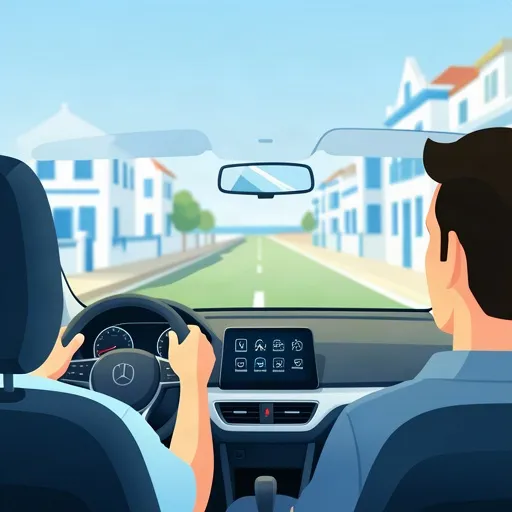
Article content overview
As automotive technology continues to evolve, the integration of automation into modern vehicles has become a frequent topic in driving theory and road safety discussions. In Portugal, the legal framework governing these systems is strictly defined to ensure public safety. For learners preparing for the IMT theory exam, it is crucial to distinguish between driver assistance systems—which are common in new vehicles—and the concept of autonomous driving, which remains subject to rigorous testing protocols rather than general public use.
The regulatory environment in Portugal is anchored in the Código da Estrada and updated via specific legislation, such as Decree-Law No. 113/2026. This decree establishes the legal requirements for testing automated driving systems and vehicle connectivity on public roads. It is important for all drivers to understand that these laws do not authorize "self-driving" cars for the general public. Instead, they provide a controlled environment for manufacturers and researchers to test new technologies under strict supervision from the Instituto da Mobilidade e dos Transportes (IMT) and the Autoridade Nacional de Segurança Rodoviária (ANSR).
Current legislation in Portugal strictly mandates that the human driver remains fully responsible for the operation of the vehicle at all times. Even if a vehicle is equipped with advanced automation, it does not absolve the driver of their legal obligation to maintain control and monitor the traffic environment.
Many modern vehicles sold in Portugal come equipped with Advanced Driver Assistance Systems (ADAS). These are categorized as Level 1 or Level 2 automation, which support the driver by providing functions such as automatic emergency braking, lane-keeping assistance, or adaptive cruise control. These systems are designed to assist, not replace, the human operator.
Technological systems designed to assist the driver in the driving process. While they can improve safety by monitoring surroundings and reacting to hazards, the driver must remain alert and ready to intervene at any moment.
In contrast, high-level automation (Levels 4 and 5), where the vehicle performs all driving tasks without human intervention, is not permitted for standard driving on Portuguese roads. Understanding this distinction is a common requirement for theory exam success, as questions often focus on the driver’s duty of care regardless of the vehicle's electronic capabilities.
When autonomous vehicles or highly automated systems are tested on public roads in Portugal, they must adhere to stringent safety protocols. The IMT ensures that any vehicle participating in these tests meets specific technical requirements to prevent accidents. These testing scenarios are carefully managed to ensure that connectivity between the vehicle and the infrastructure does not interfere with the safety of other road users.
Under the Portuguese traffic code, the "driver" is defined as the person who exercises control over the vehicle's steering and speed. Even when a vehicle is capable of keeping its own lane or adjusting speed to follow the car in front, the law does not recognize the software as a legal driver. If an accident occurs while these features are active, the human occupant is still legally liable for failing to supervise the system correctly.
This article clarifies the legal distinction between driver assistance systems (Level 1-2 ADAS) and fully autonomous vehicles (Levels 4-5) within the Portuguese legal framework. Under Decree-Law No. 113/2026 and the Código da Estrada, autonomous vehicles may only be tested on public roads under strict IMT and ANSR supervision and are not authorized for general use. Regardless of how advanced a vehicle's automation may be, the human driver retains full legal accountability for the vehicle's operation at all times and must remain vigilant, ready to intervene whenever necessary.
A short set of high-value points that capture the most important ideas from this article.
Level 1-2 ADAS features like lane-keeping and adaptive cruise control assist drivers but do not replace human control or legal responsibility.
Fully autonomous vehicles (Levels 4-5) are not permitted for general public use on Portuguese roads under current legislation.
Even when automation is active, the human driver remains the legally recognized operator and bears full liability for vehicle operation.
Decree-Law No. 113/2026 governs autonomous vehicle testing in Portugal under strict IMT and ANSR supervision.
ADAS systems must not be used beyond their technical limitations; drivers must remain ready to intervene at any moment.
IMT (Instituto da Mobilidade e dos Transportes) regulates vehicle standards and approves autonomous vehicle testing on public roads.
ANSR (Autoridade Nacional de Segurança Rodoviária) oversees road safety policy related to automated systems.
Under Portuguese traffic law, the 'driver' is defined as the person controlling steering and speed, not the vehicle software.
Level 2 automation means the vehicle controls speed and steering, but the driver must continuously supervise.
Driver assistance systems are designed to assist, not replace, the human operator.
Assuming that advanced driver assistance features mean the vehicle can drive itself and the driver can disengage.
Believing the vehicle's software can be held legally responsible for an accident instead of the human occupant.
Failing to intervene immediately when automation provides an incorrect or dangerous response to traffic.
Using driver assistance systems in conditions that exceed their technical limitations (e.g., poor weather, unclear road markings).
Thinking autonomous vehicles are currently licensed for general use in Portugal when they are only permitted under controlled testing conditions.
Article content overview
A short set of high-value points that capture the most important ideas from this article.
Level 1-2 ADAS features like lane-keeping and adaptive cruise control assist drivers but do not replace human control or legal responsibility.
Fully autonomous vehicles (Levels 4-5) are not permitted for general public use on Portuguese roads under current legislation.
Even when automation is active, the human driver remains the legally recognized operator and bears full liability for vehicle operation.
Decree-Law No. 113/2026 governs autonomous vehicle testing in Portugal under strict IMT and ANSR supervision.
ADAS systems must not be used beyond their technical limitations; drivers must remain ready to intervene at any moment.
IMT (Instituto da Mobilidade e dos Transportes) regulates vehicle standards and approves autonomous vehicle testing on public roads.
ANSR (Autoridade Nacional de Segurança Rodoviária) oversees road safety policy related to automated systems.
Under Portuguese traffic law, the 'driver' is defined as the person controlling steering and speed, not the vehicle software.
Level 2 automation means the vehicle controls speed and steering, but the driver must continuously supervise.
Driver assistance systems are designed to assist, not replace, the human operator.
Assuming that advanced driver assistance features mean the vehicle can drive itself and the driver can disengage.
Believing the vehicle's software can be held legally responsible for an accident instead of the human occupant.
Failing to intervene immediately when automation provides an incorrect or dangerous response to traffic.
Using driver assistance systems in conditions that exceed their technical limitations (e.g., poor weather, unclear road markings).
Thinking autonomous vehicles are currently licensed for general use in Portugal when they are only permitted under controlled testing conditions.
Explore related topics, search based questions, and concepts that learners often look up when studying Autonomous Driving Laws in Portugal. These themes reflect real search intent and help you understand how this topic connects to wider driving theory knowledge in Portugal.
Find clear and practical answers to common questions learners often have about Autonomous Driving Laws in Portugal. This section helps explain difficult points, remove confusion, and reinforce the key driving theory concepts that matter for learners in Portugal.
No. Fully autonomous vehicles are currently not authorized for general public use in Portugal. Testing is only permitted under strict licensing and supervision by the IMT and ANSR.
ADAS (Advanced Driver Assistance Systems) are features like lane-keep assist or cruise control that support the human driver. They do not make the vehicle autonomous, and the driver must remain in control at all times.
The human driver remains fully legally responsible for the vehicle's operation, regardless of any driver assistance or automated systems currently in use.
The Instituto da Mobilidade e dos Transportes (IMT) is responsible for regulating and authorizing the testing of automated driving systems to ensure road safety and legal compliance.
If you haven't found what you're looking for, use our powerful article search to explore related topics, refine your understanding of Portuguese road rules, or discover new insights for your IMT driving exam preparation. Continue building your knowledge effectively.