
Recognizing vehicle status indicators is a fundamental part of the theoretical training required for the IMT driving licence. This guide provides a clear breakdown of dashboard warning light categories, ensuring you understand how to react appropriately to different alerts while on the road and during your theory test.
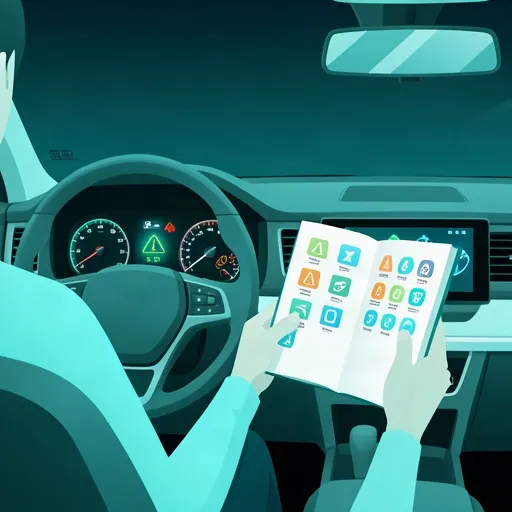
Article content overview
Mastering the language of your vehicle’s dashboard is a fundamental requirement for every learner driver in Portugal. When you sit for your theory exam conducted by the Instituto da Mobilidade e dos Transportes (IMT), you will likely encounter questions that test your ability to interpret these symbols. Understanding these indicators is not just about passing an exam; it is a critical skill for maintaining vehicle safety and ensuring you can react correctly to mechanical emergencies on the road.
Vehicle warning lights are standardized globally, and Portuguese law adheres to this universal logic. The system uses color coding to help drivers categorize the severity of a technical issue instantly. By learning these three tiers, you can filter out the informational from the truly hazardous.
The IMT exam often presents diagrams of dashboard panels to verify if a candidate understands specific vehicle systems. You should be familiar with the icons representing the braking system, the battery charging system, engine oil pressure, and the engine management system.
The following table summarizes the expected driver response based on the light color displayed on your instrument cluster.
| Light Color | Urgency Level | Required Action |
|---|---|---|
| Red | Emergency | Stop the vehicle safely immediately. |
| Amber/Yellow | Caution | Seek maintenance/repair at the earliest opportunity. |
| Green/Blue | Information | None required; indicates system is active. |
Learners often confuse the "check engine" light with immediate mechanical failure. In many cases, an amber engine management light allows you to continue your journey, though you must visit a garage for diagnostics. Conversely, exam questions regarding temperature gauges or oil pressure indicators almost always emphasize the "stop immediately" rule. Always read the specific wording of the IMT questions, as they will distinguish between a system that requires a diagnostic check and a system that represents an immediate threat to the vehicle's operation.
Article content overview
Explore related topics, search based questions, and concepts that learners often look up when studying Dashboard Warning Lights Explained. These themes reflect real search intent and help you understand how this topic connects to wider driving theory knowledge in Portugal.
Find clear and practical answers to common questions learners often have about Dashboard Warning Lights Explained. This section helps explain difficult points, remove confusion, and reinforce the key driving theory concepts that matter for learners in Portugal.
A red light indicates a serious problem that requires immediate attention. You should safely pull over and stop the vehicle as soon as possible, as continuing to drive could cause severe mechanical damage or pose a safety risk.
Amber or yellow lights indicate caution or that a system requires maintenance. While you do not need to stop immediately, you should seek professional service or check the relevant system at the earliest opportunity.
Green and blue lights are purely informational. They confirm that a specific vehicle system, such as headlights, turn signals, or cruise control, is currently active and functioning correctly.
Yes, understanding vehicle systems and the meaning of common warning symbols is a standard part of the Portuguese theory exam curriculum to ensure drivers can identify and respond to basic vehicle safety issues.
If you haven't found what you're looking for, use our powerful article search to explore related topics, refine your understanding of Portuguese road rules, or discover new insights for your IMT driving exam preparation. Continue building your knowledge effectively.