
Learning to interpret your vehicle's dashboard indicators is a critical skill for any driver operating under the Código da Estrada. This guide provides a clear breakdown of how to respond to different warning lights, ensuring you can distinguish between minor maintenance alerts and serious mechanical faults. Developing this awareness will help you perform better on your theory exam and maintain safer driving habits on Portuguese roads.
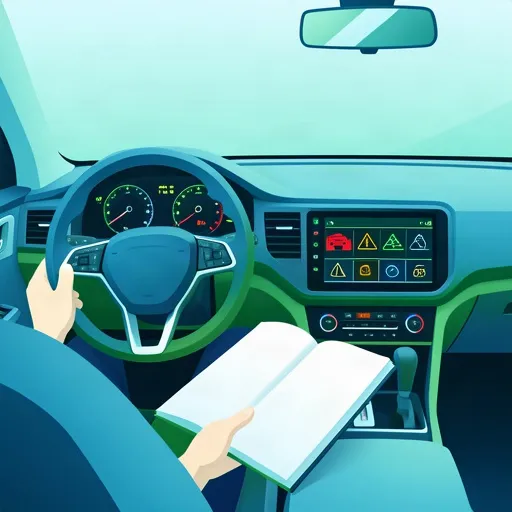
Article content overview
Understanding your vehicle's dashboard warning lights is more than just a requirement for the IMT theory exam; it is a fundamental skill for any driver operating under the Código da Estrada. These indicators act as the primary communication channel between your car's complex internal systems and you, the driver. By learning to interpret the color-coded hierarchy of these symbols, you can distinguish between routine maintenance reminders and critical safety failures that demand your immediate attention.
Vehicle manufacturers follow a standardized system of colors to signal the level of urgency. Recognizing these categories is essential for maintaining safe driving habits on Portuguese roads and is a frequently tested topic in official IMT exams.
The IMT theory exam often focuses on your ability to recognize symbols related to vehicle integrity. Understanding how these systems interact with your driving is vital for both your practical safety and your exam score.
One of the most common exam questions involves the oil pressure light, which often looks like an oil can. This is a critical red warning indicating that the engine is not receiving adequate lubrication, which can destroy an engine in minutes. Similarly, the battery or charging system light—often a red rectangle—signals that the alternator is failing to charge the battery. If this light stays on after the engine starts, you are running solely on battery power and will eventually lose power to essential systems, including lighting and engine management.
The brake warning light is another critical indicator. If it remains illuminated after releasing the parking brake, it may signal low brake fluid levels or a significant fault in the hydraulic system. On the other hand, the ABS (Anti-lock Braking System) light is typically amber. While it tells you that the ABS is not functioning, it does not mean your brakes have failed entirely, but rather that the wheels may lock during emergency braking.
Modern vehicles in Portugal often feature multi-function digital displays that provide text-based messages alongside traditional symbols. These displays can offer more specific information, such as "low tyre pressure" or "service due in 500km." While these messages are helpful, they do not replace the warning lights; they complement them. Always prioritize the color-coded warnings, as they are designed to be universally understood regardless of the language or the sophistication of your dashboard computer.
| Color | Urgency Level | Required Action |
|---|---|---|
| Red | Critical | Stop the vehicle safely immediately. |
| Amber | Caution | Schedule a service or inspection soon. |
| Green | Informational | No action; system is currently active. |
| Blue | Informational | No action; high-beam lights are active. |
Article content overview
Explore related topics, search based questions, and concepts that learners often look up when studying Understanding Dashboard Warning Lights. These themes reflect real search intent and help you understand how this topic connects to wider driving theory knowledge in Portugal.
Find clear and practical answers to common questions learners often have about Understanding Dashboard Warning Lights. This section helps explain difficult points, remove confusion, and reinforce the key driving theory concepts that matter for learners in Portugal.
A red light signifies a serious safety hazard or mechanical failure. You should find a safe place to stop the vehicle as soon as possible, turn off the engine, and consult your vehicle's manual or seek professional assistance.
Generally, red lights indicate an immediate safety or mechanical threat, amber or yellow lights indicate that a system needs attention or maintenance soon, and green or blue lights are informational, showing that a system like headlights or indicators is active.
Yes, recognizing key warning symbols and understanding the appropriate driver response is a component of the vehicle maintenance and safety sections of the IMT driving theory exam.
An amber light indicates a non-emergency maintenance requirement. While it may not require an immediate stop, it should not be ignored, as it can lead to further mechanical damage or a breakdown if left unaddressed.
If you haven't found what you're looking for, use our powerful article search to explore related topics, refine your understanding of Portuguese road rules, or discover new insights for your IMT driving exam preparation. Continue building your knowledge effectively.