
Welcome to the lesson on interacting with public transport vehicles in Sweden. This module, part of the 'Driving in Different Environments' unit, focuses on specific rules and courtesies required when encountering buses and trams on the road. Understanding these regulations is vital for safe navigation and passing your Category B theory test.
Lesson content overview
Driving on Swedish roads means sharing the space with various road users, including an extensive public transport network. Buses and trams are integral to urban and regional mobility, carrying large numbers of passengers daily. For this reason, special traffic rules apply to ensure their smooth operation and, more importantly, the safety of their passengers and other road users. This lesson will provide a detailed understanding of how to safely and legally interact with public transport vehicles as part of your Swedish Driving License Theory Course for Category B Cars.
Understanding these specific rules is crucial not only for passing your theory test but also for becoming a responsible and safe driver. Failure to respect the unique priorities and operational characteristics of buses and trams can lead to serious collisions and endanger pedestrians, cyclists, and vehicle occupants.
Public transport vehicles, such as buses and trams, operate under specific regulations designed to facilitate their service and enhance safety. These vehicles often operate on fixed routes and schedules, requiring frequent stops and merges into traffic. Swedish traffic law acknowledges these operational necessities by granting them special priority in certain situations.
The rationale behind granting special priority to public transport vehicles is multi-faceted:
The core principles guiding your interaction with public transport revolve around yielding, maintaining safe distances, and heightened awareness. These are codified in the Swedish Traffic Ordinance (Trafikförordning).
The legal obligation to allow another road user to proceed before you continue your own movement. This often means reducing speed or stopping.
These principles build upon fundamental concepts learned in earlier lessons, particularly those concerning general priority rules and safe distance management.
Buses are a common sight in both urban and rural settings. Your interaction with them is primarily governed by rules around yielding, especially when they are departing from a stop, and maintaining safe passing distances.
One of the most critical rules concerning buses in Sweden is your duty to yield when they signal their intent to leave a stop. This rule applies specifically to roads where the speed limit is 50 km/h or lower.
If a bus at a designated bus stop activates its flashing amber lights, it is signalling its intention to pull out into traffic. As a driver approaching from behind or from the side, you must reduce your speed and, if necessary, stop to allow the bus to re-enter the traffic flow safely. This prevents situations where the bus, needing to accelerate from a standstill, might be forced into a dangerous manoeuvre or a collision with oncoming traffic.
Always anticipate a bus's departure when you see it at a stop, even before it signals. Be ready to slow down or stop proactively.
This rule is designed to ensure smooth public transport operations and minimise the risk of collisions involving large, heavily laden vehicles that take longer to accelerate and stop. Ignoring this signal is a common cause of accidents and can result in legal penalties.
Recognising a bus stop and a bus's signals is key to applying the correct yielding rules.
Bus stops are typically marked with specific signage:
In addition to physical signs, buses use vehicle-mounted signals:
Always identify these signals from a distance to allow ample time to react. In low visibility conditions, such as at night or in fog, these flashing lights become even more crucial visual cues.
When a bus is stopped or moving slowly, you might consider overtaking it. However, this must be done with extreme caution and while adhering to strict safety distances to protect passengers and the bus itself.
The minimum lateral clearance required when passing a stopped or moving public transport vehicle to ensure safety for passengers and other road users.
Overtaking a bus requires careful judgment of available road width. On narrow streets, it may not be possible to maintain the required 1.5-metre clearance. In such cases, overtaking is prohibited, and you must wait behind the bus until it departs.
Never assume a wider lane automatically allows safe overtaking. Always check for passengers and ensure the required clearance before attempting to pass.
While the core rules apply, intercity and regional buses often operate on higher-speed roads and may have fewer stops within dense urban areas. However, whenever they enter urban zones with speed limits of 50 km/h or less, the rule to yield to them when they signal to leave a stop still applies. Always be mindful that these larger buses may take longer to accelerate and require more space.
Trams (also known as light-rail vehicles in some contexts) present a unique challenge as they share the roadway but are confined to fixed tracks. Their inability to swerve dictates that they are generally granted absolute priority.
Trams in Sweden almost always have priority over other road users. This means that, unless a traffic signal or specific road sign explicitly permits you to proceed, you must give way to a tram. This applies at intersections, when changing lanes, and in situations where you might otherwise have a right-of-way.
Treat an approaching tram as a vehicle with a permanent green light. Only proceed if a specific signal or sign for your direction of travel allows it.
This inherent priority is due to their fixed trajectory and significantly longer braking distances compared to cars. Attempting to contest a tram's right-of-way can result in severe collisions, as trams cannot take evasive action.
Similar to buses, specific rules govern overtaking and passing trams.
Tram stops can vary significantly. Some have dedicated platforms, while others are simply marked areas on the roadway. Always be alert for passengers stepping onto the street when a tram's doors open. Even if there are no marked pedestrian crossings, the area around a stopped tram should be treated as a potential pedestrian zone. This leads into the broader topic of passenger boarding and alighting zones.
The immediate vicinity of a stopped public transport vehicle is a high-risk area for pedestrians. Passengers, especially those in a hurry, may step into the roadway without looking, expecting traffic to yield.
The area extending from the curb up to the side of a stopped bus or tram, including any marked passenger zones, must be considered a potential hazard zone. This means:
The lateral area between the curb and the side of a stopped bus or tram where passengers may cross the carriageway. Drivers must be vigilant in this zone.
This vigilance is crucial because these areas often lack formal pedestrian crossings, yet they function as dynamic zones of pedestrian activity. Your responsibility is to act as if an unmarked pedestrian crossing exists and to be prepared to stop.
Humans are not always predictable. Passengers exiting a bus or tram might be distracted, tired, or simply focused on reaching their destination.
By maintaining a safe distance and actively scanning, you provide yourself with maximum reaction time to prevent accidents.
Intersections involving buses and trams can be complex, often requiring drivers to interpret multiple signals and priority rules simultaneously.
While general traffic light rules apply, there are specific considerations for public transport:
When a road intersects with tram tracks, even if there are no traffic lights, the tram generally maintains priority. This is a fundamental aspect of Swedish traffic law. Drivers must look out for trams and ensure the tracks are clear before proceeding. Never assume you have the right-of-way over a tram at an uncontrolled intersection involving tram tracks.
Occasionally, a public transport vehicle may become stationary due to a breakdown, accident, or other emergency. Your response in such situations is critical for the safety of everyone.
If a bus or tram activates its hazard warning lights (emergency flashers) while stationary, it indicates a breakdown or an emergency situation.
The rules governing interaction with public transport are enshrined in Swedish law, primarily the Trafikförordning (Traffic Ordinance). Adhering to these regulations is a legal requirement for all drivers.
Several sections of the Trafikförordning are particularly relevant:
It is your responsibility as a driver to be aware of and comply with these regulations.
Failing to adhere to public transport interaction rules can lead to serious consequences:
The basic rules for interacting with public transport remain constant, but their application requires adjustment based on various environmental and situational factors.
Weather conditions significantly impact driving safety and require an adjustment of your approach to public transport vehicles.
The physical layout of the road directly affects your ability to safely interact with public transport.
The type of vehicle you are driving can also influence how you interact with public transport.
Anticipate: Always expect public transport vehicles to stop and passengers to enter the roadway.
Identify Signals: Learn and recognise flashing amber lights, bus stop signs, and tram signals.
Yield Correctly: Give way to buses signalling to leave a stop on roads ≤ 50 km/h and always to trams unless otherwise directed.
Maintain Distance: Observe strict lateral (1.5m stopped, 0.5m moving) and longitudinal safe distances.
Adjust for Conditions: Increase caution and distances in adverse weather, at night, or on narrow roads.
Safely interacting with public transport vehicles is a fundamental skill for any driver on Swedish roads. It requires a combination of adherence to specific legal rules, proactive observation, and an understanding of the unique operational characteristics of buses and trams.
By consistently applying the principles of yielding to signalling buses on appropriate roads, respecting tram priority, maintaining safe distances, and being hyper-aware of passenger movements around stops, you contribute significantly to road safety. This knowledge not only prepares you for your Swedish driving theory test but also empowers you to navigate complex urban environments confidently and responsibly. Remember that public transport plays a vital role in our communities, and our shared responsibility as drivers is to ensure its safe and efficient operation for all.
This lesson covers Swedish traffic rules for interacting with buses and trams, which are essential for both safe driving and theory test preparation. The core rules are: yield to buses signalling to leave a stop on roads ≤50 km/h, and always give priority to trams unless overridden by signals. Safe passing requires 1.5m lateral clearance for stopped vehicles and 0.5m for moving vehicles. Drivers must treat boarding/alighting zones as pedestrian hazard areas and increase caution around passengers, especially children and elderly. When public transport vehicles display hazard lights, maintain double the normal stopping distance. These rules are codified in the Trafikförordning (Swedish Traffic Ordinance) and are test-relevant for Category B learners.
A short set of high-value points that capture the most important learning from this lesson.
Drivers must yield to buses signalling to leave a stop on roads with a speed limit of 50 km/h or less, even if you would normally have priority
Trams generally have absolute priority over other road users due to their fixed tracks and long braking distances, unless explicitly overridden by signals or signs
When passing a stopped bus or tram, maintain a minimum lateral clearance of 1.5 metres; for a moving vehicle, maintain at least 0.5 metres
Always treat the area around a stopped public transport vehicle as a potential pedestrian hazard zone where passengers may cross unexpectedly
When encountering a bus or tram with hazard lights activated, maintain at least twice the normal stopping distance and treat it as a fixed obstacle
Explore all units and lessons included in this driving theory course.
The bus yielding rule applies only on roads where the speed limit is 50 km/h or lower
Tram priority is the default; only proceed if a specific signal or sign grants you right-of-way
Overtaking is prohibited on streets less than 3.5 metres wide where the required 1.5m clearance cannot be achieved
Increase following distances in adverse weather conditions, especially when approaching or passing public transport vehicles
Passengers boarding or alighting near tram stops may cross the roadway even in areas without marked pedestrian crossings
Assuming you always have priority over a bus at a stop without checking if it is signalling to depart
Failing to maintain the required 1.5-metre lateral clearance when passing a stopped bus or tram, especially in narrow lanes
Attempting to overtake a tram from the left side rather than the right where passenger doors are located
Underestimating the pedestrian hazard around public transport stops and not scanning for passengers stepping into the roadway
Not adjusting speed and distance appropriately when encountering public transport vehicles in adverse weather or low visibility
Lesson content overview
A short set of high-value points that capture the most important learning from this lesson.
Drivers must yield to buses signalling to leave a stop on roads with a speed limit of 50 km/h or less, even if you would normally have priority
Trams generally have absolute priority over other road users due to their fixed tracks and long braking distances, unless explicitly overridden by signals or signs
When passing a stopped bus or tram, maintain a minimum lateral clearance of 1.5 metres; for a moving vehicle, maintain at least 0.5 metres
Always treat the area around a stopped public transport vehicle as a potential pedestrian hazard zone where passengers may cross unexpectedly
When encountering a bus or tram with hazard lights activated, maintain at least twice the normal stopping distance and treat it as a fixed obstacle
Explore all units and lessons included in this driving theory course.
The bus yielding rule applies only on roads where the speed limit is 50 km/h or lower
Tram priority is the default; only proceed if a specific signal or sign grants you right-of-way
Overtaking is prohibited on streets less than 3.5 metres wide where the required 1.5m clearance cannot be achieved
Increase following distances in adverse weather conditions, especially when approaching or passing public transport vehicles
Passengers boarding or alighting near tram stops may cross the roadway even in areas without marked pedestrian crossings
Assuming you always have priority over a bus at a stop without checking if it is signalling to depart
Failing to maintain the required 1.5-metre lateral clearance when passing a stopped bus or tram, especially in narrow lanes
Attempting to overtake a tram from the left side rather than the right where passenger doors are located
Underestimating the pedestrian hazard around public transport stops and not scanning for passengers stepping into the roadway
Not adjusting speed and distance appropriately when encountering public transport vehicles in adverse weather or low visibility
Explore search topics learners often look for when studying Interaction with Public Transport. These topics reflect common questions about road rules, driving situations, safety guidance, and lesson level theory preparation for learners in Sweden.
Browse additional driving theory lessons that cover connected traffic rules, road signs, and common driving situations related to this topic. Improve your understanding of how different rules interact across everyday traffic scenarios.
Learn the detailed Swedish driving theory rules regarding priority for buses and trams. Understand when to yield to buses and the absolute priority of trams, crucial for safe driving and passing the theory test.
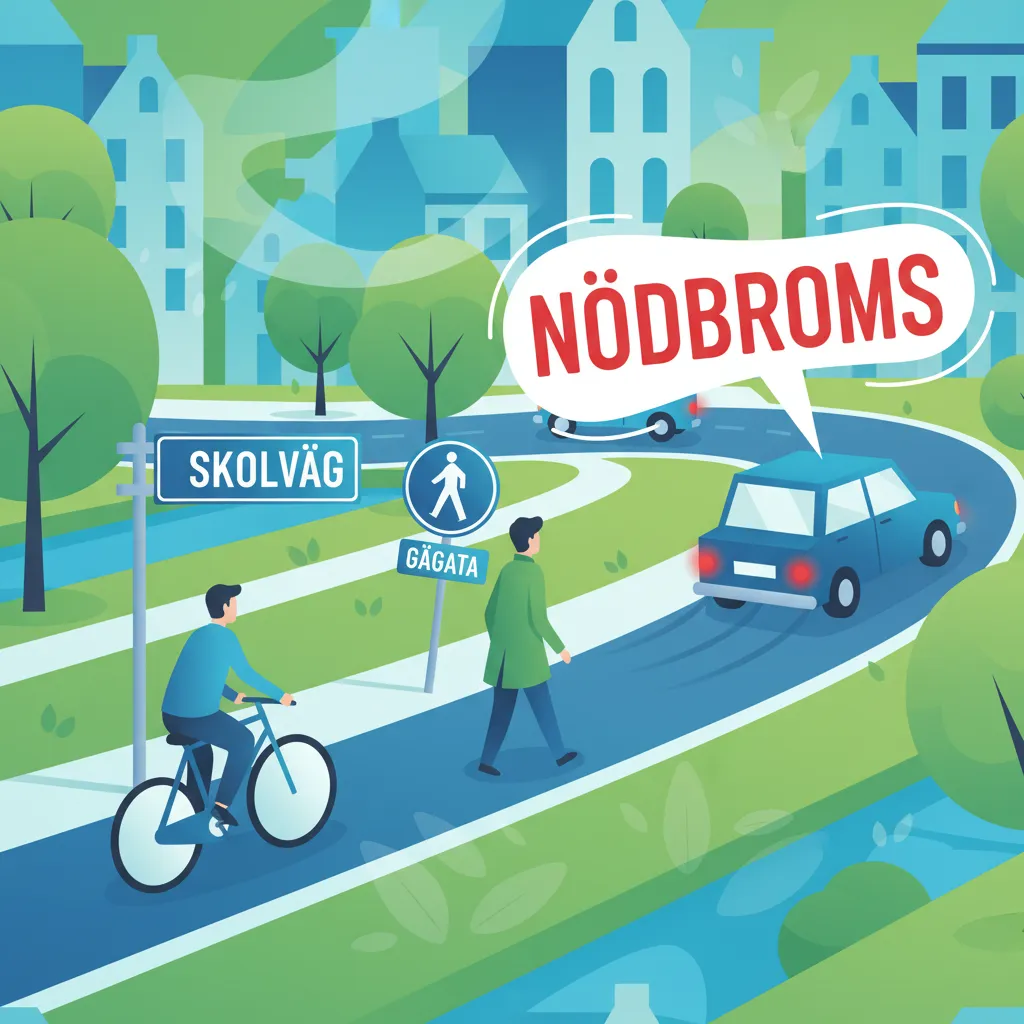
This lesson examines a variety of special situations where standard priority rules are modified. You will learn about the 'exit rule' (utfartsregeln) when entering a road from property, your duty to yield to buses indicating a departure from a stop, and the specific rules for pedestrian-only streets (gågata). The content also covers interactions with trams, emergency vehicles, and procedures at railway crossings, highlighting situations that demand maximum vigilance.
This lesson introduces the core principles of right-of-way in Sweden, including the general duty to give way (Väjningsplikt) and the stricter stop duty (Stopplikt). It explains the concept of a priority road and how to apply the right-hand rule at uncontrolled intersections. By understanding this legal framework, riders can determine who has priority in any given situation and act predictably and safely.
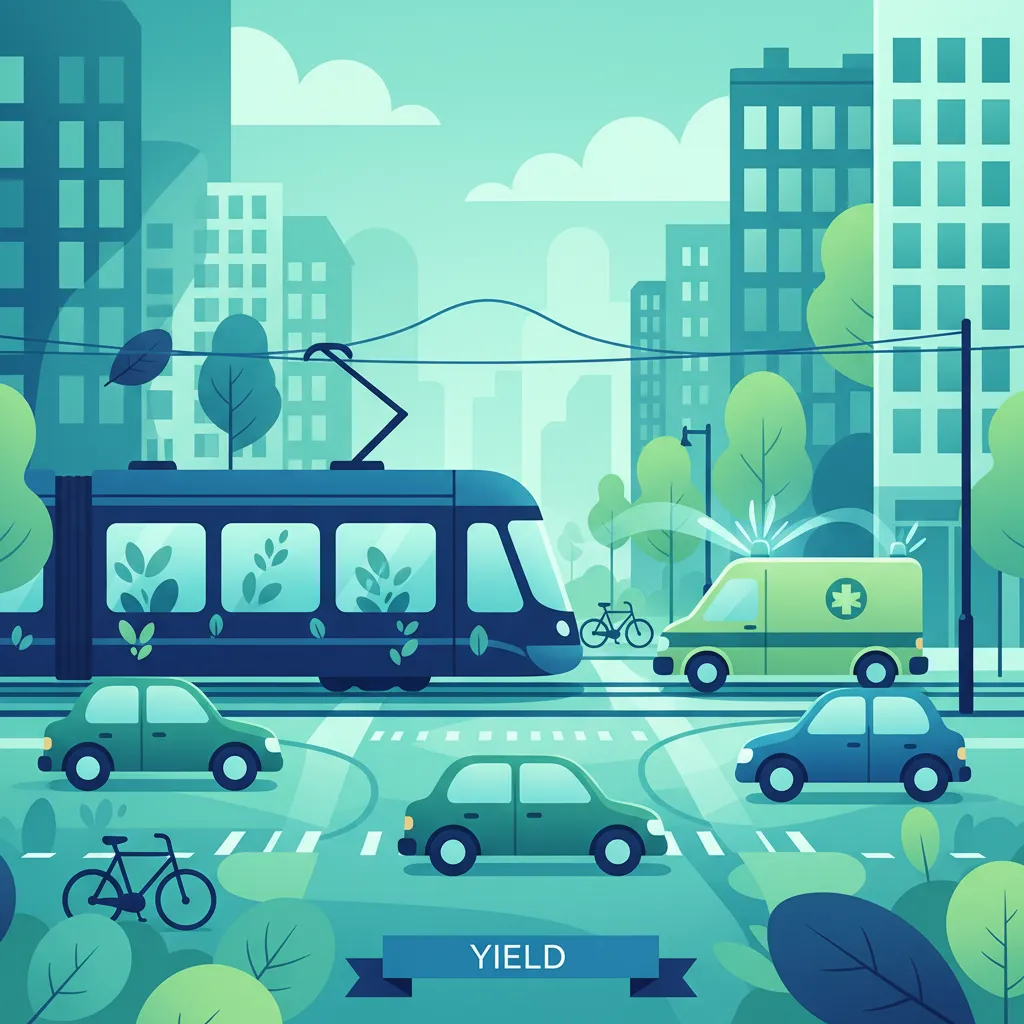
This lesson explains a motorcyclist's legal duty when encountering emergency vehicles with active sirens and lights. You will learn the correct procedure for yielding the right-of-way by safely pulling over and stopping. Additionally, the lesson covers the rules and best practices for sharing the road with public transport like buses and trams, including navigating around bus stops and respecting dedicated lanes, to ensure safety for all road users.
This lesson focuses on regulated intersections where priority is determined by signs indicating a main road (huvudled), a duty to yield (väjningsplikt), or a duty to stop (stopplikt). You will learn how to identify which road has priority and your legal obligation to give way to all traffic on that road before proceeding. The lesson covers proper procedures for approaching these junctions, assessing traffic, and entering the main road safely.
This lesson explains the two core principles of priority in Swedish traffic law: the right-hand rule (Högerregeln) and the duty to yield (Väjningsplikt). You will learn how to apply the right-hand rule at uncontrolled intersections and when to yield to other traffic as indicated by signs or road markings. Understanding this fundamental hierarchy is crucial for making correct and safe decisions in a wide variety of common traffic situations you will face as a motorcyclist.
This lesson details the specific priority rules at pedestrian and tram crossings (Spårvagnskorsning). It reinforces the legal obligation for moped riders to stop for pedestrians at marked zebra crossings and explains that trams almost always have priority. Learners will understand the importance of approaching these crossings with caution, scanning for hazards, and being prepared to stop.
This lesson addresses the unique hazards associated with public transportation. It explains how to safely navigate around buses that are stopping to pick up or drop off passengers and the importance of watching for pedestrians. It also covers the physical danger of slippery tram tracks, especially when wet, and reiterates that trams typically have absolute priority.
This lesson details a driver's responsibility towards pedestrians. You will learn the strict rule of yielding to pedestrians who are on or about to enter a marked, uncontrolled crosswalk. The content also covers the specific, highly restrictive rules for driving in designated pedestrian zones (gågata) and 'walking speed' areas (gångfartsområde), where pedestrians have complete priority and vehicle traffic is severely limited.
This lesson focuses on the unique challenges of driving in urban environments. You will learn techniques for anticipating the actions of vulnerable road users like pedestrians and cyclists, especially near crossings and bus stops. The content covers how to navigate narrow streets, one-way systems, and areas with heavy traffic, emphasizing the need for lower speeds, heightened awareness, and a defensive mindset.
This lesson focuses on the specific activity of stopping for the purpose of passenger embarkation/disembarkation or loading/unloading goods. You will learn that this is often permissible in areas marked with a 'no parking' sign, as long as the stop is brief and continuous. The lesson distinguishes this from a 'no stopping' zone, where any voluntary stop is prohibited, ensuring you understand the nuanced difference.
Explore Swedish traffic laws covering interaction with vulnerable road users, including pedestrians and cyclists. Understand how these rules apply alongside public transport obligations, ensuring safety for all road participants.
This lesson addresses the unique hazards associated with public transportation. It explains how to safely navigate around buses that are stopping to pick up or drop off passengers and the importance of watching for pedestrians. It also covers the physical danger of slippery tram tracks, especially when wet, and reiterates that trams typically have absolute priority.
This lesson focuses on the specific challenges mopeds face when interacting with cars and heavy vehicles. It highlights the significant blind spots (or 'no-zones') around trucks and buses and teaches riders how to position themselves to remain visible. The content also covers the dangers of wind turbulence when near large vehicles and the importance of maintaining a generous space cushion.
This lesson focuses on the unique challenges of driving in urban environments. You will learn techniques for anticipating the actions of vulnerable road users like pedestrians and cyclists, especially near crossings and bus stops. The content covers how to navigate narrow streets, one-way systems, and areas with heavy traffic, emphasizing the need for lower speeds, heightened awareness, and a defensive mindset.
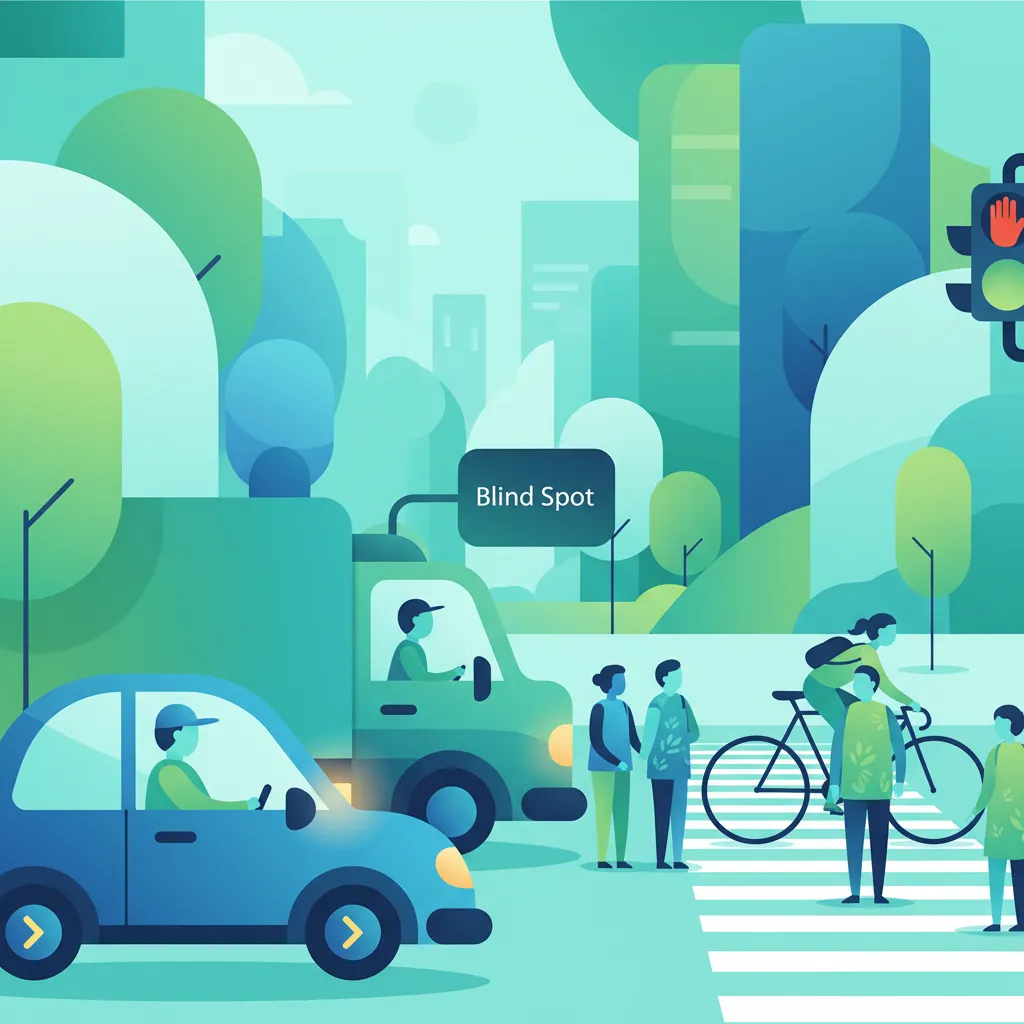
This lesson provides in-depth analysis of how to safely interact with the full spectrum of road users. You will learn about the specific characteristics of each, such as the large blind spots of trucks, the potential for sudden movements from cyclists, and the unpredictability of pedestrians. The content teaches strategies for communication, anticipation, and defensive positioning to ensure safe and respectful coexistence on the road for everyone.
This lesson details a driver's responsibility towards pedestrians. You will learn the strict rule of yielding to pedestrians who are on or about to enter a marked, uncontrolled crosswalk. The content also covers the specific, highly restrictive rules for driving in designated pedestrian zones (gågata) and 'walking speed' areas (gångfartsområde), where pedestrians have complete priority and vehicle traffic is severely limited.
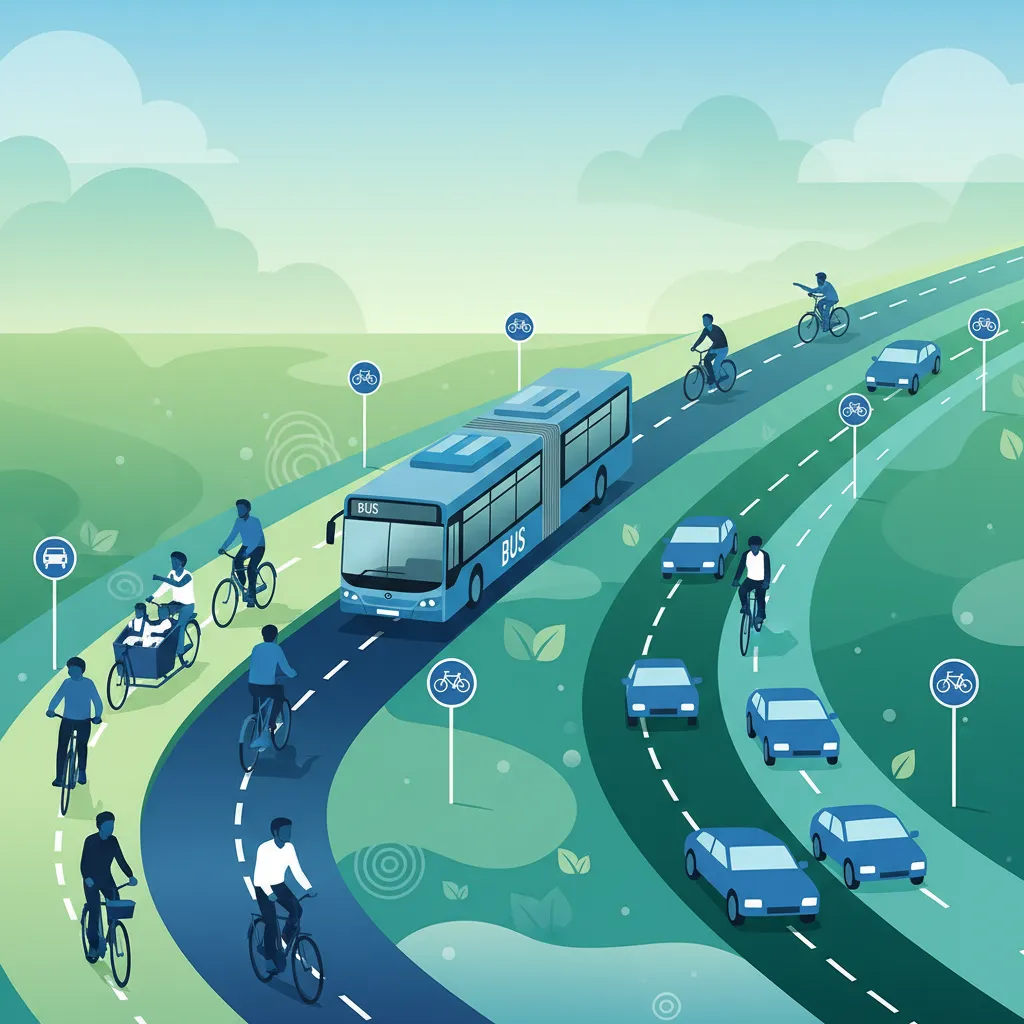
This lesson explains the specific regulations for lanes designated for particular users, such as buses or cyclists. It clarifies under what circumstances a moped is permitted to enter these lanes and the rules that must be followed while in them. Understanding these regulations is key to navigating complex urban environments legally and safely.
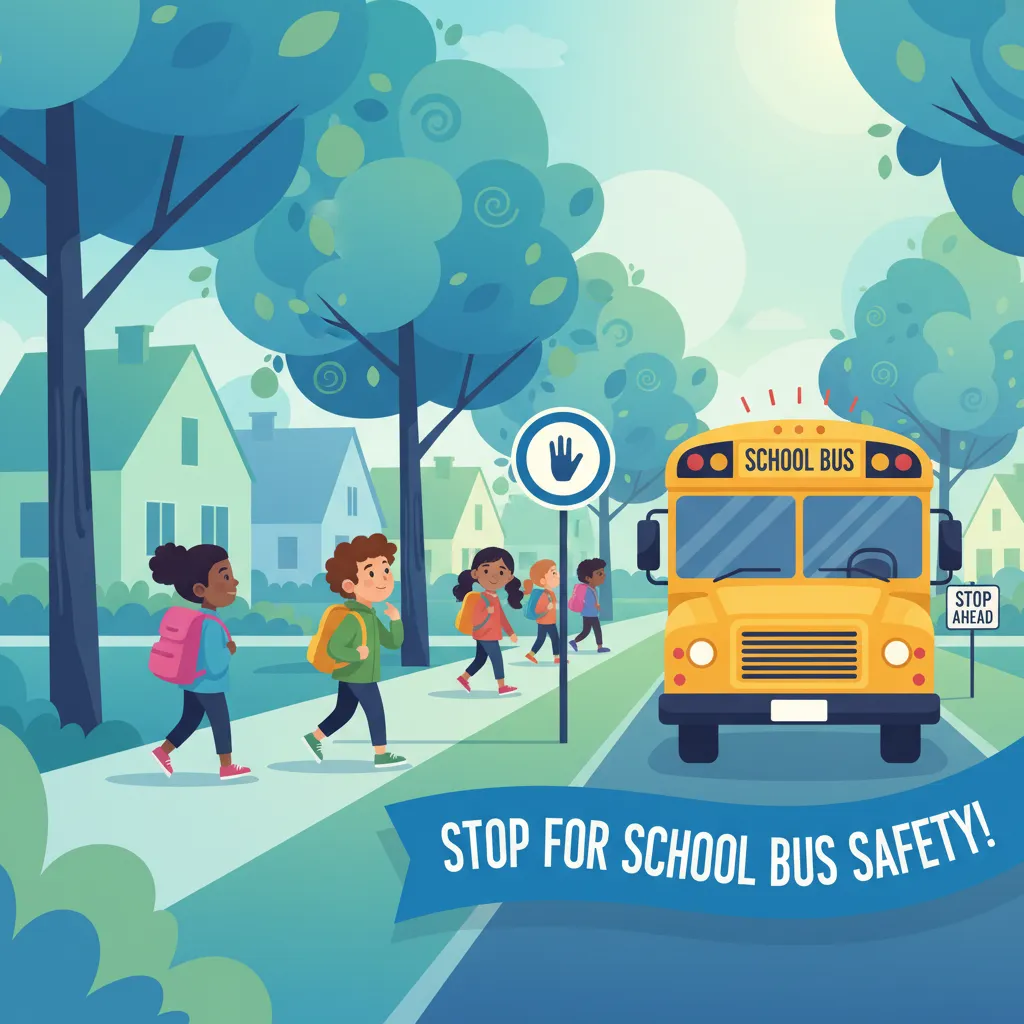
This lesson highlights the extreme caution needed in areas where children are present. You will learn to recognize school zone signs and the specific sign for a school bus, and understand your duty to slow down and be prepared to stop when a school bus has stopped for passengers. The lesson emphasizes that children can be impulsive and have poor risk judgment, requiring drivers to be exceptionally vigilant and maintain very low speeds.
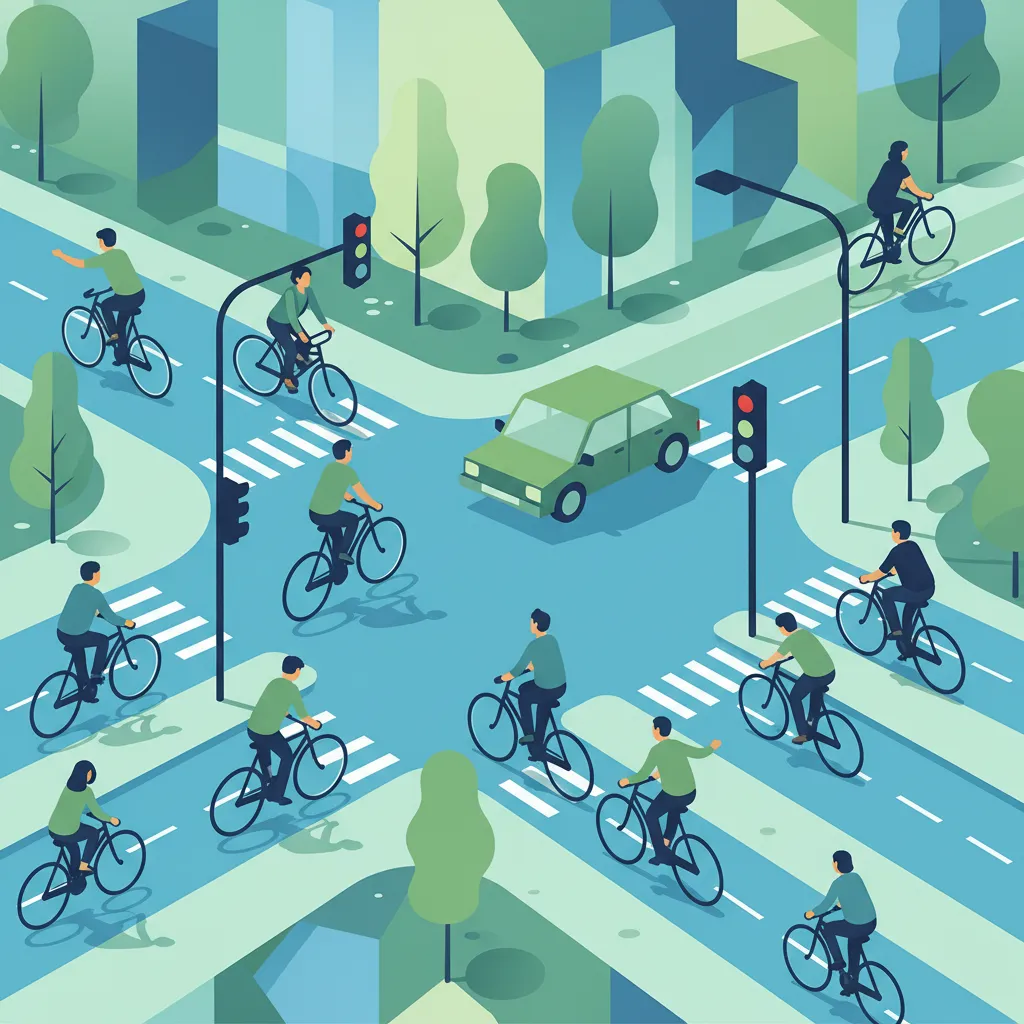
This lesson focuses on safe interaction with cyclists. You will learn to differentiate between a 'bicycle crossing' (cykelöverfart), where you have a duty to yield, and a 'bicycle passage' (cykelpassage), where specific priority rules apply. The content stresses the importance of leaving adequate space when overtaking cyclists and the critical danger of the 'right-hook' accident, emphasizing the need to check mirrors and blind spots carefully before turning right.
This lesson provides detailed guidance on navigating complex traffic points such as signalized intersections, multi-lane roundabouts, and pedestrian crossings. You will learn the correct procedures for entering and exiting roundabouts, the specific rules for yielding to pedestrians and cyclists at designated crossings, and how to interpret complex traffic light signals. These skills are vital for safe urban and suburban riding, where interaction with vulnerable road users is frequent.
This lesson explains a motorcyclist's legal duty when encountering emergency vehicles with active sirens and lights. You will learn the correct procedure for yielding the right-of-way by safely pulling over and stopping. Additionally, the lesson covers the rules and best practices for sharing the road with public transport like buses and trams, including navigating around bus stops and respecting dedicated lanes, to ensure safety for all road users.
Find clear answers to common questions learners have about Interaction with Public Transport. Learn how the lesson is structured, which driving theory objectives it supports, and how it fits into the overall learning path of units and curriculum progression in Sweden. These explanations help you understand key concepts, lesson flow, and exam focused study goals.
You must yield to a bus that is signaling to leave a bus stop, but only if the speed limit on that road is 50 km/h or less. If the speed limit is higher, you do not have this specific obligation to yield, but always remain aware of your surroundings and drive defensively.
Trams generally have priority over other vehicles. This means you must usually give way to them, especially when entering or crossing tram tracks. Always be prepared to slow down or stop for a tram.
When passing a stopped bus or tram, especially at a bus stop or tram stop, you must be extremely cautious. Passengers may be disembarking and could walk into the road unexpectedly. Slow down significantly and be ready to stop if anyone steps out.
The main exception is the speed limit; the rule to yield to a bus signaling to leave a stop applies only on roads with a maximum speed of 50 km/h. On faster roads, you are not legally required to yield in this specific situation, but safe driving practice always dictates vigilance.
The theory exam often includes questions about priority rules involving buses and trams. You might see scenarios asking you to identify who has the right-of-way, or what action you should take when approaching a bus stop or tram.
Refine your study plan by exploring practice sets on specific Swedish traffic rules, road signs, or driving situations. Use the search to quickly access relevant questions and focus your preparation for the official driving licence theory exam.