
This lesson dives into the fundamental legal rules for parking and stopping on Swedish roads, applicable even where no specific signs are present. Understanding these general prohibitions is crucial for preventing hazards and ensuring smooth traffic flow, directly impacting your Category B driving theory test success.
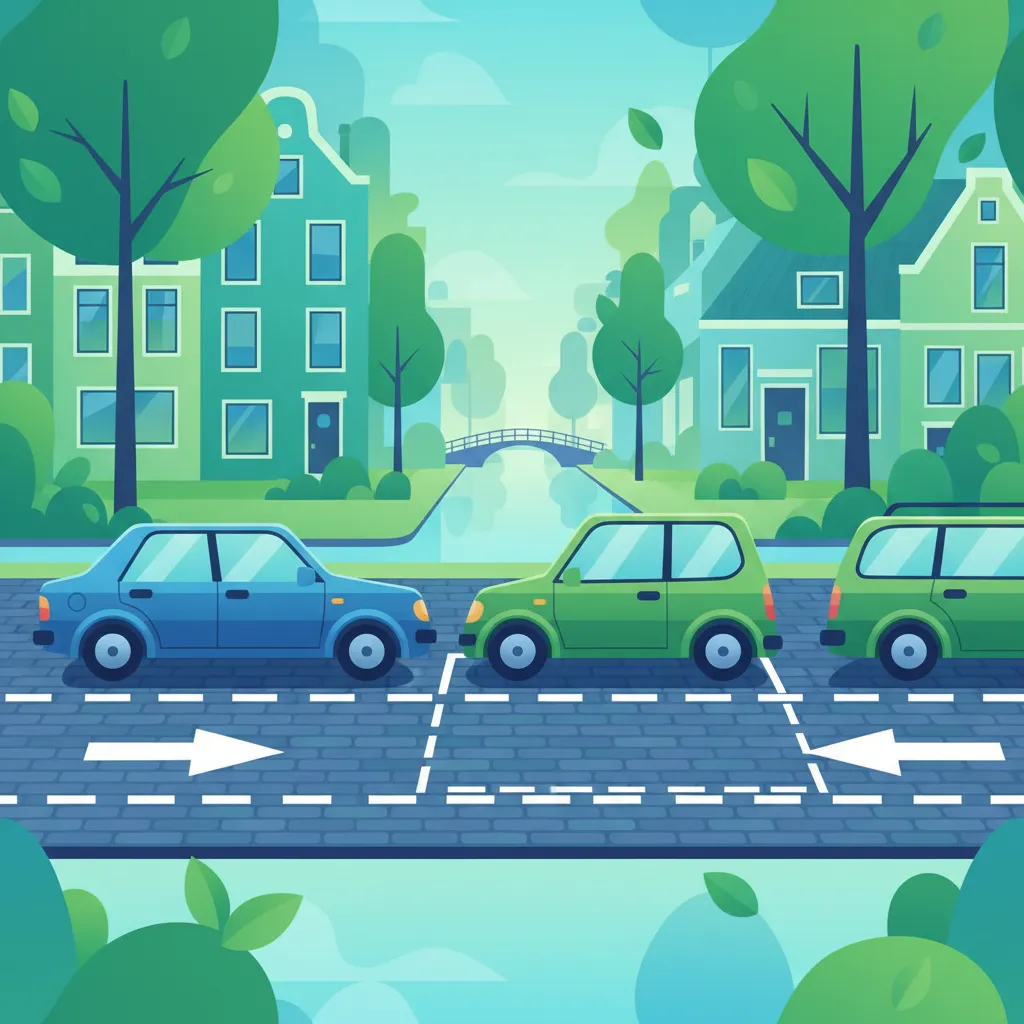
Lesson content overview
Navigating the rules for stopping and parking is a fundamental aspect of safe and responsible driving in Sweden. This lesson, part of your Swedish Driving License Theory Course for Category B Cars, focuses on the general, nationwide regulations that dictate where you may and may not stop or park, even in the absence of specific road signs. Understanding these rules is crucial not only for passing your theory test but also for ensuring road safety, maintaining traffic flow, and avoiding penalties in everyday driving.
In Swedish traffic law, there is a clear and important distinction between "stopping" (stoppa) and "parking" (parkera). This differentiation forms the basis for many regulations regarding where and for how long a vehicle can remain stationary. The rules are designed to prevent obstructions, ensure visibility for all road users, and maintain the efficiency of the road network.
Stopping refers to a brief halt where the driver remains in or immediately near the vehicle, with the clear intention of continuing movement shortly. Examples include pausing momentarily to let a passenger alight or stopping at a red light. The key characteristic is the temporary nature of the halt and the driver's immediate proximity and readiness to move.
Parking, on the other hand, means leaving a vehicle stationary for a longer period, where the driver is not required to stay in or immediately near the vehicle. This includes situations where the driver leaves the car to go shopping, attend an appointment, or simply steps away for an extended period. Generally, if a stop extends beyond a few minutes, or if the driver leaves the vehicle unattended, it is considered parking.
The practical meaning of this distinction is significant: different distance rules and exceptions apply depending on whether you are stopping or parking. Always assess your situation to determine which set of rules you must adhere to.
The underlying logic behind legal parking rules is multifaceted, primarily centered on safety, traffic efficiency, and the legal intent of the Trafikförordning (1998:1276), the Swedish Traffic Ordinance. By establishing minimum clearance distances, the law guarantees sufficient sight-lines for approaching traffic and pedestrians, preventing obstacles that could limit visibility, block right-of-way, or endanger vulnerable road users.
Incorrect stopping or parking is a frequent cause of immediate safety hazards, obstructions to traffic flow, reduced visibility, and is often met with fines and contributes to accidents. Therefore, mastering these rules is essential for safe and responsible driving on Swedish roads.
The Swedish Traffic Ordinance prescribes fixed minimum distances that a stopped or parked vehicle must maintain from certain road features, regardless of whether there are explicit signs present. Violating these distances constitutes a direct legal prohibition.
One of the most critical rules for ensuring pedestrian safety and smooth traffic flow involves maintaining adequate distance from specific road features:
Maintaining clear zones around intersections and bus stops is crucial for traffic flow and public transport efficiency:
Access to properties and garages must also be kept clear:
Beyond the general distance rules, certain areas are explicitly designated as no-stopping or no-parking zones, either through road signs or specific road markings. These prohibitions override general allowances and indicate areas where any stationary vehicle would significantly impair traffic flow or safety.
Specific regulatory signs (R-signs) clearly communicate prohibitions:
It's important to remember that these signs act as additional restrictions. The absence of a sign does not negate the national clearance distance obligations discussed earlier.
Road markings also play a crucial role in indicating where stopping or parking is not allowed:
The visibility triangle (sikttriangel) is a crucial concept in ensuring road safety, particularly at intersections and pedestrian crossings. It refers to the unobstructed triangular area that extends from a driver’s eye to a potential conflict point, such as a pedestrian crossing or an intersection. This area must remain free of obstacles.
Even if a vehicle is parked beyond the exact numerical distance (e.g., 20 metres from a pedestrian crossing), it may still be considered illegally parked if it intrudes into the visibility triangle of turning traffic, cyclists, or pedestrians. This is because such an obstruction can block the sight-line of an approaching road user, preventing them from seeing other traffic or vulnerable road users, and significantly increasing the risk of a collision. For instance, parking parallel to a curb in a way that blocks the sight-line of a cyclist turning right would be illegal due to violating the visibility triangle principle.
While general prohibitions and distance rules are strict, there are limited exceptions that allow for temporary stationary periods under specific conditions. These exceptions balance the need for flexibility with maintaining overall road safety.
Ignoring legal parking rules can lead to various penalties, traffic disruptions, and dangerous situations. It is essential for every driver to be aware of the potential repercussions.
Violations of parking and stopping rules in Sweden typically result in monetary fines. The amount of the fine varies depending on the severity of the offense and the municipality. In addition to fines, repeated or serious parking infringements can lead to penalty points on a driver's record.
Furthermore, illegally parked vehicles that obstruct traffic, create a hazard, or are left in restricted areas for extended periods may be subject to towing. Towing fees can be substantial, adding significantly to the cost of the initial fine.
Many drivers make common mistakes due to misunderstandings or misjudgment:
While the legal distances and prohibitions remain fixed, various contextual factors can influence how drivers should apply these rules and the level of caution required.
The regulations governing stopping and parking are not arbitrary; they are deeply rooted in principles of human visual perception, reaction time, traffic flow theory, and driver psychology.
By adhering to these rules, you contribute directly to a safer and more efficient road environment for everyone.
Understanding legal parking rules is foundational and connects with many other aspects of your Swedish Driving License Theory Course:
This lesson covers Sweden's fundamental legal parking and stopping rules for Category B drivers, including the critical distinction between stopping (temporary halt with driver nearby) and parking (extended leave with driver absent). Key mandatory distances include 20 metres from pedestrian crossings, traffic signals, and intersections; 10 metres from bus stops; and 5 metres from driveways. The visibility triangle concept extends these rules, as even correctly distanced vehicles can obstruct sight-lines and be illegal. Road signs C31 (No Stopping) and C32 (No Parking), along with yellow curb markings, communicate additional prohibitions, while limited exceptions exist for loading, passenger drop-off, and emergency situations. Understanding these rules is essential for both theory test success and safe real-world driving.
A short set of high-value points that capture the most important learning from this lesson.
In Swedish traffic law, 'stopping' is a brief halt with the driver remaining nearby, while 'parking' means leaving the vehicle for an extended period
You must maintain at least 20 metres from pedestrian crossings, traffic signals, and intersections; 10 metres from bus stops; and 5 metres from driveways
The visibility triangle (sikttriangel) concept means even vehicles parked beyond exact distances can be illegal if they block sight-lines
Road signs C31 (No Stopping) prohibit all halts, while C32 (No Parking) allows brief stops for loading or passengers if the driver stays with the vehicle
Yellow curb lines indicate no-parking zones, and interrupted yellow lines mean no stopping is permitted anywhere along that section
Explore all units and lessons included in this driving theory course.
Stopping = brief halt with driver nearby and ready to move; Parking = driver leaves vehicle unattended
Minimum distances: 20m from crossings/signals/intersections, 10m from bus stops, 5m from driveways
Hazard lights do not make an illegal stop legal; they only warn others during permitted temporary halts
Tram tracks are always off-limits for stopping unless it's a designated tram stop
Emergency stops require hazard lights, warning triangle 30m behind, and moving the vehicle to safety if possible
Assuming very brief stops in no-stopping zones are acceptable – the sign means no stopping at all regardless of duration
Believing hazard lights automatically permit parking in prohibited areas – they only legitimize short-term halts in permitted zones
Ignoring nationwide clearance rules because no signs are visible – distance rules apply even without signage
Parking within the visibility triangle even at technically correct distances if sight-lines are still obstructed
Thinking a disabled parking permit allows parking anywhere – it only overrides certain distance and time limits in designated areas
Lesson content overview
A short set of high-value points that capture the most important learning from this lesson.
In Swedish traffic law, 'stopping' is a brief halt with the driver remaining nearby, while 'parking' means leaving the vehicle for an extended period
You must maintain at least 20 metres from pedestrian crossings, traffic signals, and intersections; 10 metres from bus stops; and 5 metres from driveways
The visibility triangle (sikttriangel) concept means even vehicles parked beyond exact distances can be illegal if they block sight-lines
Road signs C31 (No Stopping) prohibit all halts, while C32 (No Parking) allows brief stops for loading or passengers if the driver stays with the vehicle
Yellow curb lines indicate no-parking zones, and interrupted yellow lines mean no stopping is permitted anywhere along that section
Explore all units and lessons included in this driving theory course.
Stopping = brief halt with driver nearby and ready to move; Parking = driver leaves vehicle unattended
Minimum distances: 20m from crossings/signals/intersections, 10m from bus stops, 5m from driveways
Hazard lights do not make an illegal stop legal; they only warn others during permitted temporary halts
Tram tracks are always off-limits for stopping unless it's a designated tram stop
Emergency stops require hazard lights, warning triangle 30m behind, and moving the vehicle to safety if possible
Assuming very brief stops in no-stopping zones are acceptable – the sign means no stopping at all regardless of duration
Believing hazard lights automatically permit parking in prohibited areas – they only legitimize short-term halts in permitted zones
Ignoring nationwide clearance rules because no signs are visible – distance rules apply even without signage
Parking within the visibility triangle even at technically correct distances if sight-lines are still obstructed
Thinking a disabled parking permit allows parking anywhere – it only overrides certain distance and time limits in designated areas
Explore search topics learners often look for when studying Legal Parking Rules. These topics reflect common questions about road rules, driving situations, safety guidance, and lesson level theory preparation for learners in Sweden.
Browse additional driving theory lessons that cover connected traffic rules, road signs, and common driving situations related to this topic. Improve your understanding of how different rules interact across everyday traffic scenarios.
Explore the specific nationwide rules that prohibit stopping and parking in various locations across Sweden. Understand the legal boundaries for safe and legal vehicle placement, and learn how to avoid common violations even without explicit signage.

This lesson focuses on the specific activity of stopping for the purpose of passenger embarkation/disembarkation or loading/unloading goods. You will learn that this is often permissible in areas marked with a 'no parking' sign, as long as the stop is brief and continuous. The lesson distinguishes this from a 'no stopping' zone, where any voluntary stop is prohibited, ensuring you understand the nuanced difference.

This lesson clarifies the legal distinction between stopping temporarily and parking. It identifies areas where stopping is prohibited, such as near intersections or on pedestrian crossings, to maintain traffic flow and safety. The content also discusses designated waiting areas at traffic lights, often marked for cyclists and mopeds, which can offer a safer position.
This lesson covers parking areas that are reserved for specific purposes or permit holders. The primary focus is on spaces designated for people with disabilities, explaining the requirement of a valid permit. It also addresses other restricted areas such as residential parking zones (boendeparkering), loading zones, and areas that must be kept clear for emergency vehicles, highlighting the legal and ethical reasons for respecting these designations.

This lesson focuses on the often-confusing topic of moped parking. It covers how to interpret parking signs, including those indicating prohibitions (Parkeringsförbud), and where to find designated parking spots for two-wheelers. The content provides practical advice on where it is legal to park and how to do so without causing an obstruction, thereby avoiding fines.
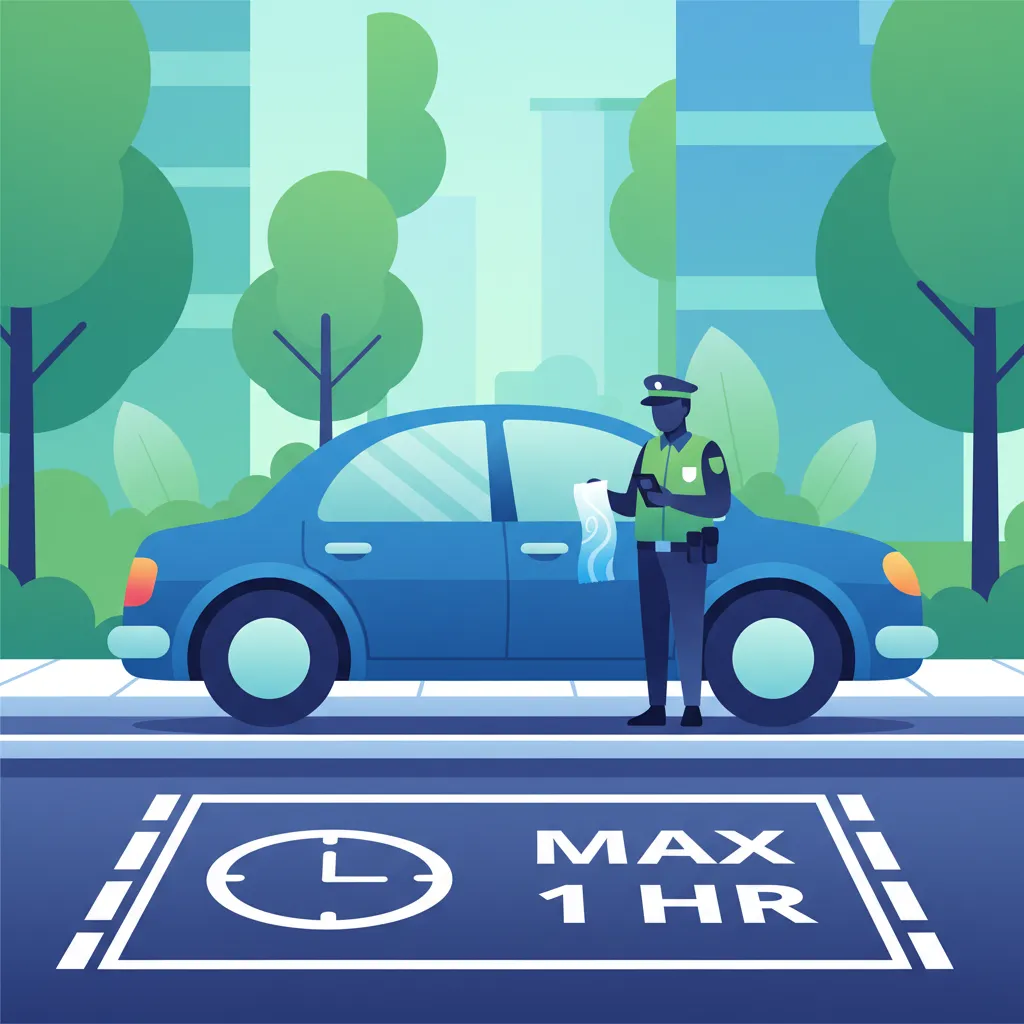
This lesson explains the various systems used to regulate parking duration and payment. You will learn how to correctly set and display a parking disc (P-skiva) in time-limited zones and how to operate parking meters and mobile payment apps. The lesson also demystifies 'date parking' (datumparkering), a rule used in some areas for street cleaning, and clarifies the difference between a public parking fine (parkeringsanmärkning) and a private control fee (kontrollavgift).
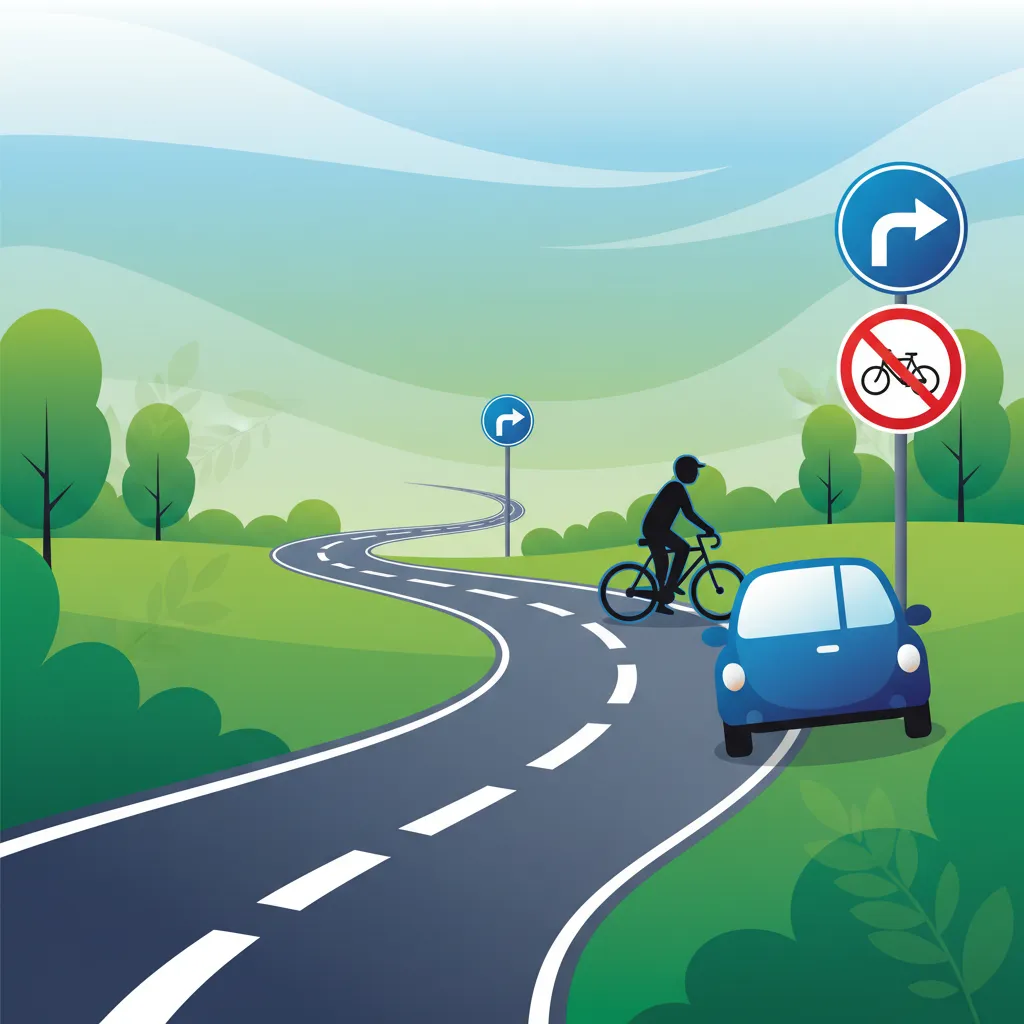
This lesson details the full range of Swedish regulatory signs, which establish legally enforceable rules for all road users. You will learn to interpret prohibitory signs (förbudsmärken) such as speed limits and no-entry signs, as well as mandatory signs (påbudsmärken) that dictate direction or lane usage. Understanding these signs is crucial as they directly regulate traffic flow, ensure safety at critical points, and carry legal consequences if ignored.

This lesson focuses on the high level of caution required when driving in residential areas. You will learn about the rules for special zones like 'gångfartsområde' (walking speed area) and the need to navigate around speed calming measures like speed bumps. The central theme is anticipating unpredictable behavior from residents, especially children, and managing the risks posed by parked cars that severely limit visibility.
This lesson revisits the practical skills of positioning a vehicle within a designated space. It describes the characteristics of the three main parking styles: parallel (fickparkering), angled, and perpendicular. The content focuses on the conceptual steps for each maneuver, such as approach, turning points, and final positioning, reinforcing the importance of slow, controlled movements and constant observation of the surroundings.
Clarify the crucial distinctions between stopping and parking according to Swedish traffic regulations. This lesson helps you understand the legal definitions, implications, and practical differences relevant for safe and lawful vehicle placement on roads.
This lesson focuses on the specific activity of stopping for the purpose of passenger embarkation/disembarkation or loading/unloading goods. You will learn that this is often permissible in areas marked with a 'no parking' sign, as long as the stop is brief and continuous. The lesson distinguishes this from a 'no stopping' zone, where any voluntary stop is prohibited, ensuring you understand the nuanced difference.
This lesson clarifies the legal distinction between stopping temporarily and parking. It identifies areas where stopping is prohibited, such as near intersections or on pedestrian crossings, to maintain traffic flow and safety. The content also discusses designated waiting areas at traffic lights, often marked for cyclists and mopeds, which can offer a safer position.
This lesson covers parking areas that are reserved for specific purposes or permit holders. The primary focus is on spaces designated for people with disabilities, explaining the requirement of a valid permit. It also addresses other restricted areas such as residential parking zones (boendeparkering), loading zones, and areas that must be kept clear for emergency vehicles, highlighting the legal and ethical reasons for respecting these designations.

This lesson provides step-by-step instructions for performing common low-speed maneuvers, including reversing in a straight line, backing around a corner, and various types of parking. You will learn how to use reference points on your vehicle and the surroundings to position the car accurately. The paramount importance of slow speed, continuous 360-degree observation, and being prepared to stop for pedestrians or other vehicles is emphasized throughout.
This lesson revisits the practical skills of positioning a vehicle within a designated space. It describes the characteristics of the three main parking styles: parallel (fickparkering), angled, and perpendicular. The content focuses on the conceptual steps for each maneuver, such as approach, turning points, and final positioning, reinforcing the importance of slow, controlled movements and constant observation of the surroundings.
This lesson focuses on the high level of caution required when driving in residential areas. You will learn about the rules for special zones like 'gångfartsområde' (walking speed area) and the need to navigate around speed calming measures like speed bumps. The central theme is anticipating unpredictable behavior from residents, especially children, and managing the risks posed by parked cars that severely limit visibility.
This lesson explains the various systems used to regulate parking duration and payment. You will learn how to correctly set and display a parking disc (P-skiva) in time-limited zones and how to operate parking meters and mobile payment apps. The lesson also demystifies 'date parking' (datumparkering), a rule used in some areas for street cleaning, and clarifies the difference between a public parking fine (parkeringsanmärkning) and a private control fee (kontrollavgift).

This lesson explains the function and legal significance of various road markings (vägmarkeringar) in Sweden. You will learn the difference between broken lines that permit overtaking and solid lines that forbid it, as well as the meaning of stop lines, pedestrian crossings, and lane direction arrows. These markings work in conjunction with signs to organize traffic flow, separate lanes, and provide critical information directly on the road surface.
This lesson details the full range of Swedish regulatory signs, which establish legally enforceable rules for all road users. You will learn to interpret prohibitory signs (förbudsmärken) such as speed limits and no-entry signs, as well as mandatory signs (påbudsmärken) that dictate direction or lane usage. Understanding these signs is crucial as they directly regulate traffic flow, ensure safety at critical points, and carry legal consequences if ignored.

This lesson focuses on the unique challenges of driving in urban environments. You will learn techniques for anticipating the actions of vulnerable road users like pedestrians and cyclists, especially near crossings and bus stops. The content covers how to navigate narrow streets, one-way systems, and areas with heavy traffic, emphasizing the need for lower speeds, heightened awareness, and a defensive mindset.
Find clear answers to common questions learners have about Legal Parking Rules. Learn how the lesson is structured, which driving theory objectives it supports, and how it fits into the overall learning path of units and curriculum progression in Sweden. These explanations help you understand key concepts, lesson flow, and exam focused study goals.
In Sweden, 'stanna' means to stop briefly, typically to pick up or drop off passengers. 'Parkera' means to leave the vehicle unattended or stopped for a longer period. The rules governing where you can 'stanna' are generally less restrictive than where you can 'parkera', but both are subject to specific legal prohibitions.
No, it is generally prohibited to stop or park too close to a pedestrian crossing. This is to ensure visibility for both pedestrians and drivers, and to maintain clear access to the crossing. The exact distance is specified in regulations, but the principle is to avoid any obstruction or hazard.
You must not stop or park in a way that obstructs visibility or traffic flow at an intersection. This includes not parking too close to the junction itself, or in a position that forces other vehicles to deviate significantly from their path. Always ensure your vehicle does not create a hazard or impediment.
Yes, stopping or parking too close to a designated bus stop is prohibited to allow buses to stop safely and passengers to embark and disembark without hazard. While specific signs often indicate bus stops, the general rule also applies to ensure accessibility and safety.
Parking in contravention of general legal rules, even without specific signs, can result in a parking ticket ( Ordningsbot ) and potentially having your vehicle towed. It's crucial to understand and follow these fundamental regulations to avoid fines and ensure road safety.
Refine your study plan by exploring practice sets on specific Swedish traffic rules, road signs, or driving situations. Use the search to quickly access relevant questions and focus your preparation for the official driving licence theory exam.