
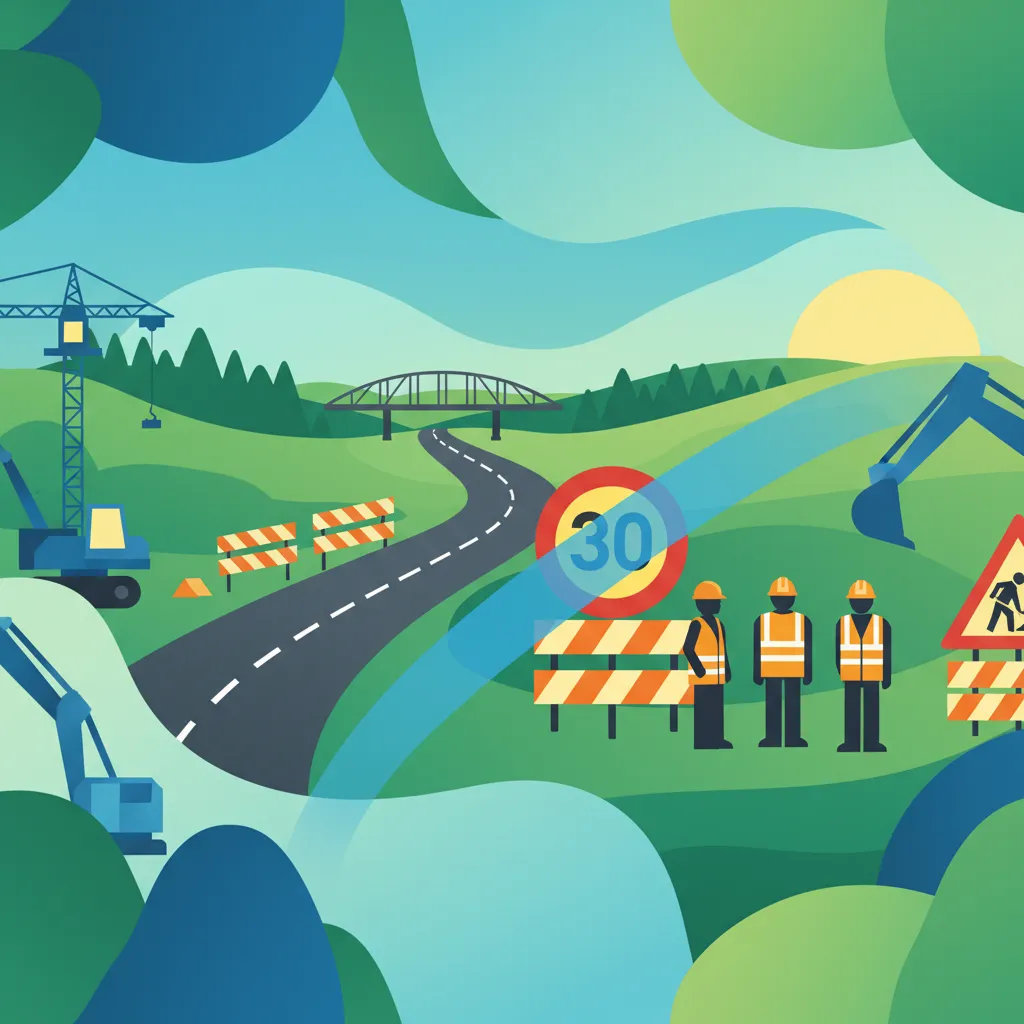
Road work zones, or construction areas, are temporary sections of road where maintenance or building activities are taking place. These zones significantly alter normal traffic flow and conditions, demanding a specific set of rules and an adjusted driving style. It's crucial for drivers in Sweden to recognize these areas and understand the temporary signs and hazards they present.
Theory topic content overview
Read the full theory topic guide for Road Work Zones with structured, easy-to-scan content built for learners in Sweden. This detailed section explains the exact rule, meaning, traffic context, comparison points, and exam logic behind this Swedish driving theory topic so you can study faster, understand the concept more clearly, and avoid common interpretation mistakes on the theory test.
A road work zone, known in Swedish as a vägarbete, is a temporary section of road where construction, maintenance, or repair activities are actively taking place. These zones are essential for maintaining and improving Sweden's road infrastructure but introduce dynamic and often unpredictable changes to the normal driving environment.
Unlike permanent road conditions, vägarbete areas are characterized by:
These zones are not static; their layout and hazards can change daily, or even hourly, making continuous observation and adaptability crucial for safety.
Road work zones are among the most hazardous environments for both drivers and road workers. The unique risks present in these areas necessitate a heightened level of awareness and a specific driving approach to prevent accidents.
Understanding vägarbete is vital for several reasons:
vägarbete areas, and failing to comply can result in fines and increased accident risk.Driving through a road work zone in Sweden requires specific adjustments based on the temporary nature of the environment.
This is a fundamental rule in Swedish traffic. Any temporary road signs (typically yellow or orange backgrounds) or temporary road markings (often yellow or white painted lines) always override permanent signs and markings.
vägarbete speed limit sign, even if lower than the permanent one, must be obeyed.Almost all road work zones will feature temporary, reduced speed limits. These are not suggestions; they are mandatory maximum speeds designed to:
You must be prepared for unexpected lane shifts, merges, or closures.
Vägarbete can involve:
Workers in vägarbete zones are often in close proximity to active traffic with minimal protection.
A critical concept for the Swedish driving theory exam is the absolute precedence of temporary traffic control devices over permanent ones.
vägarbete zone, those standard rules are temporarily suspended for the specific section.For example, if a permanent sign indicates a 70 km/h speed limit, but you encounter a temporary yellow sign with "50" in a vägarbete zone, the speed limit is 50 km/h. Ignoring this is not just a traffic violation but a severe safety risk.
VägarbeteAs you approach a vägarbete area, you will usually see a series of warning signs, often starting some distance before the actual work begins.
Once inside the vägarbete area:
You will typically see signs indicating the end of the vägarbete (often a sign with the vägarbete symbol crossed out).
Learners and experienced drivers alike can make crucial errors in vägarbete areas. Avoid these common pitfalls to ensure your safety and success in the theory exam:
In Sweden, the term vägarbete (literally "road work") is universally understood. Swedish authorities like Trafikverket (the Swedish Transport Administration) meticulously plan and sign these zones to maximize safety.
Key aspects in the Swedish context include:
vägarbete signs follow clear, consistent standards, using highly visible yellow/orange backgrounds and specific symbols. Recognizing these immediately is critical.vägarbete can occur in all seasons, sometimes compounded by challenging weather like snow or heavy rain, requiring even greater caution.Your ability to correctly interpret and react to vägarbete signage and conditions is a direct measure of your preparedness for both the driving theory exam and real-world driving on Swedish roads.
When encountering a road work zone (vägarbete) in Sweden, adopt a mindset of constant vigilance and proactive adaptation. Reduce your speed, observe all temporary signs and markings, and always be prepared for the unexpected presence of workers, equipment, or changing road conditions. Prioritizing safety, especially that of road workers, is not just a rule but a fundamental responsibility for every driver.
Road work zones (vägarbete) in Sweden are temporary sections where construction or maintenance is taking place, introducing dynamic and unpredictable changes to normal driving conditions. The fundamental rule is that temporary signs and markings always override permanent ones, requiring drivers to continuously observe and adapt to updated instructions. Safety of road workers is paramount - drivers must reduce speed, maintain vigilance, and be prepared for sudden changes in road surface, lane configuration, or the presence of workers and equipment. Common mistakes include ignoring temporary signs, driving too fast, distracted driving, aggressive lane changes, and failing to anticipate unexpected movements.
A short set of high-value points that capture the most important ideas from this theory explanation.
Temporary signs (yellow/orange background) always override permanent signs and markings in vägarbete zones
Reduced speed limits in work zones are mandatory, not optional, and you should reduce speed even without a sign if conditions warrant it
Road surfaces in vägarbete can include loose gravel, uneven pavement, sudden drops, or debris that reduce tire grip and affect steering control
Your ability to correctly interpret and react to vägarbete signage is a direct measure of preparedness for the driving theory exam and real-world Swedish driving
Workers in road work zones may move unpredictably and must always be given ample lateral space when passing
In Sweden, temporary signs always override permanent ones - if permanent says 70 km/h but temp says 50, the speed limit is 50 km/h
Yellow or white temporary lane markings always take precedence over permanent markings - follow temporary lines even if they seem to conflict with older markings underneath
Hand signals from workers directing traffic are mandatory and override traffic lights or signs
Speed reduction should be progressive and smooth, not sudden - start slowing down when you see early warning signs
Swedish vägarbete zones use consistent yellow/orange standards for temporary signs, making them instantly recognizable
Ignoring temporary signs and believing permanent speed limits or road rules still apply in the work zone
Not reducing speed sufficiently for the conditions, leading to inadequate reaction time for unexpected hazards
Failing to anticipate workers stepping into the road or machinery moving unexpectedly - always assume the unexpected
Merging late or cutting in front of other vehicles, creating dangerous situations especially when lanes are narrowed
Following too closely, leaving no safe braking distance for sudden stops caused by work activity or uneven surfaces
Start with a short, direct summary of Road Work Zones before reading the full explanation below.
When approaching or driving through a road work zone in Sweden, you must reduce your speed, pay close attention to all temporary signs and markings, and be prepared for sudden changes in traffic patterns or road surfaces. Always anticipate the presence of workers and heavy equipment, giving them ample space. These temporary rules often override permanent ones and are critical for safety and exam success.
Review the most important terms, rule signals, and traffic concepts linked to Road Work Zones.
Explore related theory topic pages connected to Road Work Zones and continue with the next useful rule explanation.
See the common search queries learners use when trying to understand Road Work Zones in Sweden.

Dive deeper into specific theory topics, review detailed explanations of road rules, and reinforce your understanding of Swedish traffic regulations. Continue your preparation for the driving licence exam by exploring each core concept in detail.
Explore Driving Theory TopicsTheory topic content overview
A short set of high-value points that capture the most important ideas from this theory explanation.
Temporary signs (yellow/orange background) always override permanent signs and markings in vägarbete zones
Reduced speed limits in work zones are mandatory, not optional, and you should reduce speed even without a sign if conditions warrant it
Road surfaces in vägarbete can include loose gravel, uneven pavement, sudden drops, or debris that reduce tire grip and affect steering control
Your ability to correctly interpret and react to vägarbete signage is a direct measure of preparedness for the driving theory exam and real-world Swedish driving
Workers in road work zones may move unpredictably and must always be given ample lateral space when passing
In Sweden, temporary signs always override permanent ones - if permanent says 70 km/h but temp says 50, the speed limit is 50 km/h
Yellow or white temporary lane markings always take precedence over permanent markings - follow temporary lines even if they seem to conflict with older markings underneath
Hand signals from workers directing traffic are mandatory and override traffic lights or signs
Speed reduction should be progressive and smooth, not sudden - start slowing down when you see early warning signs
Swedish vägarbete zones use consistent yellow/orange standards for temporary signs, making them instantly recognizable
Ignoring temporary signs and believing permanent speed limits or road rules still apply in the work zone
Not reducing speed sufficiently for the conditions, leading to inadequate reaction time for unexpected hazards
Failing to anticipate workers stepping into the road or machinery moving unexpectedly - always assume the unexpected
Merging late or cutting in front of other vehicles, creating dangerous situations especially when lanes are narrowed
Following too closely, leaving no safe braking distance for sudden stops caused by work activity or uneven surfaces
Start with a short, direct summary of Road Work Zones before reading the full explanation below.
When approaching or driving through a road work zone in Sweden, you must reduce your speed, pay close attention to all temporary signs and markings, and be prepared for sudden changes in traffic patterns or road surfaces. Always anticipate the presence of workers and heavy equipment, giving them ample space. These temporary rules often override permanent ones and are critical for safety and exam success.
Review the most important terms, rule signals, and traffic concepts linked to Road Work Zones.
Explore related theory topic pages connected to Road Work Zones and continue with the next useful rule explanation.
See the common search queries learners use when trying to understand Road Work Zones in Sweden.
Dive deeper into specific theory topics, review detailed explanations of road rules, and reinforce your understanding of Swedish traffic regulations. Continue your preparation for the driving licence exam by exploring each core concept in detail.
Explore Driving Theory TopicsUse this exam-focused revision tip to understand how Road Work Zones is likely to appear in theory questions for learners in Sweden. This section helps you identify the most testable part of the rule, avoid common traps, and remember the concept more effectively during Swedish driving theory exam preparation.
In the Swedish driving theory exam, road work zone questions often test your understanding that temporary signs (especially yellow/orange) always take precedence over permanent ones. Remember to prioritize the safety of workers, reduce speed, and be prepared for sudden, unexpected changes in the road environment.
Read direct answers to the most common learner questions about Road Work Zones in Sweden. This FAQ focuses on rule confusion, practical meaning, comparison with similar concepts, and the exact uncertainties that appear most often in Swedish driving theory revision and exam preparation.
A road work zone is any section of road where construction, maintenance, or repair activities are ongoing. These areas are typically marked by temporary signs, cones, and barriers, indicating altered traffic conditions.
It's crucial to adapt your driving due to temporary hazards like uneven surfaces, reduced lane widths, heavy machinery, and the presence of workers near active traffic. Standard rules may be overridden by temporary instructions, and safety is paramount.
You should look for orange or yellow warning signs indicating road work ahead, temporary speed limits, lane closures, changed traffic patterns (e.g., 'omledning' for diversions), and signs specifically for workers or equipment.
Yes, temporary speed limits are legally binding and must be strictly adhered to, regardless of whether you can see workers or equipment. They are set to ensure safety for potential hazards that may not be immediately visible.
Workers are exposed to risks from passing traffic, moving machinery, and falling objects. Drivers must always give workers maximum space, reduce speed, and be extra vigilant to protect them from accidents.
Plan lane changes well in advance, follow all temporary signs and markings, and merge smoothly. Avoid sudden movements, and always check your blind spots, as traffic patterns can be confusing and unpredictable for other drivers too.
Refine your study plan by exploring practice sets on specific Swedish traffic rules, road signs, or driving situations. Use the search to quickly access relevant questions and focus your preparation for the official driving licence theory exam.