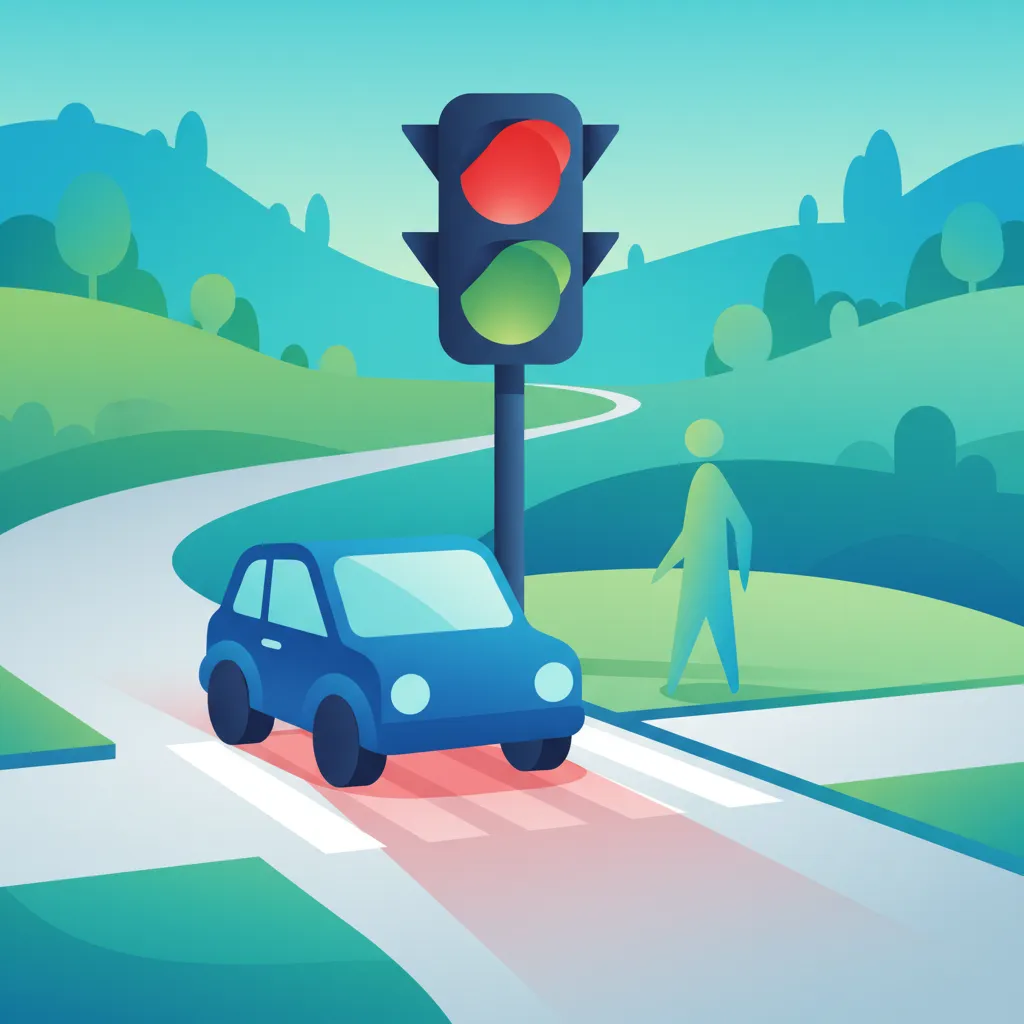
Traffic lights, or 'trafiksignaler' in Swedish, are vital devices that regulate vehicle and pedestrian movement. Learning how to interpret and react correctly to each signal color – red, yellow, and green – is fundamental for passing your driving theory exam and driving safely on Swedish roads. This page outlines the specific rules you must follow.
Theory topic content overview
Read the full theory topic guide for Traffic Lights & Signals with structured, easy-to-scan content built for learners in Sweden. This detailed section explains the exact rule, meaning, traffic context, comparison points, and exam logic behind this Swedish driving theory topic so you can study faster, understand the concept more clearly, and avoid common interpretation mistakes on the theory test.
Traffic lights, known as trafiksignaler in Sweden, are fundamental control devices that regulate the flow of vehicles and pedestrians at intersections, pedestrian crossings, and other conflict points on the road. Understanding how to interpret and react to each signal is essential for road safety, smooth traffic flow, and successfully passing your Swedish driving theory exam.
Traffic lights are visual signals using distinct colors to tell road users when they can proceed, when they must prepare to stop, and when they must stop. Their primary purpose is to prevent collisions by assigning clear rights of way, especially in complex intersections where multiple paths of travel converge. In Sweden, trafiksignaler are a critical component of traffic management, working alongside road signs and road markings to ensure order.
For anyone learning to drive in Sweden, a deep understanding of trafiksignaler is non-negotiable.
Each color signal provides a clear instruction for drivers:
Instruction: You must stop.
stopplinjen (stop line), or if no stop line is present, before the signal itself, ensuring you do not block pedestrian crossings or junctions.Instruction: You must stop, unless it is unsafe to do so.
Instruction: You may proceed, if safe and clear.
trafiksignal is out of order or temporarily deactivated.huvudled (main road) or väjningsplikt (give way).högerregeln): If no road signs regulate priority, the högerregeln applies – you must give way to traffic approaching from your right.extra försiktighet (extra caution) when encountering a flashing yellow light.Stopp. It often indicates that a road is completely closed or there is an immediate, critical hazard that requires an absolute stop, such as at some railway crossings or before a bridge opening.högerregeln or the guidance of vägmärken (road signs).trafiksignal, it turns yellow. You assess that you have sufficient distance to brake gently and safely stop before the stopplinjen without risking a rear-end collision. Correct action: You must stop. If you accelerate instead, you risk a fine or driving licence consequences.trafiksignal turns green. You see two cars approaching from the opposite direction, intending to go straight, and a pedestrian stepping onto the crosswalk on the road you wish to enter. Correct action: You must wait for the oncoming cars to pass and for the pedestrian to cross safely before completing your left turn, even though your light is green.huvudled (main road) in rural Sweden, you encounter an intersection where the trafiksignaler are flashing yellow. There is a huvudled sign indicating you are on the main road. Correct action: You proceed with caution, maintaining your priority due to the huvudled sign, but remain prepared for others who might not observe the rule. If there were no huvudled sign and you were on a side road, the högerregeln would typically apply, requiring you to yield to traffic from your right.Always approach trafiksignaler with a proactive and anticipatory mindset. Prioritize safety over speed. For your Swedish driving licence, remember that a green light is conditional, especially for turns, and a yellow light is primarily a signal to stop safely. By internalizing these nuances, you will not only pass your theory exam but also become a safer, more responsible driver on Swedish roads.
Swedish traffic lights (trafiksignaler) use red, yellow, and green signals to regulate vehicle and pedestrian flow at intersections, with red always requiring a complete stop and yellow requiring a stop unless it would be unsafe to do so. The green light is conditional, especially when turning left, where drivers must yield to oncoming vehicles and vulnerable road users like pedestrians and cyclists. Special signals include the green arrow (protected turn), flashing yellow (malfunctioning lights requiring uncontrolled junction rules), and red flashing lights (absolute stop required). For the Swedish driving theory exam, mastering the yellow light distinction and understanding that green does not guarantee right of way are critical points that frequently appear in test questions.
A short set of high-value points that capture the most important ideas from this theory explanation.
Red light always means stop completely before the stop line or signal, and you must remain stopped during red + yellow until green appears.
Yellow light means stop unless it would be unsafe to do so; only proceed if braking suddenly would endanger yourself or others.
Green light is conditional; when turning, you must always yield to oncoming traffic and to pedestrians or cyclists crossing your path.
Green arrow provides a protected turn in the indicated direction, but you should still stay alert for road users who may be ignoring their signals.
Flashing yellow signals mean the lights are malfunctioning; treat the intersection as uncontrolled and follow road signs or the högerregeln.
The yellow light exception: stop only if it is safe to stop; proceed only if sudden braking would cause danger.
Red + yellow simultaneously means the signal is about to change to green - remain stopped and wait.
Green light for vehicles does not override pedestrian and cyclist right of way when turning.
Huvudled (main road) signs maintain priority even when traffic lights are flashing yellow.
When no signs regulate priority at an uncontrolled junction, högerregeln requires giving way to traffic from your right.
Accelerating through a yellow light when it would have been safe to stop, thinking it means 'hurry up'.
Assuming a green light means an unobstructed path without checking for oncoming traffic or pedestrians before turning.
Forgetting to yield to pedestrians and cyclists when turning on a green light.
Not understanding that a flashing yellow requires following standard uncontrolled junction rules, including högerregeln.
Releasing the clutch or beginning to accelerate when seeing red + yellow instead of waiting for green.
Start with a short, direct summary of Traffic Lights & Signals before reading the full explanation below.
Traffic lights control traffic flow using distinct colors: red means stop before the stop line, green means you may proceed if safe and clear, and yellow means you must stop unless it's unsafe to do so. In Sweden, drivers must also be aware of specific rules when turning on a green light, such as yielding to oncoming traffic and pedestrians, and how to act if signals are malfunctioning.
Review the most important terms, rule signals, and traffic concepts linked to Traffic Lights & Signals.
Explore related theory topic pages connected to Traffic Lights & Signals and continue with the next useful rule explanation.
See the common search queries learners use when trying to understand Traffic Lights & Signals in Sweden.

Dive deeper into specific theory topics, review detailed explanations of road rules, and reinforce your understanding of Swedish traffic regulations. Continue your preparation for the driving licence exam by exploring each core concept in detail.
Explore Driving Theory TopicsTheory topic content overview
A short set of high-value points that capture the most important ideas from this theory explanation.
Red light always means stop completely before the stop line or signal, and you must remain stopped during red + yellow until green appears.
Yellow light means stop unless it would be unsafe to do so; only proceed if braking suddenly would endanger yourself or others.
Green light is conditional; when turning, you must always yield to oncoming traffic and to pedestrians or cyclists crossing your path.
Green arrow provides a protected turn in the indicated direction, but you should still stay alert for road users who may be ignoring their signals.
Flashing yellow signals mean the lights are malfunctioning; treat the intersection as uncontrolled and follow road signs or the högerregeln.
The yellow light exception: stop only if it is safe to stop; proceed only if sudden braking would cause danger.
Red + yellow simultaneously means the signal is about to change to green - remain stopped and wait.
Green light for vehicles does not override pedestrian and cyclist right of way when turning.
Huvudled (main road) signs maintain priority even when traffic lights are flashing yellow.
When no signs regulate priority at an uncontrolled junction, högerregeln requires giving way to traffic from your right.
Accelerating through a yellow light when it would have been safe to stop, thinking it means 'hurry up'.
Assuming a green light means an unobstructed path without checking for oncoming traffic or pedestrians before turning.
Forgetting to yield to pedestrians and cyclists when turning on a green light.
Not understanding that a flashing yellow requires following standard uncontrolled junction rules, including högerregeln.
Releasing the clutch or beginning to accelerate when seeing red + yellow instead of waiting for green.
Start with a short, direct summary of Traffic Lights & Signals before reading the full explanation below.
Traffic lights control traffic flow using distinct colors: red means stop before the stop line, green means you may proceed if safe and clear, and yellow means you must stop unless it's unsafe to do so. In Sweden, drivers must also be aware of specific rules when turning on a green light, such as yielding to oncoming traffic and pedestrians, and how to act if signals are malfunctioning.
Review the most important terms, rule signals, and traffic concepts linked to Traffic Lights & Signals.
Explore related theory topic pages connected to Traffic Lights & Signals and continue with the next useful rule explanation.
See the common search queries learners use when trying to understand Traffic Lights & Signals in Sweden.
Dive deeper into specific theory topics, review detailed explanations of road rules, and reinforce your understanding of Swedish traffic regulations. Continue your preparation for the driving licence exam by exploring each core concept in detail.
Explore Driving Theory TopicsUse this exam-focused revision tip to understand how Traffic Lights & Signals is likely to appear in theory questions for learners in Sweden. This section helps you identify the most testable part of the rule, avoid common traps, and remember the concept more effectively during Swedish driving theory exam preparation.
Pay close attention to the nuance of the yellow light rule in Swedish exams; the distinction between 'stop' and 'proceed if unsafe to stop' is crucial. Also, remember that a green light for you does not always mean a clear path – particularly when turning left or dealing with pedestrians. Always check your surroundings.
Read direct answers to the most common learner questions about Traffic Lights & Signals in Sweden. This FAQ focuses on rule confusion, practical meaning, comparison with similar concepts, and the exact uncertainties that appear most often in Swedish driving theory revision and exam preparation.
A red light means you must stop before the stop line or, if there isn't one, before the signal itself. You must remain stopped until the light turns green. Never proceed against a red light.
A yellow light means you must stop. However, if you are so close to the intersection that stopping safely without sudden braking is impossible, you are permitted to proceed. This exception requires that you genuinely could not stop safely.
A green arrow indicates that you may proceed safely in the direction of the arrow. All other road users (vehicles, pedestrians, cyclists) whose path might cross yours will have a red light, giving you exclusive right of way for that specific turn.
Yes, even on a green light, if you are turning left, you must yield to oncoming traffic and any pedestrians or cyclists who also have a green signal and are crossing your path. Only proceed when it is safe to do so.
A flashing yellow light or a completely non-functioning signal means the traffic light is out of order. In this situation, you must exercise extreme caution, follow any existing road signs (e.g., give way or stop signs), and if no signs are present, the general right-hand rule typically applies.
Yes, in Sweden, a red light together with a yellow light means that the signal is about to change to green. You must still wait for the green signal before moving.
Yes, pedestrians have their own signals, typically a standing red figure and a walking green figure. Drivers must always be aware of pedestrian signals, especially when turning, as pedestrians may have the right to cross even when drivers have a green light.
Refine your study plan by exploring practice sets on specific Swedish traffic rules, road signs, or driving situations. Use the search to quickly access relevant questions and focus your preparation for the official driving licence theory exam.