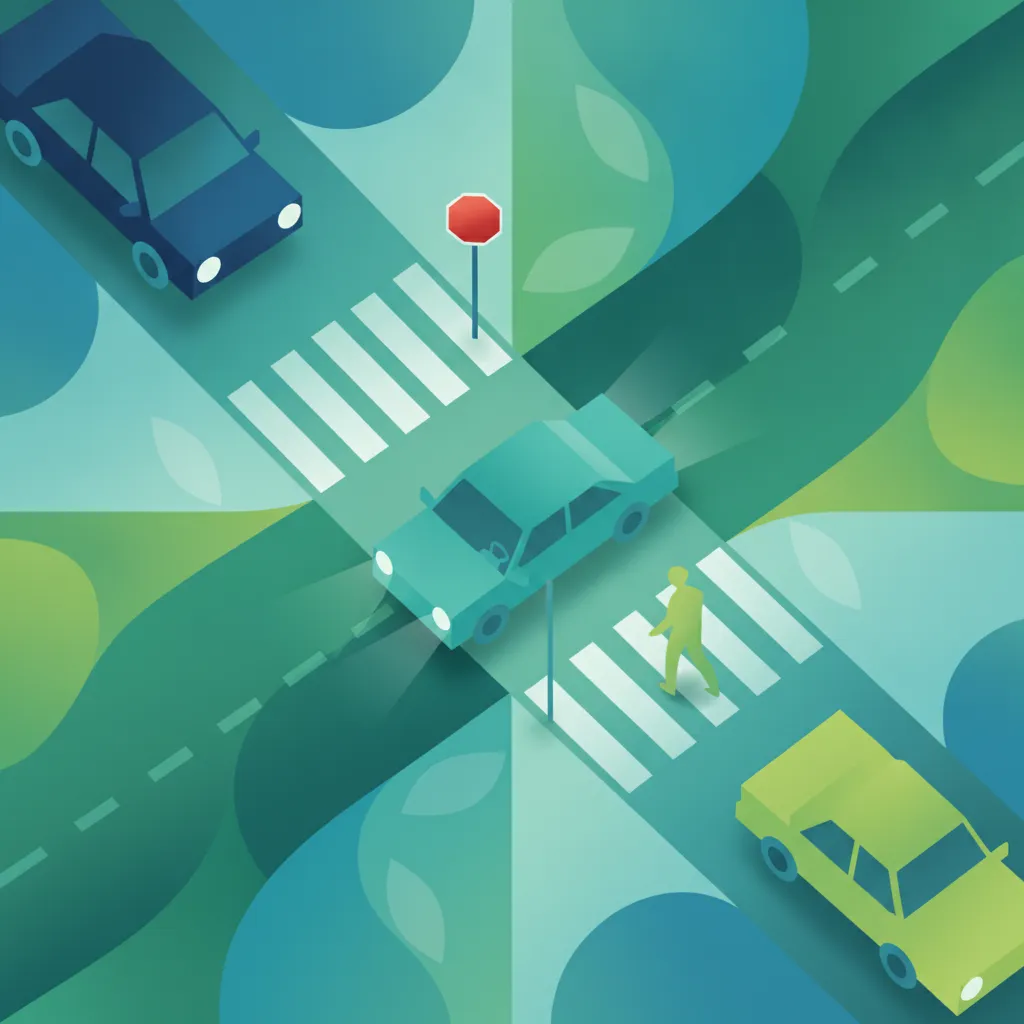
Intersections are high-risk zones that require precision and strict adherence to Turkish traffic laws. This lesson builds on your knowledge of road signs and markings to teach you how to manage speed, visibility, and right-of-way when navigating junctions on a moped.
Lesson content overview
Intersections represent the highest-risk zones for any road user, but they are particularly hazardous for Category AM moped riders. In Turkey, complex urban traffic, varying road designs, and the small visual profile of light motorized bicycles contribute to a disproportionately high rate of intersection-related accidents.
This lesson provides a comprehensive guide to understanding, approaching, and safely navigating intersections. It covers the essential rules of the road (Karayolları Trafik Kanunu), defensive scanning techniques, and the physics of managing a lightweight two-wheeled vehicle in high-conflict traffic environments.
Under Turkish traffic regulations, intersections are classified into controlled and uncontrolled environments. Recognizing the type of intersection you are approaching dictates your legal duties, your speed, and your level of alertness.
A controlled intersection is governed by active traffic control devices or authorized personnel. At these locations, your right-of-way is explicitly indicated, but you must still remain highly vigilant. Controlled intersections feature:
An uncontrolled intersection lacks traffic lights, traffic signs, or police officers to regulate the flow. These are highly common in Turkish residential areas and rural sectors.
At uncontrolled intersections, drivers must rely strictly on standard statutory right-of-way rules. Because there are no signs to warn crossing traffic, these zones require maximum deceleration and active visual scanning before entry.
Complex intersections feature multiple lanes, dedicated turning bays, or staggered layouts where roads do not cross at perfect right angles. For a moped rider, these layouts demand early lane selection to avoid being trapped in blind spots or forced into unsafe, last-minute lane changes across multiple traffic streams.
Understanding who has the legal right to proceed first is not just about passing your Turkish MTSK theory exam (MTSK e-sınavı); it is a critical survival skill. In any conflict situation, you must know the statutory hierarchy of priority.
When multiple road users arrive at an intersection, the following hierarchical rules determine who must yield:
There are specific scenarios under Turkish traffic law where the standard "rule of the right" does not apply at uncontrolled intersections:
To minimize the risks associated with crossing traffic, every moped rider should employ a structured, highly predictable approach sequence.
Speed Reduction and Deceleration: Begin easing off the throttle early. Gradual deceleration alerts drivers behind you and buys you valuable time to scan the environment. Avoid abrupt braking near the intersection boundary where road surfaces may be slick.
Early Lane Positioning: Choose your lane well in advance of the intersection. If you plan to turn, move into the appropriate position early. Sudden lane changes near an intersection are highly dangerous and illegal.
Comprehensive Scanning: Execute a systematic visual scan: look left, look right, look ahead, and then look left again. Check your rear-view mirrors and perform a quick shoulder check (blind spot check) before changing position or initiating a turn.
Decisive Execution: Once the path is clear or your legal right-of-way is established, proceed through the intersection smoothly. Do not hesitate or stall in the middle of the conflict zone; exit the intersection efficiently.
Turning a moped at an intersection involves changes in stability, speed, and positioning. Because mopeds have smaller wheels and less engine power than standard motorcycles, they are highly sensitive to surface irregularities and require careful speed management during turns.
Under Turkish traffic rules, right turns must be executed along a tight radius (dar kavisle).
Left turns are significantly more hazardous because they require you to cross oncoming traffic lanes. Under Turkish rules, left turns must be executed along a wide radius (geniş kavisle).
A common cause of multi-vehicle collisions involving mopeds is the "SMIDSY" phenomenon (Sorry Mate, I Didn't See You). Because of a moped's narrow profile, drivers of larger vehicles often misjudge your speed or fail to notice you entirely.
When an oncoming vehicle is waiting to turn left across your path at an intersection, always assume they do not see you.
Even when you legally hold the right-of-way, never force it. If an oncoming or crossing vehicle fails to yield, prioritize your physical safety over your legal right.
Survival Rule: Having "right-of-way" will not protect you from physical impact. If a vehicle enters your path illegally, apply your brakes smoothly, maintain control of your moped, and be prepared to yield your priority to prevent a collision.
The stability of a moped is heavily dependent on environmental factors. Intersections are prime locations for hazards like spilled fluids, polished tarmac, and pedestrian activity.
To pass your driving theory exam and ride safely on public roads, you must be aware of the most common mistakes made at intersections.
Navigating intersections on a Category AM moped requires a proactive blend of legal knowledge, physical control, and defensive strategies. By always reducing speed early, selecting your lane in advance, scanning systematically, and respecting the priority rights of pedestrians and oncoming traffic, you can safely handle the high-conflict zones of Turkish roads. Always prioritize your physical safety over legal priority, and adapt your riding to match the ever-changing environmental conditions.
This lesson covers the essential skills for safely navigating intersections on a Category AM moped in Turkey, including the distinction between controlled and uncontrolled junctions and the legal priority hierarchy that determines right-of-way. Learners should memorize the 4-step approach method: reduce speed early, position in the correct lane, scan comprehensively in all directions, then execute decisively. Key technical points include executing right turns with a tight radius and left turns with a wide radius, while always yielding to pedestrians, emergency vehicles, and main road traffic. The lesson also emphasizes defensive riding strategies to compensate for the moped's small visual profile and advises riders to prioritize physical safety over legal priority when facing non-yielding drivers.
A short set of high-value points that capture the most important learning from this lesson.
Intersections are the highest-risk zones for mopeds due to crossing traffic paths and reduced visibility
The legal priority hierarchy ranks pedestrians first, then emergency vehicles, then main road traffic, then the vehicle approaching from the right
Right turns must use a tight radius hugging the curb; left turns must use a wide radius around the imaginary center of the intersection
Always use turn signals early and maintain continuous scanning in all directions before executing any maneuver
Even with legal right-of-way, prioritize physical safety by yielding if another vehicle fails to stop
Explore all units and lessons included in this driving theory course.
At uncontrolled intersections, yield to vehicles approaching from your right (Sağdan Gelene Yol Verme rule)
Tramways always have absolute priority over all wheeled vehicles at intersections
Keep handlebars straight while waiting to turn left; being rear-ended with turned handlebars pushes you into oncoming traffic
Cover your brake levers in high-risk zones to minimize reaction time
Pedestrians at marked or unmarked crosswalks have absolute priority regardless of other signals
Rolling through stop signs instead of coming to a complete, balanced halt before the stop line
Cutting corners on left turns, which places the moped directly in the path of oncoming vehicles or pedestrians
Failing to signal or activating turn signals too late for other drivers to react appropriately
Entering an intersection in the wrong lane and attempting a last-minute lane change to execute a turn
Underestimating the speed of oncoming vehicles when planning a left turn across traffic
Lesson content overview
A short set of high-value points that capture the most important learning from this lesson.
Intersections are the highest-risk zones for mopeds due to crossing traffic paths and reduced visibility
The legal priority hierarchy ranks pedestrians first, then emergency vehicles, then main road traffic, then the vehicle approaching from the right
Right turns must use a tight radius hugging the curb; left turns must use a wide radius around the imaginary center of the intersection
Always use turn signals early and maintain continuous scanning in all directions before executing any maneuver
Even with legal right-of-way, prioritize physical safety by yielding if another vehicle fails to stop
Explore all units and lessons included in this driving theory course.
At uncontrolled intersections, yield to vehicles approaching from your right (Sağdan Gelene Yol Verme rule)
Tramways always have absolute priority over all wheeled vehicles at intersections
Keep handlebars straight while waiting to turn left; being rear-ended with turned handlebars pushes you into oncoming traffic
Cover your brake levers in high-risk zones to minimize reaction time
Pedestrians at marked or unmarked crosswalks have absolute priority regardless of other signals
Rolling through stop signs instead of coming to a complete, balanced halt before the stop line
Cutting corners on left turns, which places the moped directly in the path of oncoming vehicles or pedestrians
Failing to signal or activating turn signals too late for other drivers to react appropriately
Entering an intersection in the wrong lane and attempting a last-minute lane change to execute a turn
Underestimating the speed of oncoming vehicles when planning a left turn across traffic
Explore search topics learners often look for when studying Approaching and Crossing Intersections Safely. These topics reflect common questions about road rules, driving situations, safety guidance, and lesson level theory preparation for learners in Turkey.
Browse additional driving theory lessons that cover connected traffic rules, road signs, and common driving situations related to this topic. Improve your understanding of how different rules interact across everyday traffic scenarios.
Explore the common mistakes riders make at intersections, such as poor lane positioning or misjudging vehicle speed. Understand how to anticipate driver behavior and maintain clear visibility to prevent collisions in high-risk traffic environments based on standard traffic legislation.
This lesson explores the critical skill of hazard identification and anticipation while driving. Topics include recognizing potential risks in traffic, road conditions, and environmental factors. Learners will develop skills in anticipatory driving to proactively address hazards before they become dangerous. Real-world examples illustrate how to maintain vigilance.
Learn the specific entry, circulation, and exit procedures for roundabouts in Turkey. Understand how to manage lane selection, signaling, and priority rules to move through circular junctions safely while minimizing conflict with other road users.
Roundabouts require a clear understanding of yield regulations and precise signaling to avoid conflicts with larger vehicles. This lesson details the legal requirements under Turkish road rules, which demand that entering vehicles yield to traffic already circulating inside the roundabout. You will learn how to select the appropriate lane upon entry, maintain a steady speed, signal your exit intentions clearly with your indicators, and remain alert to drivers who cut across lanes.
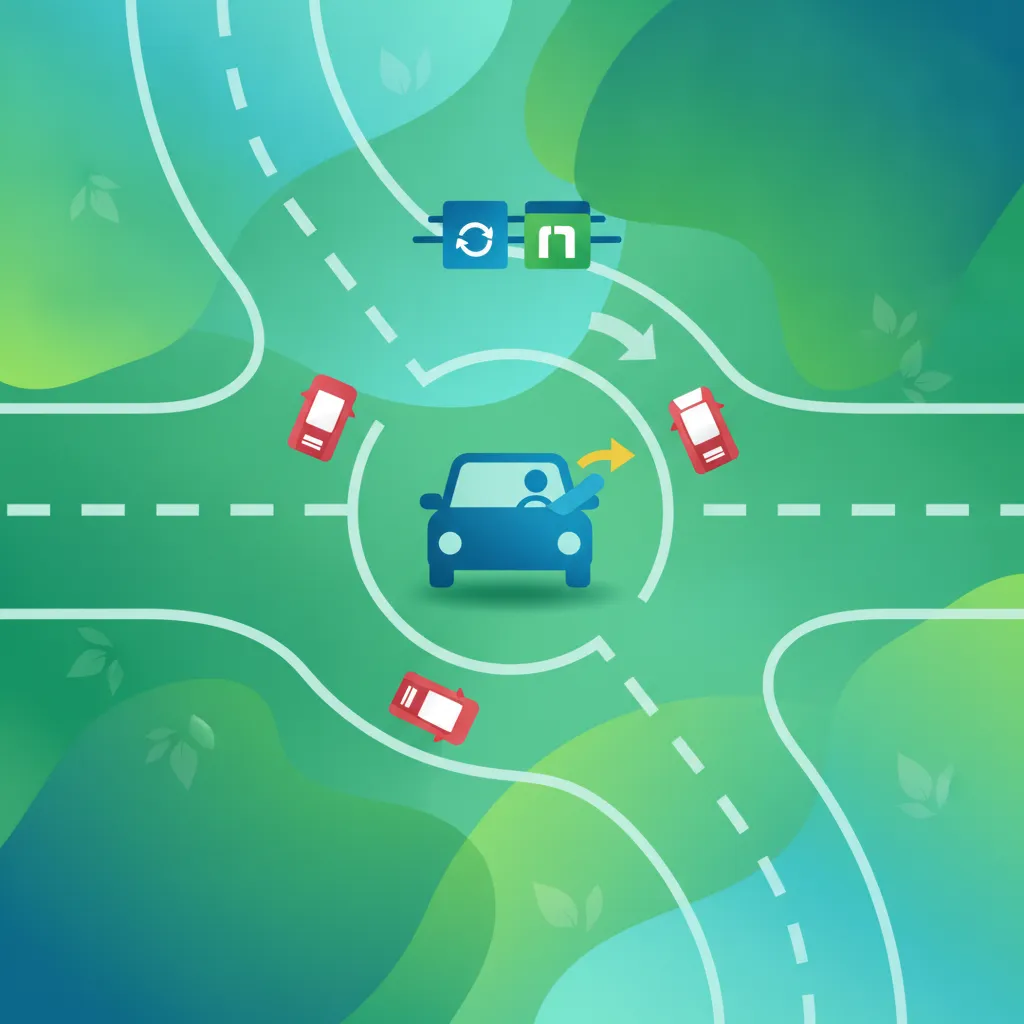
In this lesson, learners explore the specific priority rules and navigation techniques for roundabouts. Topics include yielding to traffic already in the roundabout, proper lane selection upon entry, and safe exit strategies. The lesson also addresses interactions with pedestrians and cyclists near roundabouts and the importance of maintaining appropriate speed.
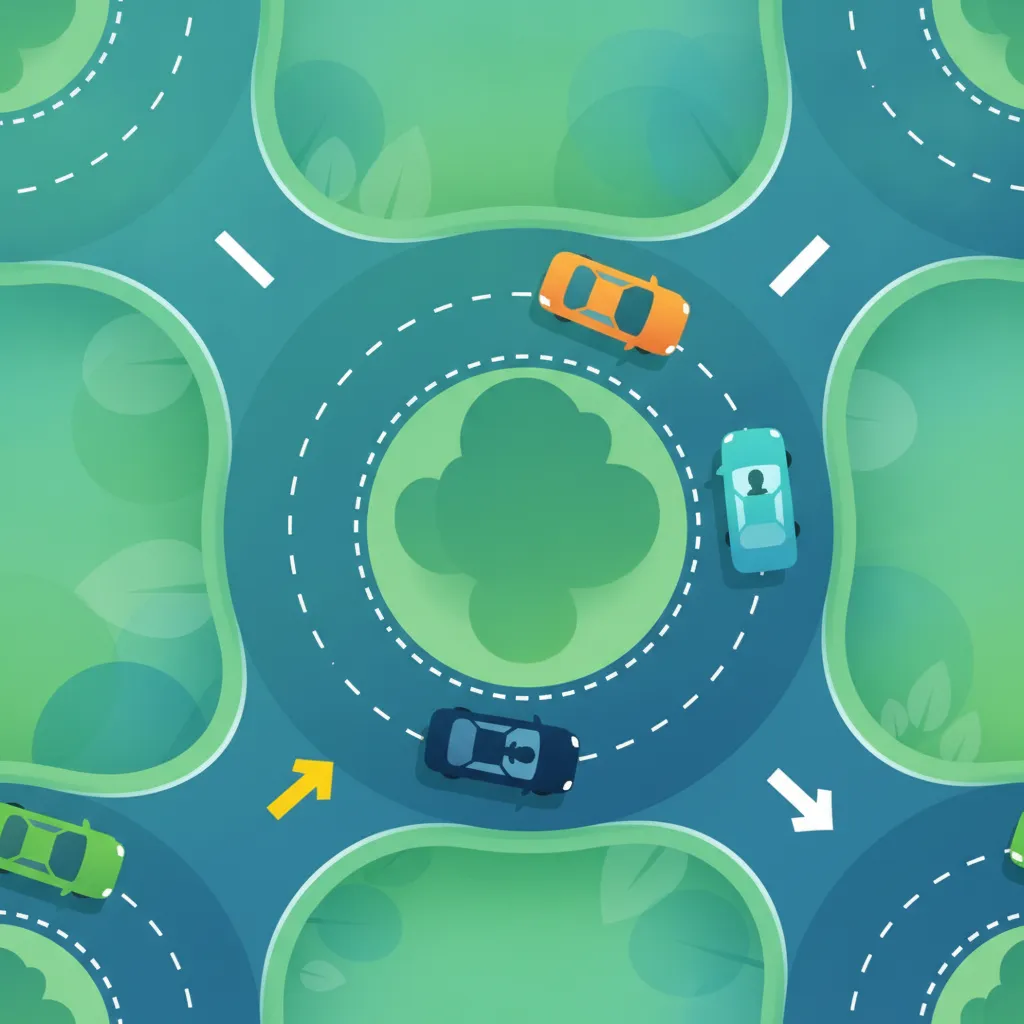
This lesson delves into the specific challenges and procedures associated with navigating roundabouts on a motorcycle. It outlines the importance of approaching at a safe speed, selecting the correct lane, and yielding to vehicles already within the roundabout. The content also covers the proper use of signals when exiting and emphasizes the need for heightened awareness of blind spots, especially when larger vehicles are present.
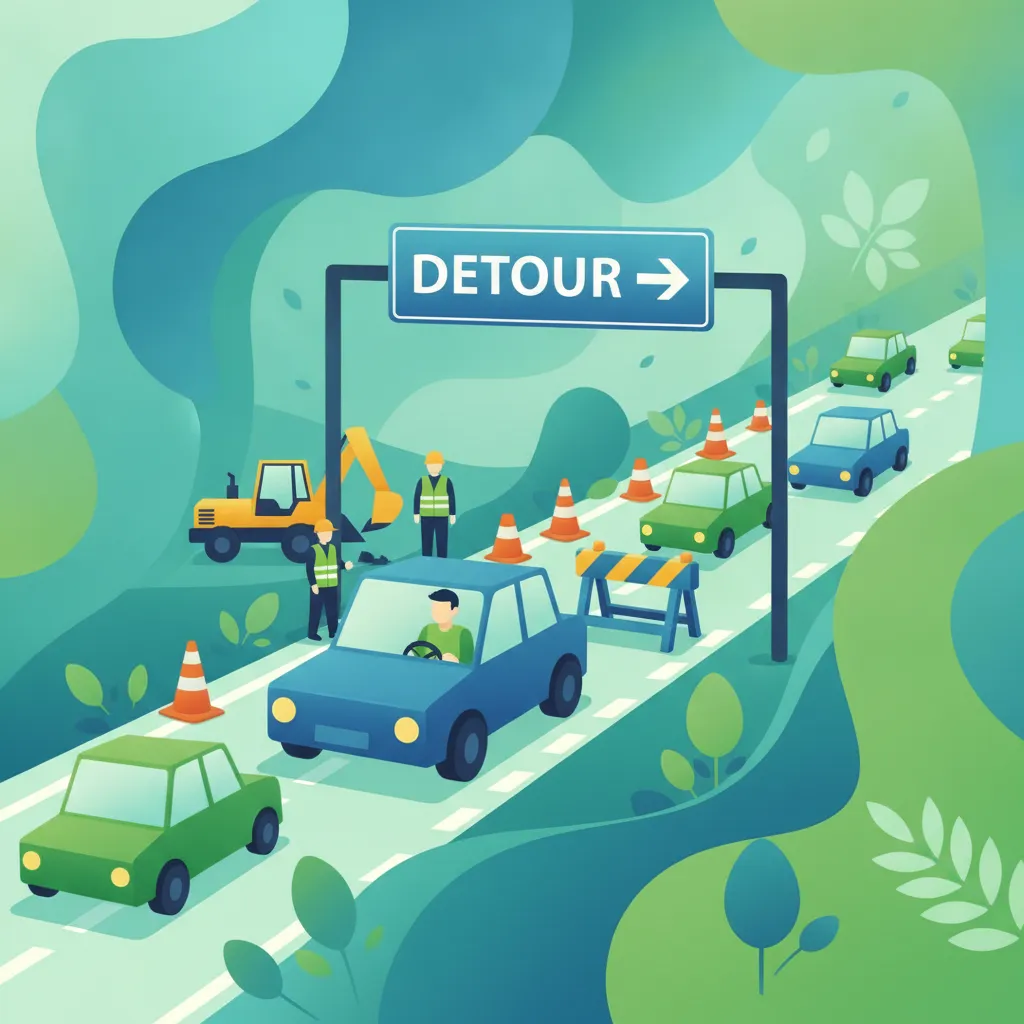
This lesson guides motorists on how to safely navigate active roadwork zones, detours, and temporary lane configurations. It details the meaning of construction signs, temporary speed reductions, and the legal requirement to protect highway workers. Drivers will learn to expect sudden stops and maintain slow, steady speeds through work areas.
This lesson outlines the precise legal and safety procedures for overtaking slower vehicles on two-lane and multi-lane roads. It details when overtaking is strictly prohibited by signs or solid road lines, and how to calculate passing distances. Drivers will learn how to communicate their intentions using indicators and pass other vehicles safely.
In this lesson, learners will explore the functioning of traffic lights and their impact on motorcycle riding. It delves into the meanings of red, amber, and green lights, as well as dedicated turn arrows and pedestrian signals. The lesson highlights specific considerations for motorcyclists at intersections, such as the appropriate response to amber lights, the use of turn arrows for safe lane changes, and legal crossing obligations.
In this lesson, learners will master the skills required to safely navigate various types of intersections encountered in Turkish urban settings. The content covers interpreting traffic signals, understanding right-of-way rules, and executing proper lane positioning. Practical strategies for managing blind spots and ensuring visibility to other road users are emphasized. By the end of this session, participants will be equipped with safe crossing techniques.
Correctly interpreting traffic signal sequences and priority rules is crucial for preventing devastating right-angle collisions at intersections. This lesson breaks down the phase progression of standard lights, the meanings of flashing amber or red indicators, and the hierarchy of traffic control when a police officer is directing vehicles. You will also master the basic legal default rules of right-of-way, such as yielding to vehicles coming from the right at uncontrolled junctions.
Focusing on pedestrian safety, this lesson addresses the unique considerations motorcyclists must take when approaching zebra crossings, traffic signal-controlled pedestrian crossings, and designated school zones. Learners will understand the legal obligations to yield to pedestrians, especially children, and the importance of reducing speed in these high-risk areas. The lesson also provides practical tips for ensuring visibility.

In this lesson, learners will gain comprehensive knowledge of safe overtaking maneuvers during riding, emphasizing the importance of assessing traffic flow, checking blind spots, and signaling intentions. The content covers overtaking strategies on both straight roads and curves, considering visibility and speed differentials. By mastering these techniques, motorcyclists can execute overtaking safely.
Find clear answers to common questions learners have about Approaching and Crossing Intersections Safely. Learn how the lesson is structured, which driving theory objectives it supports, and how it fits into the overall learning path of units and curriculum progression in Turkey. These explanations help you understand key concepts, lesson flow, and exam focused study goals.
Yes, AM category moped riders must follow the same fundamental priority rules as all other motor vehicles under Turkish traffic legislation. You must always yield to the right at uncontrolled junctions unless traffic signs indicate otherwise.
Because mopeds are smaller, they are easily missed by drivers in larger vehicles. Correct lane positioning ensures you remain visible and prevents cars from attempting to squeeze past you in the same lane during a turn.
Always scan ahead for vehicles signaling a turn. Even if you have the right of way, you must prioritize your safety by being ready to brake if the other driver fails to yield. Never assume they have seen you.
The exam often presents visual scenarios or animations of intersections. You will be asked to identify which vehicle has the right of way based on the traffic signs present or the order of arrival at an uncontrolled junction.
Use our comprehensive practice search to find exactly the Turkish driving theory questions you need to master. Whether reviewing specific road signs, traffic rules, or first aid scenarios, select your perfect practice set and boost your confidence for the official ehliyet sınavı.