
This lesson teaches you how to scan the road for hazards and anticipate potential dangers before they occur. It is a vital skill for Category B drivers in Turkey, helping you navigate complex traffic environments while preparing for your MTSK e-sınav hazard perception questions.
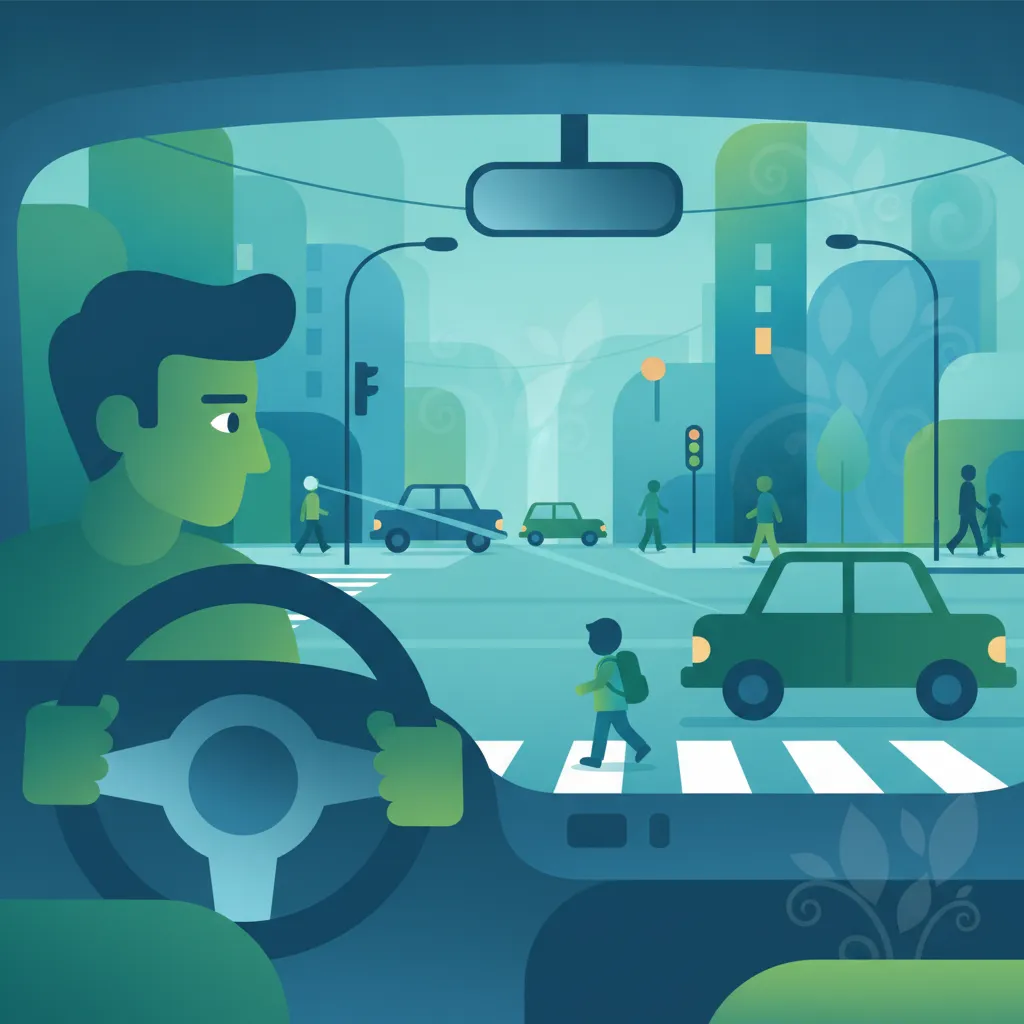
Lesson content overview
Mastering the art of hazard identification and anticipation is the cornerstone of defensive driving (defansif sürüş). Operating a light passenger vehicle (Category B) on busy streets and highways requires more than physical control of the steering wheel and pedals. It demands continuous cognitive engagement.
In Turkey, the official Ministry of National Education (MEB) driving theory exam (MTSK e-sınav) heavily emphasizes safe driving principles, risk perception, and legal obligations regarding road hazards. By developing a proactive, anticipatory driving style (öngörülü sürüş), you transition from a reactive driver who merely responds to emergencies to a proactive driver who prevents emergencies from occurring in the first place.
At its heart, hazard identification is the process of scanning your driving environment, recognizing potential sources of danger, and formulating a plan to mitigate them before they turn into critical threats.
When you fail to anticipate a hazard, your response is delayed. This delay drastically increases your stopping distance and the likelihood of a collision. Defensive drivers rely on a combination of visual scanning, situational awareness, and cognitive risk assessment to read the road like a map of potential events.
To appreciate why hazard anticipation is vital, you must understand the timeline of a physical response behind the wheel:
By anticipating a hazard early, you effectively eliminate or minimize the perception and reaction intervals. You can ease off the accelerator or pre-charge your brakes, ensuring that if you do need to stop, you can do so smoothly and safely.
Road hazards are generally divided into three major categories: static, dynamic, and environmental. Understanding these distinctions allows you to categorize risks instantly and apply the correct preventative actions.
Static hazards are physical objects or infrastructure elements that do not move, but change the profile of the road or restrict your path, visibility, or lane space.
Dynamic hazards involve moving elements within the traffic environment. Because these hazards are mobile, they are unpredictable and require constant tracking.
Environmental hazards are atmospheric or surface conditions that degrade visibility, reduce vehicle traction, or affect handling.
To protect yourself and others, you must integrate several core behaviors into your daily driving habit. These principles work together to create a safety bubble around your Category B vehicle.
Defensive drivers use a structured mental cycle known as the SIPDE process to manage risks systematically:
Search (Scan): Actively search the road 15 to 20 seconds ahead, as well as your side mirrors, rearview mirror, and blind spots. Do not stare fixedly at the car directly in front of you.
Identify: Locate potential hazards within your visual field. Recognize a parked delivery truck, a child playing near the sidewalk, or a wet patch on the asphalt.
Predict: Ask yourself "What if?" Predict how the identified hazard might develop. For example, "What if that delivery truck driver steps out of the cabin without looking?"
Decide: Formulate a defensive plan. Decide whether you need to adjust your speed, change lanes, sound your horn, or flash your headlights to make yourself visible.
Execute: Carry out your decision smoothly. Avoid sudden, panicked maneuvers that could startle other drivers or cause a loss of control.
Situational awareness means understanding the dynamic relationship between your vehicle and everything else on the road. It requires you to know what is in front of you, behind you, and directly next to your rear quarter panels at all times.
Complacency is the enemy of situational awareness. When driving on familiar routes, drivers often fall into "highway hypnosis" or automated behavior, which severely blunts their hazard detection abilities.
The state of sustained cognitive alertness and focused sensory awareness over the entire duration of a journey. Vigilance requires the conscious elimination of internal distractions (mobile phones, complex dashboard menus) and external distractions (looking at roadside billboards instead of traffic).
Your primary safety buffer against frontal collisions is your following distance (takip mesafesi). According to the Turkish Highway Traffic Regulation (Karayolları Trafik Yönetmeliği), drivers must maintain a safe distance from the vehicle in front of them to prevent collisions in the event of sudden braking.
In ideal weather and road conditions, you should use the Two-Second Rule to establish a baseline safe following distance:
When visibility or traction is compromised, you must double your following distance to at least four seconds. This provides a larger physical margin to compensate for the longer braking distances associated with slippery roads or delayed visibility.
In Turkish traffic law, a simplified rule of thumb is often referenced for general driving conditions: your following distance in metres should be at least half of your speed value in km/h.
| Vehicle Speed (km/h) | Safe Dry Following Distance (Metres) | Safe Wet/Adverse Following Distance (Metres) |
|---|---|---|
| 50 | 25 m | 50 m |
| 80 | 40 m | 80 m |
| 90 | 45 m | 90 m |
| 120 | 60 m | 120 m |
Tailgating is a Serious Violation: Driving closer than the safe following distance is a common cause of multi-vehicle pileups on highways (zincirleme trafik kazası). This offense carries monetary fines and adds demerit points to your driver's record under Article 56 of the Turkish Traffic Law.
Speed management is not simply about staying under the posted legal limit. It is the practice of constantly adjusting your velocity to match the immediate physical realities of the road.
The maximum legal speed limit is designed for optimal conditions. You are legally required to reduce your speed below the limit in the following situations:
The Turkish Traffic Code (Karayolları Trafik Kanunu) explicitly codifies the responsibilities of a driver to remain vigilant, identify hazards, and react appropriately. Neglecting these rules can lead to administrative fines, driver's license demerit points (ceza puanı), or criminal prosecution in the event of an accident.
Drivers under the Category B license are subject to a demerit point system. Accumulating 100 demerit points within a single calendar year results in a temporary suspension of your driving privileges. Key violations related to hazard identification, speed, and safety distances include:
To turn these theoretical rules into practical driving habits, let us analyze two common scenarios you may face after passing your MTSK e-sınav and taking your practical driving test.
To ensure you pass your driving license theory exam and remain safe on the road, memorize these essential hazard perception concepts:
This lesson teaches the cornerstone skill of hazard identification and anticipation for Turkish Category B drivers, emphasizing that proactive scanning and prediction prevent emergencies better than reactive responses. Learners must master the three hazard categories (static, dynamic, environmental) and apply the SIPDE mental cycle to systematically search, identify, predict, decide, and execute actions while maintaining appropriate following distances. The Two-Second Rule for dry conditions and Four-Second Rule for adverse conditions (rain, fog, towing) provide concrete distance guidelines tied to Turkish traffic legislation. The content connects directly to MTSK e-sınav requirements while building real-world defensive driving skills that protect both the driver and vulnerable road users.
A short set of high-value points that capture the most important learning from this lesson.
Defensive driving (*defansif sürüş*) relies on proactive anticipation rather than reactive responses to emergencies
Hazards are categorized into three types: static (fixed objects), dynamic (moving elements), and environmental (weather/visibility conditions)
The SIPDE cycle (Search, Identify, Predict, Decide, Execute) provides a structured mental framework for systematic hazard scanning
Your stopping distance must always be shorter than your clear line of sight ahead, requiring continuous speed adjustment
Vigilance requires eliminating both internal distractions (phones) and external distractions (billboards) during driving
Explore all units and lessons included in this driving theory course.
The Two-Second Rule is the absolute minimum following distance in dry conditions; identify a fixed marker and count to two before passing it
The Four-Second Rule applies during rain, fog, snow, or when towing a trailer—double your following distance
A useful speed-to-distance guideline: following distance in metres should be at least half your speed in km/h (e.g., 40m at 80 km/h)
In rain, the first few minutes are most dangerous as dust mixes with water to create a highly slippery film on Turkish roads
When approaching blind intersections or stopped buses, cover your brake pedal and scan gaps where pedestrians may emerge hidden from view
Falling into 'highway hypnosis' on familiar routes, which severely reduces hazard detection ability and eliminates the 15-20 second forward scanning habit
Assuming the posted speed limit is always appropriate—legal limits are for optimal conditions and must be reduced when visibility or traction is compromised
Staring fixedly at the vehicle directly ahead instead of maintaining broad visual scanning across mirrors, blind spots, and the road ahead
Failing to predict secondary hazards—for example, only watching a pedestrian and not noticing the vehicle that might obscure them from view
Making sudden, panicked steering or braking inputs when a hazard materializes instead of executing smooth, pre-planned maneuvers
Lesson content overview
A short set of high-value points that capture the most important learning from this lesson.
Defensive driving (*defansif sürüş*) relies on proactive anticipation rather than reactive responses to emergencies
Hazards are categorized into three types: static (fixed objects), dynamic (moving elements), and environmental (weather/visibility conditions)
The SIPDE cycle (Search, Identify, Predict, Decide, Execute) provides a structured mental framework for systematic hazard scanning
Your stopping distance must always be shorter than your clear line of sight ahead, requiring continuous speed adjustment
Vigilance requires eliminating both internal distractions (phones) and external distractions (billboards) during driving
Explore all units and lessons included in this driving theory course.
The Two-Second Rule is the absolute minimum following distance in dry conditions; identify a fixed marker and count to two before passing it
The Four-Second Rule applies during rain, fog, snow, or when towing a trailer—double your following distance
A useful speed-to-distance guideline: following distance in metres should be at least half your speed in km/h (e.g., 40m at 80 km/h)
In rain, the first few minutes are most dangerous as dust mixes with water to create a highly slippery film on Turkish roads
When approaching blind intersections or stopped buses, cover your brake pedal and scan gaps where pedestrians may emerge hidden from view
Falling into 'highway hypnosis' on familiar routes, which severely reduces hazard detection ability and eliminates the 15-20 second forward scanning habit
Assuming the posted speed limit is always appropriate—legal limits are for optimal conditions and must be reduced when visibility or traction is compromised
Staring fixedly at the vehicle directly ahead instead of maintaining broad visual scanning across mirrors, blind spots, and the road ahead
Failing to predict secondary hazards—for example, only watching a pedestrian and not noticing the vehicle that might obscure them from view
Making sudden, panicked steering or braking inputs when a hazard materializes instead of executing smooth, pre-planned maneuvers
Explore search topics learners often look for when studying Hazard Identification and Anticipation. These topics reflect common questions about road rules, driving situations, safety guidance, and lesson level theory preparation for learners in Turkey.
Browse additional driving theory lessons that cover connected traffic rules, road signs, and common driving situations related to this topic. Improve your understanding of how different rules interact across everyday traffic scenarios.
Learn advanced strategies for maintaining situational awareness and mitigating risks on busy Turkish roads. This guide covers how to systematically apply defensive driving to prevent common collisions, manage driver fatigue, and ensure safety in high-density urban environments according to official Turkish road transport regulations.

In this lesson, learners will discover the principles of defensive riding, focusing on hazard anticipation, maintaining safe distances, and practicing proactive avoidance techniques. It emphasizes developing a vigilant riding posture, constantly scanning the environment, and preparing to react to potential dangers from other road users, road conditions, or unexpected traffic events.

This lesson details defensive driving techniques for adverse weather conditions such as rain, snow, black ice, dense fog, and strong winds. It explains the physics of aquaplaning and how to regain vehicle control when losing traction on slippery surfaces. Drivers will learn how to adjust speed and increase safety gaps to prevent weather crashes.
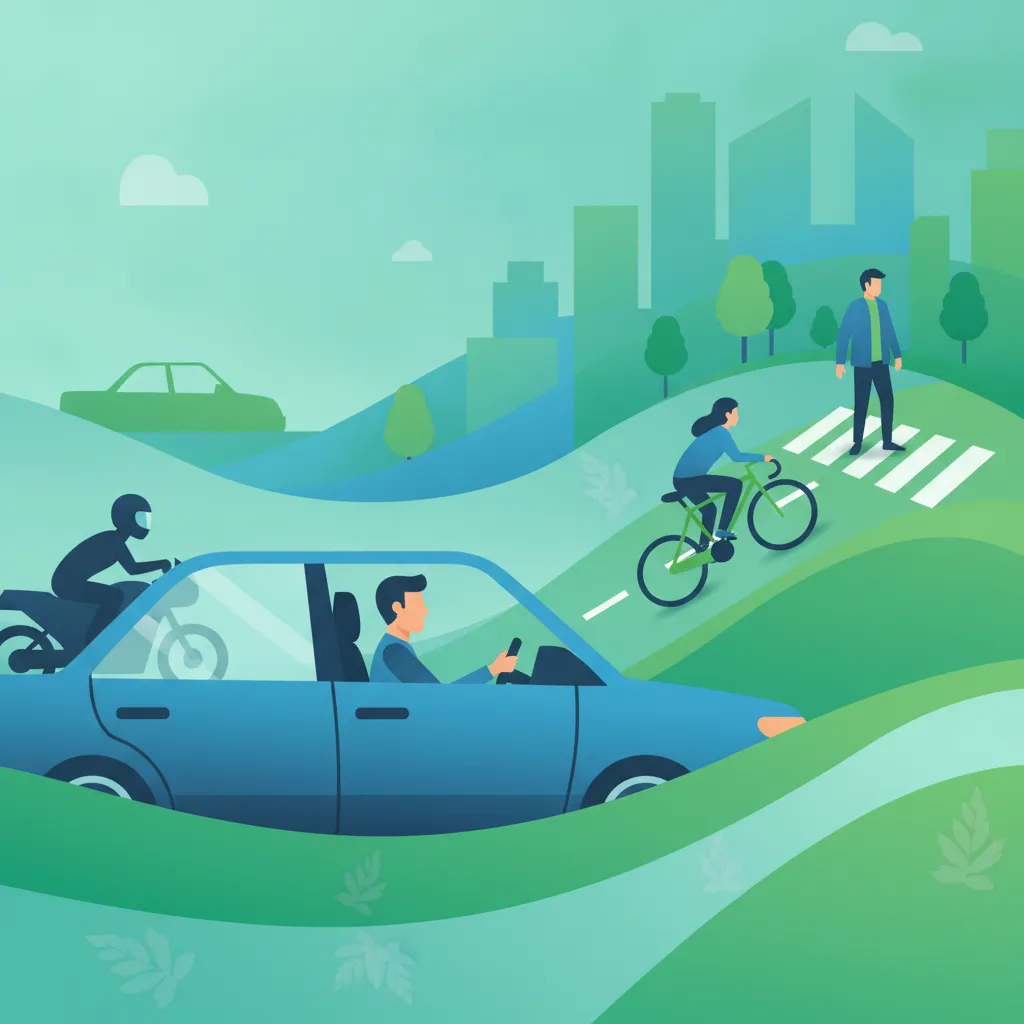
Learners will examine the complexities of operating in environments where various road users, including pedestrians, cyclists, and motorcyclists, coexist. The lesson emphasizes the need for heightened situational awareness, defensive driving techniques, and proactive hazard anticipation. Strategies for navigating mixed traffic safely, especially in congested urban areas, are highlighted.
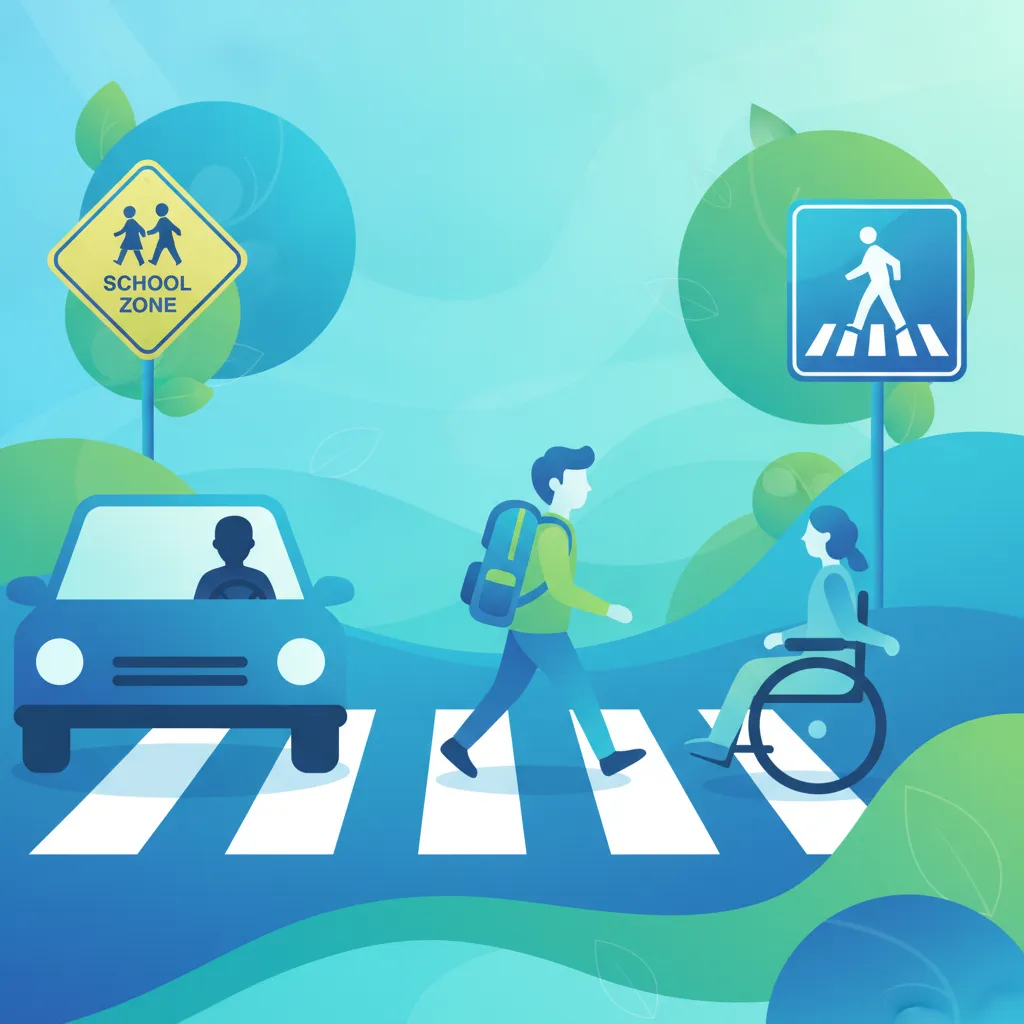
Learners will identify the different categories of vulnerable road users and understand the heightened risks they face. The lesson emphasizes the importance of recognizing these users, anticipating their actions, and taking proactive measures to ensure their safety while operating passenger vehicles. Strategies for mitigating danger and fostering a protective driving environment are explored.
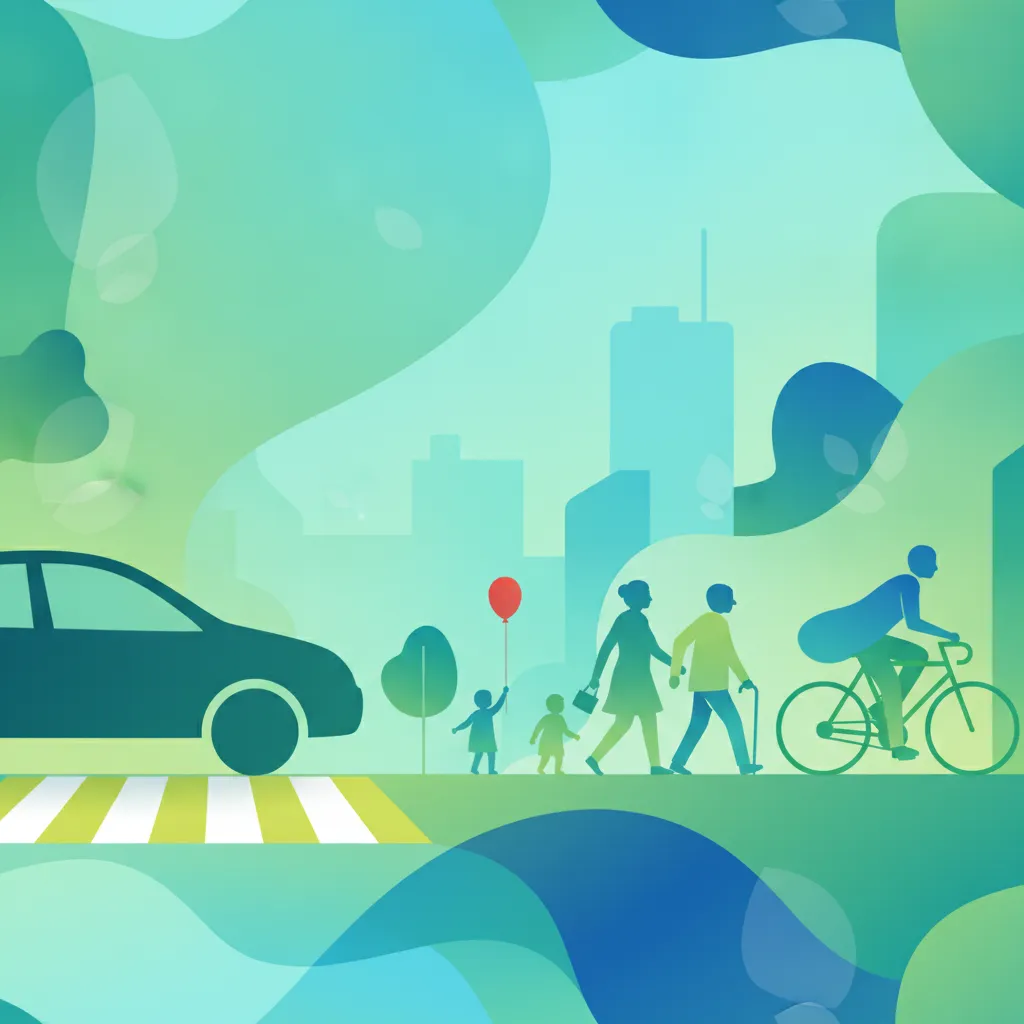
This lesson focuses on protecting vulnerable road users, such as pedestrians, cyclists, and motorcyclists, in mixed traffic environments. Learners will examine specific strategies for increased vigilance, anticipatory driving, and properly yielding to these users. The lesson also covers high-risk zones, such as school areas and public transport stops, emphasizing the need for heightened safety.

This lesson explores the hazards characteristic of rural roads, including narrow paths, lack of lighting, slow agricultural vehicles, and sharp curves. It teaches drivers how to anticipate blind corners, adjust speed, and pass slow-moving tractors safely. Motorists will learn to remain highly alert for unexpected roadway obstructions.

Defensive riding is the practice of anticipating potential road conflicts and acting early to prevent accidents before they occur. This lesson teaches you how to systematically scan the road ahead for changing conditions, keep an adequate safety cushion around your moped, and pre-plan exit routes in tight spots. You will learn to assume you are invisible to other drivers and adapt your speed and road position proactively to protect yourself against sudden maneuvers.

This lesson focuses on the principles governing safe following distances between vehicles. Topics include understanding time and distance gaps, reaction times, and braking distances. Learners will explore guidelines for maintaining proper following distances based on speed and road conditions. Real-world examples demonstrate the importance of safe following practices in preventing rear-end collisions.
This lesson delves into specific manoeuvring strategies required when navigating both tight urban environments and open rural roads with large passenger vehicles. Learners will explore techniques for handling narrow streets, tight turns, and intersections, while maintaining safety and efficiency. The content emphasizes planning and execution of manoeuvres based on road conditions and vehicle dimensions.

This lesson emphasizes the ethical dimension of driving, encouraging a responsible and considerate attitude towards all road users. Learners will explore the principles of defensive driving, risk awareness, and the moral obligations that come with operating a vehicle. The importance of respecting pedestrians, cyclists, and vulnerable road users is highlighted, along with the broader societal benefits of ethical driving.
Explore the official Turkish Highway Traffic Regulation guidelines regarding safe following distances and velocity management. Understand how to calculate stopping distances, adapt to adverse weather conditions, and adjust speed when approaching intersections, crossings, and roadwork zones to remain compliant with traffic safety laws.
This lesson focuses on the principles governing safe following distances between vehicles. Topics include understanding time and distance gaps, reaction times, and braking distances. Learners will explore guidelines for maintaining proper following distances based on speed and road conditions. Real-world examples demonstrate the importance of safe following practices in preventing rear-end collisions.
This lesson examines the speed limit regulations applicable in different road environments in Turkey. Topics include understanding posted speed limits, speed zones, and maximum and minimum speed requirements for urban, rural, and highway settings. Learners will explore the significance of complying with speed limits and the potential consequences of exceeding them.
In this lesson, learners explore the factors influencing the determination of a safe driving speed. Topics include adjusting speed for road conditions, weather, traffic density, visibility, and vehicle performance. The lesson emphasizes the importance of dynamic speed management and how to assess appropriate speeds for varying situations.

This lesson focuses on the importance of maintaining safe following distances for goods vehicles, taking into account longer braking distances and increased load. Learners will learn how to calculate appropriate gaps based on speed, road conditions, and vehicle dynamics. The lesson emphasizes safe following practices to prevent rear-end collisions and improve overall traffic safety in Turkey.
This lesson focuses on managing vehicle speed according to different road environments—urban, rural, and highways—while complying with legal speed limits and traffic flow. Learners will understand how to adjust speed for varying road conditions, traffic density, and safety considerations, ensuring a balance between efficiency and risk mitigation.
This lesson explains the specific rules, driving etiquette, and safety protocols for operating a vehicle on high-speed Turkish motorways. It covers correct lane usage, overtaking procedures, emergency lane restrictions, and how to maintain consistent high speeds safely. Drivers will learn to avoid dangerous tailgating and sudden lane changes.
Learners will learn how to calculate and maintain safe following distances, accounting for the longer braking distances and reaction times inherent to larger passenger vehicles. The lesson emphasizes the importance of a sufficient time gap to allow for safe stopping and to prevent rear-end collisions, particularly in varying traffic conditions.

This lesson focuses on the unique requirements and best practices for operating passenger vehicles on highways and expressways. Topics include maintaining appropriate speed, adhering to lane discipline, executing safe overtaking maneuvers, and managing merges and exits. Emphasis is placed on ensuring a smooth ride for passengers while integrating safely with faster-moving traffic.

Managing your speed effectively is not just about obeying posted legal limits; it is about adjusting your pace to the immediate traffic context. This lesson teaches you how to evaluate traffic density, pedestrian presence, and blind corners to select an appropriate speed that guarantees safe stopping distances. You will learn to anticipate flow fluctuations, allowing you to avoid sudden, unstable speed changes that can compromise your balance and traction in mixed traffic.
This lesson outlines the precise legal and safety procedures for overtaking slower vehicles on two-lane and multi-lane roads. It details when overtaking is strictly prohibited by signs or solid road lines, and how to calculate passing distances. Drivers will learn how to communicate their intentions using indicators and pass other vehicles safely.
Find clear answers to common questions learners have about Hazard Identification and Anticipation. Learn how the lesson is structured, which driving theory objectives it supports, and how it fits into the overall learning path of units and curriculum progression in Turkey. These explanations help you understand key concepts, lesson flow, and exam focused study goals.
The most important factor is maintaining constant situational awareness. This means not just looking at the vehicle immediately in front of you, but scanning the entire road environment, including sidewalks, intersections, and mirrors to spot changes in traffic flow early.
In the theory exam, you must recognize that rain, fog, or snow significantly reduces visibility and grip. Anticipating these conditions means you should expect longer stopping distances and lower speed limits, and you must adjust your answers accordingly when presented with scenario-based questions.
Many candidates find them challenging because they require quick thinking. The key is to practice identifying the 'hidden' risks, such as a child appearing from behind a parked car or a vehicle emerging from a blind intersection, rather than just focusing on active traffic.
While driving as a passenger, actively narrate what you see: 'There is a pedestrian near the curb who might cross' or 'That car is merging, so I should prepare to brake.' This builds the mental habit of scanning for hazards, which translates directly to better exam performance.
Use our comprehensive practice search to find exactly the Turkish driving theory questions you need to master. Whether reviewing specific road signs, traffic rules, or first aid scenarios, select your perfect practice set and boost your confidence for the official ehliyet sınavı.